Dalí and Fashion: The Art of Making an Image
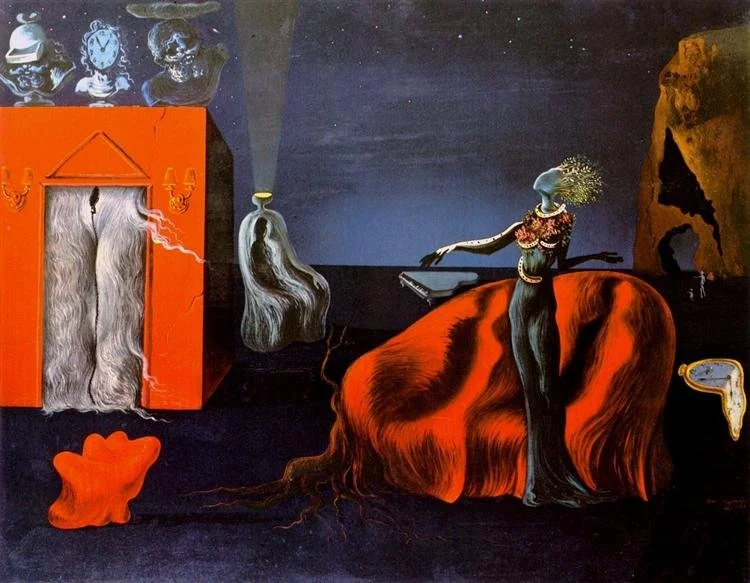
Salvador Dalí , Singularities
c. 1935
© Salvador Dalí, Fundació Gala-Salvador Dalí, Figueres, 2026
Salvador Dalí's association with Elsa Schiaparelli is well known. Together they produced some of the most recognisable images of 20th-century fashion: the 1937 Lobster Dress, the Shoe Hat of 1937–38, and the Tears Dress of 1938, with its trompe-l'œil rips across the fabric. But Schiaparelli was only one of Dalí's fashion collaborators. He also worked with Coco Chanel, Christian Dior and, later, Paco Rabanne.
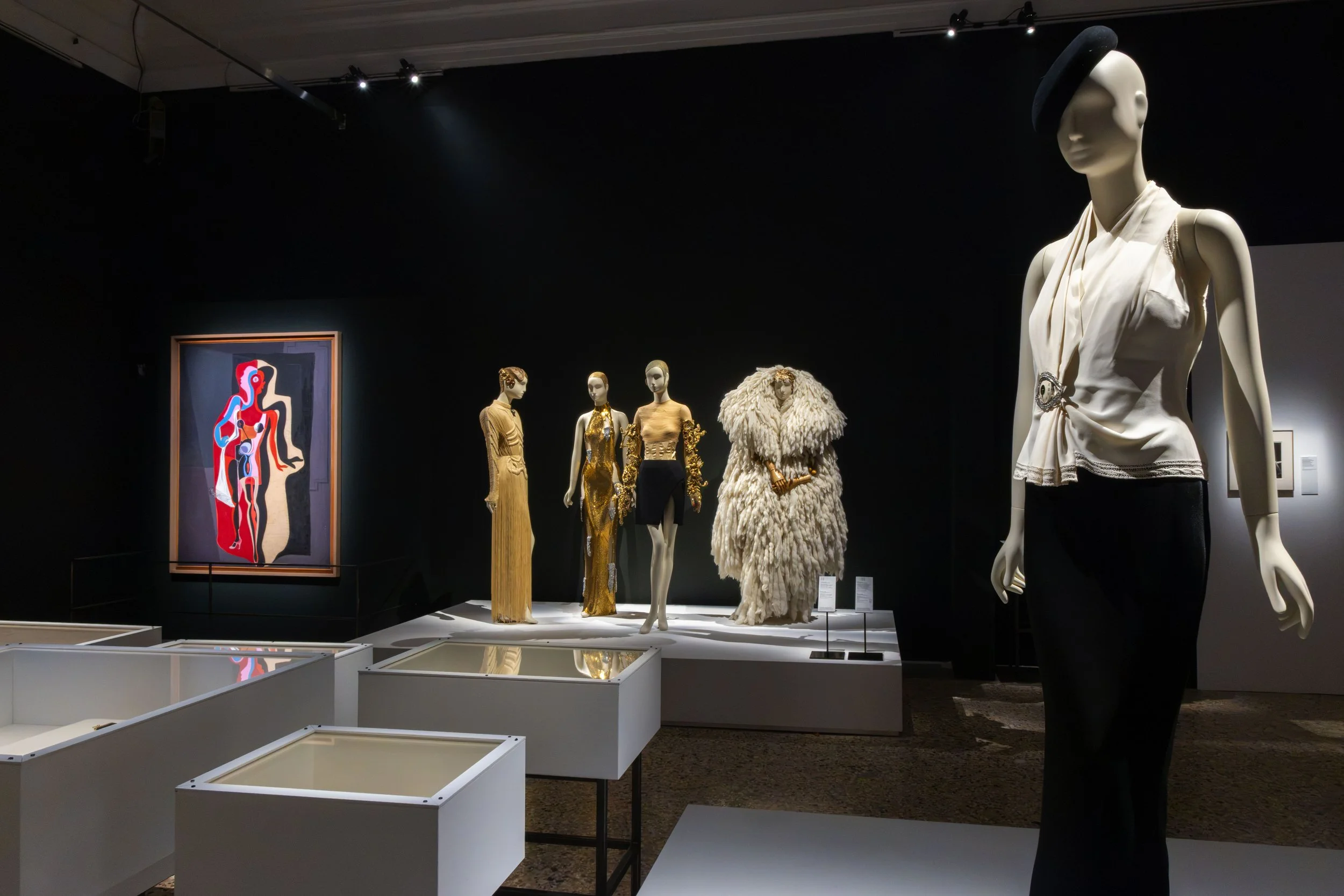
Those relationships are the subject of Dalí e la Moda, which opens at Milan's Palazzo Reale on 24 September during Milan Fashion Week and runs until 31 January 2027. More than 200 works and archival materials are included, spanning paintings, drawings, photographs, garments, jewellery, film and objects. Loans come from the Fundació Gala-Salvador Dalí, the Dalí Museum in St Petersburg, Florida, and Madrid's Museo Nacional Centro de Arte Reina Sofía, alongside material from the archives of Schiaparelli, Chanel, Dior and Rabanne.
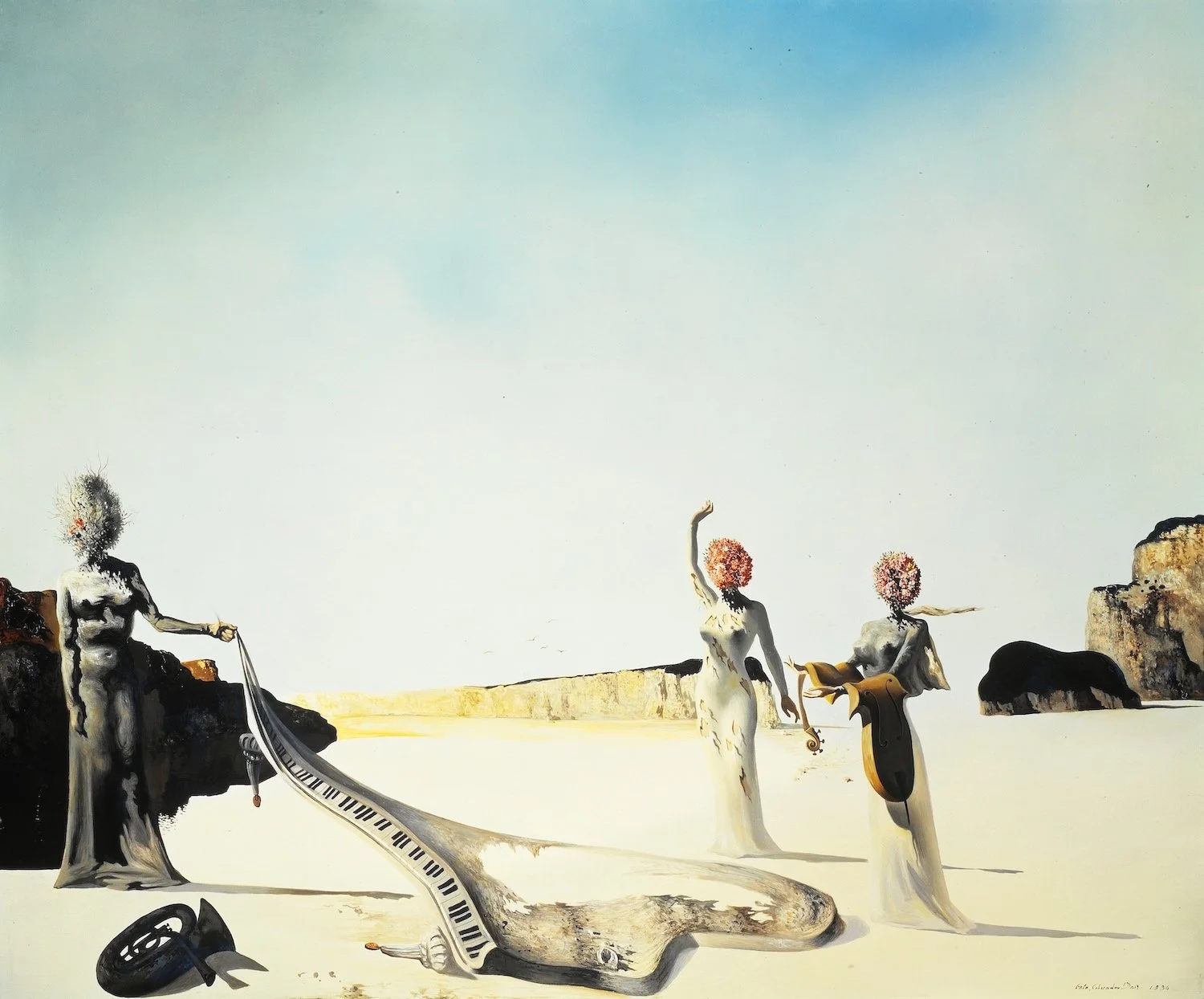
Salvador Dalí, Three young surrealist women holding in their arms the skins of an orchestra
1936
© Salvador Dalí, Fundació Gala-Salvador Dalí, Figueres, 2026
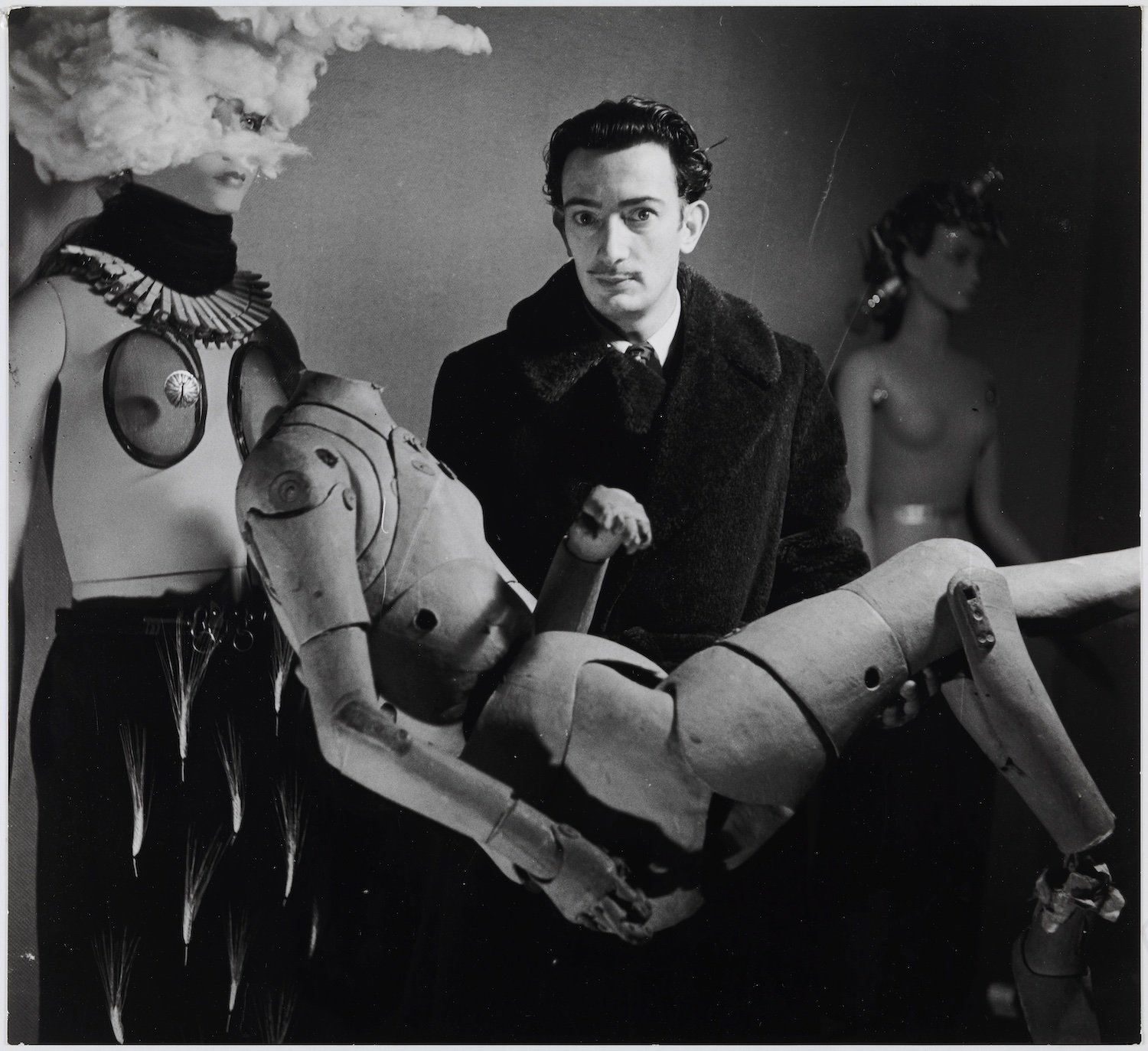
The exhibition begins with Dalí's visual language and his recurring use of fashion, then moves into the wardrobe and the dressed body before arriving at performance. That progression puts clothing inside the larger system of images Dalí built around himself, rather than treating his work with designers as a series of isolated collaborations. His wife, Gala, was central to that system: her clothes, Dalí's increasingly recognisable appearance and the photographs of them together all contributed to the public identity the couple built around themselves. Clothing could change the meaning of an object simply by putting it on a person, making fashion part of Dalí's wider practice of image-making rather than a secondary chapter in his career.
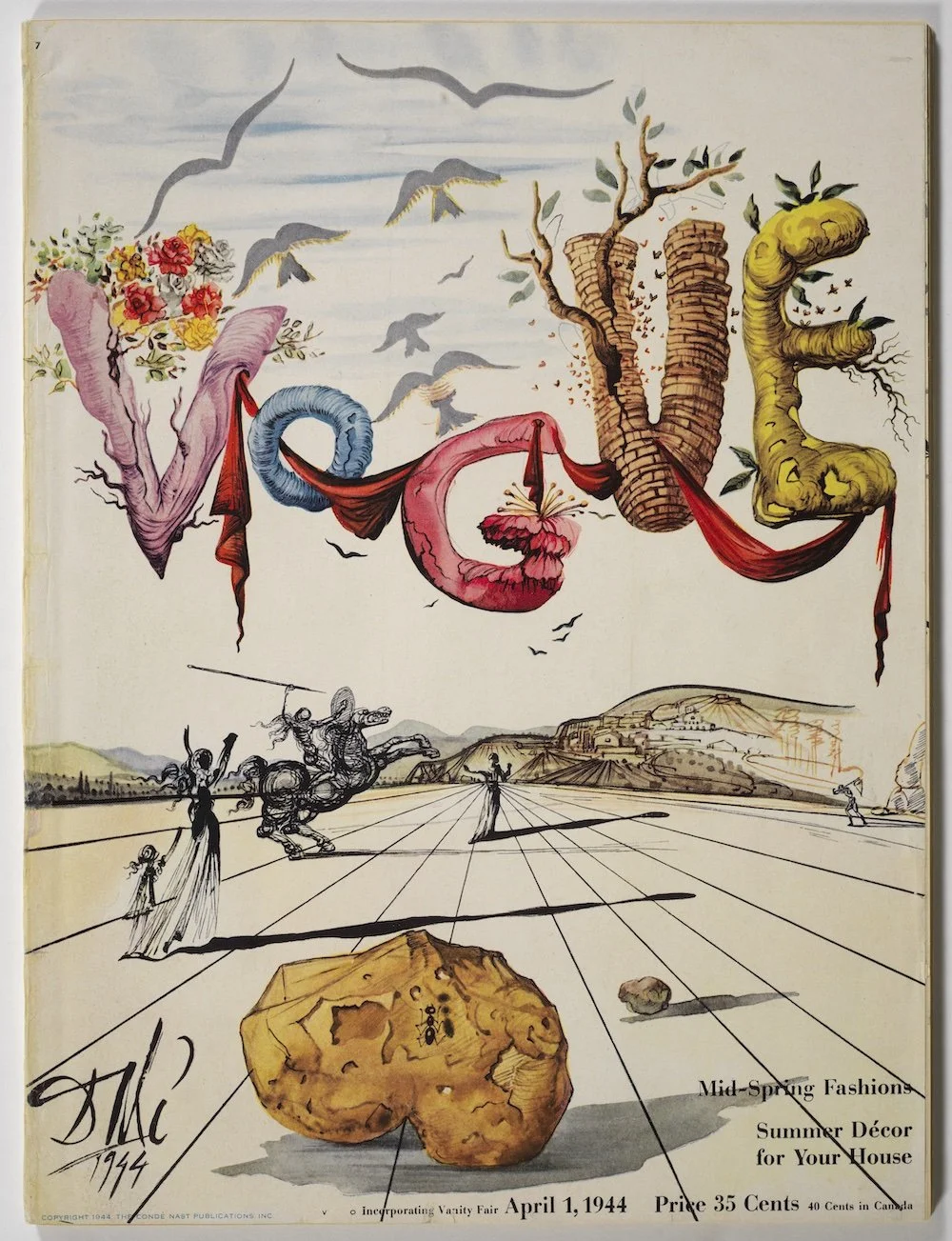
The Lobster Dress shows how this process worked. Dalí had already used the lobster as a motif, most famously in the 1936 Lobster Telephone. Schiaparelli translated the image into a white silk organza evening dress, with the lobster printed across the skirt. In 1937, Wallis Simpson wore the dress for Cecil Beaton's photographs at the Château de Candé, shortly before her marriage to Edward VIII. Vogue published the photographs that June. The lobster had moved from Dalí's objects and images into couture, then into a celebrity portrait and the fashion press, acquiring a different meaning at each stage.
The exhibition traces the same movement between art, clothing, photography and performance through Dalí's work with other designers. Chanel worked with Dalí on the costumes for Bacchanale, the 1939 Ballets Russes de Monte Carlo production for which Dalí also created the set design and libretto. In 1951, Dalí and Christian Dior were involved in the costumes for Carlos de Beistegui's Oriental Ball at Palazzo Labia in Venice, with Gala and the young Pierre Cardin also contributing. In the 1960s, Paco Rabanne's experimental garments entered Dalí's performances in Portlligat, Cadaqués, Barcelona and Paris.
Salvador Dalí, The Eye of Time
1949
© Salvador Dalí, Fundació Gala-Salvador Dalí, Figueres, 2026
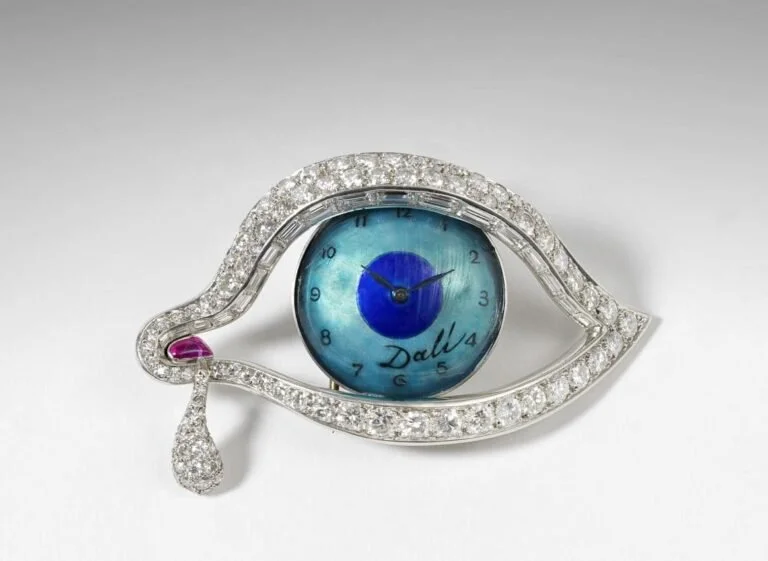
Jewellery extended Dalí's fascination with transforming familiar objects. The Eye of Time, from 1949, turns a watch into an eye, while Lips of Ruby transforms the shape of lips into a jewel. The same idea appears in his fashion work, where familiar parts of the body and everyday objects are altered through scale, material and function. Palazzo Reale places these pieces alongside paintings, drawings and garments, so that the movement from image to physical object becomes part of the exhibition itself.
The final section, Dalí and Fashion Now, shifts towards contemporary fashion and raises a question about how directly Dalí can be connected to later designers. It is easy to draw a straight line from his lobsters, lips, eyes and distorted bodies to contemporary fashion, but the historical material suggests a more specific kind of influence. Dalí understood that an object could acquire another life through the person wearing it, the photograph recording it and the publication distributing the photograph. Schiaparelli is the clearest example, but Chanel, Dior and Rabanne show that he returned to this relationship throughout his career. Fashion gave Dalí another way to turn an image into an object, and then send that object back into circulation as an image.