Azzedine Alaïa’s Enduring Connection to Africa
Azzedine Alaïa spent a career being asked about Tunis and answering, mostly, about Paris. The city shaped his professional life: the ateliers, the fittings, the decades spent refining a precise relationship between fabric and the body. Africa, by contrast, occupied a quieter place in his public narrative. The new exhibition at the Fondation Azzedine Alaïa examines that less visible thread in his work.
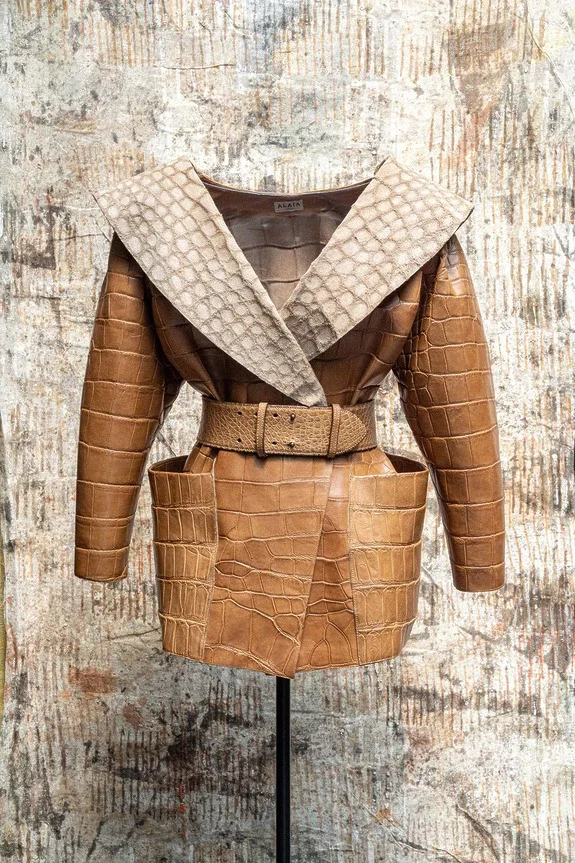
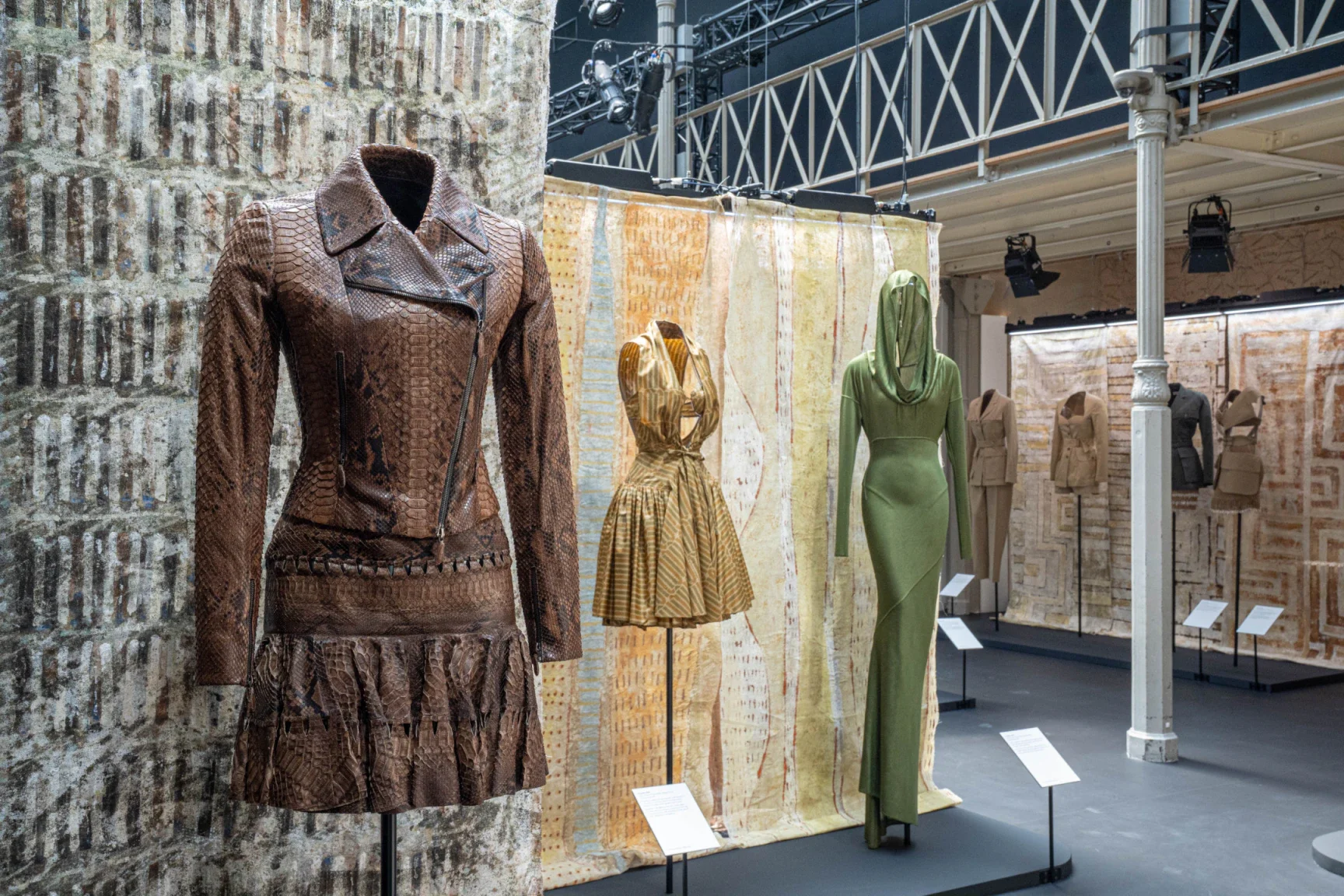
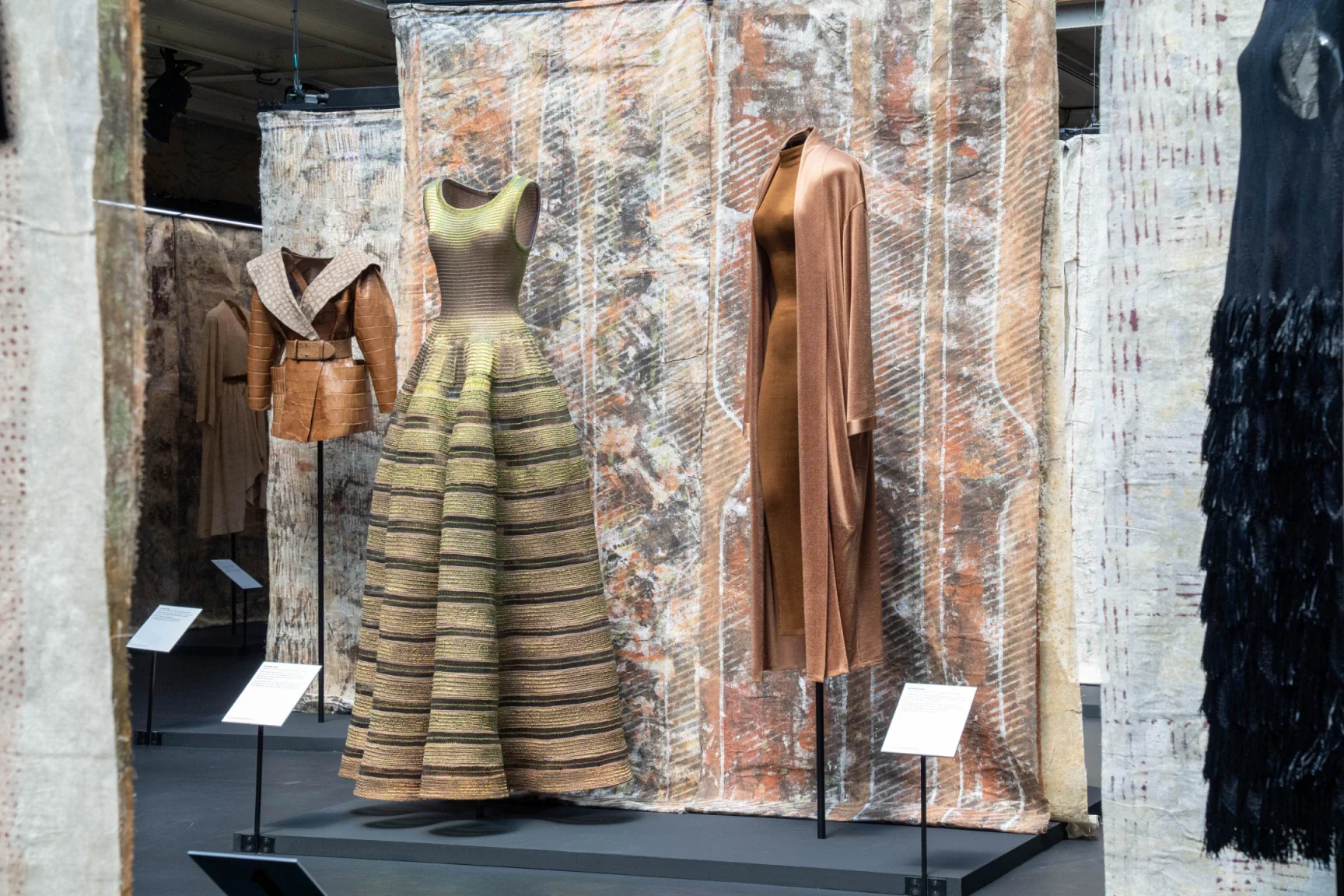
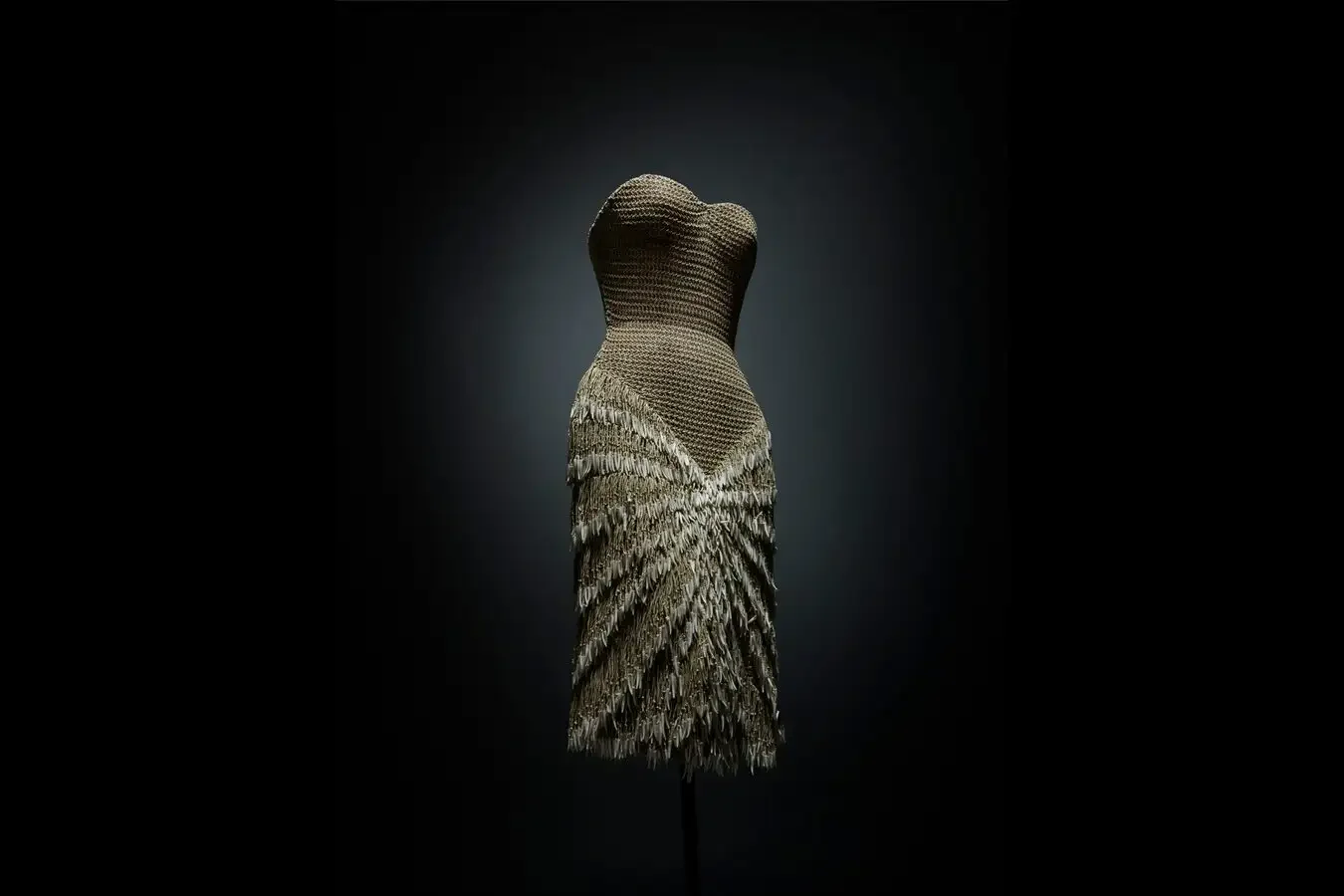
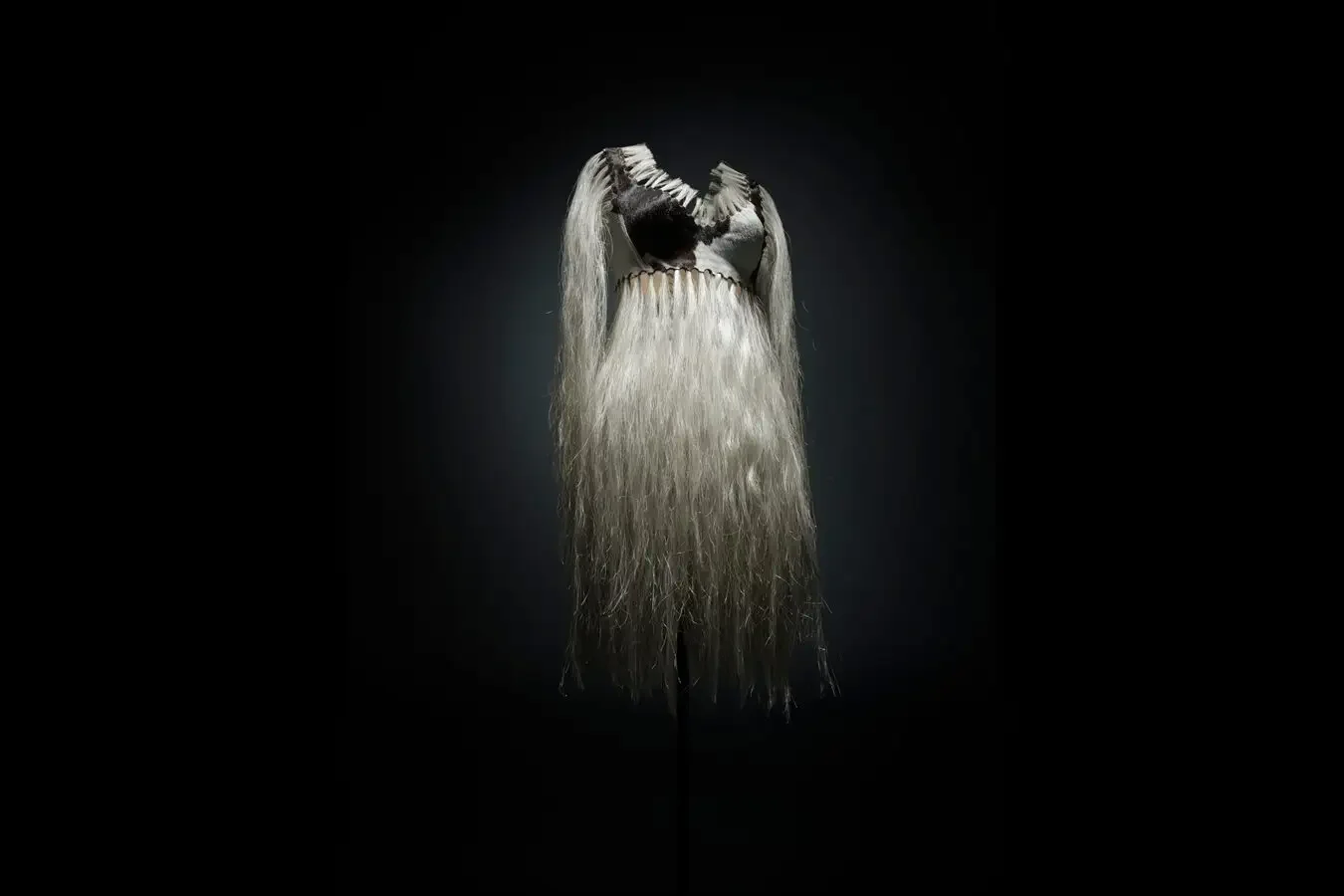
Azzedine Alaïa and Africa, curated by Olivier Saillard, proposes a reading of the designer's archive through memories, materials and forms connected to the continent. Sixty-two garments, spanning more than thirty years, are presented not as a chronological survey but through recurring elements: mashrabiya screens remembered from his childhood in Tunis, cowrie-shell embroidery, raffia, openwork surfaces and draped silhouettes. The exhibition considers how these references reappeared across Alaïa's career, often transformed through his approach to construction and proportion.
Saillard's argument is that Alaïa's relationship with Africa was expressed less through direct quotation than through the materials and structures that informed his designs. The mashrabiya screens, for example, are read not simply as decorative motifs but as an early way of thinking about surface, transparency and the relationship between the body and its surroundings — the same questions his later work would ask through fabric instead of architecture.
Early pieces from the late 1980s and early 1990s include cowrie-shell embroidery, macramé dresses and striped tailoring recalling North African dress, while later collections return to raffia, openwork techniques and sculptural forms, the same ideas reworked at a different scale.
Kris Ruhs's scenography follows this visual language through the exhibition space. Panels graded in sand, ochre and terracotta frame the garments, extending the palette identified throughout the selection into the architecture of the show itself.
A parallel presentation, Peter Beard and Azzedine Alaïa: A Journey of Friendship, adds a more specific chapter. It revisits the pair's 1996 trip to Kenya, where Alaïa spent time with the Samburu community and observed forms of dress, ornament and movement. Unlike the rest of the exhibition, which works by inference, this is a documented encounter — a rare instance of Alaïa's Africa on the record rather than read between the seams.
Azzedine Alaïa and Africa is on view at the Fondation Azzedine Alaïa until 4 January 2027.