How Photography Helped Shape the Yves Saint Laurent Myth
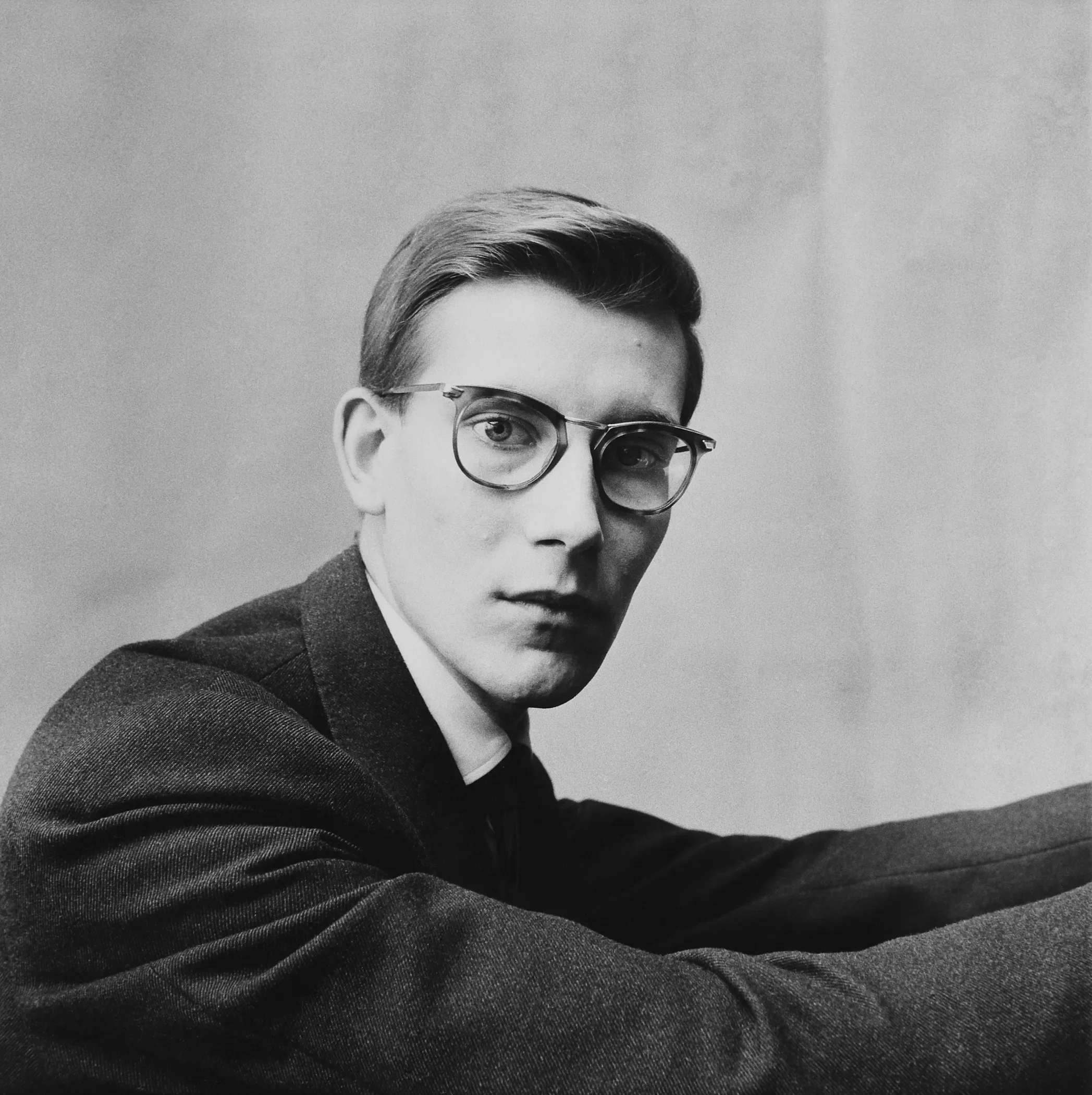
Yves Saint Lauren by Irving Penn, 1957
Irving Penn photographed Yves Saint Laurent for the first time in 1957. The designer was only 21, newly appointed at Christian Dior following the founder's sudden death. His expression is difficult to decipher: not quite confidence, not quite apprehension, but perhaps that of a young man aware that history may be arriving faster than expected.
Nearly seventy years later, it remains one of the defining portraits of Saint Laurent, capturing the moment a private individual began to become a public figure. Saint Laurent understood early that fashion would be remembered not only through clothes, but through the images that carried them into the world.
Yves Saint Laurent and Photography, which recently opened at the International Center of Photography in New York, takes that understanding as its subject. Drawn from the archives of the Musée Yves Saint Laurent Paris and the Fondation Pierre Bergé–Yves Saint Laurent, the exhibition brings together more than 300 photographs and archival objects spanning four decades, tracing the full arc of Saint Laurent's creative career from his first collection under his own name in 1962 to his final couture show in 2002.
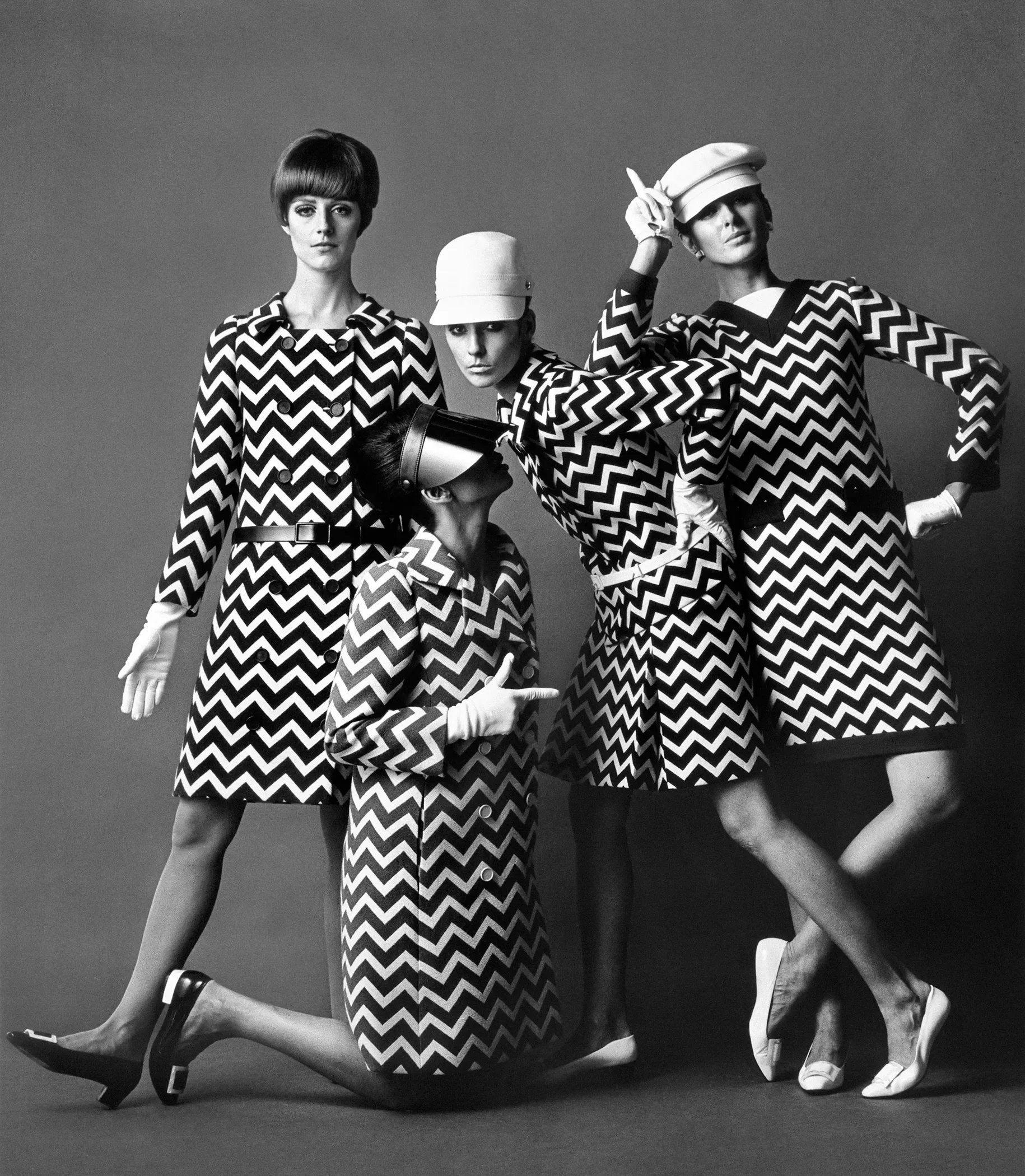
Model from the SS 1966 Haute Couture collection, photographed by James Moore for Harper’s Bazaar March 1966

Yves Saint Laurent evening dress from the Fall-Winter 1984 haute couture collection, photographed by Dominique Issermann for Vogue, November 1984.
It was first presented at the Rencontres d'Arles in 2025, and arrives at ICP with a sharpened focus: the institution has recalibrated the show around Saint Laurent's long, specific relationship with New York, the city that housed his two most important photographic collaborators — Penn and Richard Avedon — and where some of his most theatrical public moments unfolded.
The exhibition is as much a portrait of Saint Laurent as it is a history of fashion photography. Saint Laurent did not work with the same photographers out of habit or loyalty alone. He paid close attention to who was shaping the visual language of the moment and aligned himself accordingly. The result is a collection of photographs that reads as a kind of unofficial chronicle of how fashion pictures changed across half a century.
What the show argues, persuasively, is that those images weren't promotional add-ons to the work — they were part of the work. Newton's photographs of Le Smoking are the clearest example: by the time those images circulated, the tuxedo and the women wearing it had become something larger than a garment. Avedon brought a particular kinetic energy to Saint Laurent's couture that stills from a runway could never have produced.
Through more than 200 archival objects — contact sheets, campaign books, original magazine pages, invitations — the exhibition pulls back the curtain on how images moved from studio to press to collective memory. What emerges is a portrait of a brand consciously constructed over time.
The ICP staging showcases YSL's attachment to New York as a city, not just a market. Henri Dauman's 1958 photograph of a young Saint Laurent on Seventh Avenue — taken months after his Dior appointment, before his own house existed — anchors one end of the timeline. Roxane Lowit's early 1980s image of him grinning and holding a miniature Statue of Liberty like a trophy anchors the other. Between them, there are show images from Battery Park and Liberty Island, perfume launches, front-row moments. It's a relationship the mythology of Saint Laurent as the quintessential Parisian couturier tends to underplay
Yves Saint Laurent and Photography is on view at the International Center of Photography, New York, through September 28, 2026.