When Symbols Become Structure: Chanel's Signes & Symboles
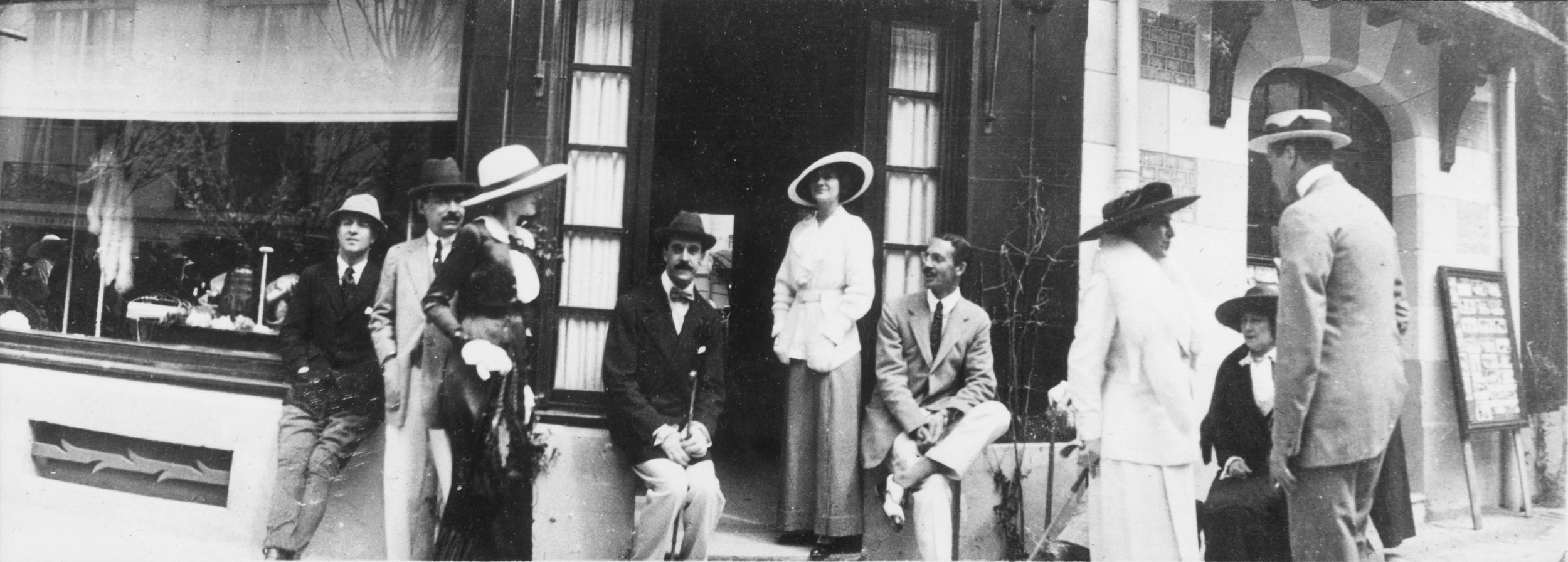
The lion, the camellia, the star and the sun have become so familiar within Chanel that they are often read as House codes first and personal symbols second. Yet these motifs entered Chanel's vocabulary long before they became branding devices. They belonged to Gabrielle Chanel's private world, appearing in her apartment at 31 rue Cambon, in her jewellery, in her interest in astrology and in the objects she collected throughout her life.
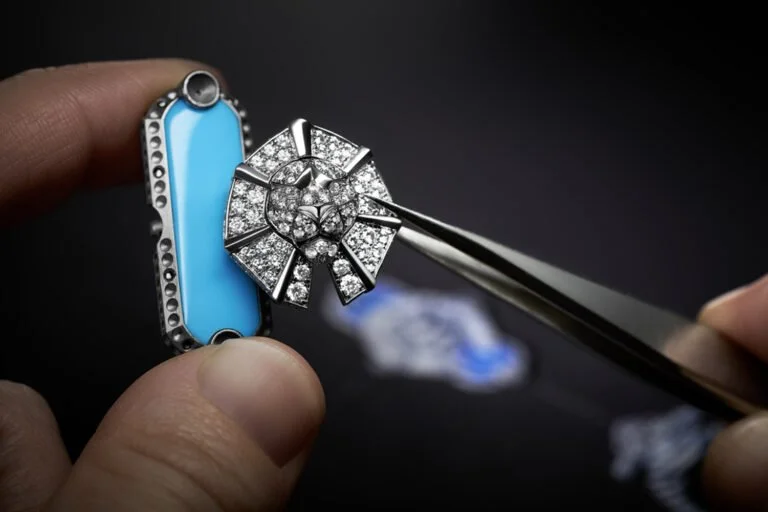
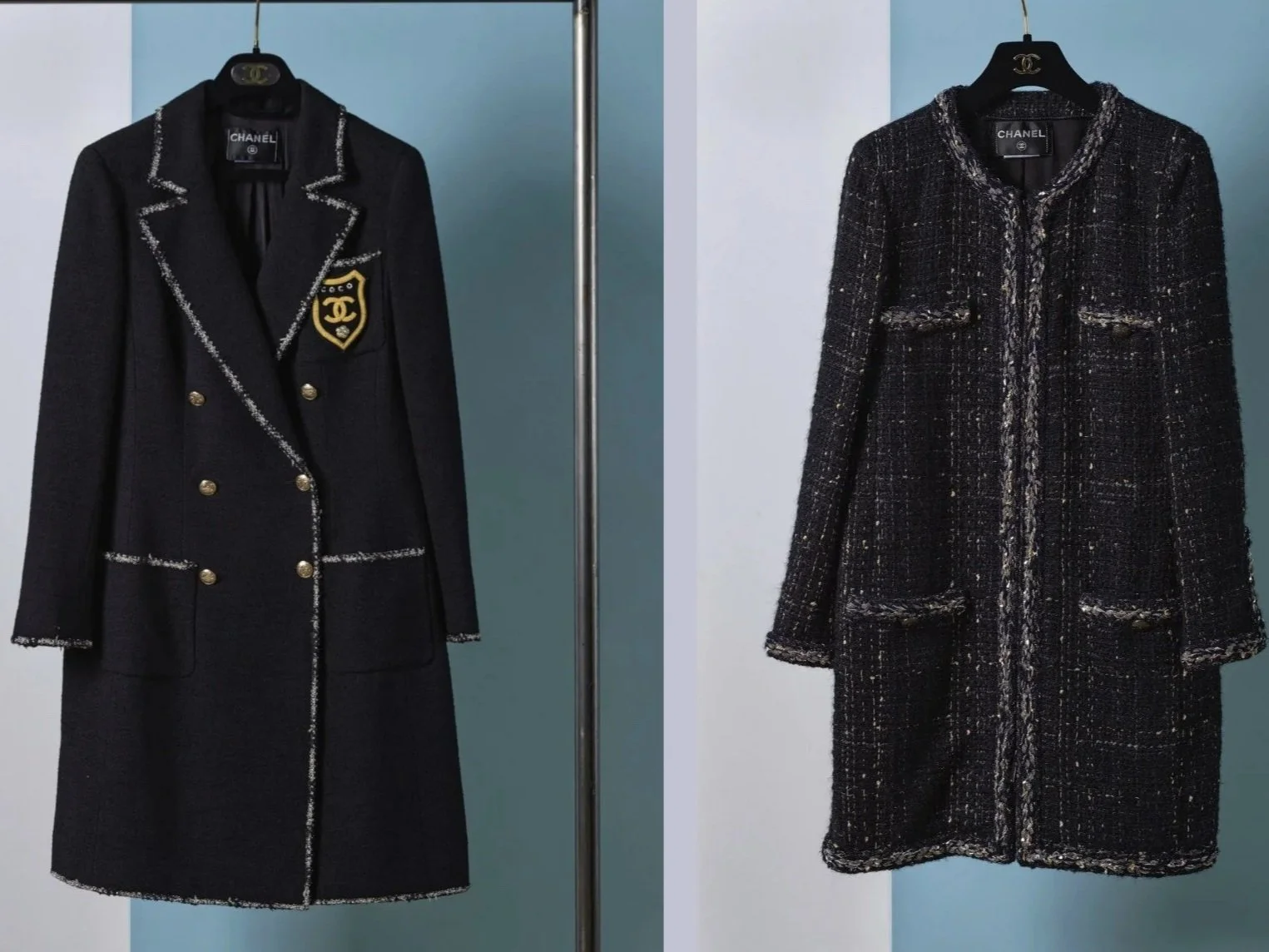
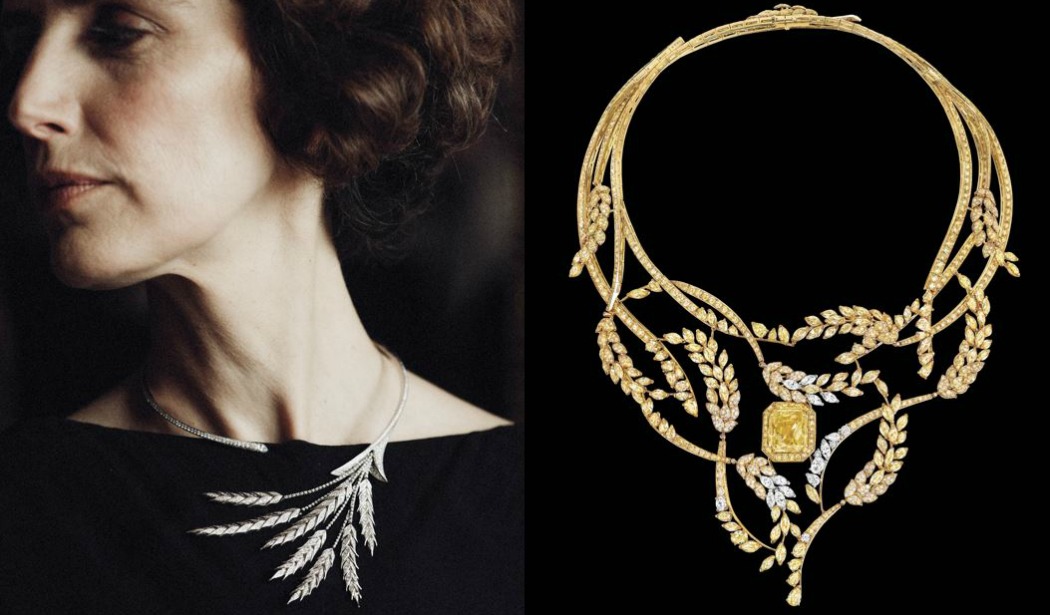
Signes & Symboles, Chanel's 2026 High Jewellery collection, returns to that symbolic language. Comprising 85 creations, it gathers together motifs that have surfaced repeatedly throughout the House's history and considers them as a connected system rather than as individual emblems. The result is a collection that looks inward, drawing less from fashion references than from the founder's personal iconography.
For Gabrielle Chanel, these symbols carried specific associations. Born under the sign of Leo, she adopted the lion as a personal emblem and filled her interiors with leonine figures. The camellia appealed to her for its formal purity and geometric structure. Stars and comets appeared early in her creative vocabulary and became central to the 1932 Bijoux de Diamants collection, where celestial motifs were integrated directly into the body rather than confined to conventional jewellery forms. Across her homes and personal possessions, symbols functioned as markers, talismans and sources of inspiration.
The collection is organised into four chapters — Les Imprimés, Le Lion Emblématique, Les Bijoux Talismans and Les Symboles — but a common idea runs throughout. Rather than treating motifs as decorative additions, the Jewellery Creation Studio frequently uses them as structural devices. Symbols are embedded in the construction of the jewels, shaping volume, articulation and composition.
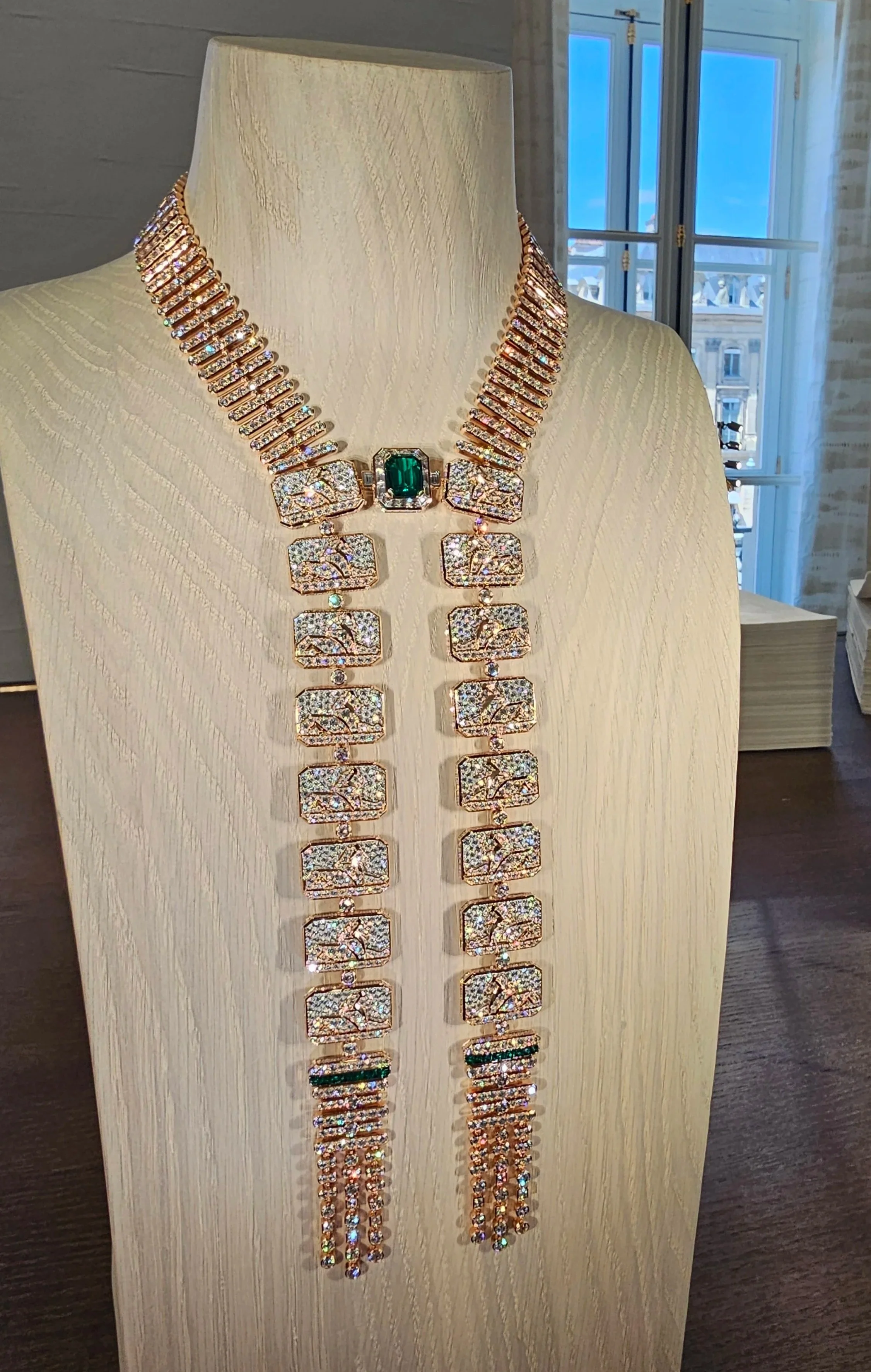
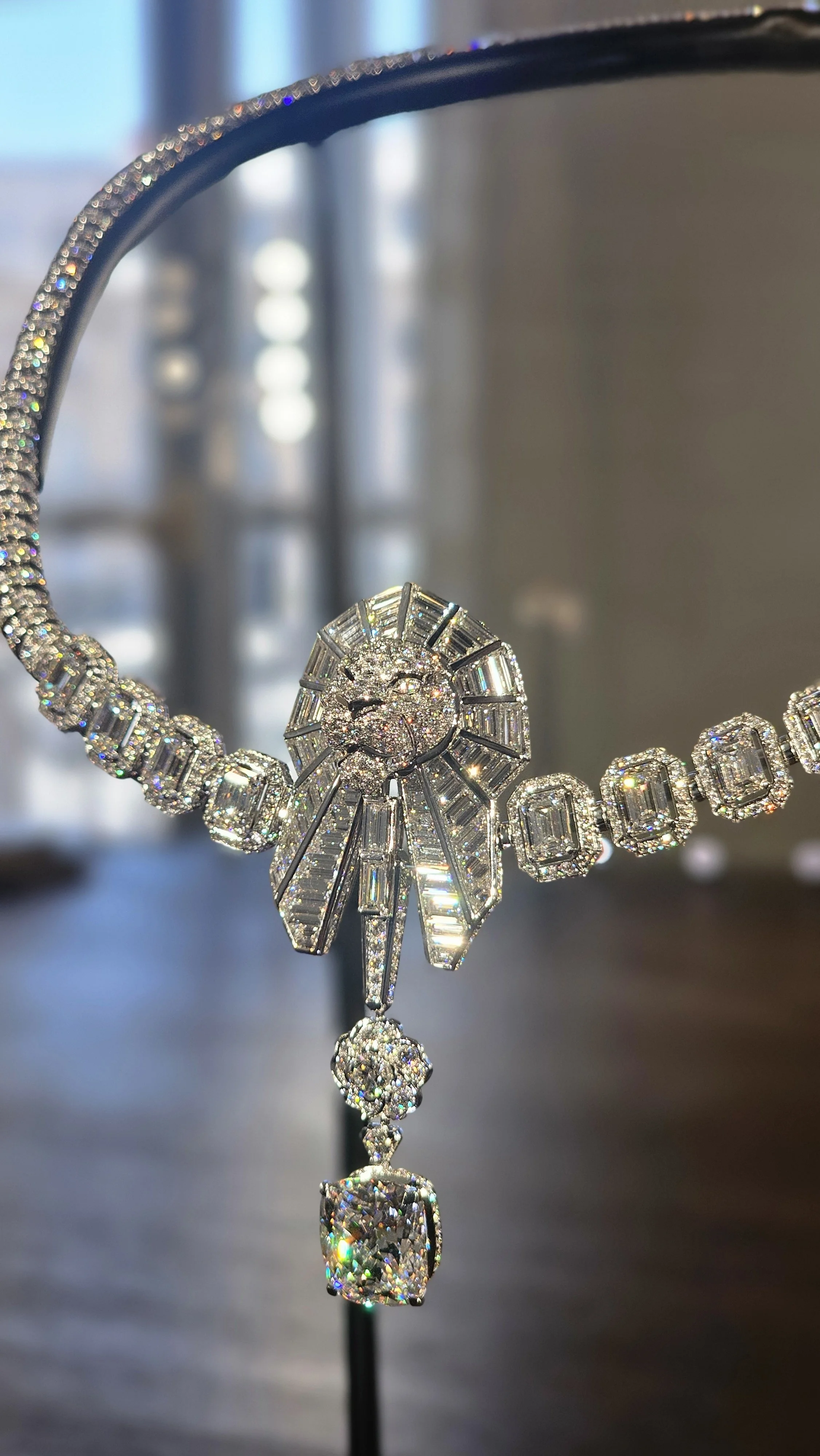
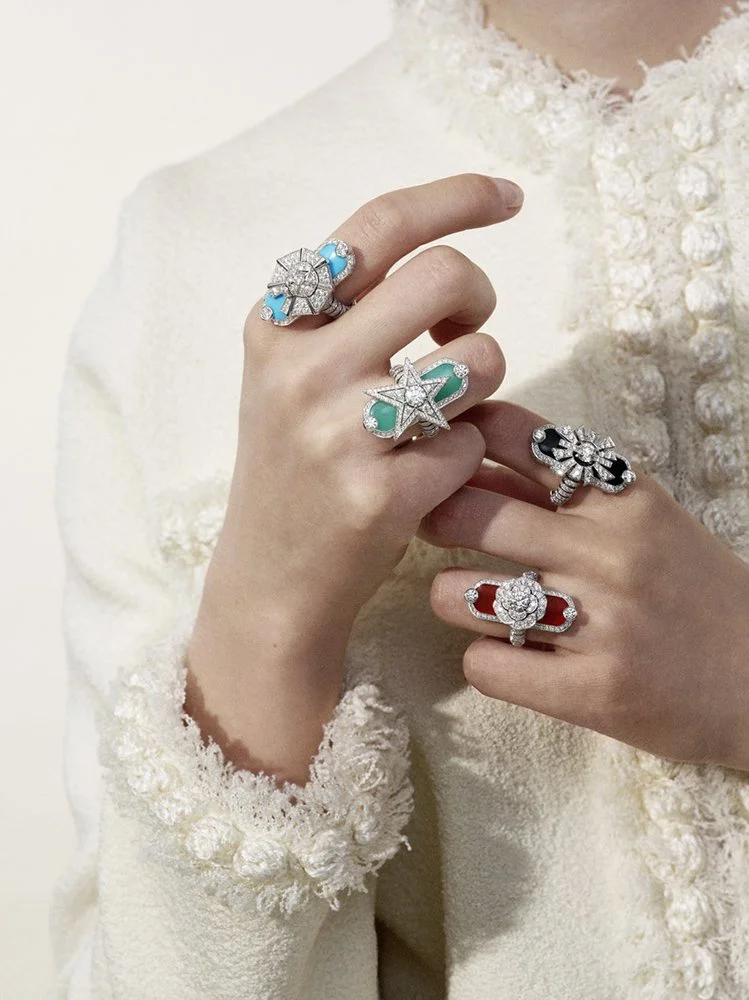
This approach is most visible in Les Imprimés. Here, camellias, stars and suns are repeated across necklaces and rings as graphic patterns, creating surfaces that recall textile design as much as traditional jewellery. The centrepiece, the Imprimé Lion necklace, is built around a 20.66-carat octagonal-cut sapphire. Diamonds arranged in vertical lines create a fluid, fabric-like movement across the body, while the lion emerges from the composition rather than dominating it. The piece reflects a recurring Chanel idea: jewellery conceived as an extension of silhouette.
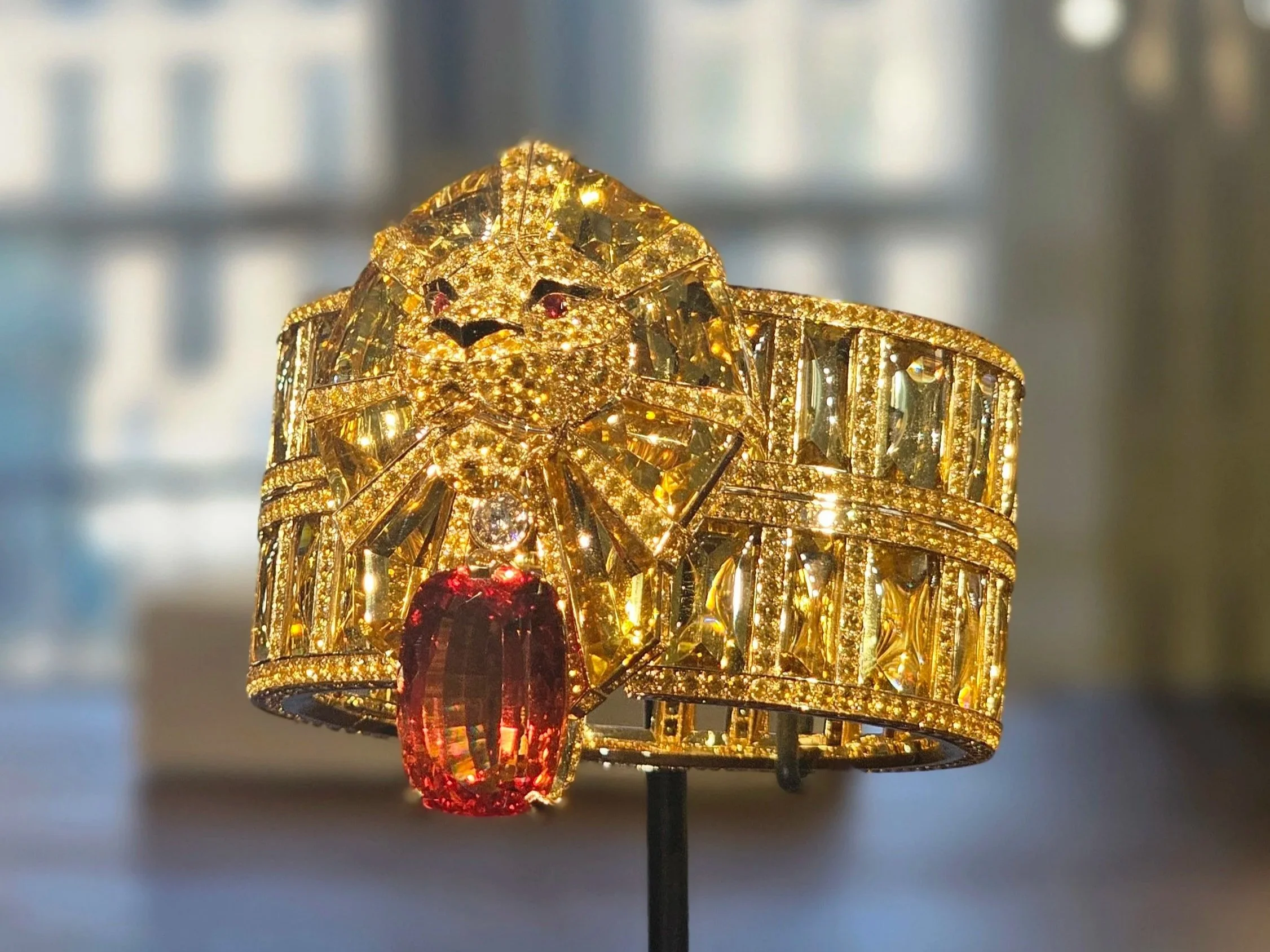
Elsewhere, the lion takes on a more sculptural presence. Introduced as a dedicated High Jewellery motif in 2012, it appears here in forms that range from graphic bas-reliefs in onyx and diamonds to fully modelled heads surrounded by coloured gemstones. The Lion Millénaire necklace centres on the interplay of ruby, onyx and diamond. Rather than relying on volumetric sculpting, the lion is rendered as a bas-relief motif, reinforcing the collection's broader interest in graphic composition and contrast.
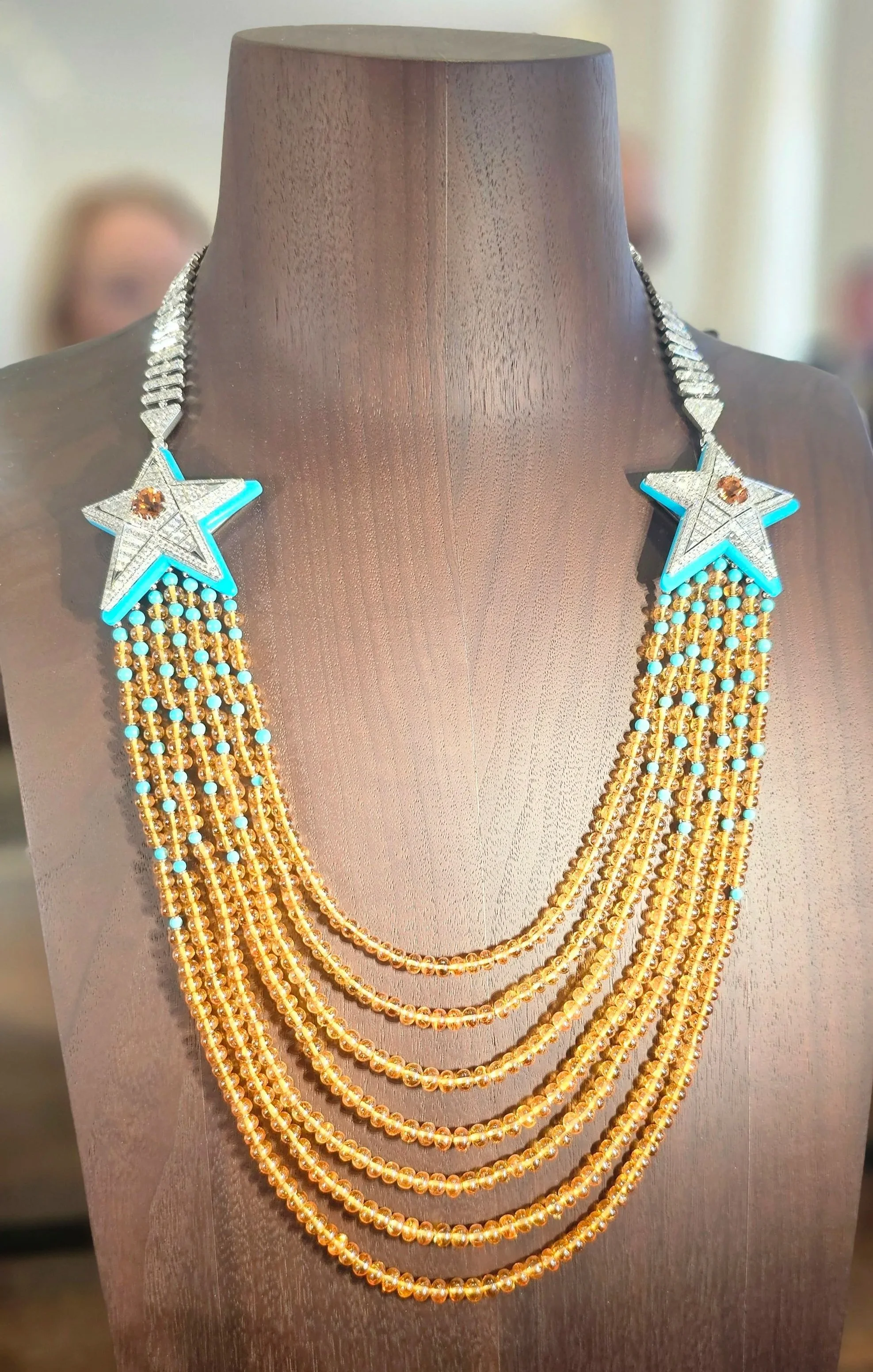
Colour plays an unusually important role in this new collection. While the collection includes exceptional examples of the traditional quartet of diamond, ruby, sapphire and emerald, it also gives prominence to materials that occupy a less hierarchical position within classical French High Jewellery. Carnelian, turquoise, chrysoprase, spessartite garnets and pink sapphires appear throughout the talisman jewels, introducing a richer and less predictable palette. The decision recalls Gabrielle Chanel's own habit of mixing precious jewellery with personal charms and costume pieces, challenging conventional distinctions between rarity and value.
Some of the most technically ambitious pieces appear in Les Symboles. The Symbole Étoile necklace combines tanzanite, imperial topaz, garnet and carnelian in a composition that can be transformed and reconfigured. The Symbole Camélia Rose ring centres on a 10.32-carat D Flawless diamond surrounded by pink sapphires, while the Symbole Saphir ring balances a substantial cabochon sapphire against a halo of sapphires and diamonds. In each case, the gemstones serve a broader visual structure rather than functioning solely as trophies of rarity.
Chanel's symbols are hardly new territory. What feels different in Signes & Symboles is the emphasis on structure. The lion, camellia, star and sun do not simply appear as recognisable emblems; they generate patterns, frame gemstones and determine the architecture of the jewels themselves. The collection's strongest pieces are those in which symbolism becomes a method of construction rather than a narrative overlay.
DISCOVER MORE ABOUT CHANEL FINE JEWELRY