Schiaparelli FW27 Couture: Between Material Experiment and Visual Excess
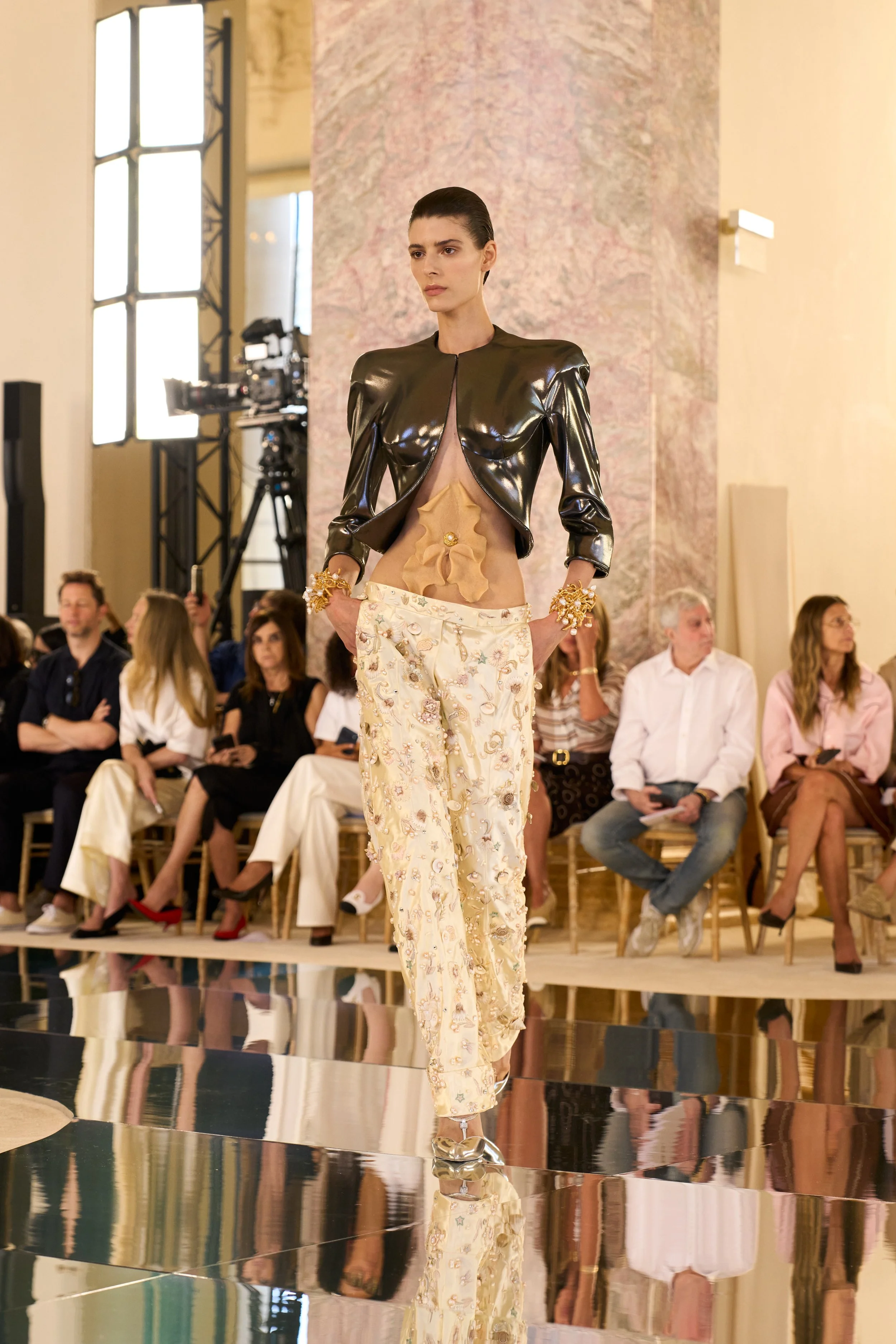
Daniel Roseberry arrived at this couture season after a visit to Barcelona, where Gaudí’s architecture offered the starting point for the collection. He had expected a familiar creative path: travel, encounter, inspiration. In his notes, Roseberry admits that after last season’s “The Agony and the Ecstasy” he believed he had understood the conditions that produced it. “All I had to do was re-create last season’s creative process,” he writes. Instead, the approach stalled.
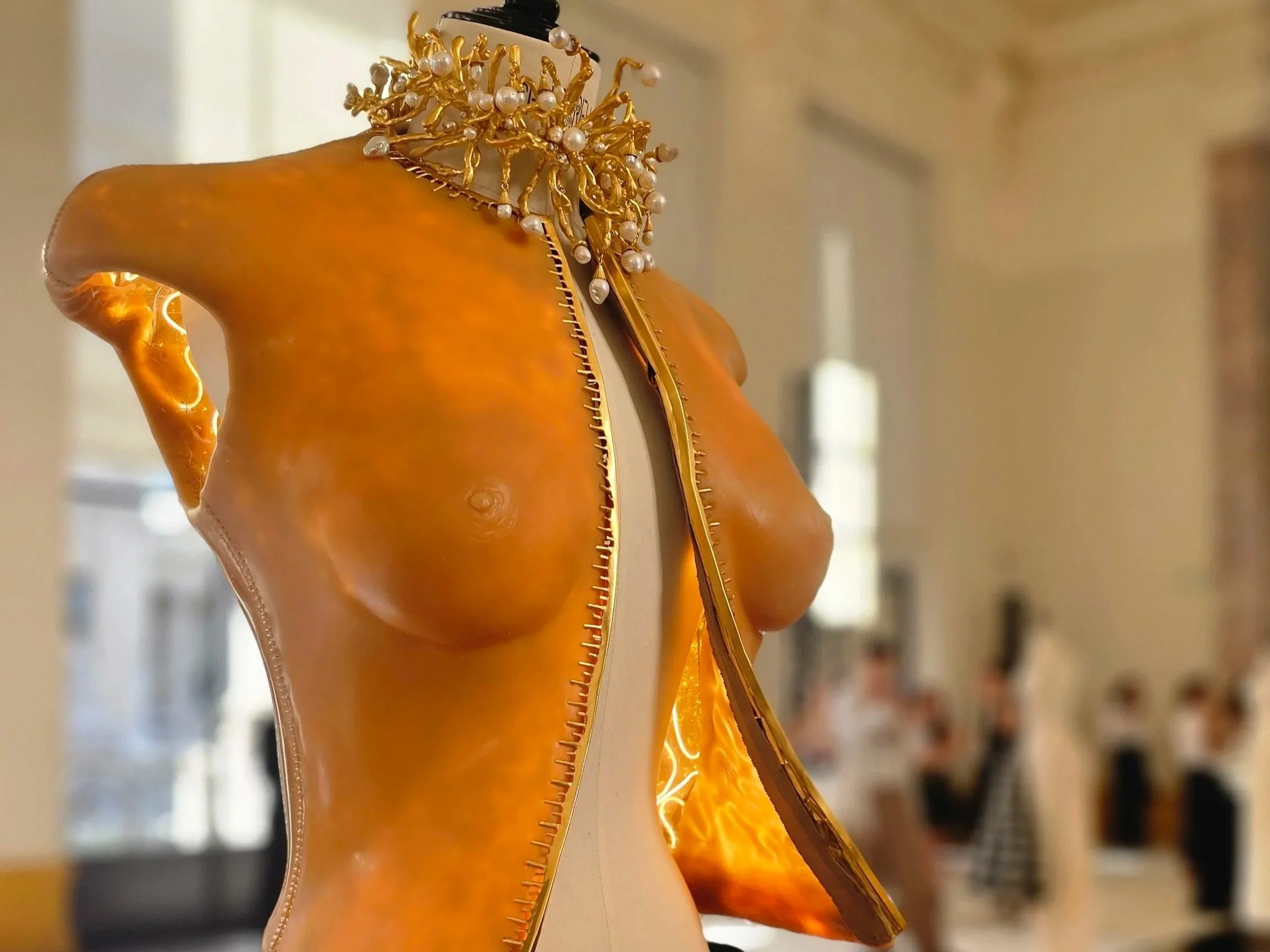
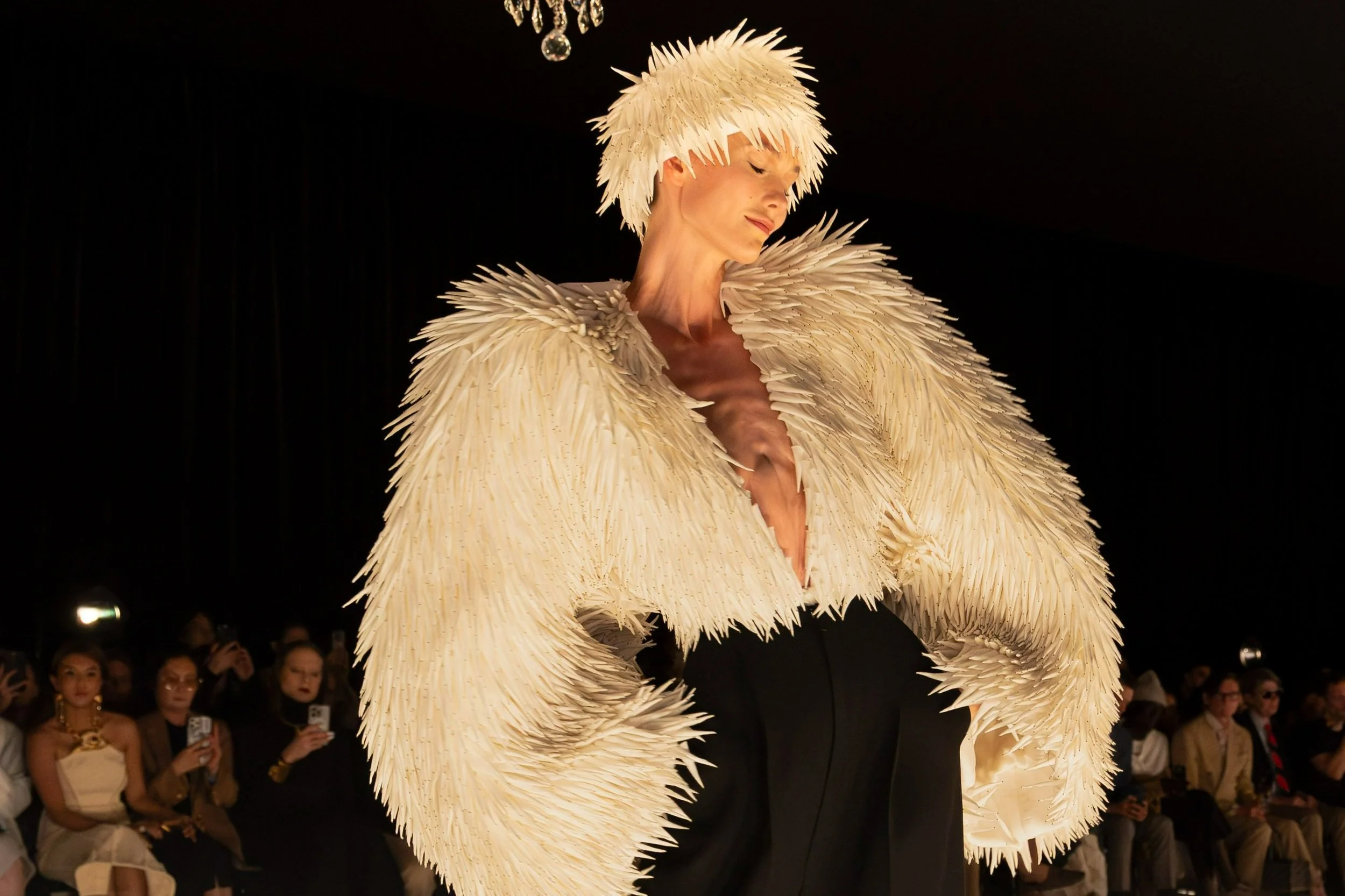
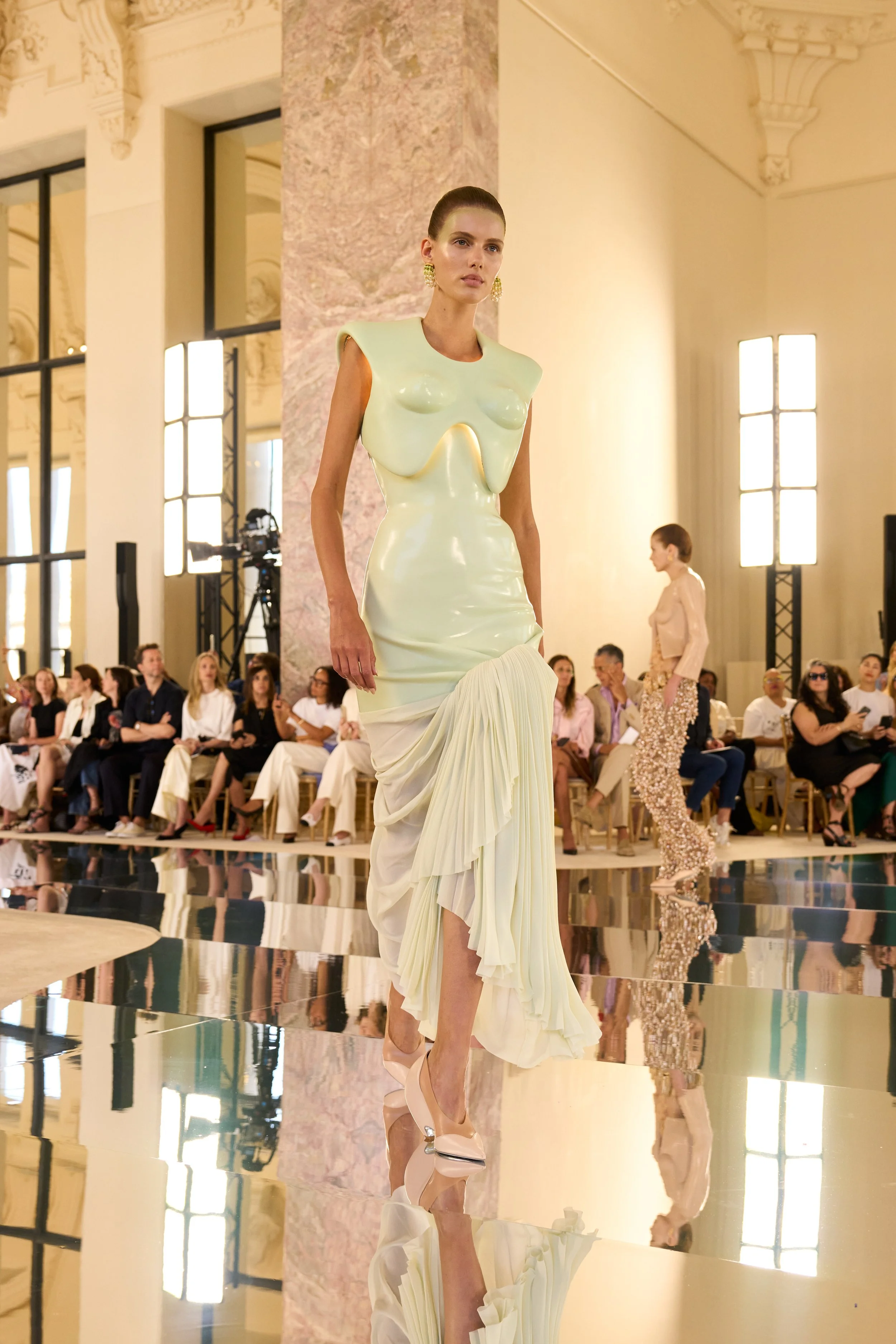
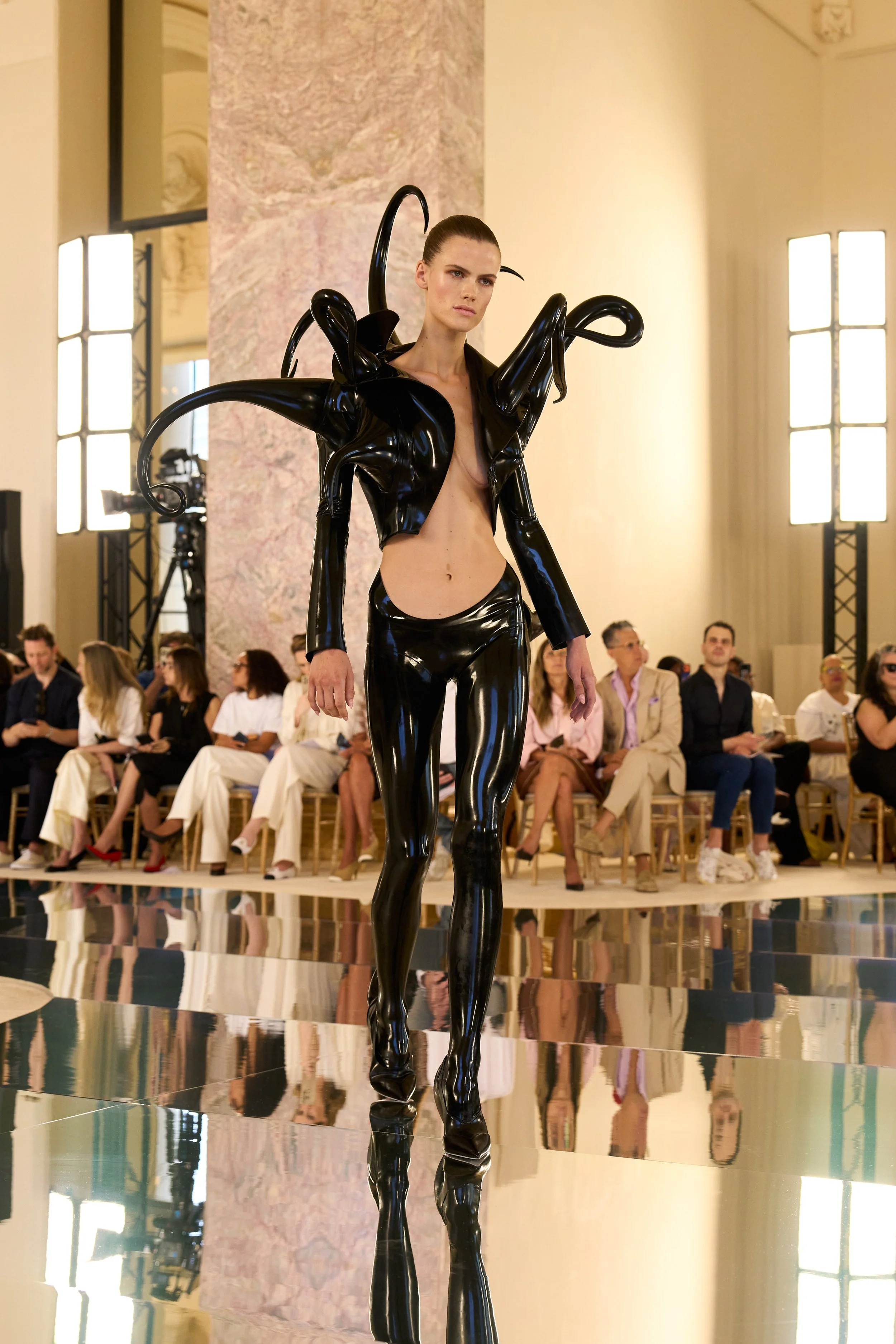
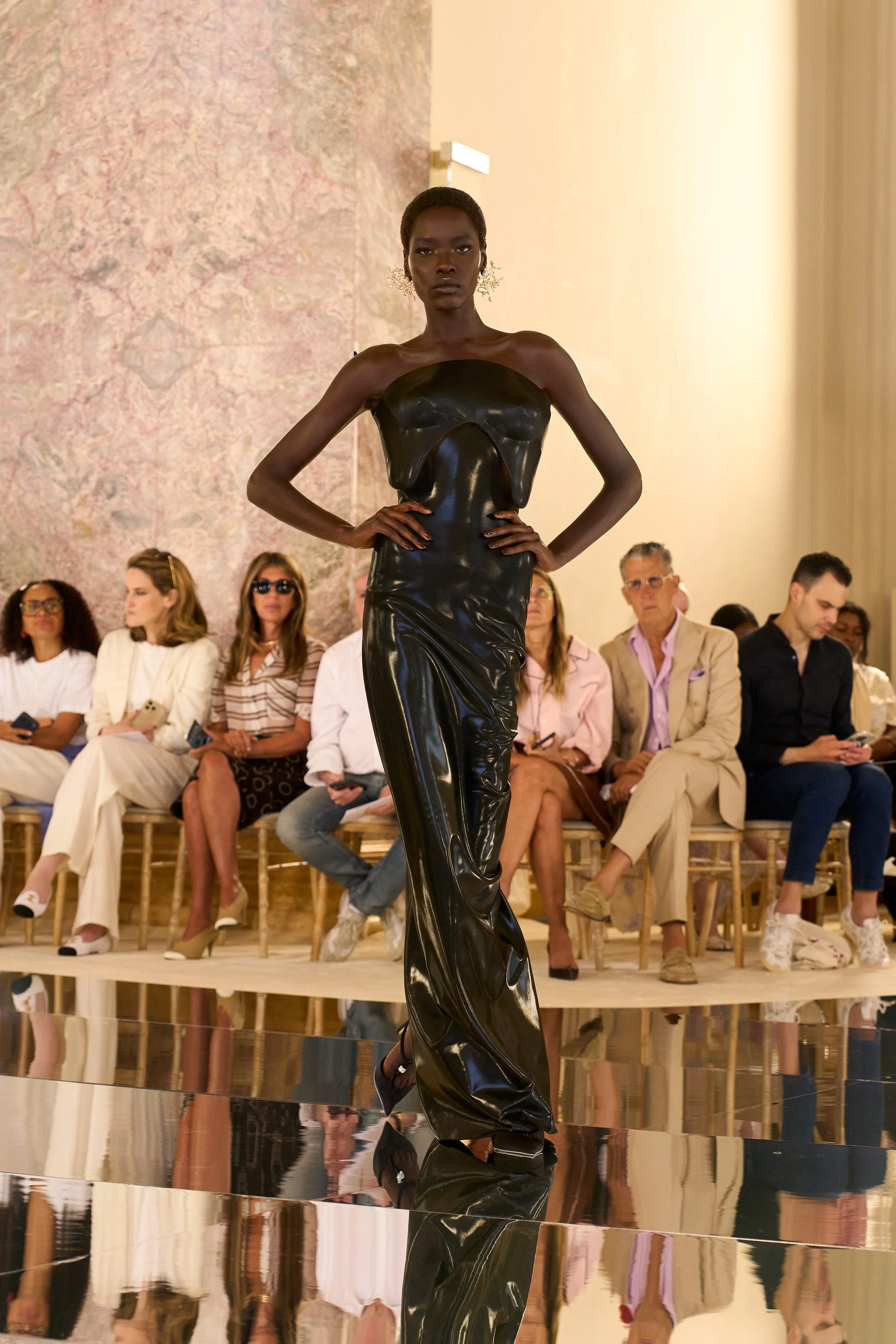
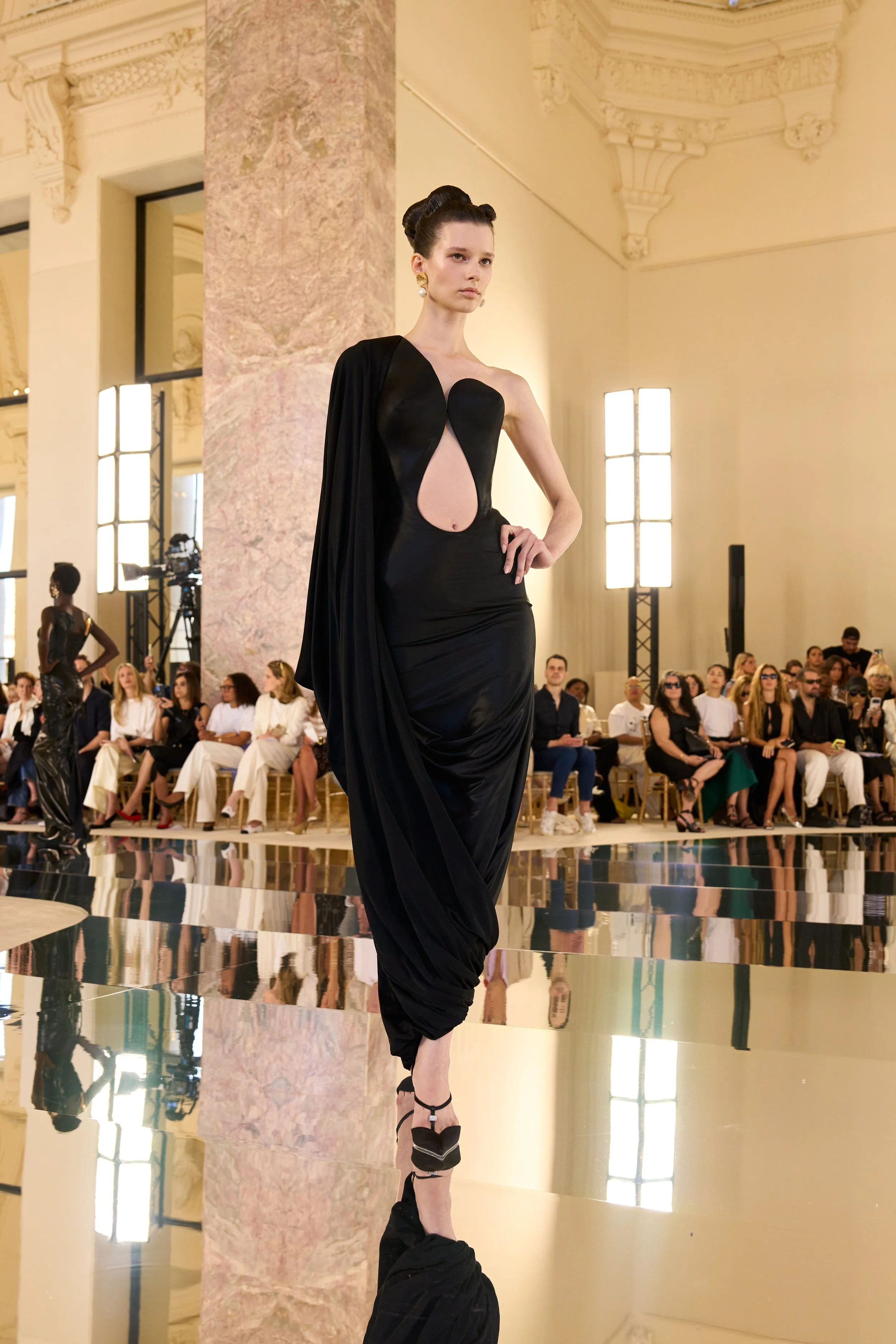
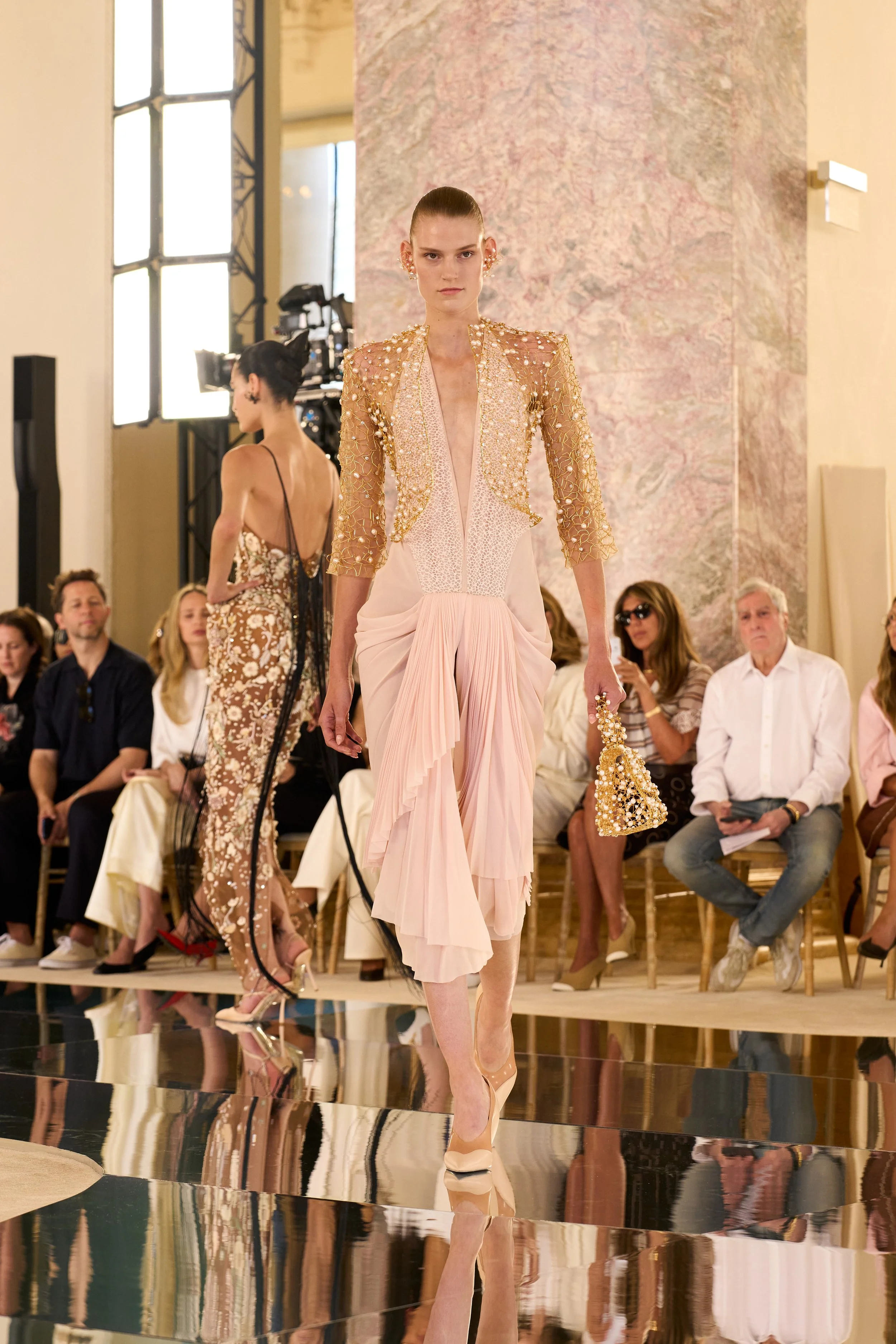
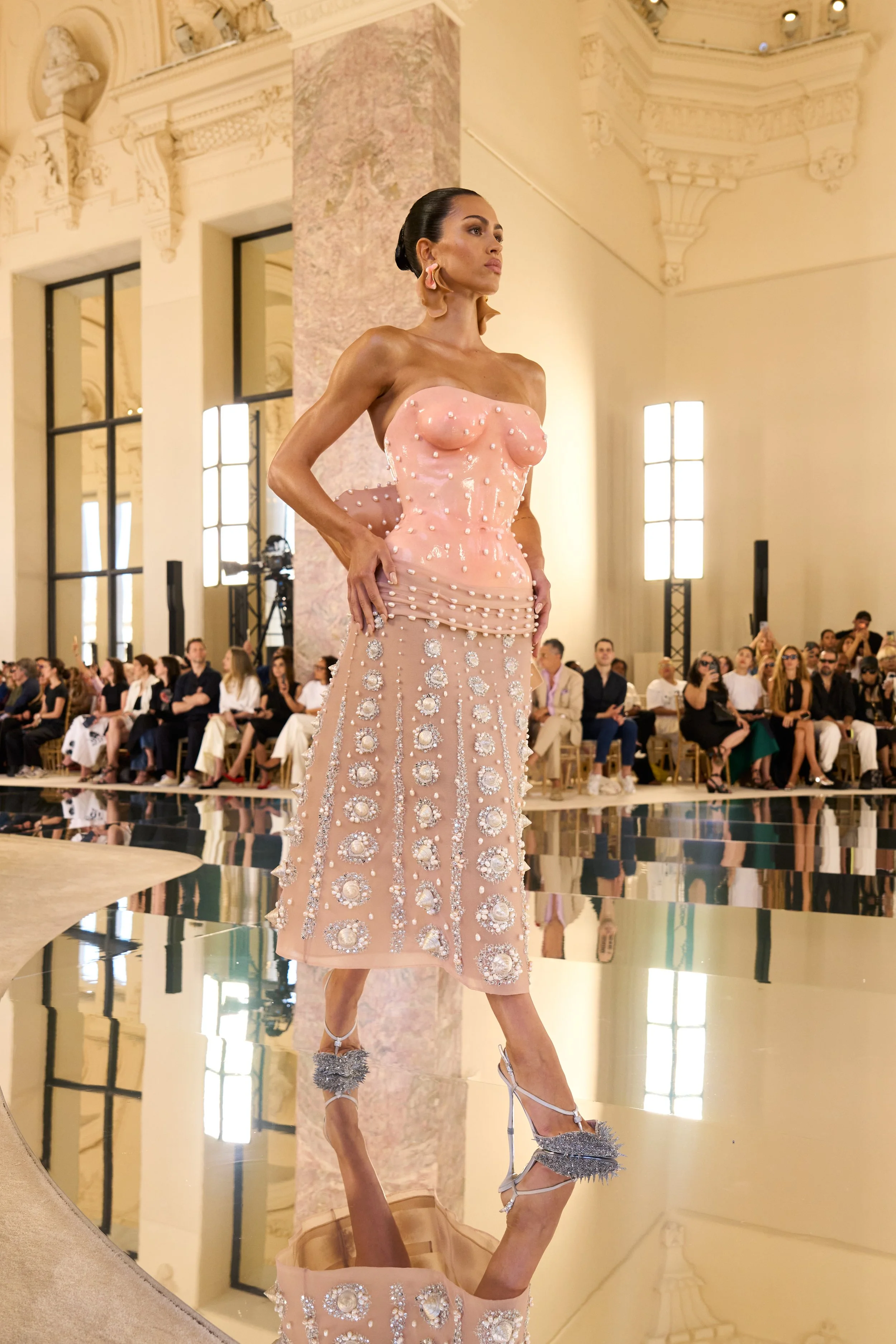
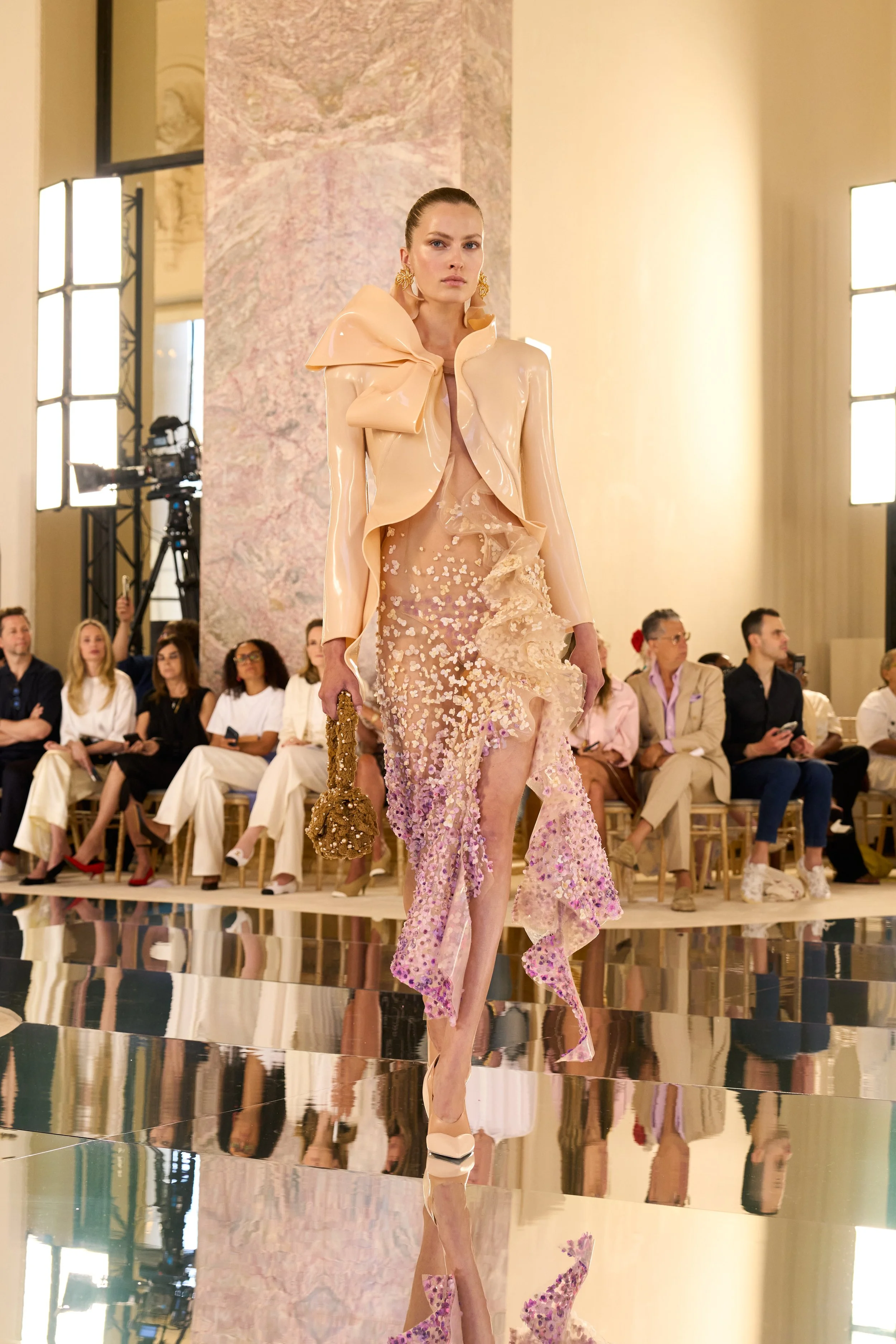
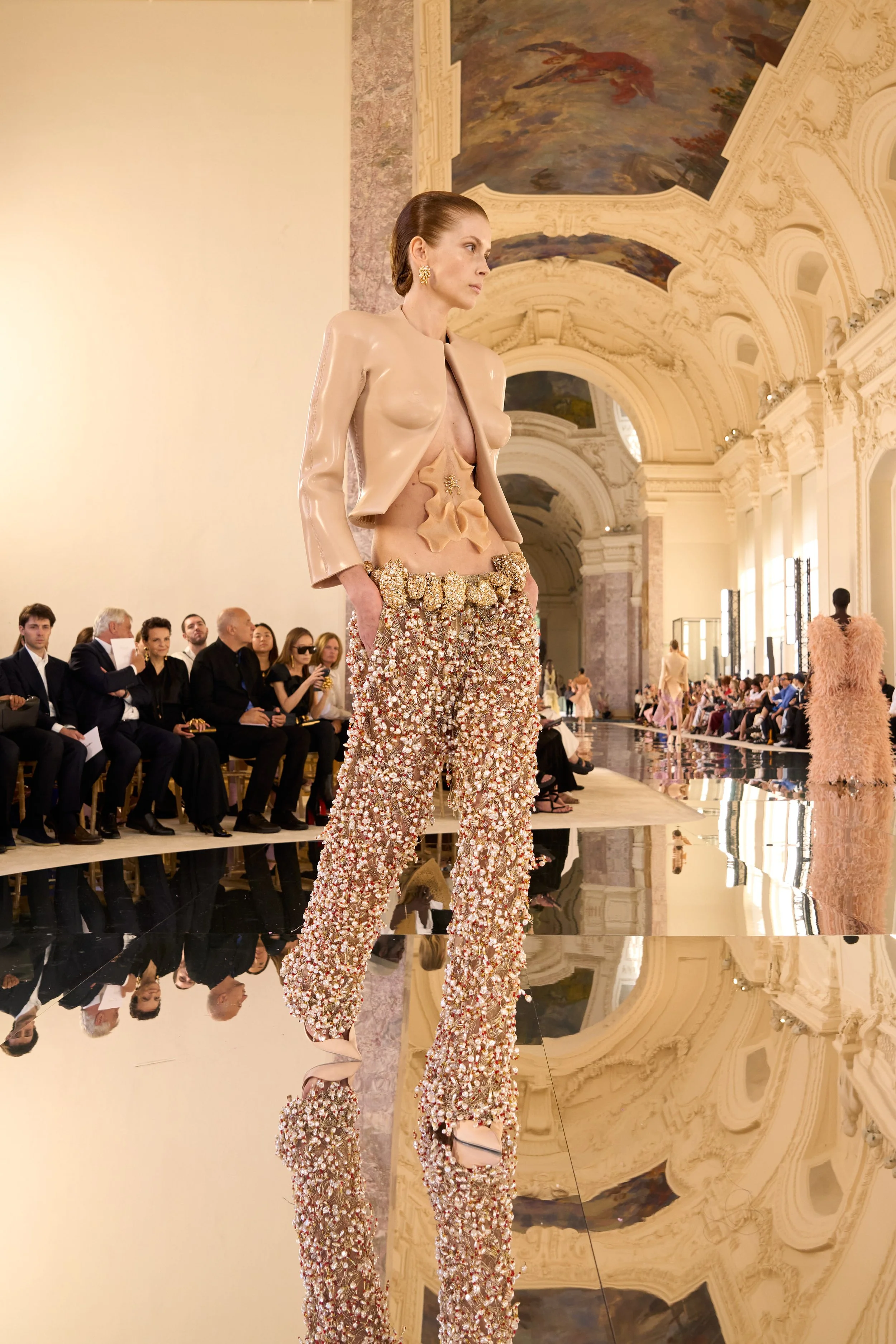
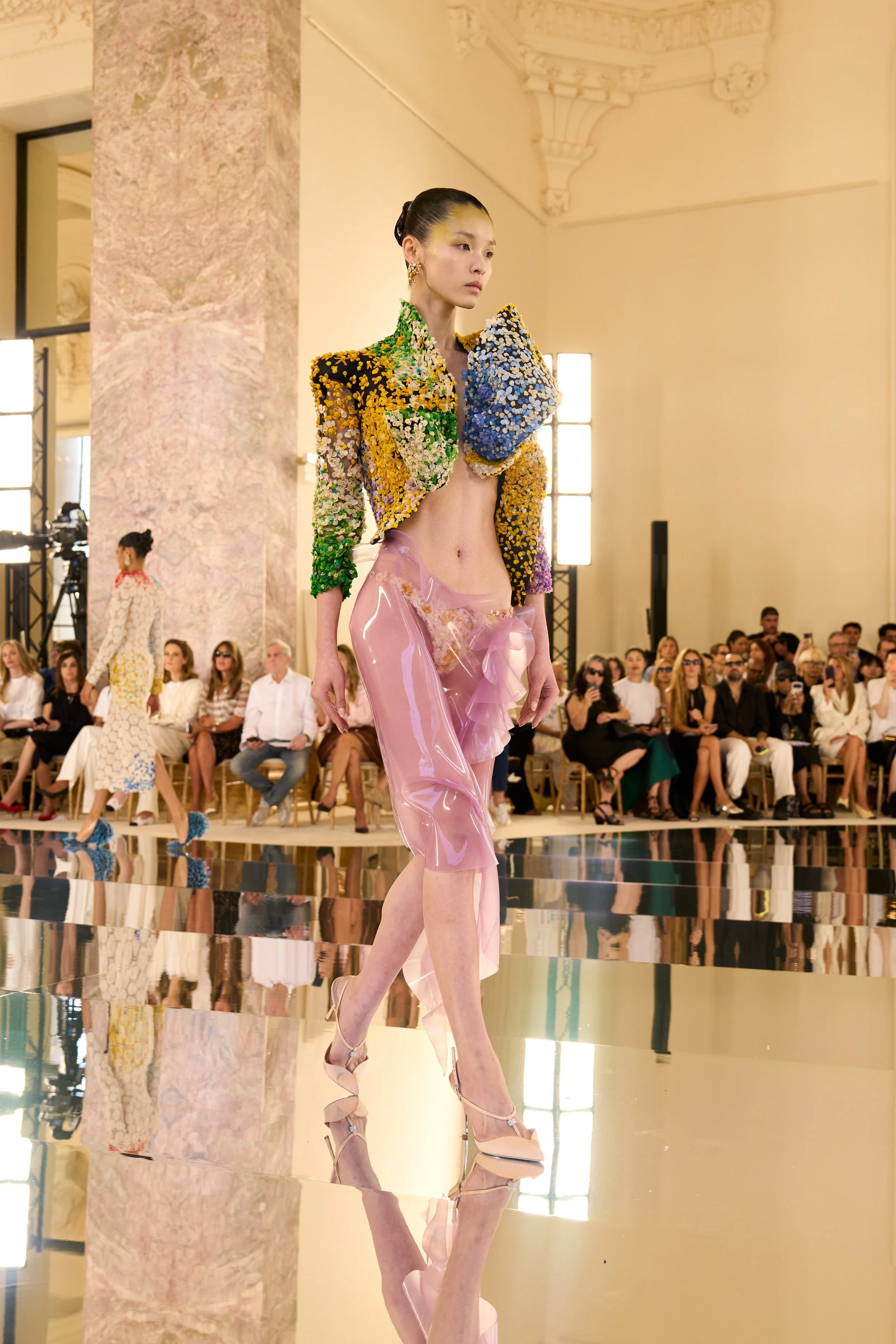
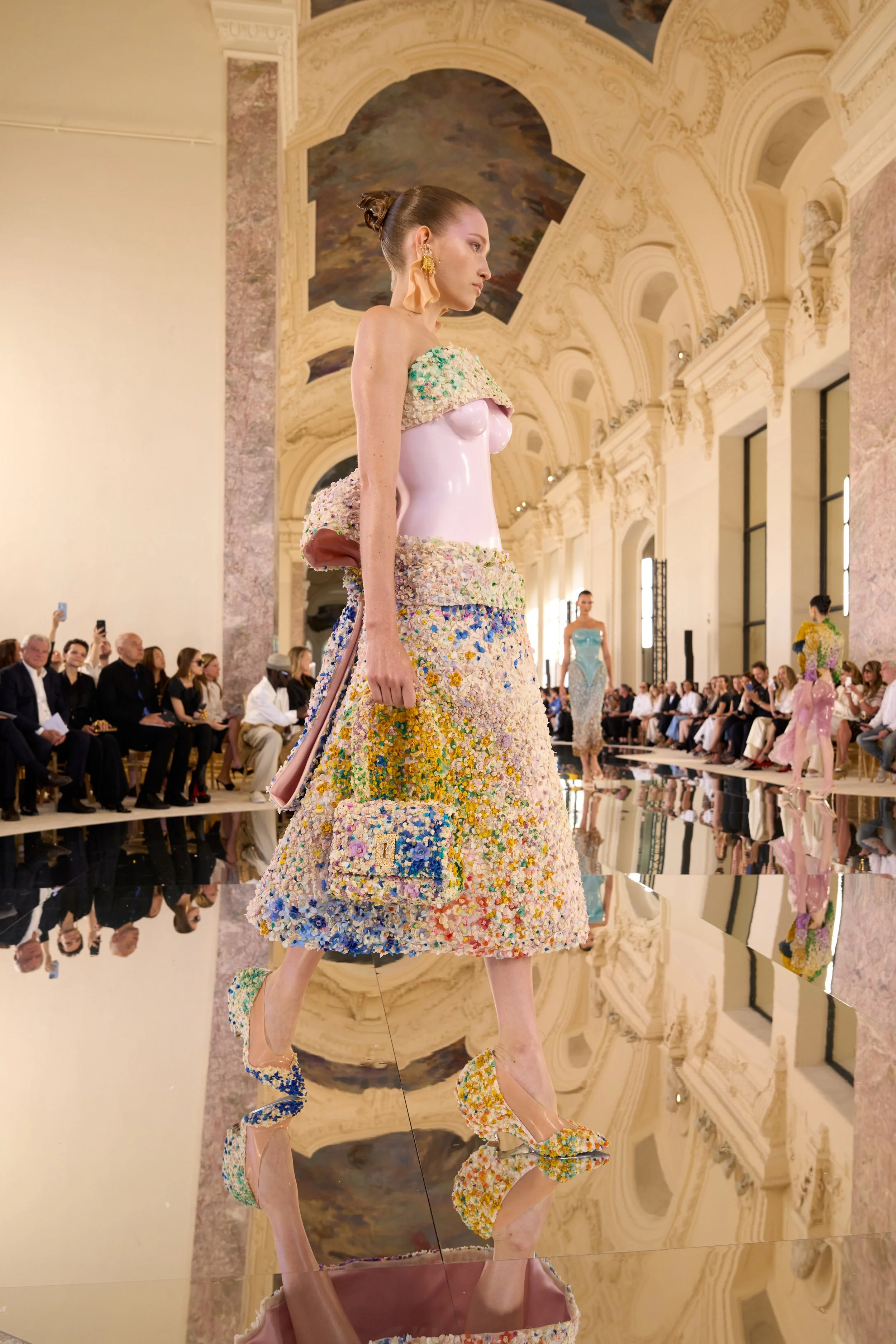
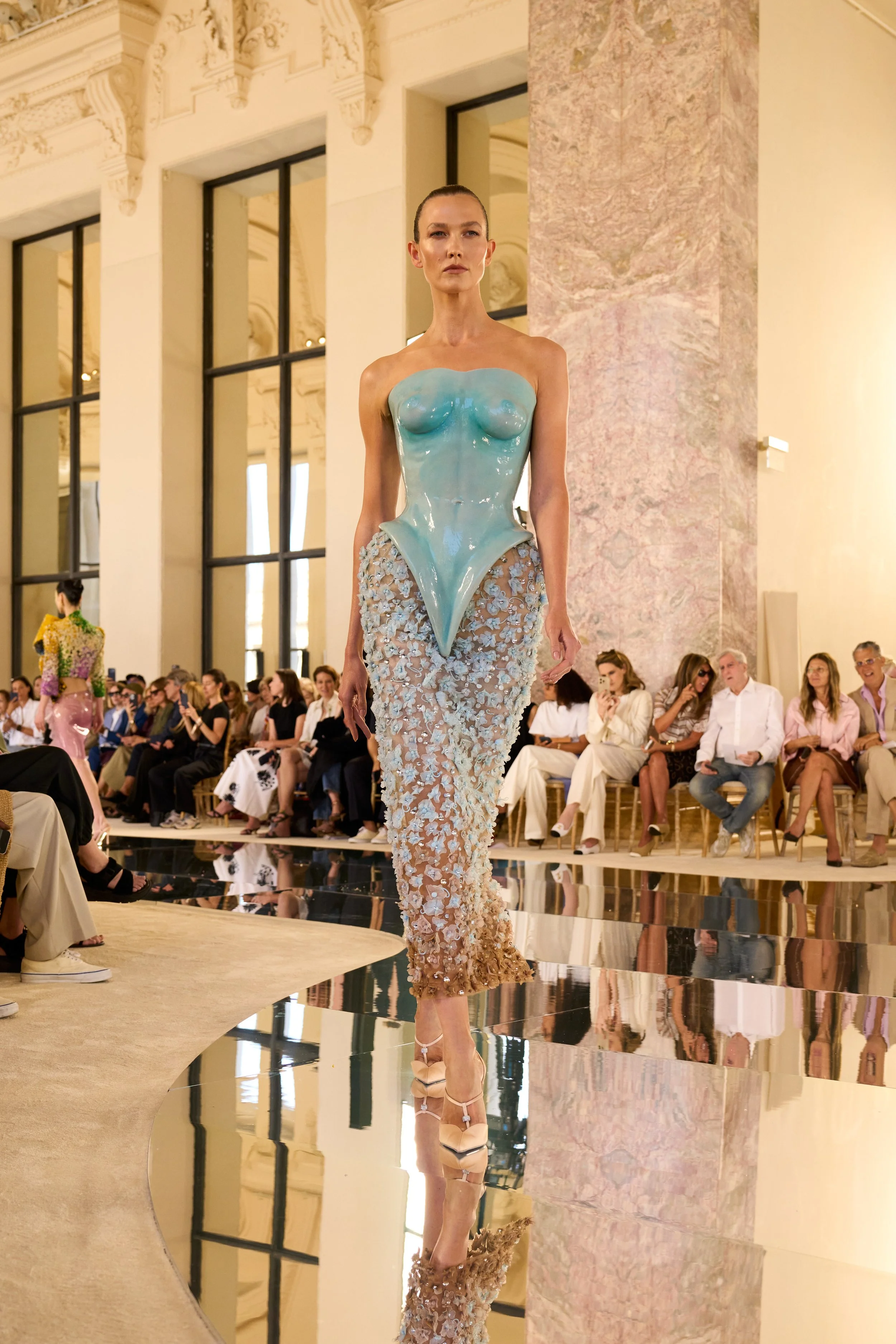
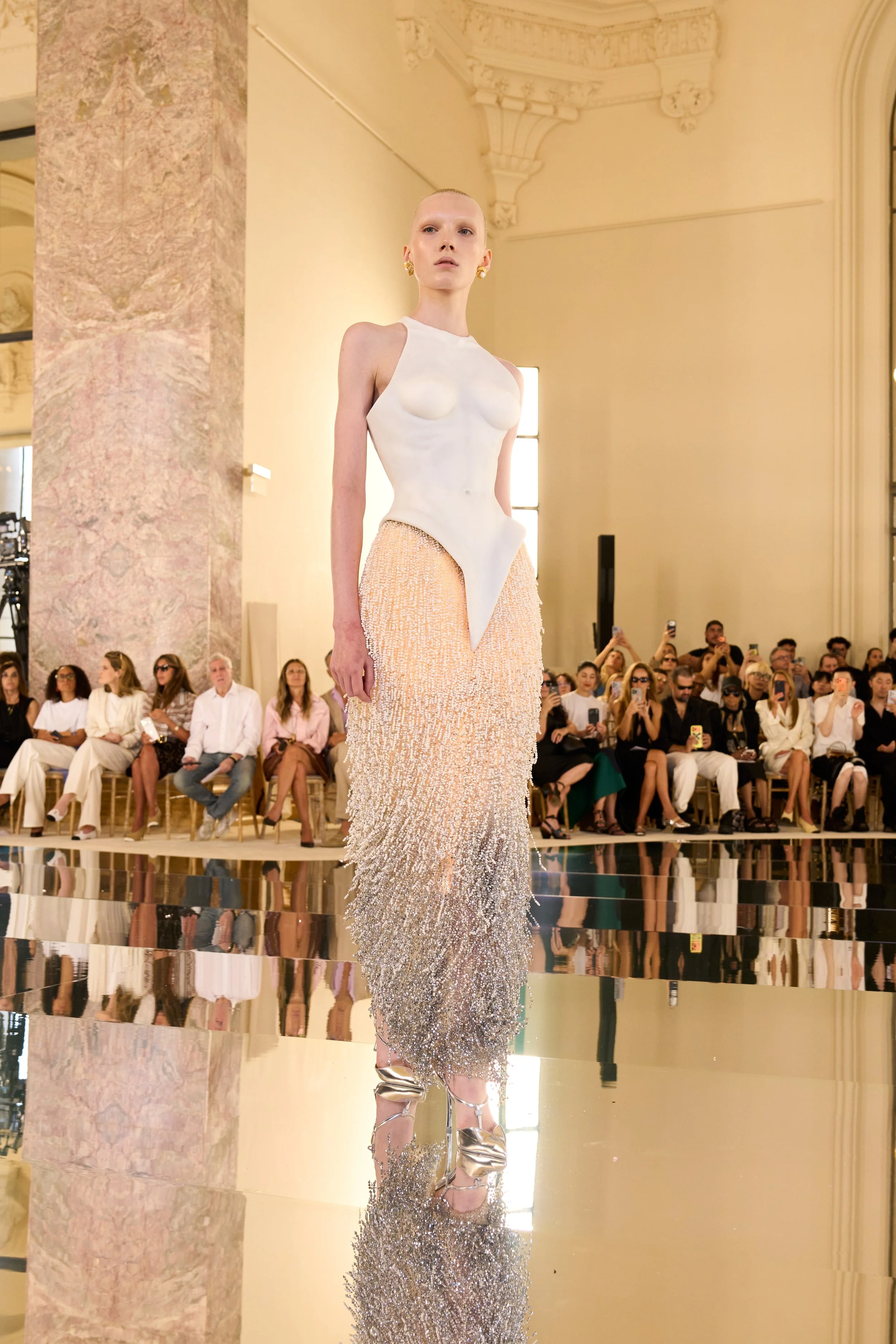
The collection that emerged is built around altered surfaces and unfamiliar ccouture materials. A pale blue silicone bustier sits over the body like a second layer of skin, its smooth finish interrupted by the precision of couture construction. A skirt is assembled from hundreds of flowers made from stretched hosiery, each one fixed to metal wires and arranged in a gradual fade from cornflower blue to caramel. On another look, latex forms extend from the shoulders of a jacket, moving as the wearer walks. The body is treated less as a fixed shape than as something that can be redrawn.
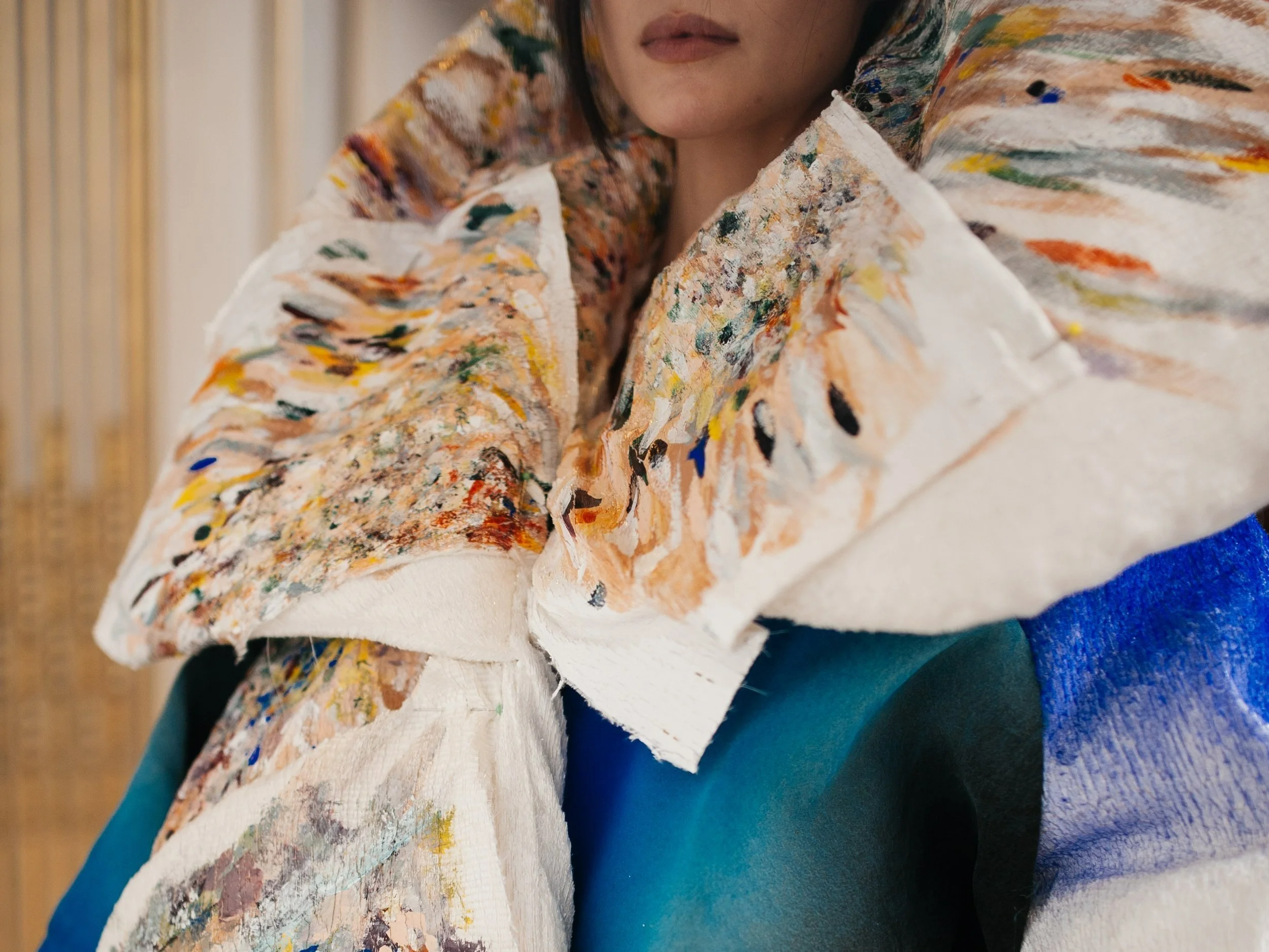
Roseberry attributes the shift to accepting uncertainty. “In trying to control the creative process, and ignoring what the French call l’appel du vide — the call of the void — I stifled not only myself, but the work,” he writes. The idea is reflected in the collection’s material choices. Latex and silicone (a material the atelier has never worked with) areplace the expected softness of couture fabrics, forcing the atelier to approach construction differently. The achievement lies in the labour required to make these materials behave like couture rather than industrial objects.
“Couture has always transformed the ordinary into the extraordinary. Here, that transformation asked us to think beyond “noble” materials, asking whether beauty resides in the material itself—or in the imagination capable of reinventing it,” he remarked.
Light plays an important role as the designer aimed to “illuminate the essence” of the wearer from the inside out.
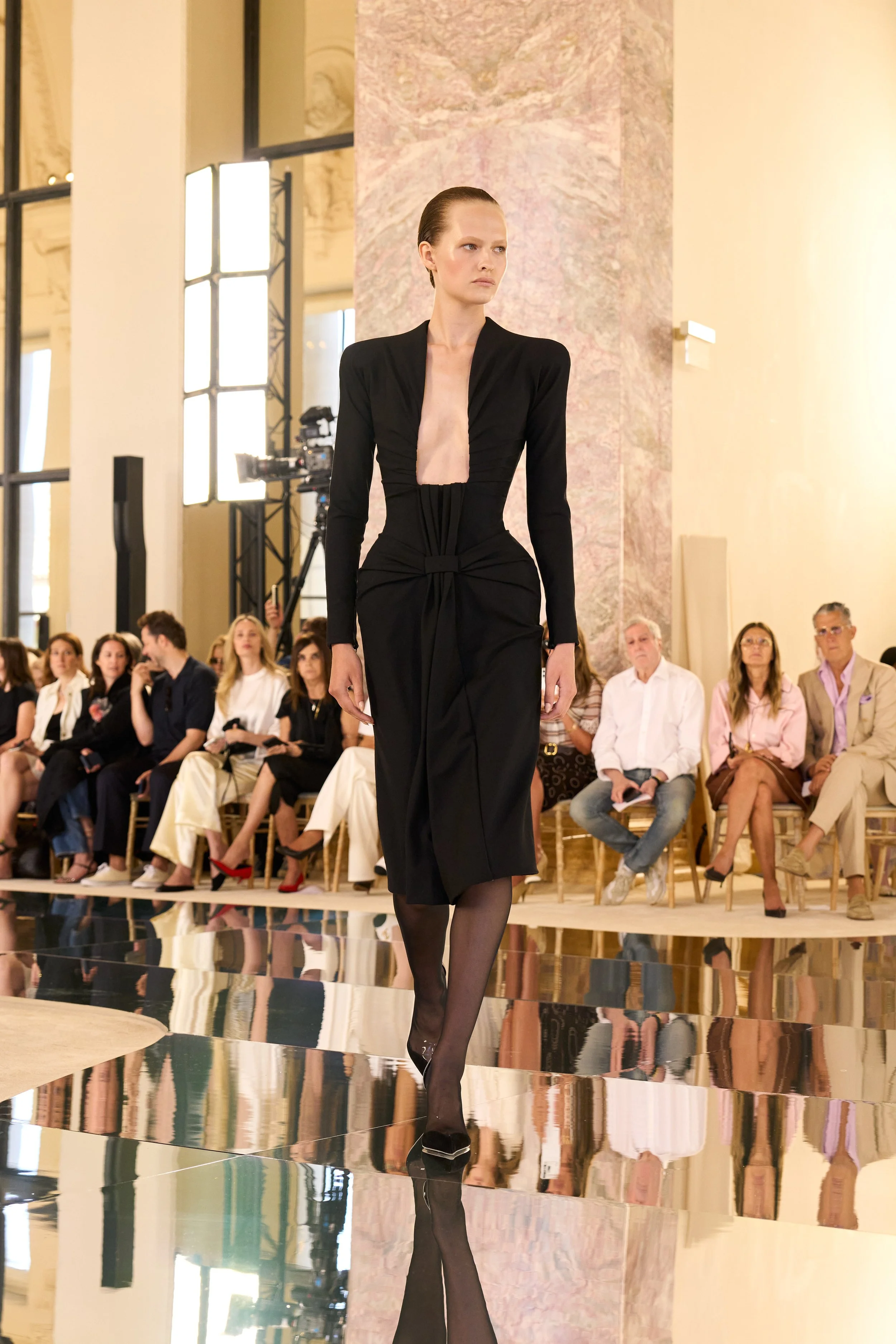
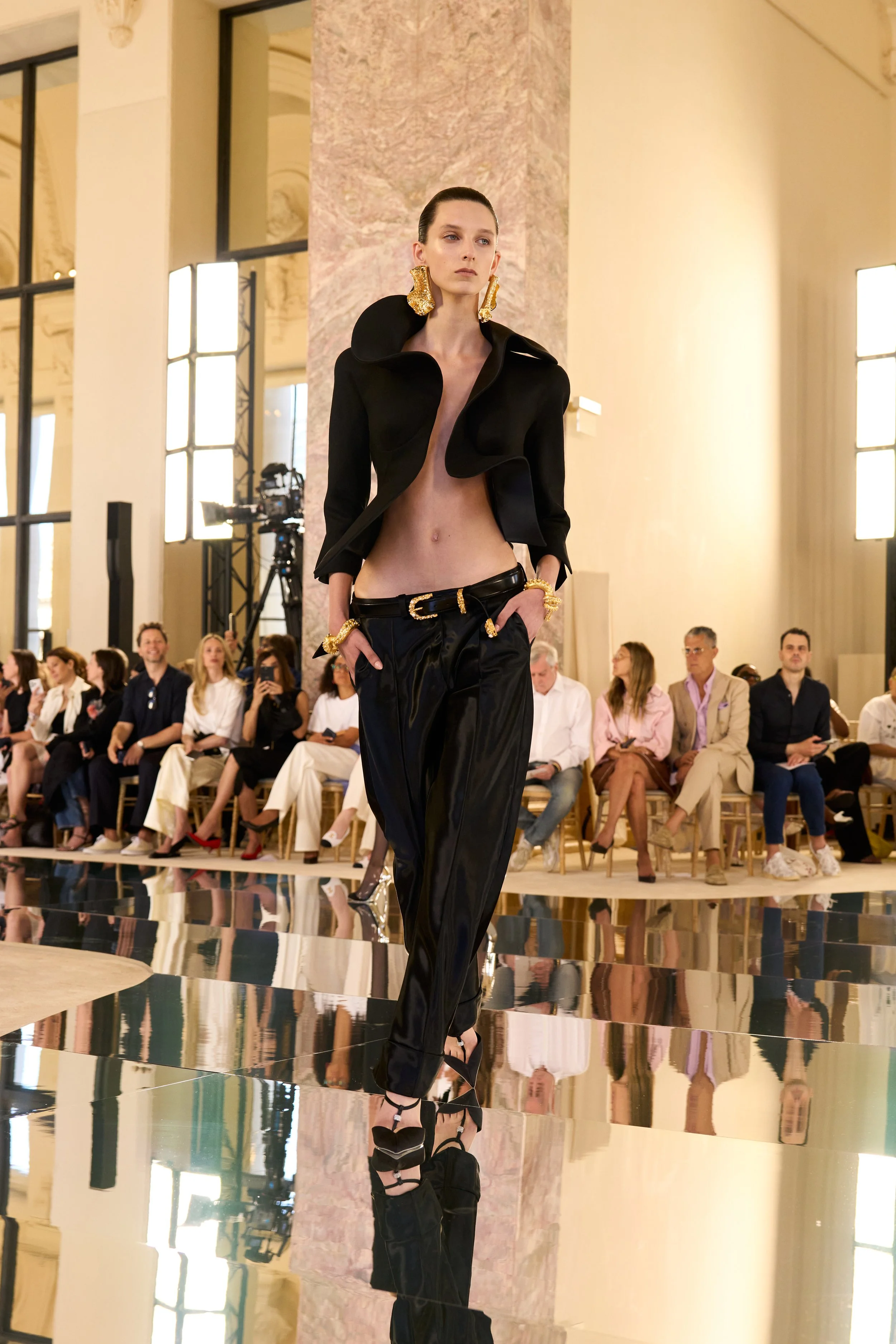
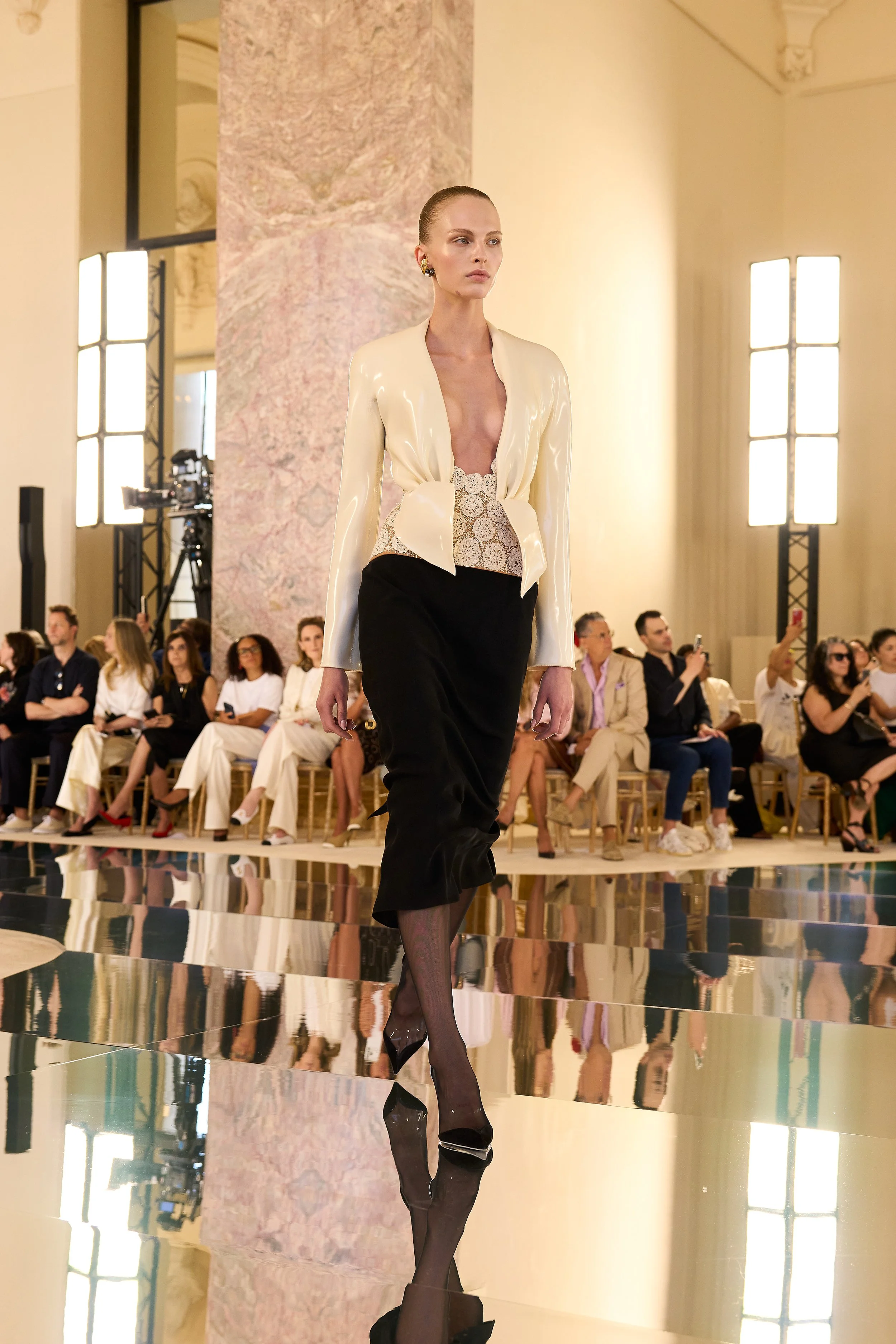
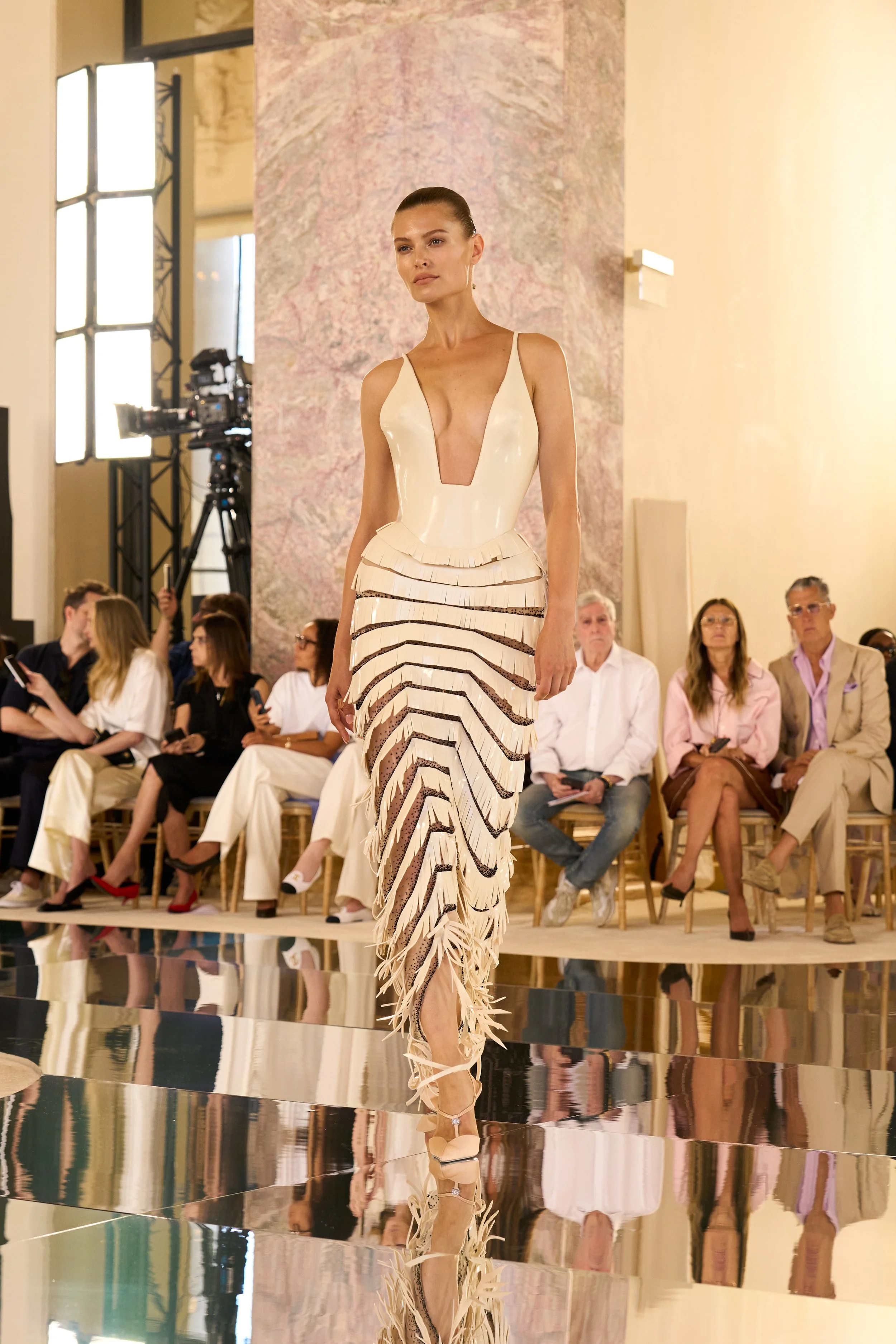
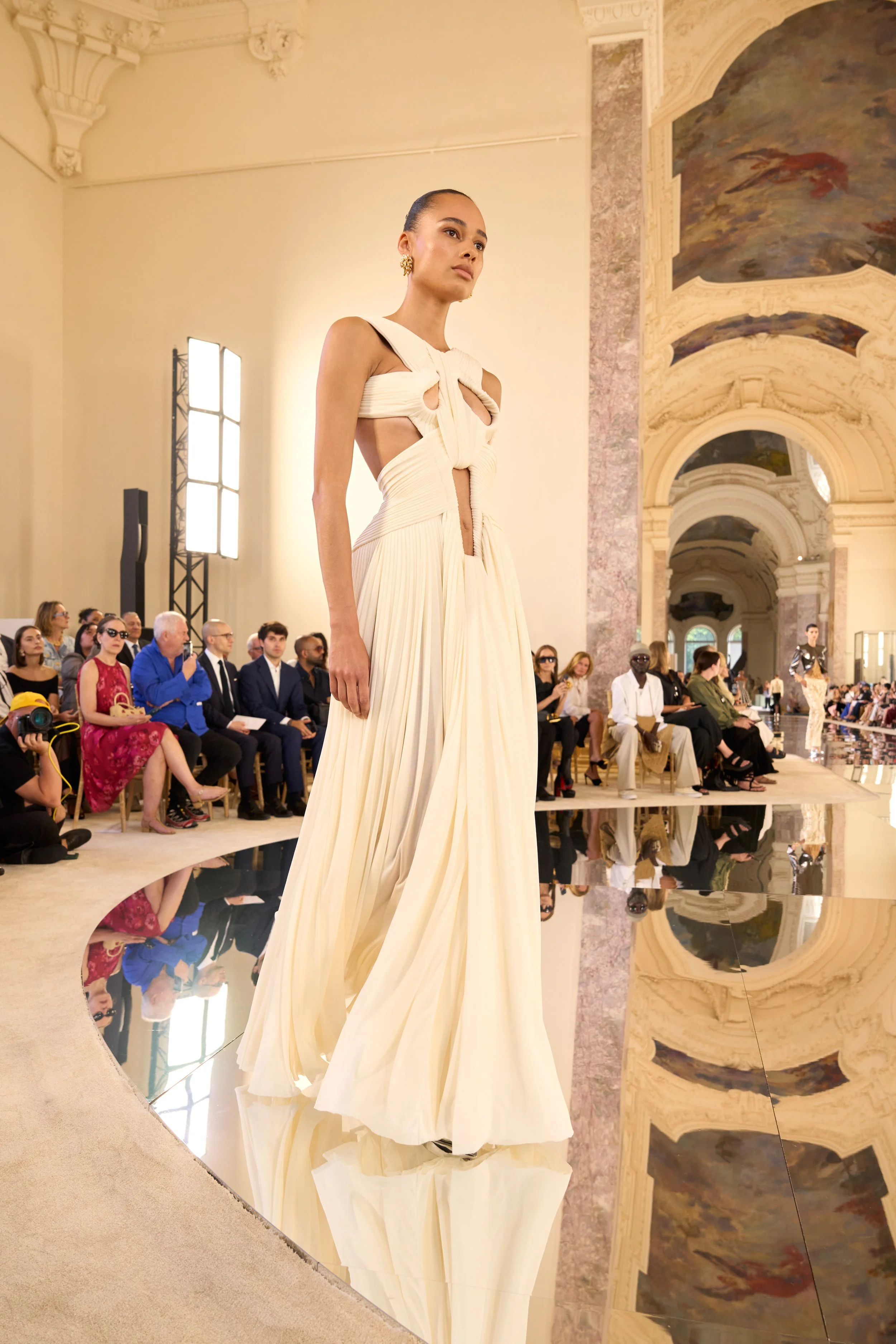
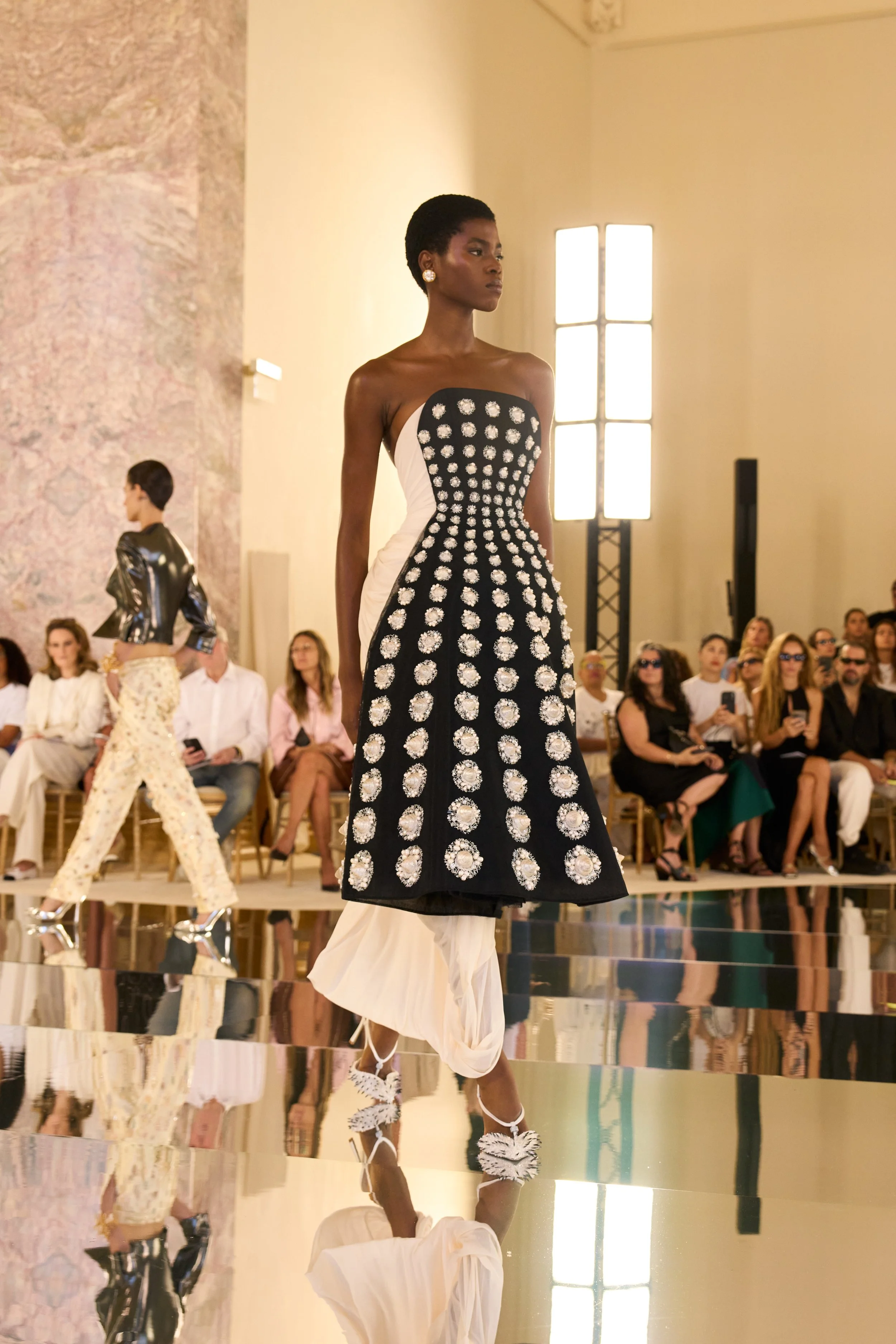
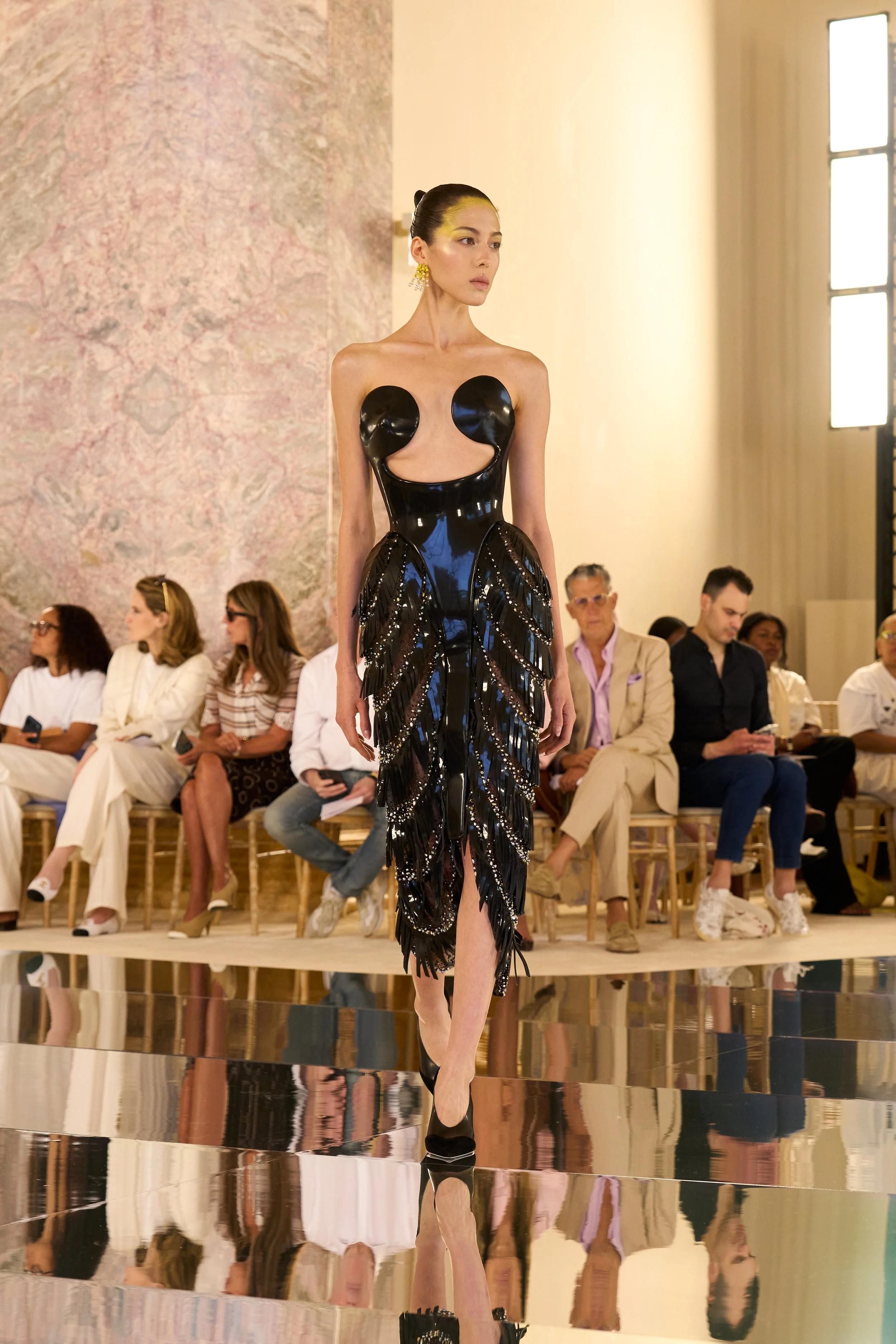
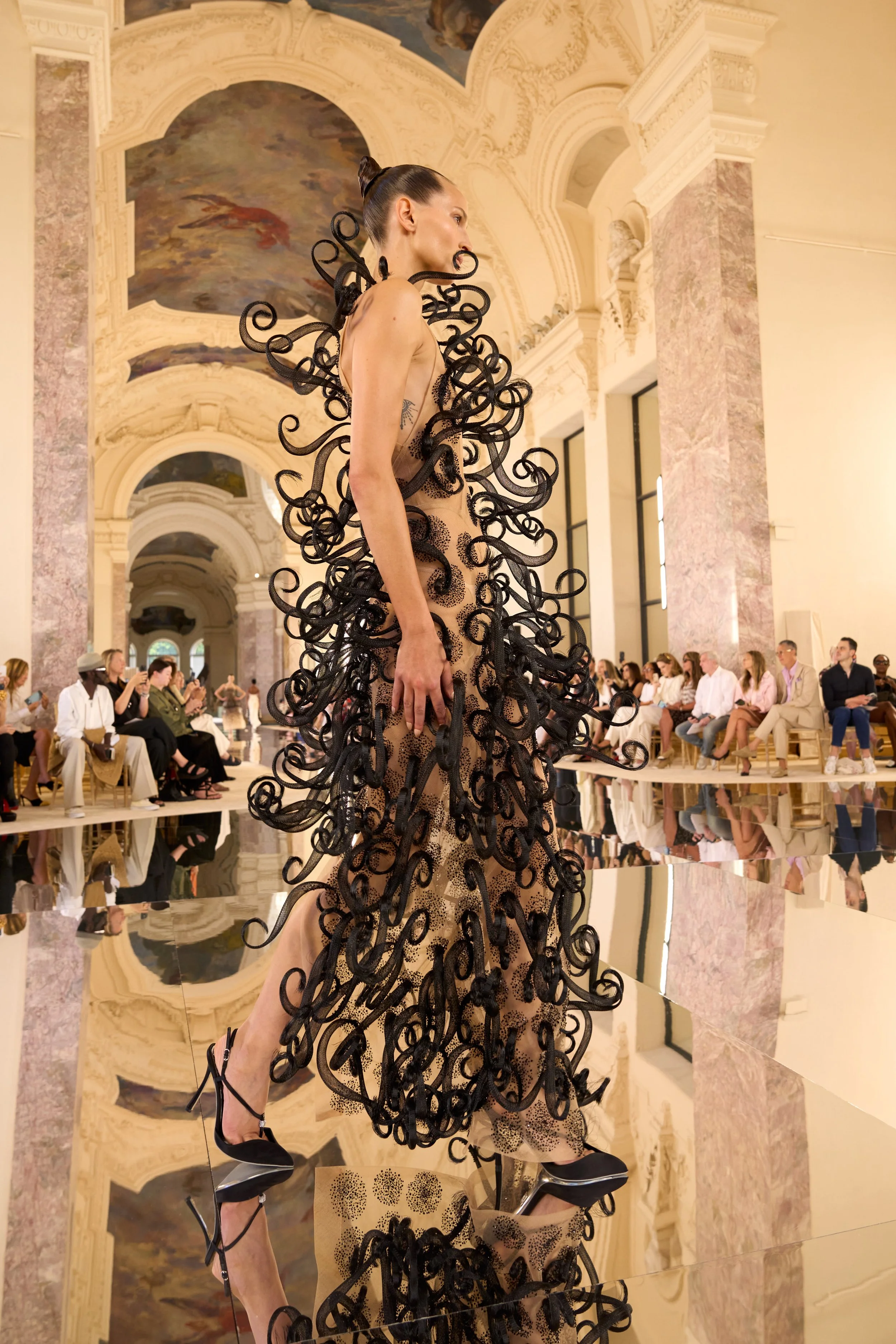
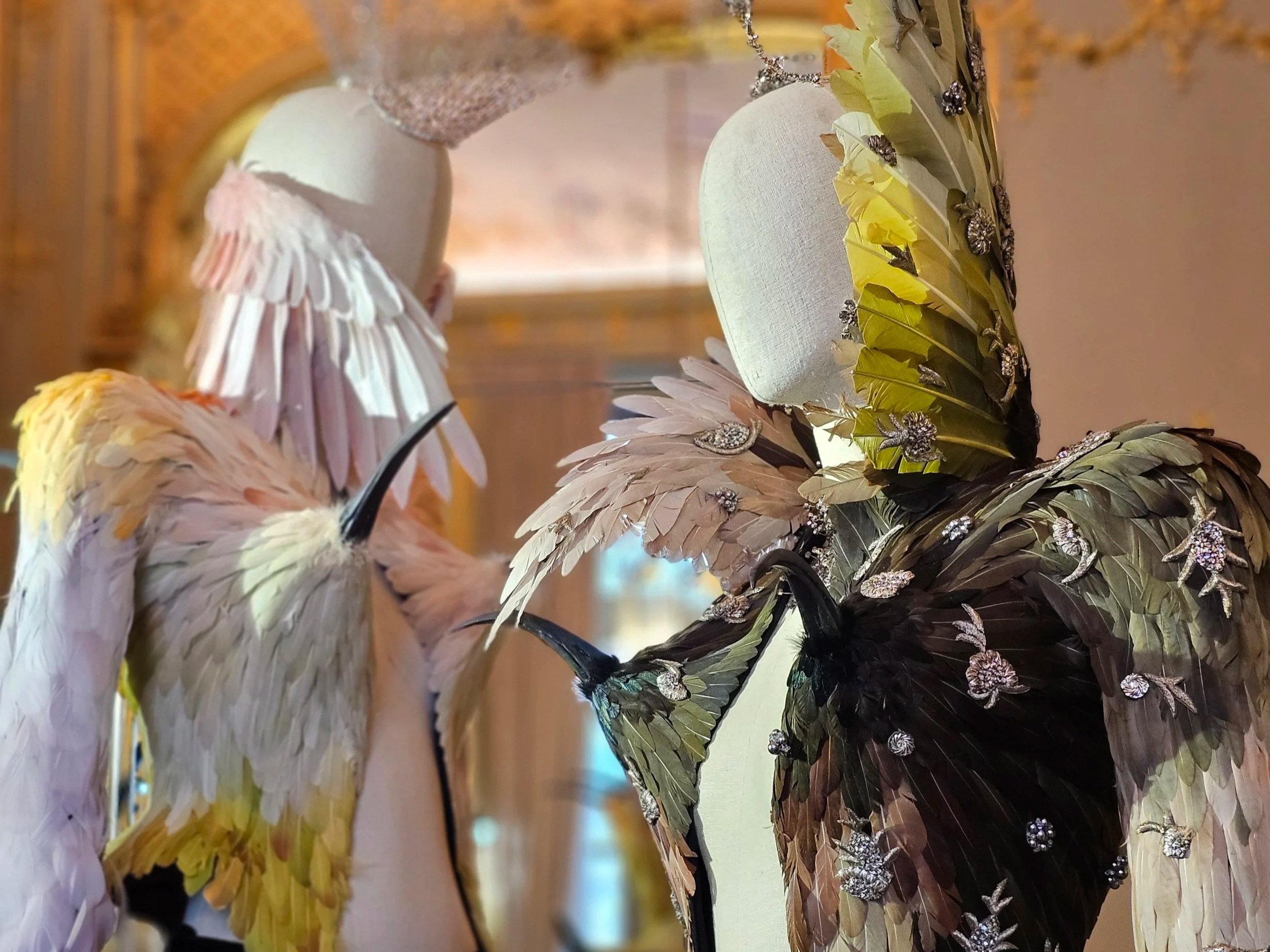
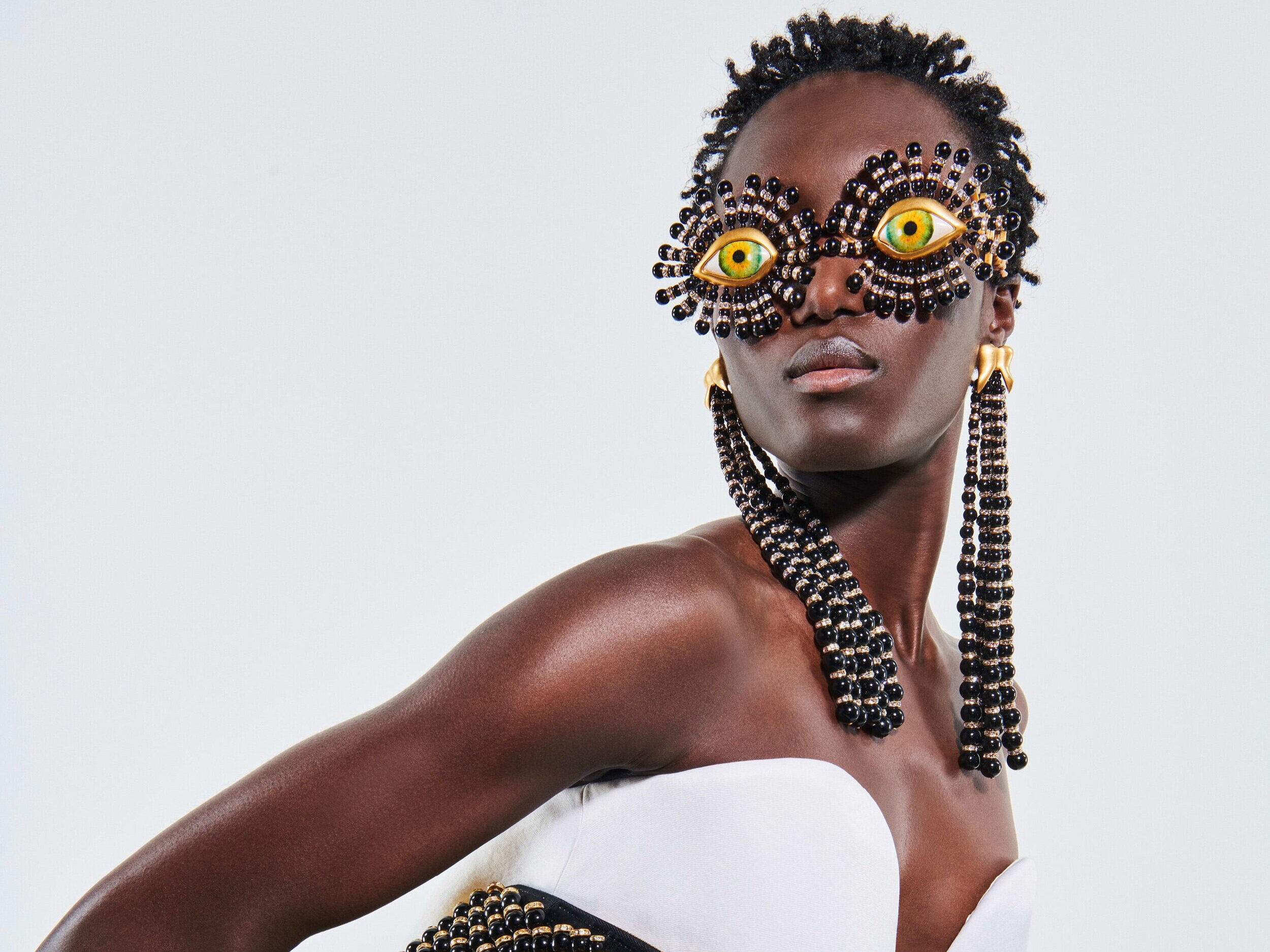
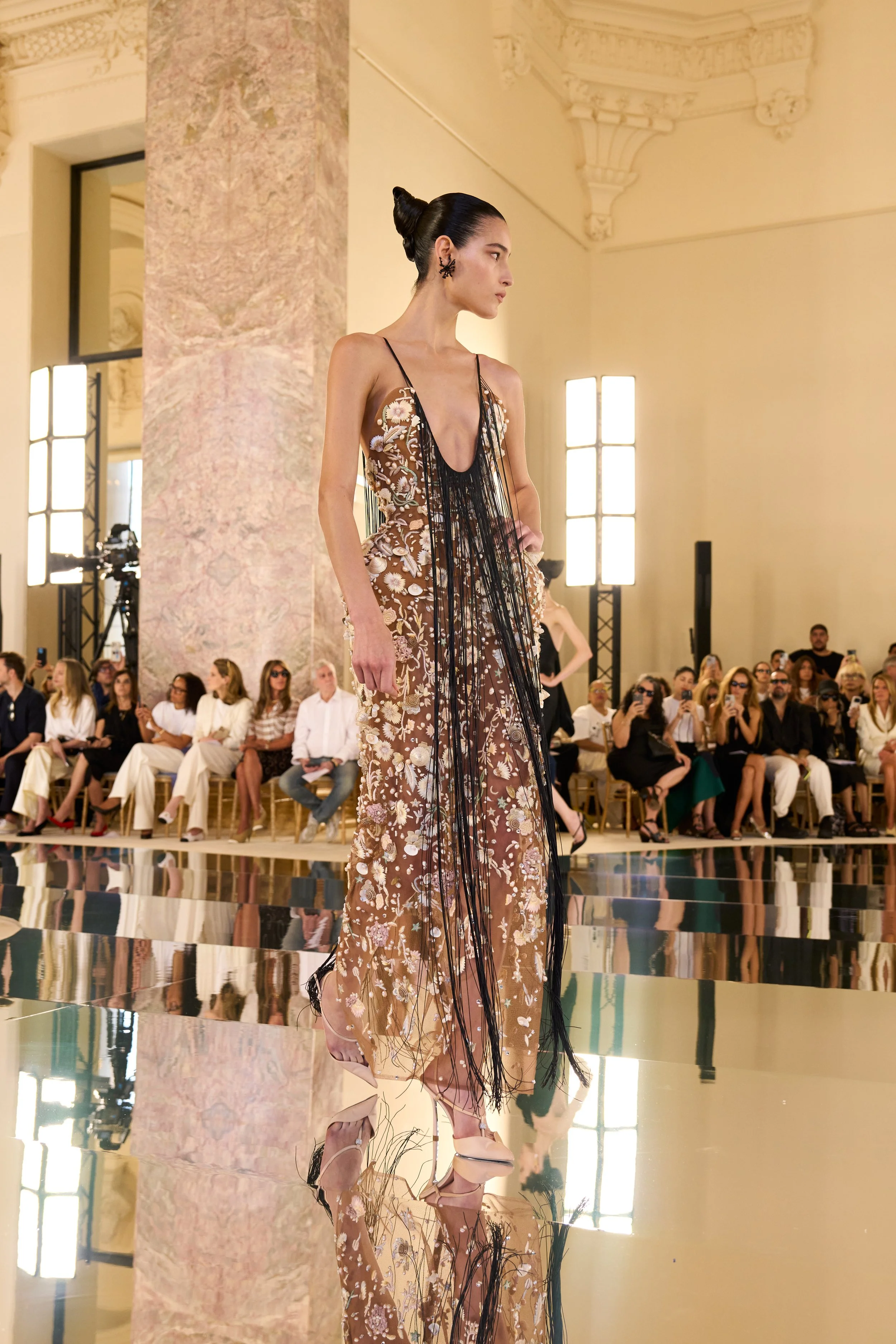
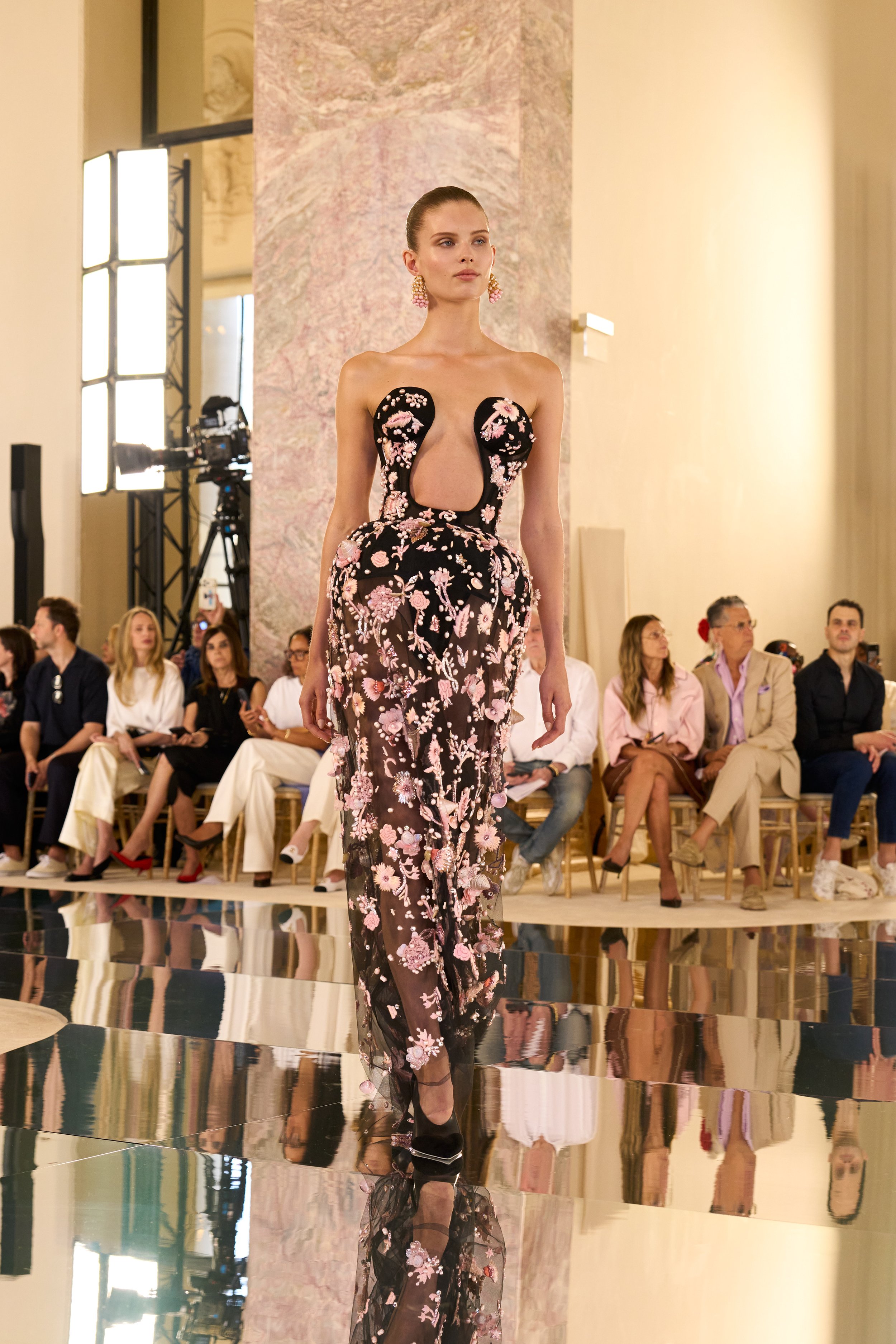
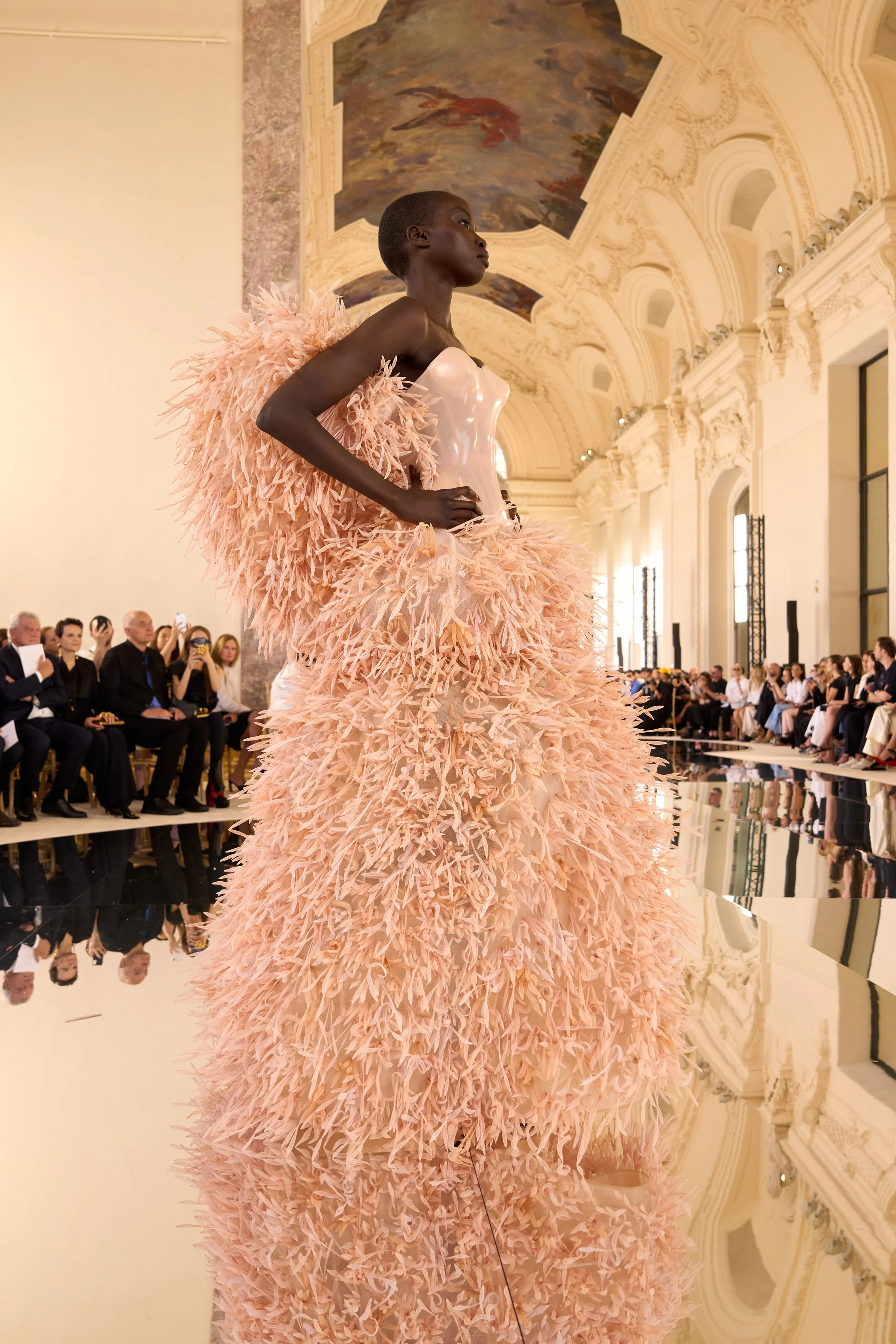
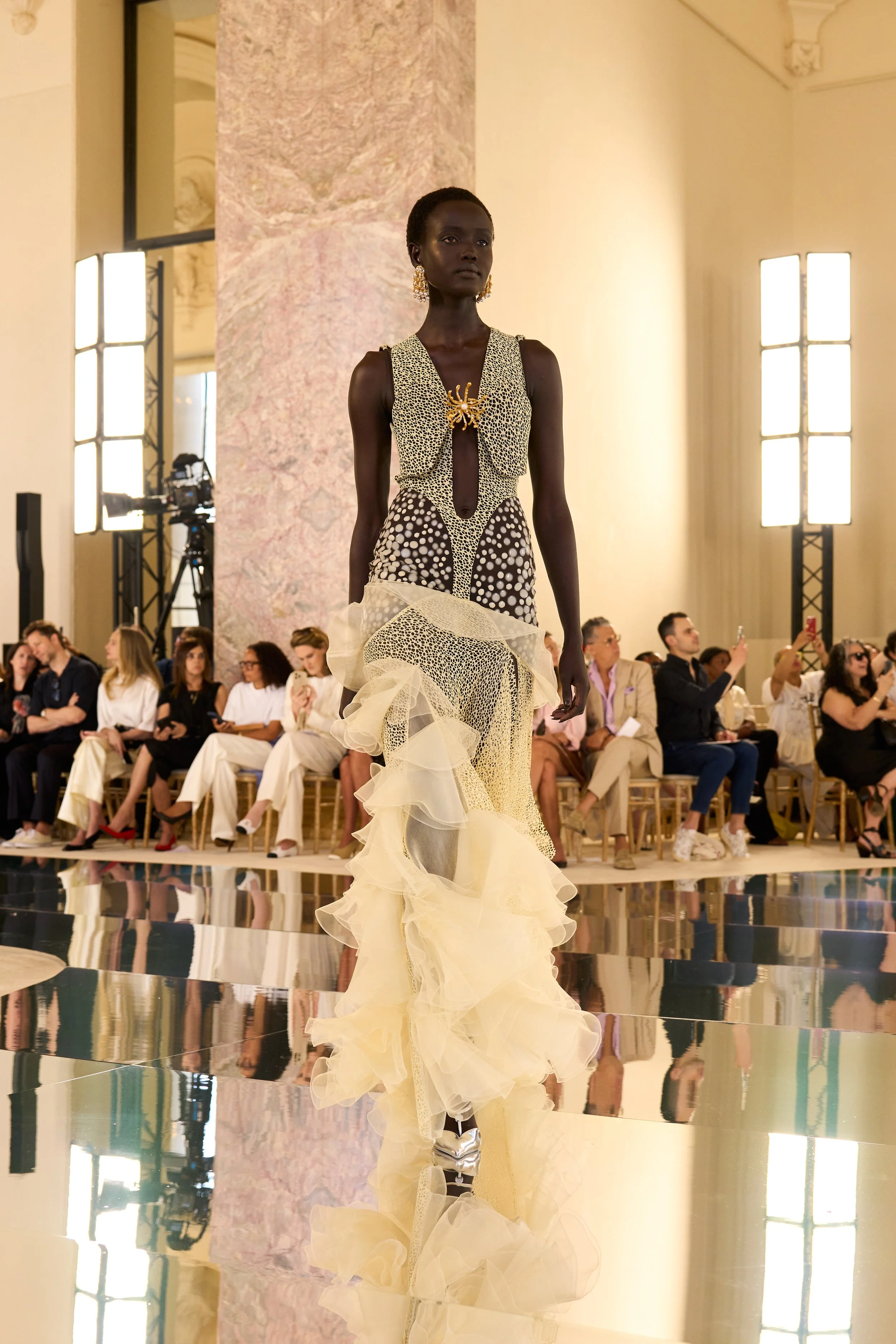
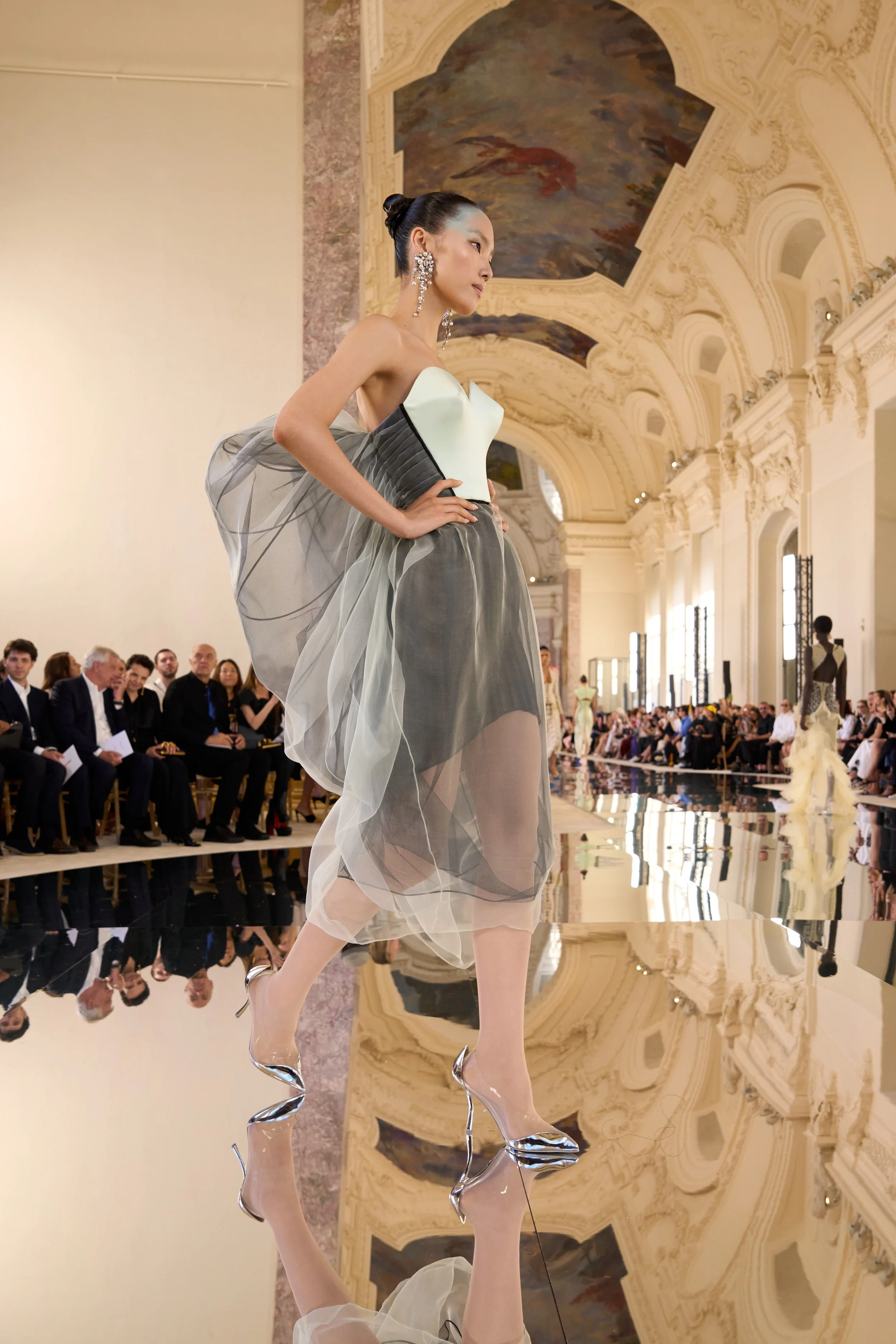
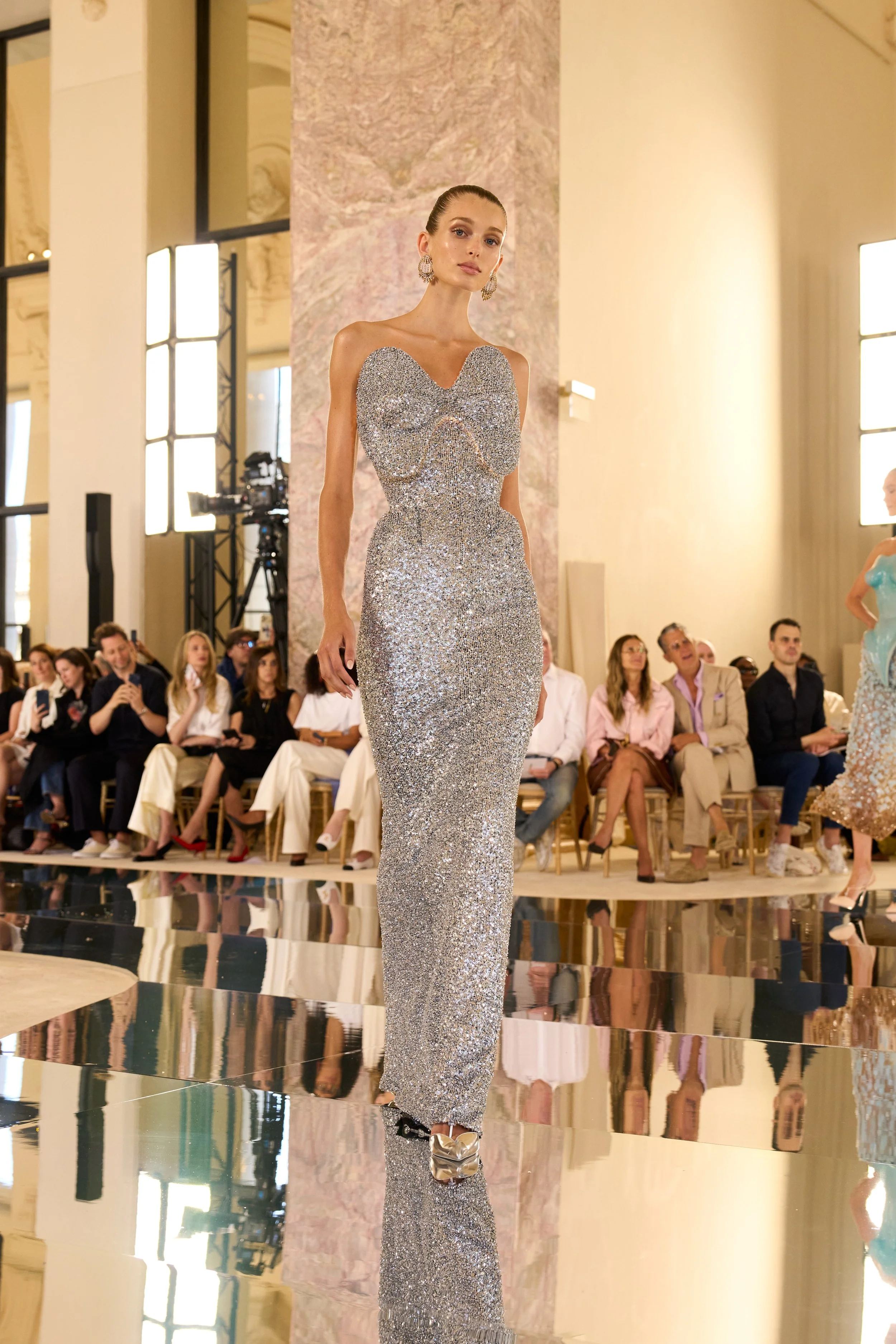
The difficulty comes when the collection moves from experimentation into accumulation. Schiaparelli has become associated with immediate visual recognition: the sculpted body, the surreal accessory, the object that reads clearly from a photograph. This season offers many such moments. The Bubble shoe, with its metallic form and silicone covering, is designed to be noticed. Jewellery shaped like shells and tentacles extends the collection’s underwater references. A dress covered in sculpted crinoline tubes creates a silhouette that is impossible to miss.These pieces are effective as images. Their presence is undeniable. On the runway, however, the constant arrival of another transformation can flatten the impact of the individual ones. The viewer moves from one invention to the next — a new surface, a new creature-like form, a new interruption of the body — before the construction beneath each idea has time to register.
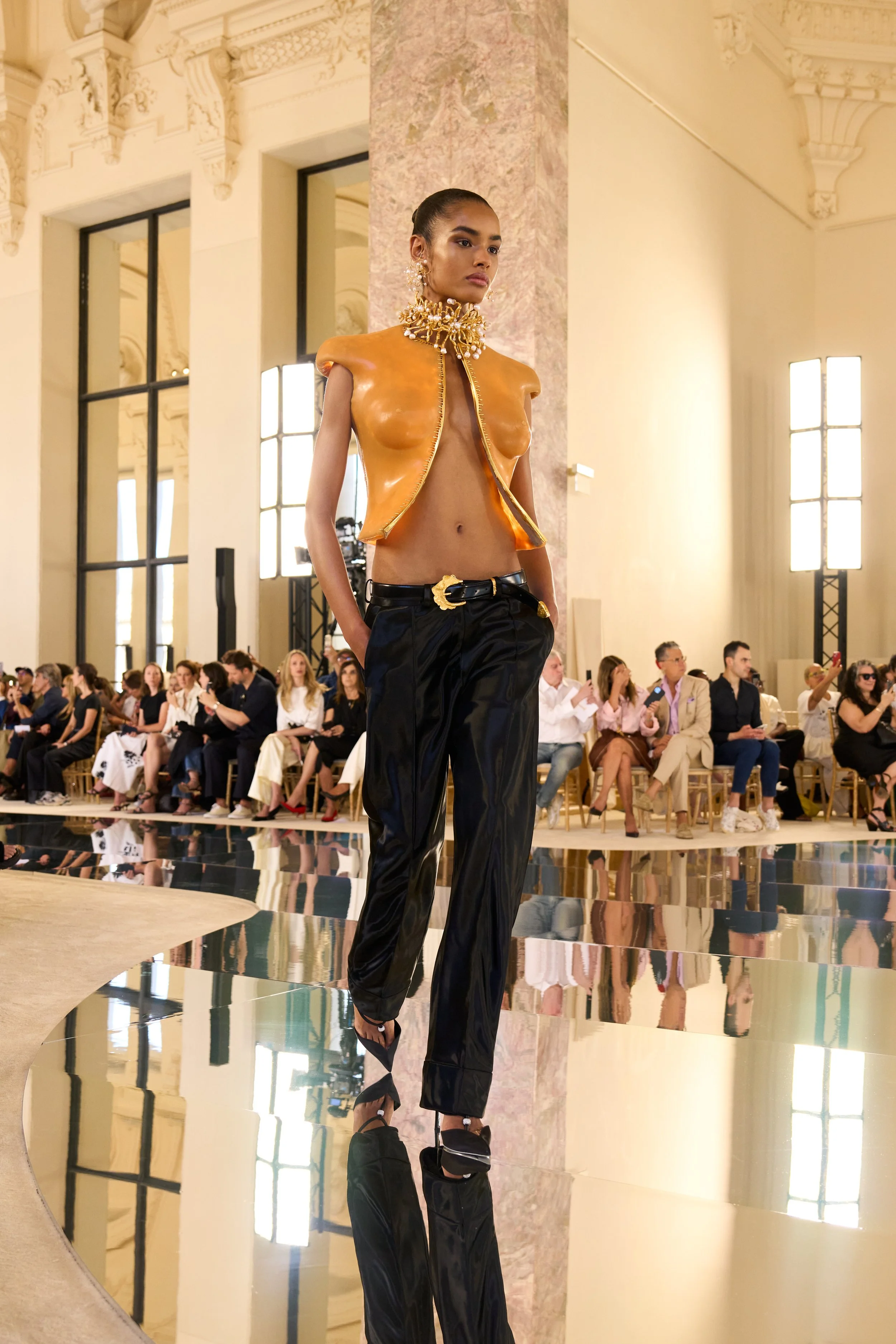
Roseberry writes that “codes — as beloved as they are — aren’t meant to be static”, and this collection tests some of Schiaparelli’s most familiar signatures. The house’s gold, once a small but powerful punctuation mark, appears here as a sculptural material. The jacket, historically one of the central pieces of the Schiaparelli vocabulary, is repositioned as an accessory within the larger composition of the look.
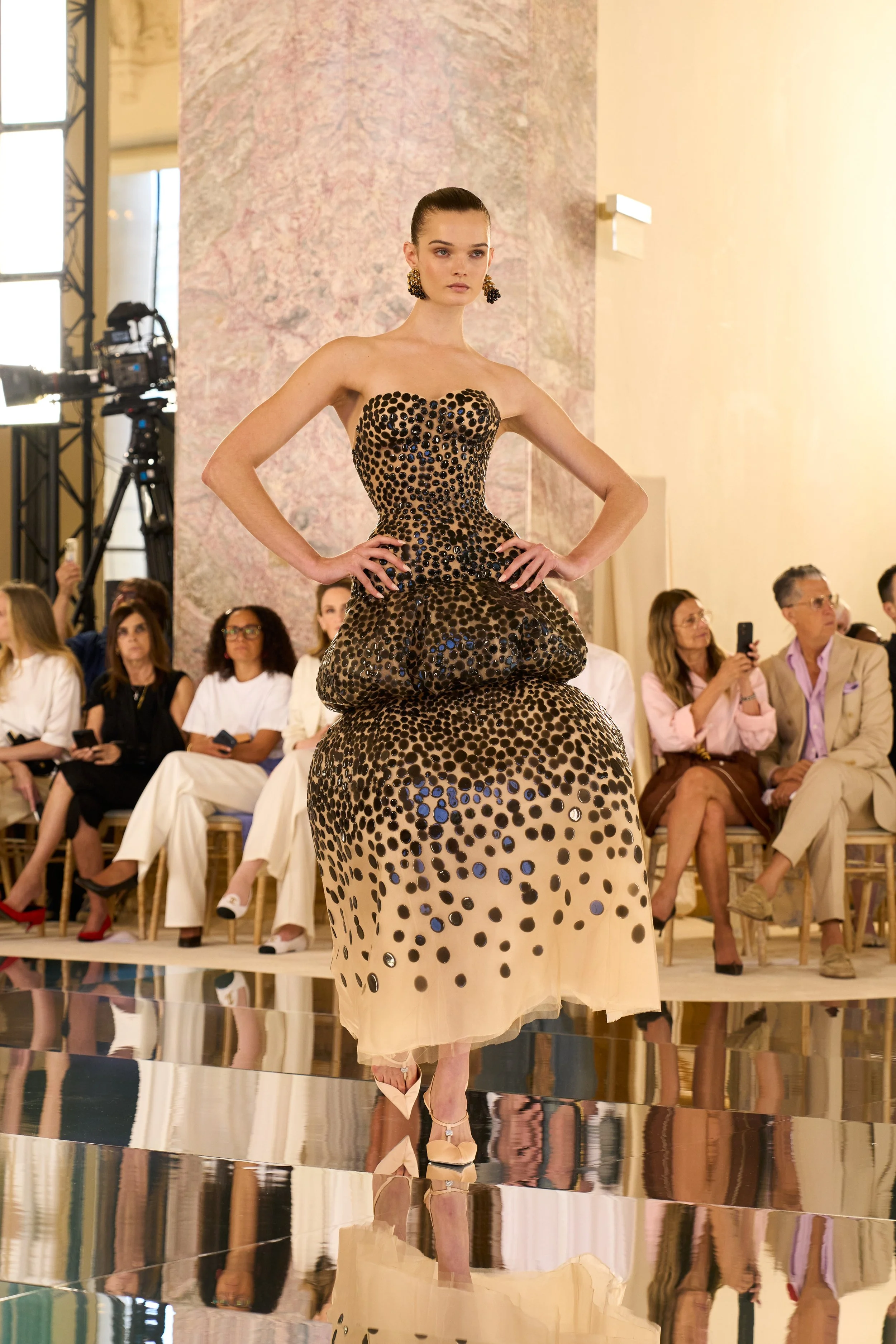
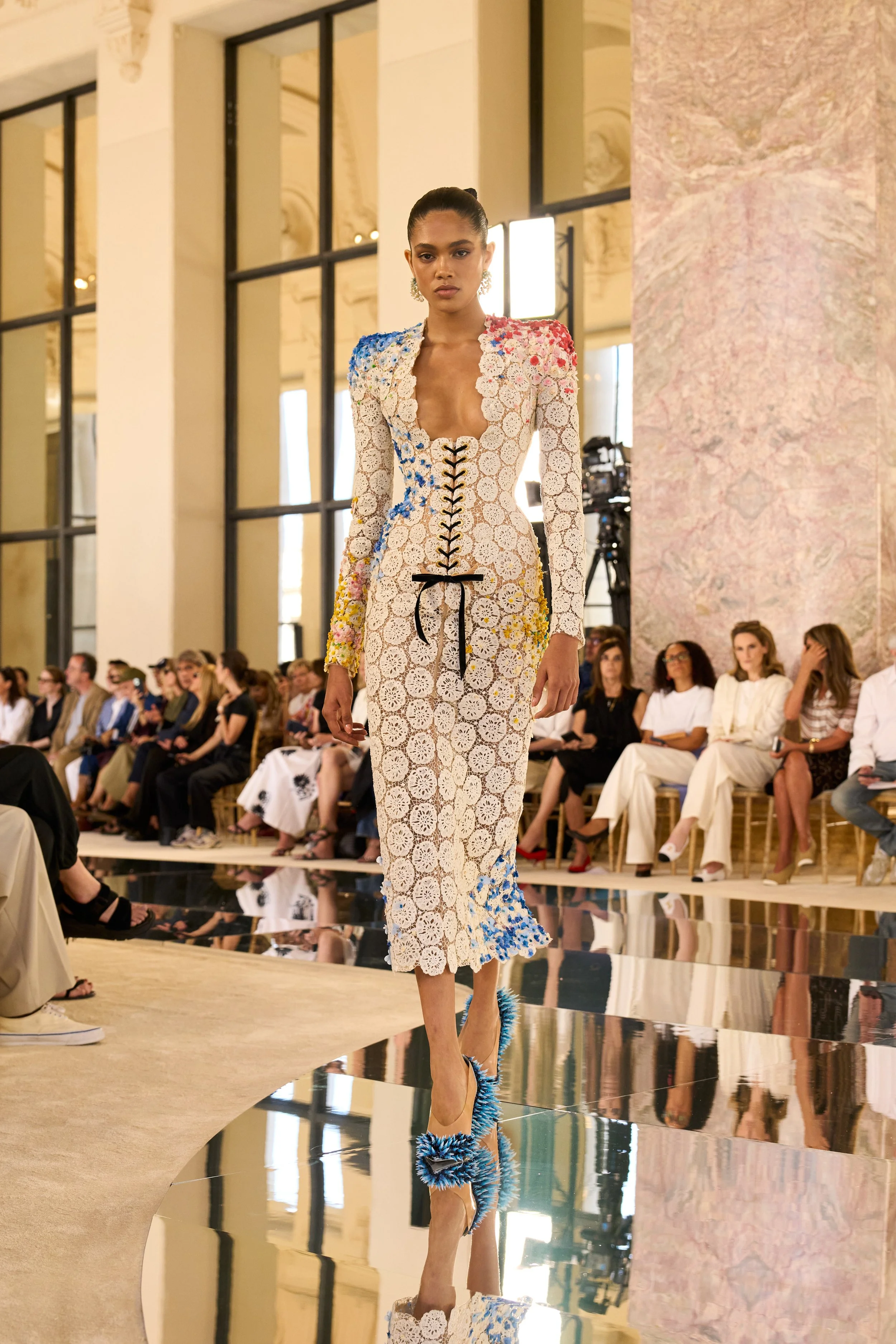
The most convincing pieces are those where the material changes what the garment appears to be. The silicone bustier blurs the boundary between surface and skin, while the hosiery flowers disguise a complex structure beneath their delicacy. In these cases, the Surrealism is not an ornament placed onto the clothes; it is built into their construction
Roseberry writes that Elsa Schiaparelli understood that enduring creations come from “contradiction, intuition, accident, and the courage to trust what cannot yet be understood.” It is an idea that still defines the house’s ambition. The collection reveals a challenge for Schiaparelli: once a sculpted body, an unexpected material or a surreal accessory becomes familiar territory, the house has to find new ways for those gestures to feel unsettling again.
Schiaparelli remains one of couture’s most committed houses when it comes to making clothes that exist beyond utility. This season proves the atelier can give almost any material a couture vocabulary. The more difficult achievement may be deciding when the material, the reference and the image have said enough.
DISCOVER MORE ABOUT SCHIAPARELLI