Reframing Marilyn: Two Exhibitions Explore the Construction of an Icon
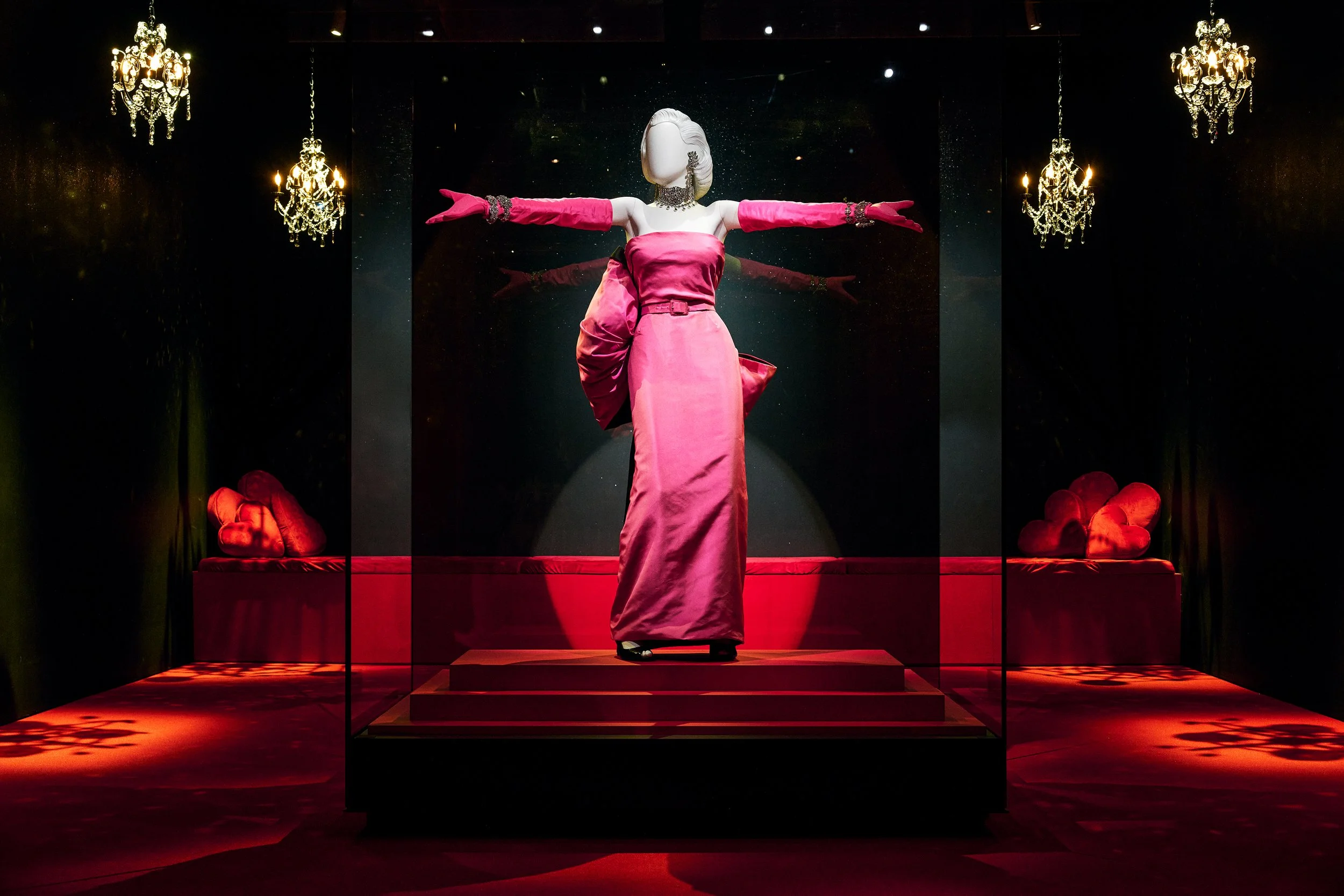
©Academy Museum Foundation, Photo by: Emily Shur
Marilyn Monroe has spent decades trapped inside her own image. The white halter dress. The platinum curls. The mouth slightly open for the camera. Museums have revisited her before, usually through the familiar grammar of celebrity: dresses under glass, tragic anecdotes, auction-house fascination with the possessions left behind. What is different about 2026 is not simply the scale of the tributes marking the centenary of her birth, but the fact that Monroe now sits within a well-established museum language — one that treats fame, photography and repetition not as framing devices, but as the subject itself.
This summer, two major institutions — one devoted to the history of film, the other to the art of portraiture — are dedicating exhibitions to Monroe. In Los Angeles, the Academy Museum of Motion Pictures has opened Marilyn Monroe: Hollywood Icon, while London’s National Portrait Gallery will follow soon with Marilyn Monroe: A Portrait. They arrive almost simultaneously, yet feel as though they are talking about two entirely different women.
The Academy Museum show begins where it should: inside Hollywood itself. Not Hollywood as fantasy, but Hollywood as a system — contractual, visual, industrial. Here, Monroe appears not as the familiar tragic figure of popular memory, but as a working actress who understood exactly how films manufactured desire. The exhibition is full of the expected treasures: studio archives, photographs, production notes, publicity material and an impressive assembly of screen-worn costumes. But the tone leans toward examination rather than nostalgia.
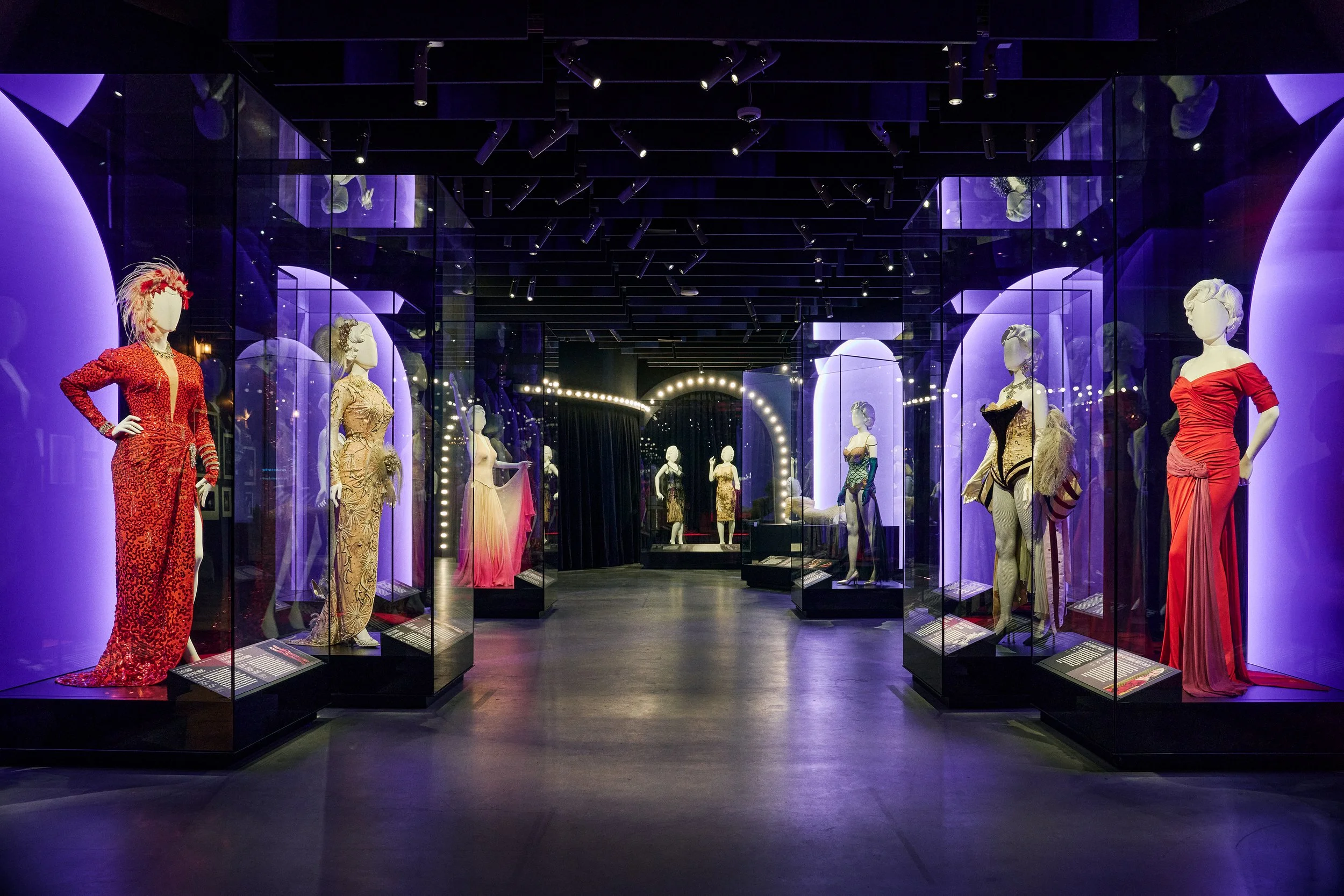
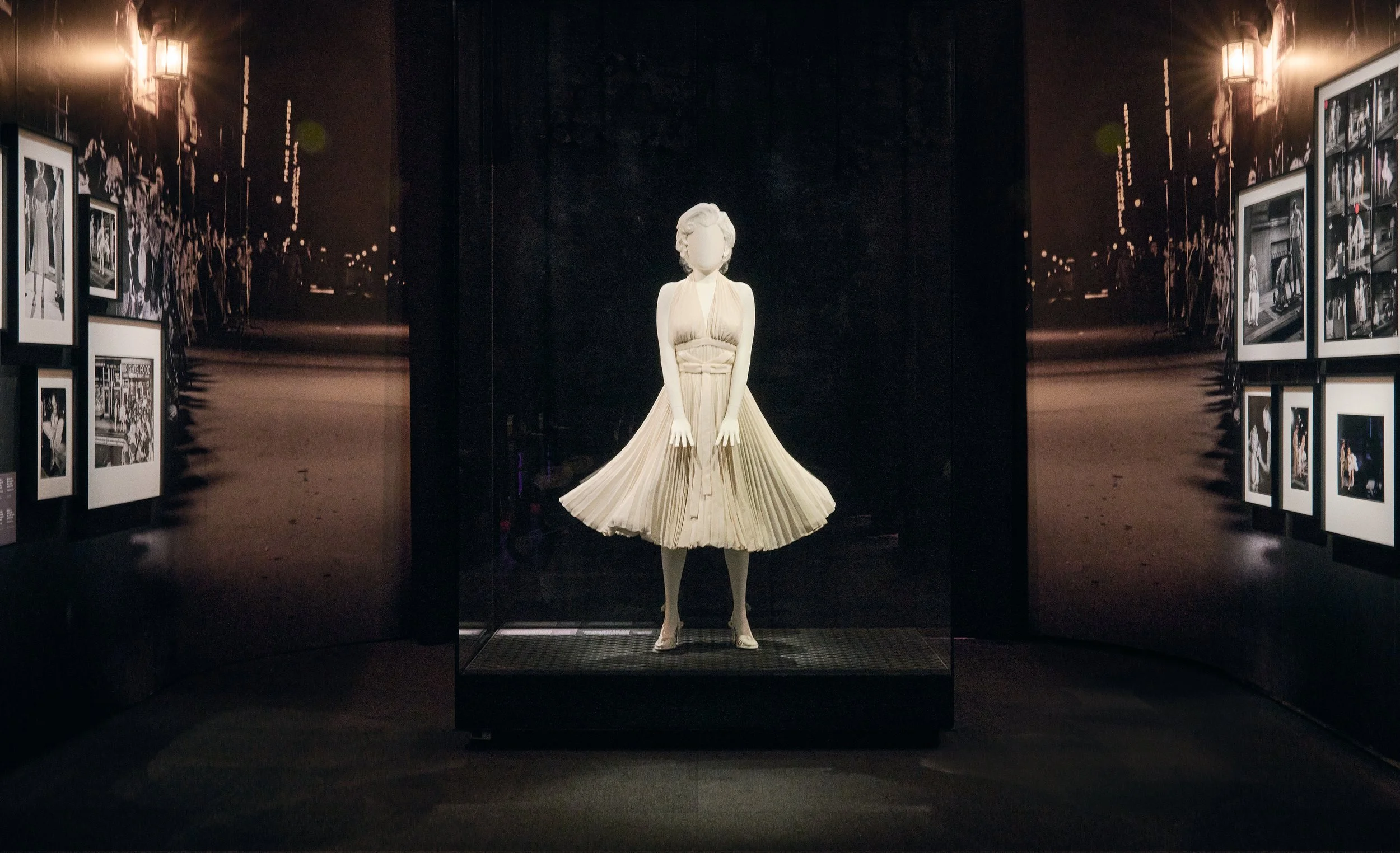
That shift matters because the Academy Museum has generally avoided the easy seduction of movie-star worship. Since opening, its strongest exhibitions have examined filmmaking as craft and cultural machinery rather than celebrity spectacle. Placing Monroe within that framework changes the temperature completely. She is no longer presented as Hollywood ornamentation. She becomes evidence.
And the costumes — unsurprisingly — tell the story best.
©Academy Museum Foundation, Photo by: Emily Shur
William Travilla’s pink satin gown from Gentlemen Prefer Blondes will inevitably be one of the exhibition’s major draws. Alongside costumes from Some Like It Hot and Love Happy, the garments form part of what the Academy Museum describes as one of its most extensive displays of Monroe’s screen wardrobe to date. Reproduced endlessly across film history books, documentaries and popular culture, these costumes have long since transcended cinema to become visual shorthand for Hollywood glamour itself. Yet the exhibition appears intent on repositioning them not as nostalgic relics, but as evidence of how carefully Monroe constructed her onscreen identity. Travilla’s famous dress, with its unapologetically theatrical pink satin and sculpted silhouette, captures the heightened visual language of 1950s Hollywood at its most deliberate — a style Monroe understood instinctively and used with remarkable precision.
What emerges throughout the exhibition is how disciplined she actually was. That may sound obvious now, but Monroe is still too often discussed as though fame merely happened to her. The Academy exhibition quietly pushes against that mythology. The archival material suggests someone obsessively involved in the construction of her image — attentive to lighting, camera angles, publicity photographs, wardrobe, posture. Not unlike contemporary celebrities, except Monroe had to invent the language herself.
London approaches her differently.
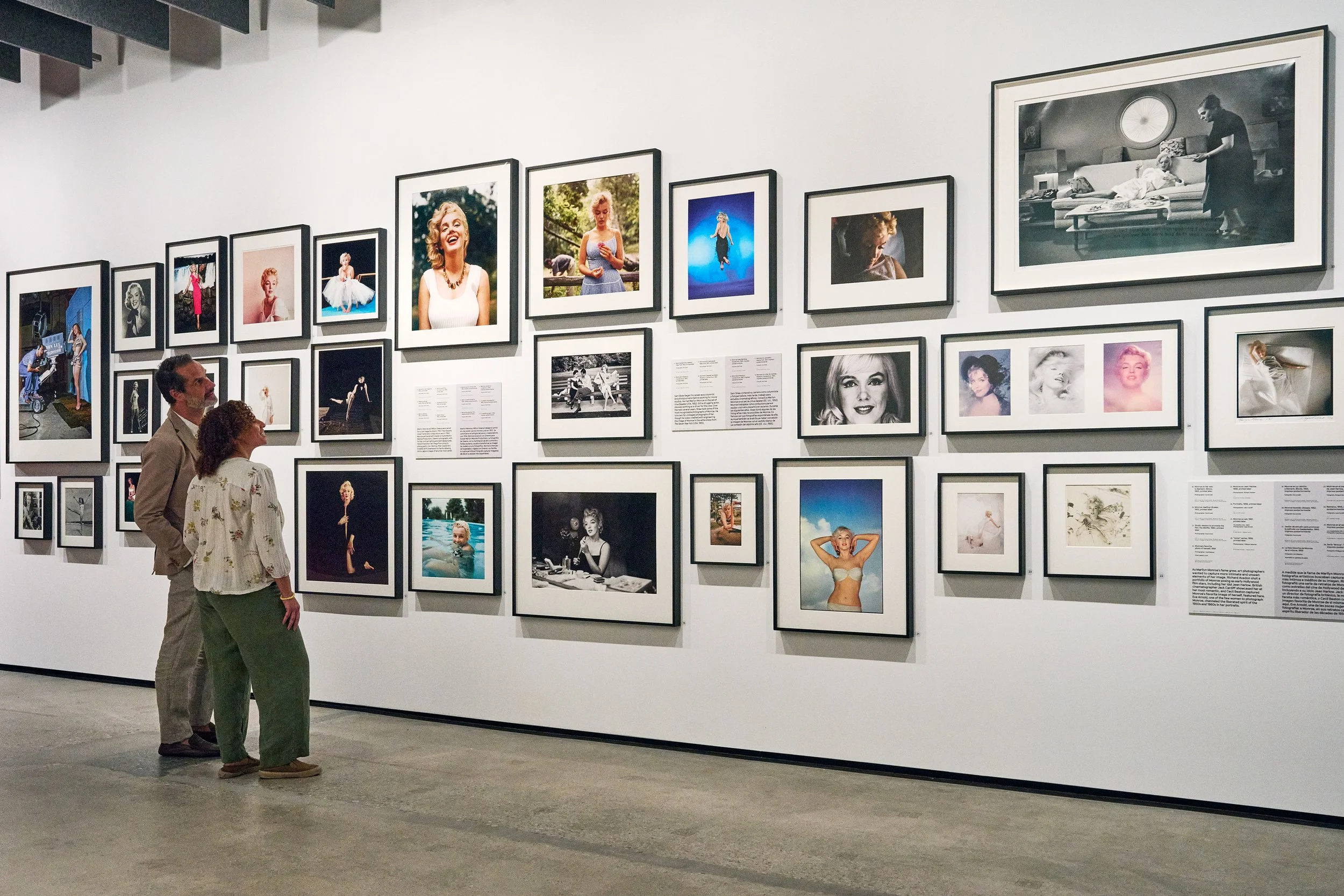
At the National Portrait Gallery, the focus shifts away from Monroe the actress toward Monroe the image — a figure onto whom twentieth-century culture projected glamour, desire, melancholy and fame. The exhibition brings together photographers and artists who each captured a different version of Monroe: Cecil Beaton, Richard Avedon, Eve Arnold, Philippe Halsman, Milton Greene, Andy Warhol and Pauline Boty.
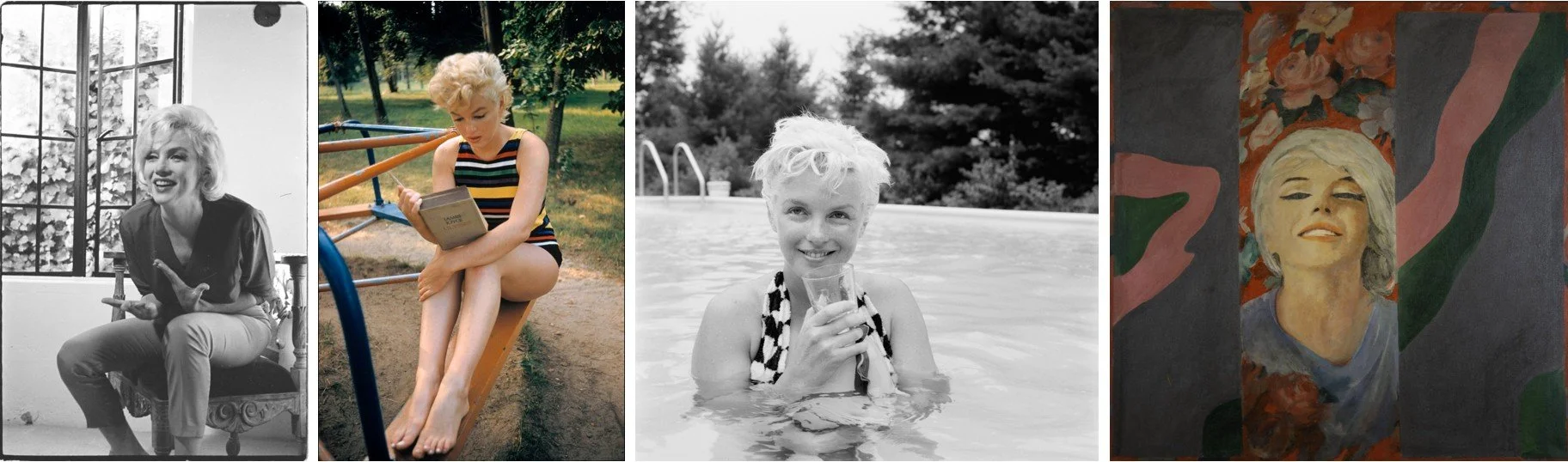
L-R: Marilyn Monroe, 1962, by Allan Grant, © 1962 MM LLC (Photographs by Allan Grant), www.marilynslostphotos.com; Marilyn Monroe, Mount Sinai, Long Island, 1952, by Eve Arnold, © Eve Arnold Estate; Marilyn Monroe, 1955, by Milton H. Greene, © 1962 MM LLC (Photograph by Allan Grant); Colour Her Gone, 1962, by Pauline Boty. © Pauline Boty Estate, Reproduction by permission of Wolverhampton Art Gallery, Purchased with the assistance of the Art Fund and the Friends of Wolverhampton Arts and Heritage.
The photographic material is positioned as one of the exhibition’s central threads, drawing together portraits that trace Monroe’s shifting relationship with the camera. Monroe could shift from luminous presence in one frame to something more distant and ungraspable in the next. Photographers who worked with her often described the transformation almost mystically, as though a switch had been activated the moment the lens appeared. But looking at the portraits together, what becomes apparent is not magic so much as calculation. She understood still imagery instinctively — where softness worked, where melancholy lingered longer than glamour, when to lean into artifice and when to withdraw from it.
Then there are the Allan Grant photographs taken shortly before her death. Those images carry none of the lacquered certainty associated with “Marilyn Monroe.” She looks distracted, intelligent, tired, occasionally amused. At moments, she resembles an actress between scenes waiting for direction that never arrives.
The exhibition’s concluding sections explore Monroe’s posthumous transformation in contemporary art, from Andy Warhol’s serialised iconography to Pauline Boty’s more personal and psychologically charged interpretations
Taken together, the two exhibitions expose a tension that has always sat at the centre of Monroe’s legacy. Hollywood created Marilyn Monroe, certainly. But Monroe also understood, earlier than most, that modern fame depended on self-authorship. She was not simply being photographed or styled or consumed. She was participating in the construction — sometimes controlling it, sometimes overwhelmed by it, often both at once.
Perhaps that is why museums now seem determined to reclaim her from cliché. Monroe no longer fits comfortably inside the old narratives: tragic starlet, sex symbol, victim of fame. Those stories flatten her almost as much as the photographs did. What these exhibitions suggest instead is something more complicated and far more contemporary — a woman who grasped that image could offer protection, but also set its own limits.