At the China National Silk Museum in Hangzhou, a major retrospective traces the Chinese couturier’s development through nine collections, from sculptural embroidery and architectural silhouettes to her reinterpretations of imperial dress.
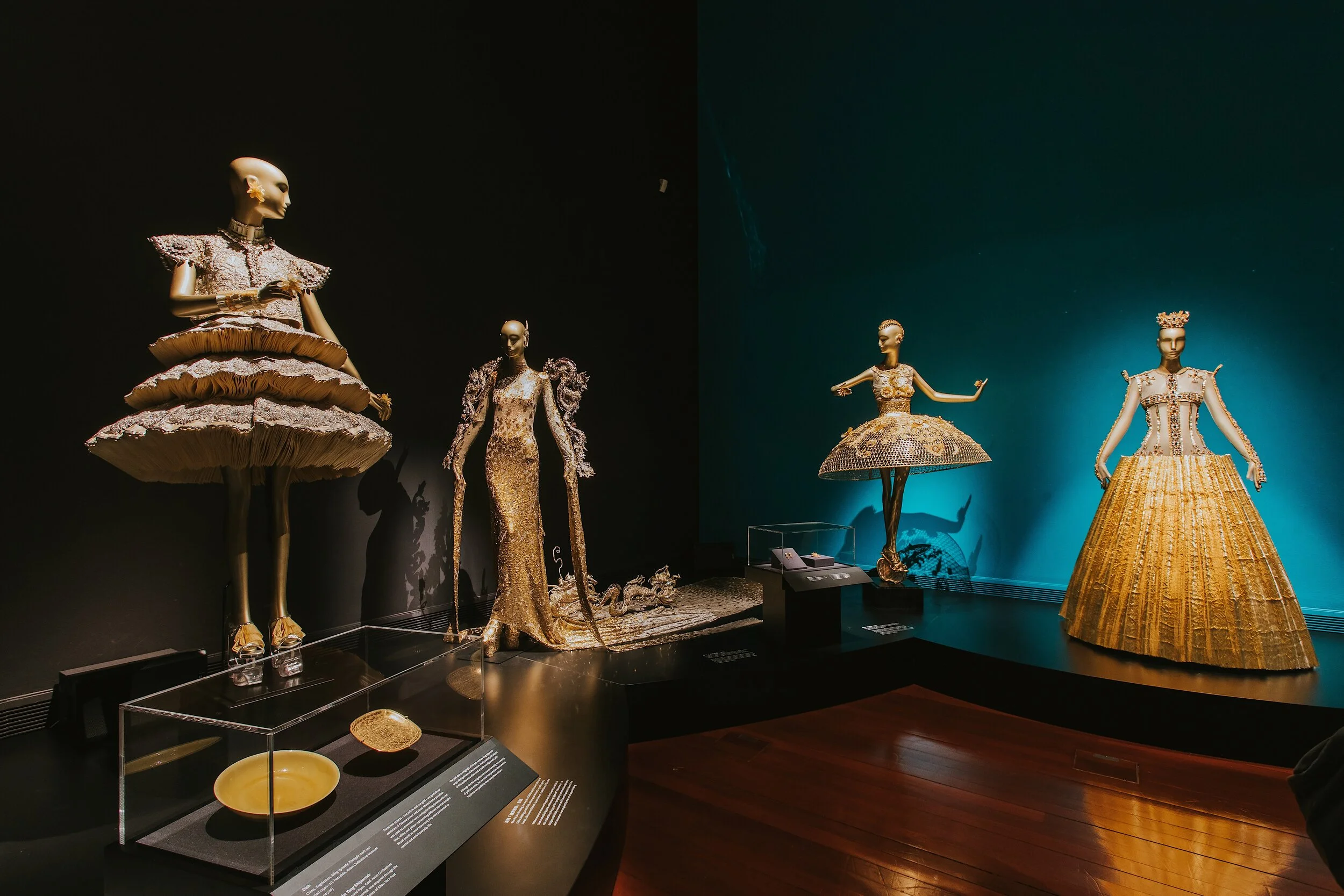
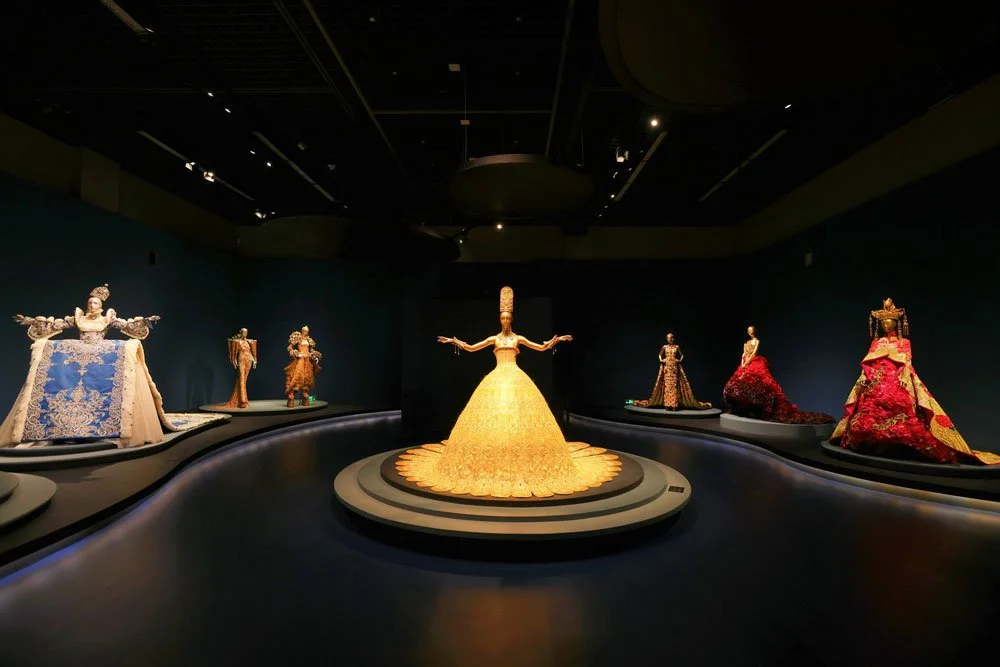
Guo Pei has spent four decades developing a couture practice rooted in Chinese craftsmanship, complex silhouettes and labour-intensive embroidery. Garden of Ethereal Realms: Guo Pei Costume Art Exhibition, running until 31 August 2027, brings together more than 170 works showcasing her use of elaborate embroidery, textile manipulation and sculptural construction.
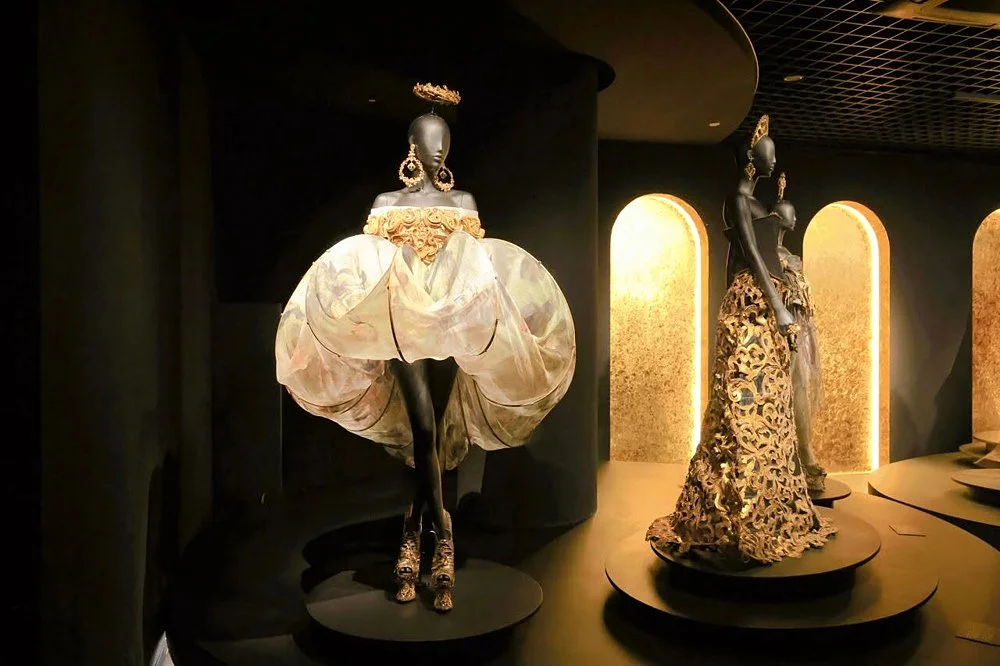
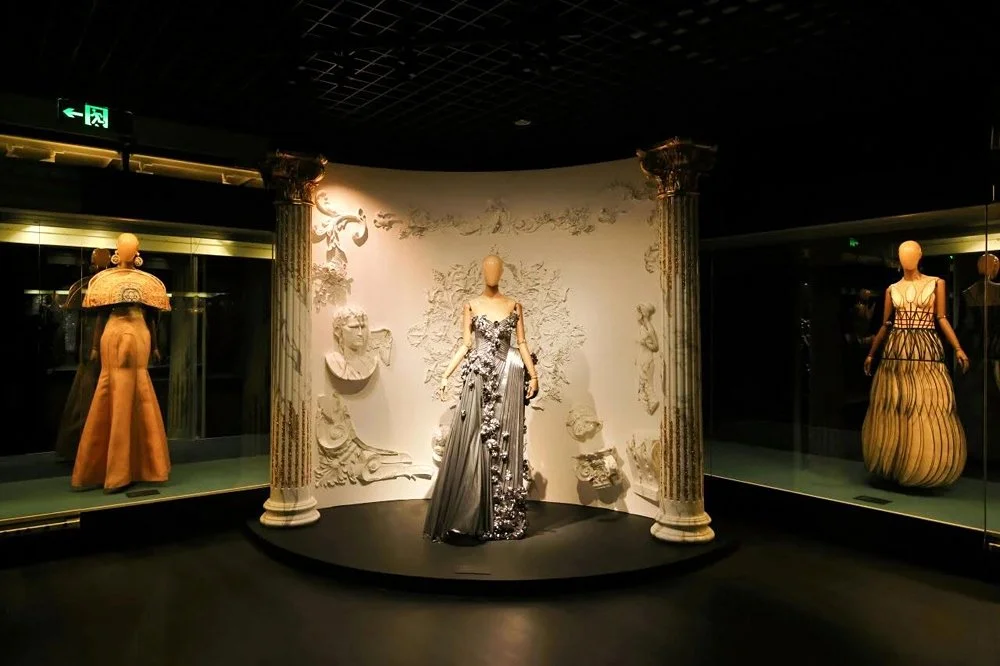
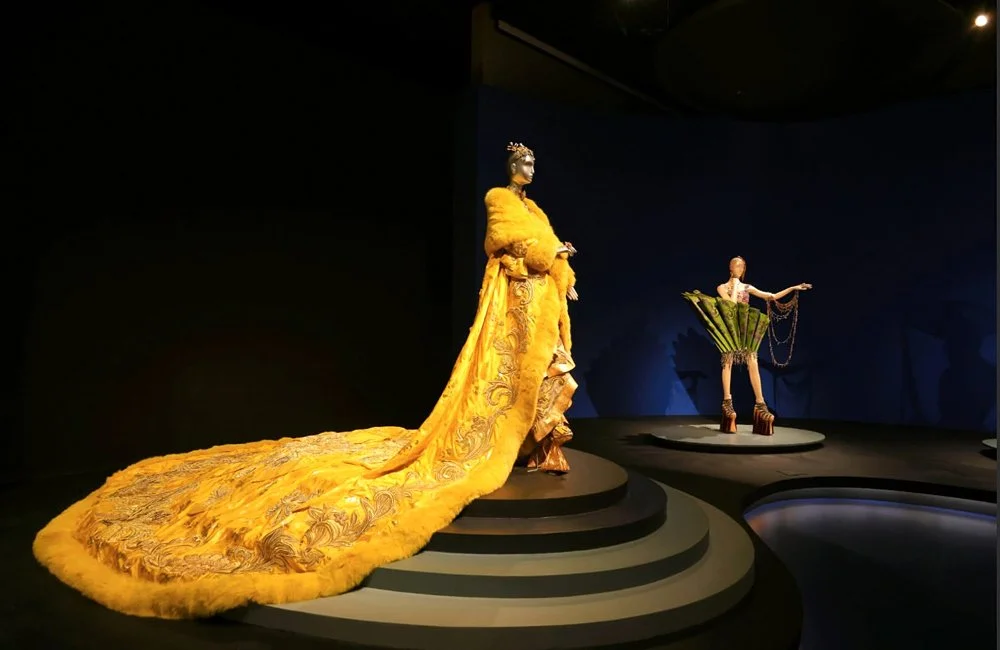
Guo Pei began working in China’s garment industry in 1986 and founded her Beijing couture house, Rose Studio, in 1997. Alongside her own collections, which drew on Chinese history and mythology as well as European architecture, she took on major commissions, including the ceremonial uniforms for the 2008 Beijing Olympic Games.
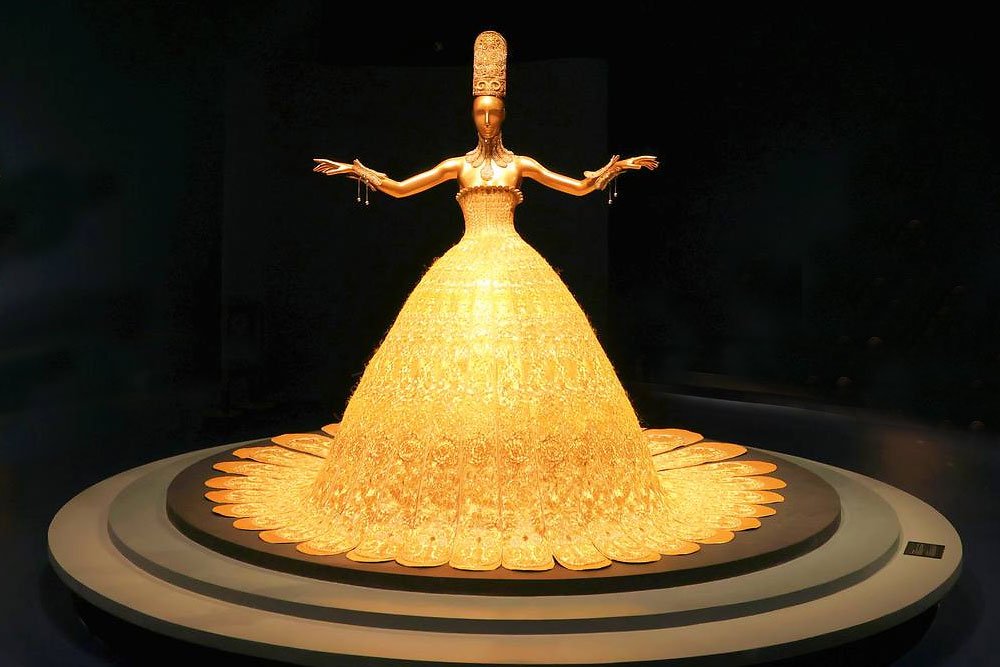
International attention followed in 2015, when Rihanna wore the Chinese designer’s yellow embroidered cape gown to the Met Gala, themed China: Through the Looking Glass. The following year, Guo Pei became the first Chinese designer to be invited by the Chambre Syndicale de la Haute Couture as a guest member, allowing her to present collections within the Paris couture calendar.
The Hangzhou exhibition opens with Samsara, One Thousand and Two Nights and The Story of the Dragon, early collections in which narrative and cultural symbolism shape the garments.
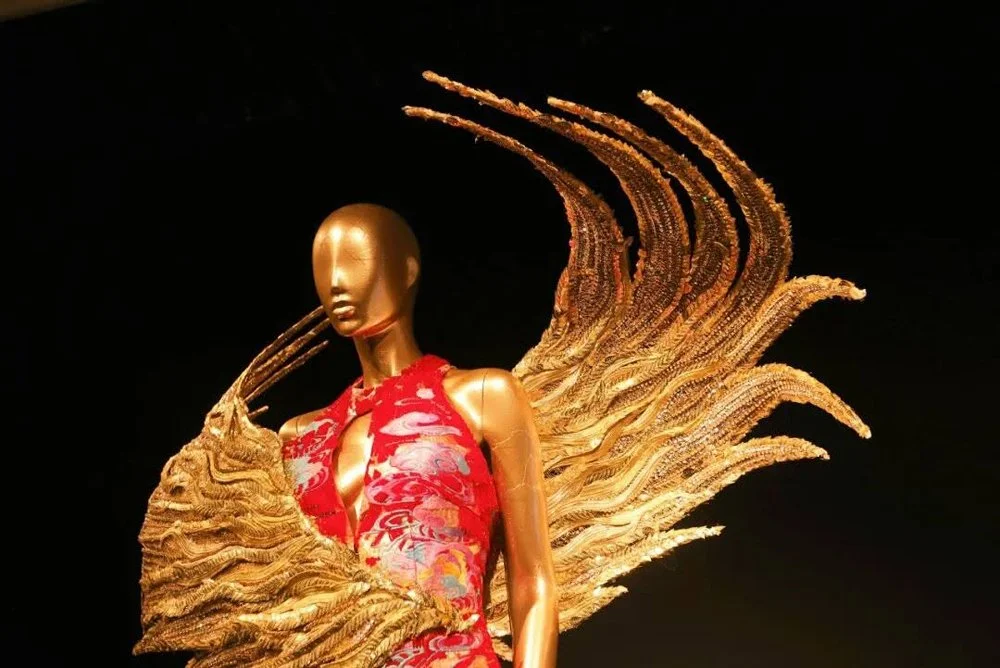
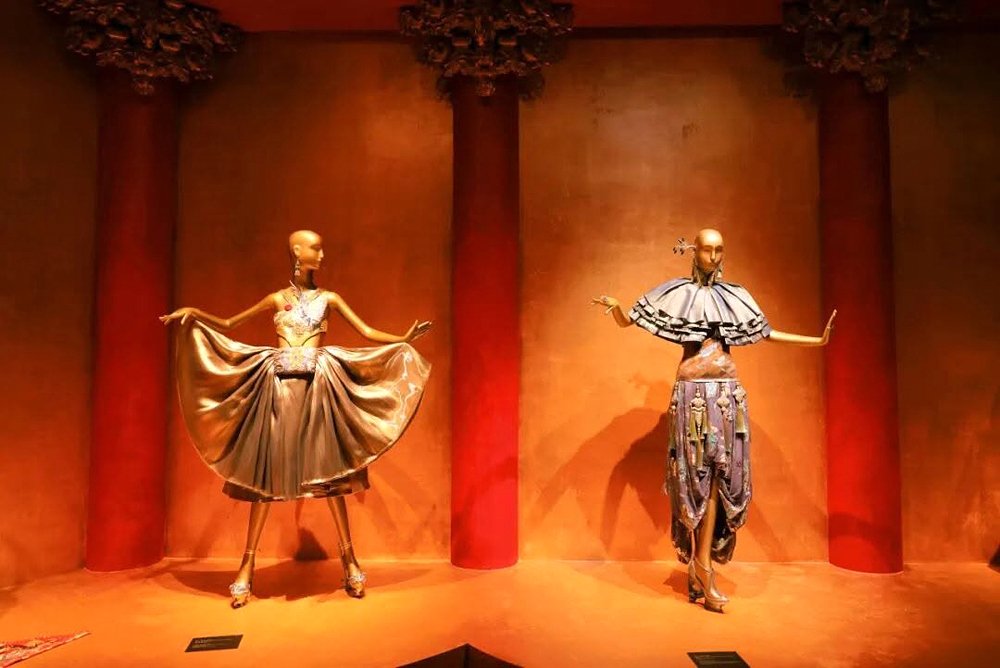
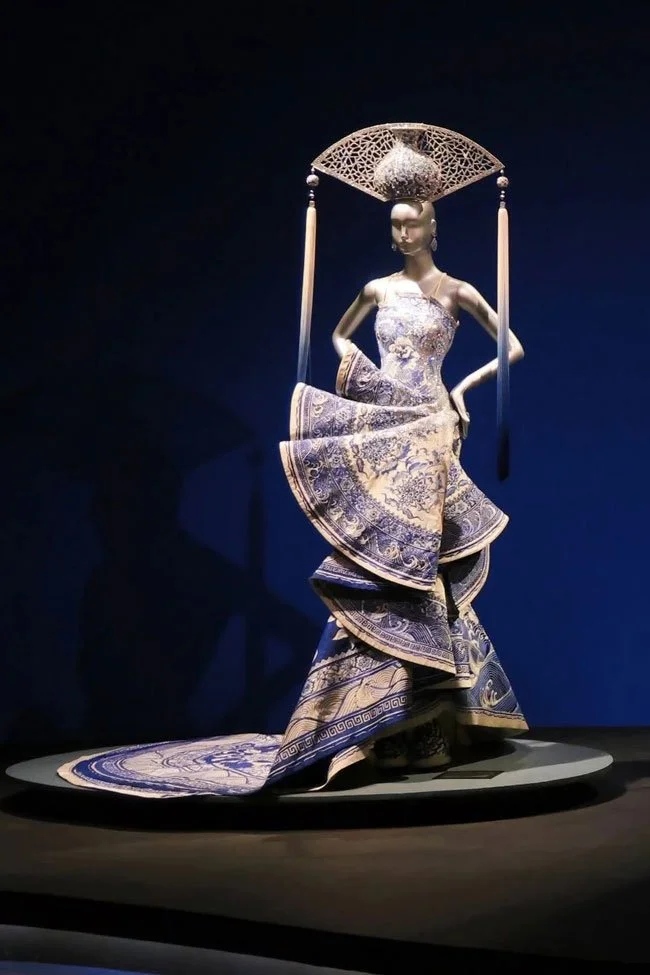
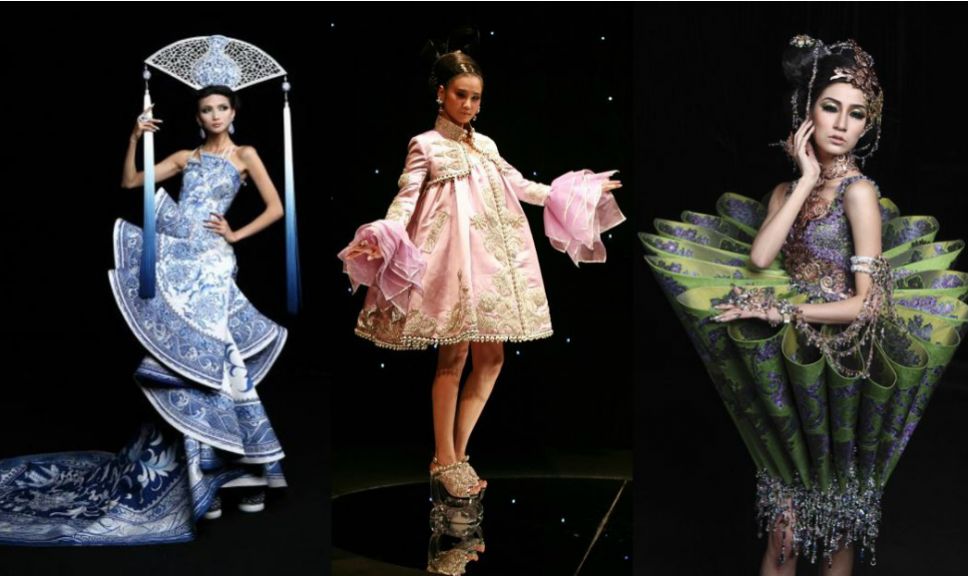
The first section brings together three collections in which Guo uses symbolism and narrative to shape the garment. Samsara (2005) explores the cycle of life, while One Thousand and Two Nights (2009) draws on the tales of the Arabian Nights and the emotional lives of the women within them. In The Story of the Dragon (2012), this interest in narrative takes a more explicitly Chinese form. Guo reworks the dragon, a longstanding symbol in Chinese culture, through techniques including openwork and raised, padded embroidery. The resulting relief gives the motif depth and volume, making the surface of the garment part of the storytelling.
Architecture and decorative arts provided the starting point for Legend (SS2017), which was inspired by the Swiss city of St Gallen. Its cathedral murals and Rococo ornament informed bespoke fabrics developed in collaboration with textile manufacturer Jakob Schlaepfer. Guo combined these intricate surfaces with three-dimensional embroidery and handcrafted copper accessories, translating the richness of European ecclesiastical art into couture.
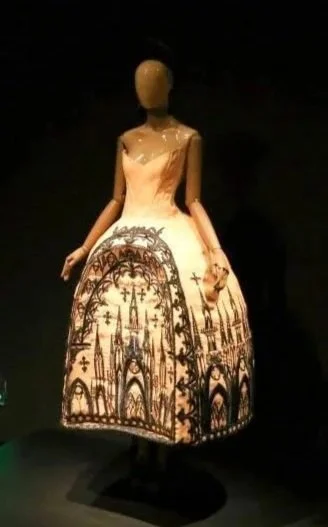
Architecture, presented in Paris for FW2018 drew her interest in Gothic buildings. This time, Guo Pei translated their pointed spires, vaulted arches and stained-glass windows into exaggerated silhouettes and geometric lines. Panniers provided the foundation for skirts with curved extensions and layered planes, giving the clothes the volume needed to sustain their architectural shapes.
Childhood imagery, flowers and fantastical creatures inform the third section of the exhibition, which includes Children’s Dream, Heart’s Garden and Couture Paradise.
Children’s Dream, from 2008, uses pastel colours, high waists and folded forms to evoke childhood play and the construction of paper objects. Heart’s Garden, presented in 2015, takes flowers as its central motif, drawing on their associations with growth and renewal.
Couture Paradise, shown in 2018, draws on Elysium, the paradise of the blessed in Greek mythology. Guo extended the collection’s fantastical imagery through embroidered flowers, sculptural forms and accessories made from unusual materials, including bamboo woven in Huangshan, Anhui.
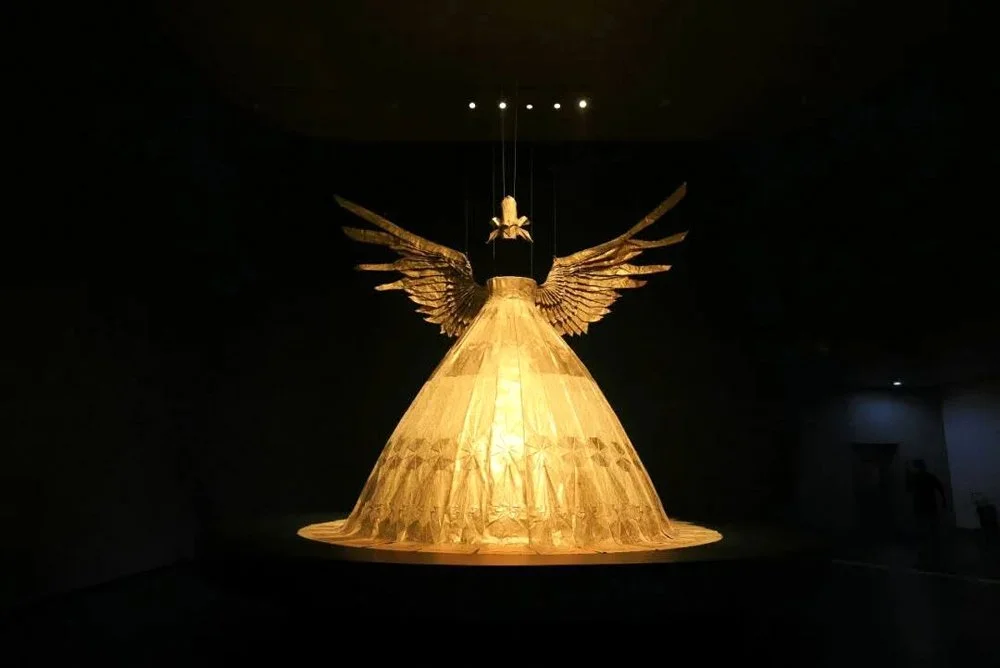
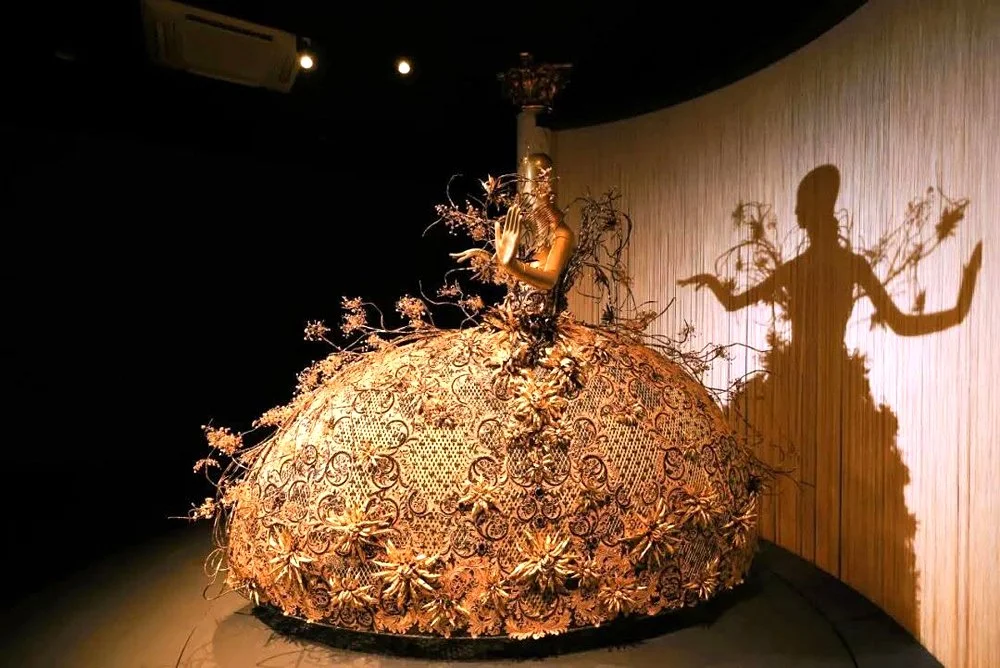
The final section draws on Chinese mythology, imperial architecture and historical dress, with the East Palace collection, presented in 2019, as a central reference. Inspired by the lunar palace of Chinese mythology and the underwater palaces of the Dragon Kings, the collection incorporates auspicious animals and other traditional motifs. Wide sleeves, crossed collars and long robes recall traditional dress forms, while contemporary tailoring alters their proportions. Mother-of-pearl inlay and elaborate embroidery add further detail. Guo’s approach to historical dress was evident here. Traditional silhouettes and decorative techniques provide a starting point for new forms, with the scale of couture allowing her to exaggerate proportions and develop more complex construction. The garments retain recognisable elements of Chinese dress without reproducing historical costumes intact.
For a designer whose work depends so heavily on embroidery and the manipulation of fabric, the China National Silk Museum is a fitting host. The museum’s focus on silk, textiles and the history of dress places Guo’s contemporary practice within a longer tradition of Chinese textile making.
Seen across several decades, the collections show how the Chinese designer has adapted different cultural references to the demands of couture. Her references regularly shift between East and West, but her approach stays constant. Guo expects the garment itself to carry the idea, through the way it is cut, built and embroidered.