All photos: Kim Lo
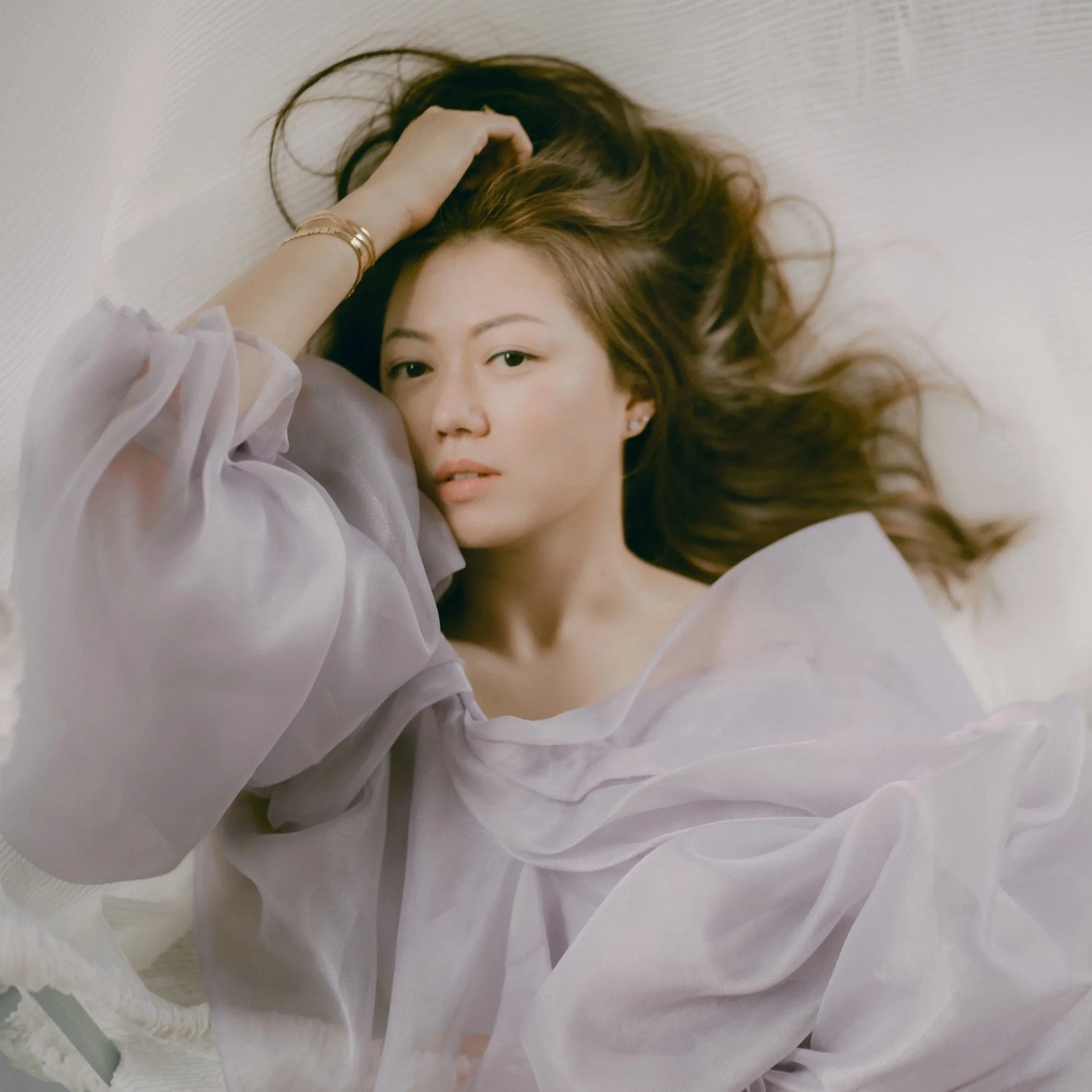
Vivian Luk
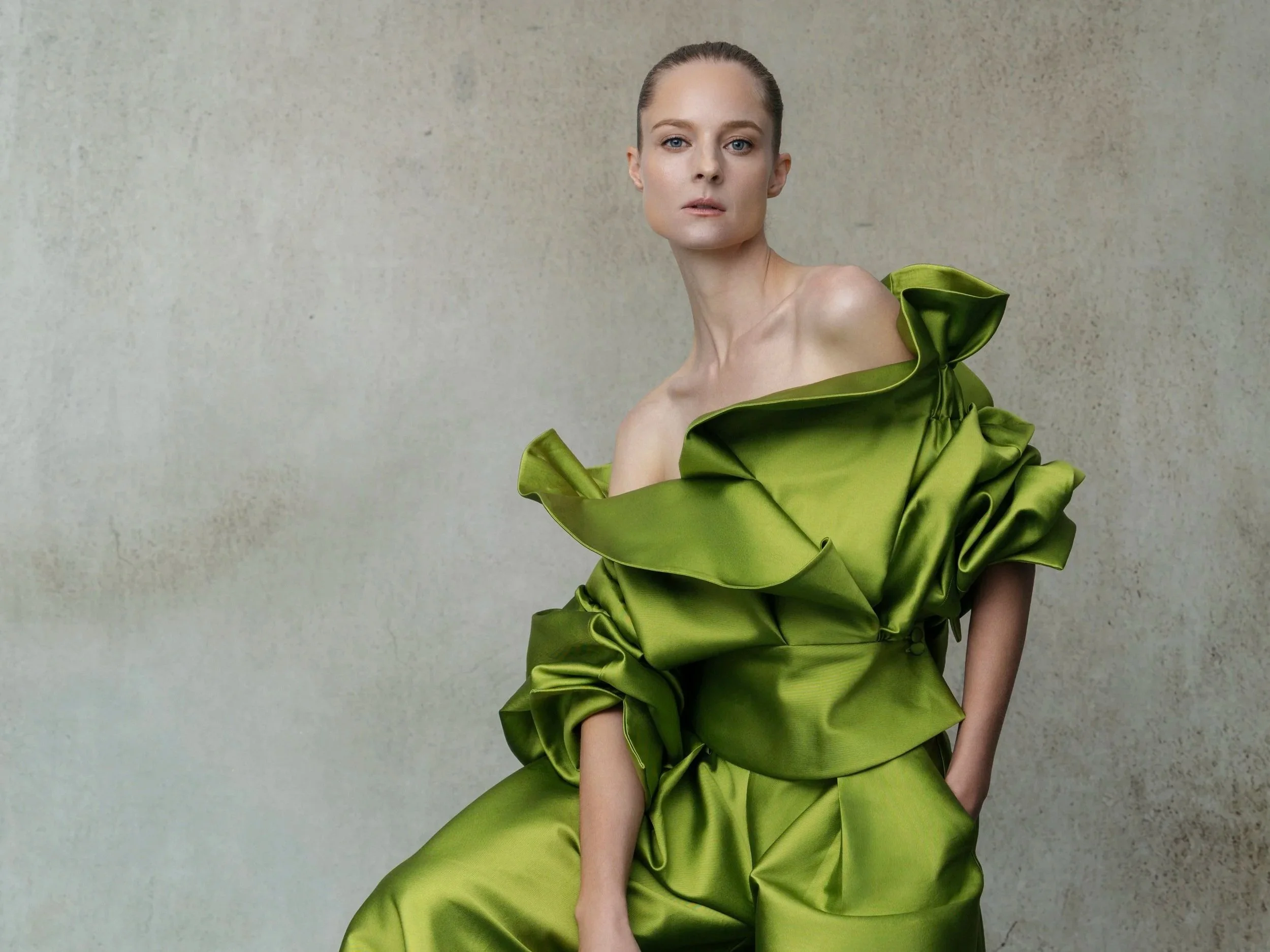
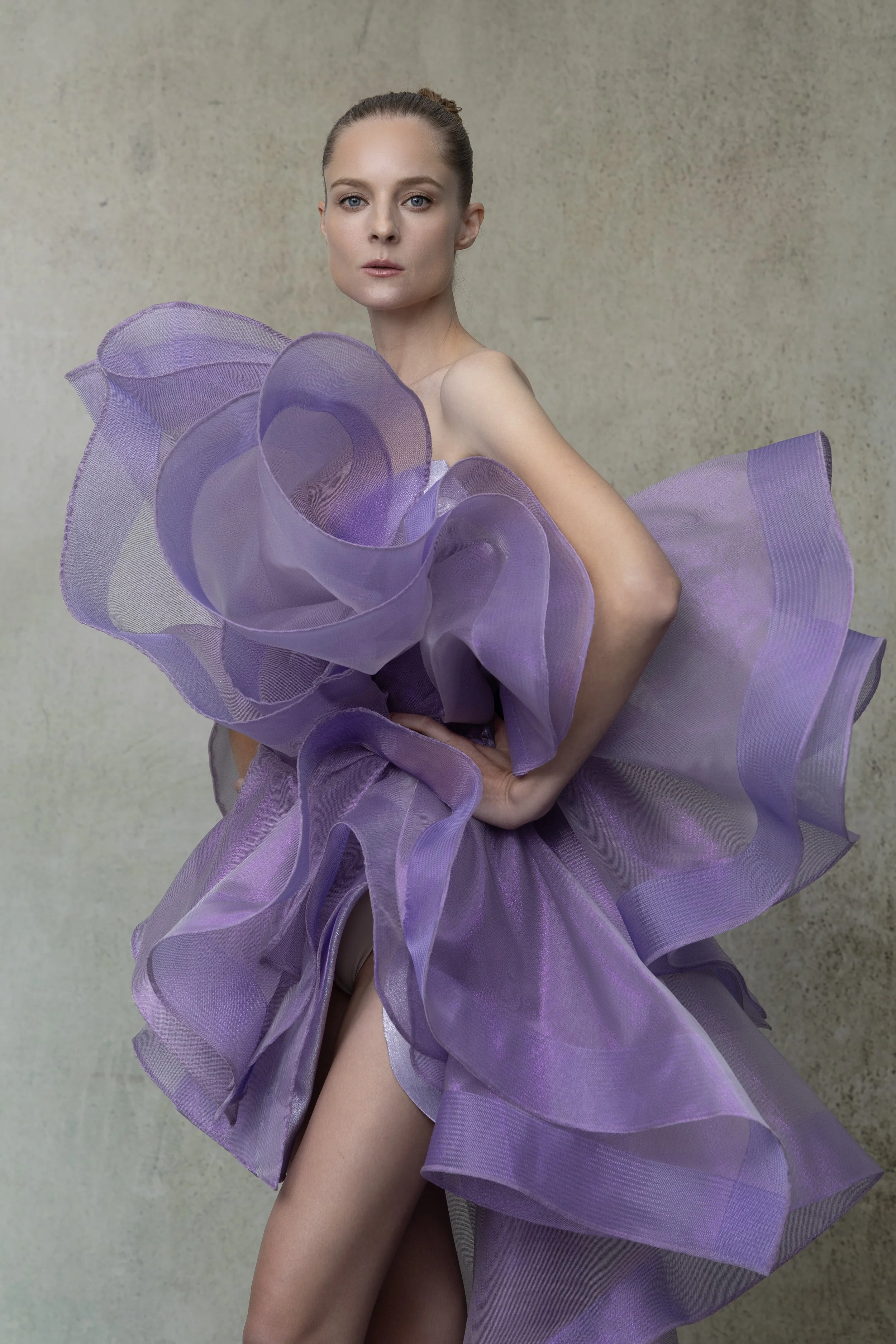
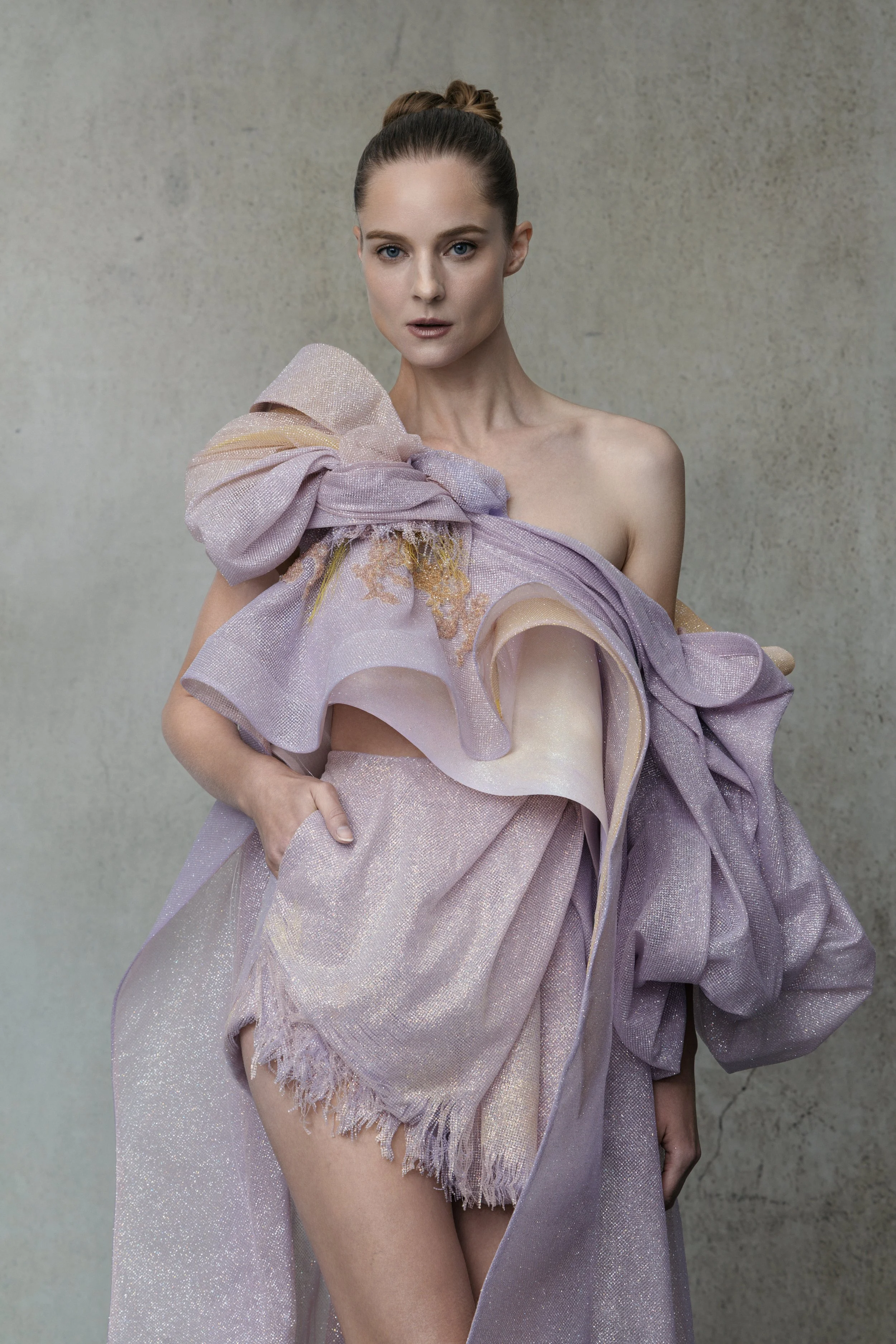
At VIRTUOSE: The Artistry of Couture 2026, Vivian Luk showed ten looks built around movement, draping and controlled volume. A lavender gown formed petal-like shapes around the body; a Mikado jacket extended into a ruffled train; a celadon faille top was paired with deep-pleated trousers. The clothes were sculptural but not rigid, with much of their technical complexity concealed beneath the surface.
“I like to celebrate the natural curves of the body through draping that suggests movement, even when the wearer is standing completely still. My work is less about imposing structure onto the body and more about creating a dialogue between fabric and form,” she says, noting that the draping process itself often retains traces of the human hand. “I'm drawn to folds that feel almost accidental, free-spirited, and instinctive. These asymmetrical shapes continuously wrap around the body, creating a sense of fluidity and motion.”
Her latest collection, presented at VIRTUOSE, introduced mix-and-match separates alongside the gowns, bringing some ready-to-wear logic into an atelier practice.
“To me, couture is fashion that allows itself the time and space to go deeper. It is about exploring the meaning behind a design, investigating different forms of craftsmanship, and developing techniques that solve technical challenges in unique ways. It also fosters a more personal relationship between the designer and the client, creating something that feels truly individual,” she says.
“Couture isn't about adding elements simply to satisfy established criteria. Instead, couture remains open to interpretation, allowing creativity, experimentation, and a designer's unique point of view to take centre stage,” she adds.
Luk has been working in Hong Kong since 2008, but remains relatively little known outside the city's private-client and society circles. Before establishing her atelier, she spent several years at Vera Wang working on bridal and made-to-order clothes. That experience continues to show in the way she thinks about construction, though not necessarily in the finished silhouette.
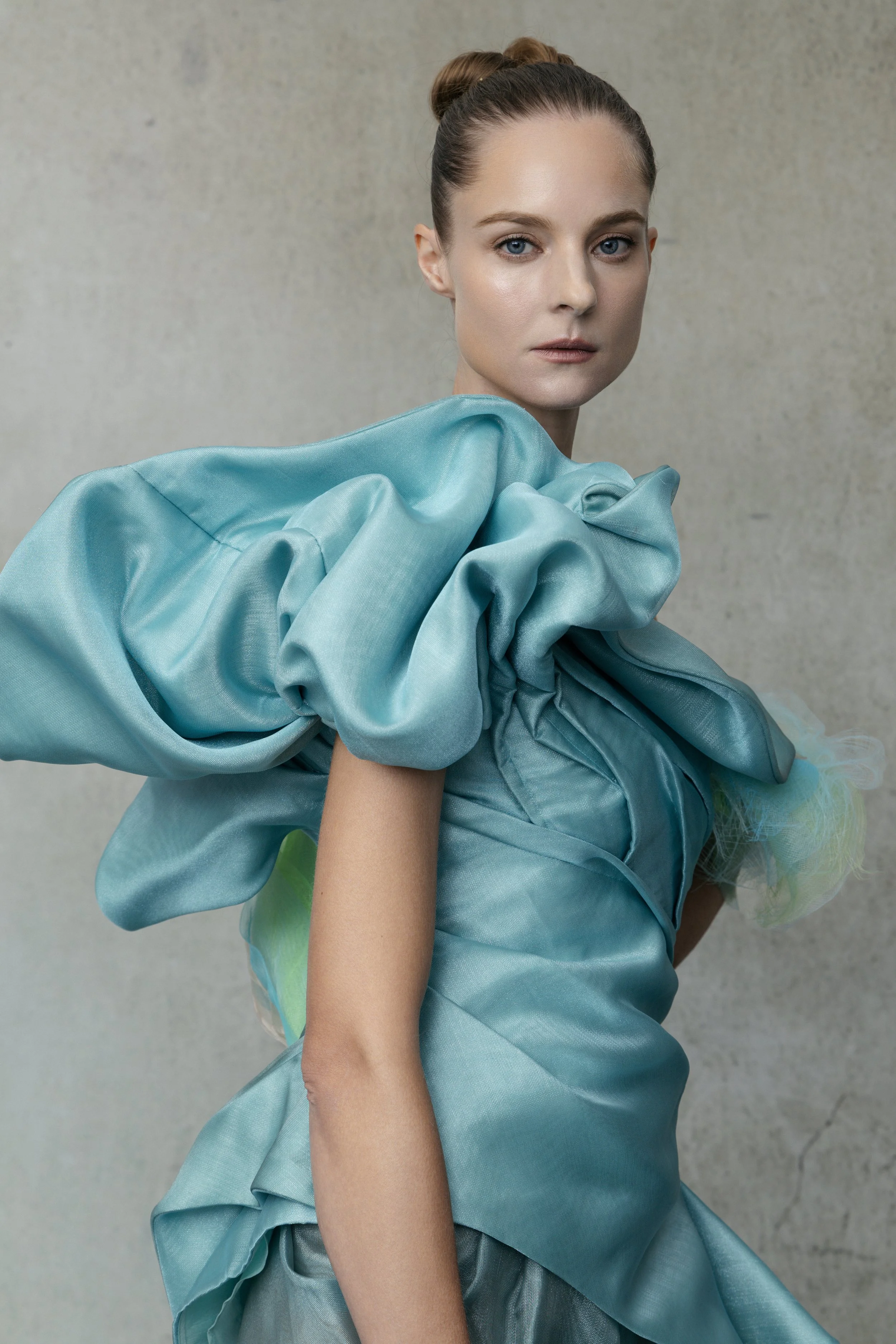
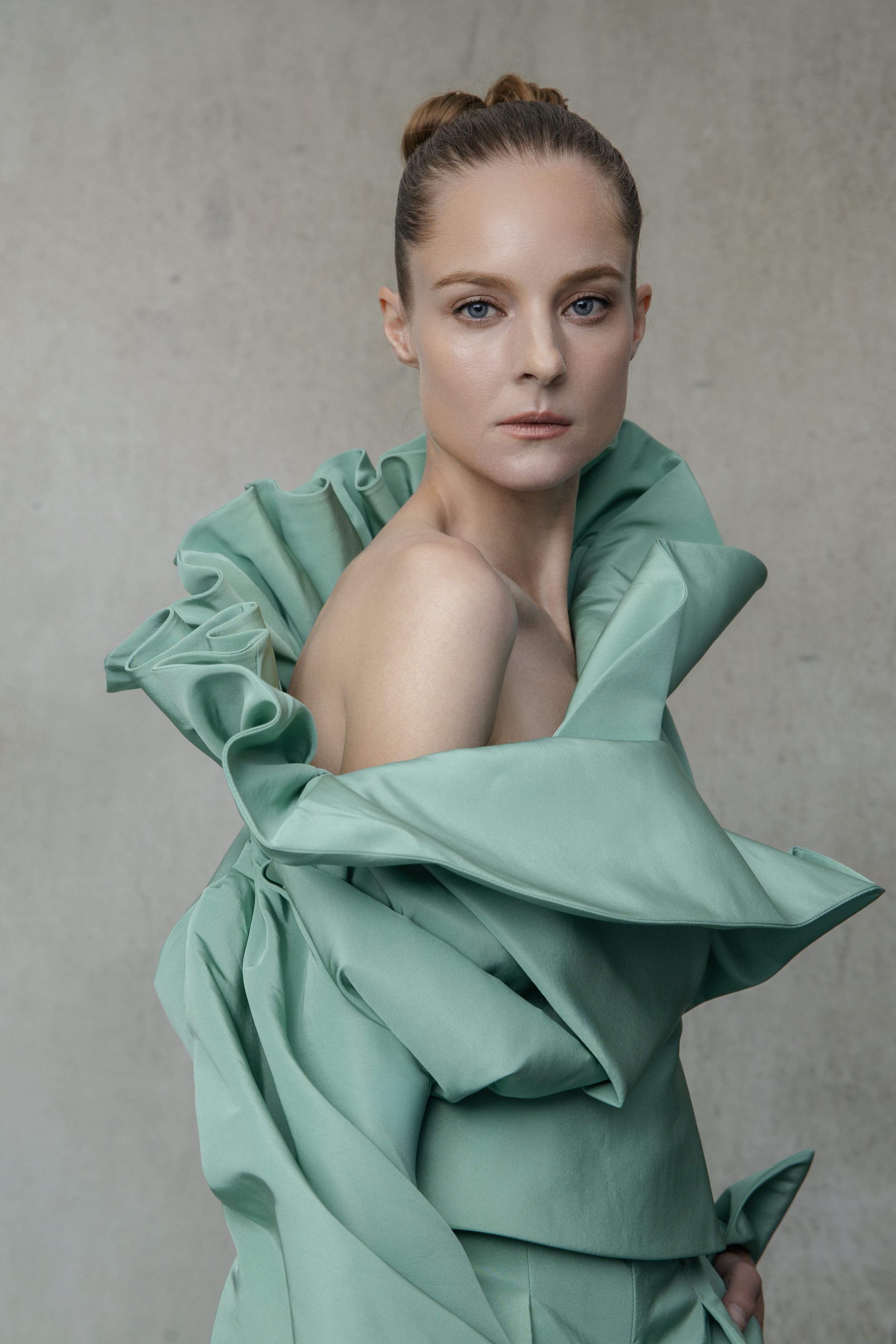
At Vera Wang, Luk remembers working with four or five pattern makers, each with a different method of translating an idea into a garment. One might take a neckline she had draped and incorporate it directly into a toile; another would question the proportions before translating the two-dimensional drawing into three dimensions. “I learned not only about construction techniques, but also about new ways of thinking and unique ways to work with different personalities,” she says.
That experience has stayed with her, but the relationship between idea and execution has changed. “Since my years at Vera Wang, what I've moved away from isn't the standard of craftsmanship, which I still deeply admire, but rather the degree of separation between the original idea and its execution,” Luk says. She now drapes all of her own creations, keeping the process closer to the fabric and the body.
“I am now less concerned with preserving my initial sketch and more interested in discovering what emerges throughout the process,” she says. “I've become more comfortable allowing instinct, draping, and the behaviour of the fabric to guide the design. My process today is far more organic and exploratory than when I first started my career.”
Looking back, Luk says that earlier in her career she was often fascinated by highly labour-intensive craftsmanship and heavily manipulated fabrics, and felt “a stronger need to demonstrate those technical achievements within the garment.”
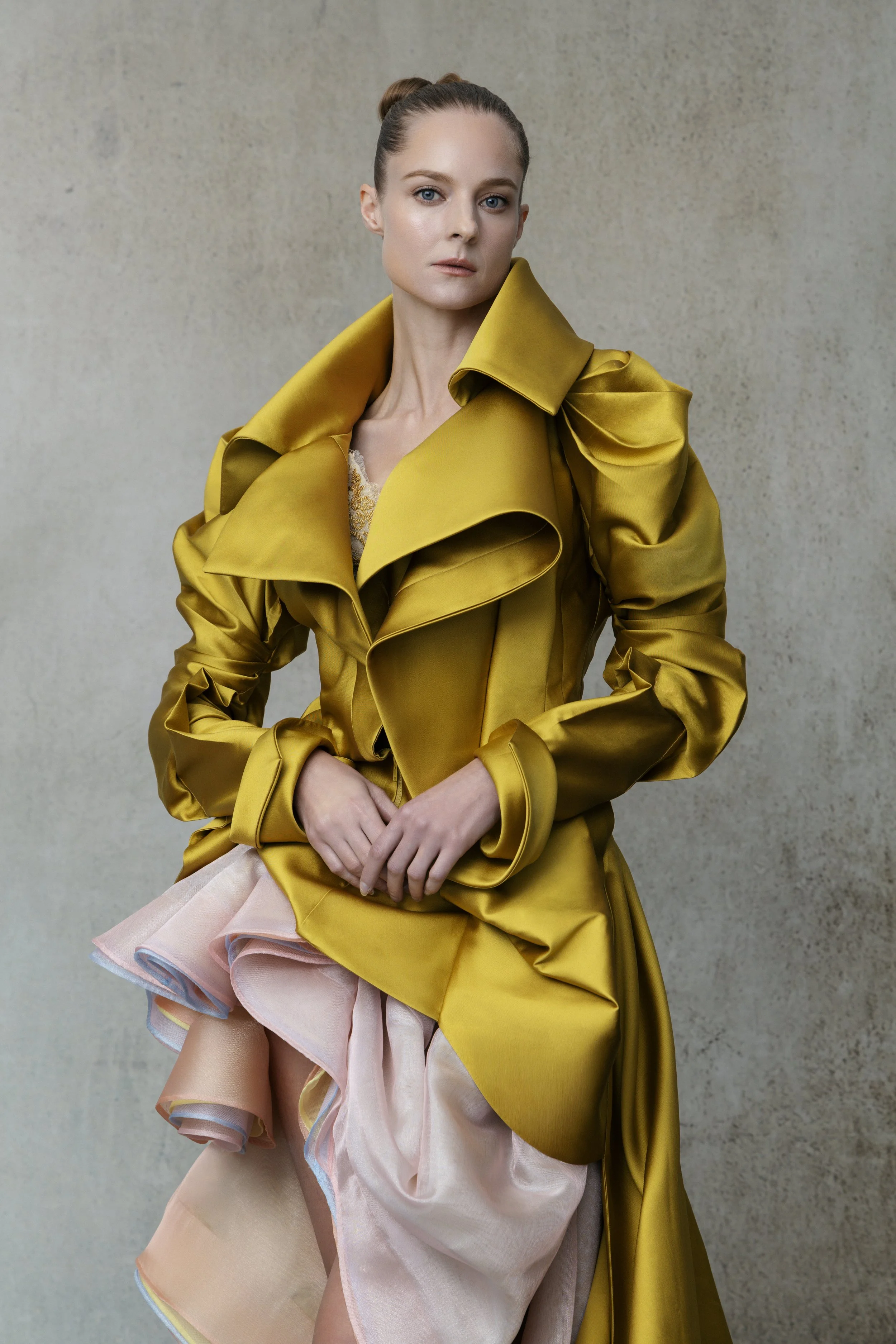
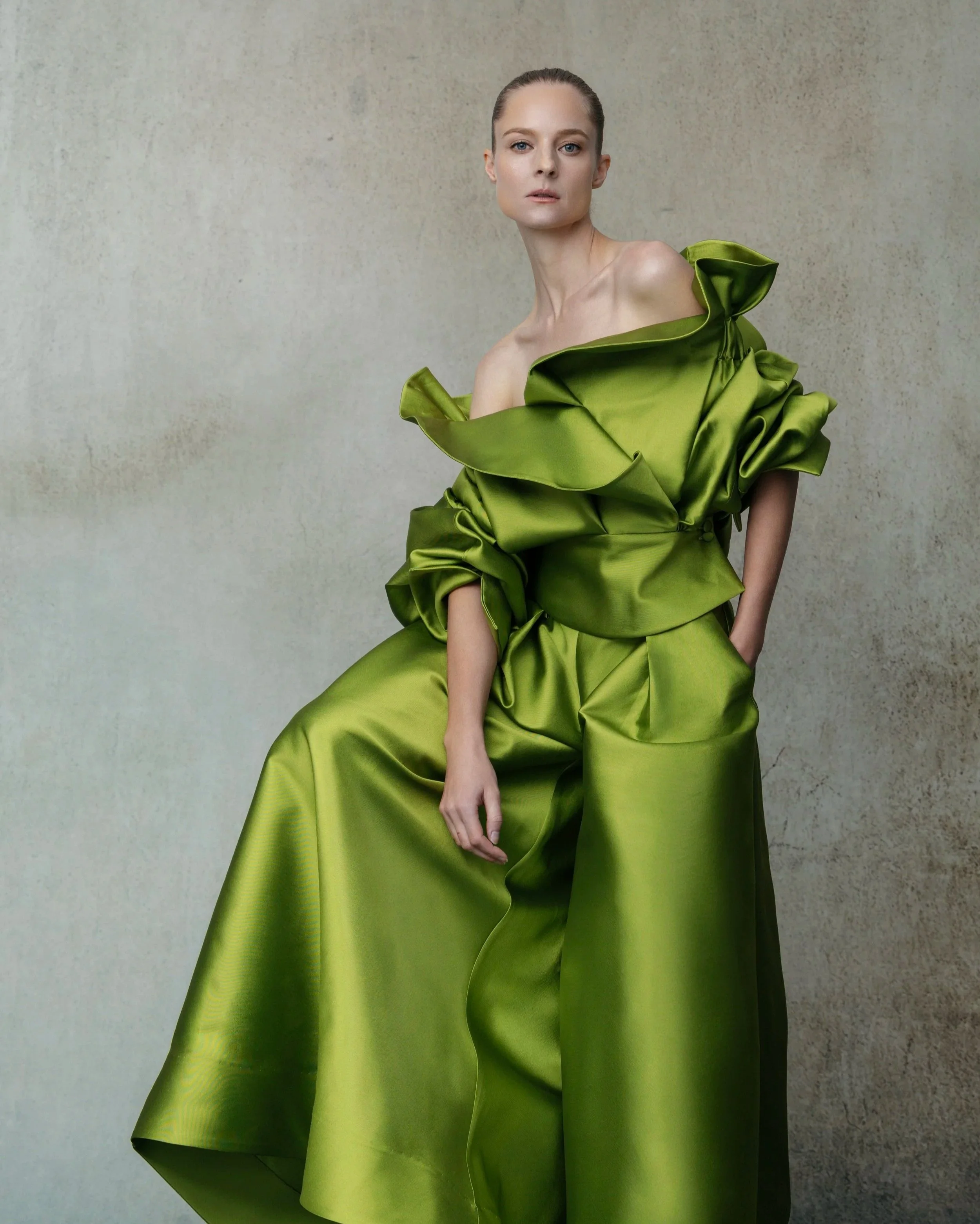
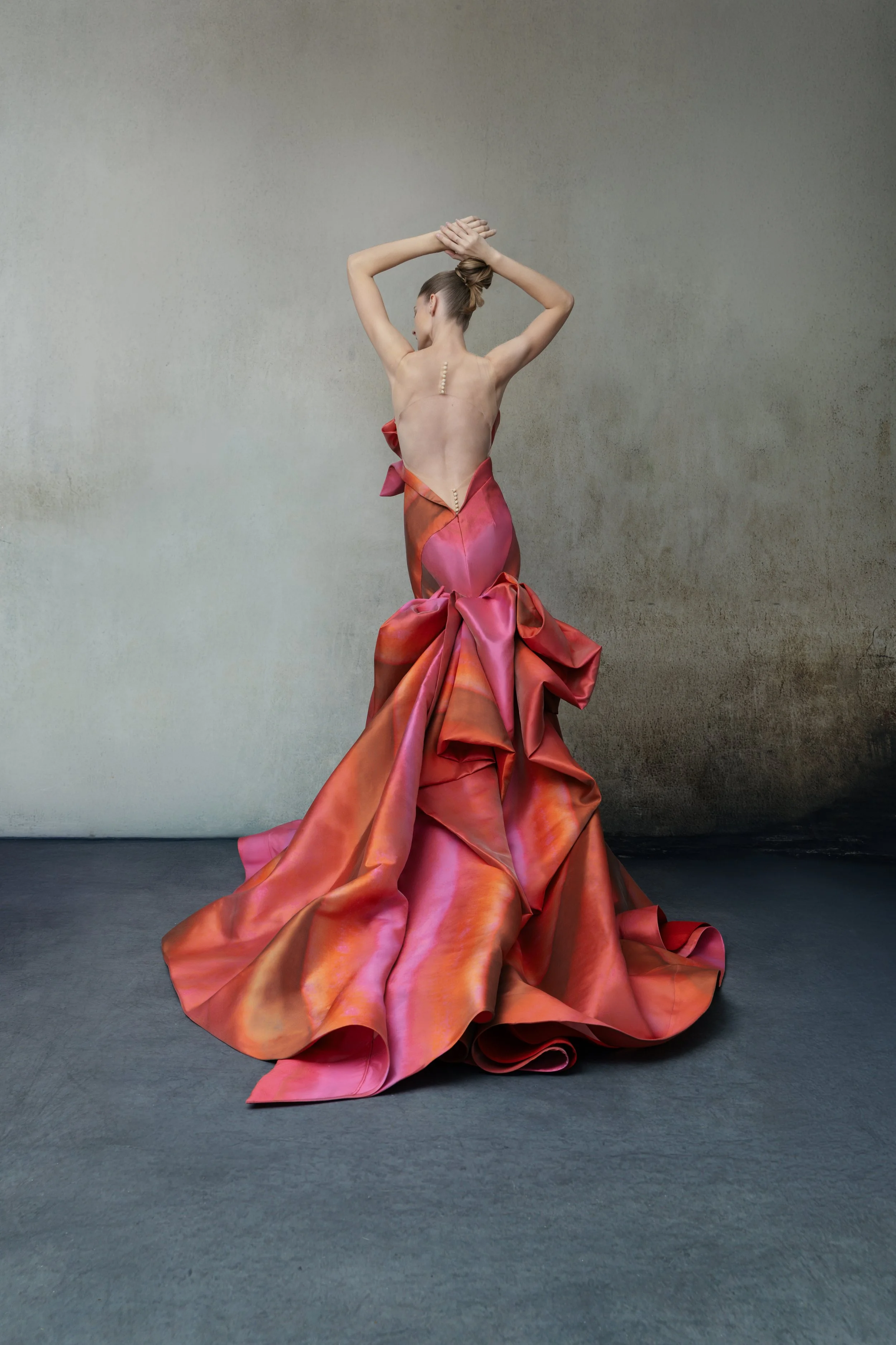
Movement is particularly important to Luk. She trained at a performance arts school in Canada, where watching classmates pursue dance and music informed her visual work. She now tries on her own mock-ups and observes them while walking, turning and even dancing. “Often that is when I discover other proportions or new silhouette ideas. A garment can look beautiful standing still, but it becomes truly alive when it moves with the body,” she says.
Creating for couture clients means there is a continual process of checking how a design interacts with an individual client's body and how it can best complement their natural proportions. “This has led me to explore adaptability within the garment itself. Details such as sleeves that can be worn on or off the shoulder, or elasticated necklines that allow the silhouette to be reshaped in different ways, create a dialogue between the wearer and the design. Rather than sacrificing my design language, my recent philosophy has been to build flexibility into the garment, allowing each person to connect with and to personalise in their own way,” she says.
Luk is drawn to complex forms and construction, but she wants the finished garment to retain a sense of ease. “I aspire to create work that appears simple without actually being simple. Beneath the silhouette are layers of decisions, technical construction, and craftsmanship. For those who understand how garments are made, that complexity is there to be discovered, revealing itself gradually rather than demanding attention,” she says.
The sophistication of Luk's current couture lies less in how much technique can be put into a garment than in how much technique can be made to disappear. The clothes do not need to explain their construction. They need to move, hold their shape and leave enough evidence for the trained eye to understand the work required to make them.