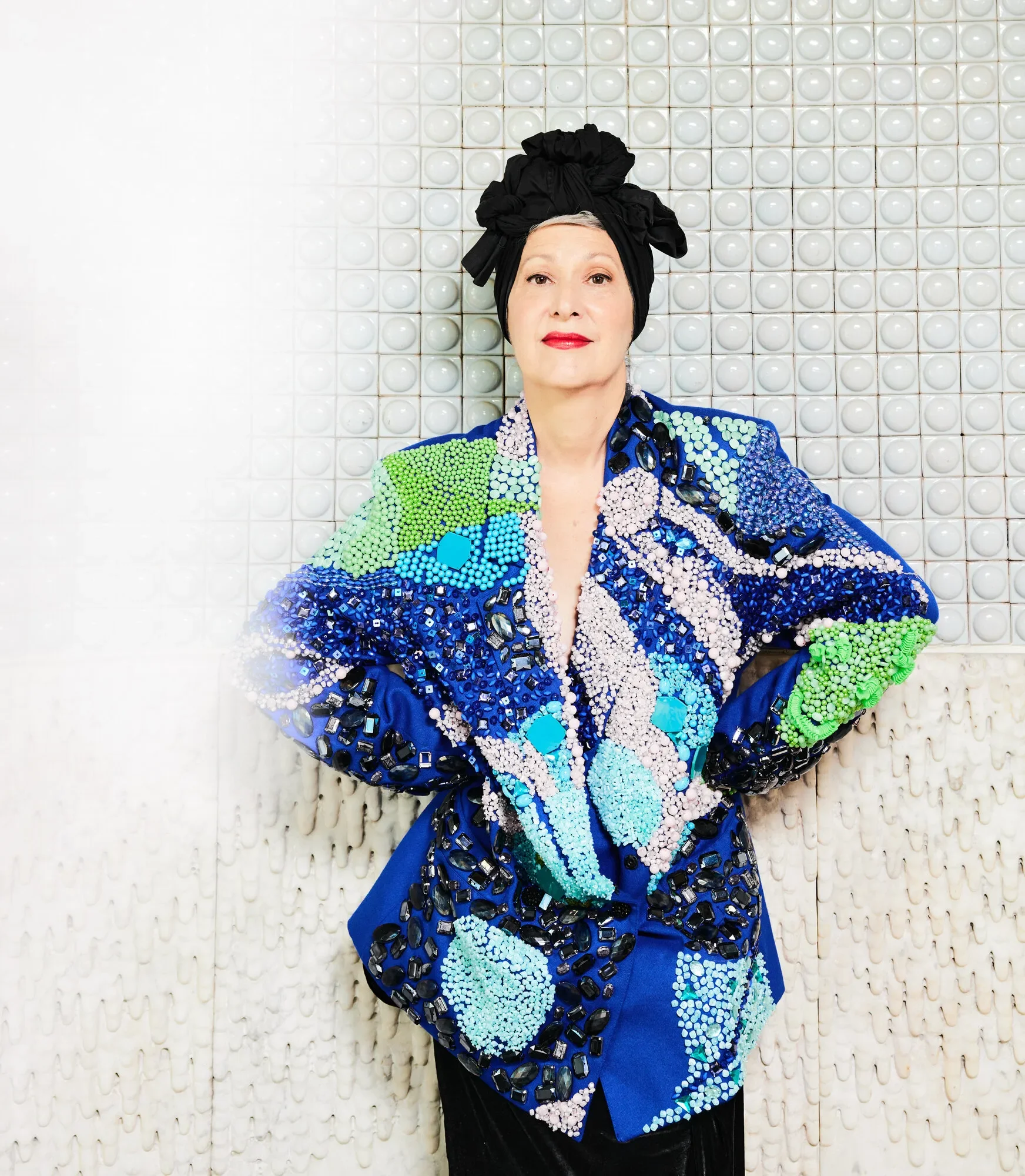
Designer Marylin Fitoussi
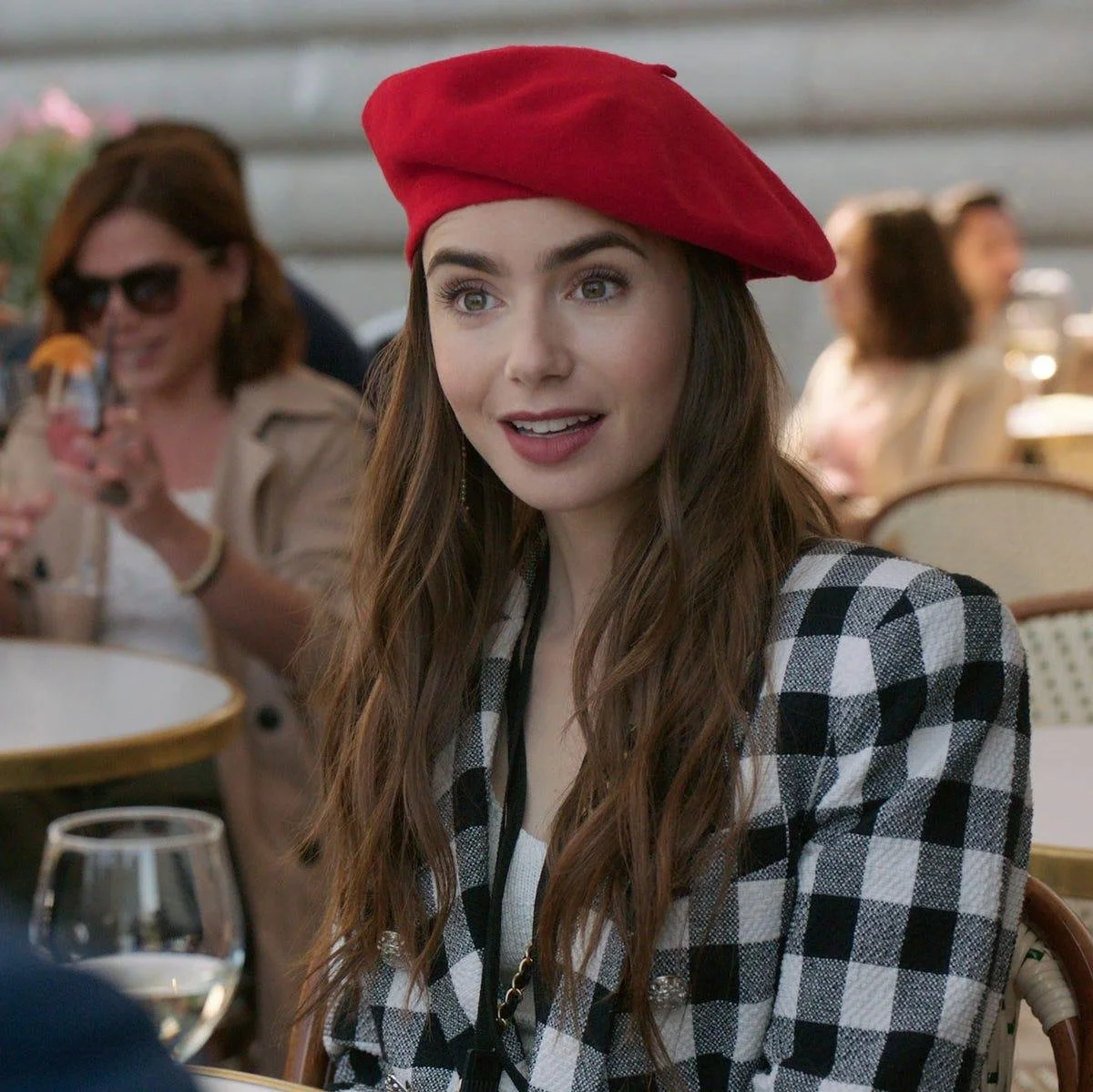
When Emily in Paris premiered on Netflix in 2020, its clothes quickly became a talking point, often eclipsing the plot. Lily Collins’s Emily Cooper wore berets, clashing prints and designer pieces piled on top of one another, a combination that seemed to confirm every American stereotype about French style. French reviewers criticised the series’ clichés about Parisian life; fashion commentators questioned its caricature of Parisian dress. But the wardrobe had a clear purpose. Emily was an outsider who had landed in Paris full of enthusiasm and little grasp of its rules. She dressed accordingly.
As the series went on, attention shifted from Emily’s outfits to the designers behind them. Viewers wanted to identify the labels, fashion houses sought placement and emerging designers gained exposure. Costume designer Marylin Fitoussi’s work earned three Emmy nominations for costume design and a 2022 Costume Designers Guild award, shared with Patricia Field.
The costumes will now have an exhibition of their own. Emily in Paris: Fashion Without Rules — Costumes by Marylin Fitoussi, opening at SCAD FASH Museum of Fashion + Film in Atlanta on 11 November, will bring together more than 100 ensembles, alongside sketches, photographs and production material. The exhibition will trace the changing wardrobes of Emily, Sylvie Grateau, Mindy Chen and Camille, each with a distinct approach to dress.
Season one of the series was built on excess. Colour, print and accessories competed for attention, and the red beret became shorthand for the show’s glossy, heightened version of Paris. Patricia Field, whose work on Sex and the City had established her influence on television costume, was brought in by creator Darren Star as a consultant. She selected Paris-based Fitoussi to design the clothes, drawing on her knowledge of French and European designers, vintage sourcing and garment construction. Field remained a consultant for the first two seasons; from season three, Fitoussi led the costume department without her.
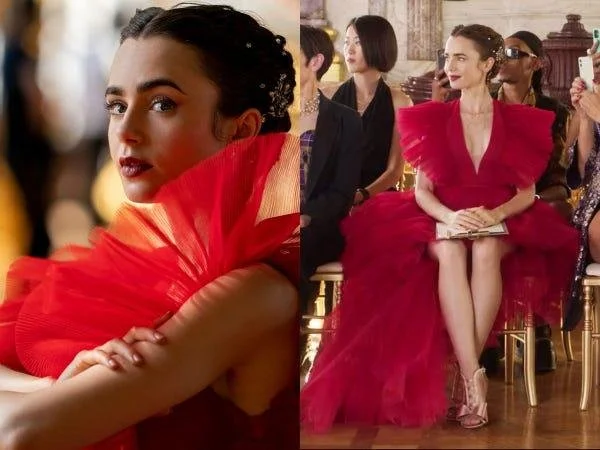
By season two, Emily’s wardrobe had begun to broaden its references. The colours remained bold, but the labels ranged from Elie Saab and Versace to vintage Thierry Mugler. Fitoussi combined established designers with vintage finds, avoiding the effect of a succession of brand placements. The season’s fashion show in the Hall of Mirrors at Versailles brought Marie Antoinette imagery into the series.
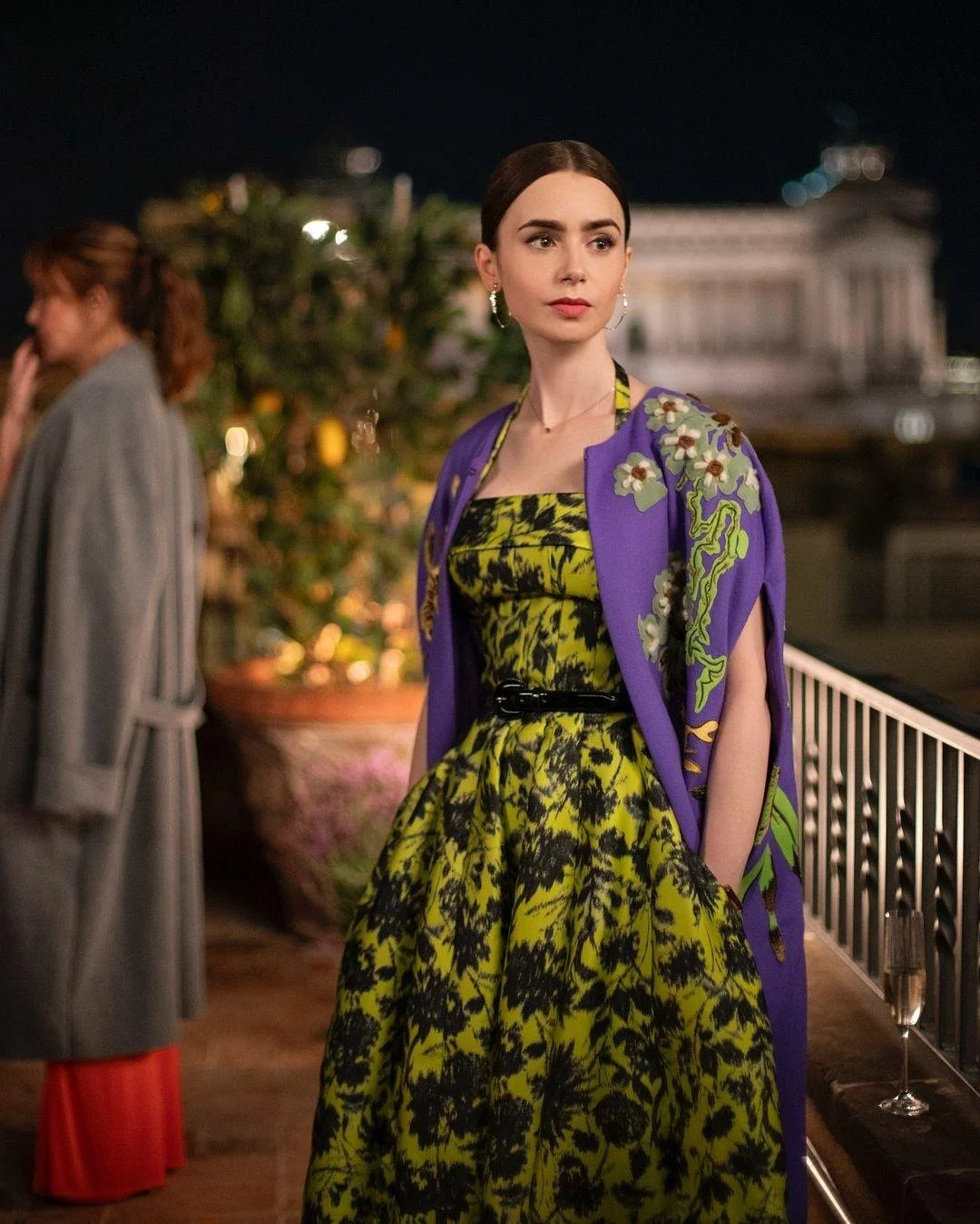
Season three brought a more recognisably French set of references, including Françoise Hardy and Jane Birkin. Fitoussi also began to adjust Emily’s relationship to Parisian style, while retaining the character’s appetite for colour and theatrical detail. In season four, Audrey Hepburn became a more prominent reference, with looks recalling Roman Holiday, Charade and My Fair Lady. The second half of that season took Emily to Rome, setting up the change of location that would shape the next instalment.
The women around Emily were dressed with equal attention. Philippine Leroy-Beaulieu’s Sylvie wears sharp tailoring, controlled proportions and sensual evening clothes; her authority is expressed through precision. Ashley Park’s Mindy leans towards the theatrical, with sequins and dramatic silhouettes suited to her ambitions as a performer. Camille Razat’s Camille has a more pared-back wardrobe, with a sharper, sometimes experimental edge.
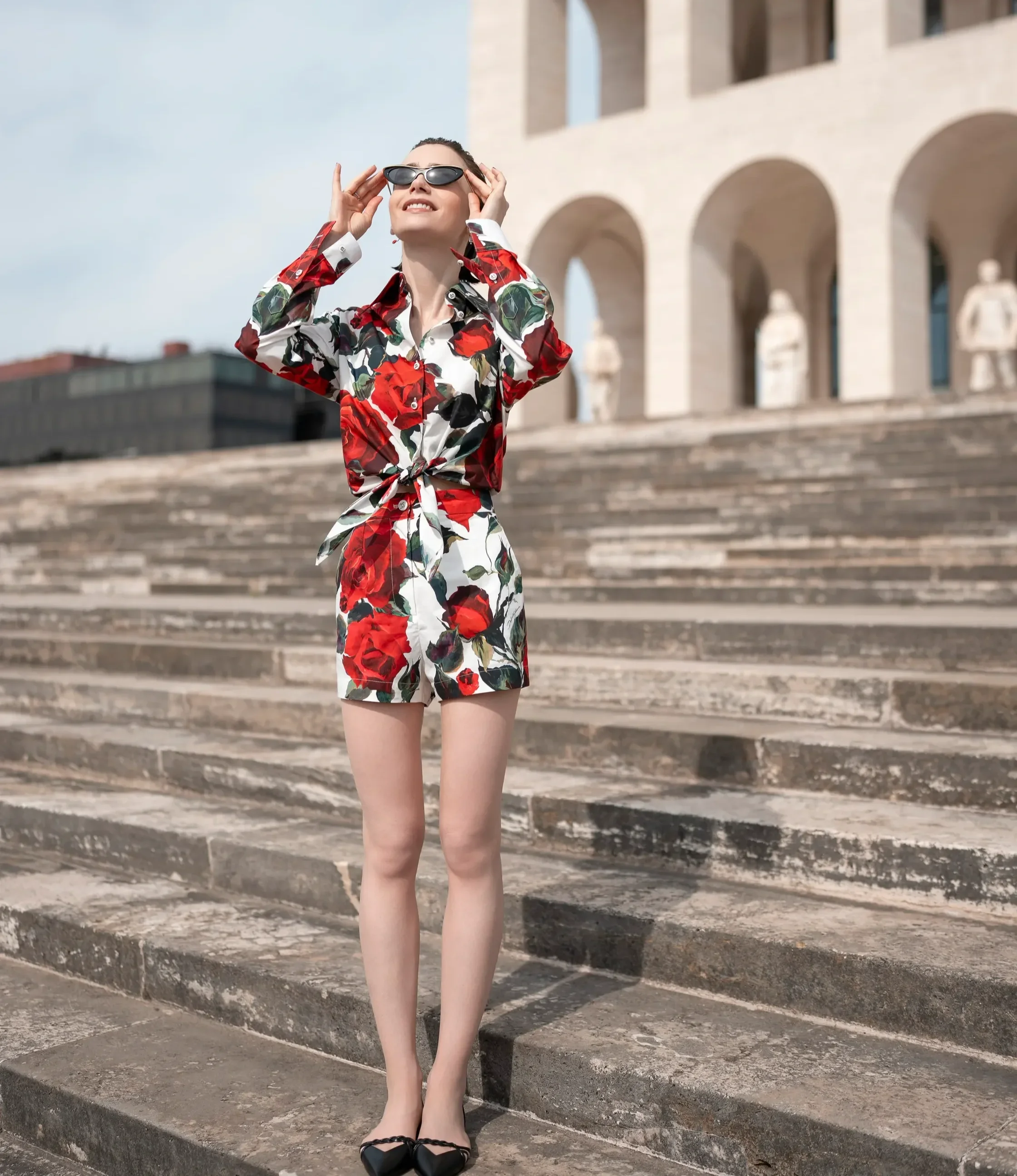
Season five extended the Italian references across Rome and Venice. Fitoussi looked to Sophia Loren, Claudia Cardinale and Anna Magnani, drawing on the silhouettes and polka dots of 1950s Italian cinema. Dolce & Gabbana, Fendi and Moschino appeared alongside references to Sharon Stone’s costumes in Casino. Emily’s wardrobe became more tailored and romantic, with suits, jumpsuits and 1950s-inspired shapes.
The exhibition opens before the sixth and final season premieres on Netflix on 24 December 2026. In Atlanta, the costumes will be seen outside the story that gave them meaning. Fashion museums have traditionally devoted more attention to designers and fashion houses than to the work of costume designers. Fitoussi’s series provides a strong case for changing that emphasis: its clothes have helped define the characters, but they have also brought the work of the people who make and source them into public view.
Emily in Paris: Fashion Without Rules — Costumes by Marylin Fitoussi runs at SCAD FASH Museum of Fashion + Film, Atlanta, from 11 November 2026 to 14 March 2027.