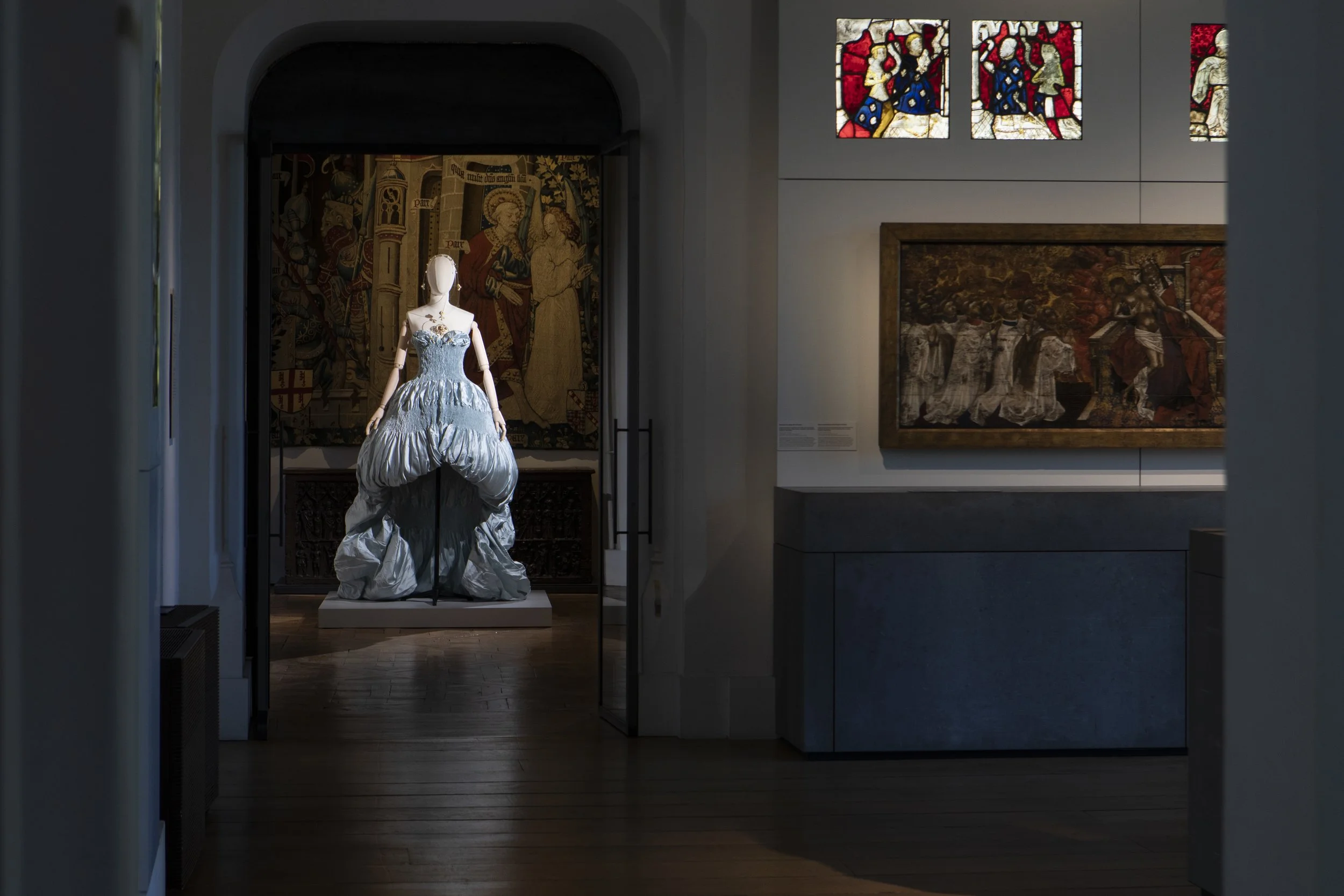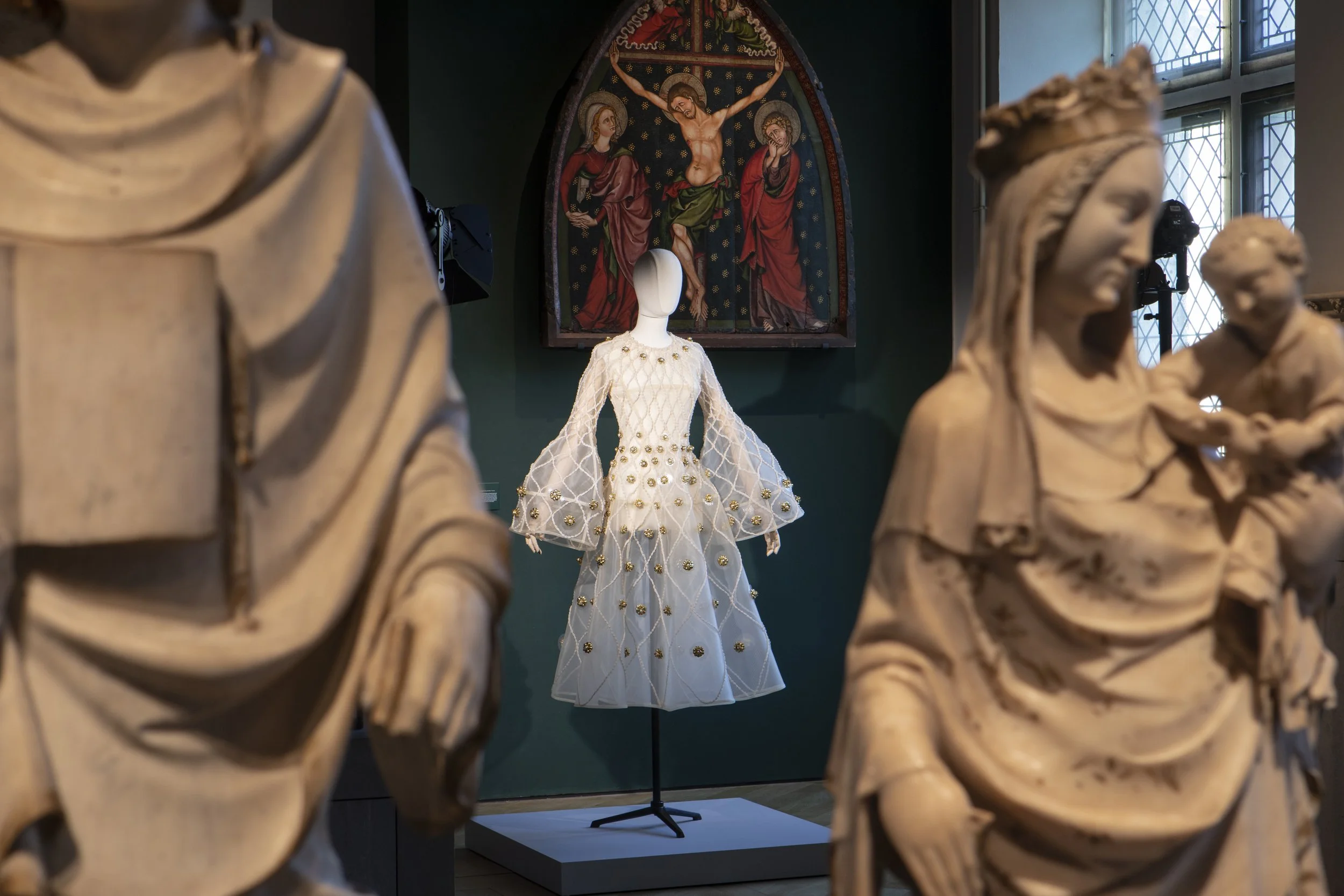
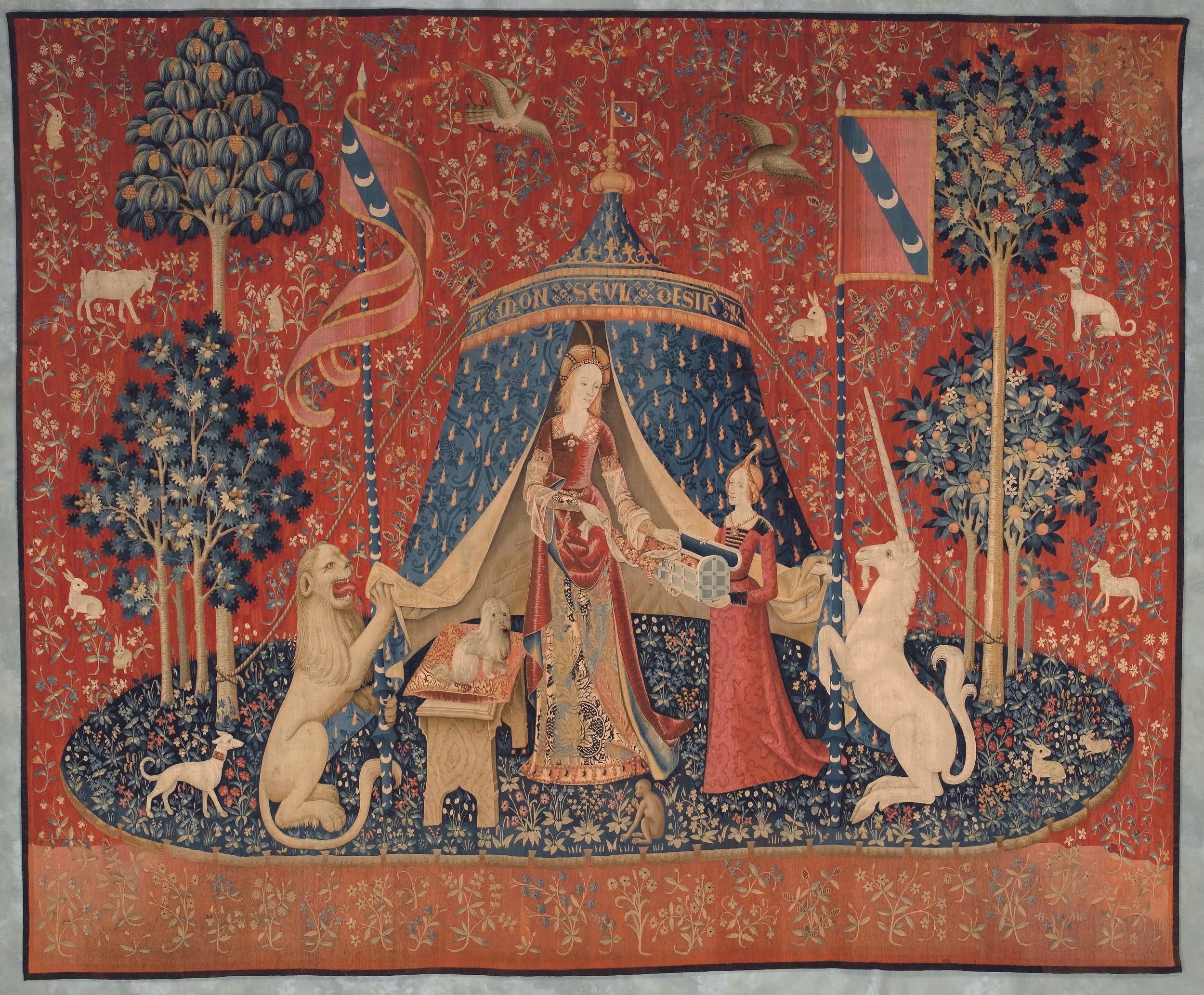
The flowers of La Dame à la licorne appear scattered across the tapestry as if they had grown there naturally. In reality, each element is the result of a precise woven construction: thousands of threads arranged to create depth, rhythm and the illusion of a world beyond the surface. It is this technical achievement that provides the starting point for Sylvio Giardina’s Mon Seul Désir, a Couture FW2027 project presented at the Musée de Cluny on 6 July 2026.
The Italian designer approached the medieval tapestries through their making and his collection examined how woven structures can produce depth and relief from a two-dimensional surface — how thread, through density, transparency and placement, can transform a textile into a field of visual perception
The millefleurs technique offers one of the clearest examples of this approach. The flowers that fill the tapestry backgrounds are not isolated decorative motifs; their repetition creates the atmosphere and structure of the composition. Giardina translated this principle into couture, using floral elements as part of the organisation of the garment surface and exploring how repeated forms can shape perception.
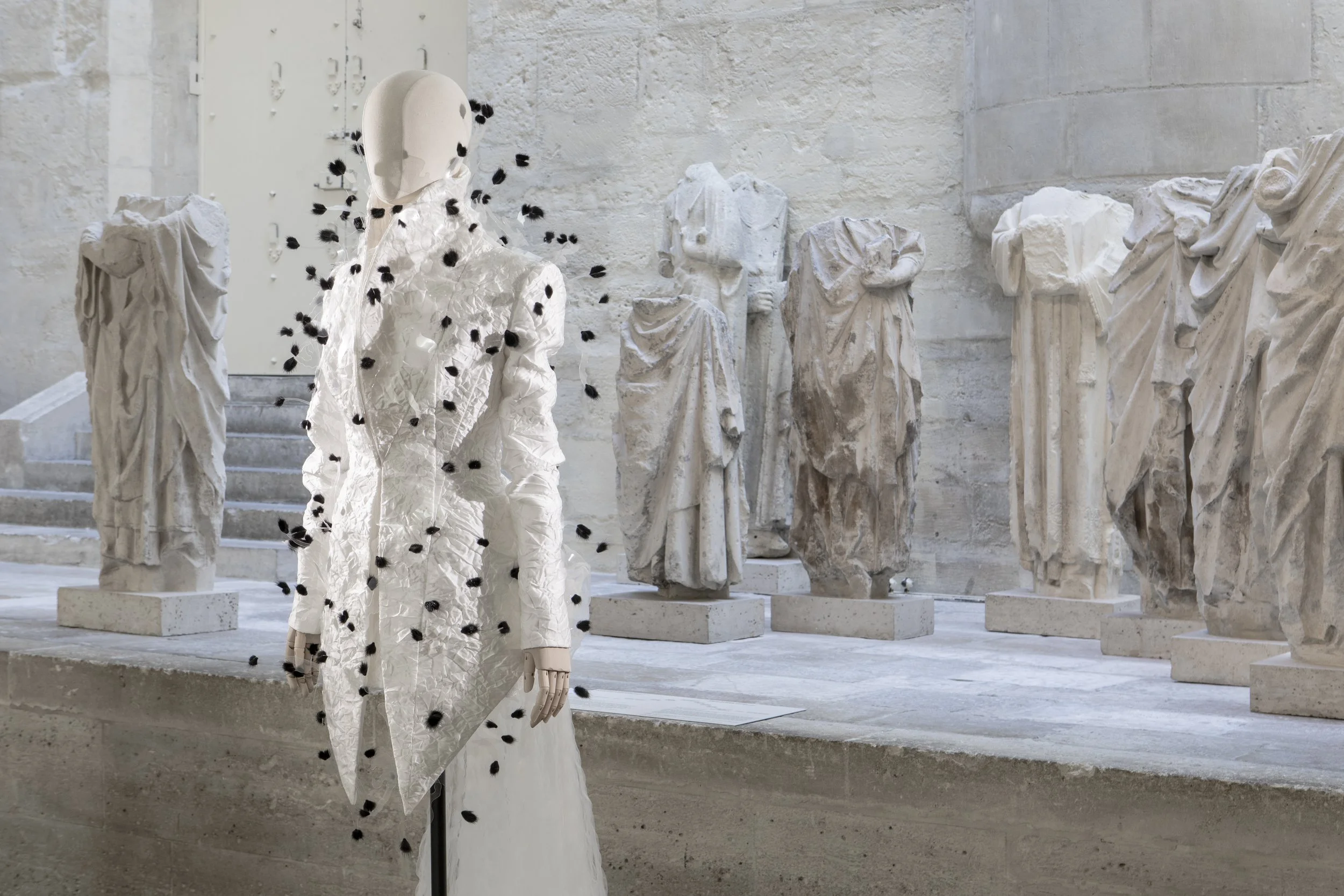
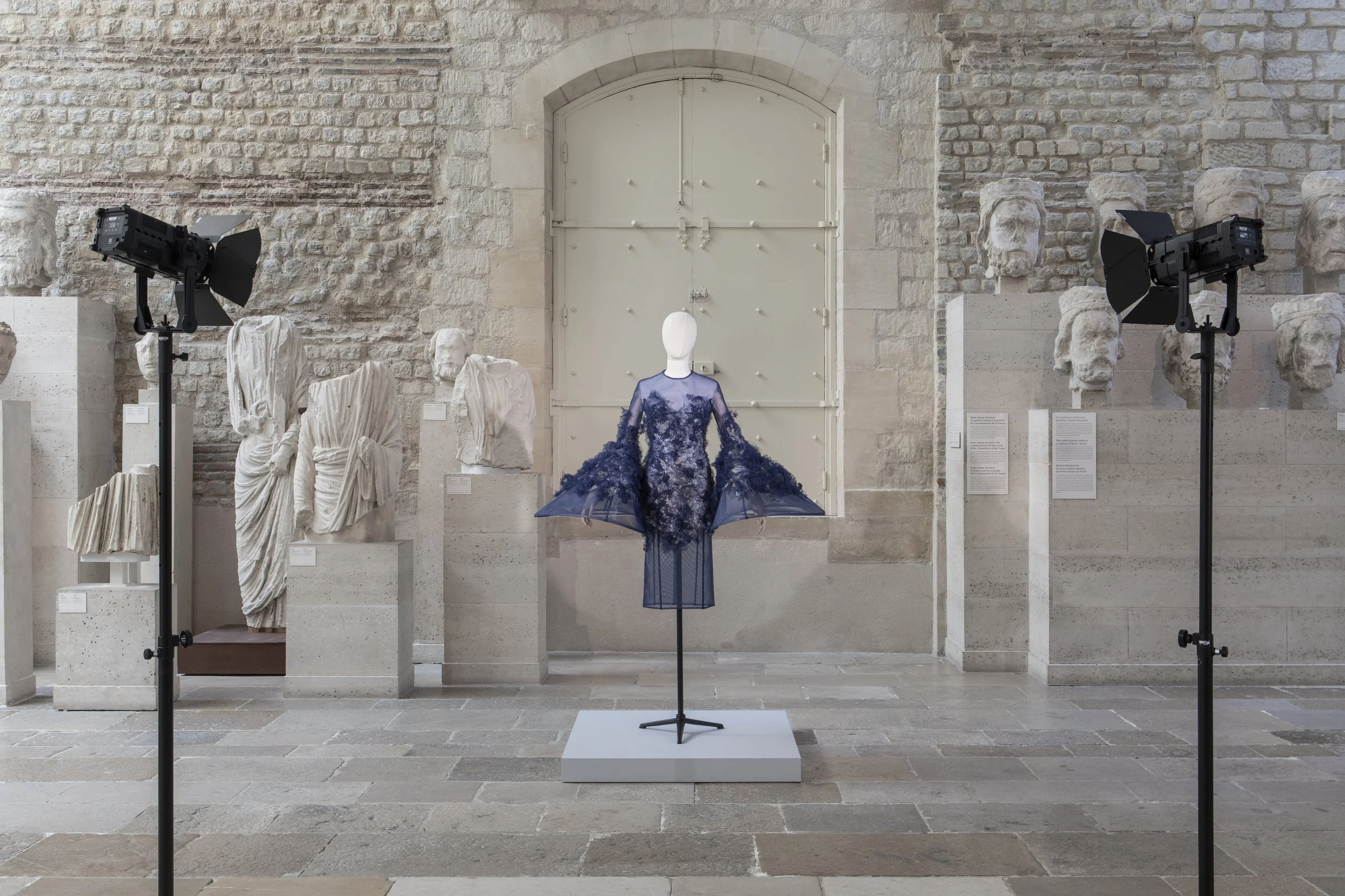
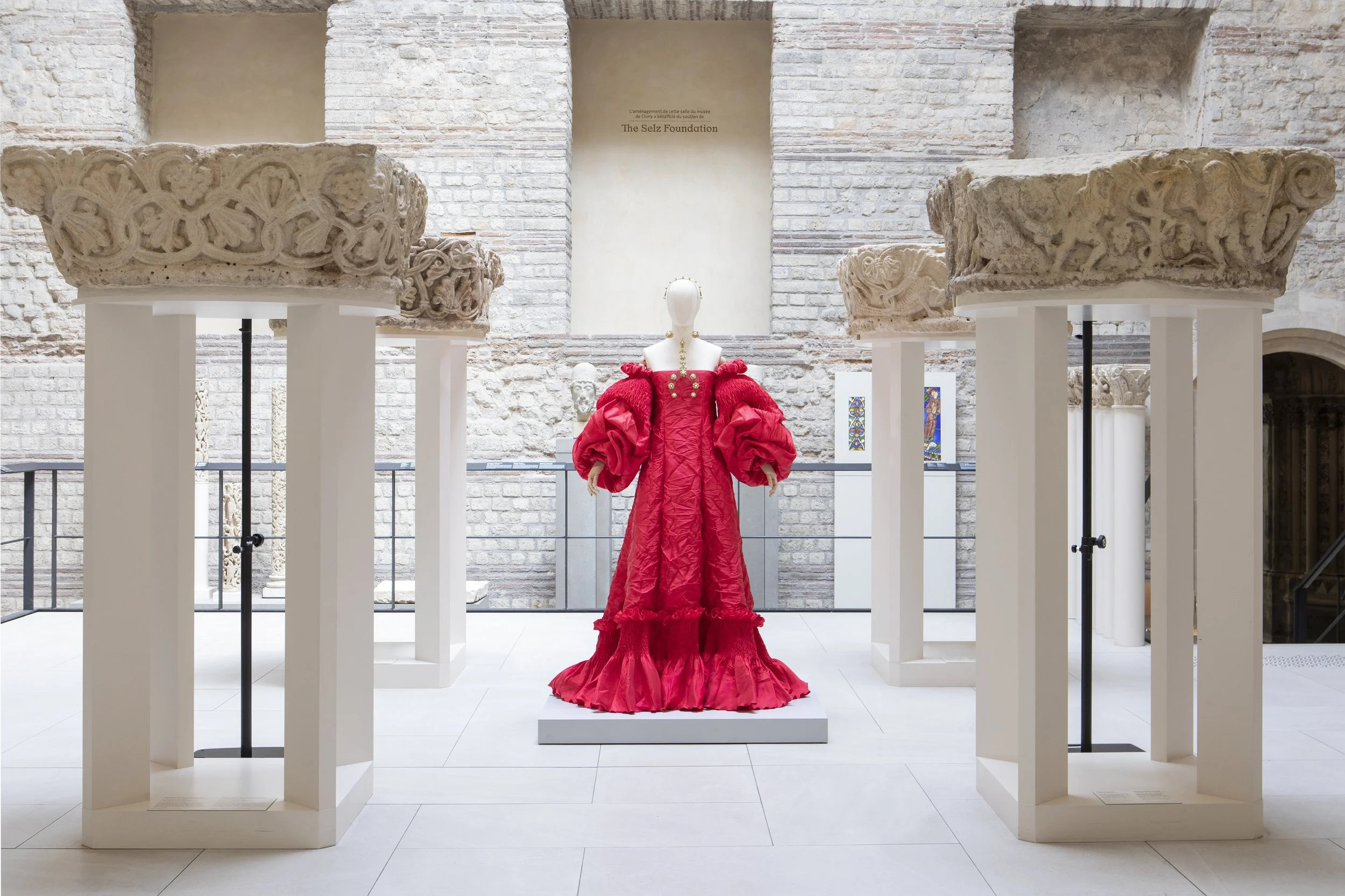
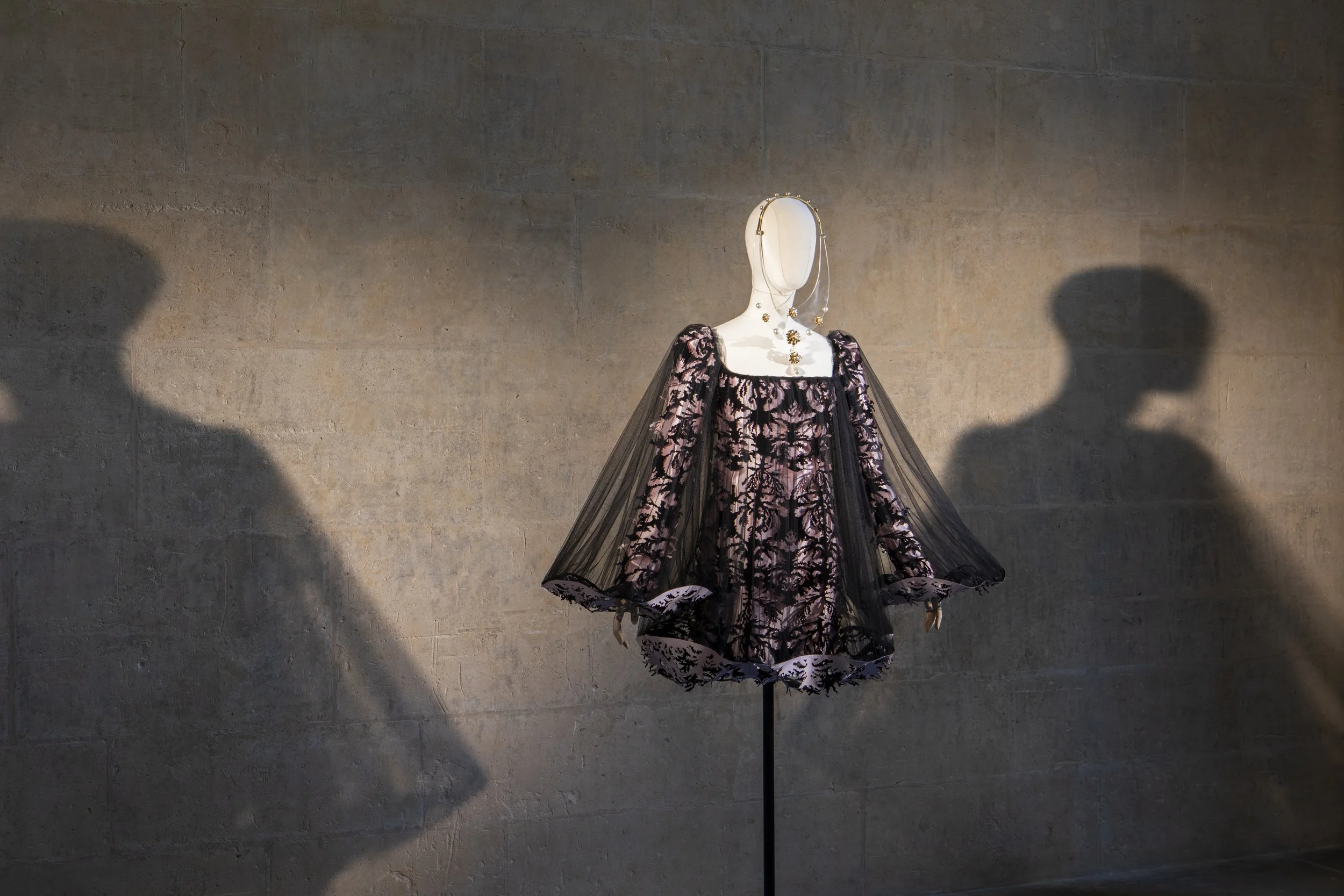
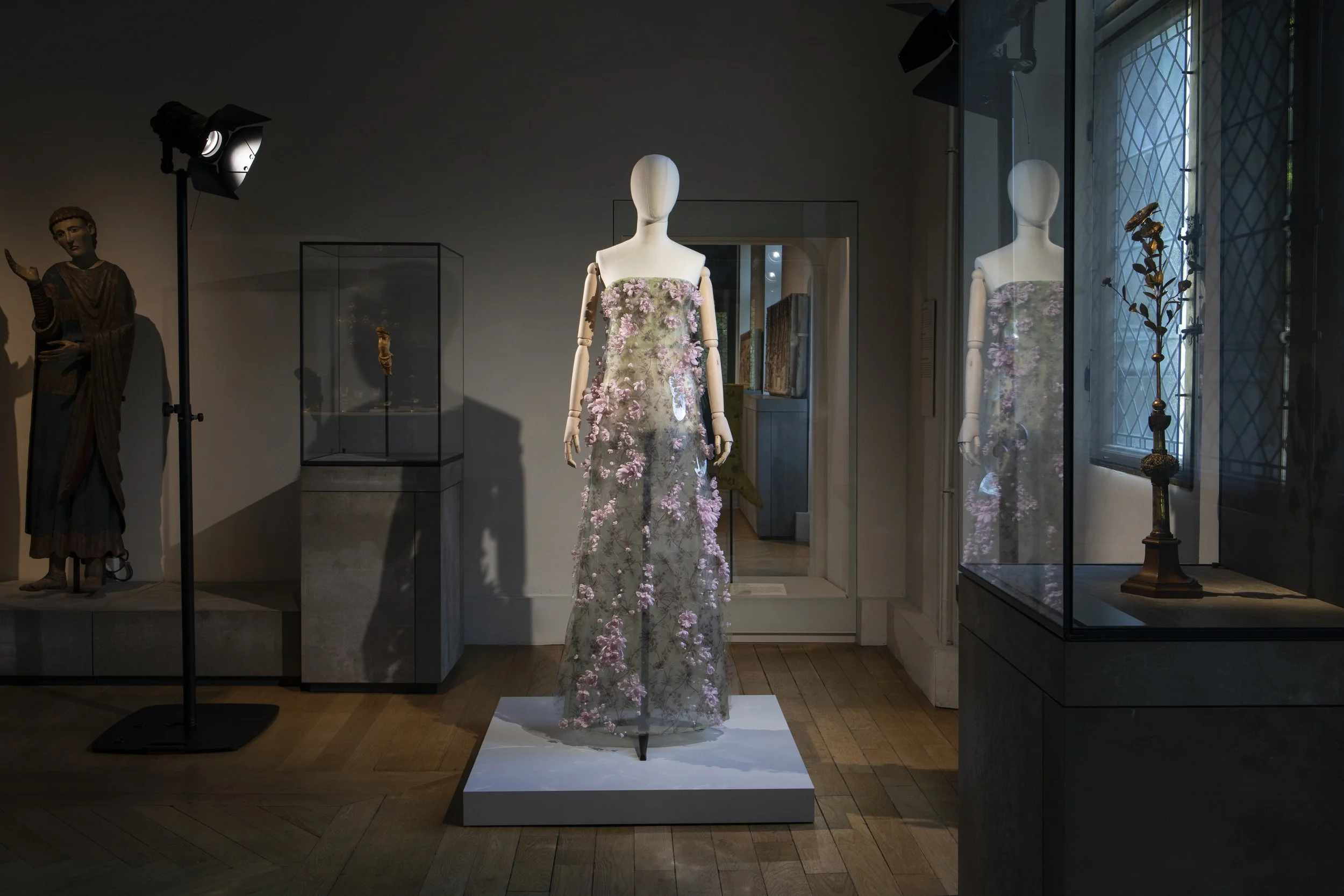
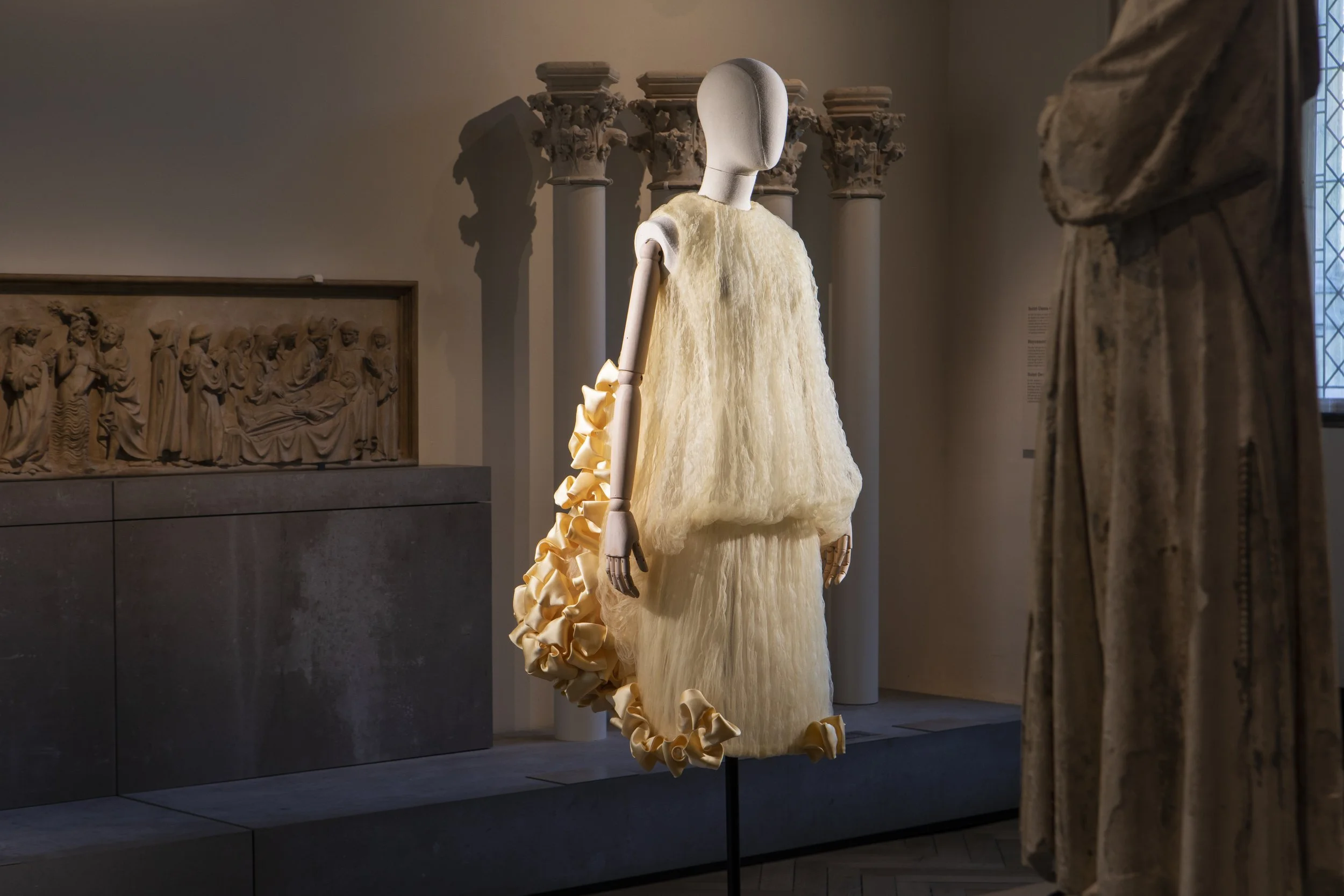
This connection between textile and illusion has long been central to couture. The discipline has always depended on the ability to make fabric behave differently from its original state: pleating can create movement, embroidery can alter the appearance of a surface. Giardina’s research into medieval weaving follows the same material logic, examining how construction itself becomes a visual language.
The collection extends this investigation to the objects represented within the tapestries, including the jewels woven into their scenes. These details are reconsidered as couture elements, moving from illustrated ornament into physical structures integrated into garments and transparent surfaces.
The designer used mikado, duchesse satin, tulle, lace and velvet, using their contrasting qualities of structure, density and openness to build variation across the silhouettes.
The project will continue in Rome in October 2026 at Trinità dei Monti, a setting connected to Giardina’s training at the Accademia di Costume e di Moda and his early experience in Italian haute couture.