Yanina Couture FW27's Garden of Heroines
For autumn/winter 2026, Yulia Yanina titled her couture collection “Provocation” with her accompanying notes moving through eighteenth-century tailoring, Belle Époque lingerie and the heroines of Balzac, Maupassant and Zola. On the Yanina Couture runway, those references rarely arrived intact. They appeared instead as fragments — a corseted waist, a lace stocking, a ribbon fastening — absorbed into the romantic vocabulary Yanina Couture has developed over the past decade.
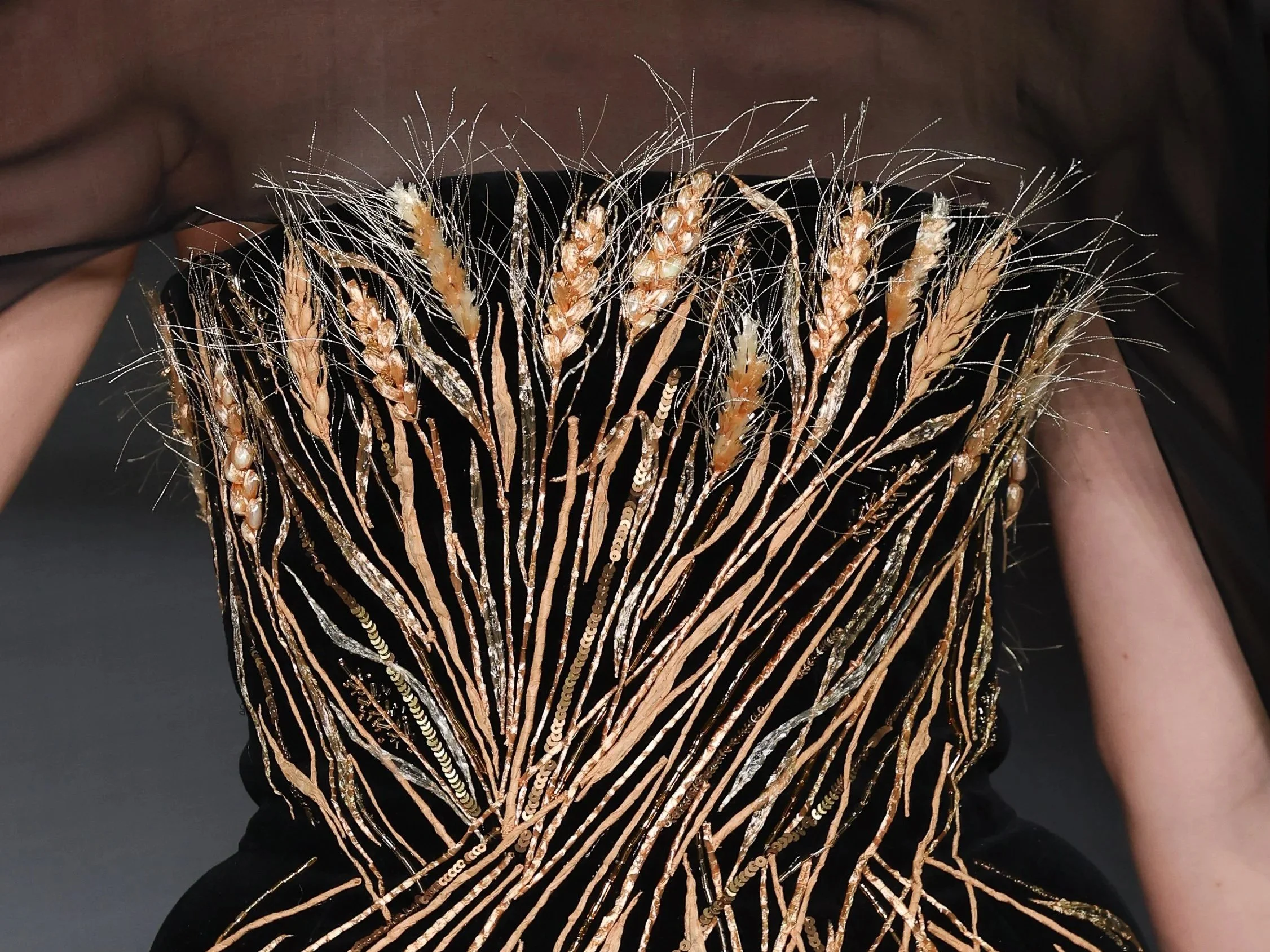
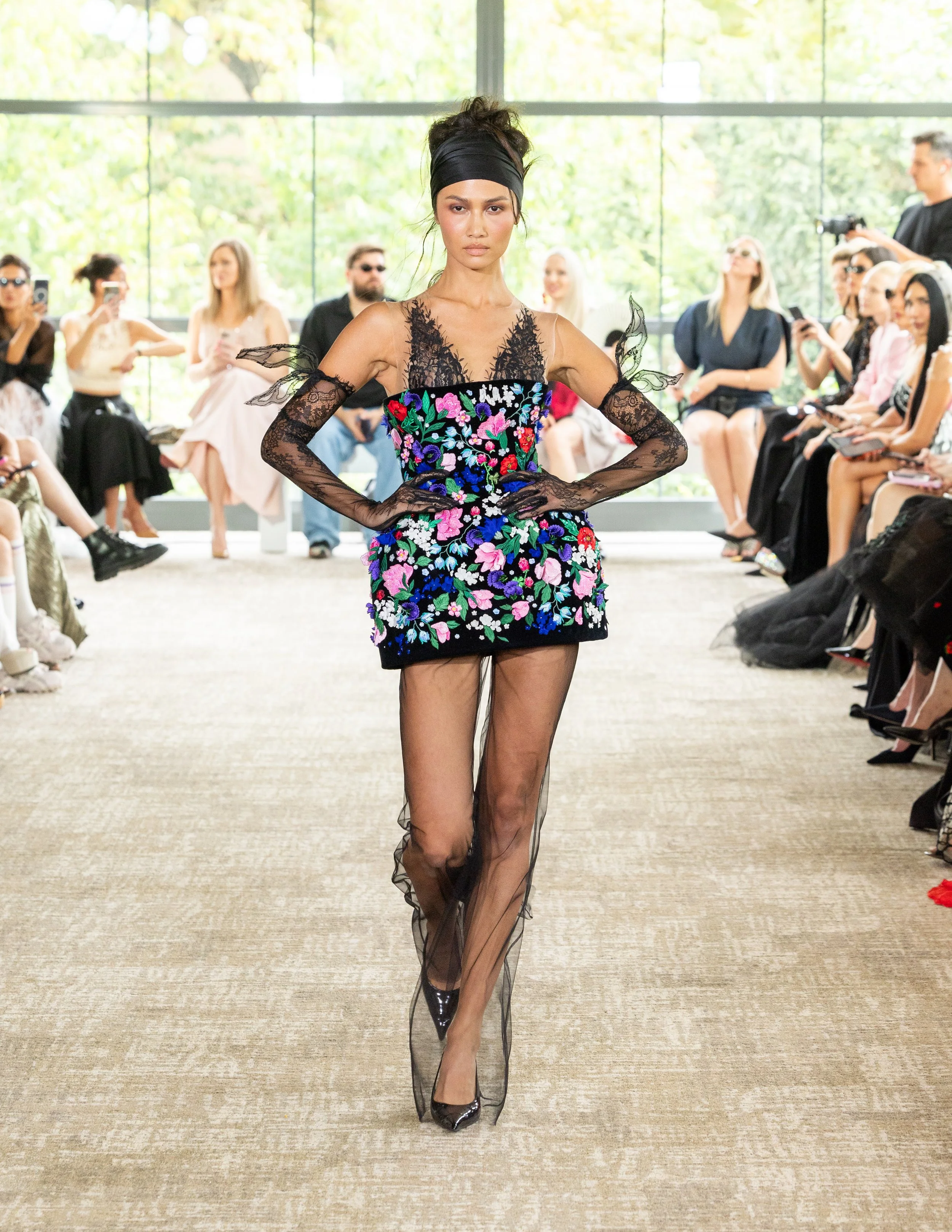
The opening looks set the tone. A black velvet corset dress with a short, sculpted peplum skirt swept a sheer tulle train behind it, closer to a court gown reduced to its structure than a literal period reconstruction. The following look offered the clearest lingerie reference: a sheer white floral lace bodysuit, plunging and unlined through the torso, paired with a structured quilted black short cinched with a bow at the waist.
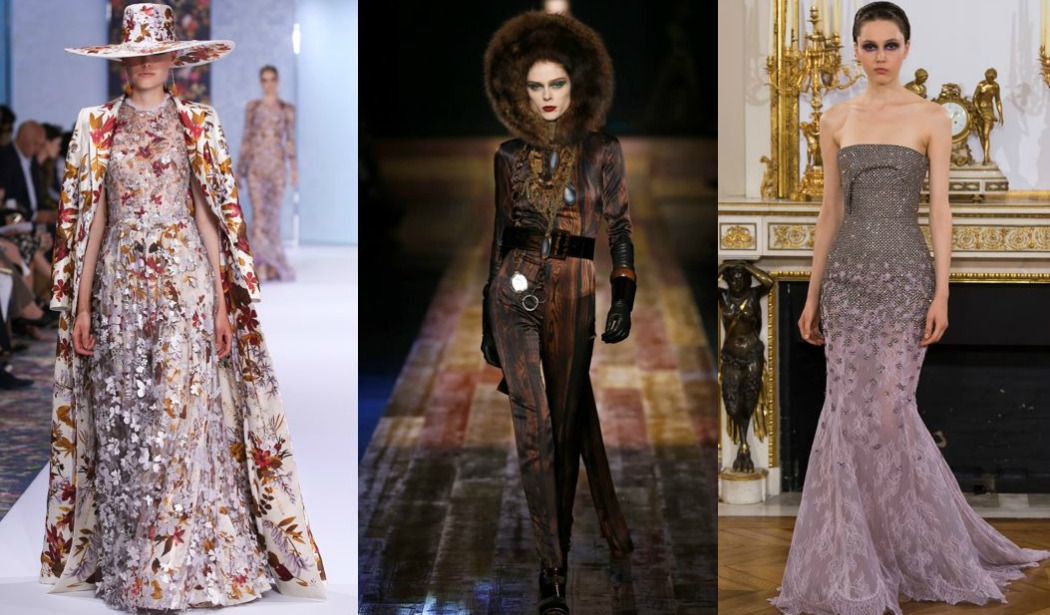
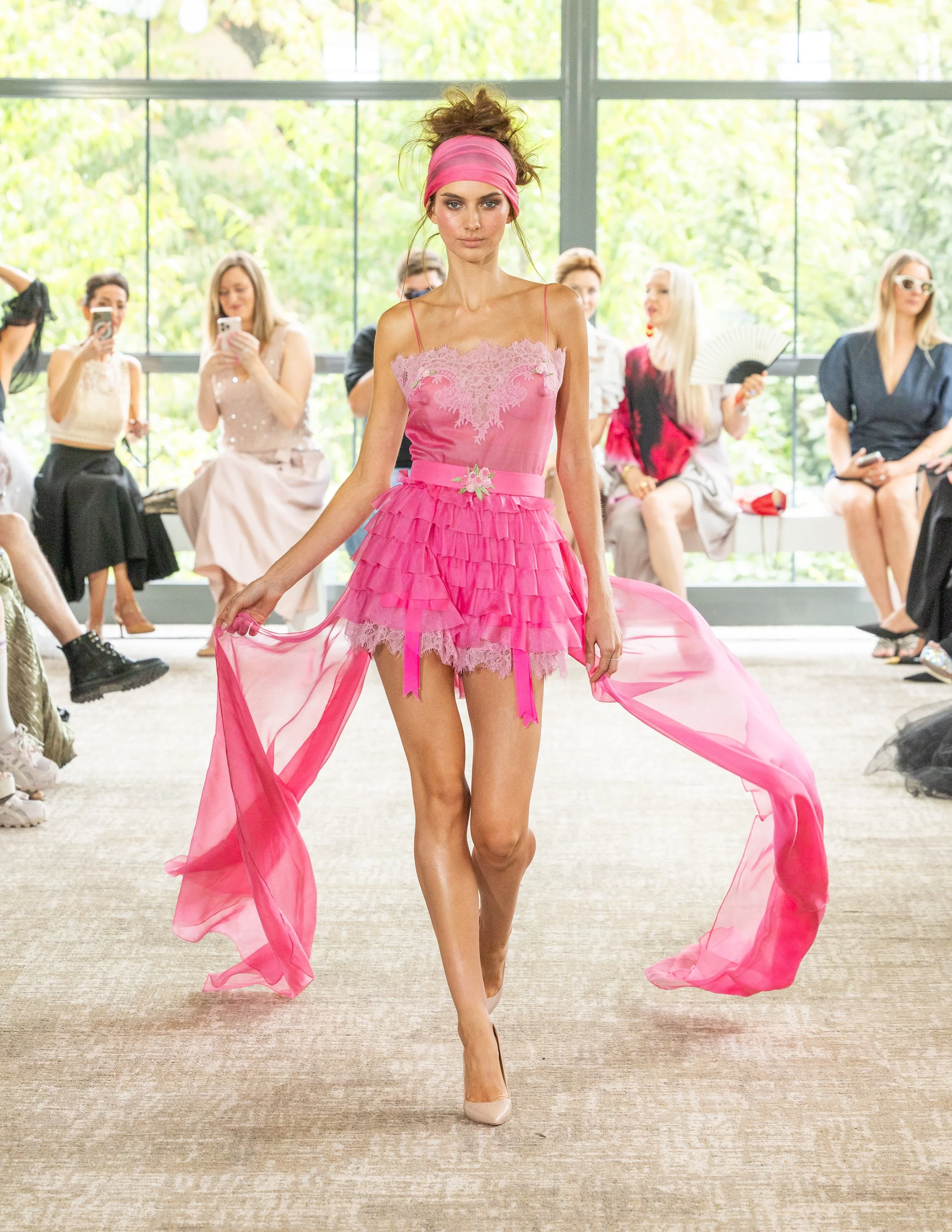
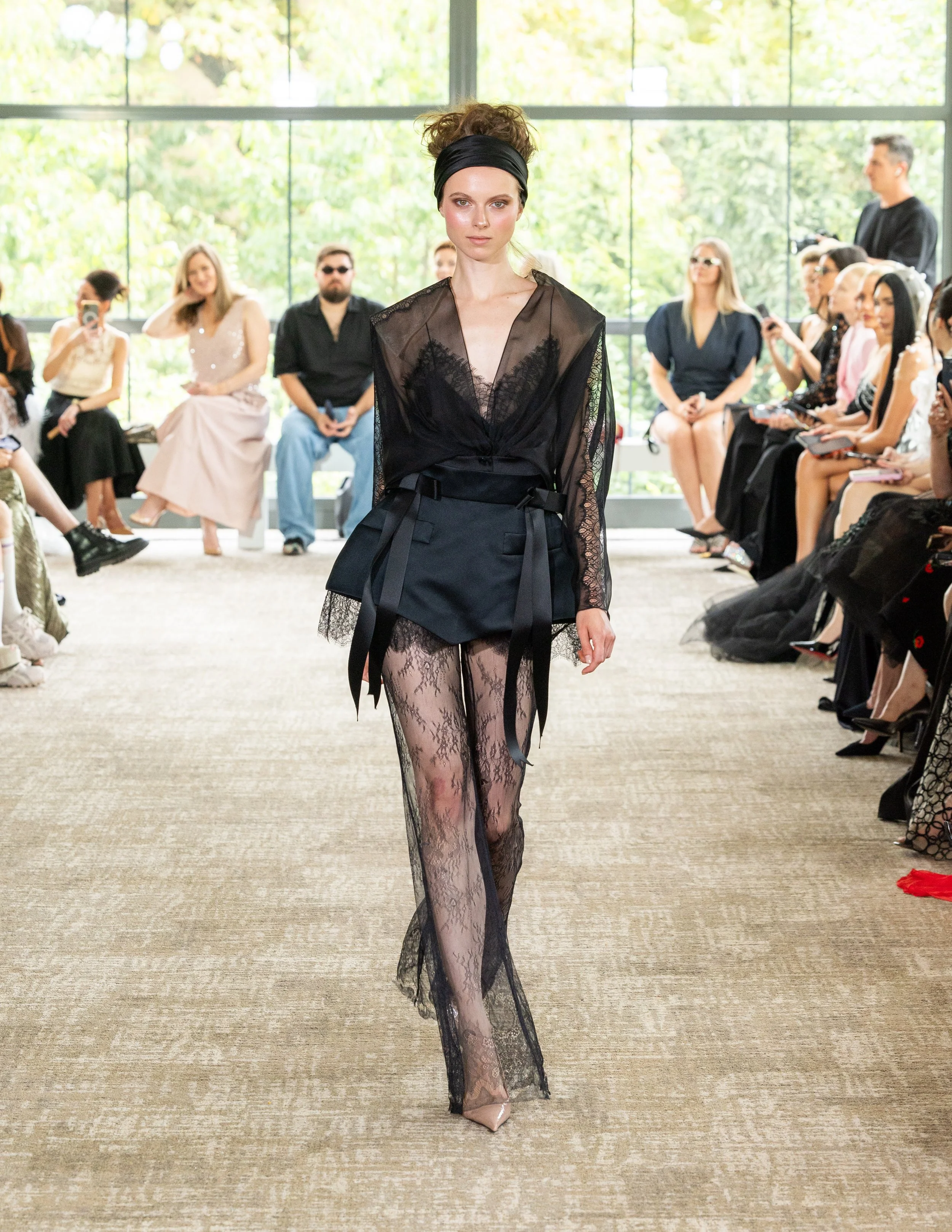
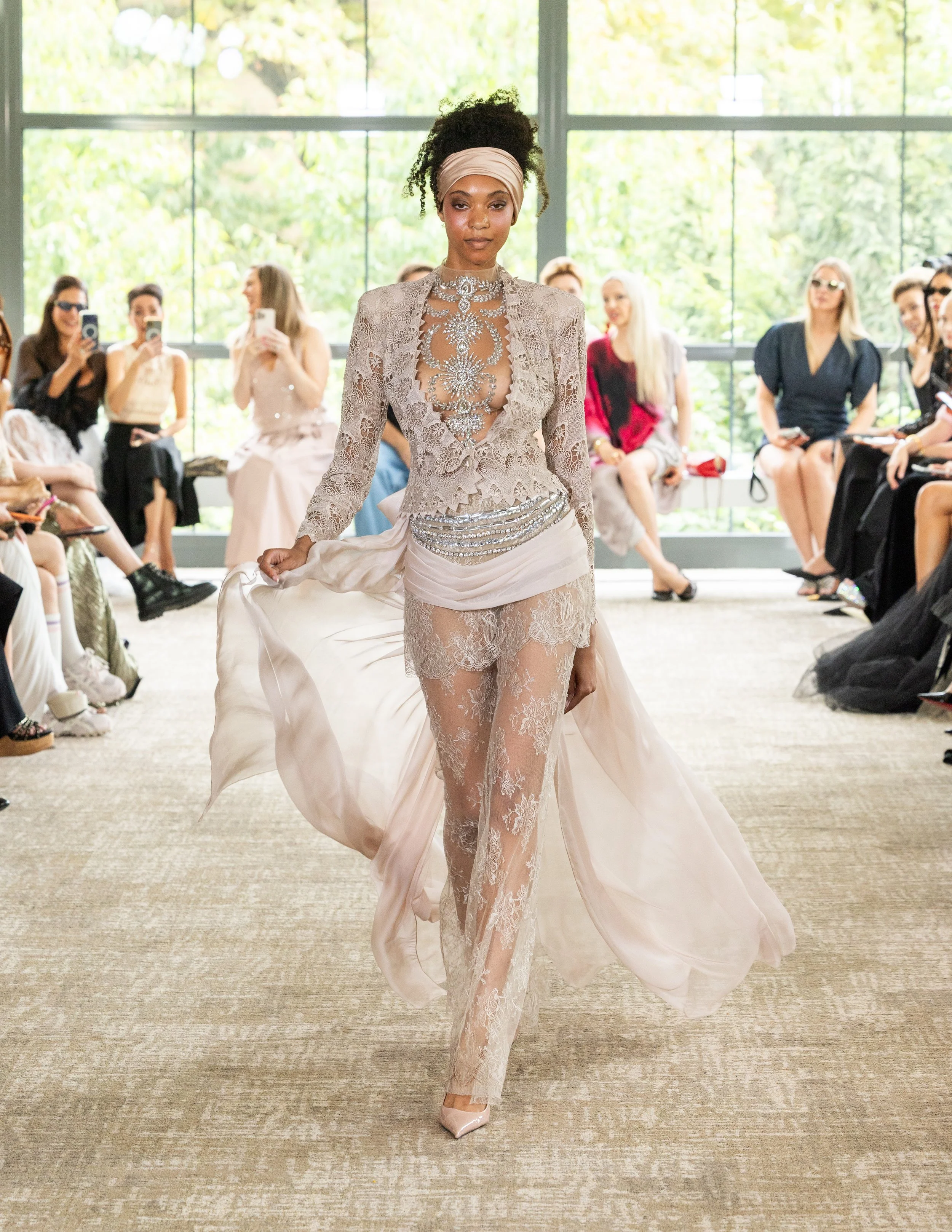
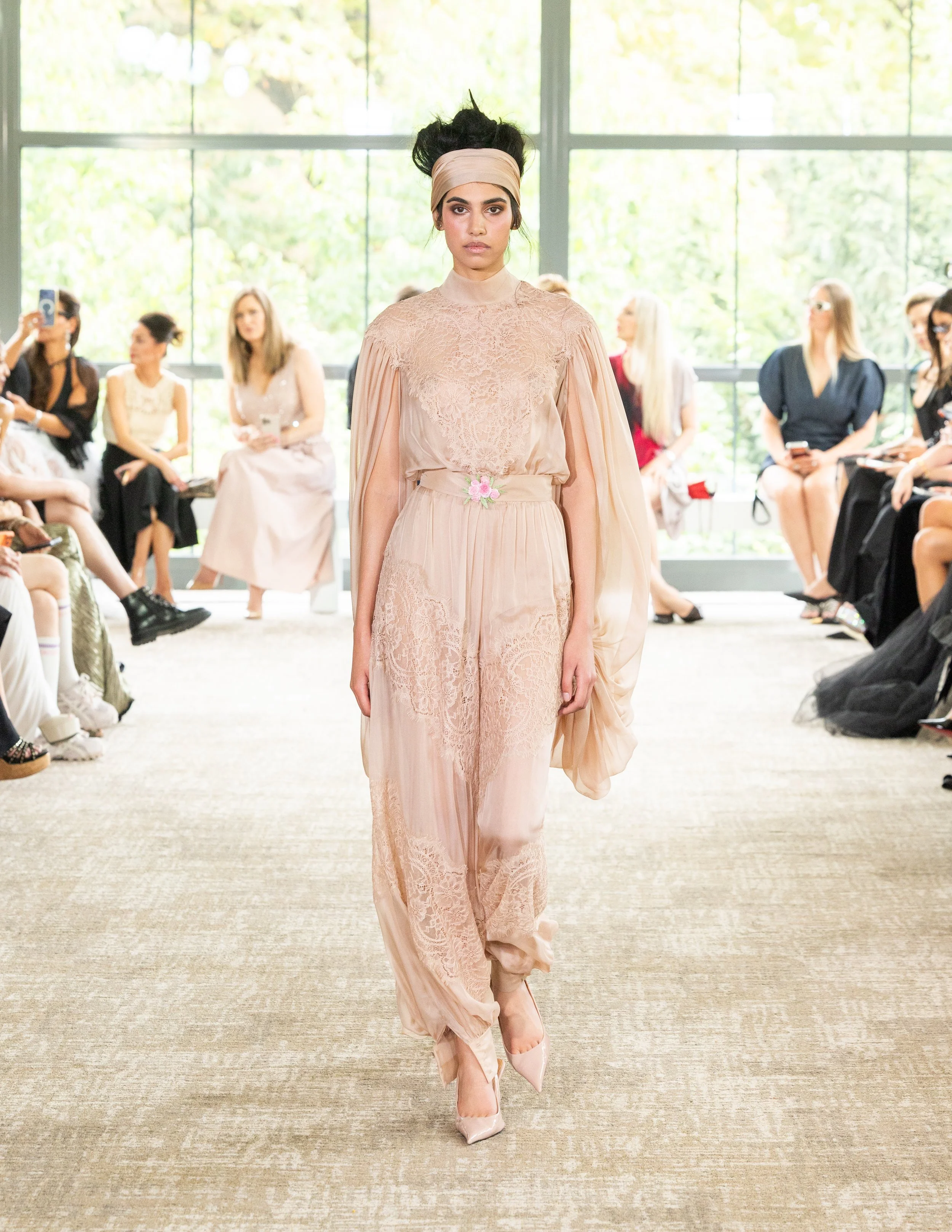
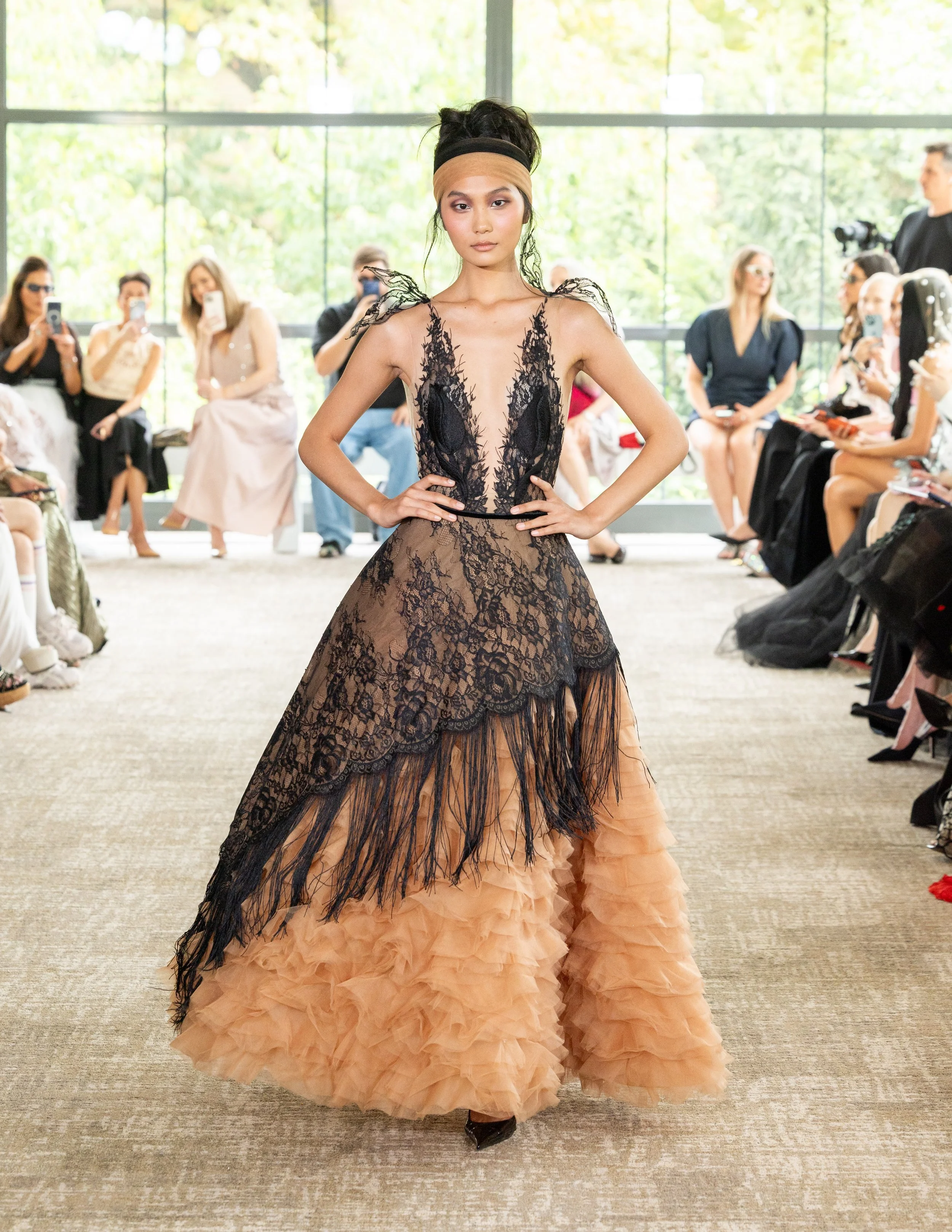
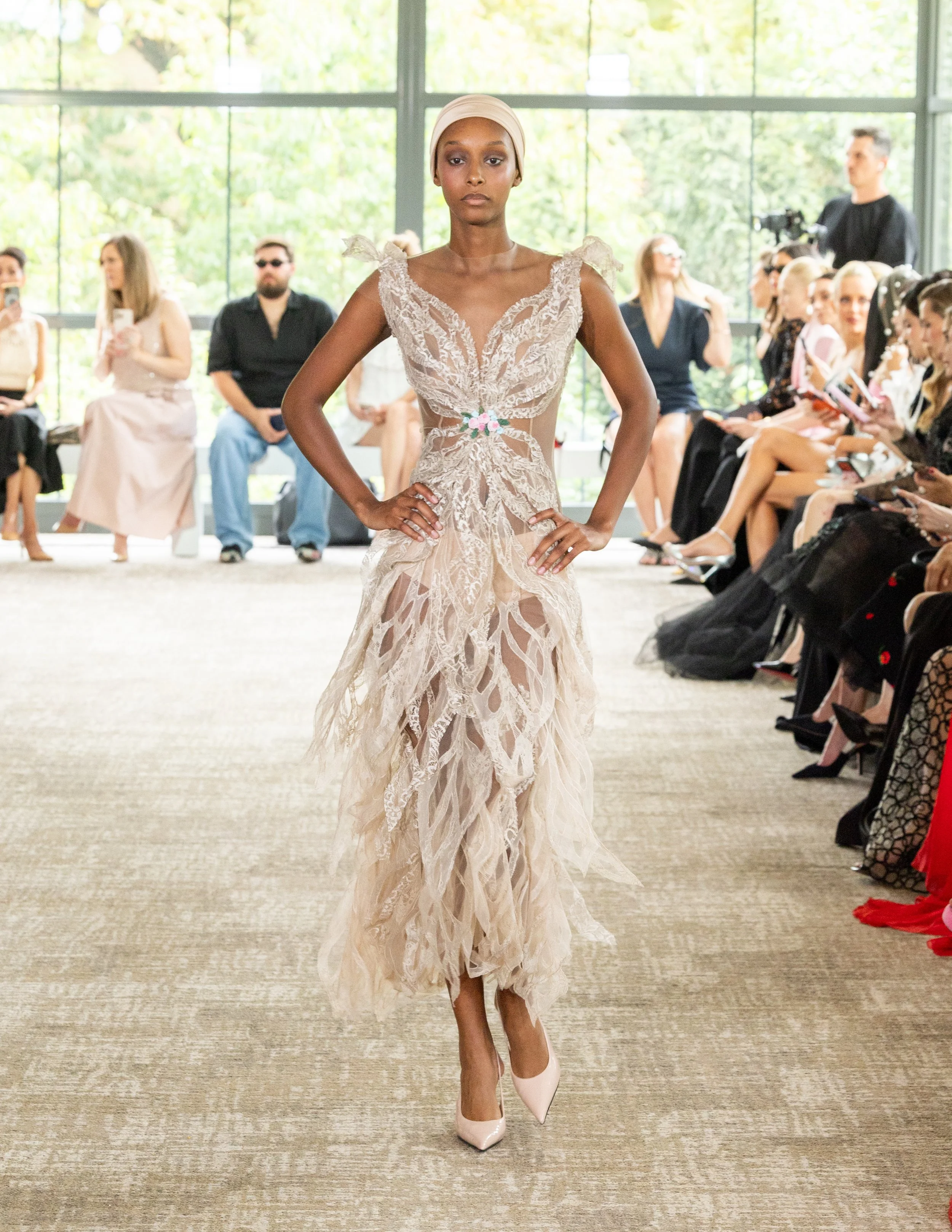
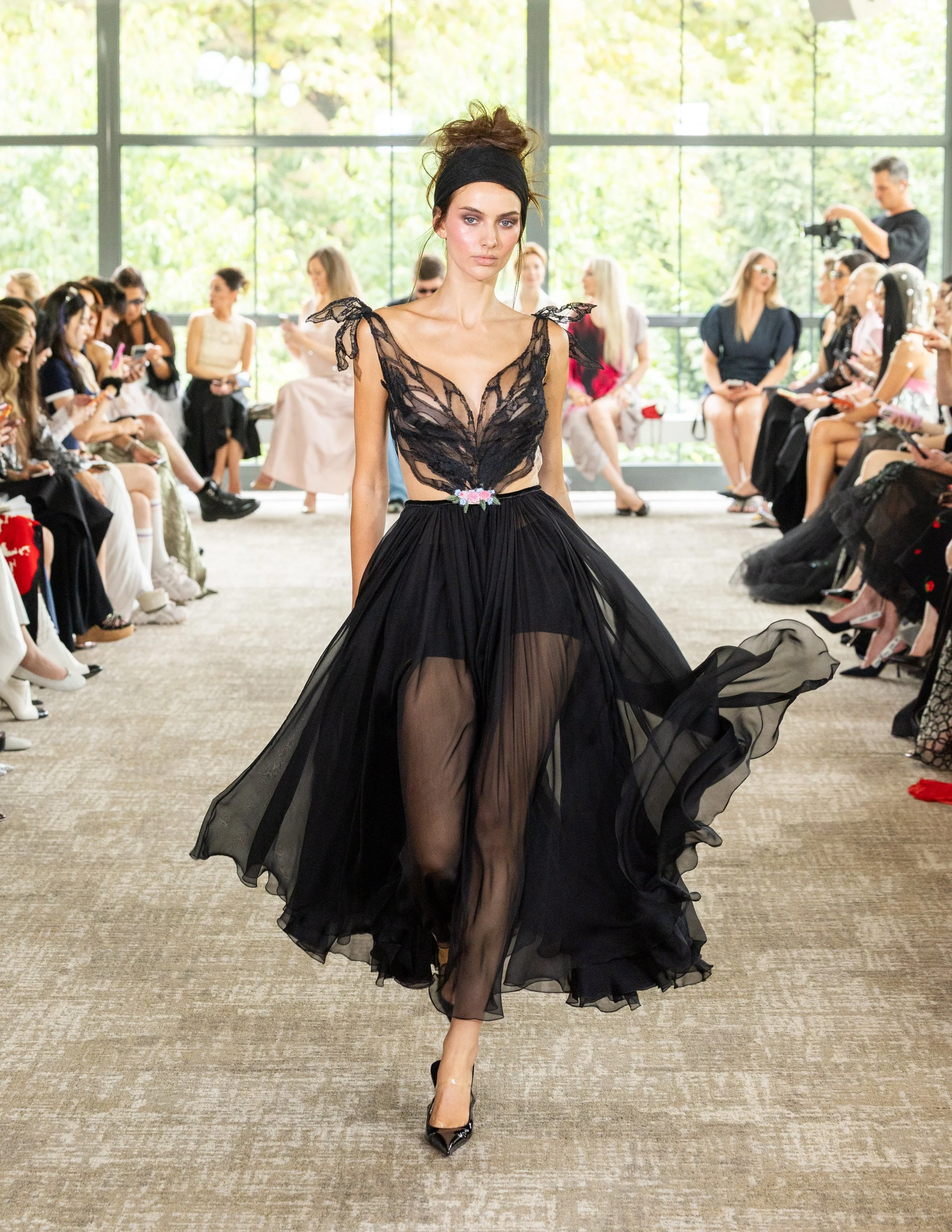
The lingerie codes remained controlled throughout. Lace appeared at hems and straps rather than dominating the silhouette. Stockings, corsetry and transparent layers softened the boundary between underwear and eveningwear without turning exposure into the central idea. Within the wider history of lingerie worn as fashion, Yanina’s approach sits at a different point from designers such as Jean Paul Gaultier, whose corseted silhouettes often used the language of underwear to question ideas of visibility and power. Yanina draws on the same visual vocabulary but redirects it towards delicacy, ornament and historical femininity. The collection’s version of provocation lies in restraint rather than confrontation.
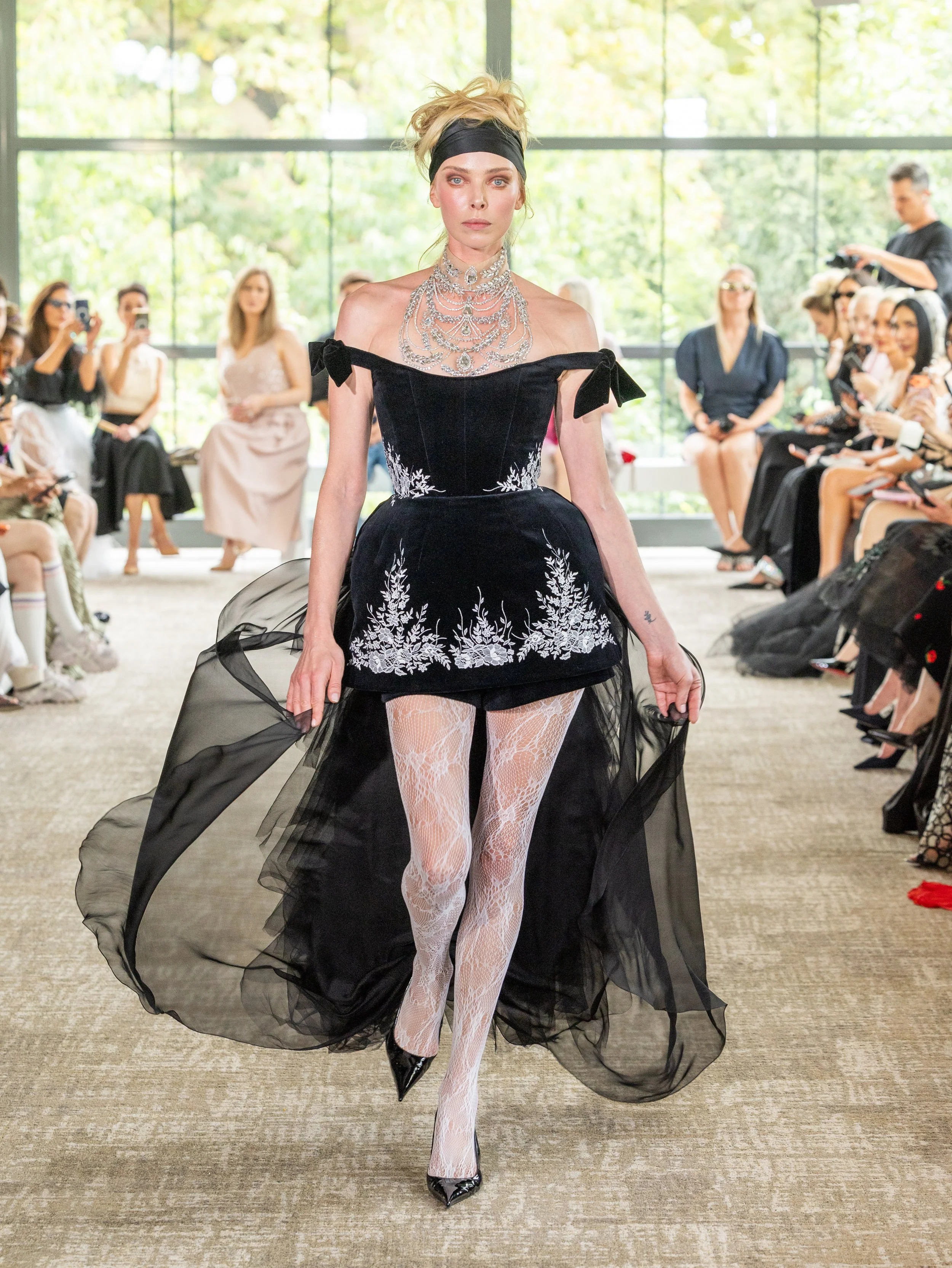
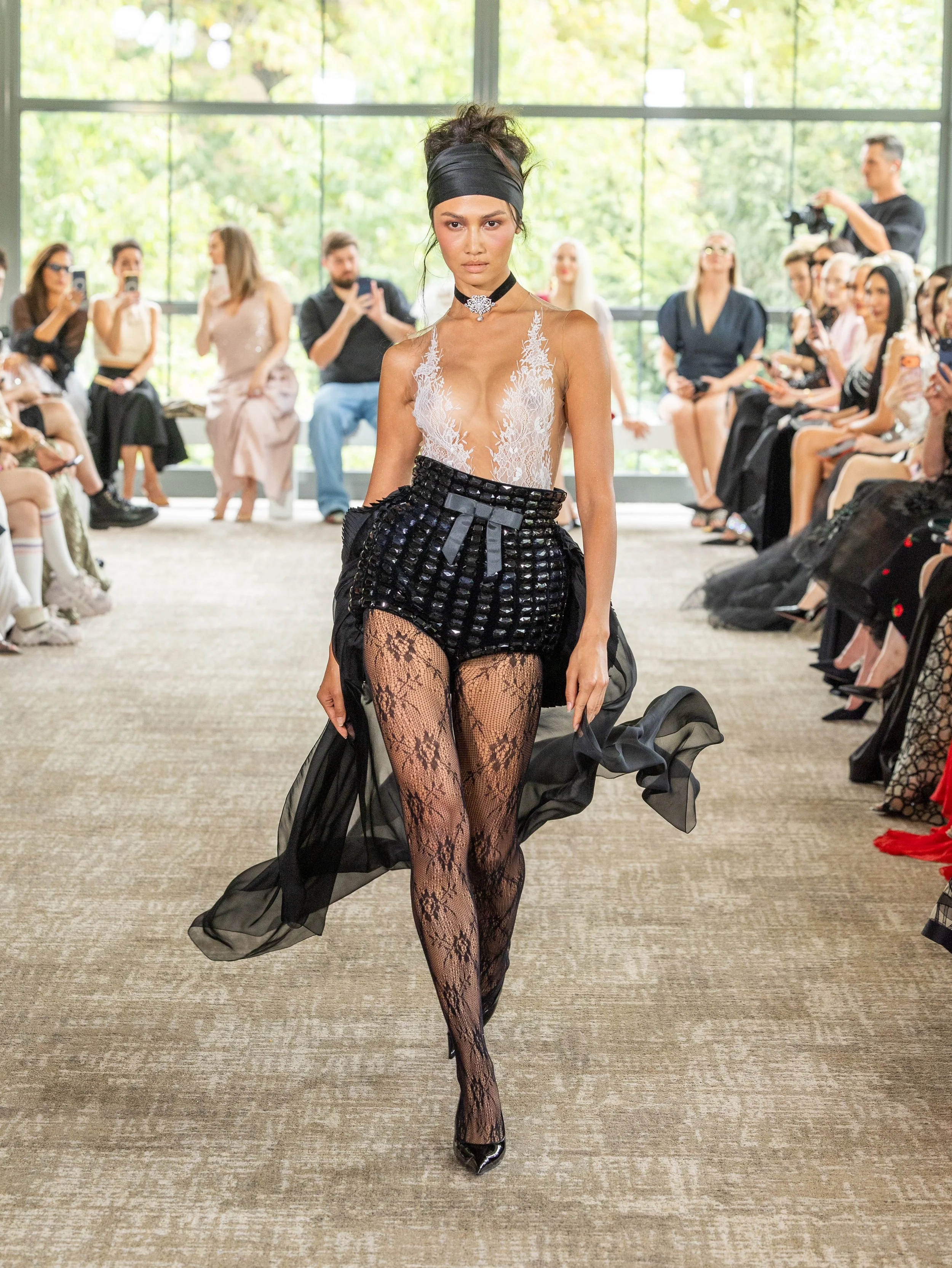
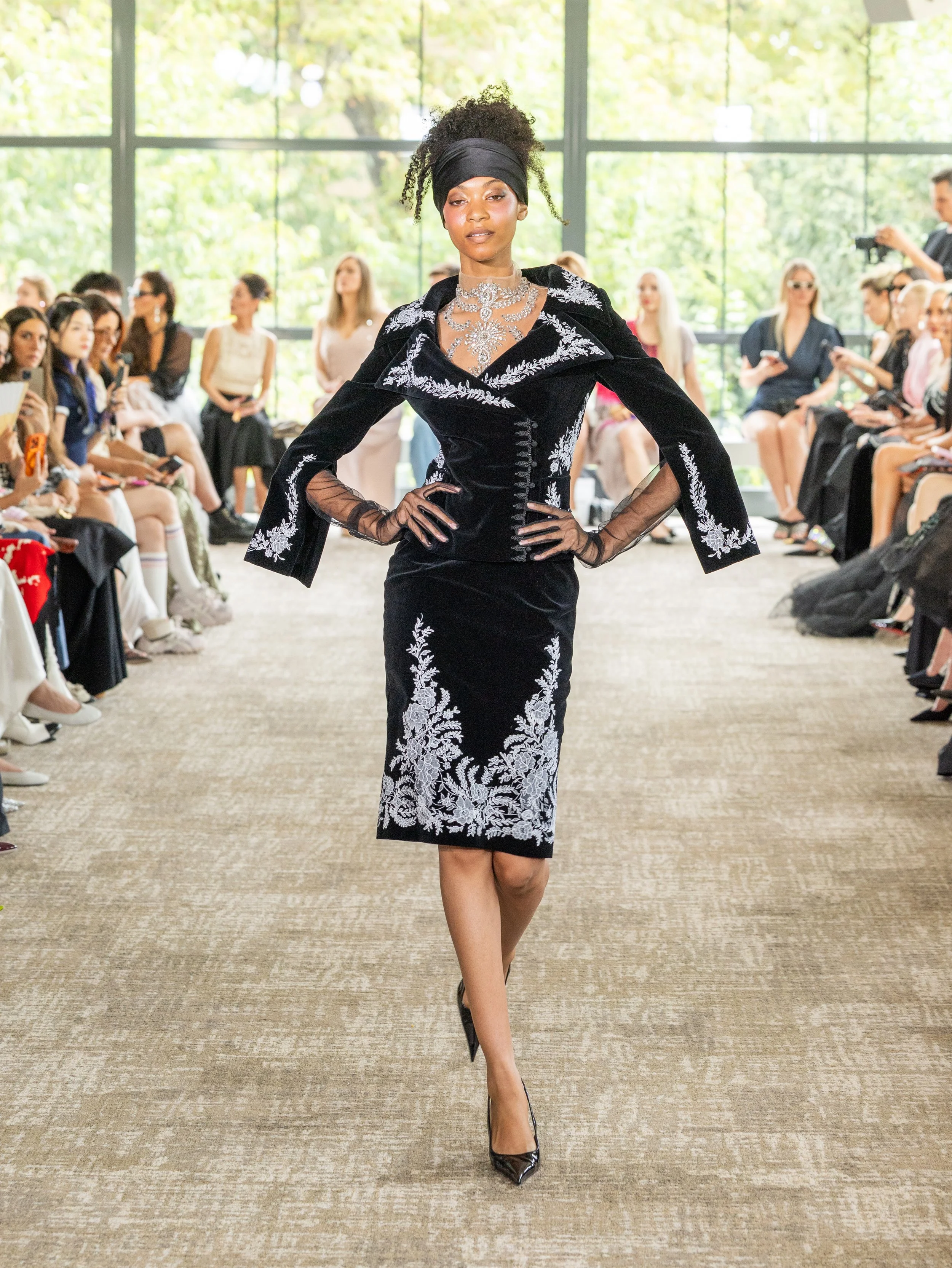
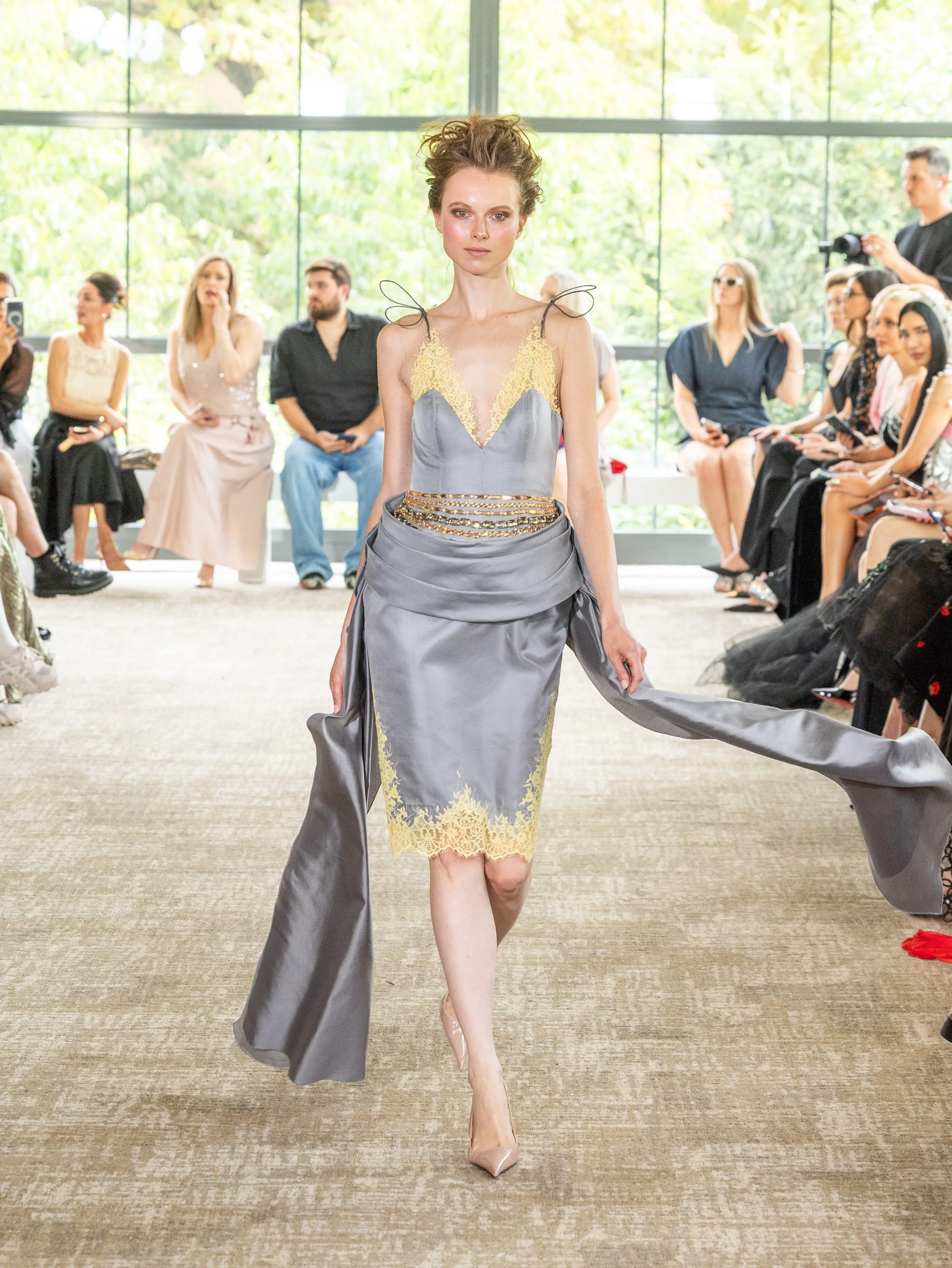
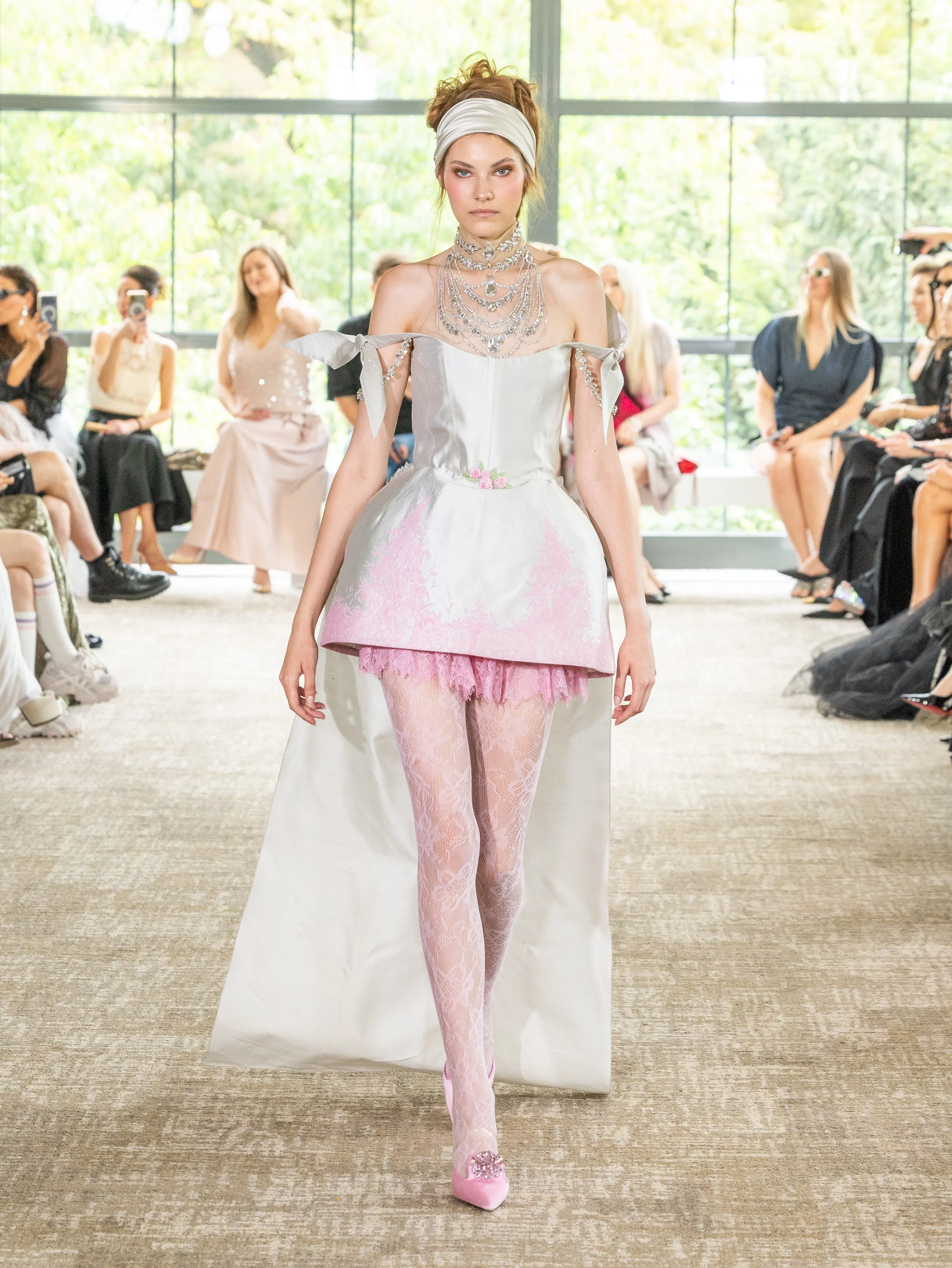
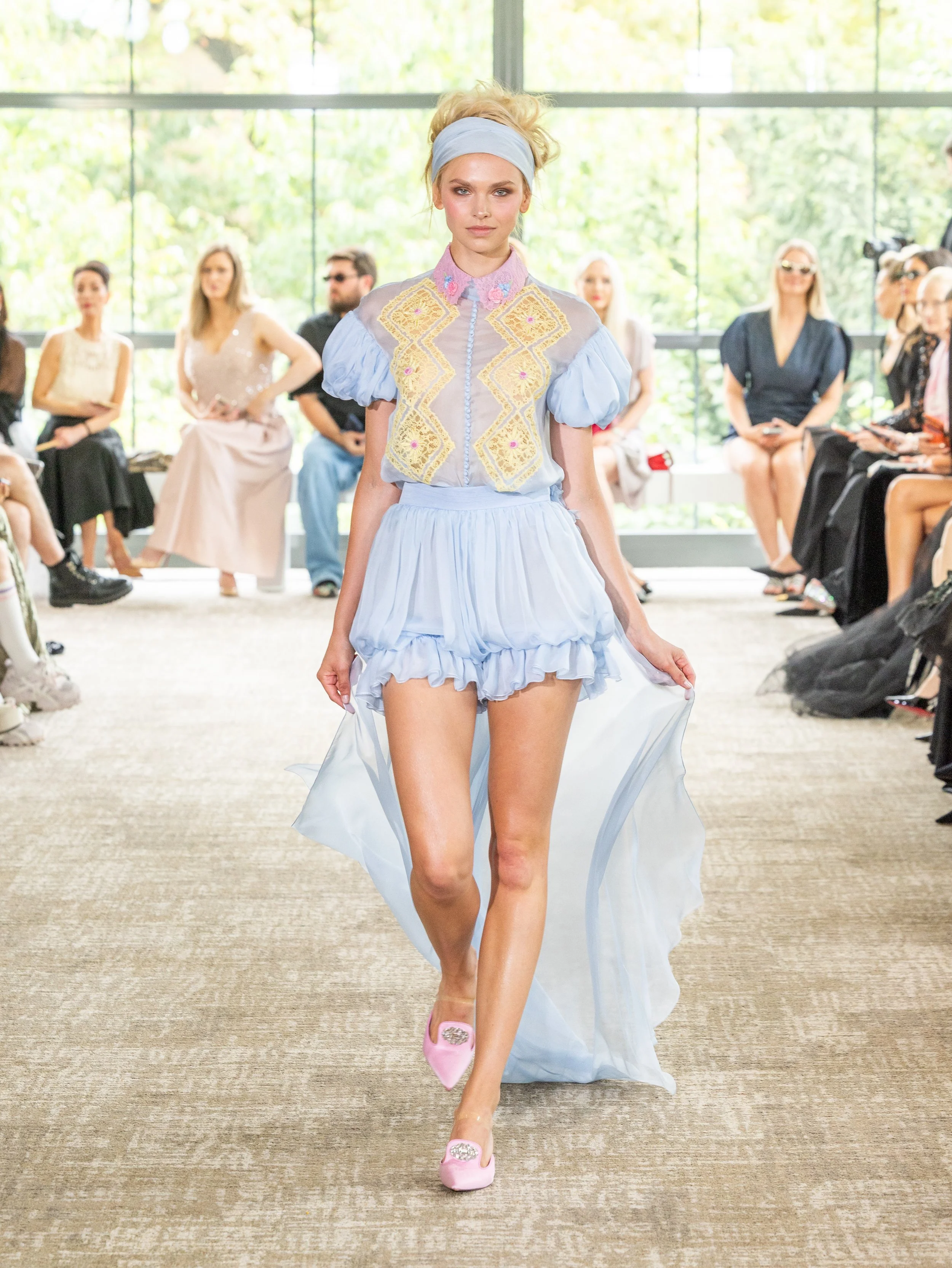
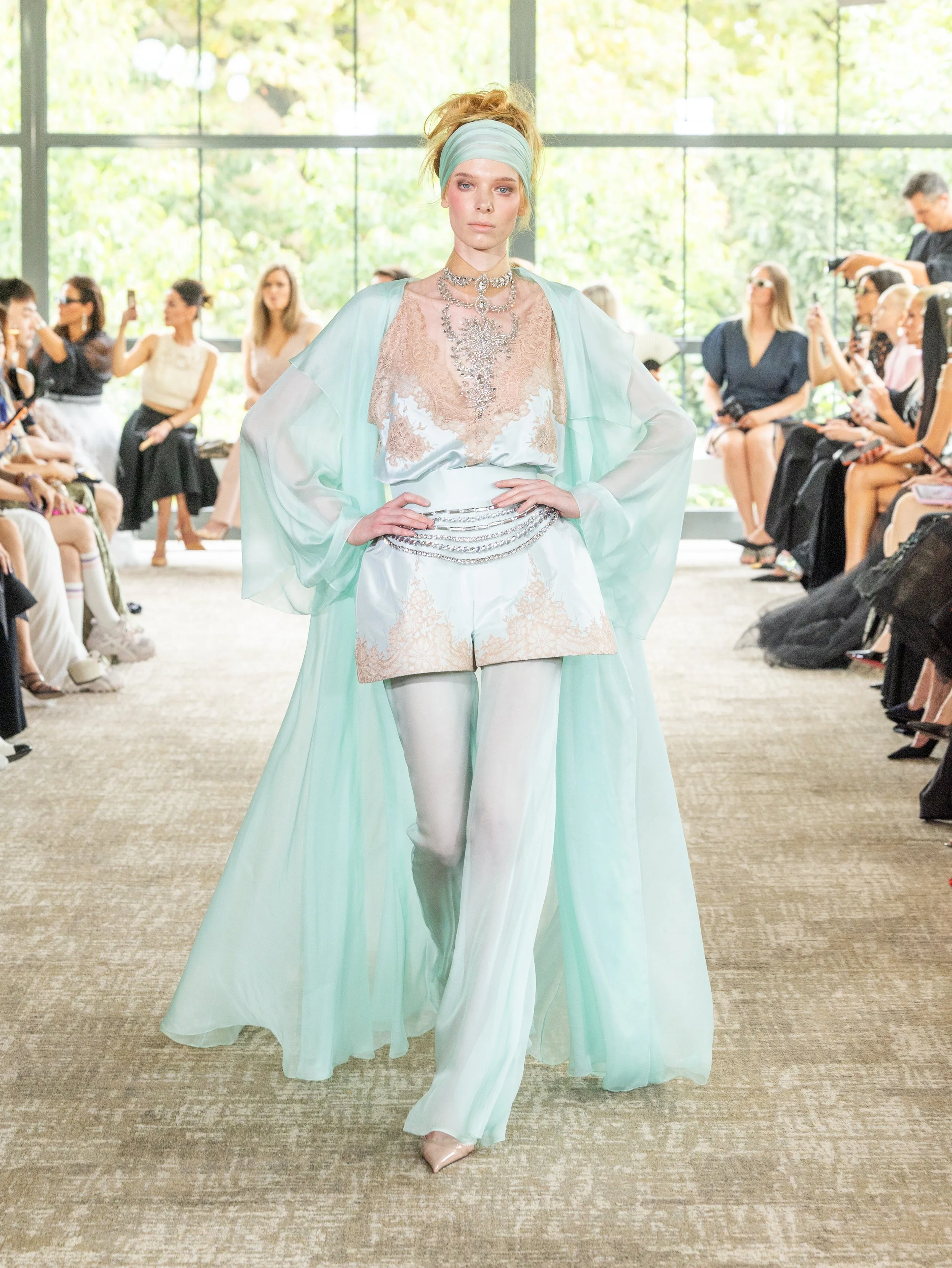
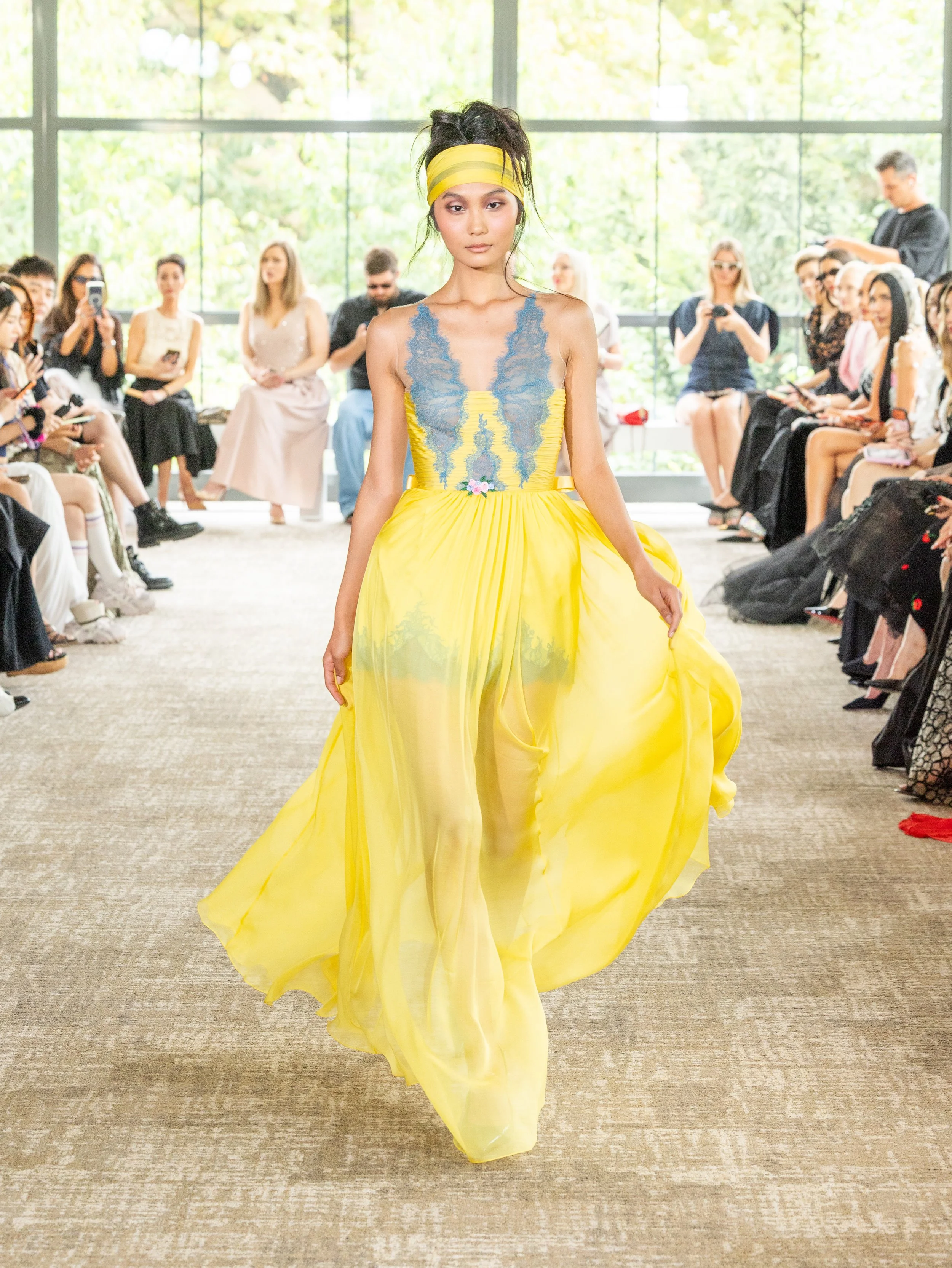
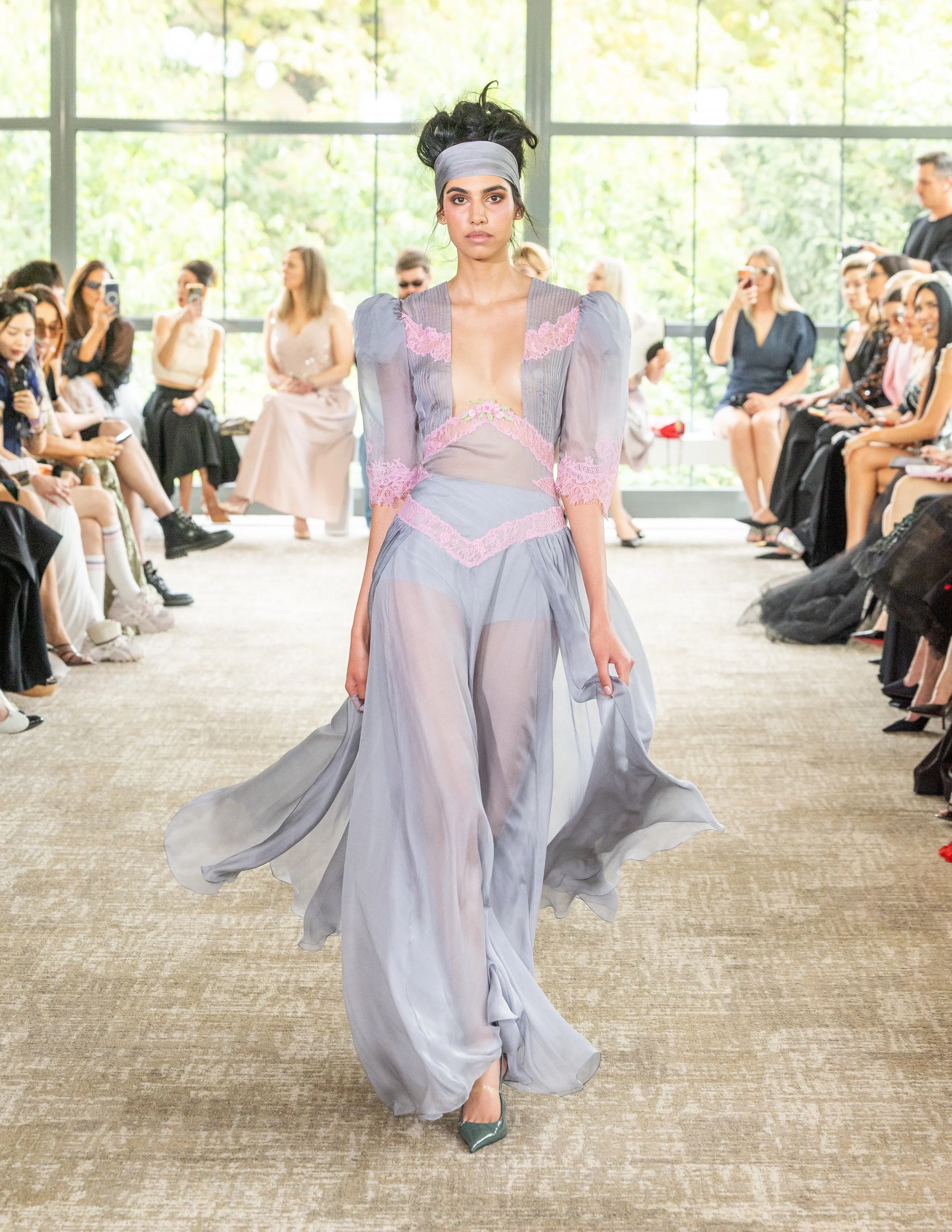
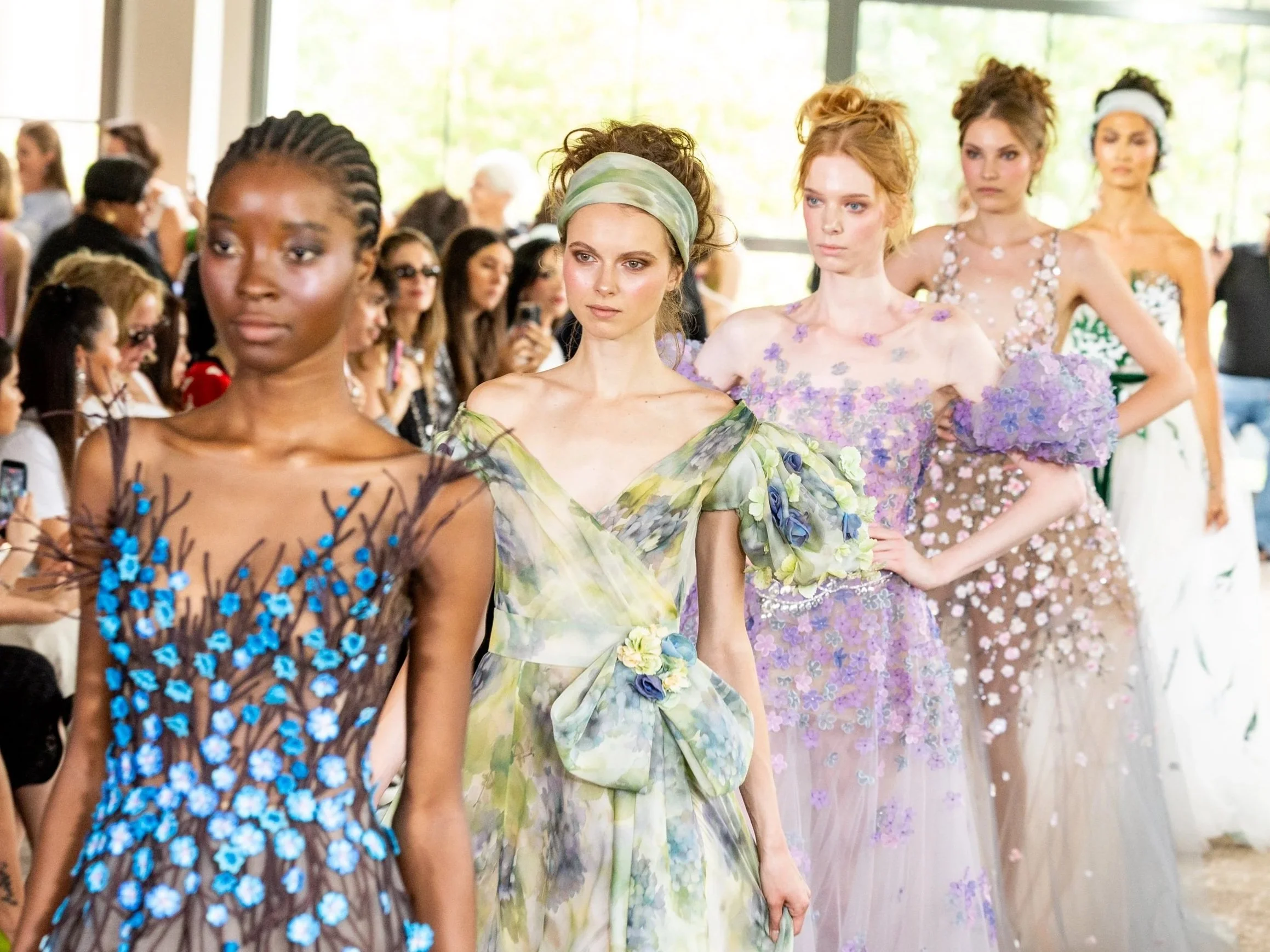
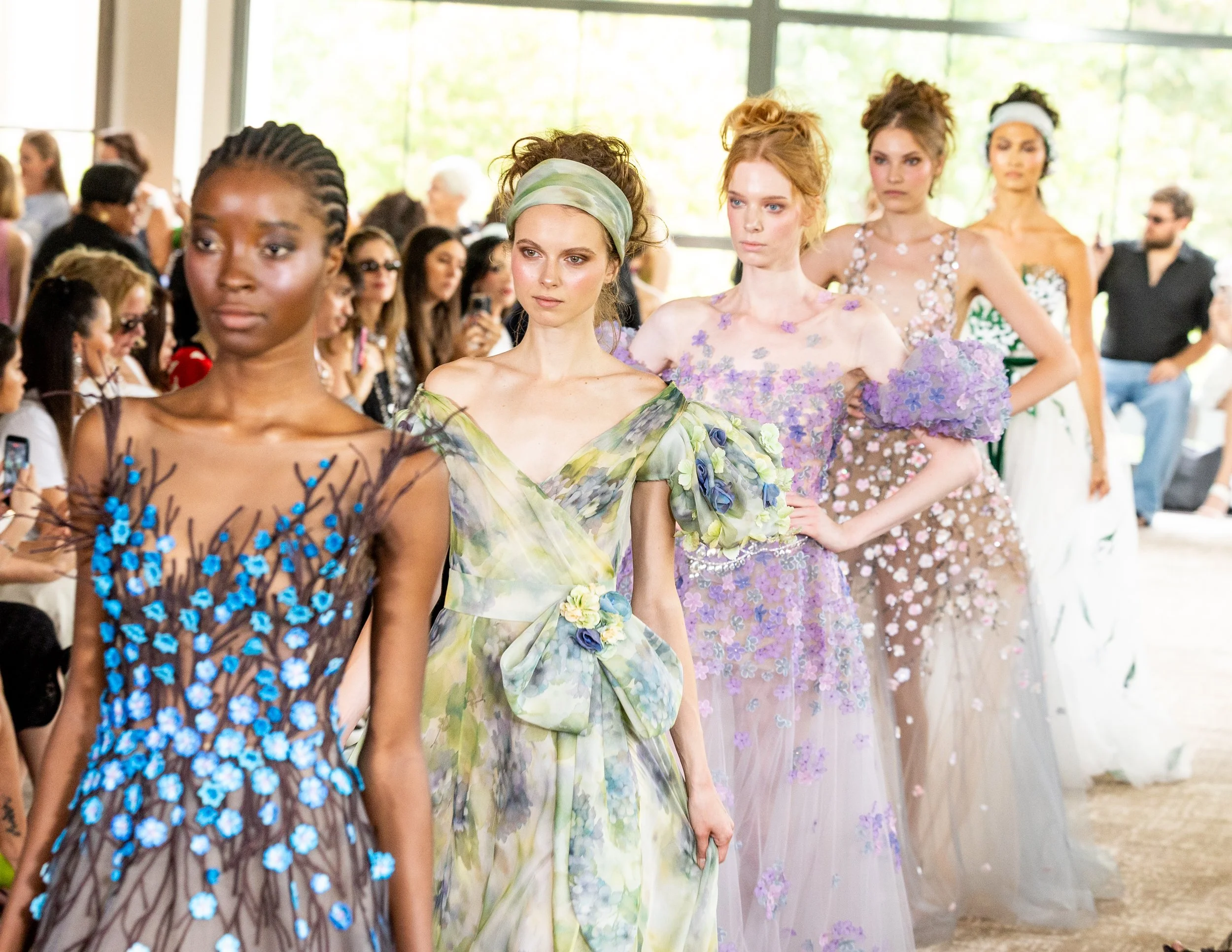
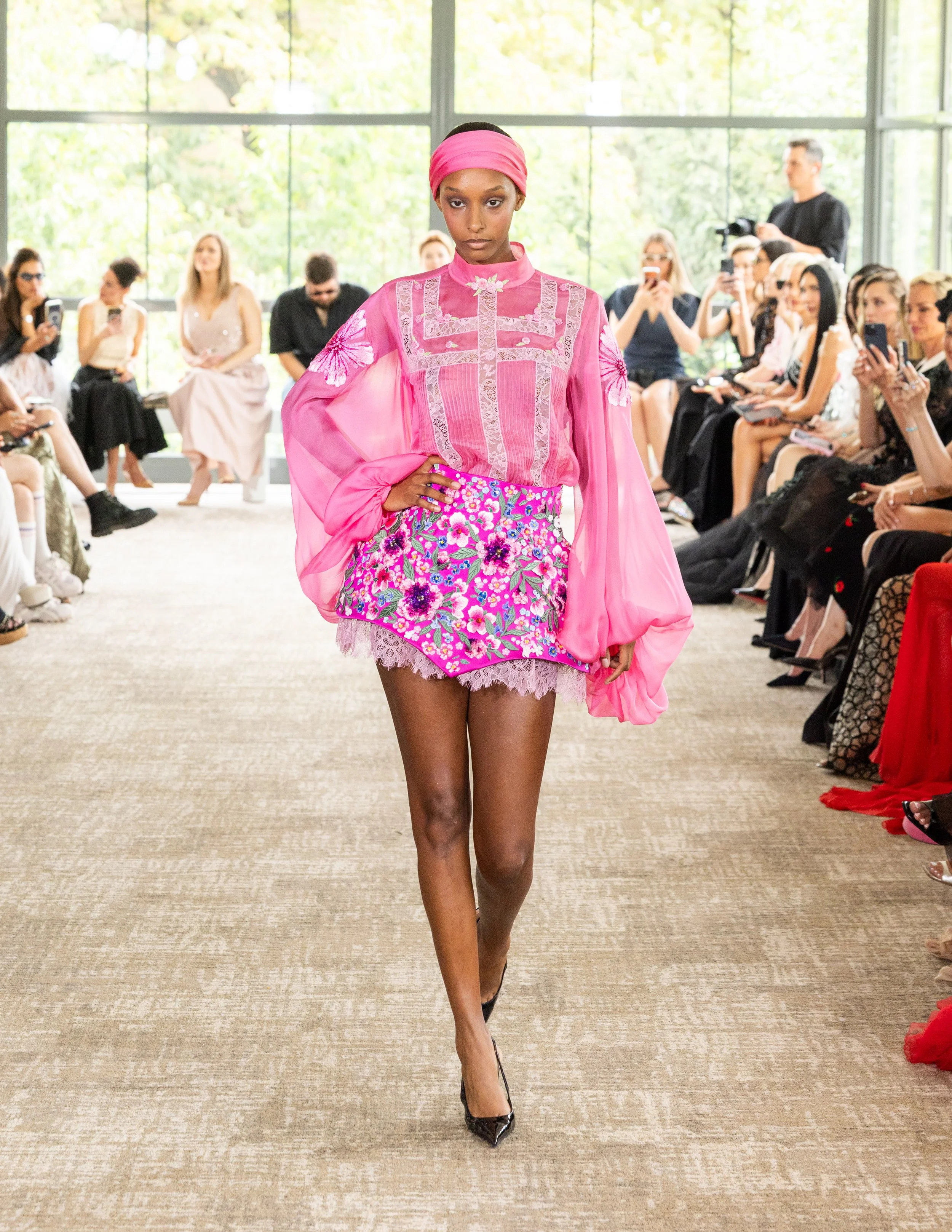
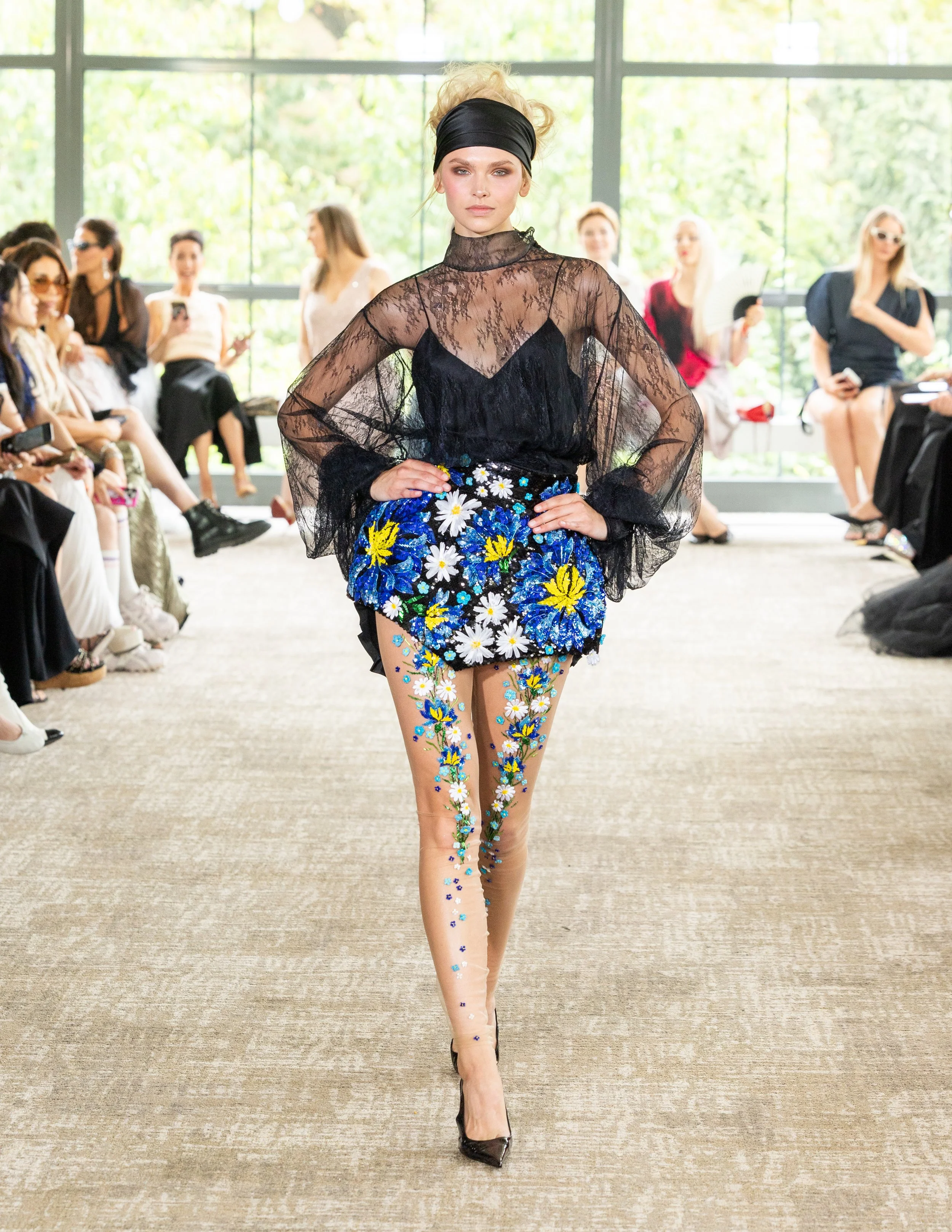
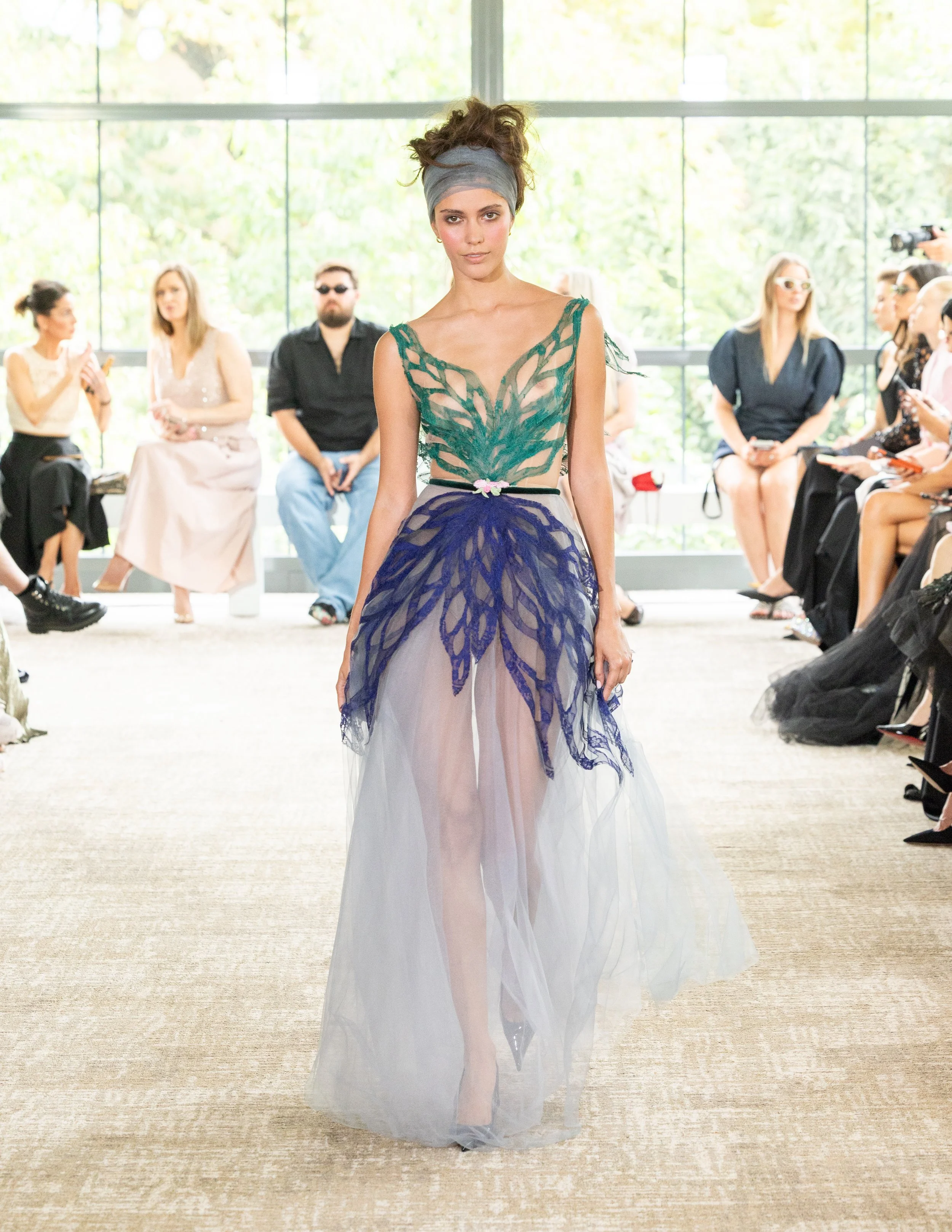
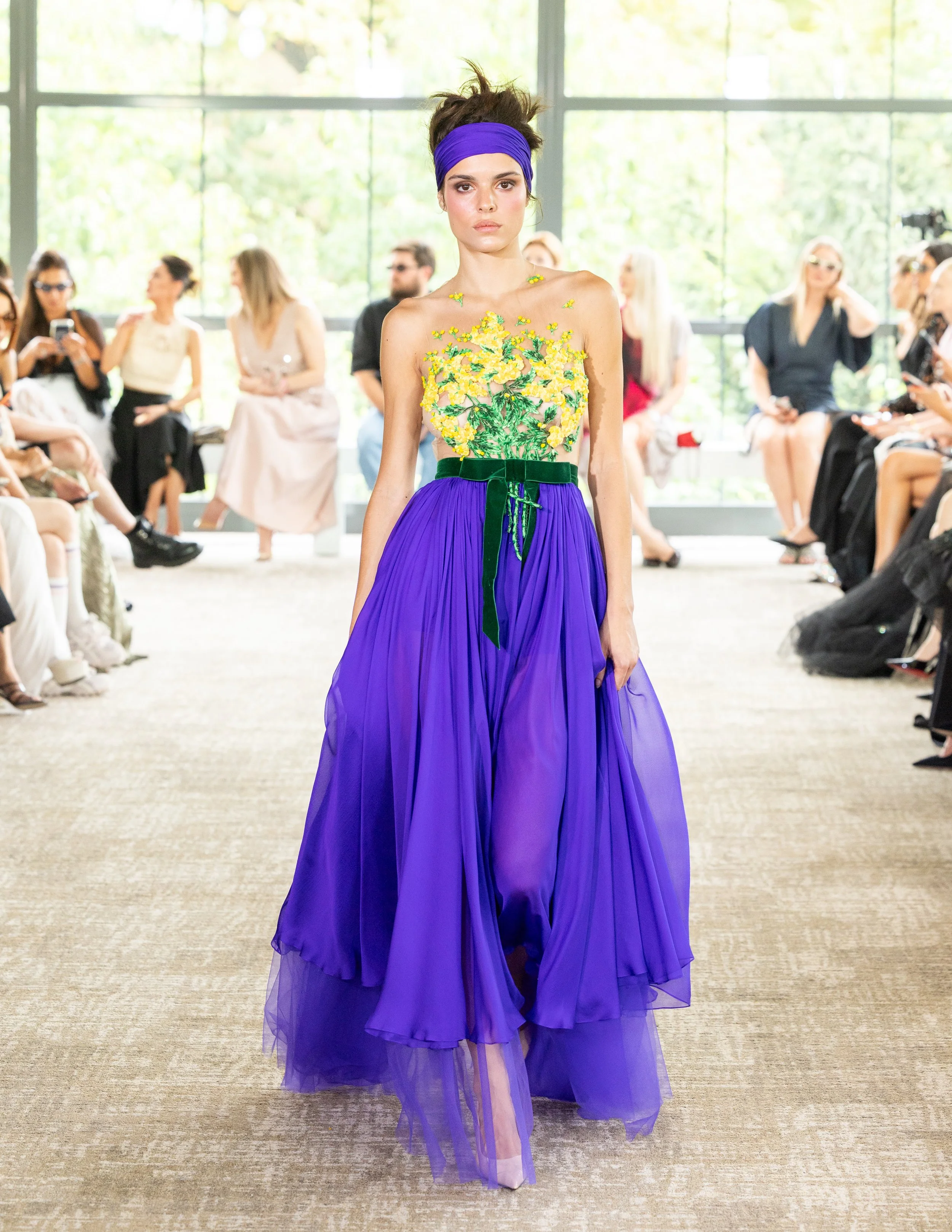
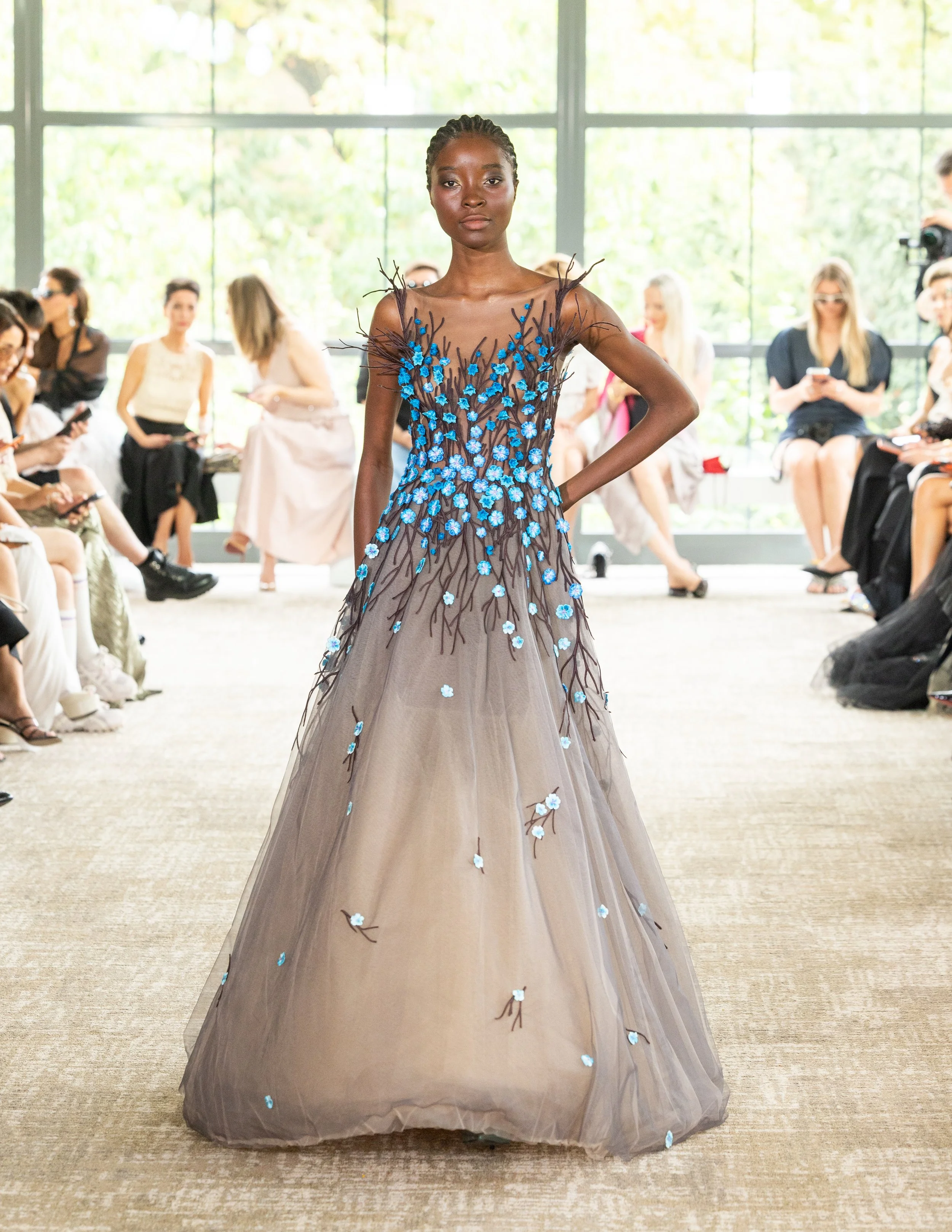
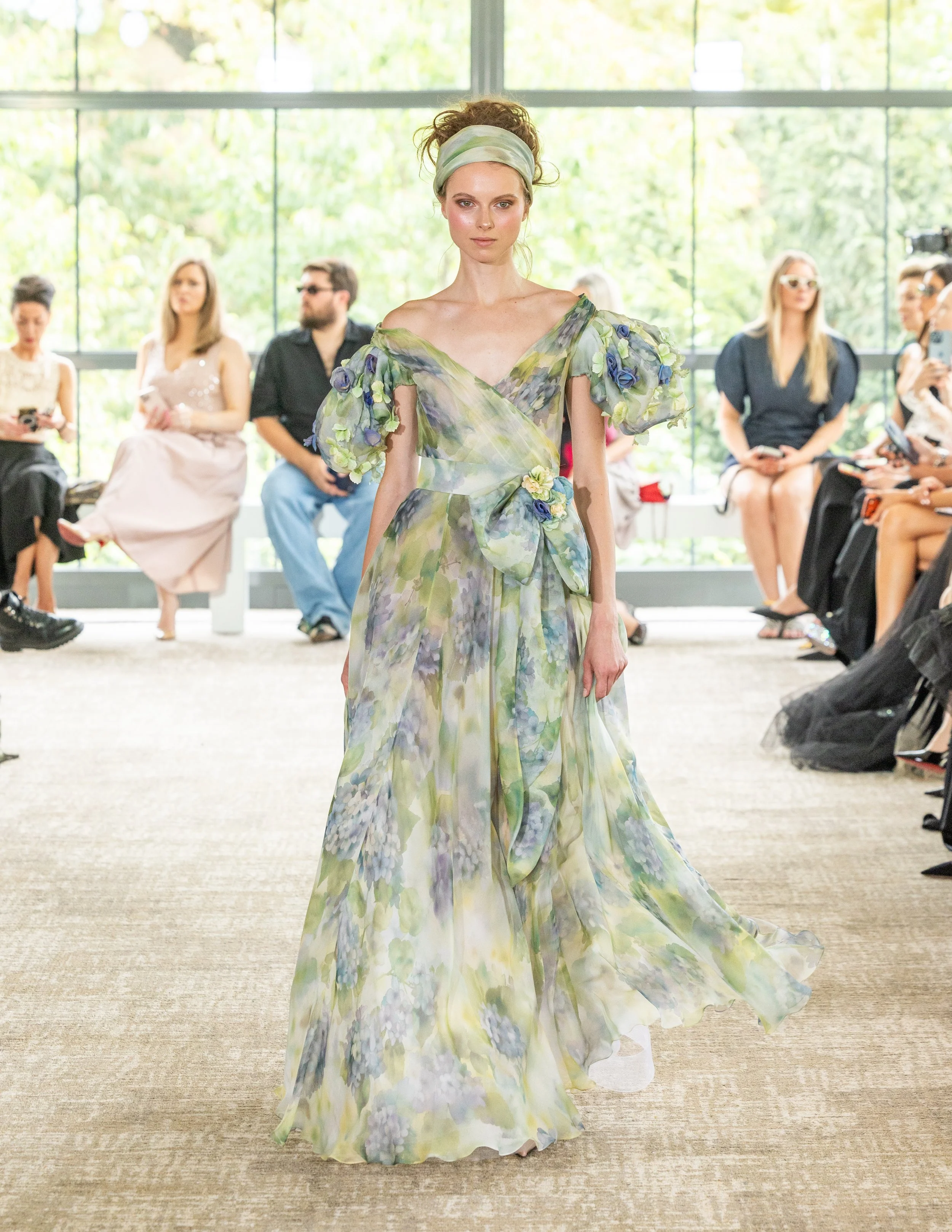
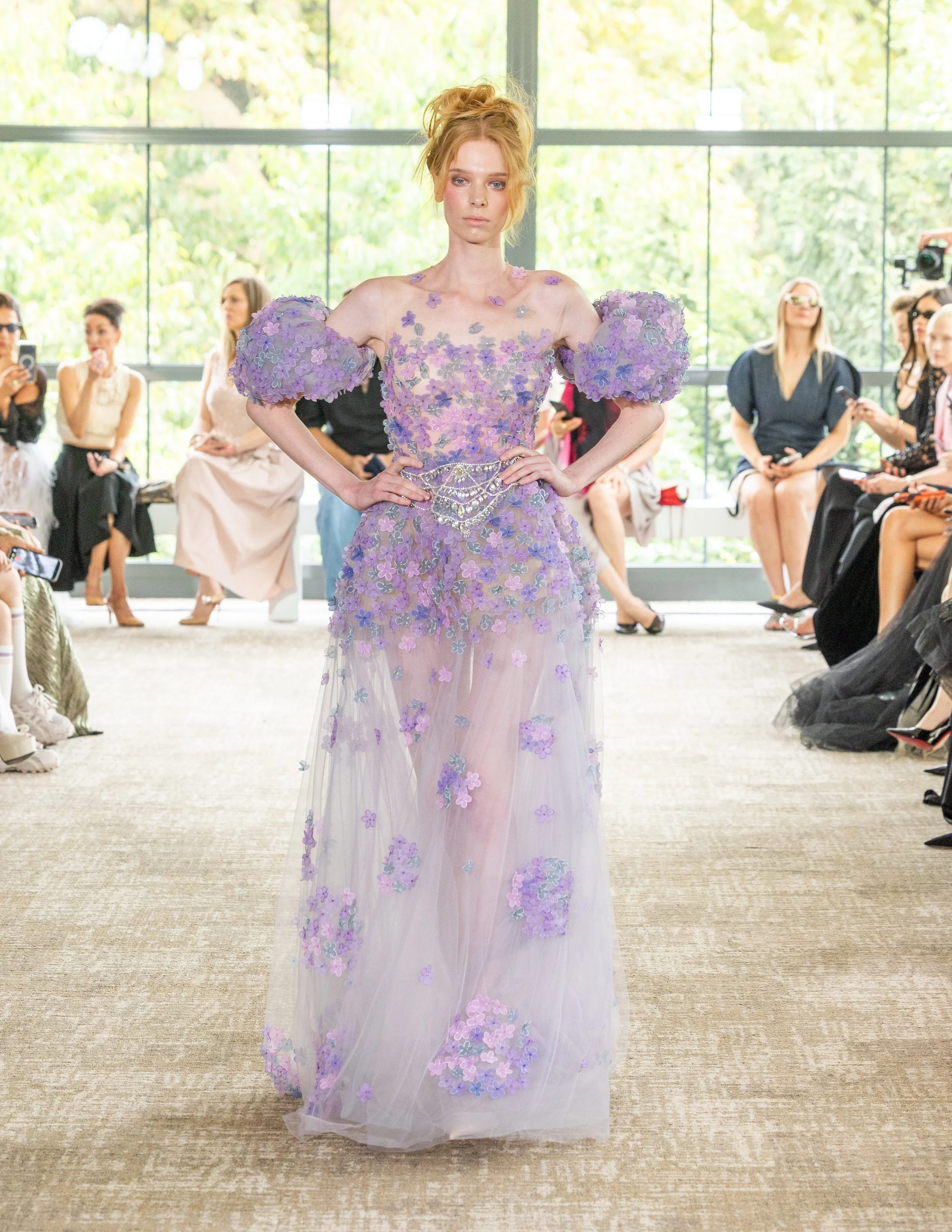
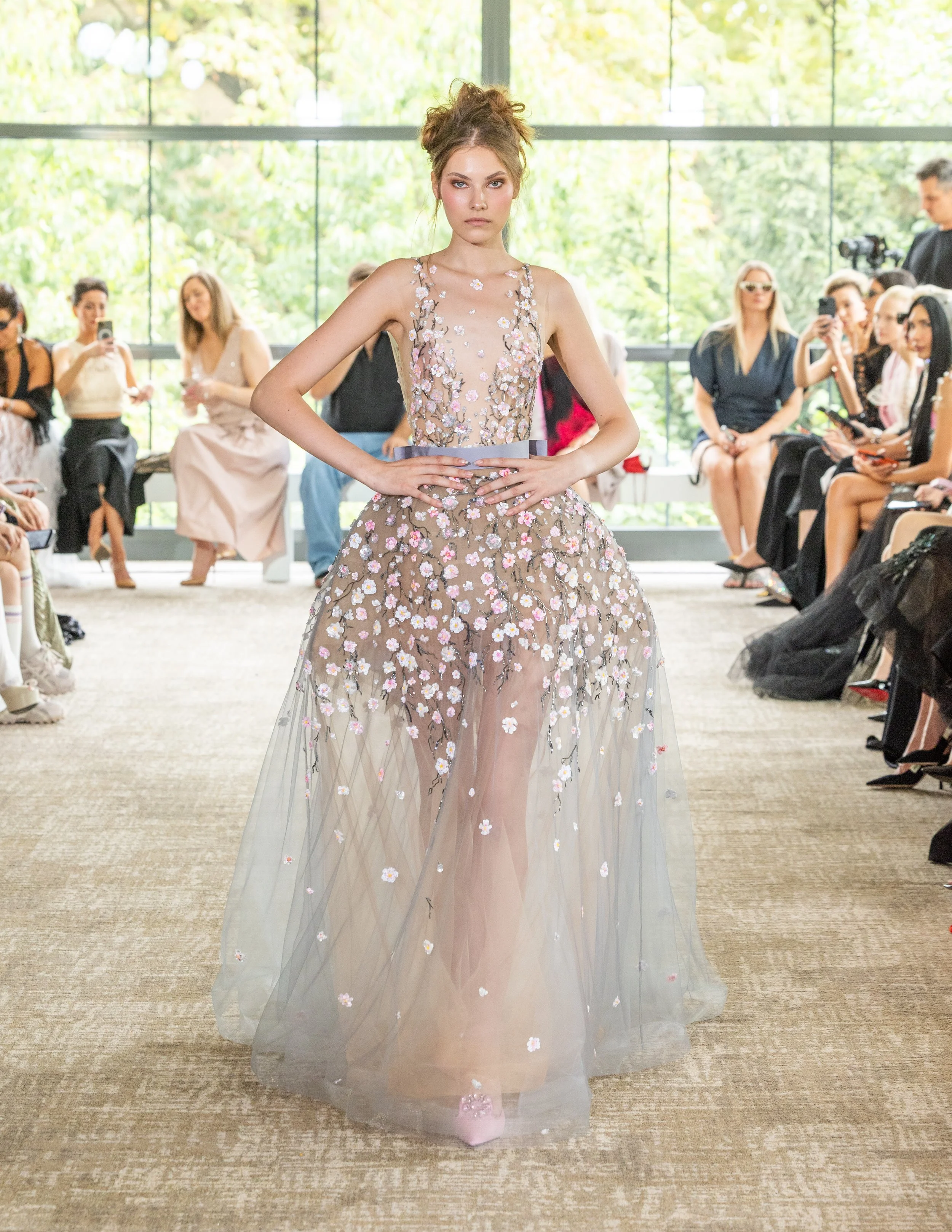
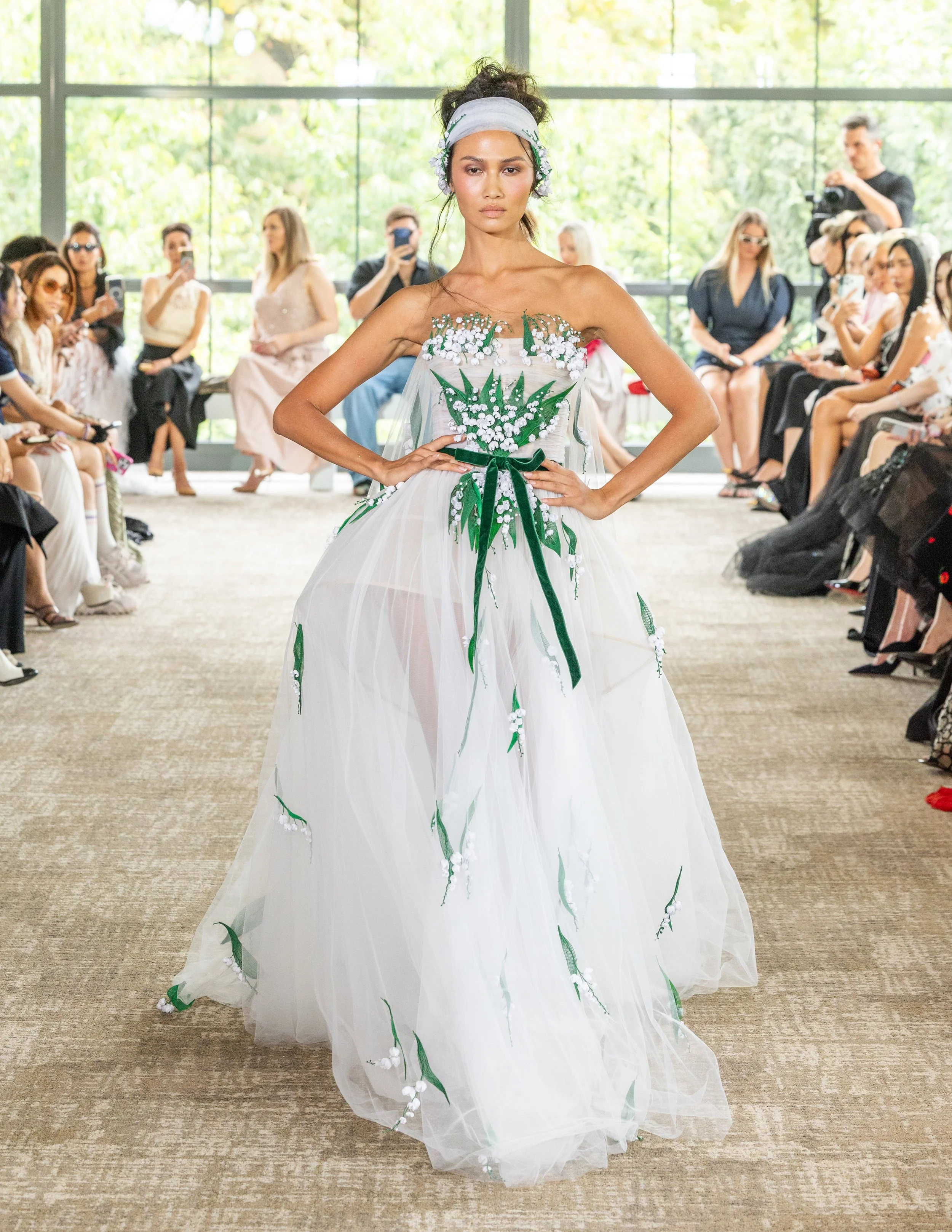
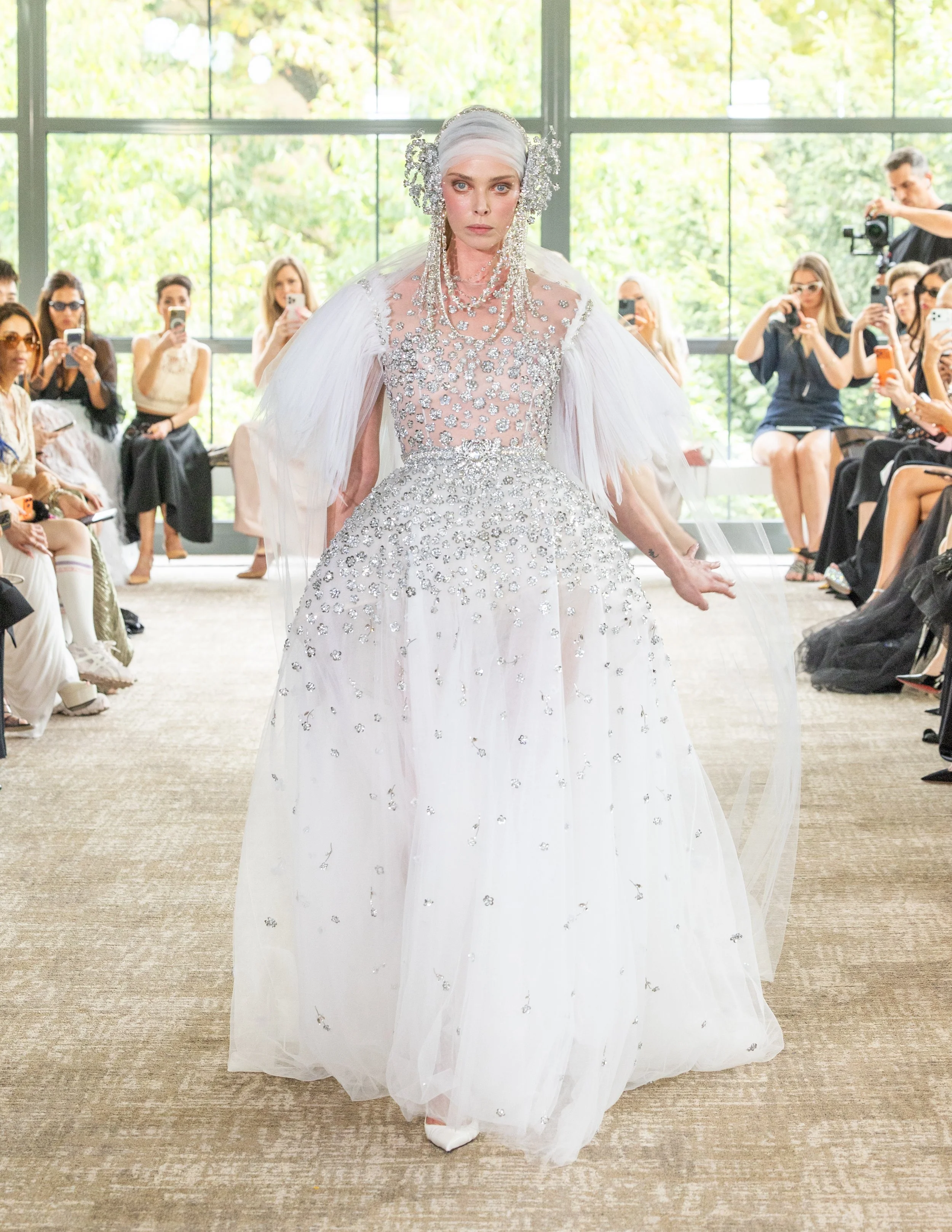
The floral work carried the collection’s strongest visual argument. Bluebells, hydrangeas, daisies and lily-of-the-valley appeared across skirts and bodices, sometimes as scattered details, elsewhere as entire surfaces built from embroidery, appliqué and raised three-dimensional elements. Flowers have returned throughout Yanina’s collections in changing scales and techniques, and here they outweighed the historical references. The eighteenth-century silhouettes and Belle Époque details functioned less as subjects in themselves than as structures for the floral craftsmanship.
Strip away the title and the literary references, and the collection’s strongest element is its embroidery and appliqué. The flowers that recur across the gowns — identified by species, built in relief and layered into the fabric — reveal where Yanina’s attention is most focused. The historical references provide some silhouettes, but the craftsmanship gives the clothes their identity.
DISCOVER MORE ABOUT YANINA COUTUE