ArdAzAei’s The Nightingale’s Rose Turns Persian Allegory into Couture Structure
Bahareh Ardakani, the Iranian-born founder and creative director of ArdAzAei, grew up seeing the rose and nightingale in the carpets of her family’s house in Gothenburg, in miniature paintings of paradise gardens, and in the poetry of Hafez and Saadi. In Persian literature and decorative arts, the pairing carries specific meaning: the rose stands for perfection and beauty, while the nightingale is the lover drawn towards it, defined by desire and persistence.
For her Fall/Winter 2027 collection, titled The Nightingale’s Rose, she translates the motif through couture’s own materials and techniques — fabric, proportion and handwork — treating it less as an image to reproduce than as a structure to rebuild.
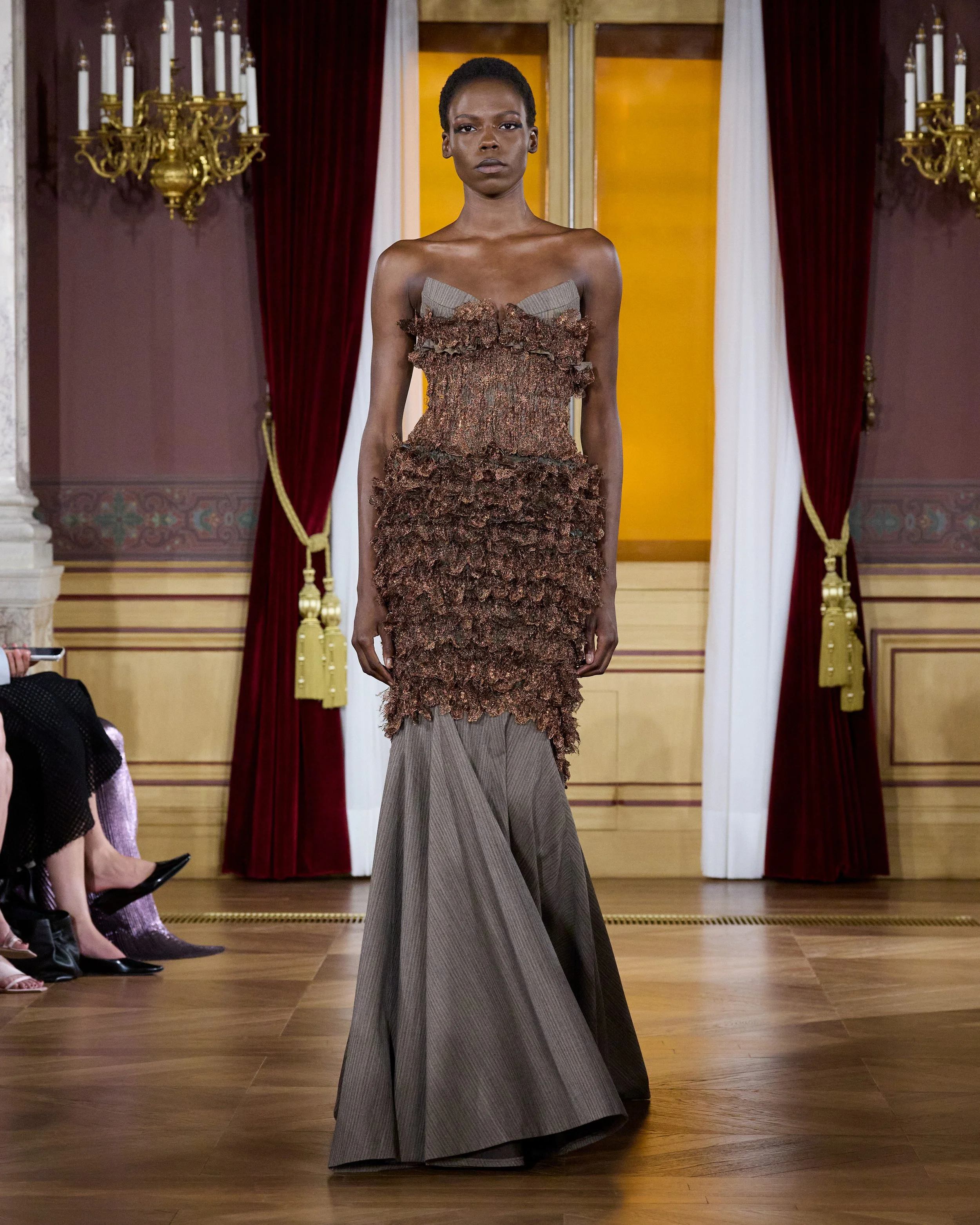
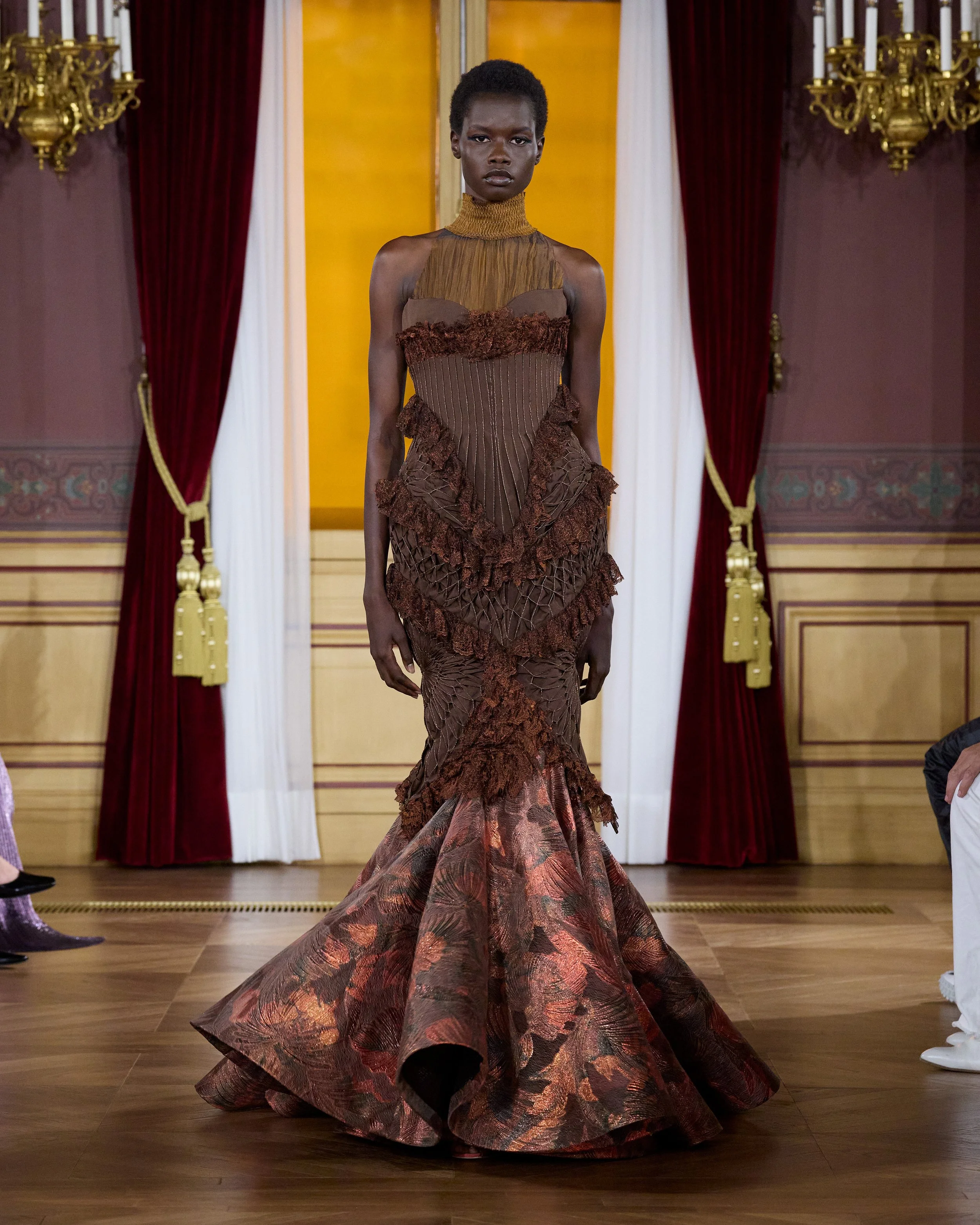
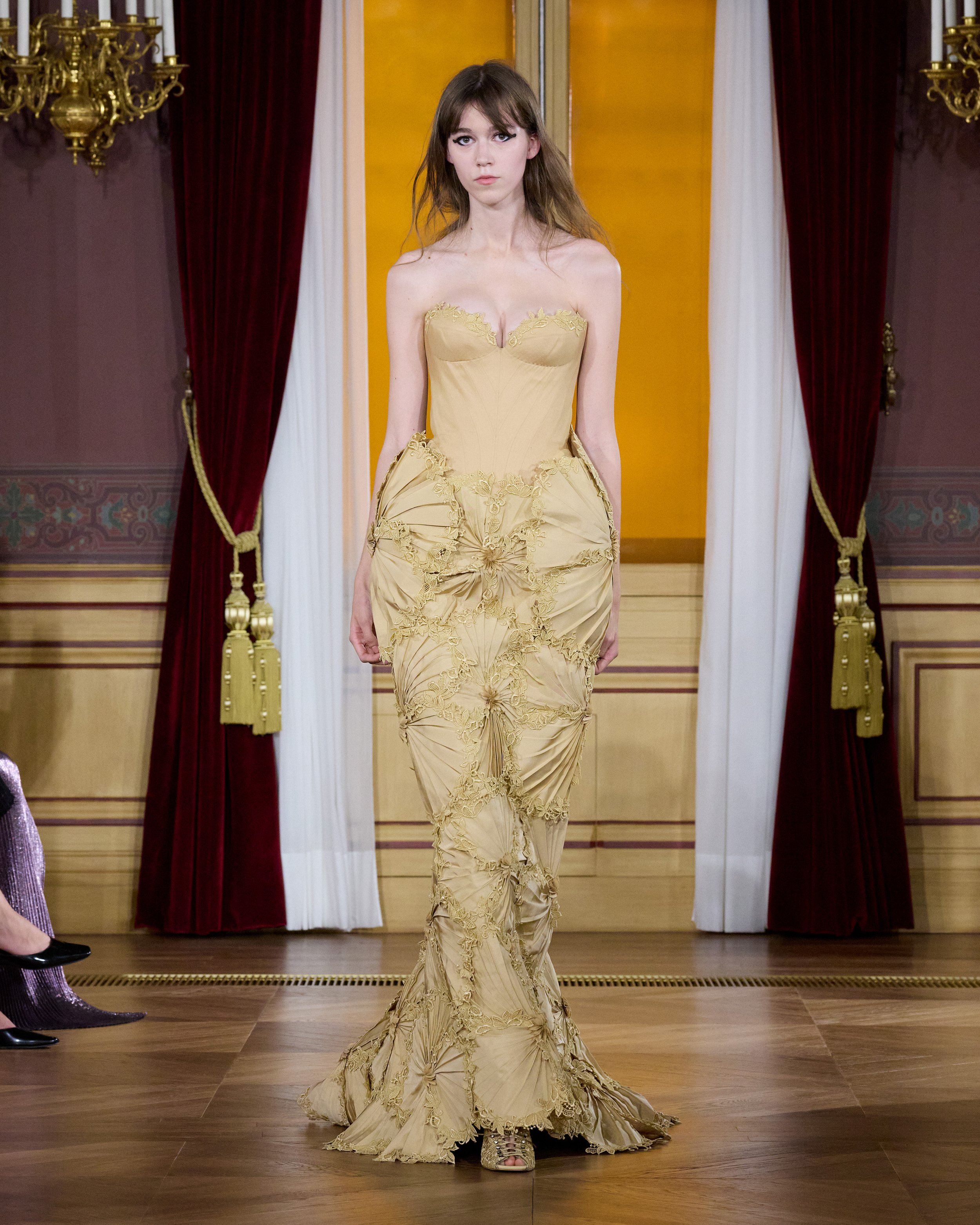
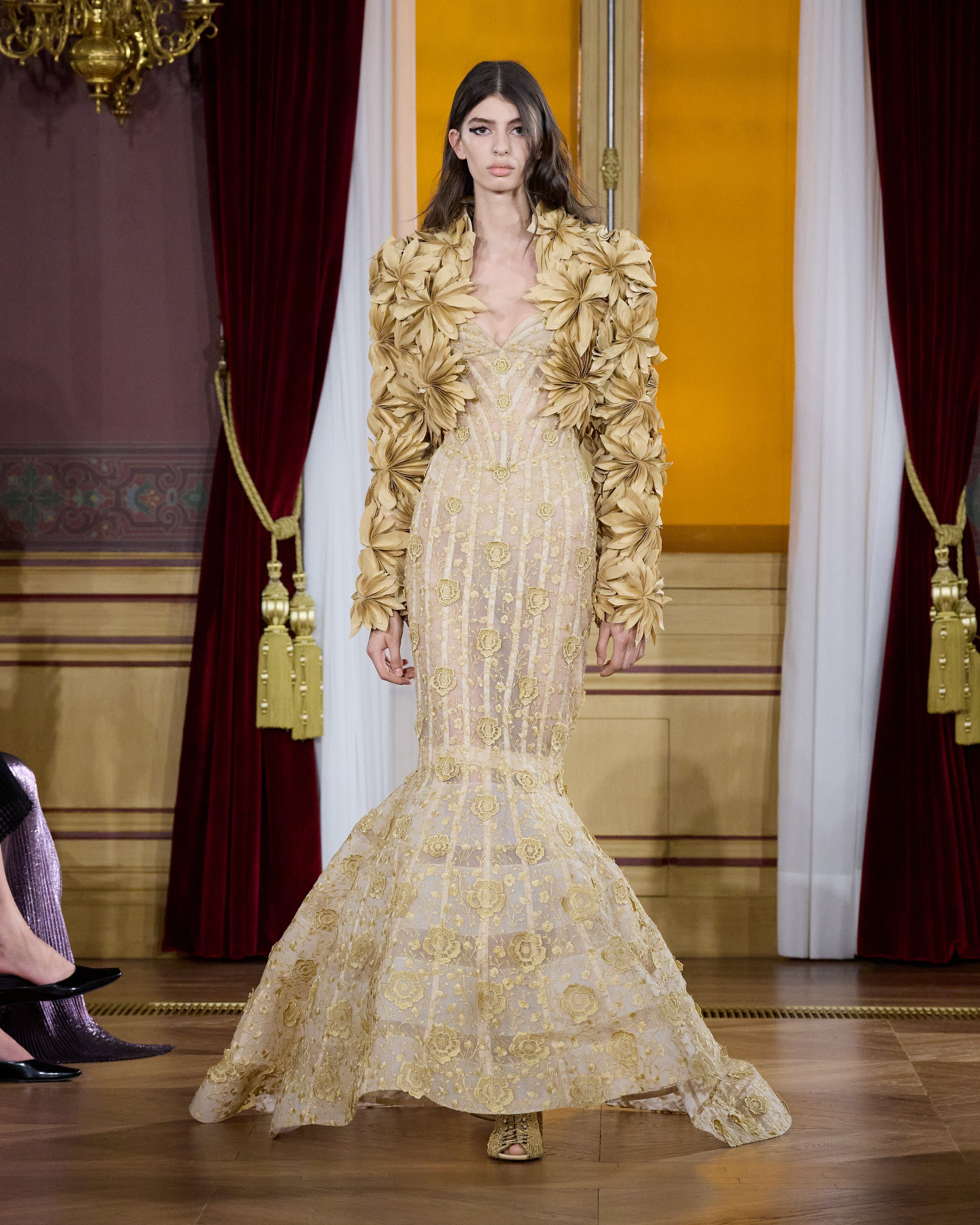
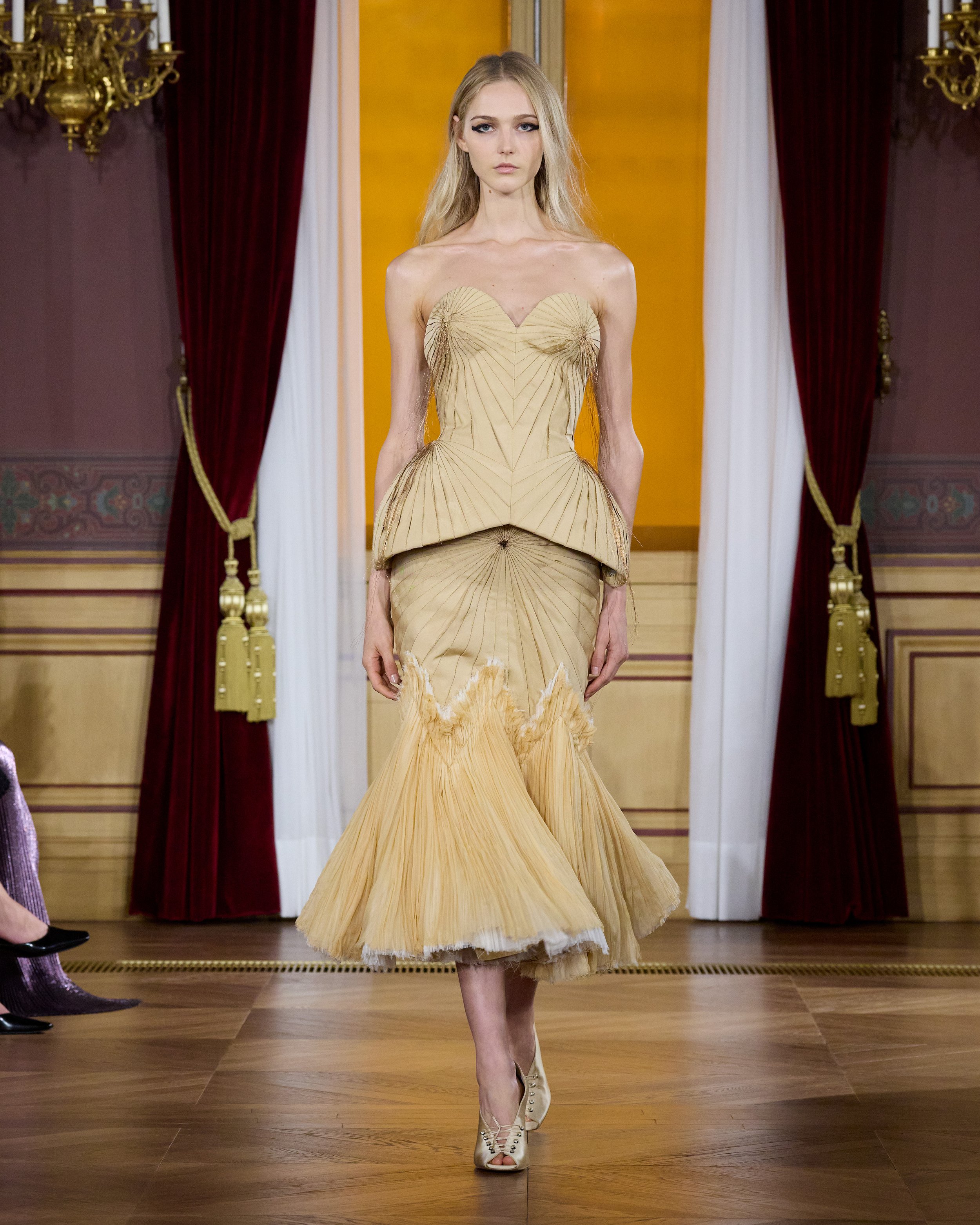
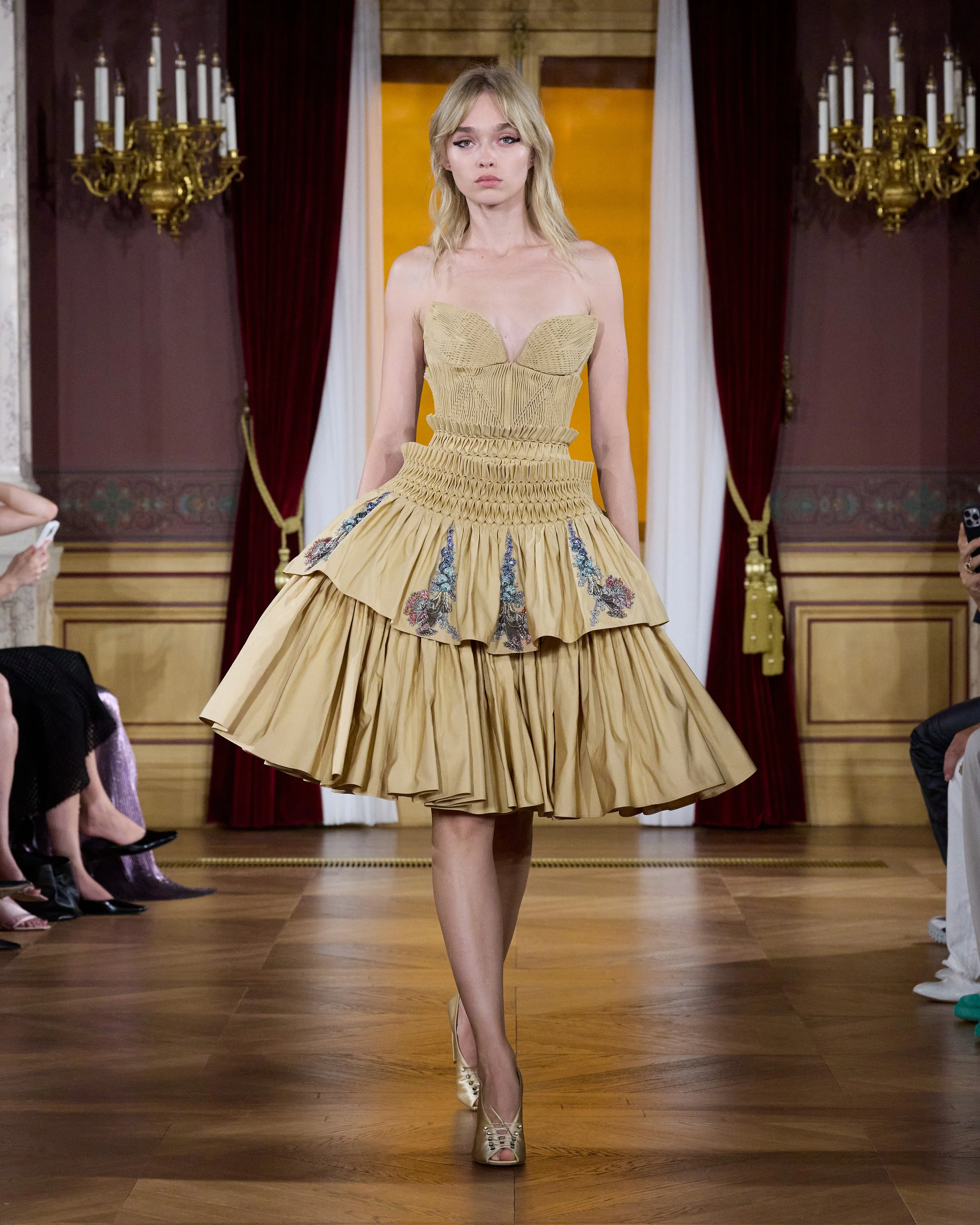
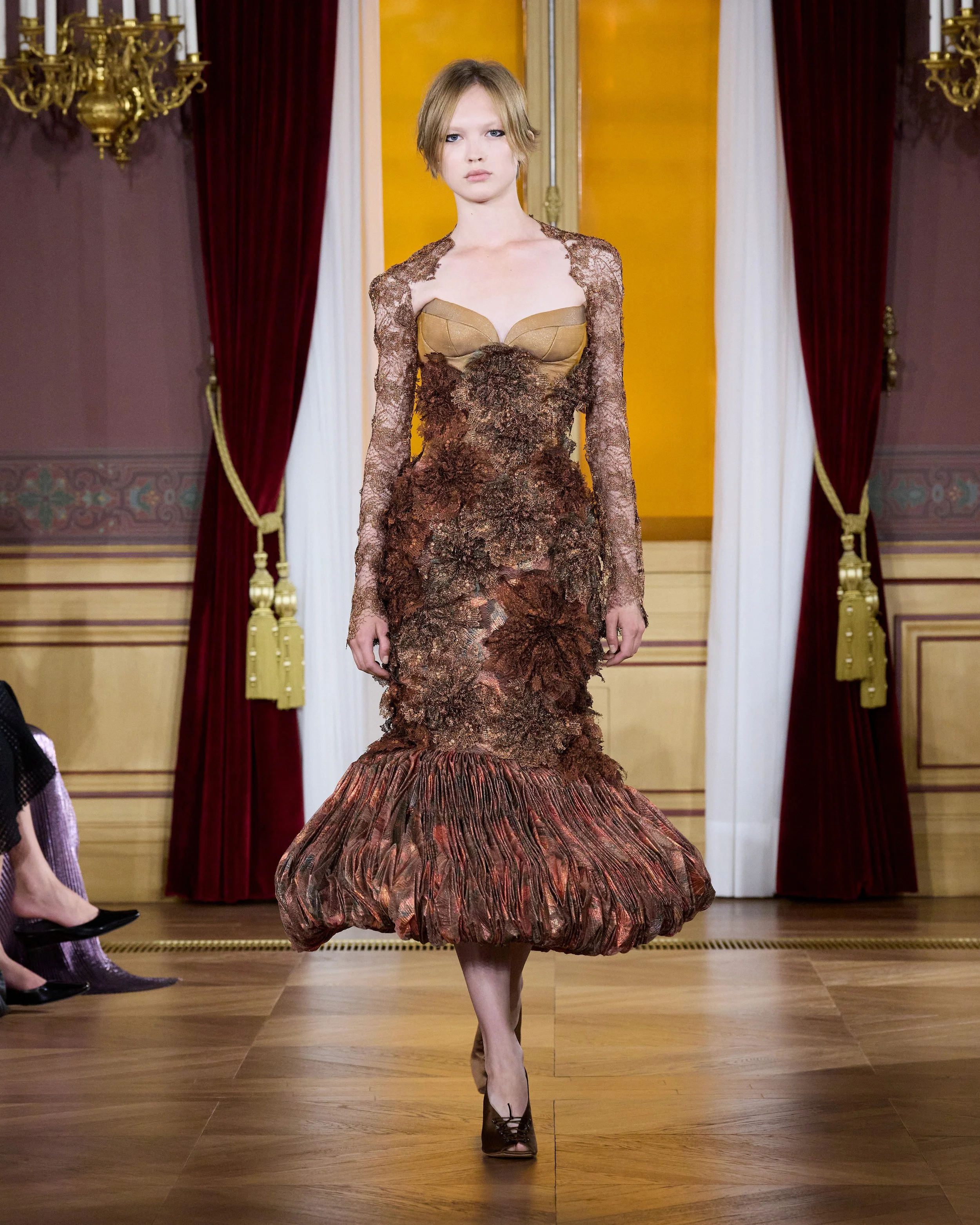
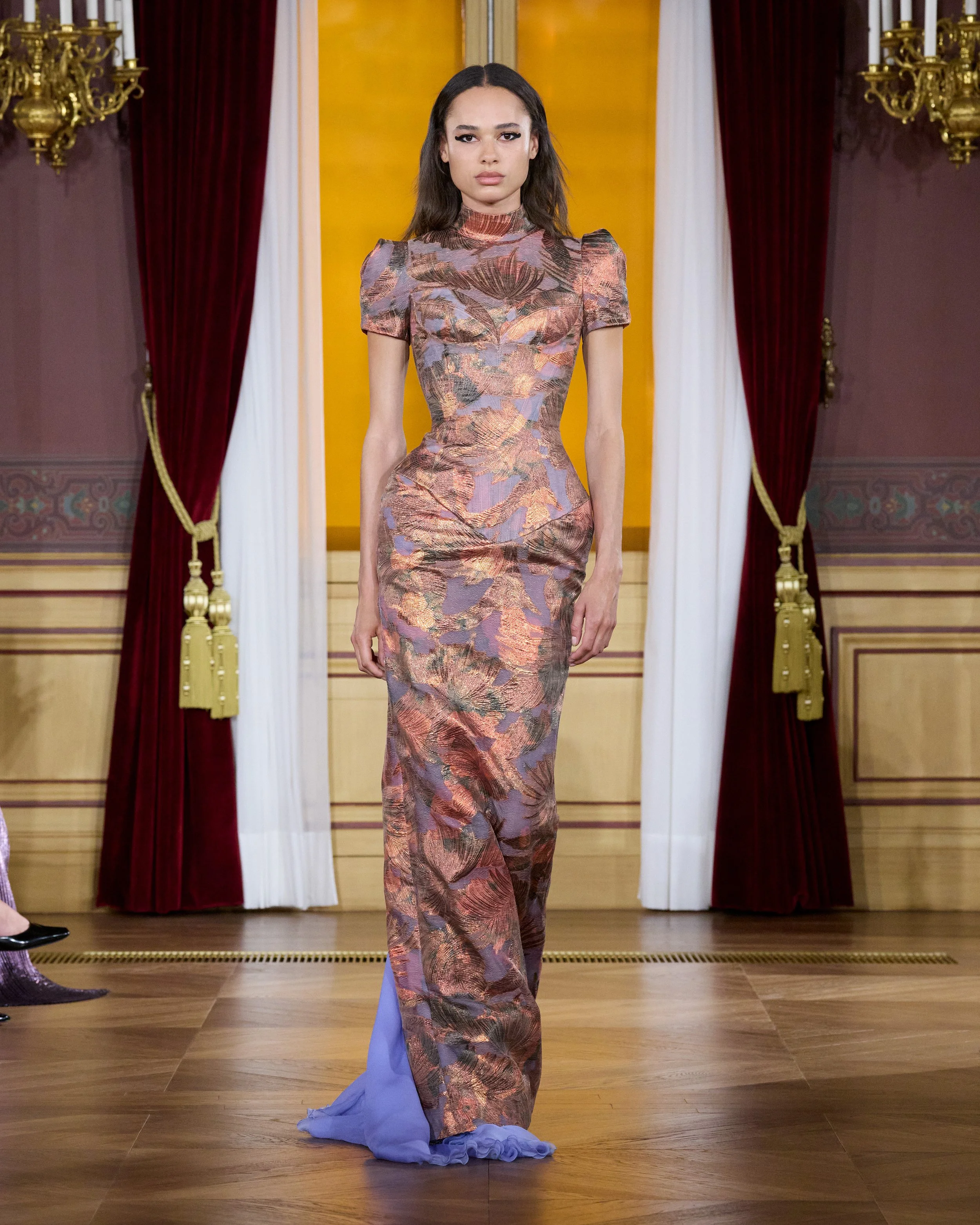
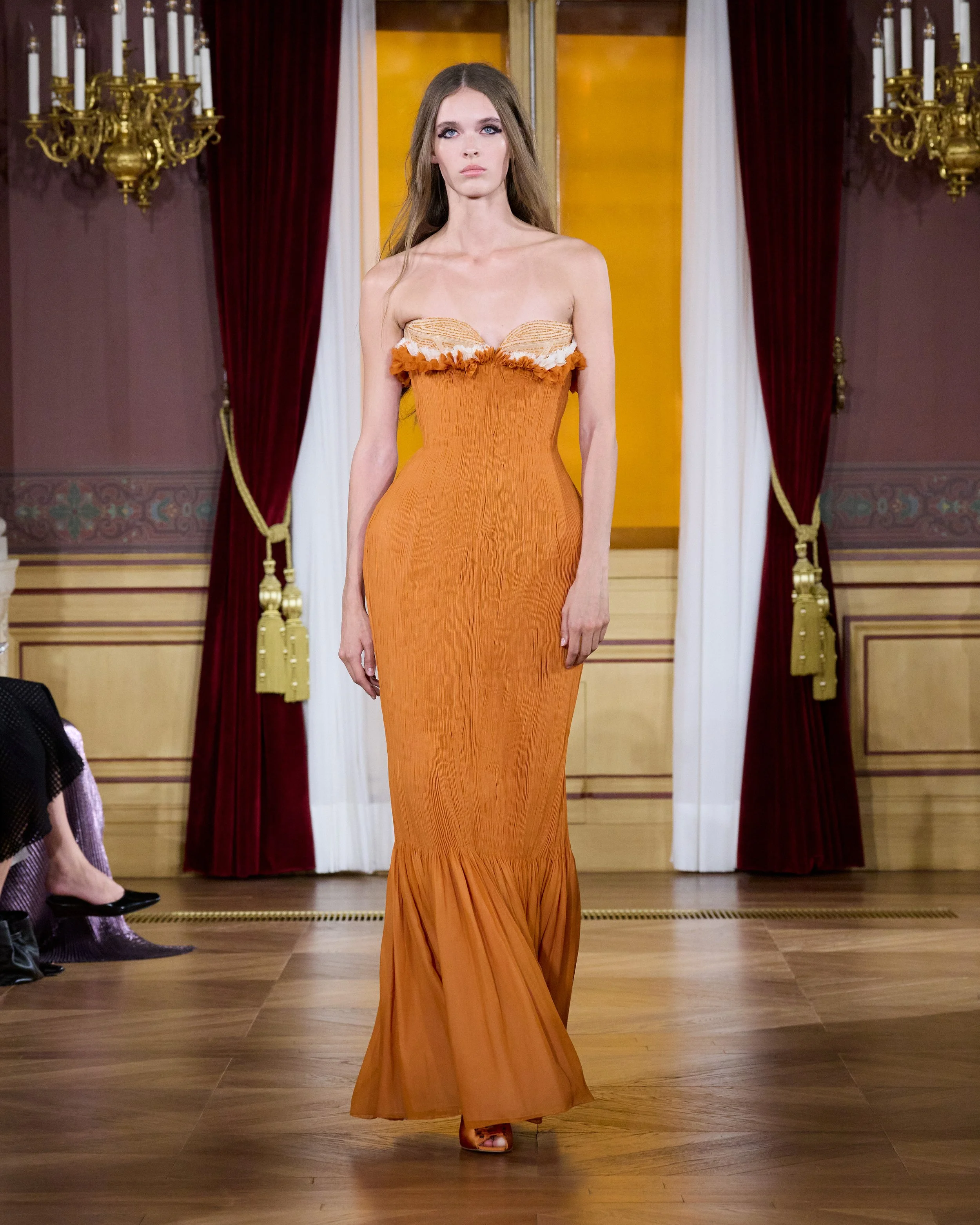
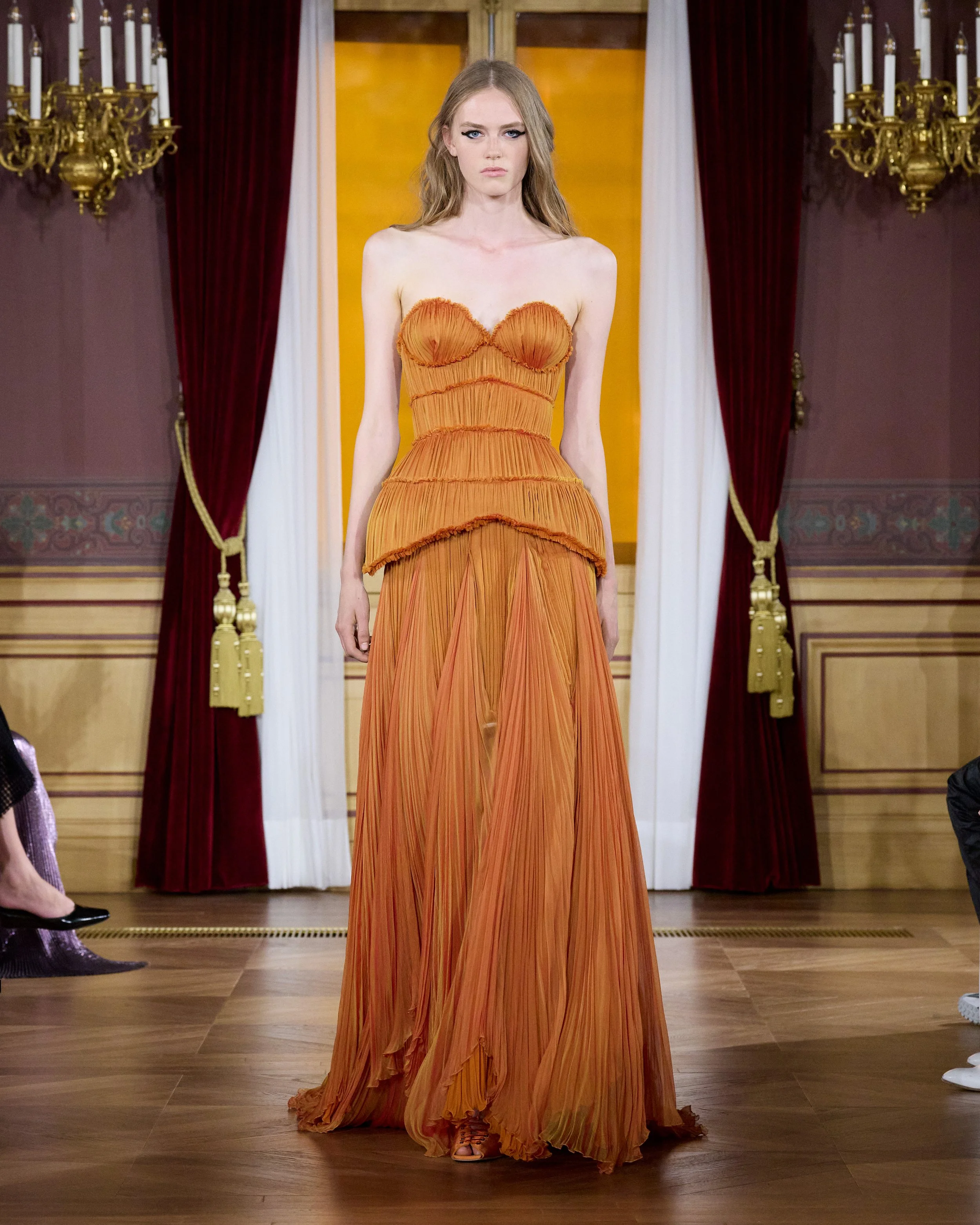
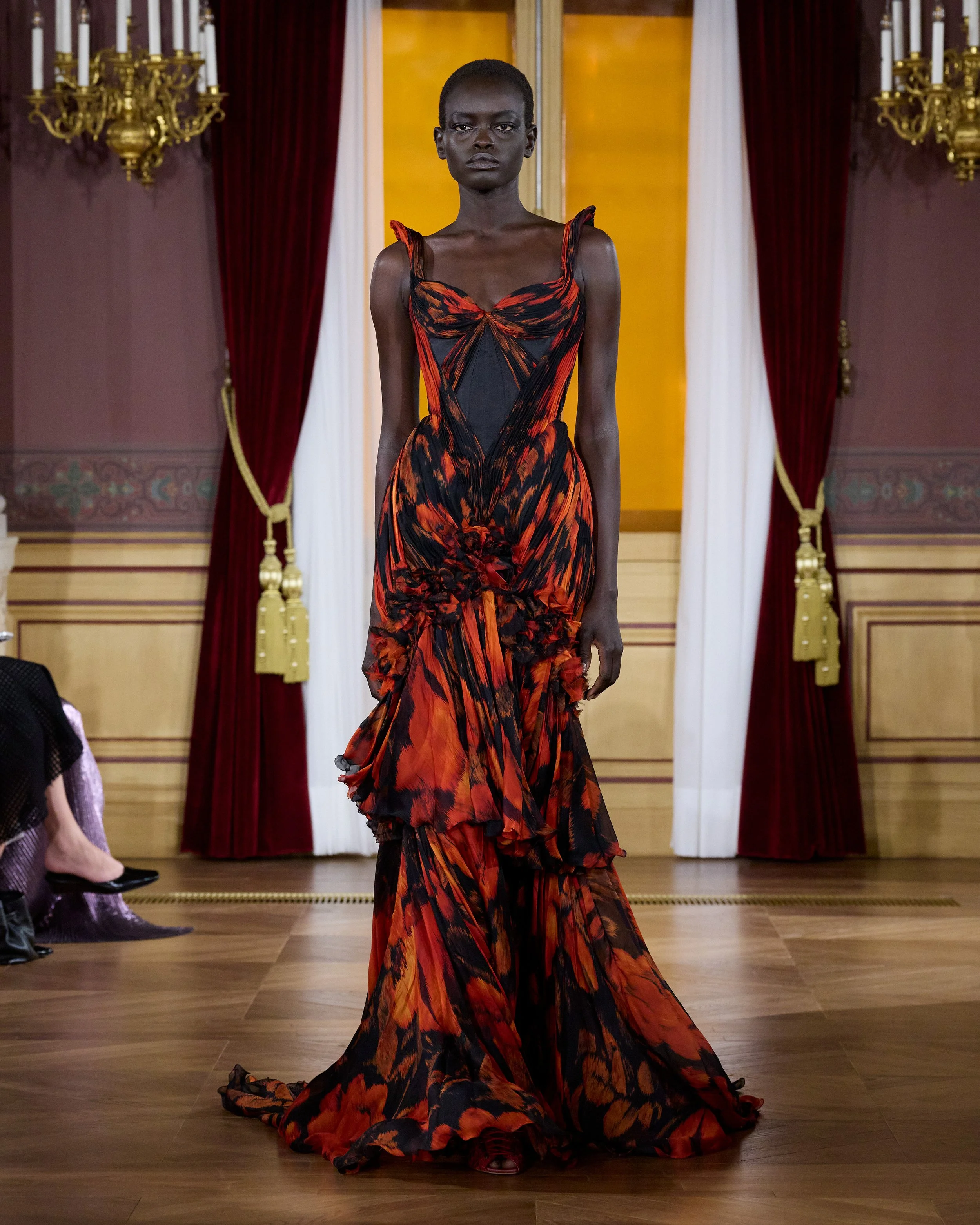
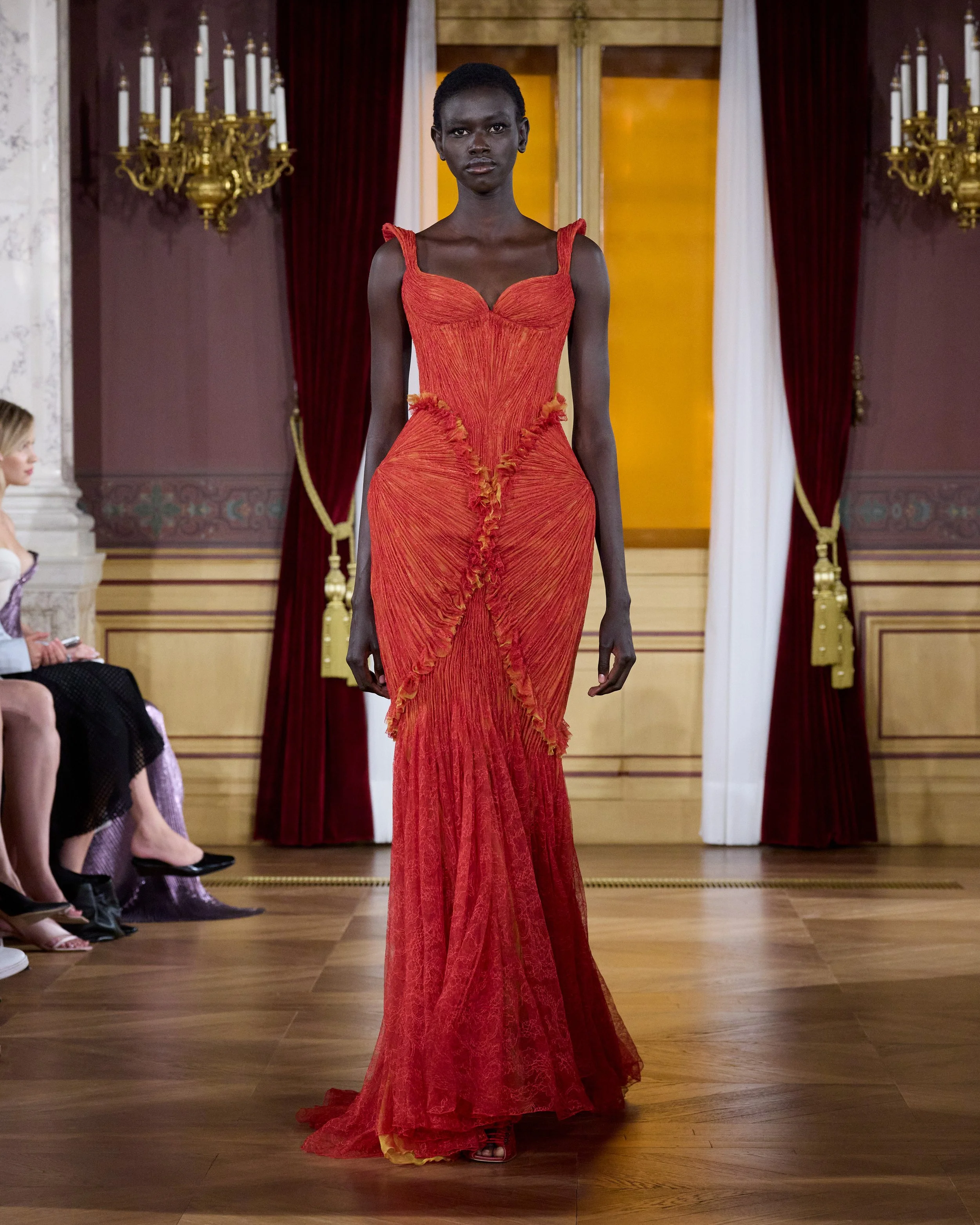
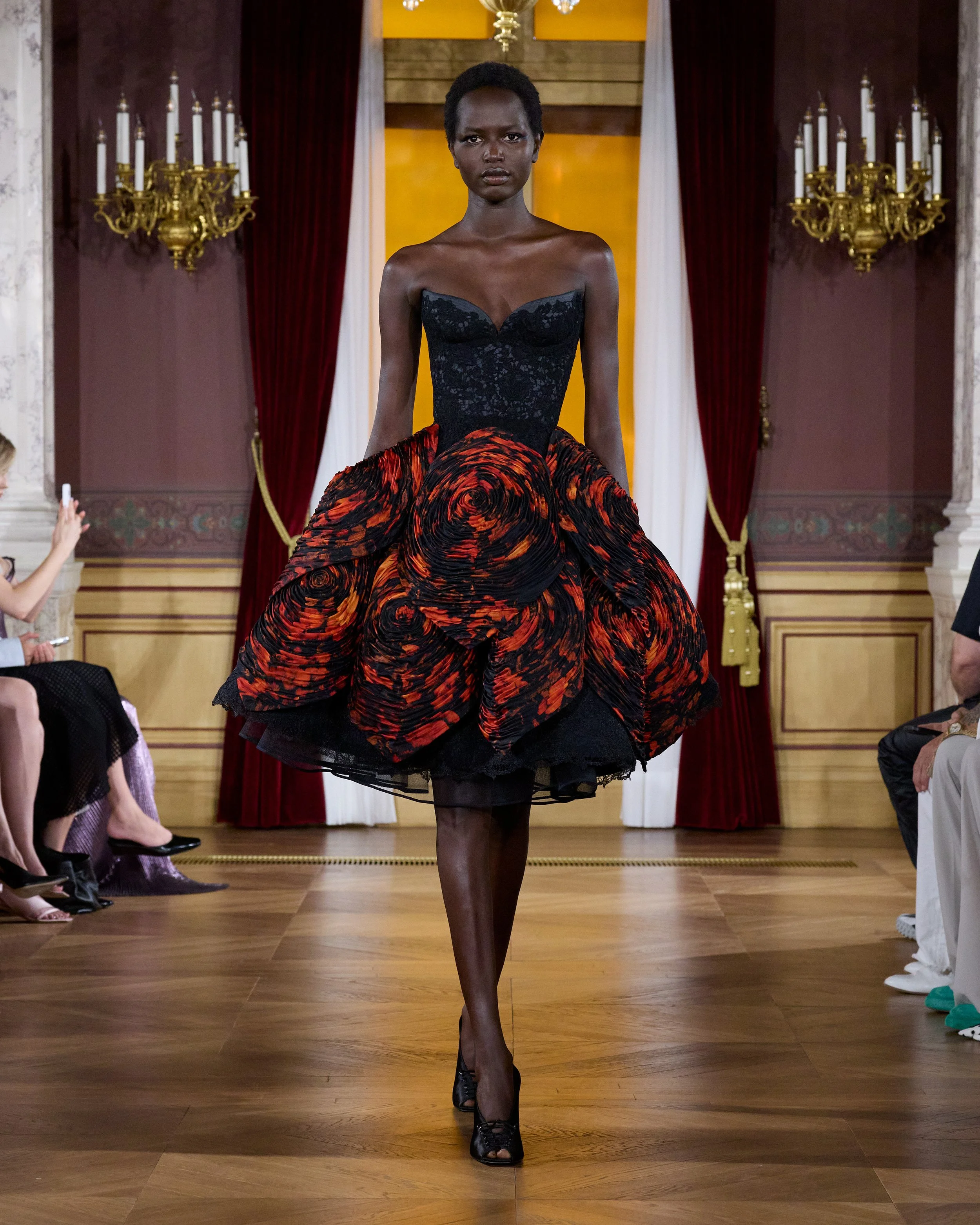
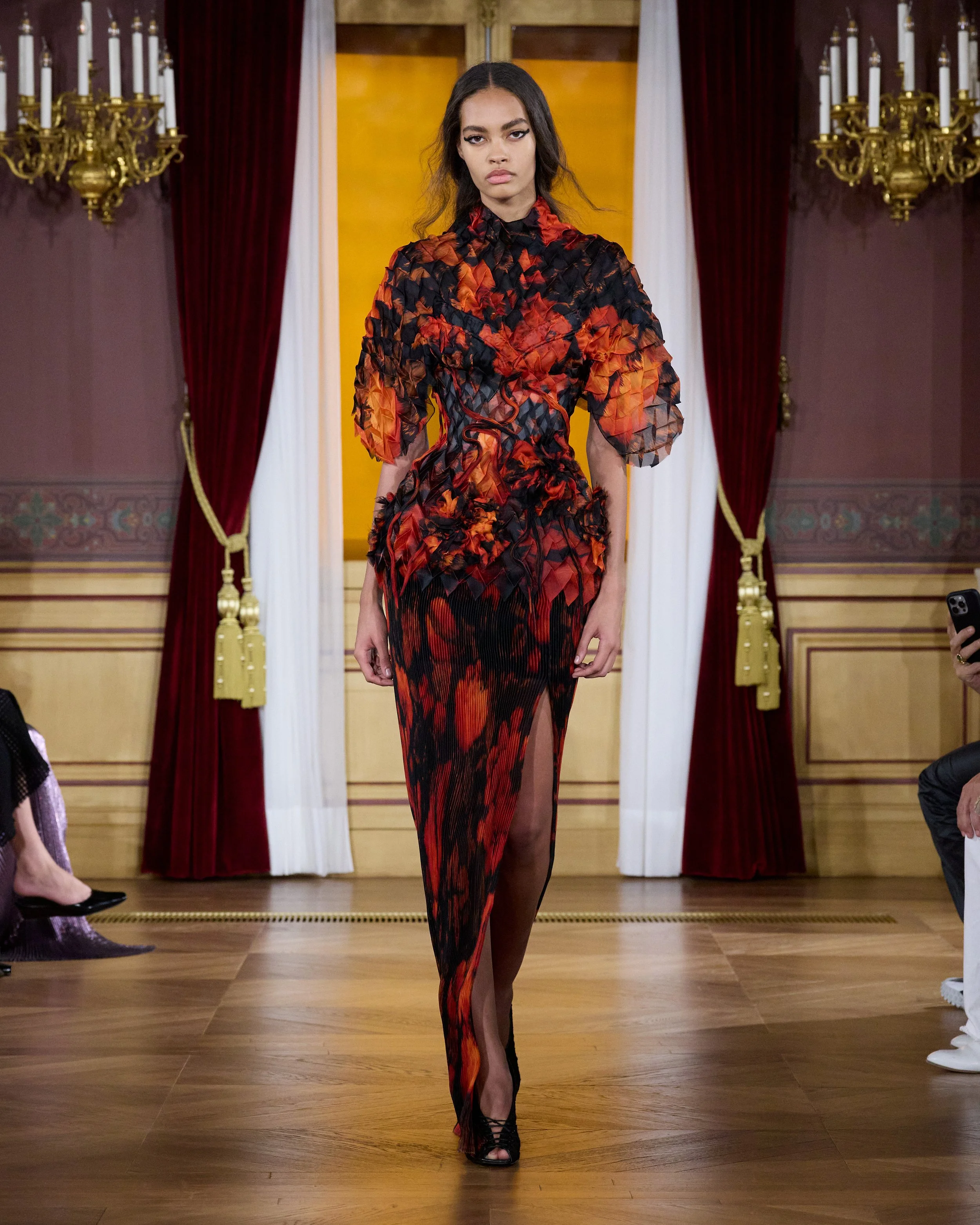
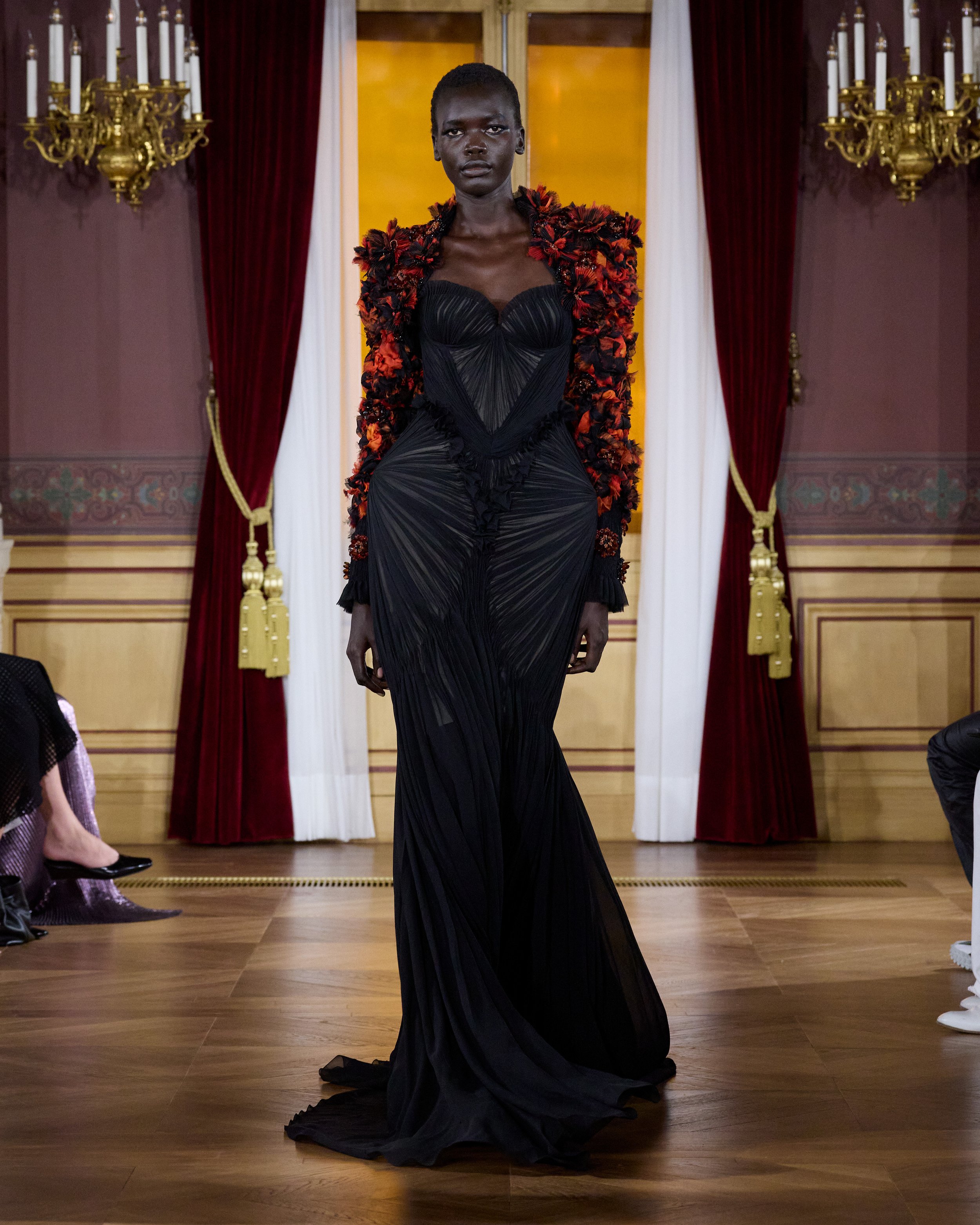
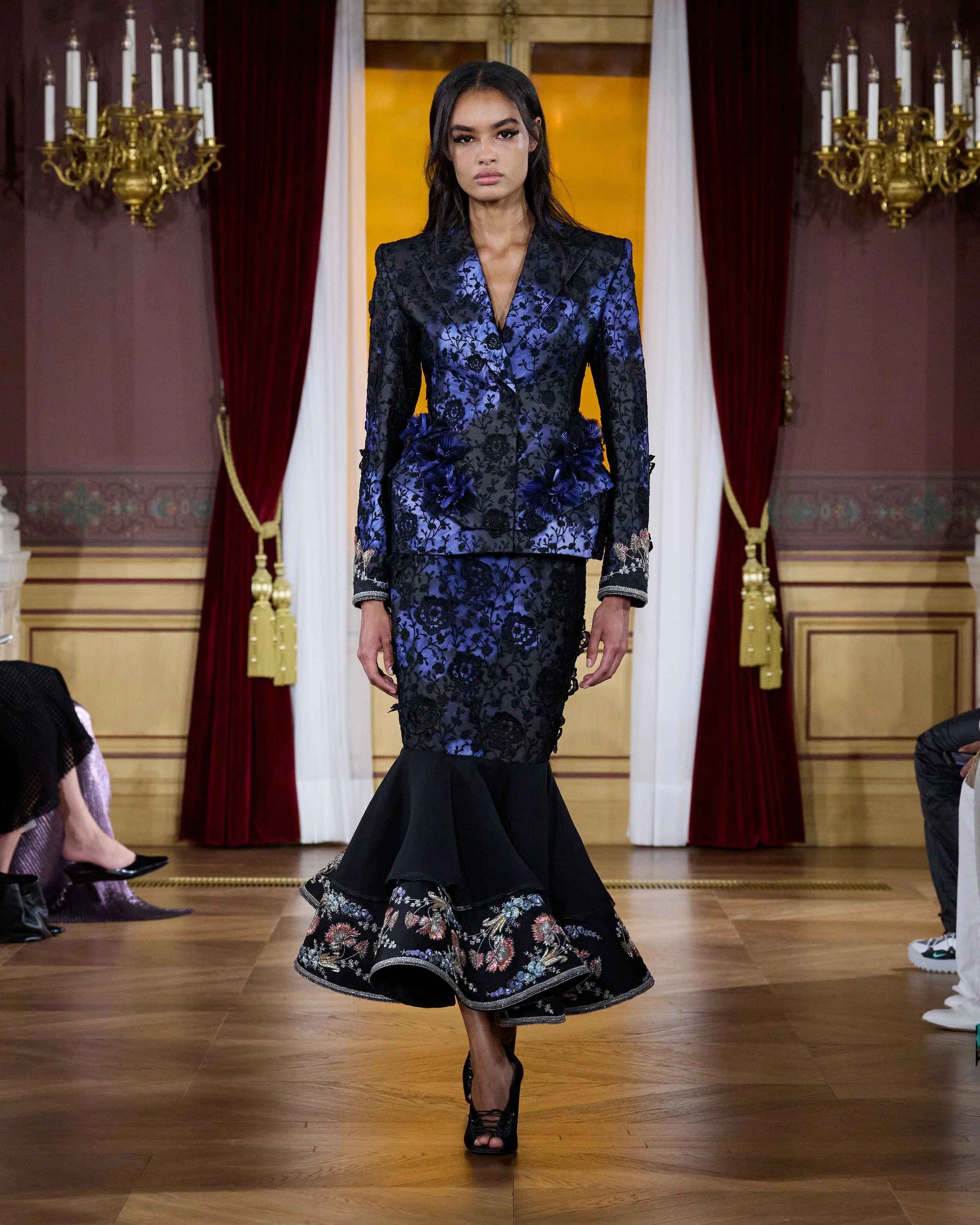
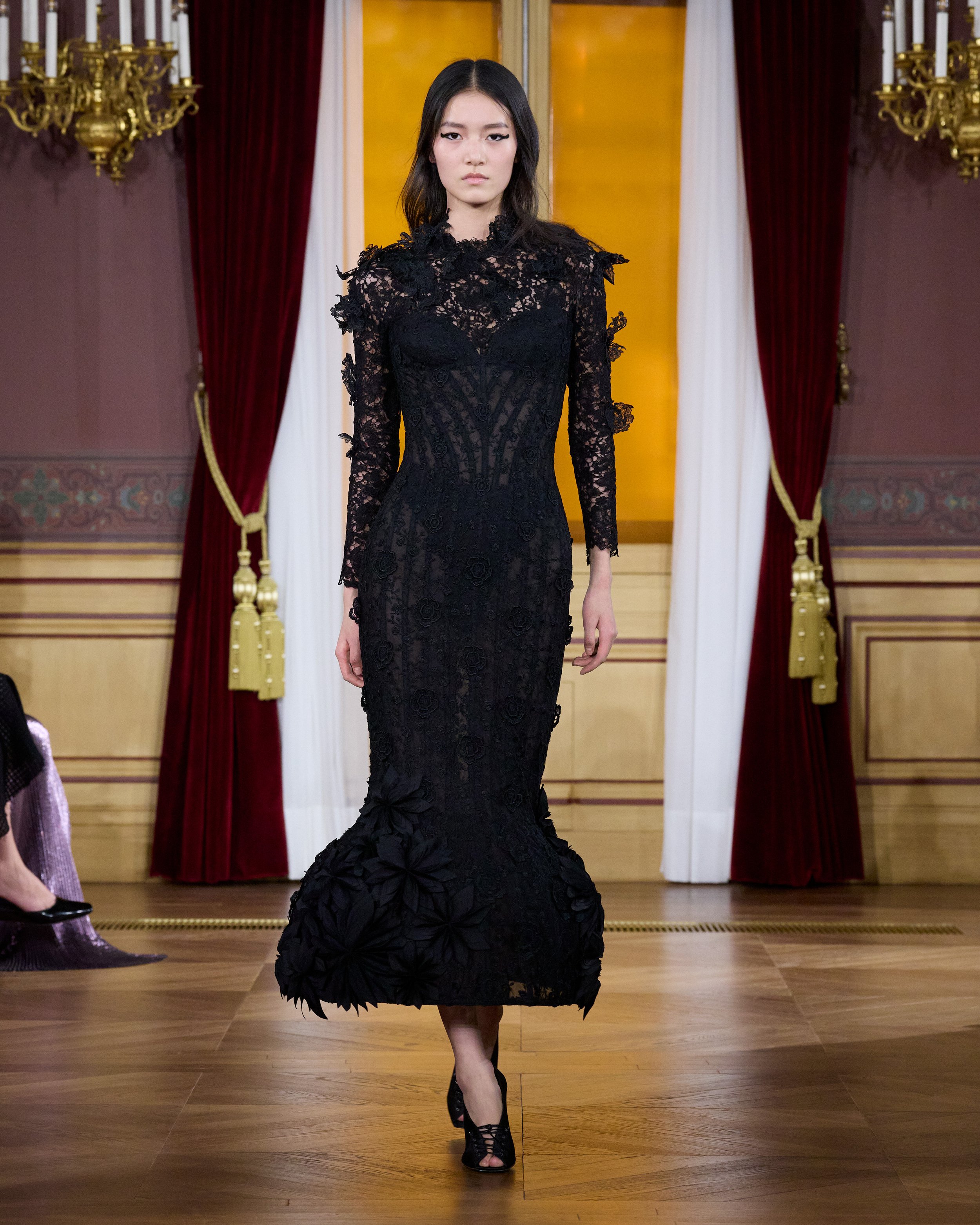
The silhouette is where that rebuilding starts. Exaggerated hips, skirts that elongate down toward the ankle, and corseted tops with wing-shaped cups all gesture at the bird's body. Several pieces close at the back with an angular "A"-shaped seam that reads, from a distance, like a bird mid-flight. The references remain structural rather than literal: curved hips, wing-like cups and bird-shaped back closures suggest the nightingale without reproducing it as costume.
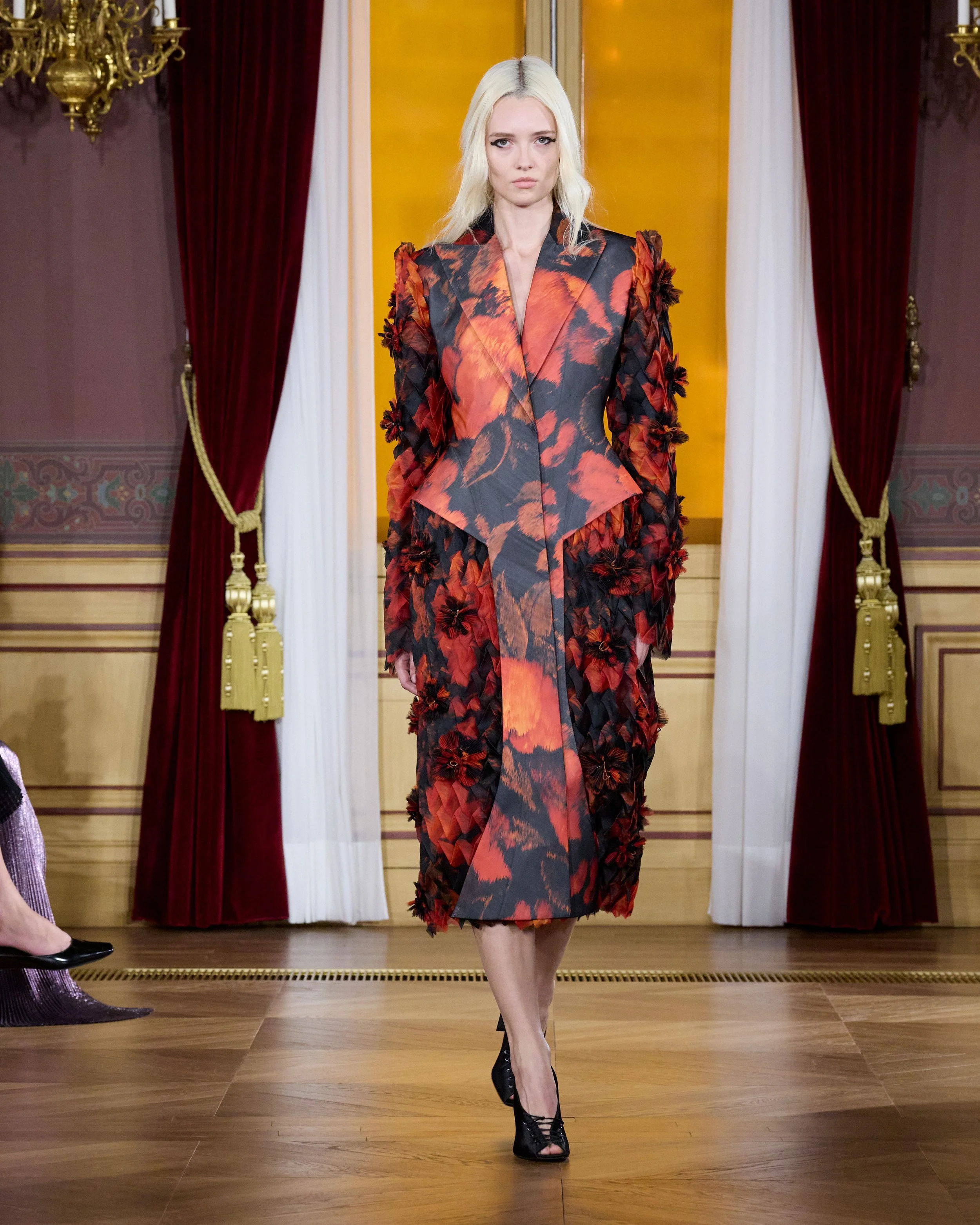
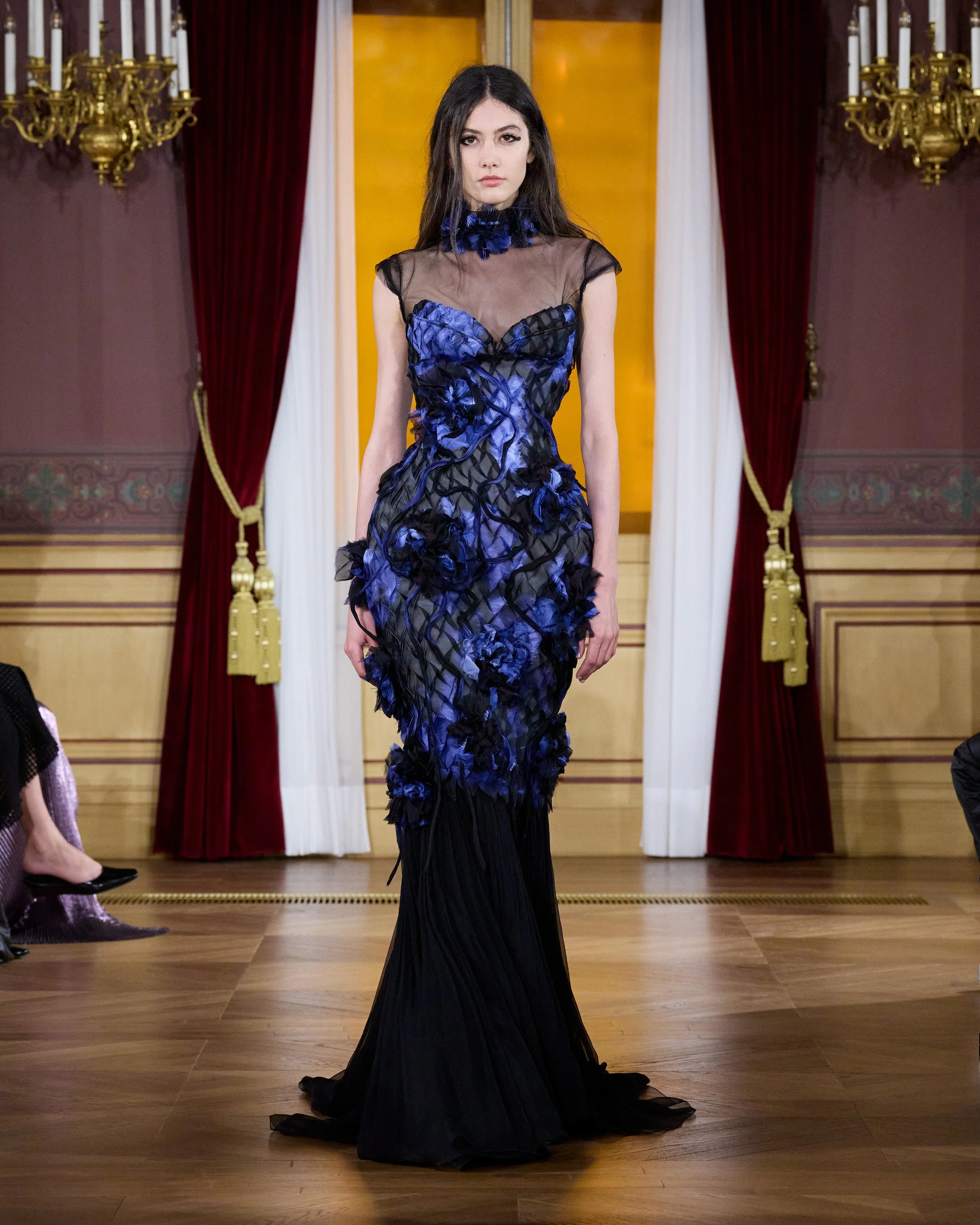
The references remain structural rather than literal: curved hips, wing-like cups and bird-shaped back closures suggest the nightingale without reproducing it as costume. The palette runs across evening gowns, cocktail dresses, jackets and coats, with the silhouettes moving between restraint and volume: corseted waists paired with long, trailing skirts, structured pleating set against layers of chiffon and silk.
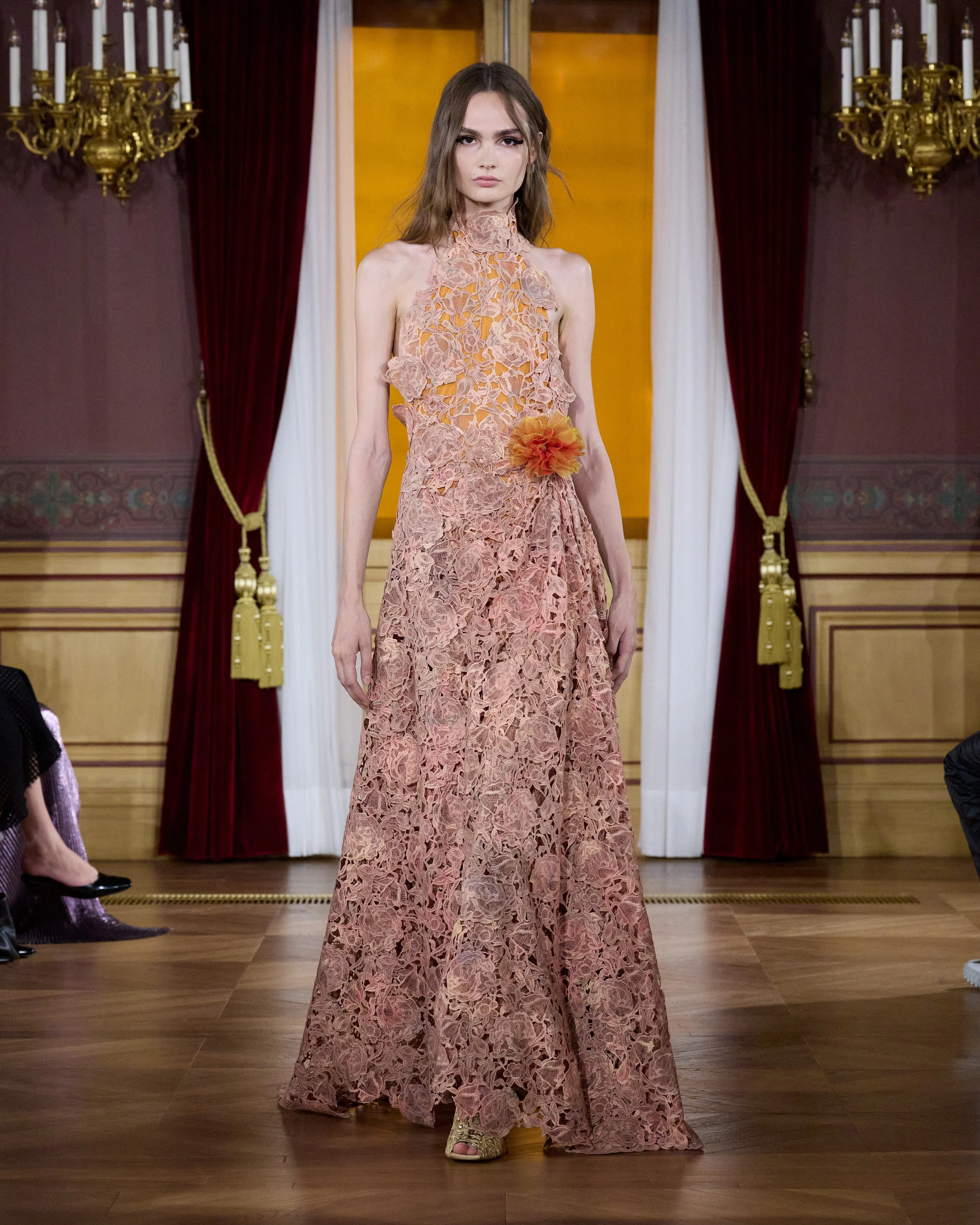
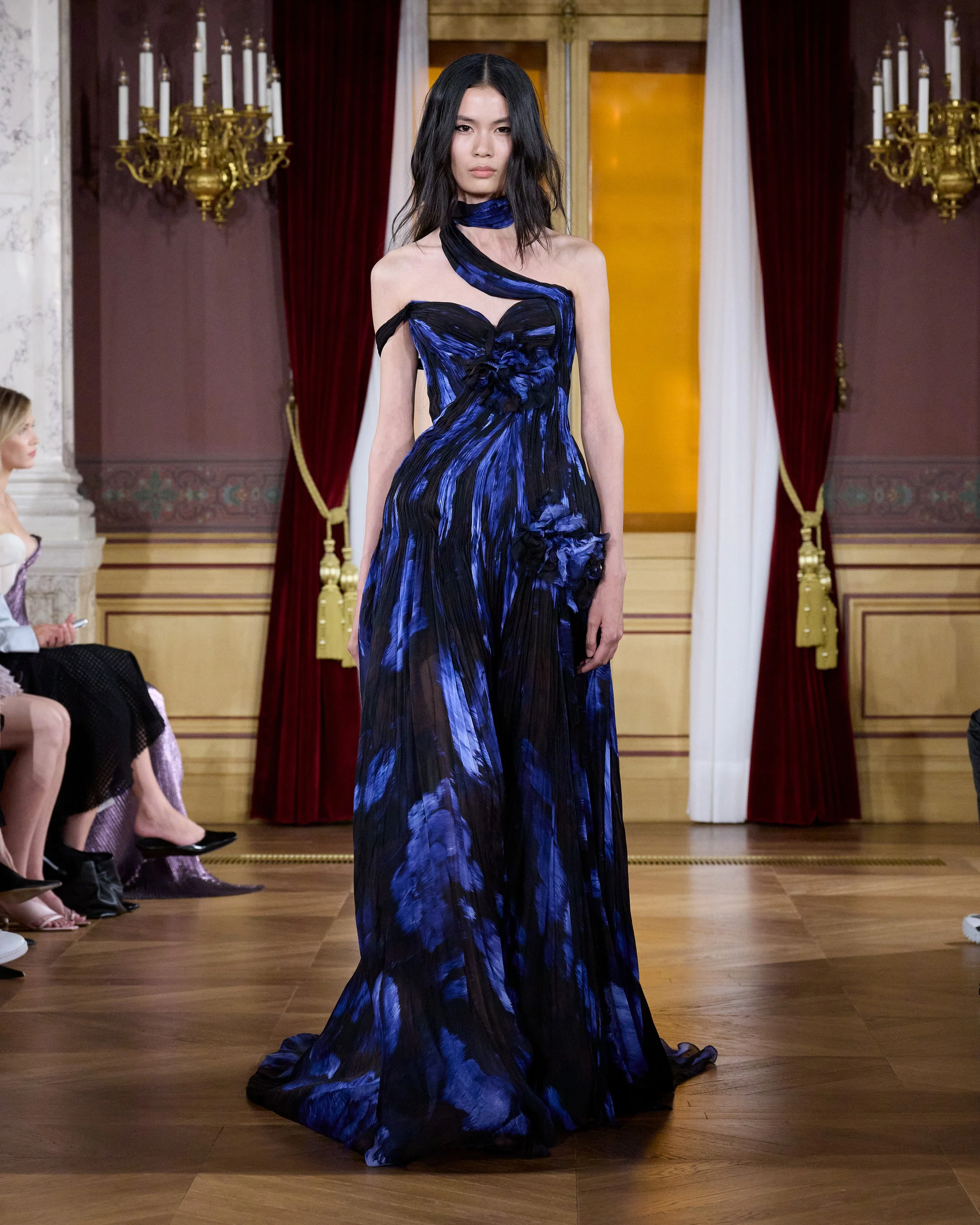
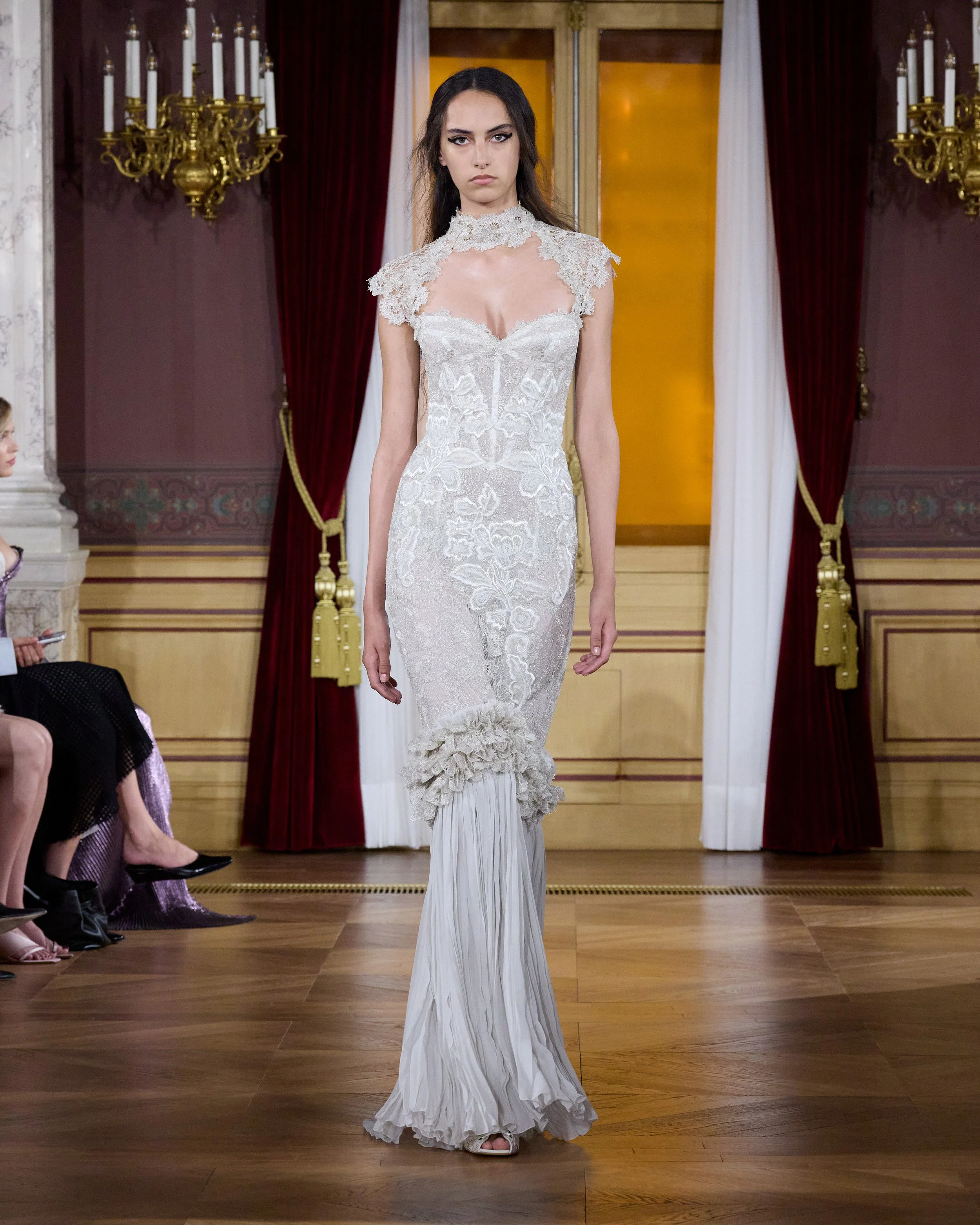
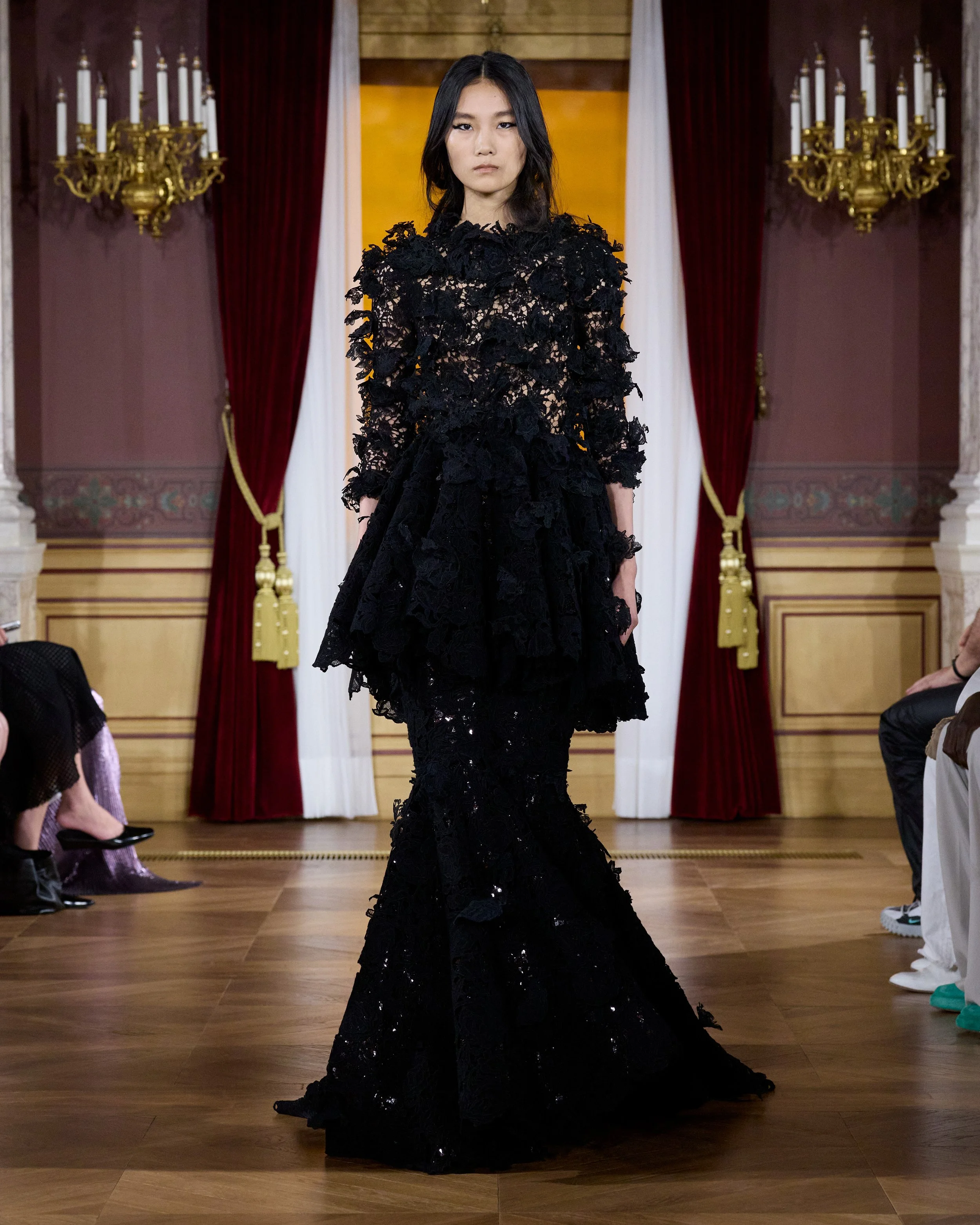
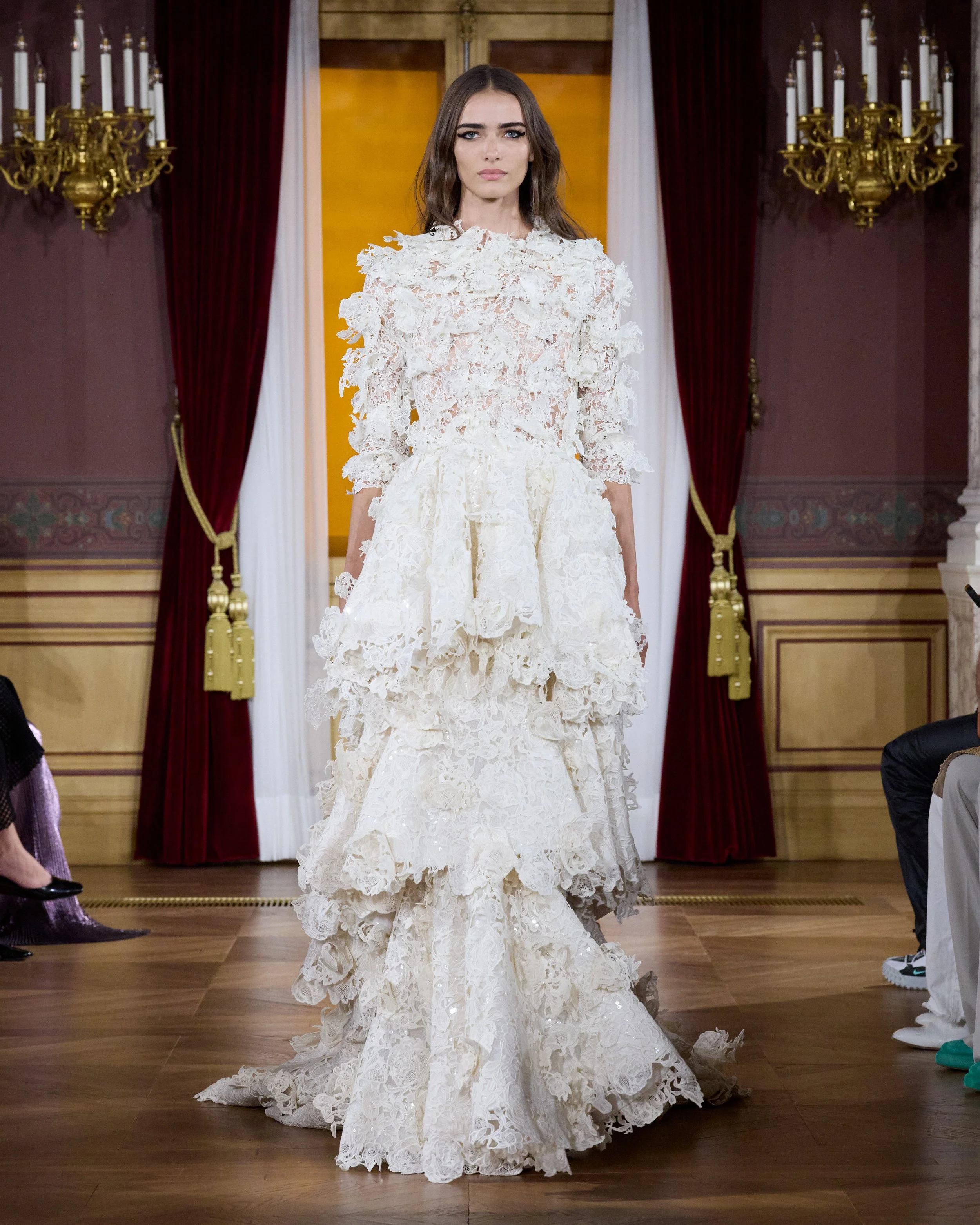
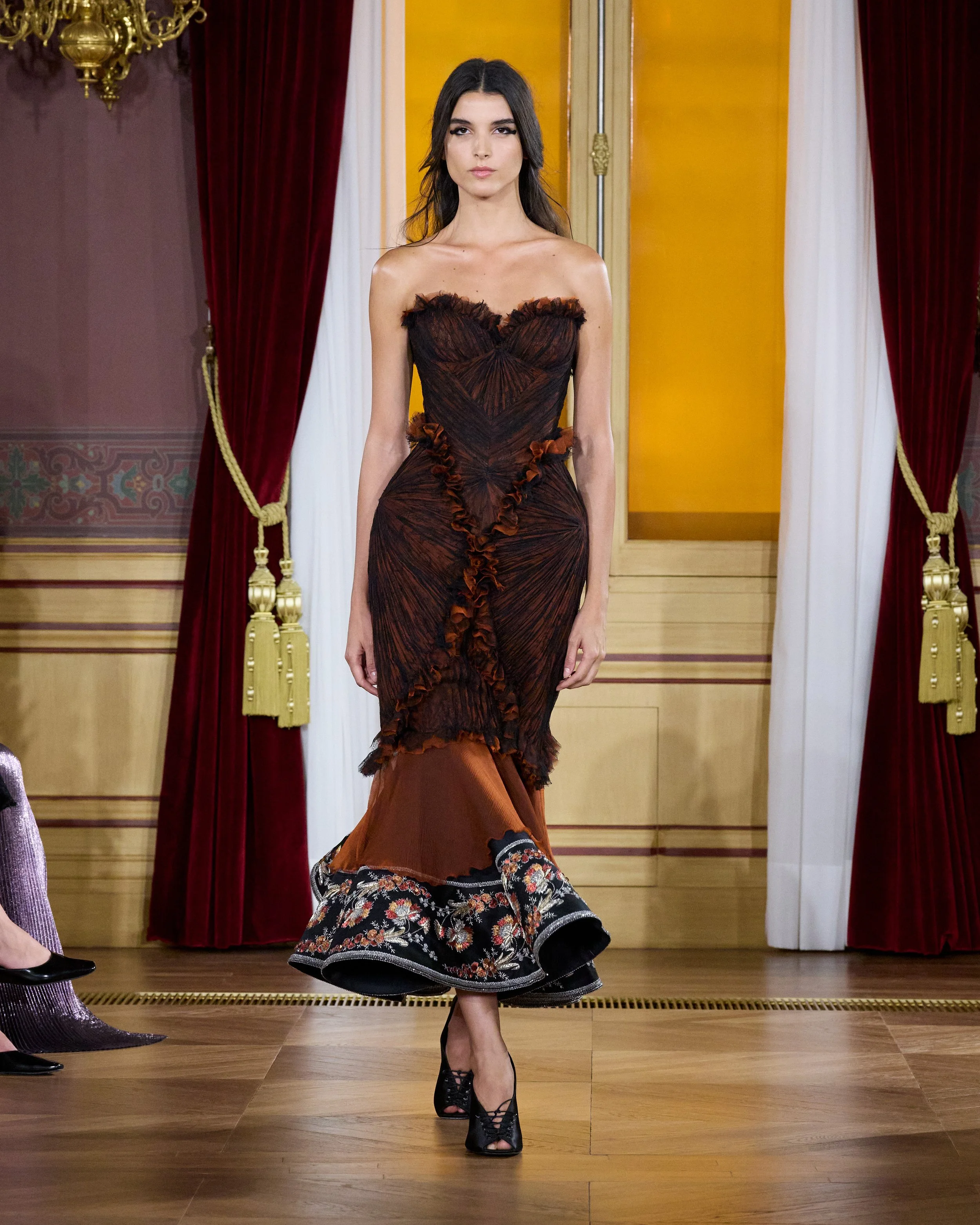
Technique carries the collection’s symbolism into construction. ArdAzAei avoids real feathers, using mathematical pleating to recreate the folded texture and shifting light of a nightingale’s plumage. Geometric smocking draws on the architectural forms of Safavid gardens, while bespoke laces developed by the Maison carry the rose motif across layers of sheer fabric. On one black bodice, dense guipure lace gives way to a small ballet-style skirt of swirling silk chiffon petals, creating the impression of a flower emerging from the body.
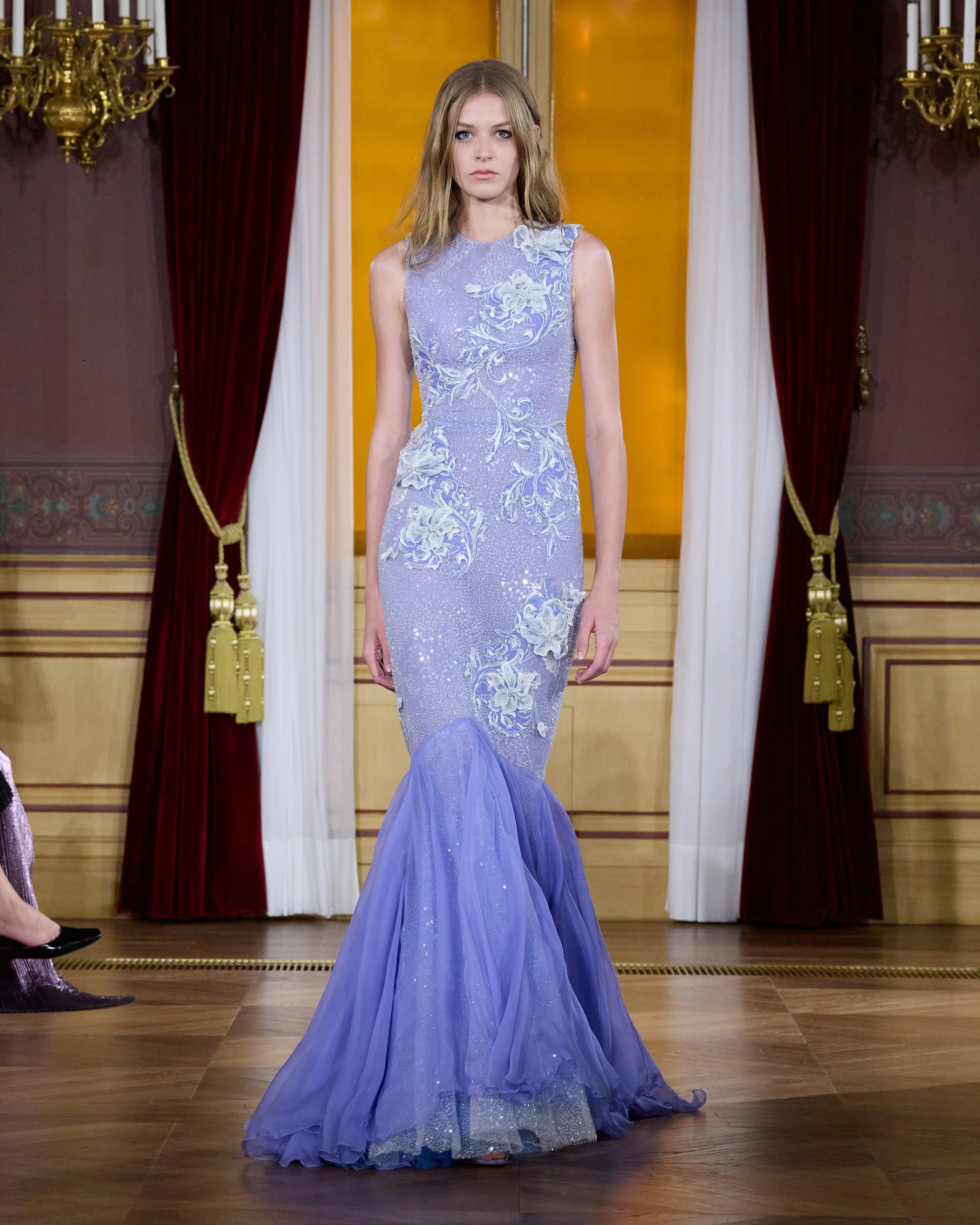
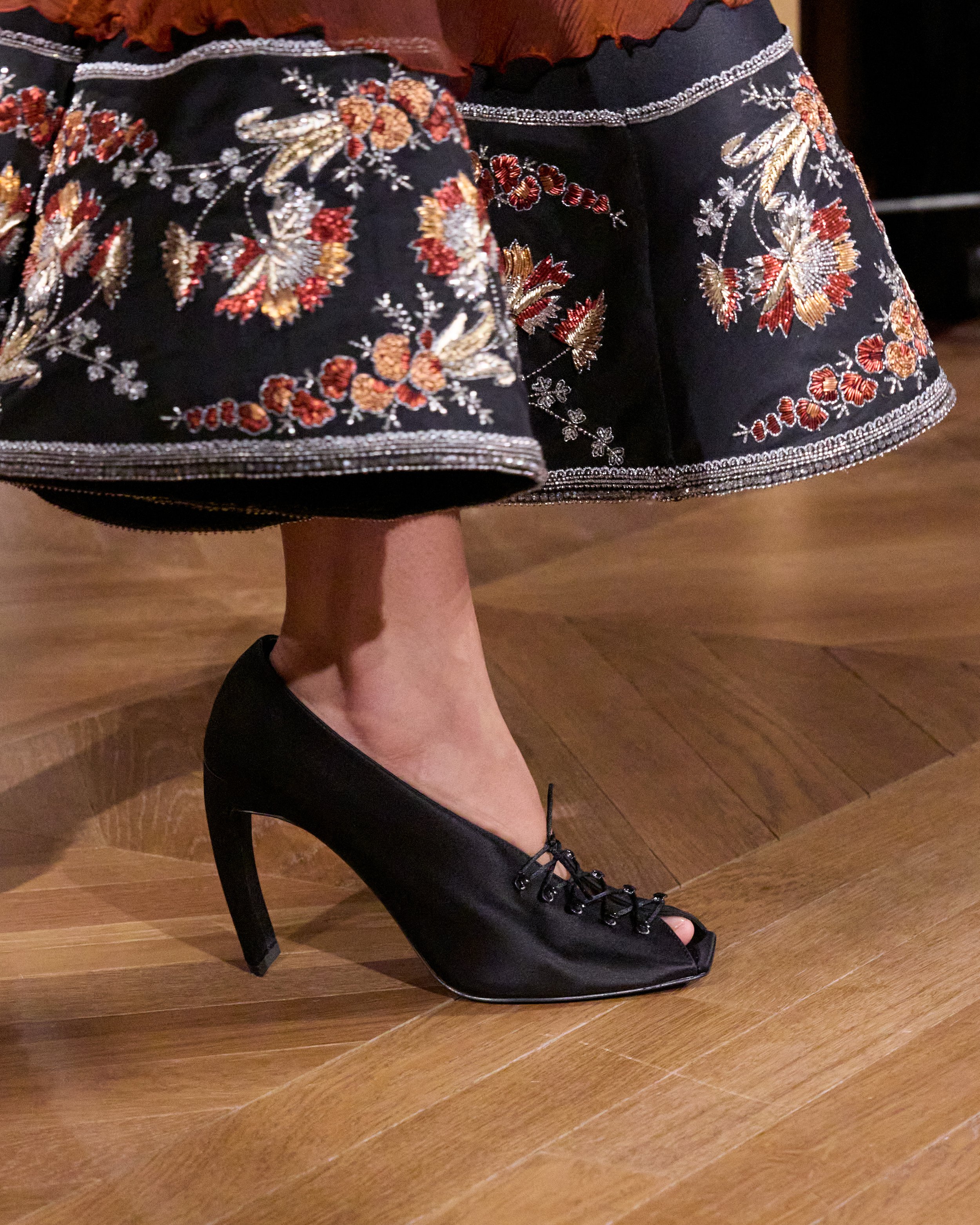
Climbing roses are formed from glass beads, sequins and Swarovski® crystals on muslin, with hand stitching creating feather-like strokes across the surface. Deep copper Zardozi embroidery, a technique with origins in 7th-century Persia, borders the hems of dresses. The paisley motif appears again on perforated leather ankle boots, while satin pumps echo Persian carpet colours through ArdAzAei’s curved heels.