The Fabric Routes of Franck Sorbier’s FW27 Couture Collection
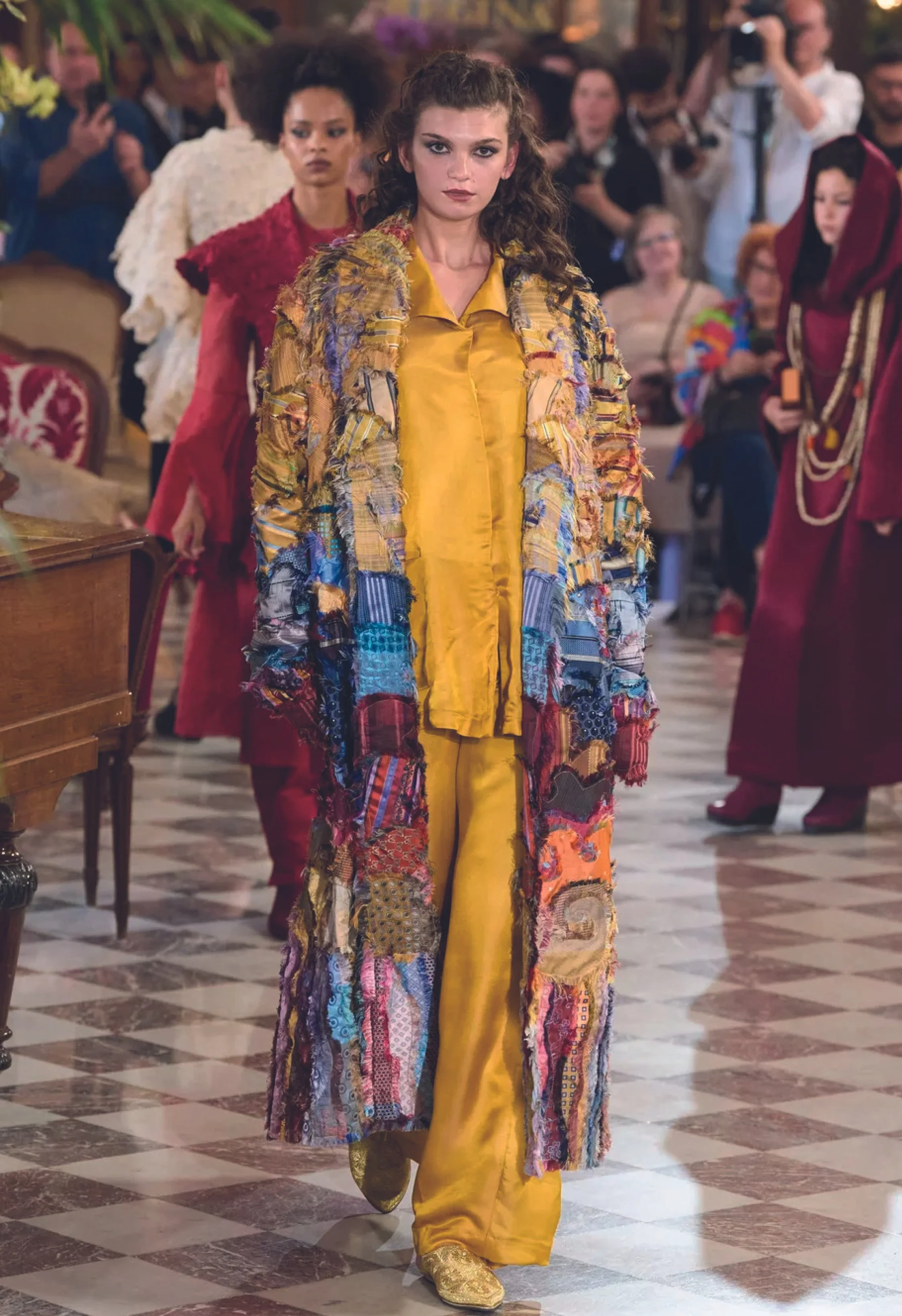
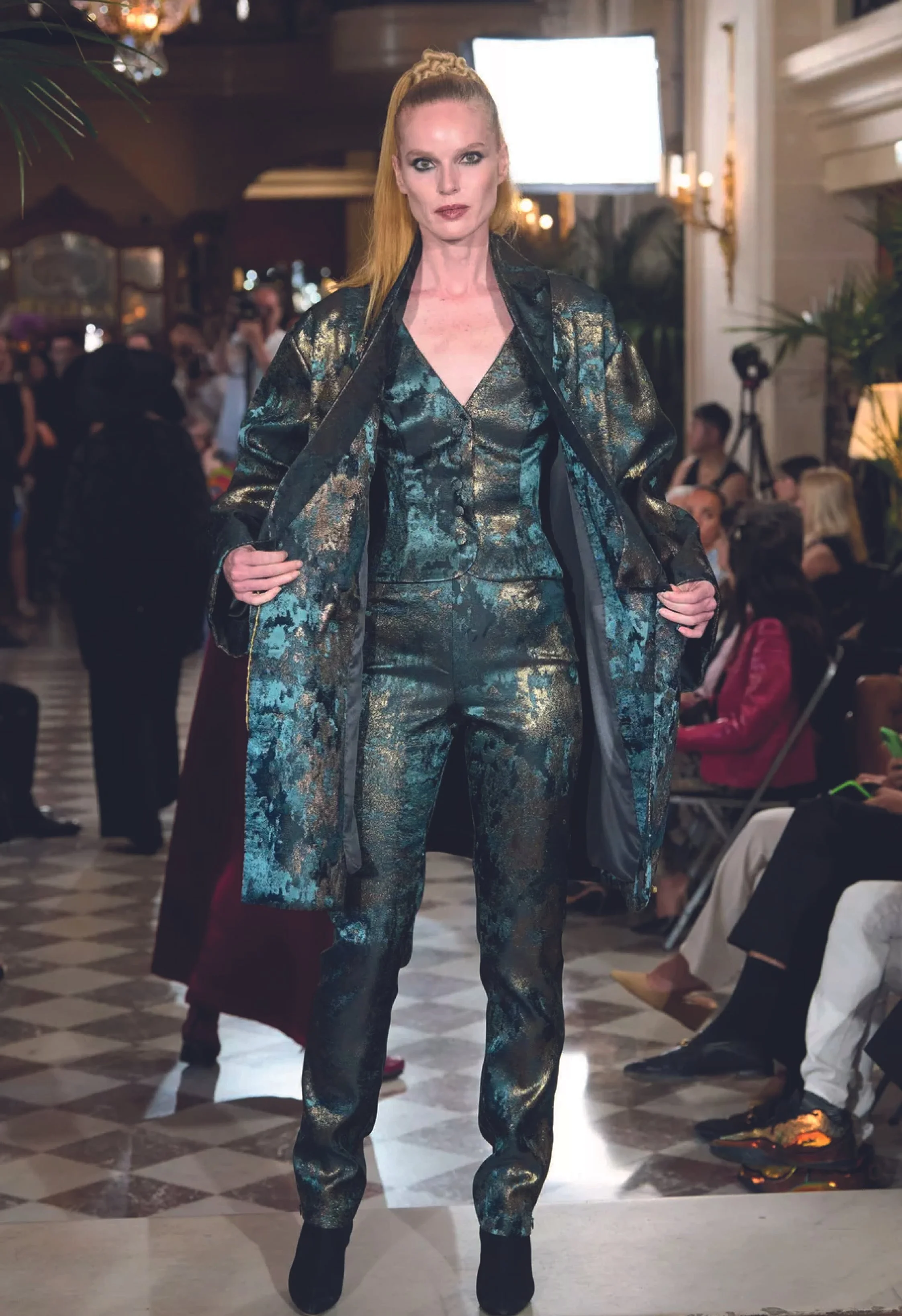
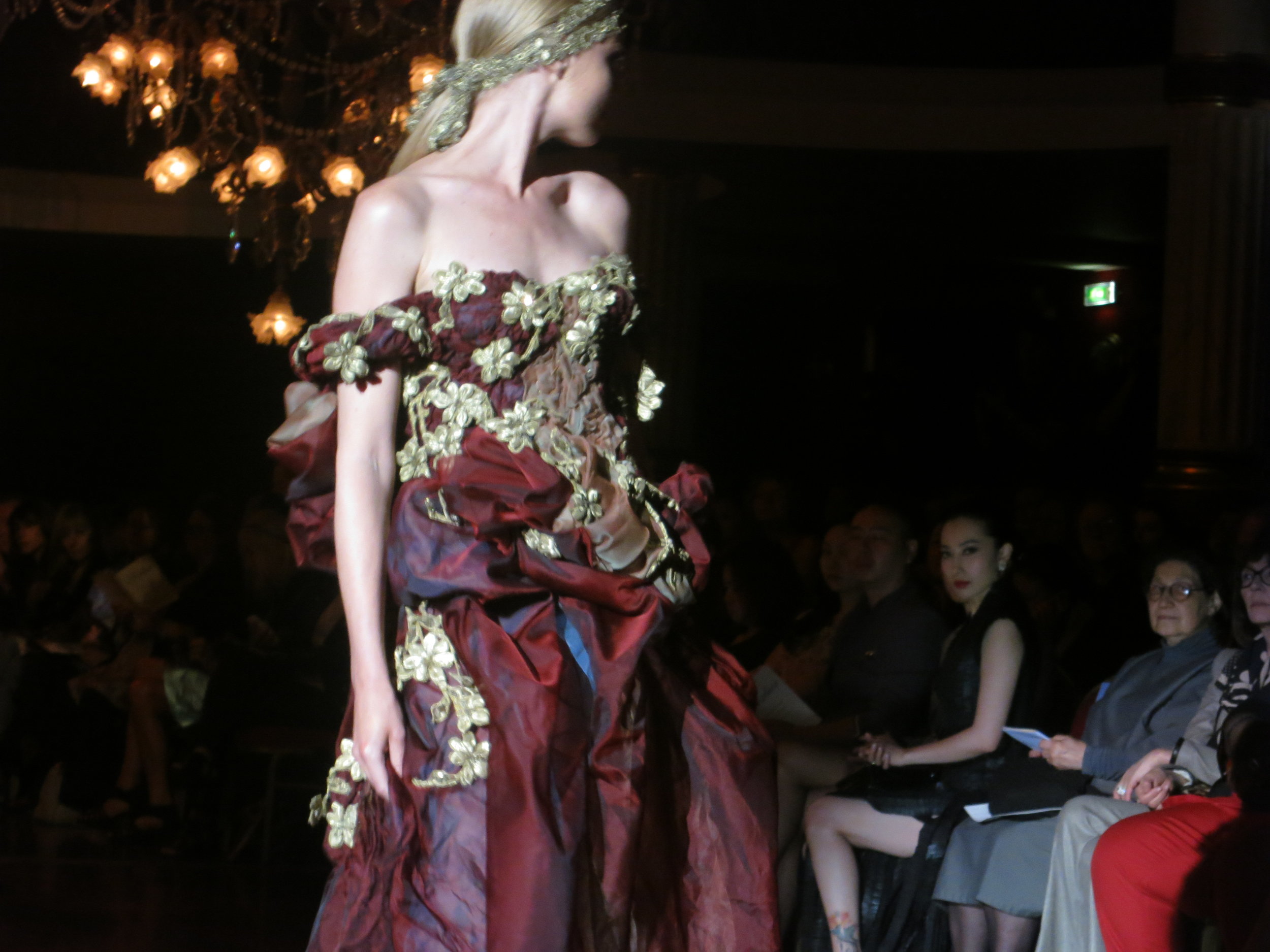
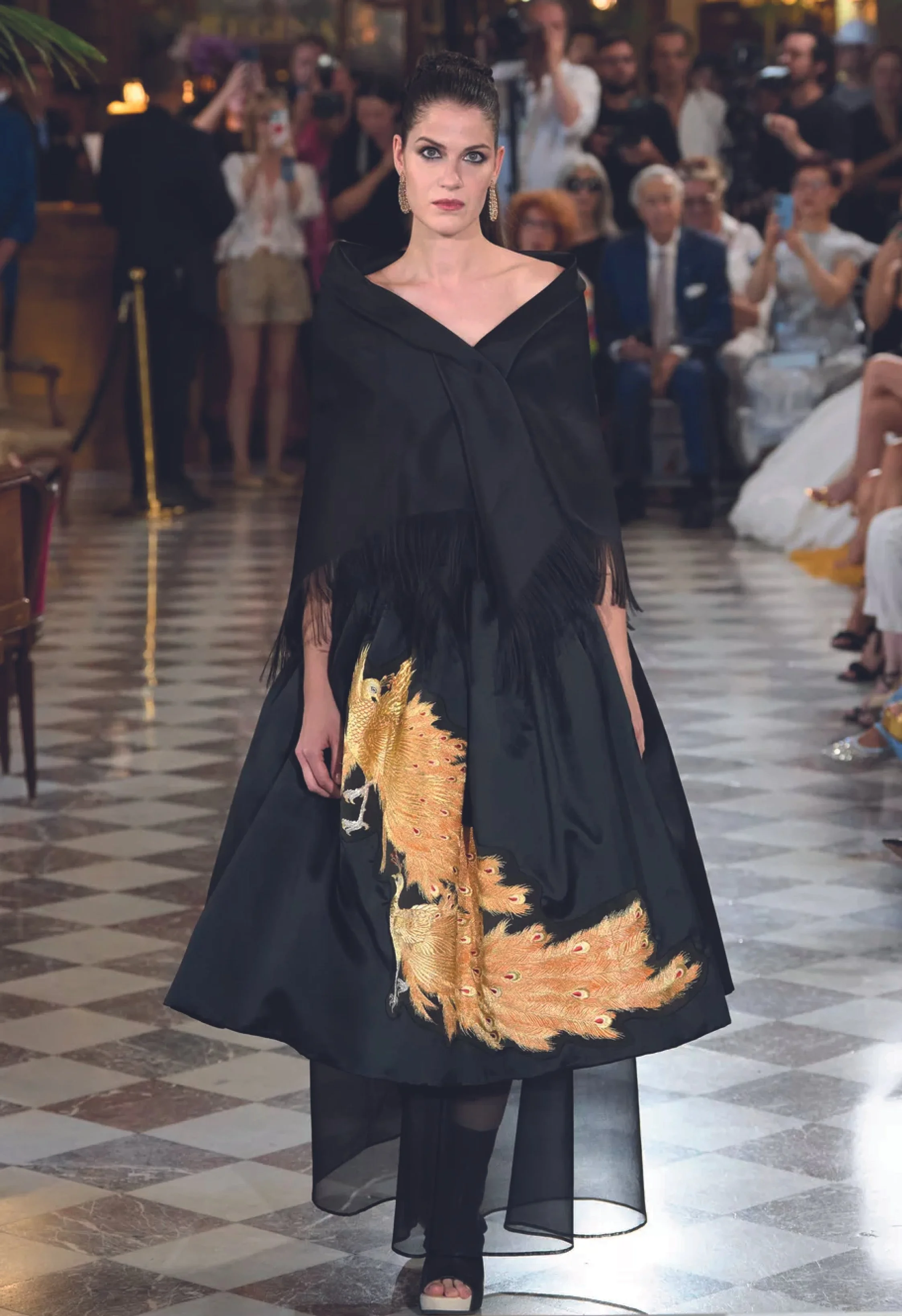
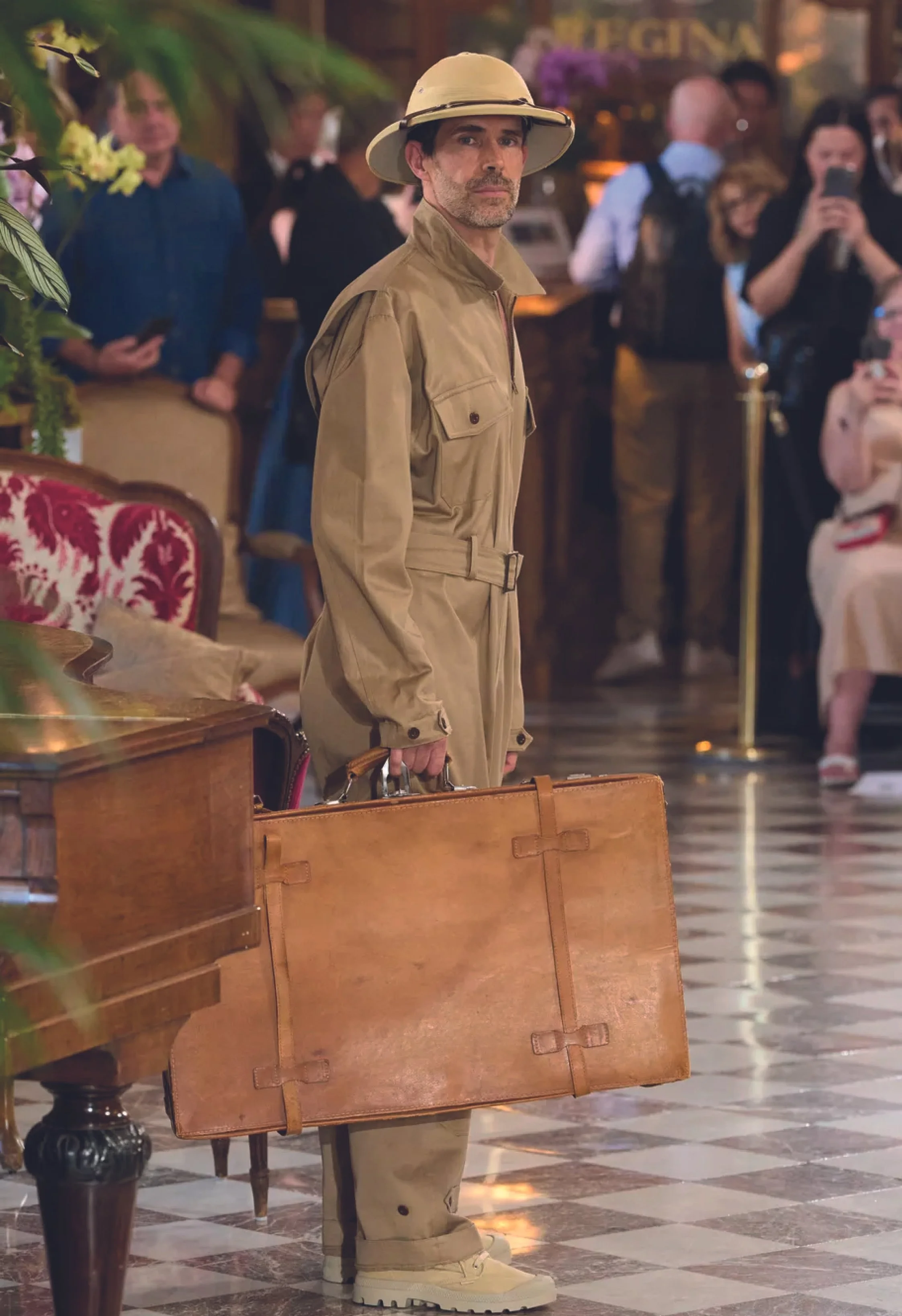
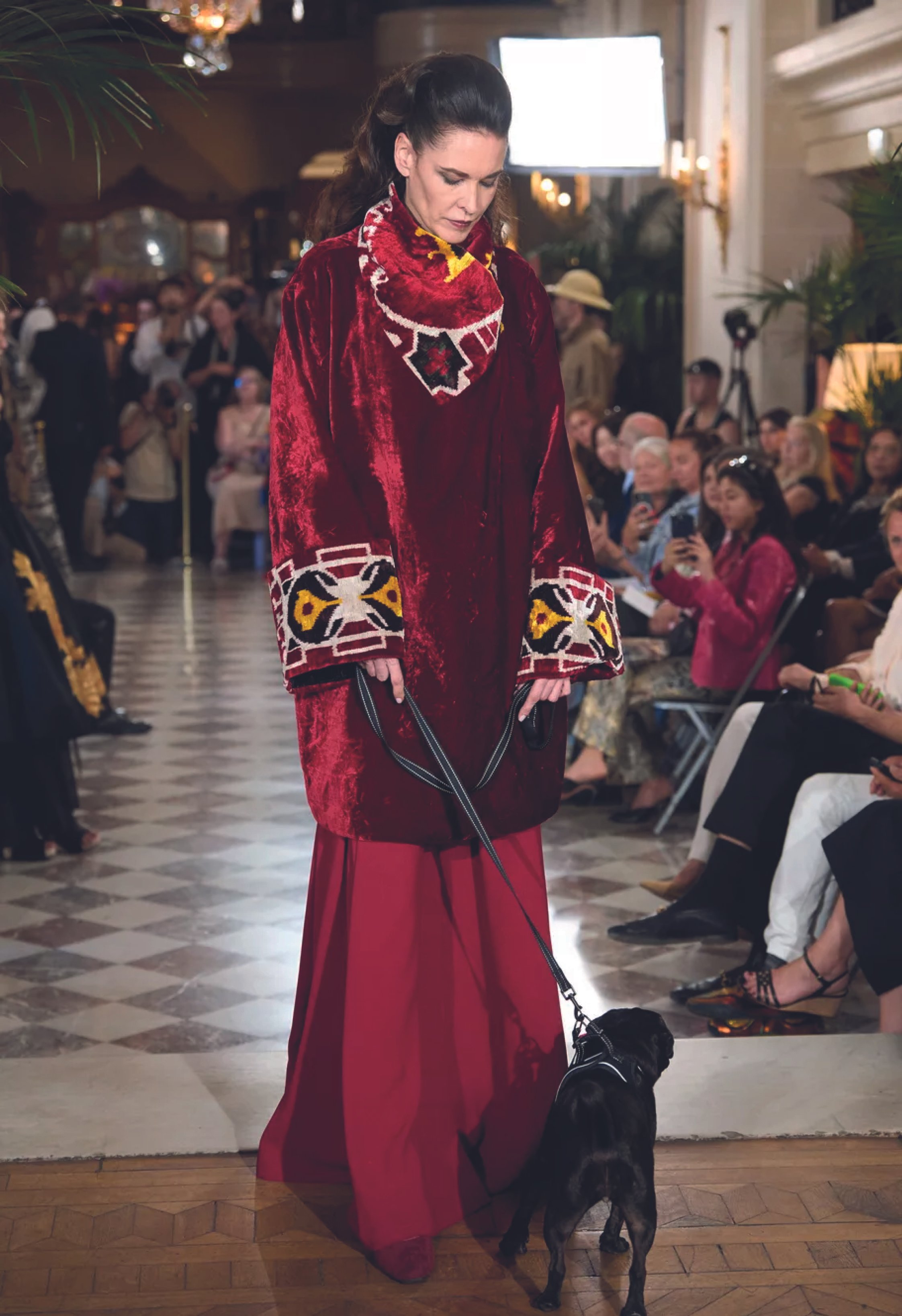
A fragment of antique Japanese embroidery, a strip of Uzbek ikat, velvet in shades of deep red: these are the starting points for Franck Sorbier’s FW27 couture collection. The show notes cite the 1900 Universal Exposition, the Orient Express and the old Central Asian trade routes, but the references function less as historical reconstruction than as a way of reading the textiles themselves — fabrics that have travelled and arrived carrying traces of other places and periods.
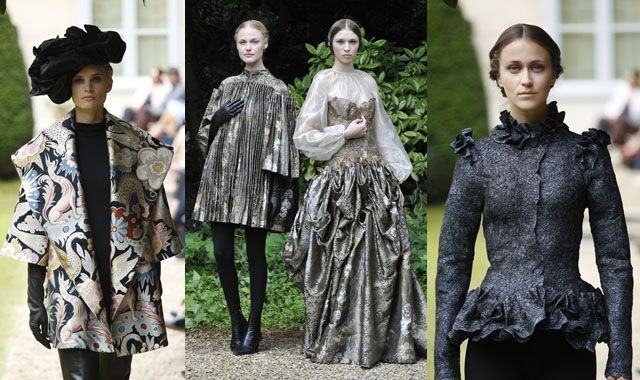
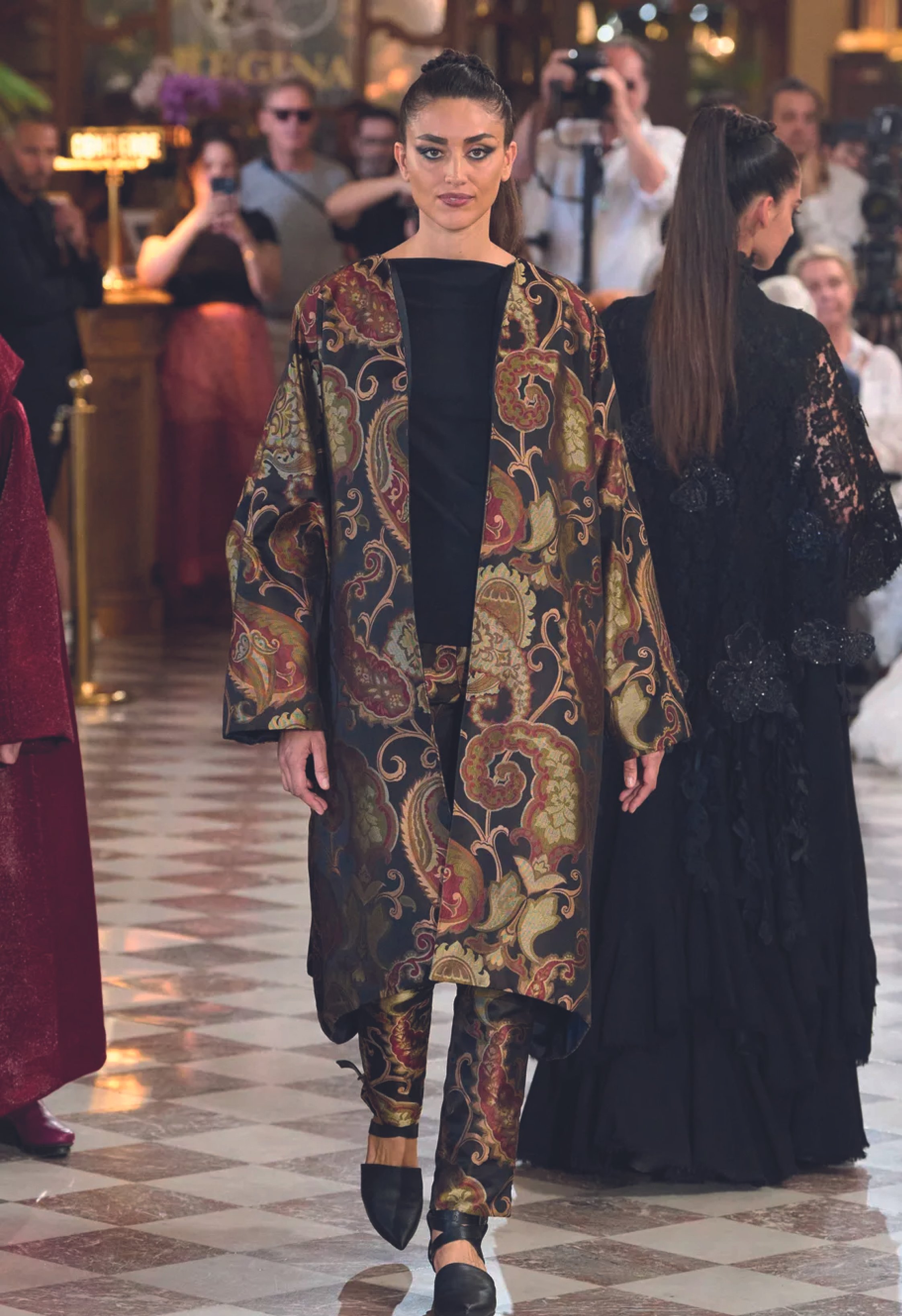
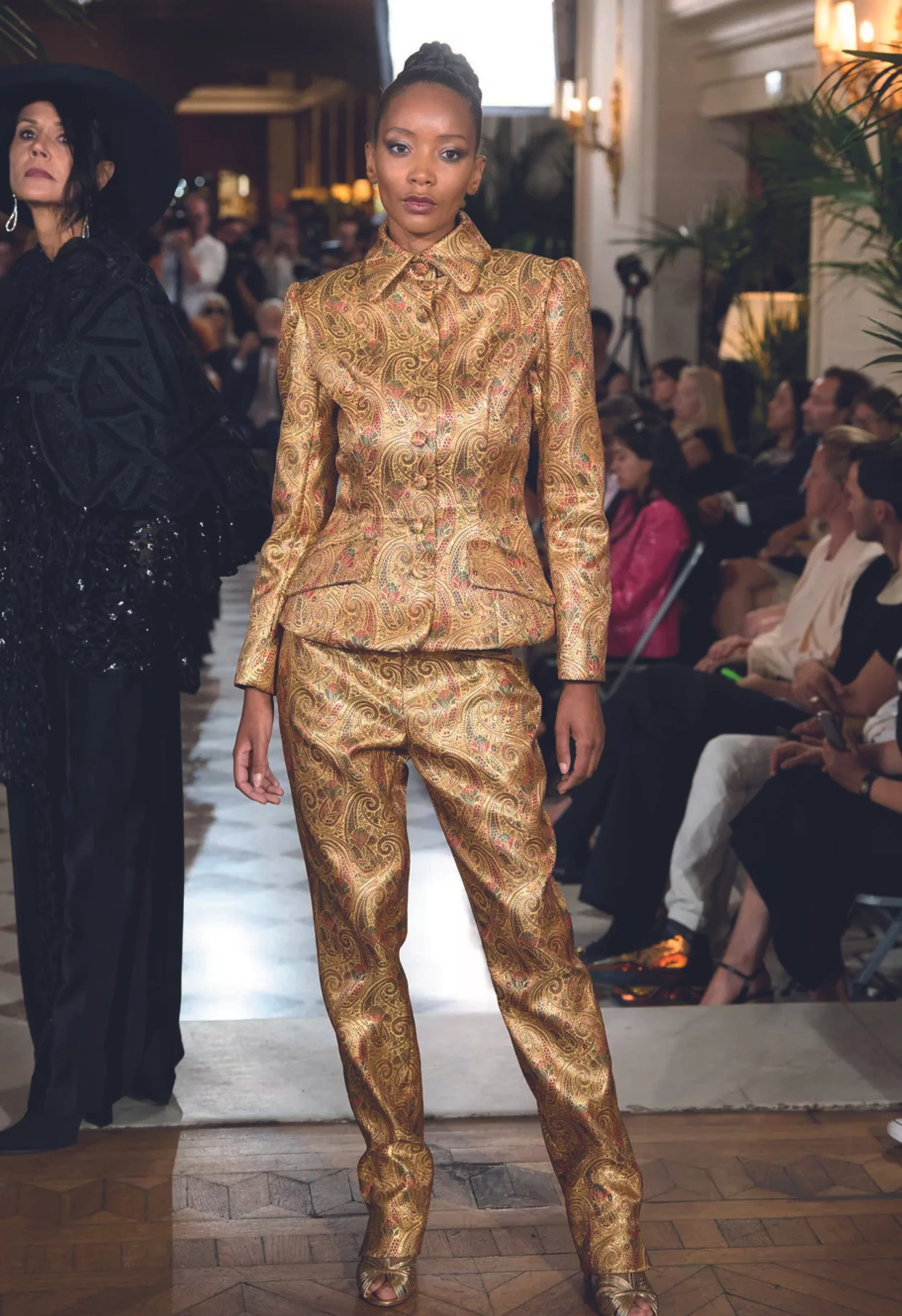
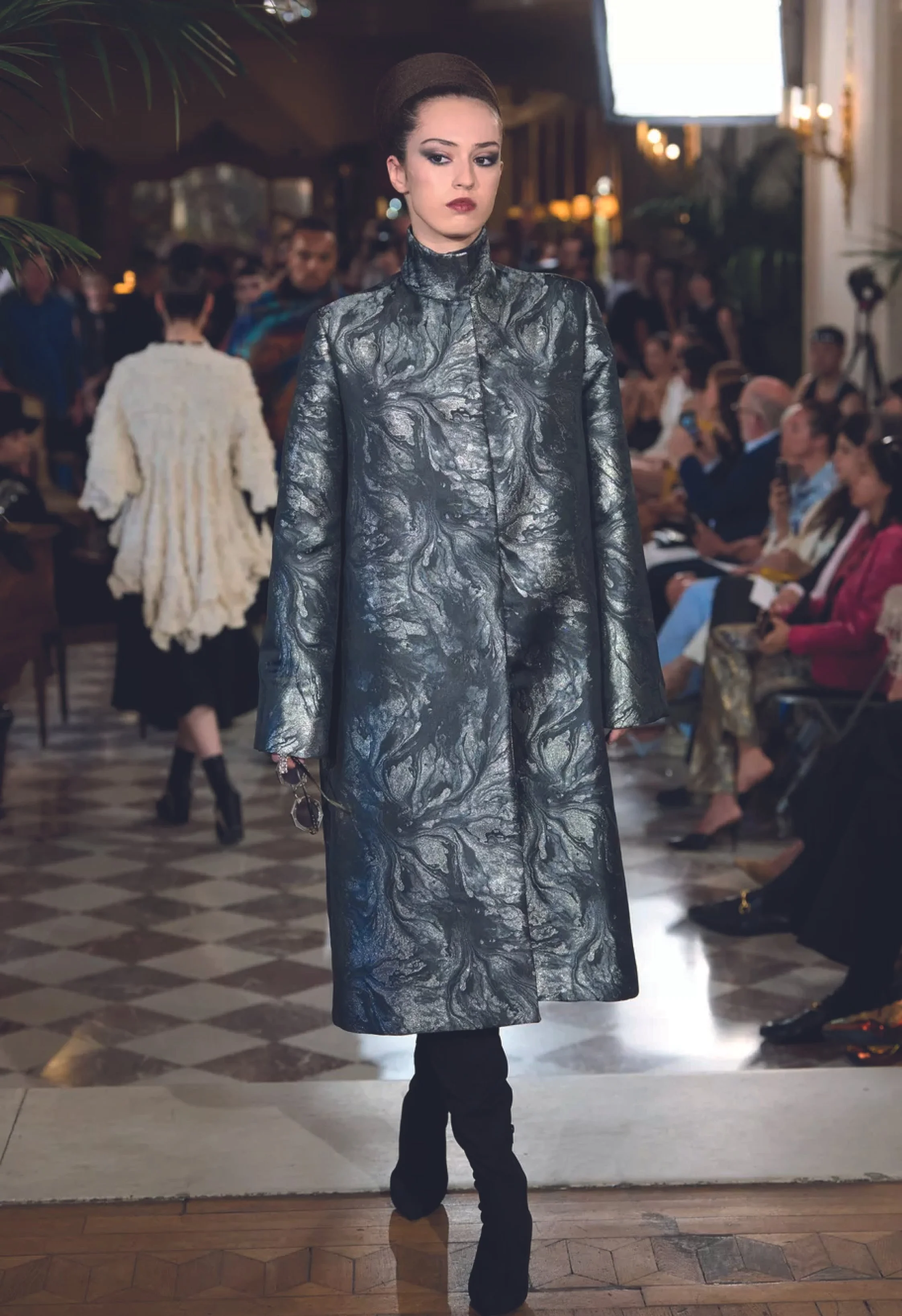
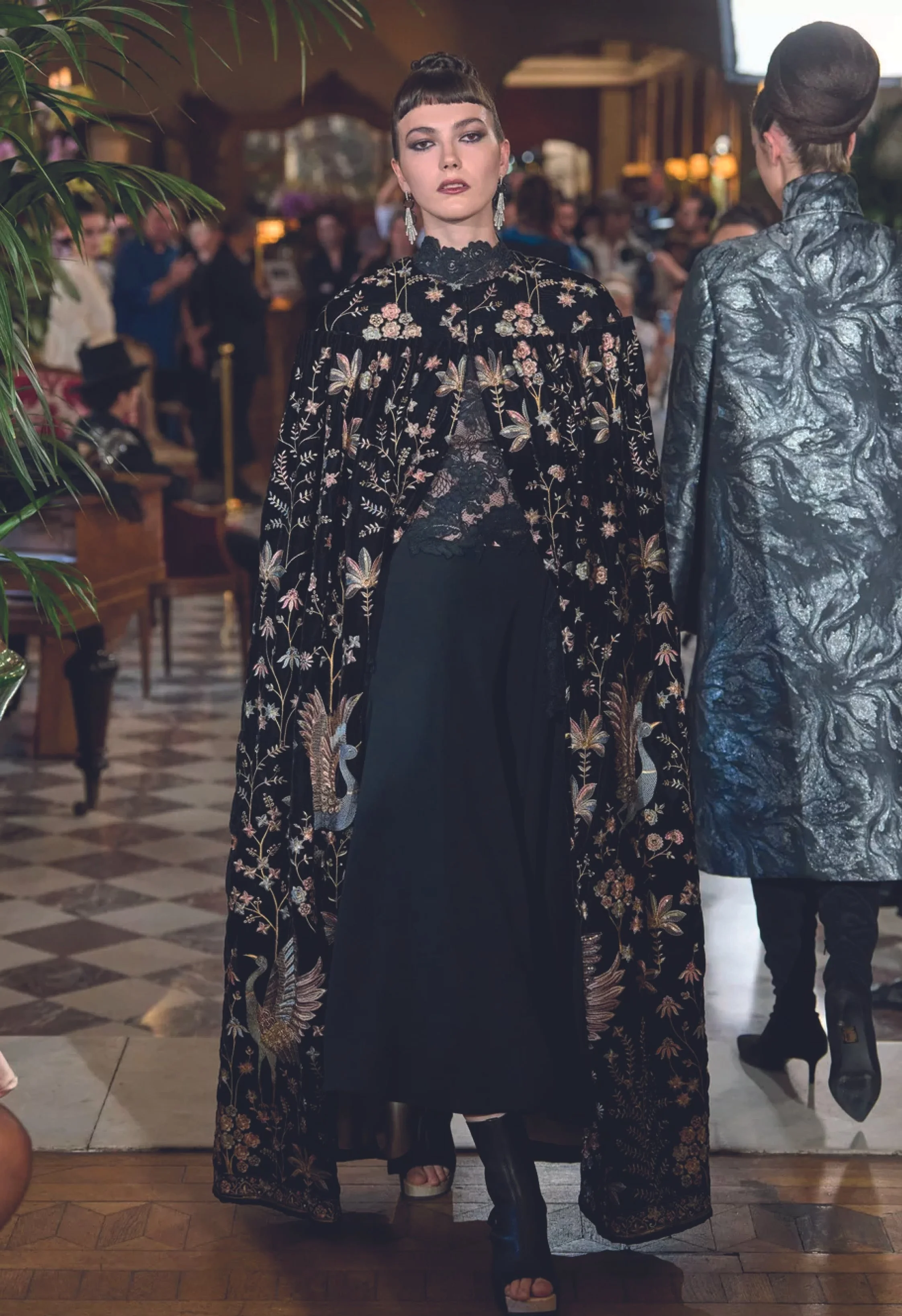
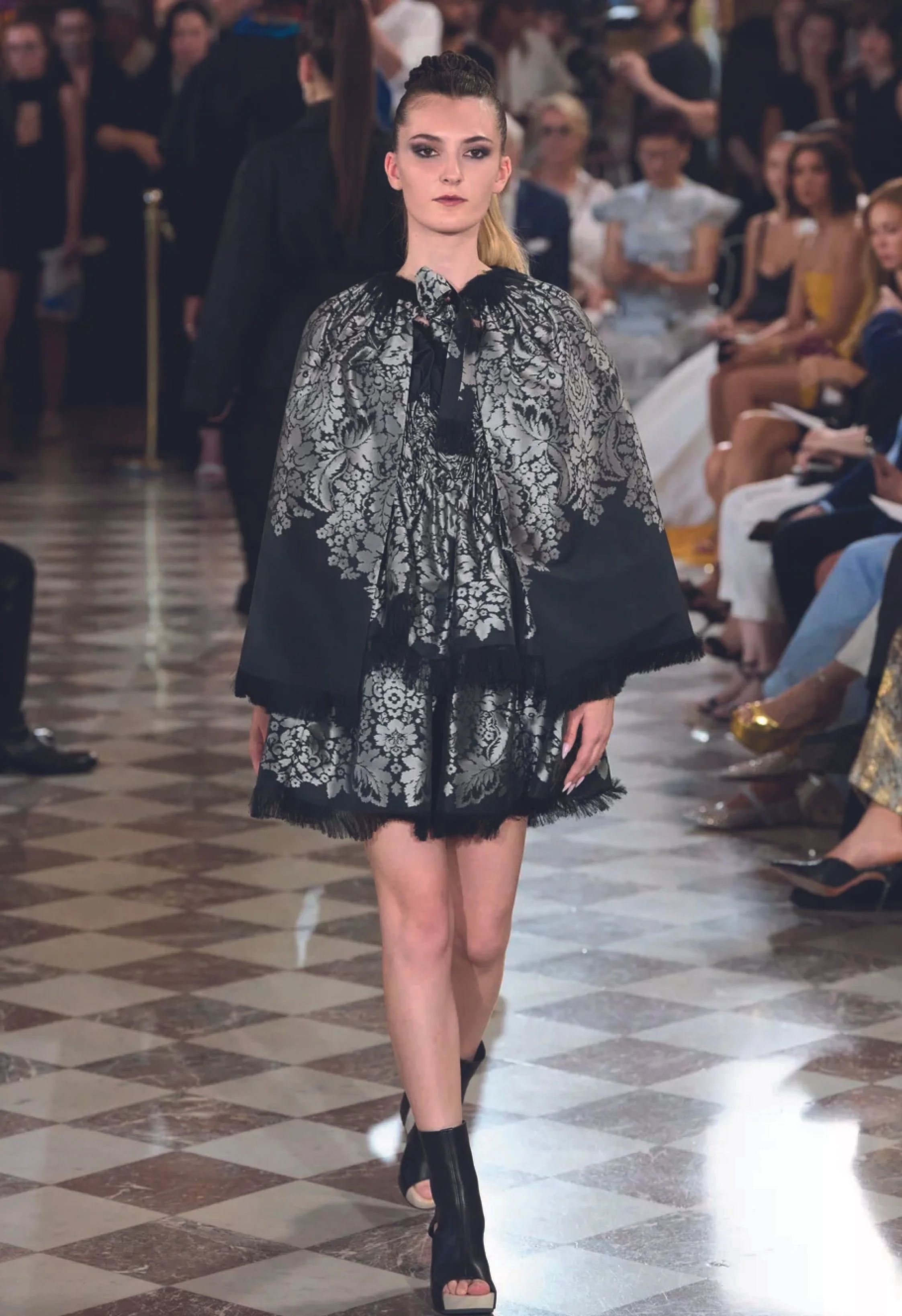
Sorbier has long built collections around the relationship between material and narrative, and here the story sits inside the textiles themselves. Marbled jacquards recall the decorated papers of old manuscripts; oversized palmettes borrow from Persian and Mughal ornament. Antique embroidery retains its irregularities, its evidence of age and handling, rather than being treated as a surface to perfect.
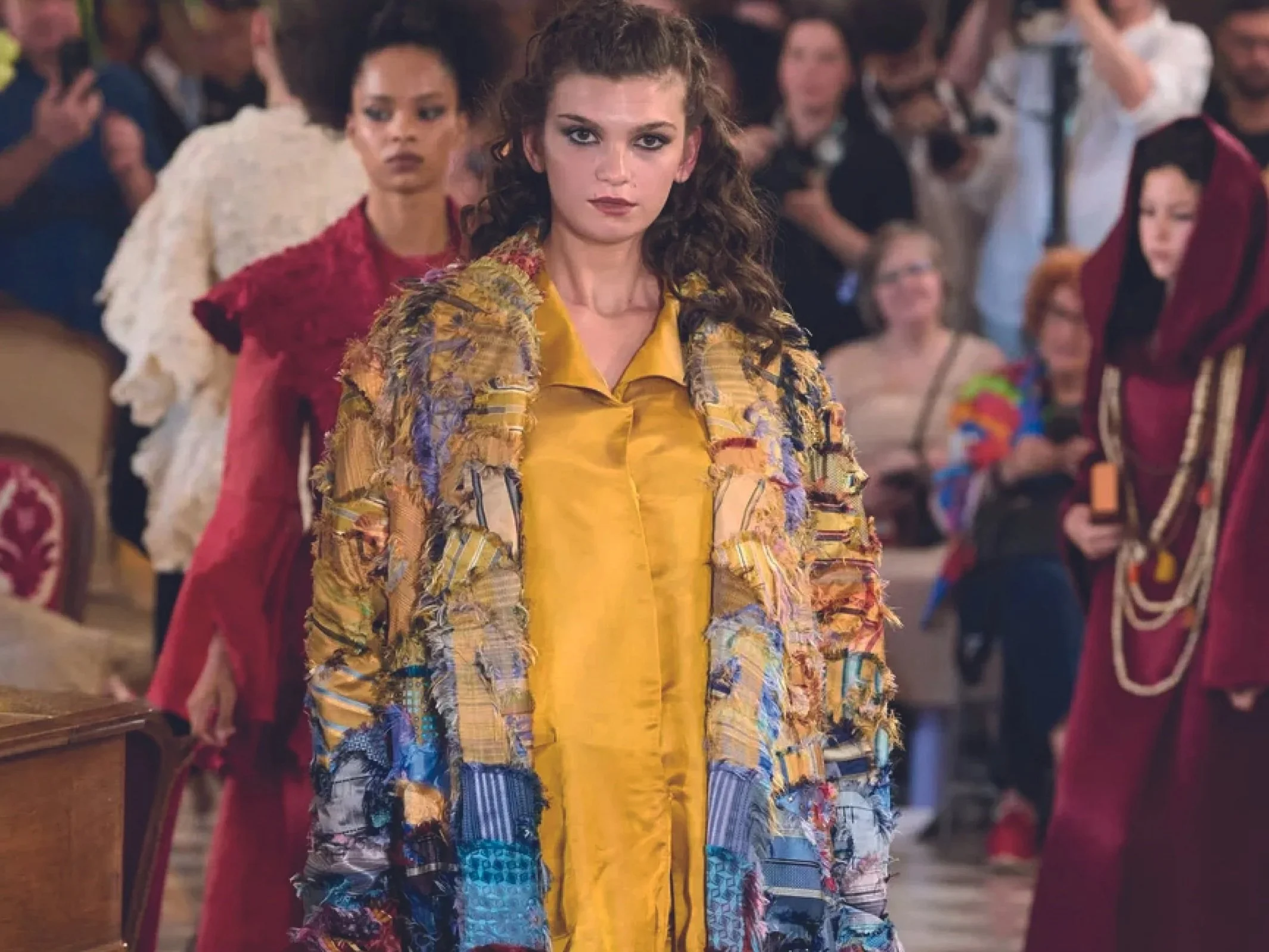
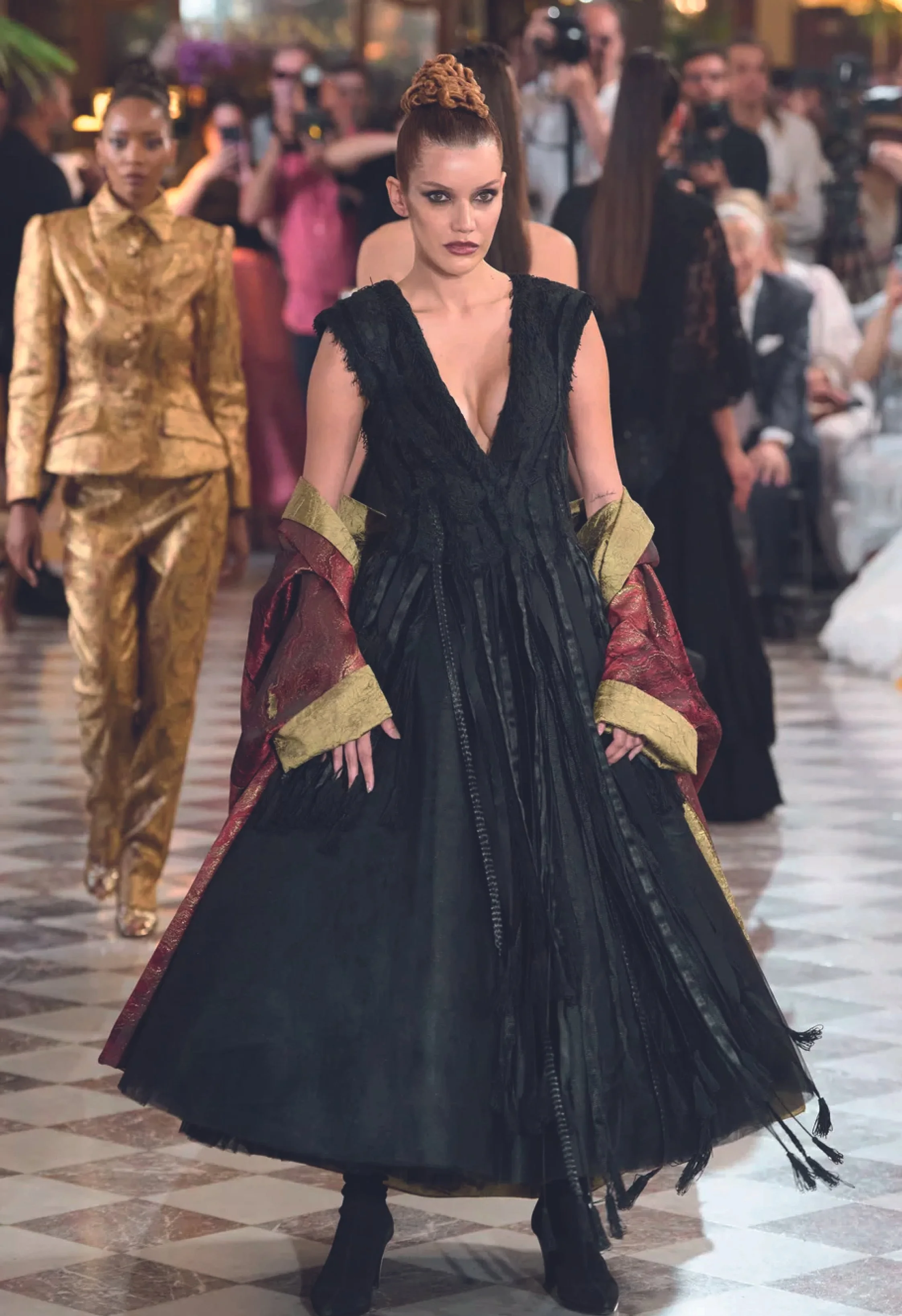
That instinct produces the collection's strongest pieces, the ones where the maker's hand stays visible. A dressing gown built from frayed silk tie jacquards lets its worn edges read as character rather than flaw — a reminder that Sorbier's real subject is the life a fabric has already lived before it becomes a garment.
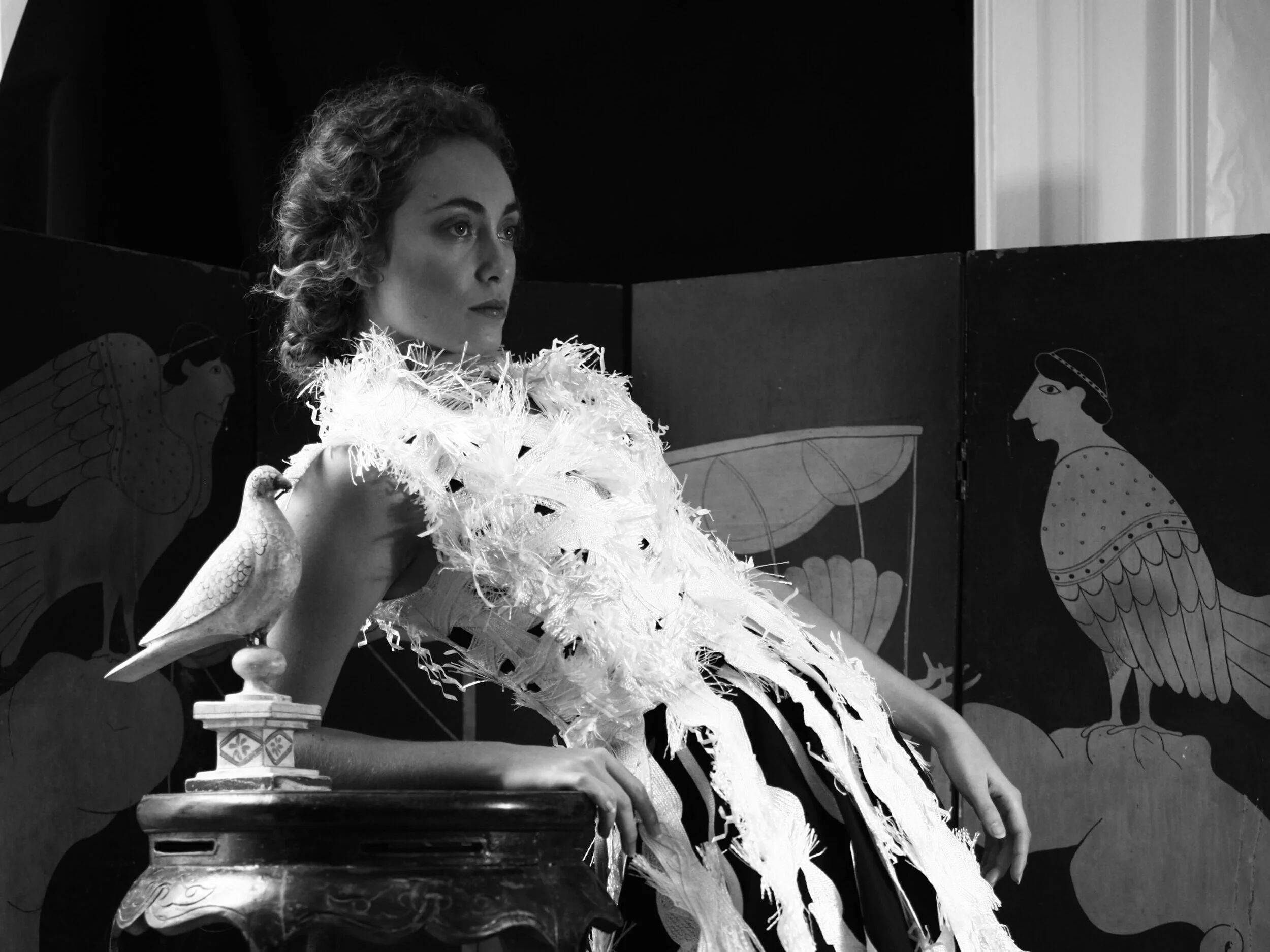
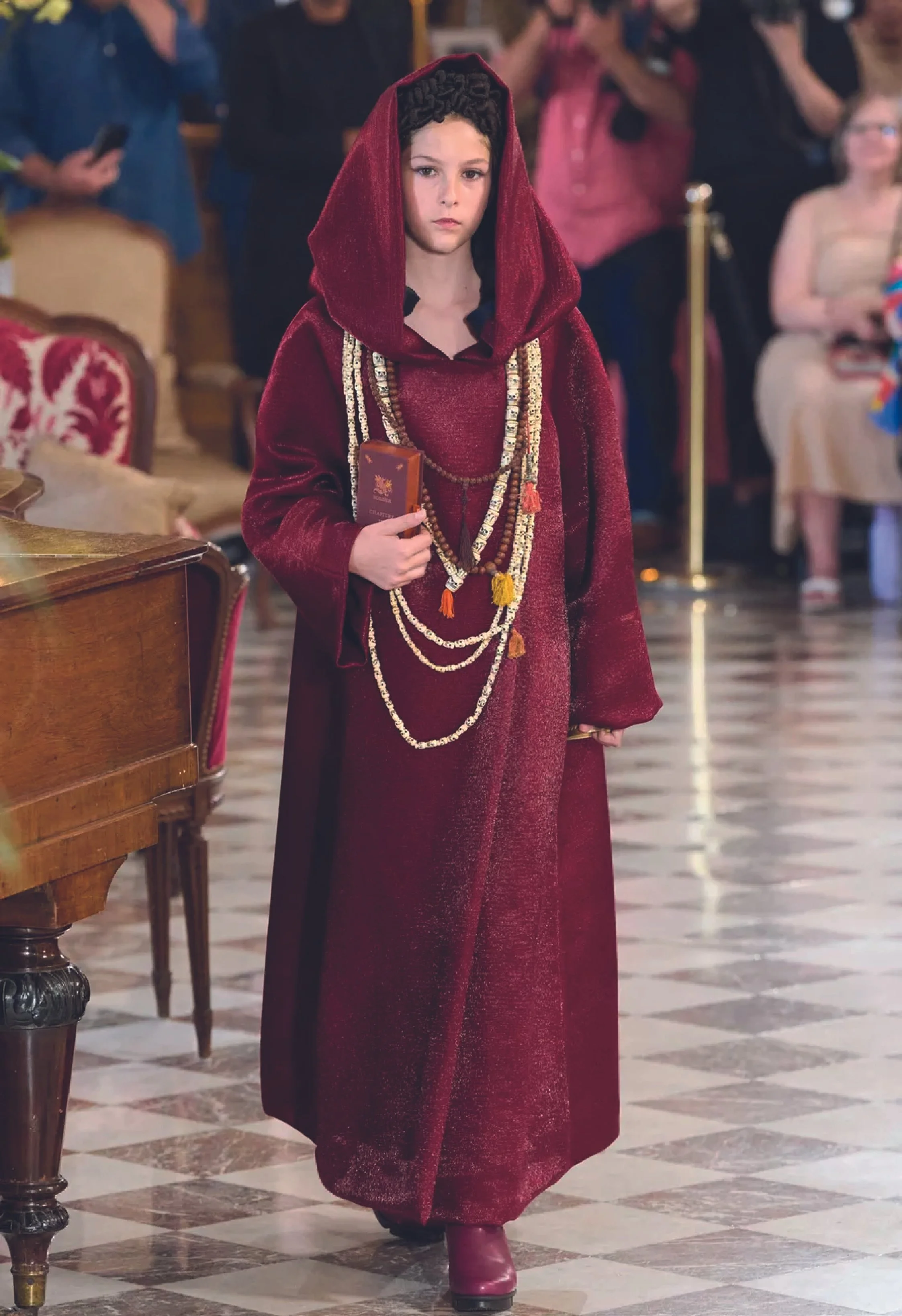
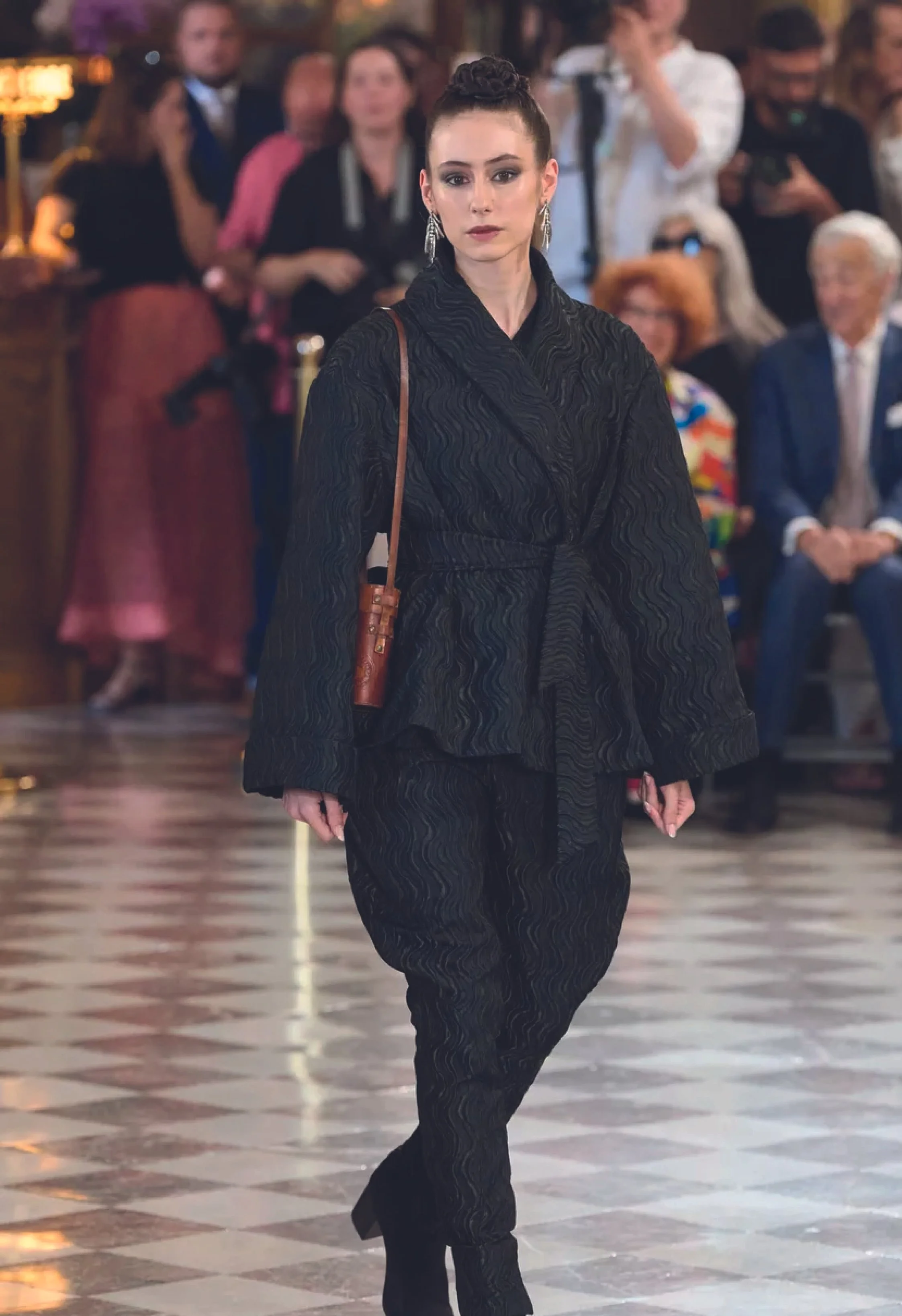
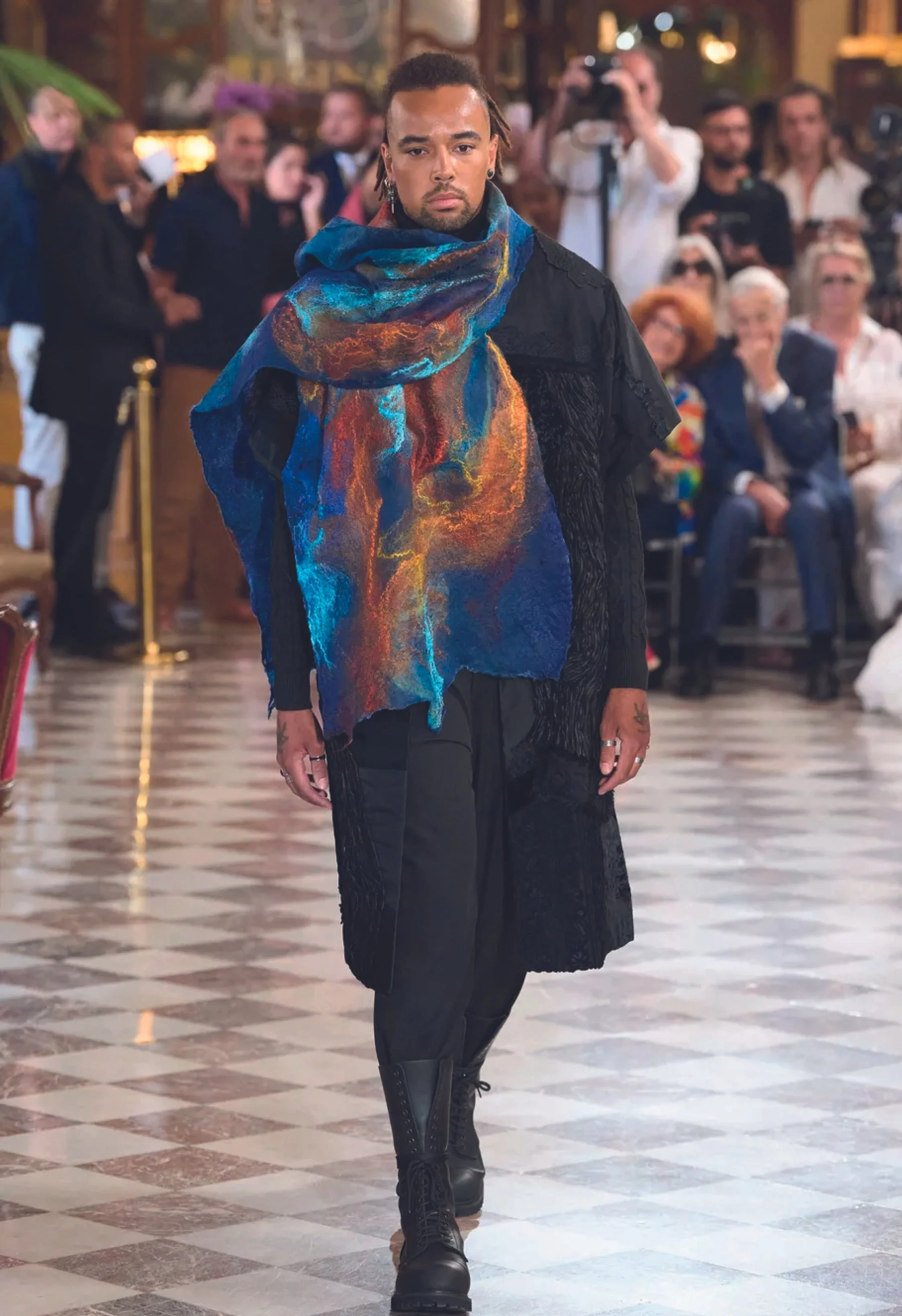
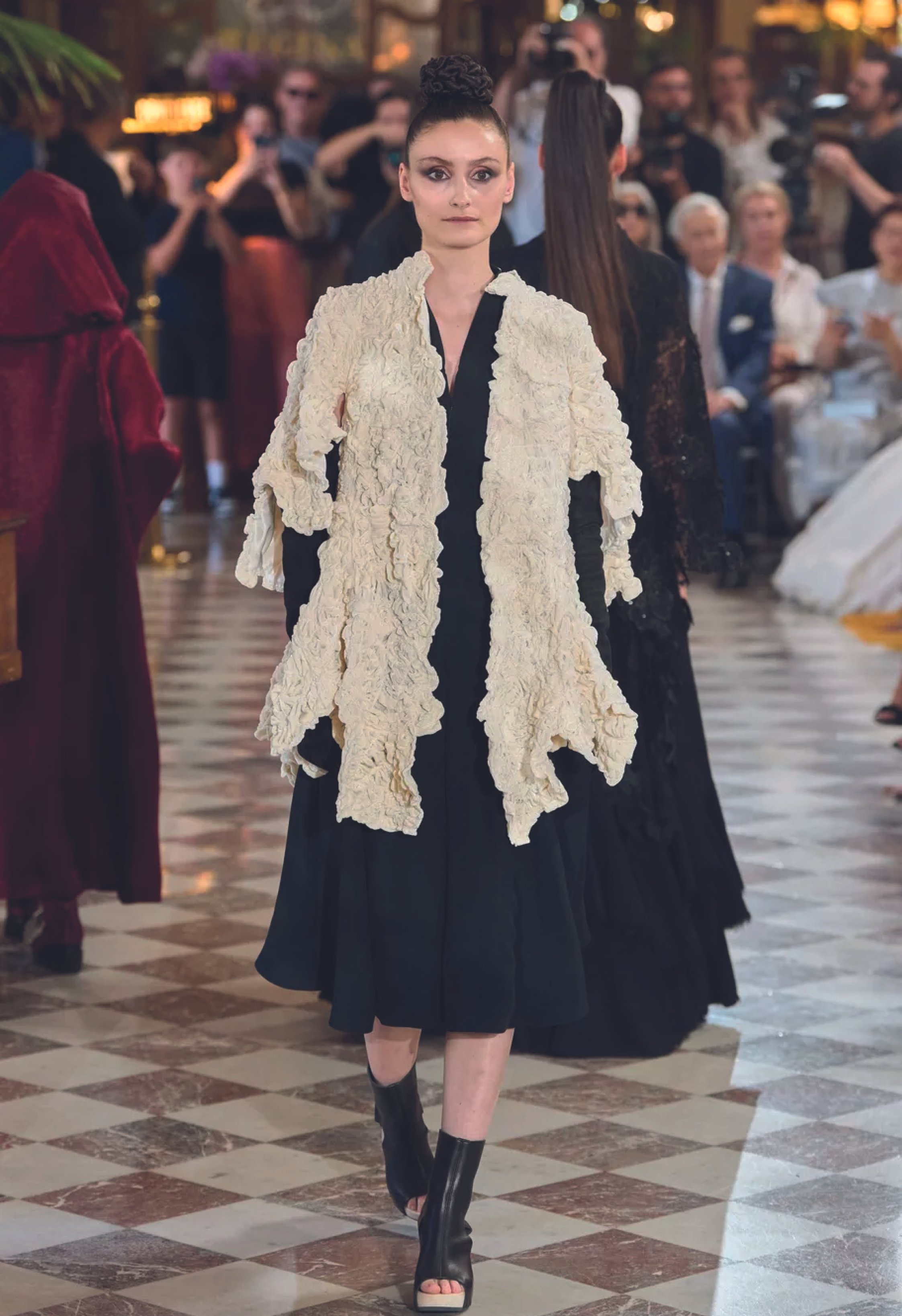
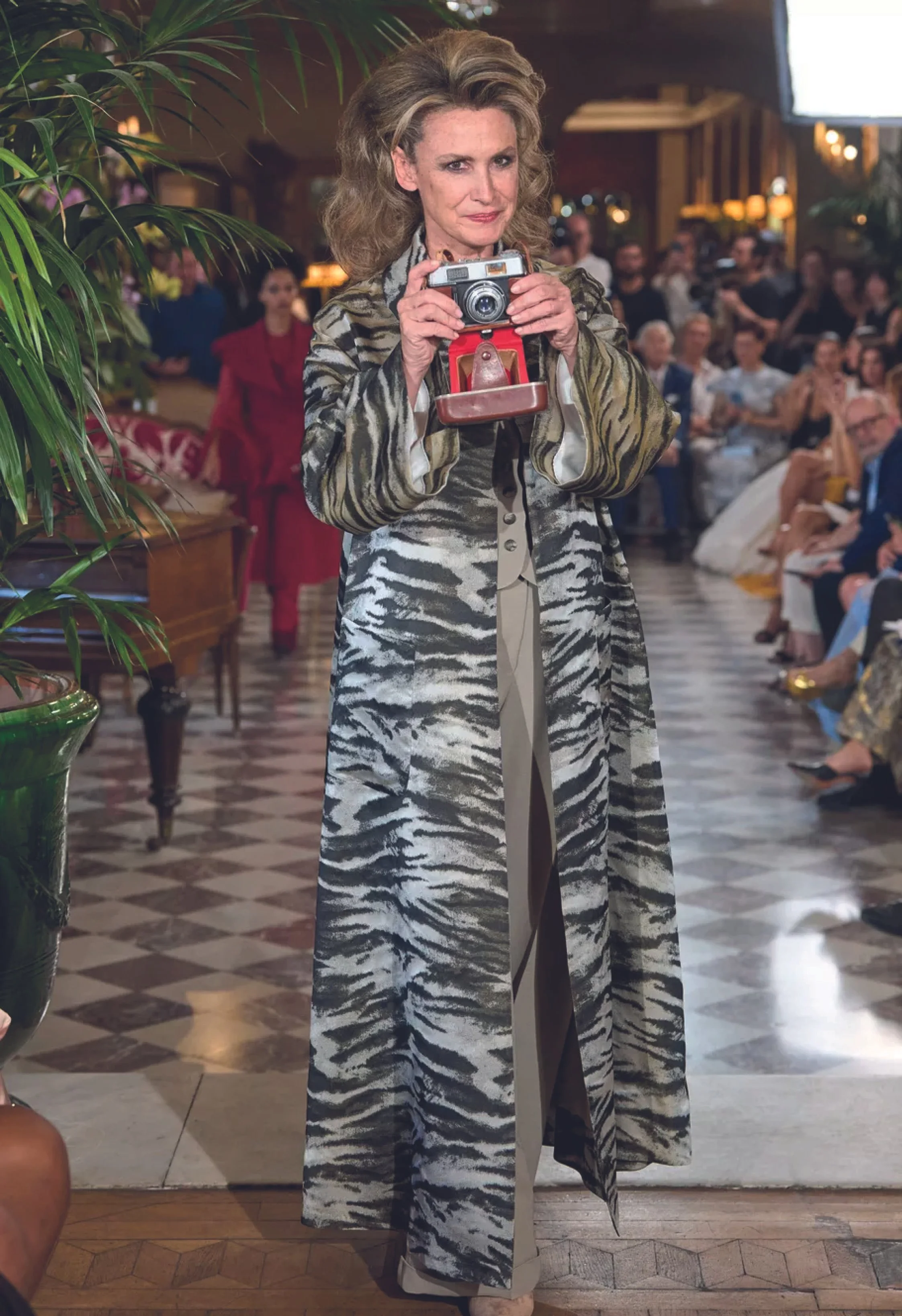
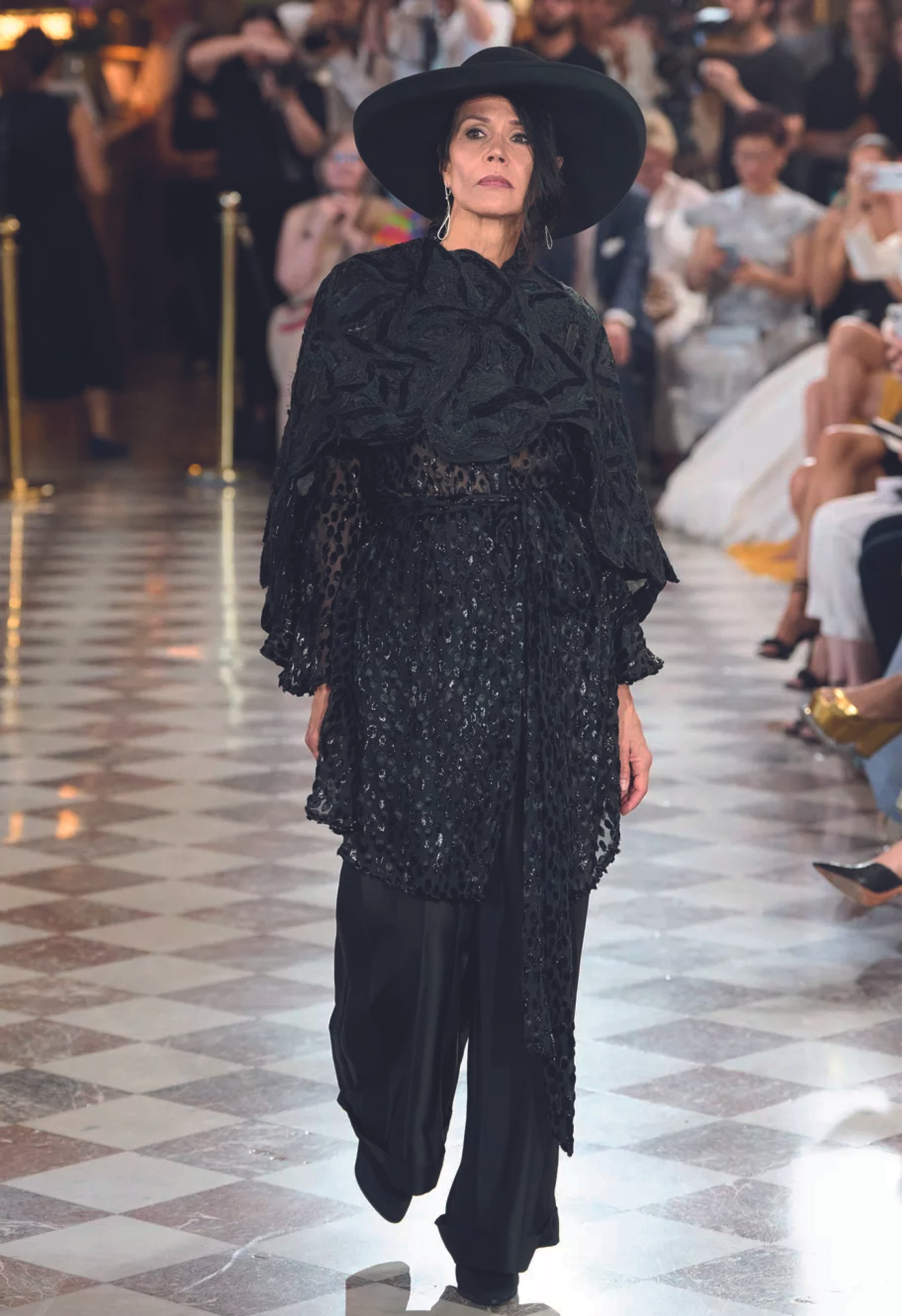
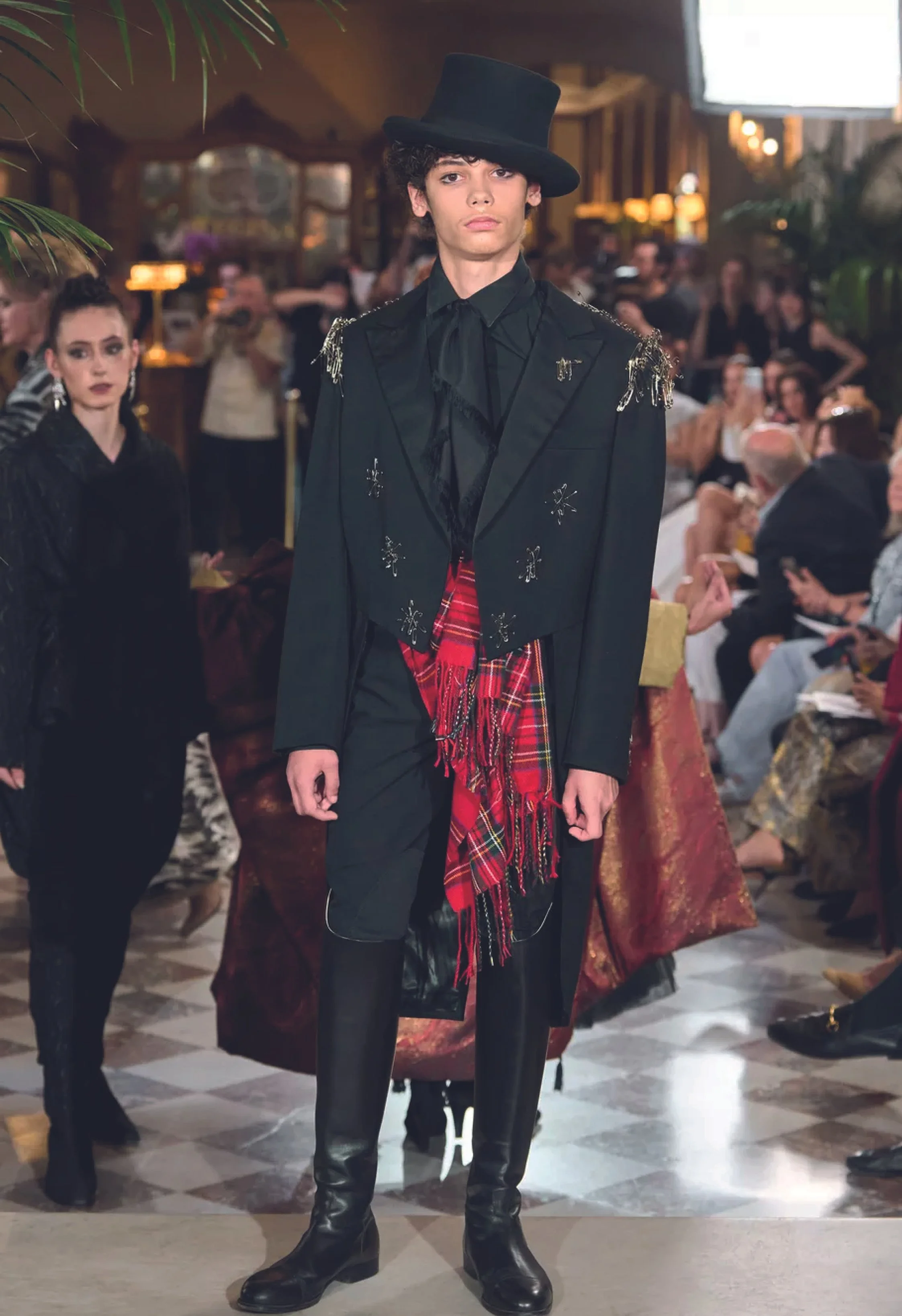
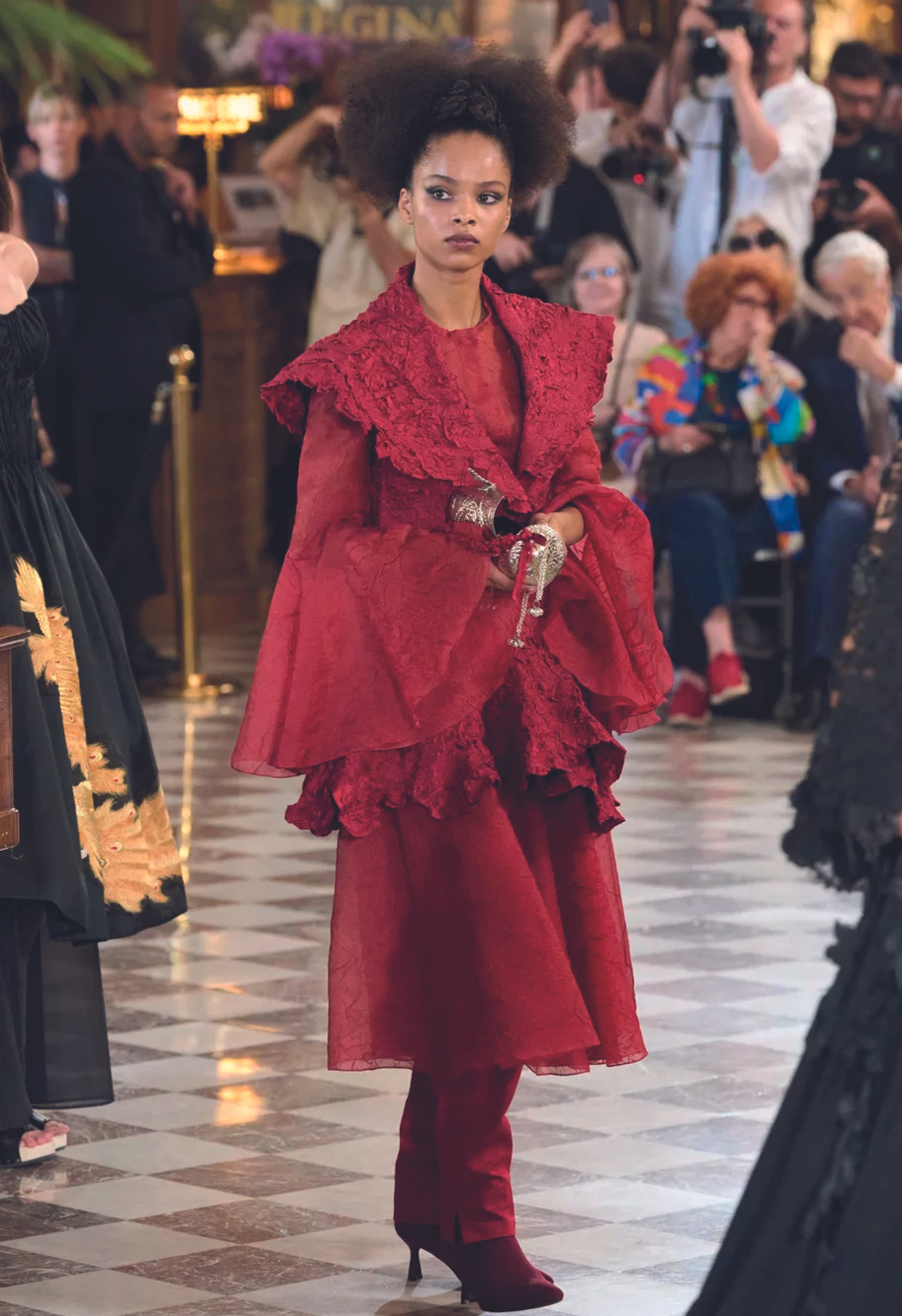
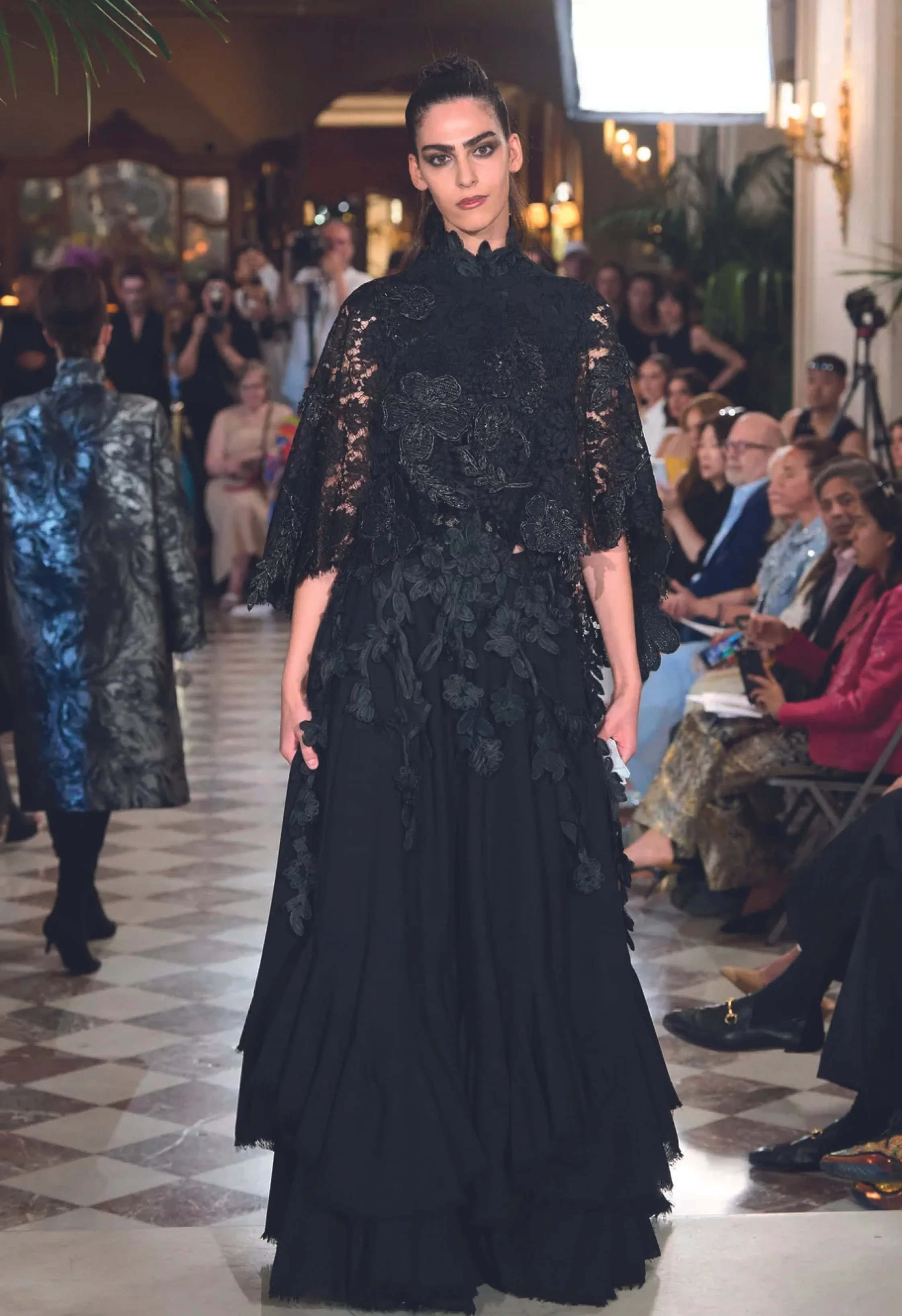
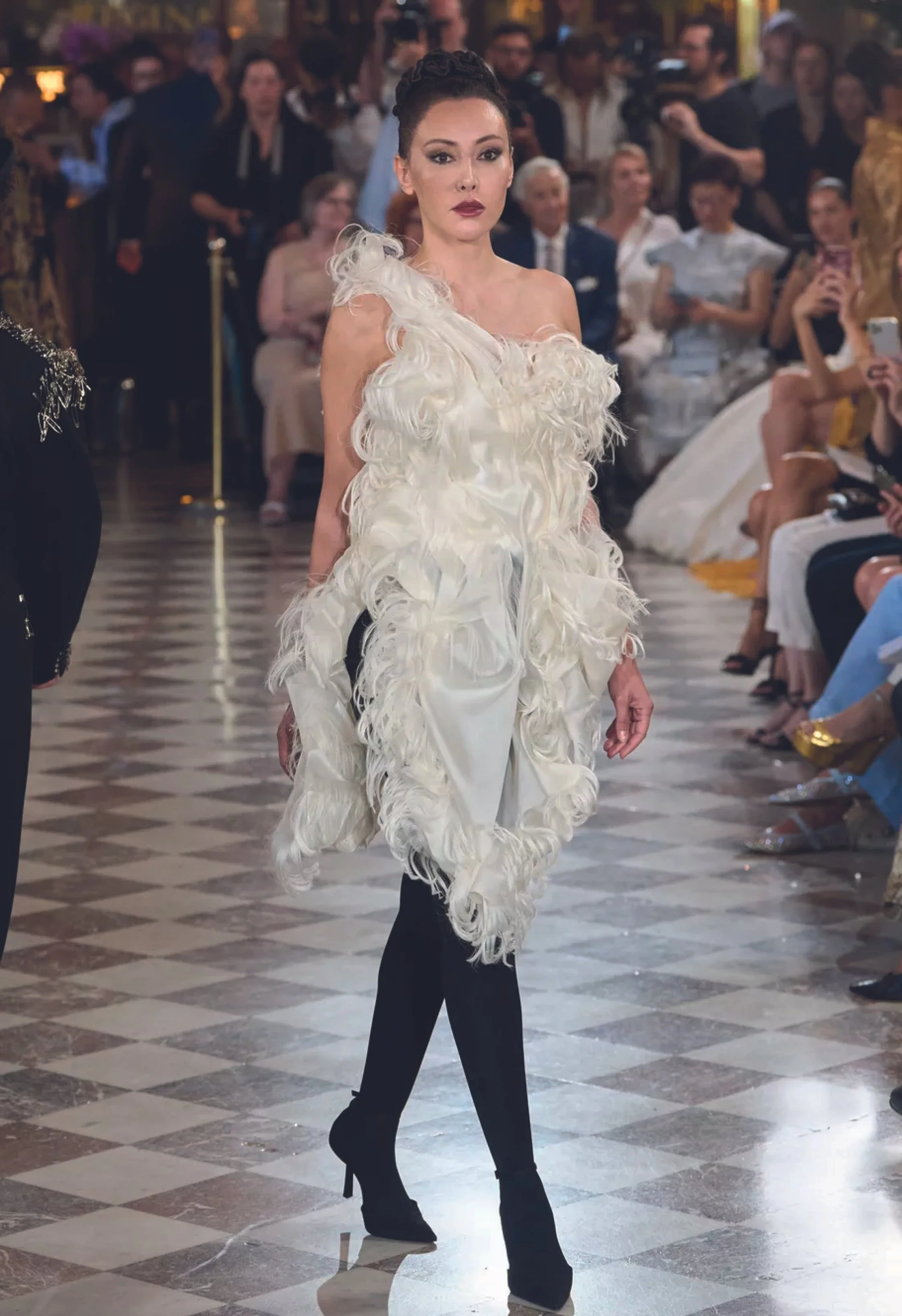
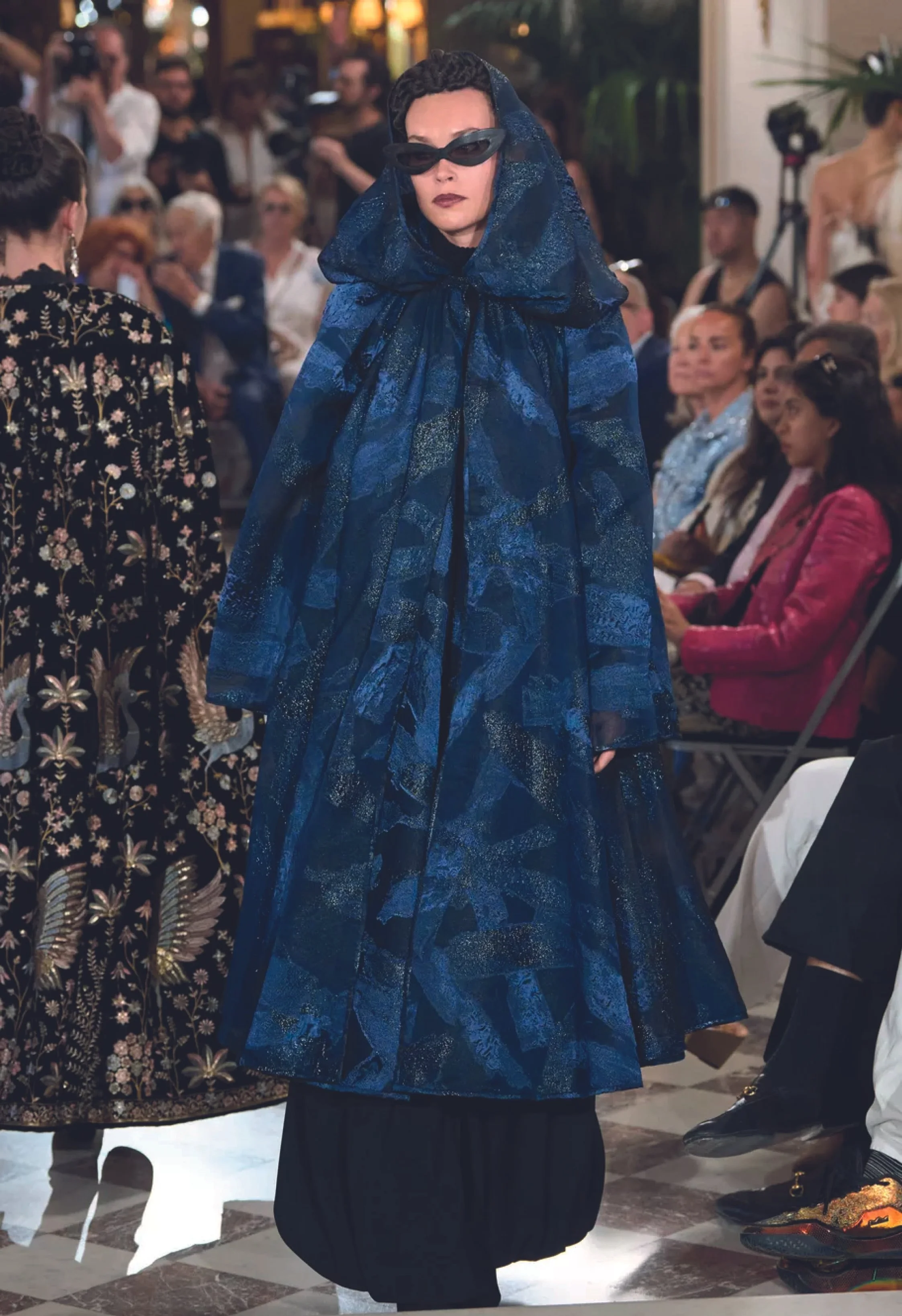
The silhouettes themselves — generous coats, batwing sleeves, volumes that envelop rather than define — provide the structure, while the textiles determine the impression of the collection. Velvet catches light differently than satin does; organza feathers break up the density of the woven surfaces; metallic thread and jacquard supply movement without needing ornament layered on top.
Sorbier’s most persuasive pieces are those that allow the materials to retain their previous lives. The embroidery keeps its irregularities; the frayed silk jacquards keep their signs of wear. In a couture landscape often defined by the pursuit of perfection, his argument lies in leaving evidence of time visible.
DISCOVER MORE ABOUT FRANCK SORBIER