Imane Ayissi FW27: Couture Between Colour, Volume and Memory
Imane Ayissi opened his latest couture show with an airport-style departure announcement, a tribute to his late mother, Julienne Honorine Eyenga Ayissi, who worked as both a model and an air stewardess. The collection was dedicated to her memory.
He titled the collection “Ozouandam Ollat,” a phrase he coined from Fang and Beti, two Bantu languages spoken in Cameroon. Ayissi describes “Ozouandam” as referring to something elevated and respected, while “Ollat” relates to handwork — the processes of sewing, shaping and transforming material. The term is not a translation of haute couture, but an attempt to define couture through another linguistic and cultural framework, suggesting how a Parisian tradition can engage with different systems of value and imagination.
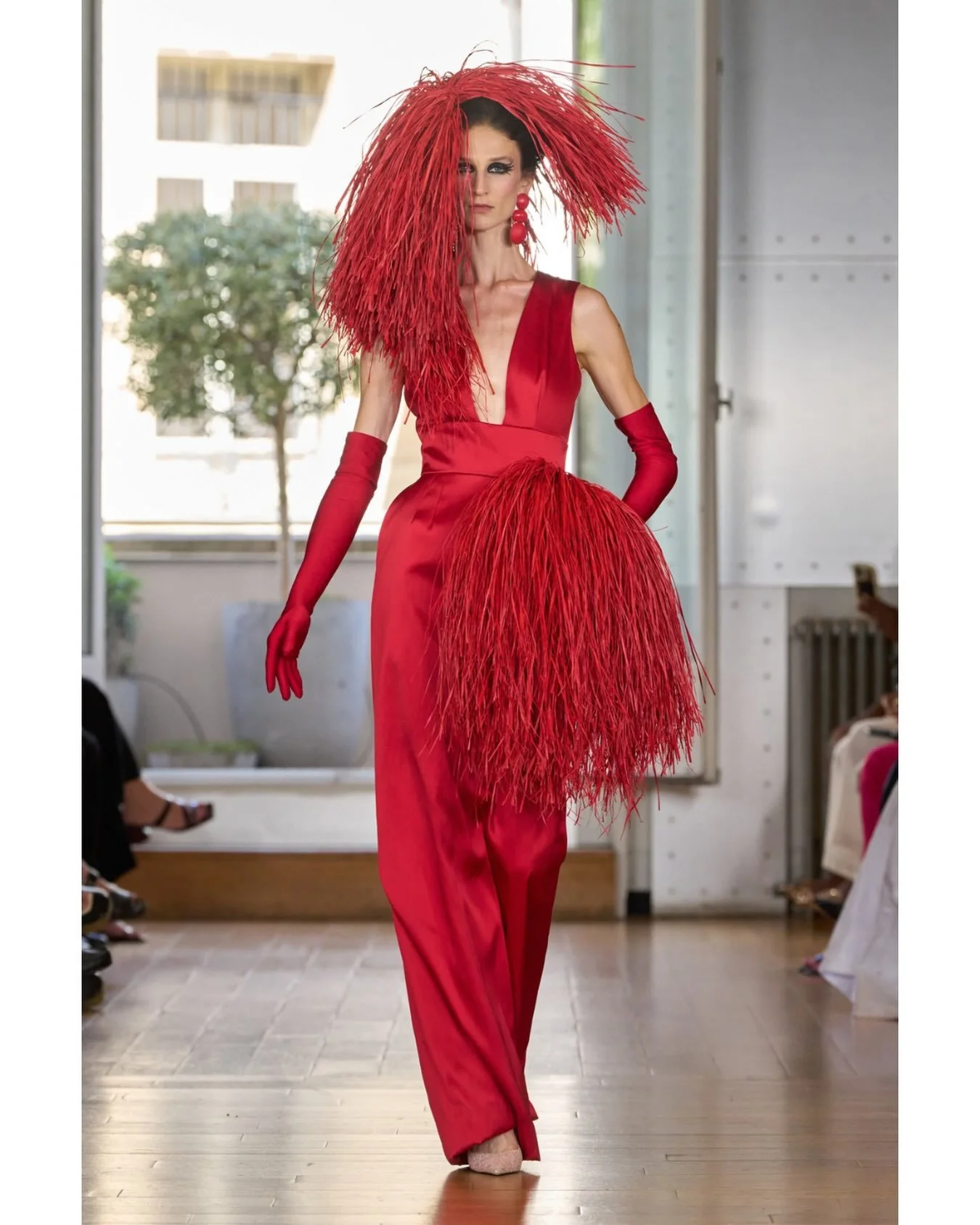
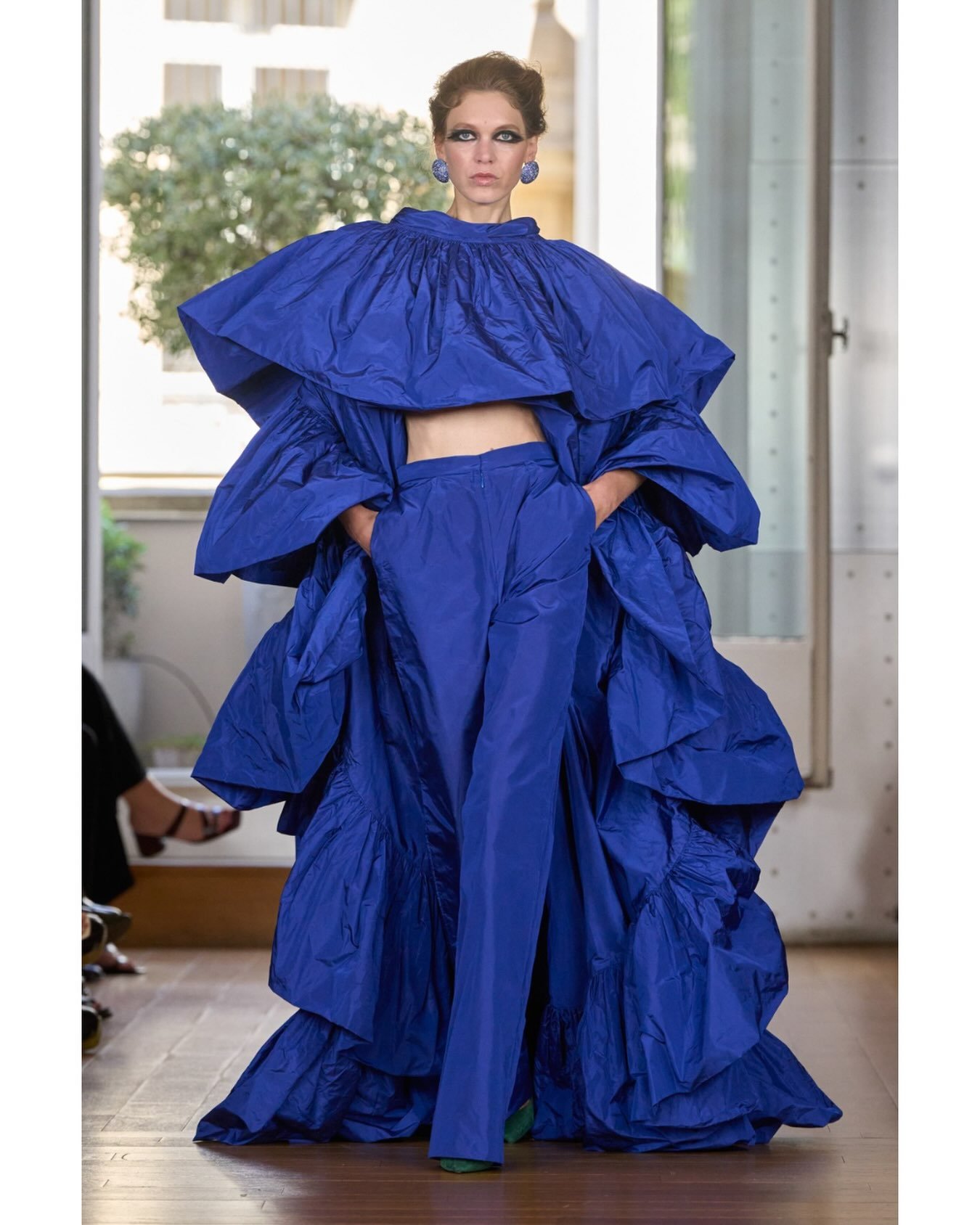
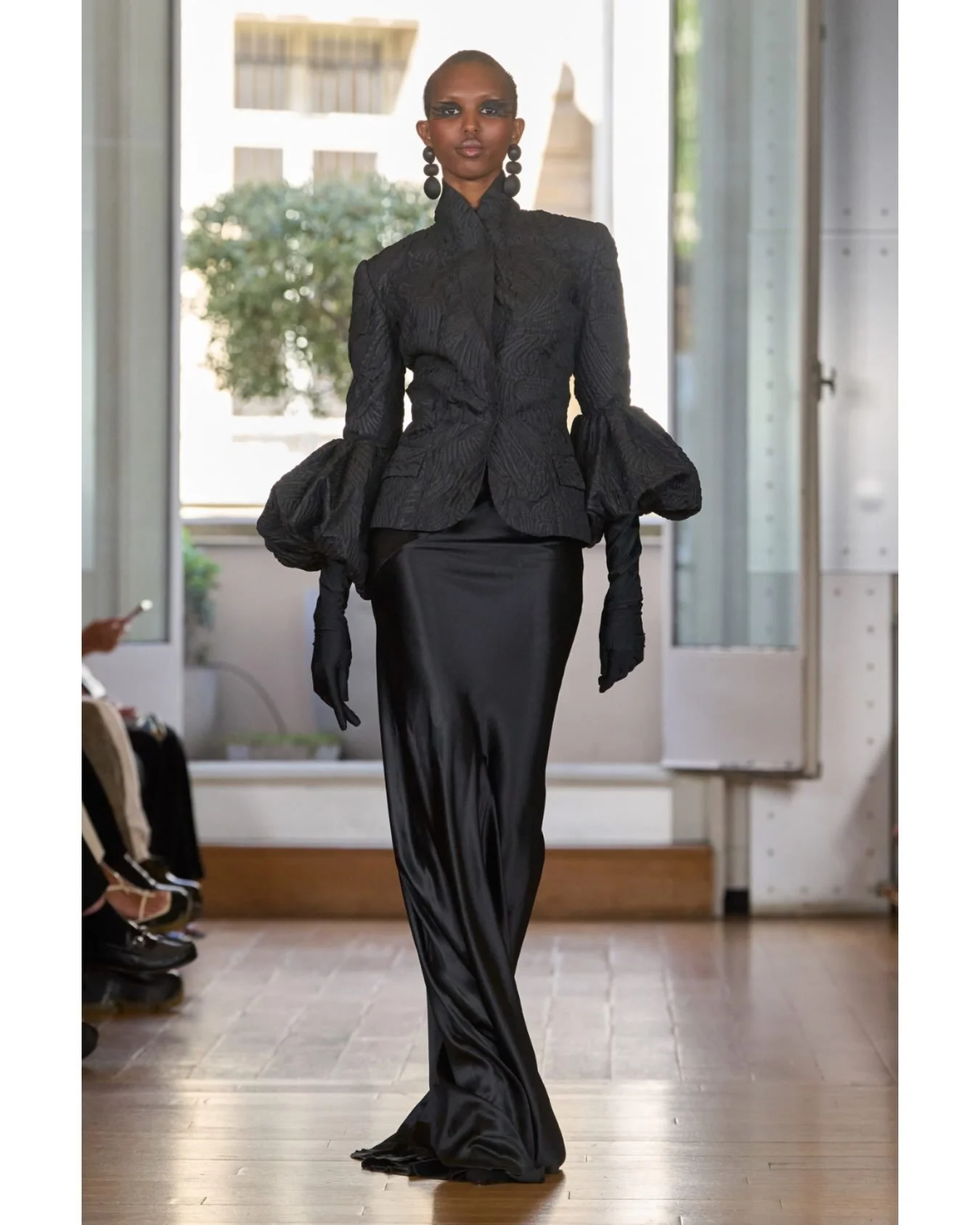
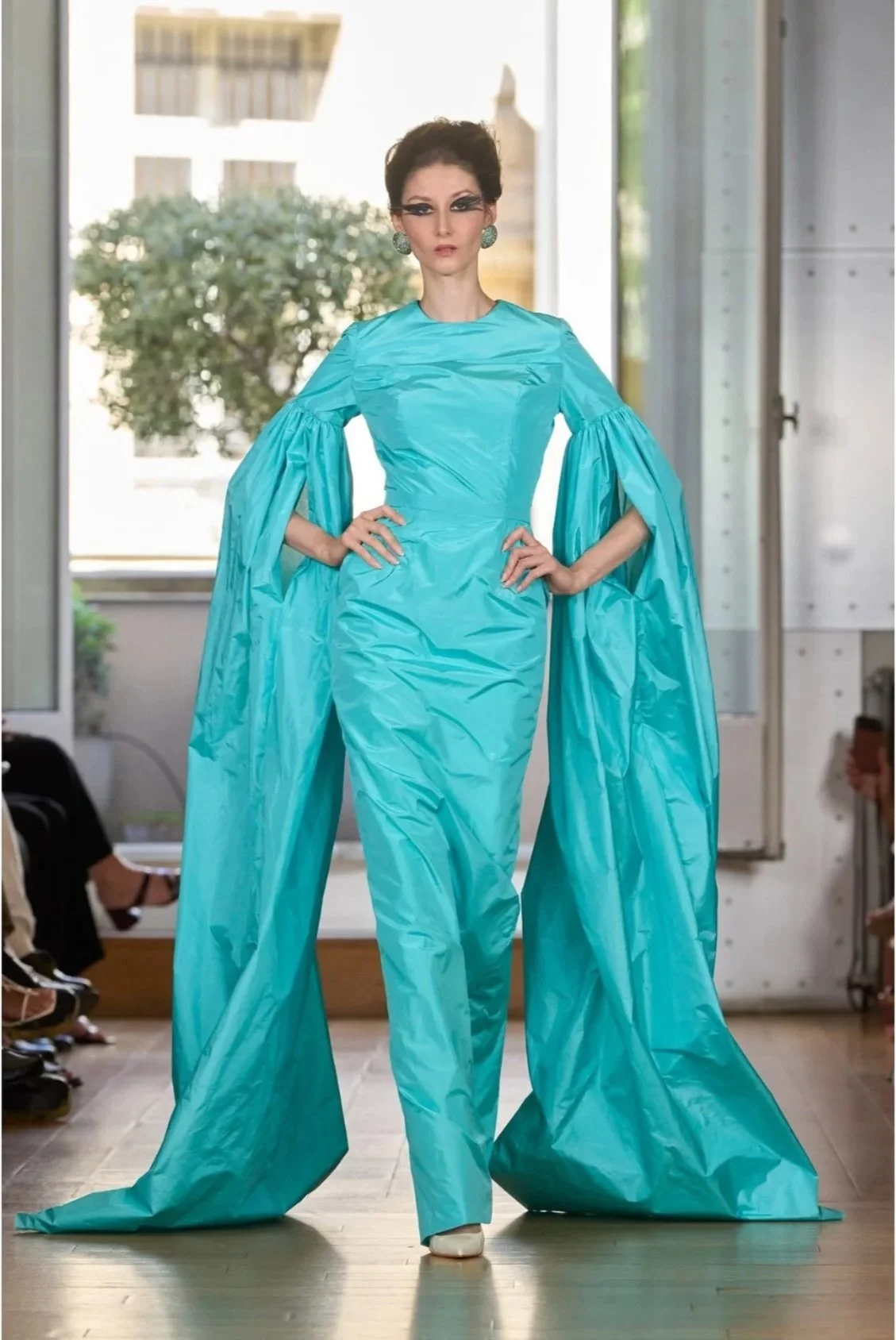
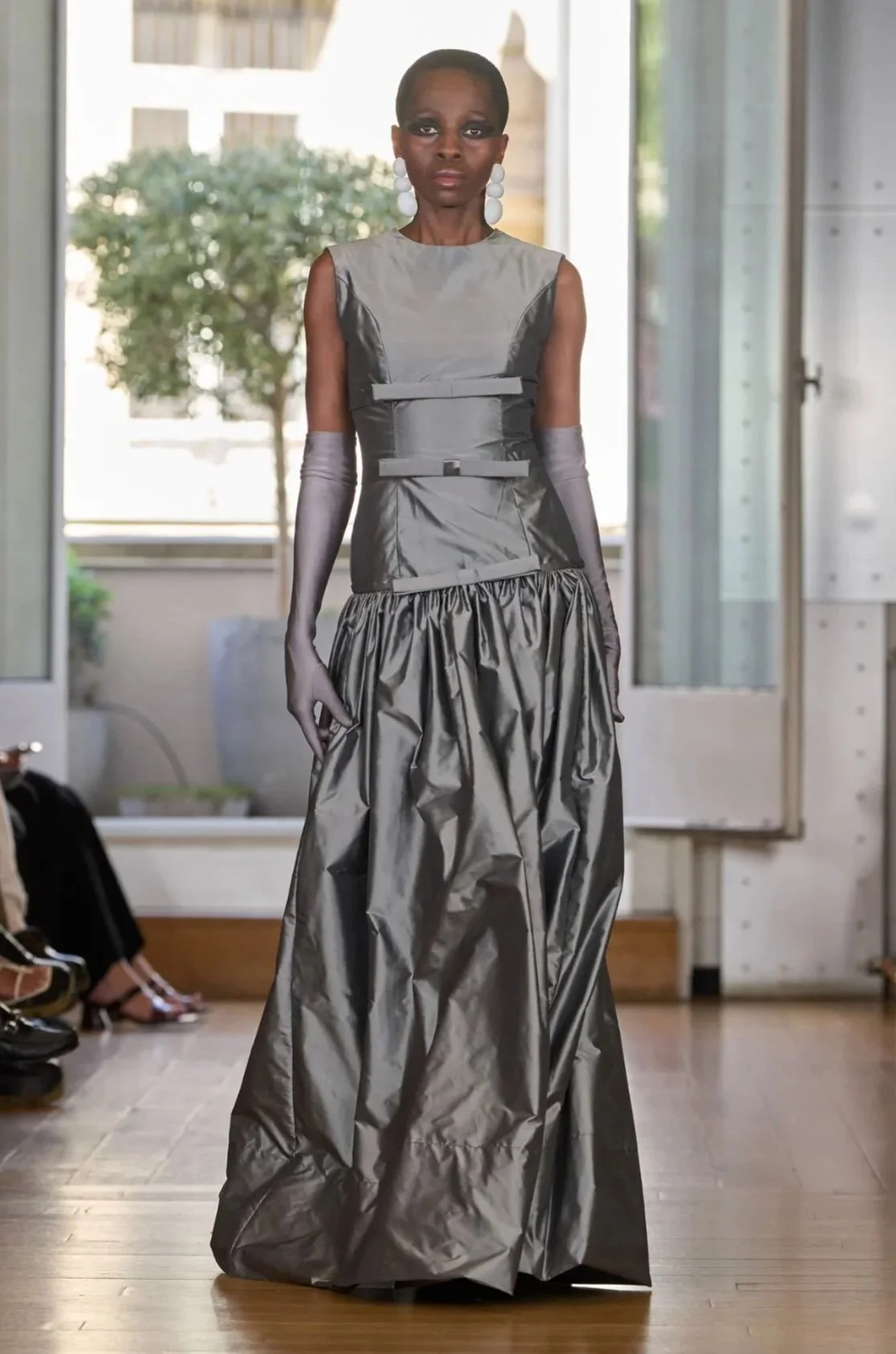
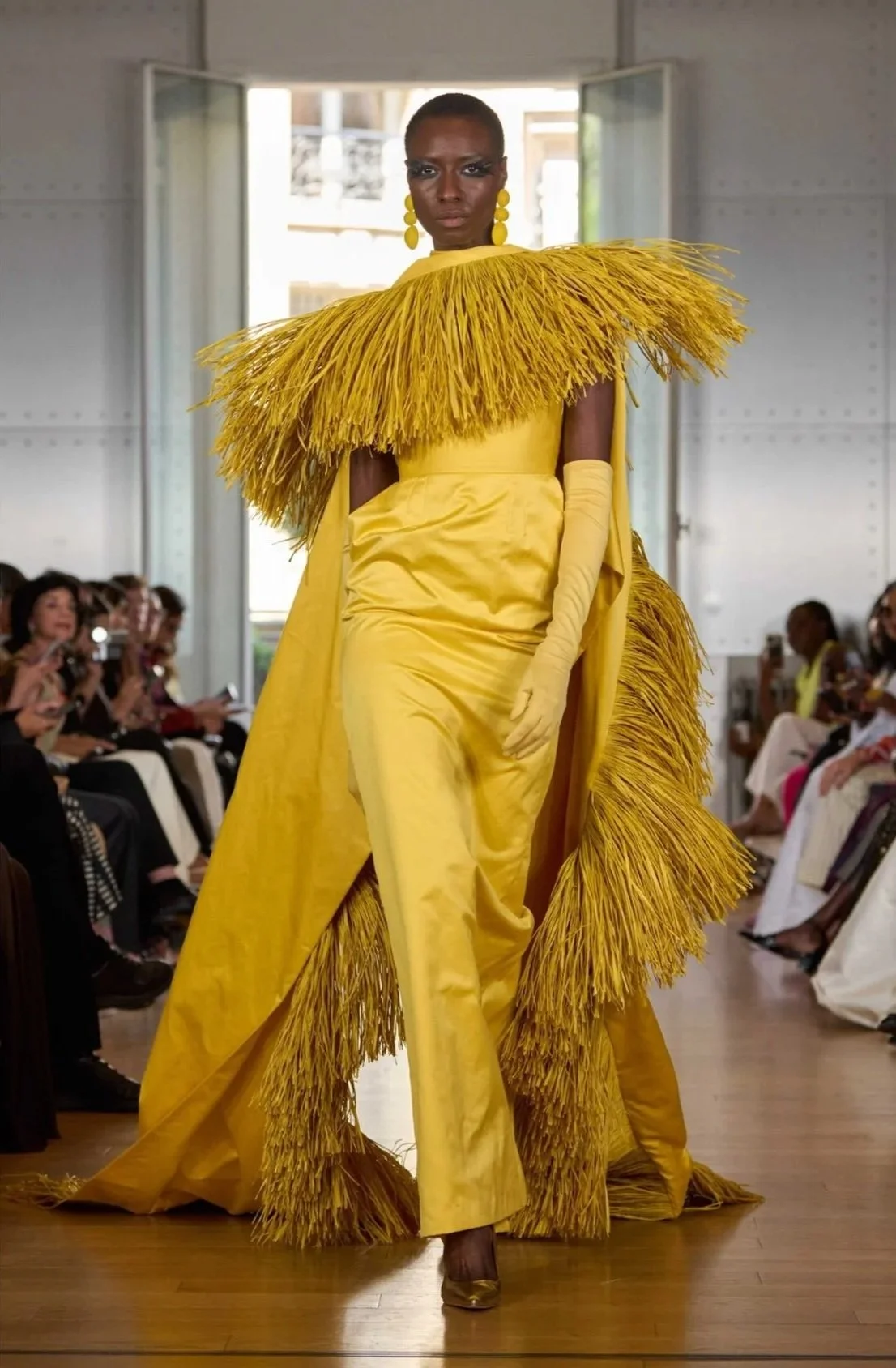
Compared with earlier Ayissi collections, the African references in Fall/Winter 2027 were less immediately visible. The emphasis moved towards volume, movement and sculptural construction, recalling the glamour of 1950s couture through sweeping shapes, precise proportions and a heightened sense of occasion.
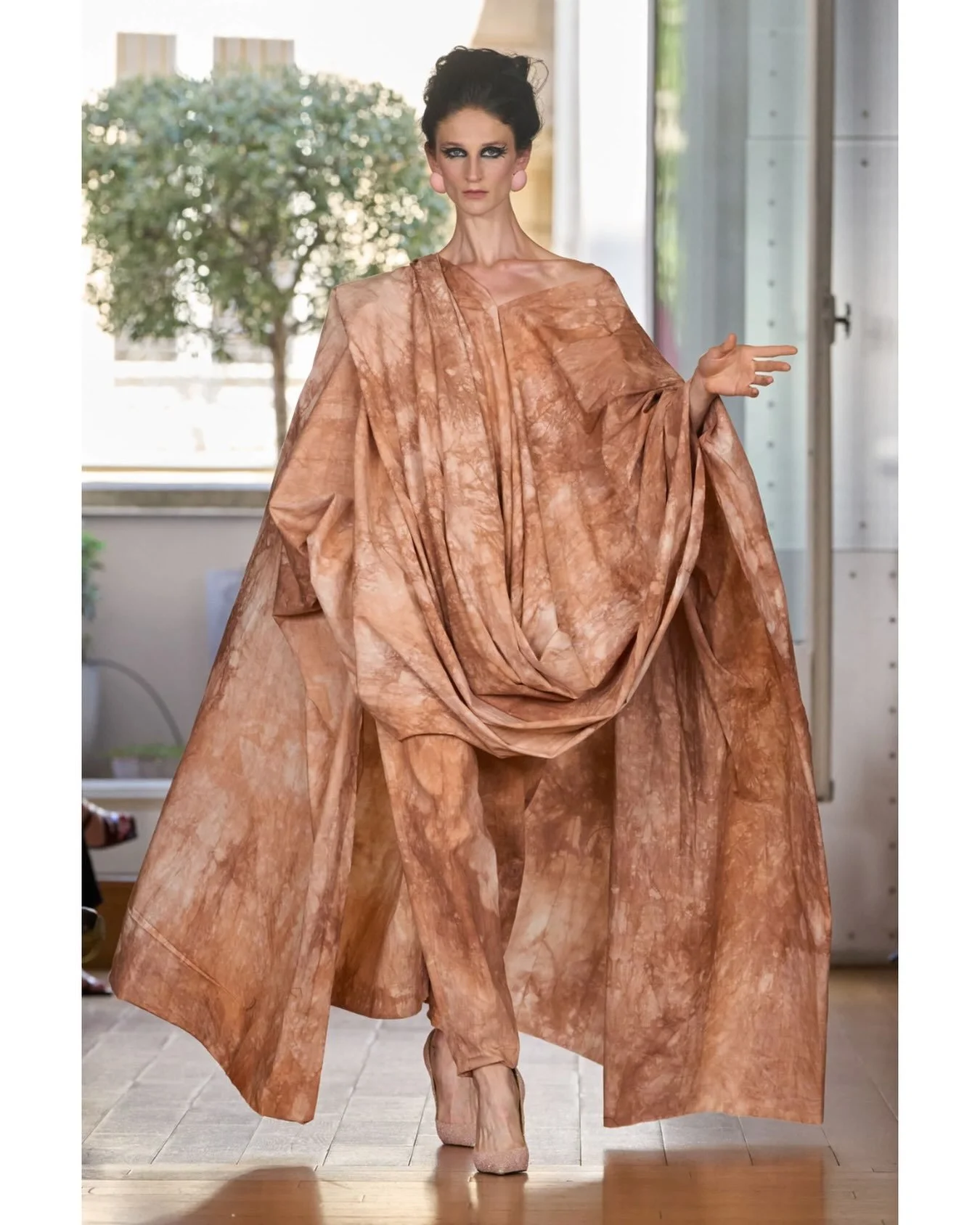
Raffia continued to appear throughout the collection, but the clearest references to Ayissi’s textile heritage were concentrated in a small group of looks. A tie-dye ensemble combined a sweeping cape with tapered trousers in dusty pink and white, while a cornflower blue minidress layered with floral appliqué brought the designer’s African textile vocabulary to the surface. The collection’s most striking experiment in craft introduced a new beading technique for the house: a loose top built around vivid orange floral embroidery, contrasted with royal blue silk puff sleeves and a matching full skirt.
Proportion became the central study of the collection. Ayissi reworked familiar silhouettes through architectural adjustments, including a boxy short-sleeved midi dress that extended into a bias-cut train and cape at the back, creating a tension between control and movement.
With Ozouandam Ollat, Ayissi moves beyond treating African materials as references or sources of inspiration. They function instead as part of couture’s construction language, alongside the techniques, volumes and craftsmanship that define the form itself.