Iris van Herpen FW27: The New Physics of Couture
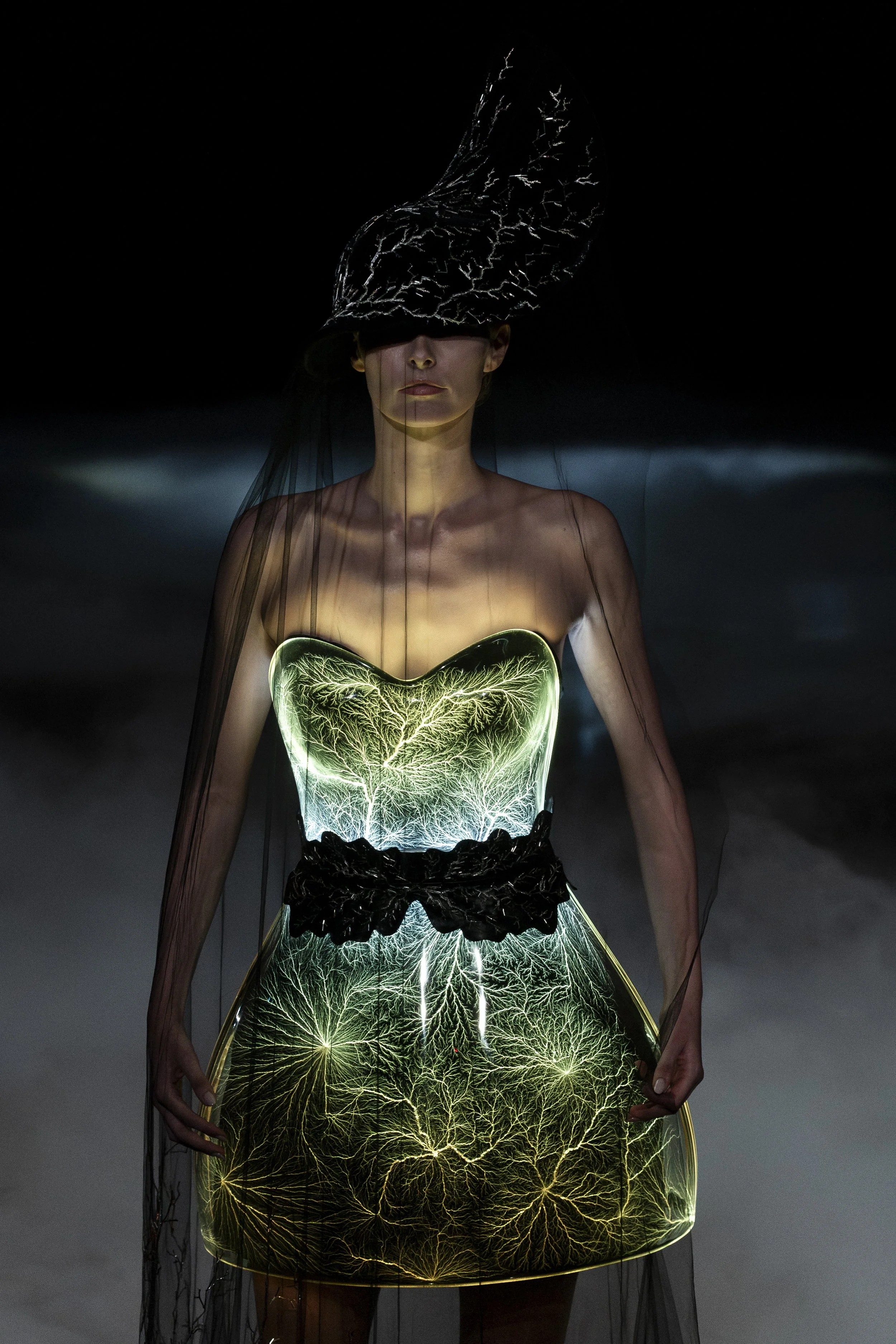
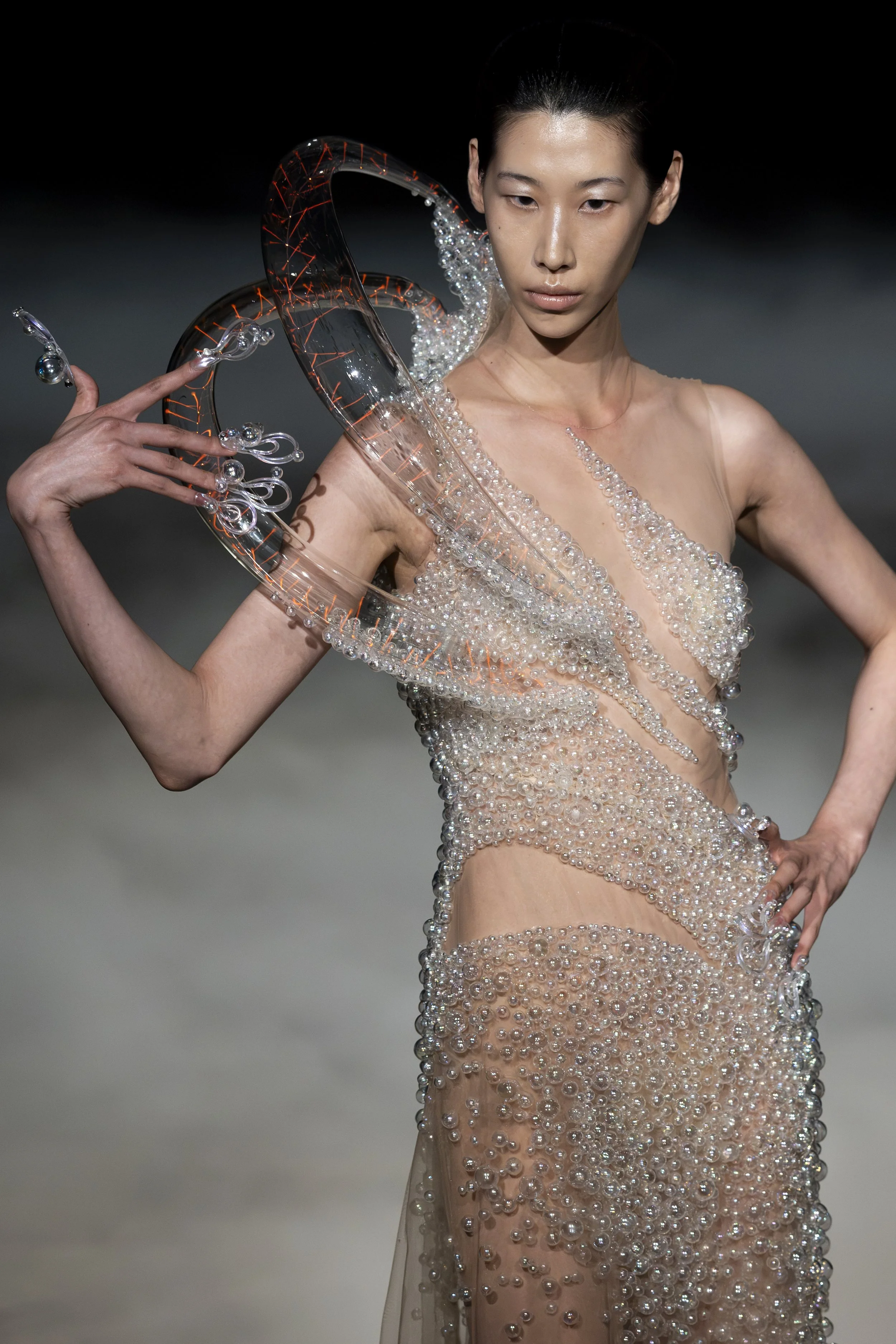
Every Iris van Herpen collection returns to the same question: where do couture and science meet? For nearly two decades, the Dutch designer has treated them as connected disciplines, moving through 3D printing, magnetism, water and biological processes in search of new methods of construction. At the Élysée Montmartre this season, that exploration led to plasma — the fourth state of matter — incorporated into a couture garment for Sonic Starquakes, a collection shaped by the vibrations and forces of distant stars.
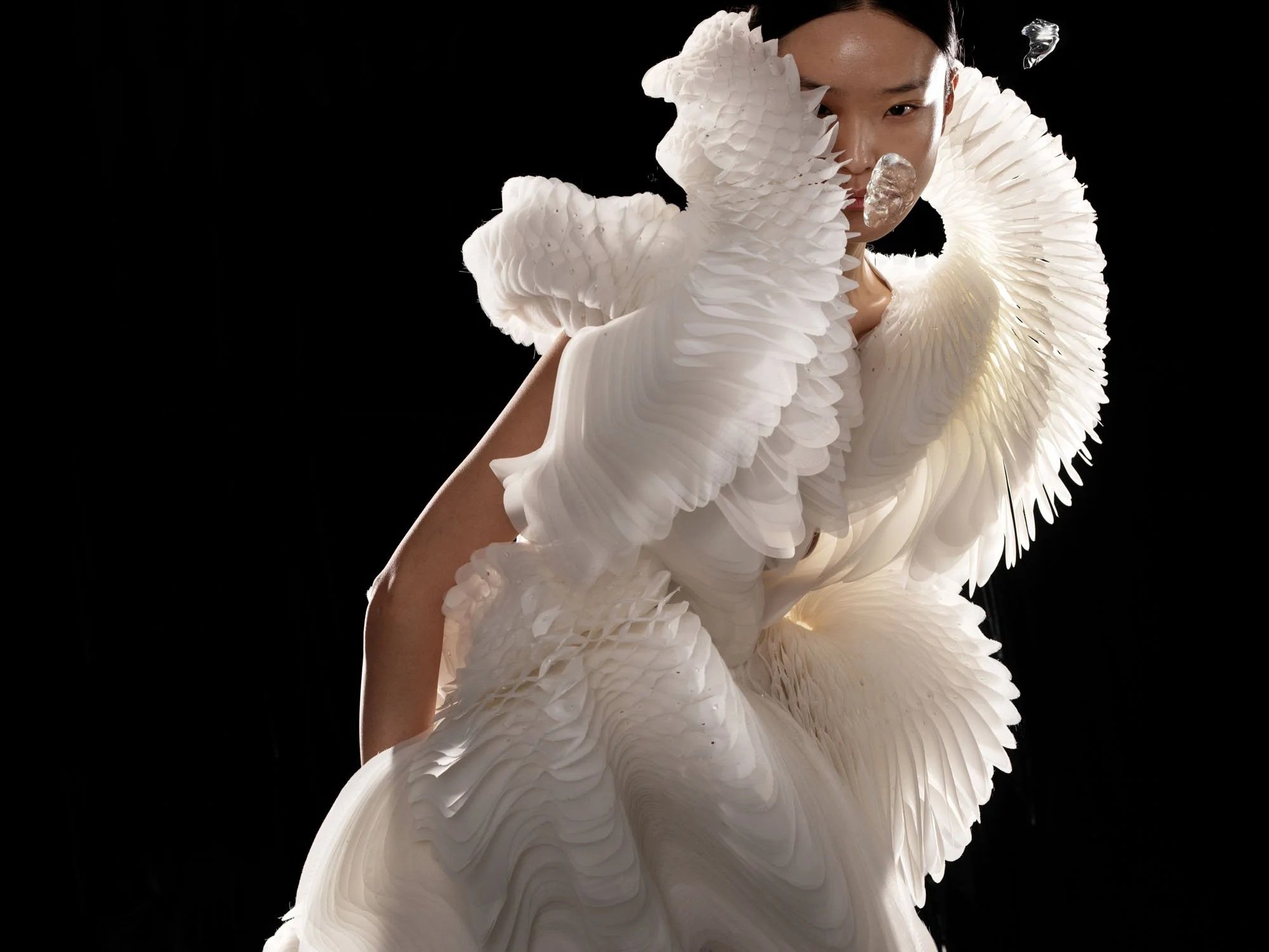
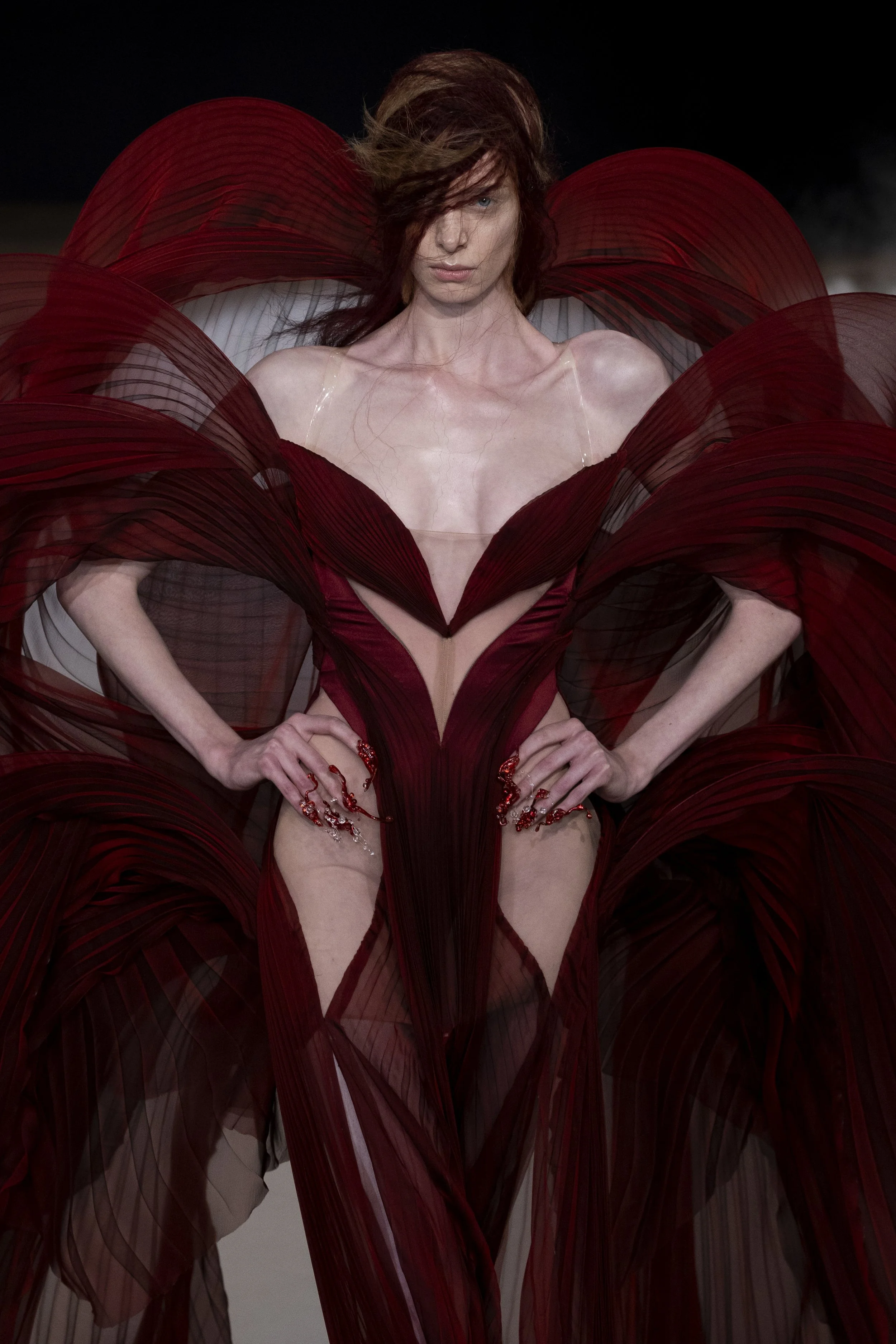
The title refers to the seismic activity produced as stars evolve and fracture, translated into seventeen looks through light, movement and material experimentation. The collection’s defining piece, Helix Nebula (above right), placed two crescents of hand-blown glass at the shoulders, each containing plasma that responded to the wearer’s electromagnetic field. The garment became an exchange between body and material: movement, heat and energy were built into its construction. Around the glass structures, thousands of hand-blown spheres were arranged across illusion tulle, catching ultraviolet light and creating a surface that shifted between visibility and disappearance.
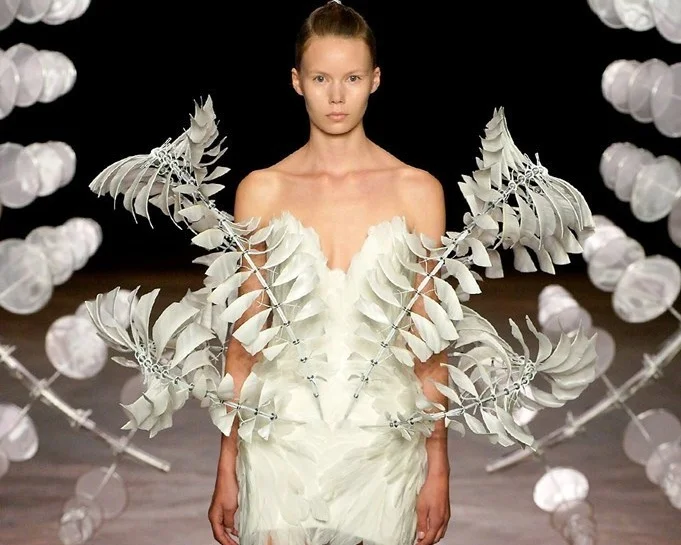
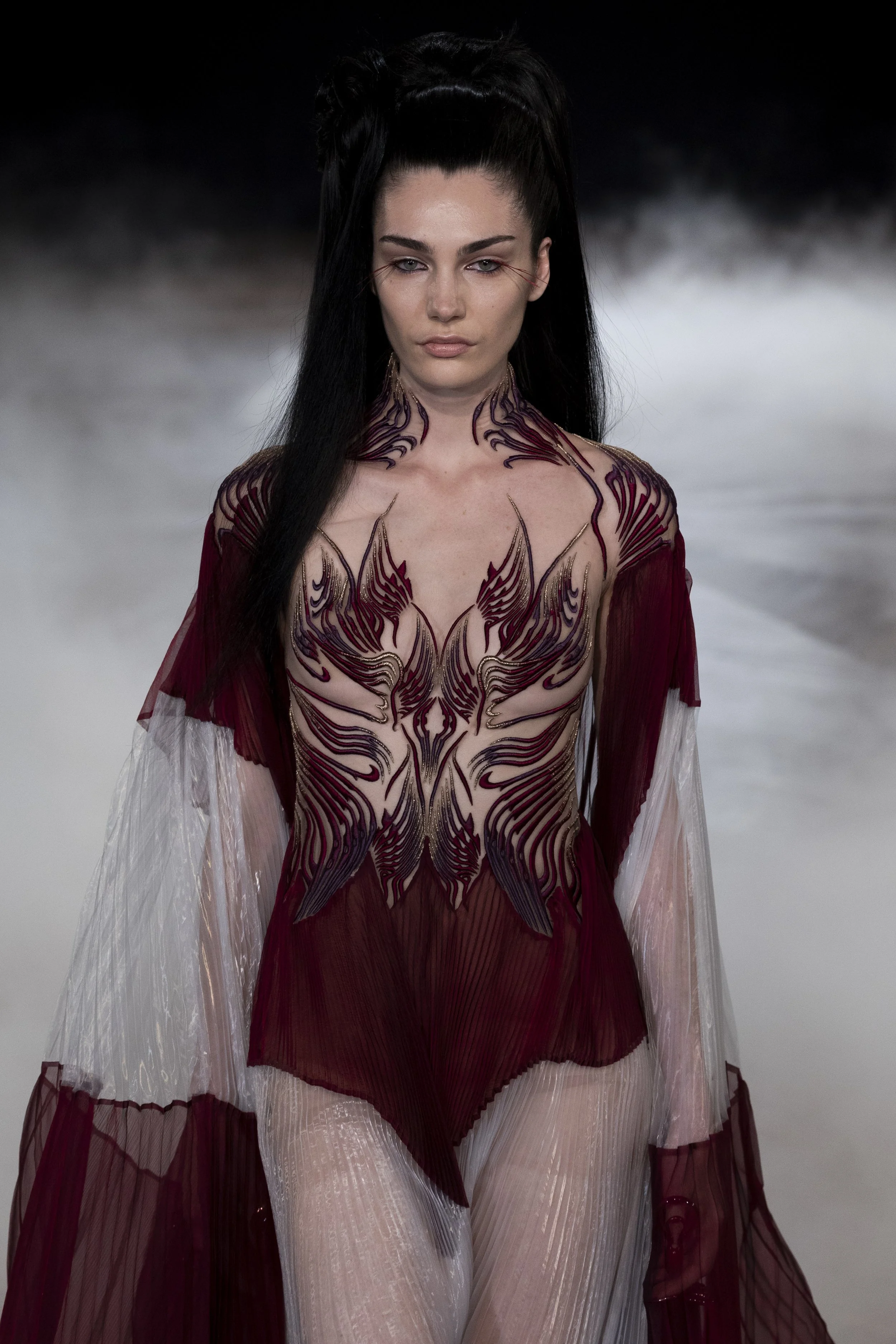
Fractal Universe (above left) continued this exploration of energy and transformation. The garment was charged inside a particle accelerator and kept cryogenically frozen before the show, with the intention of producing a controlled electrical discharge during the presentation. Instead, branching Lichtenberg patterns appeared across its surface before the runway, leaving the marks of the process within the finished piece. It reflected a principle that has long shaped van Herpen’s work: allowing physical forces and material behaviour to influence the final form.
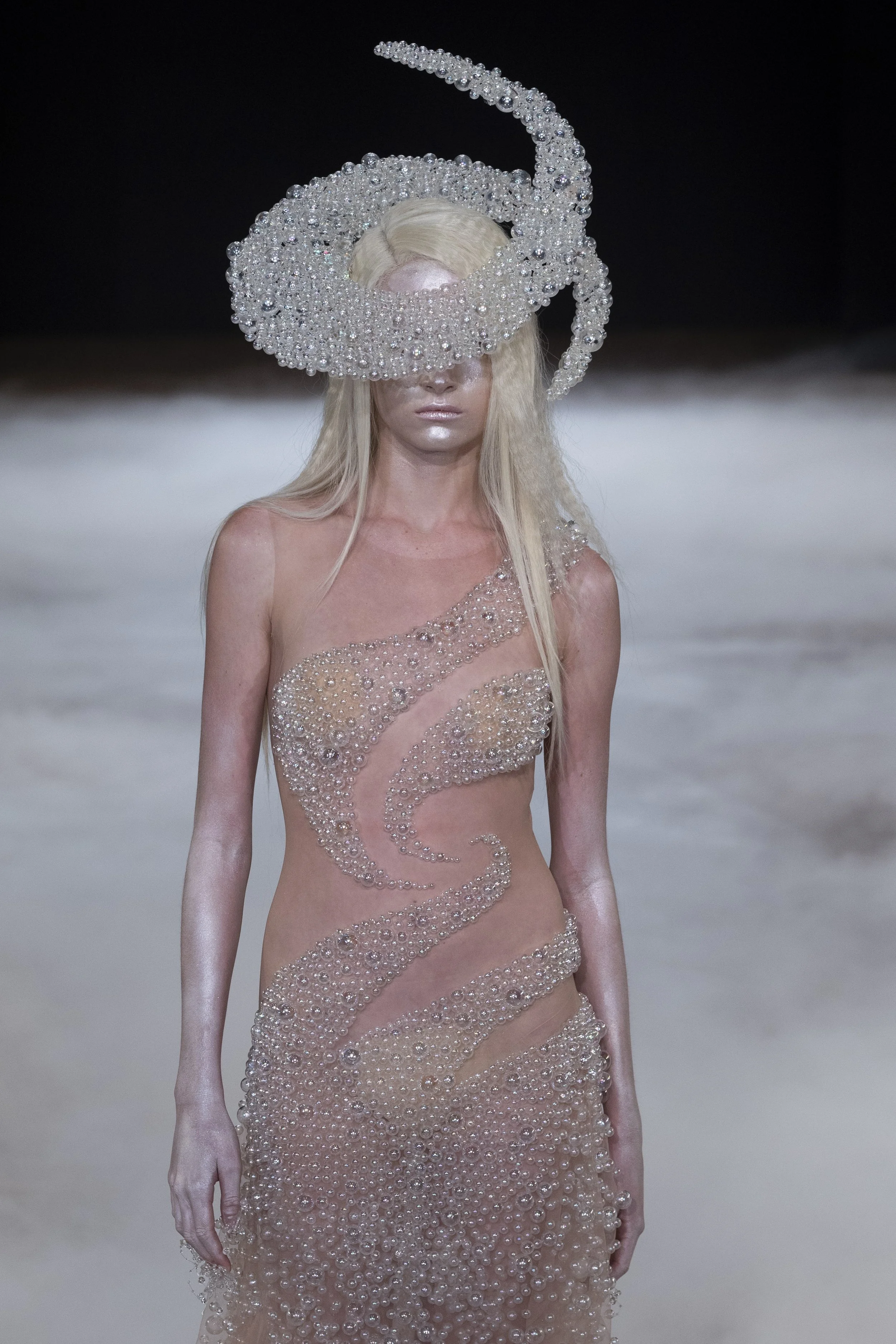
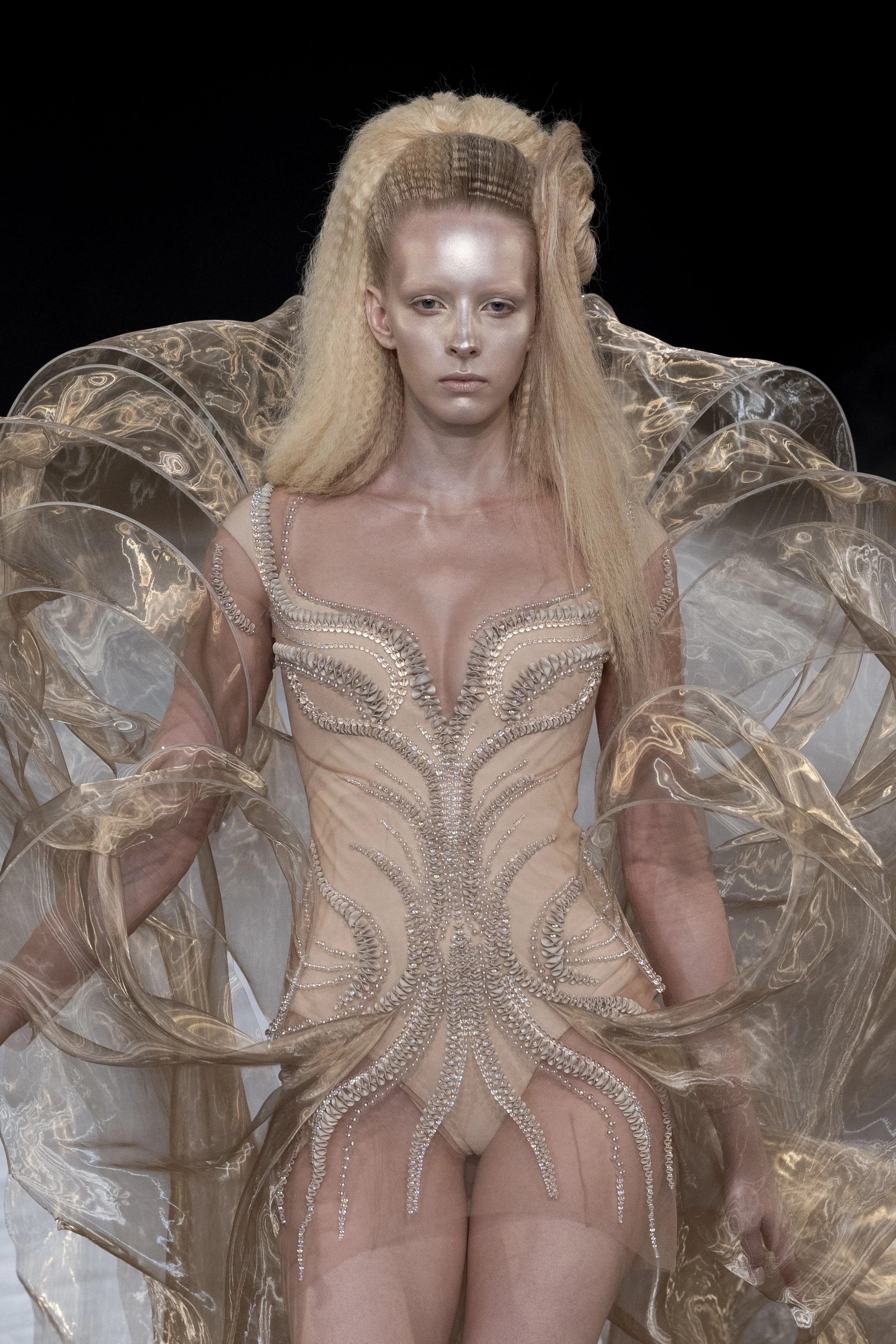
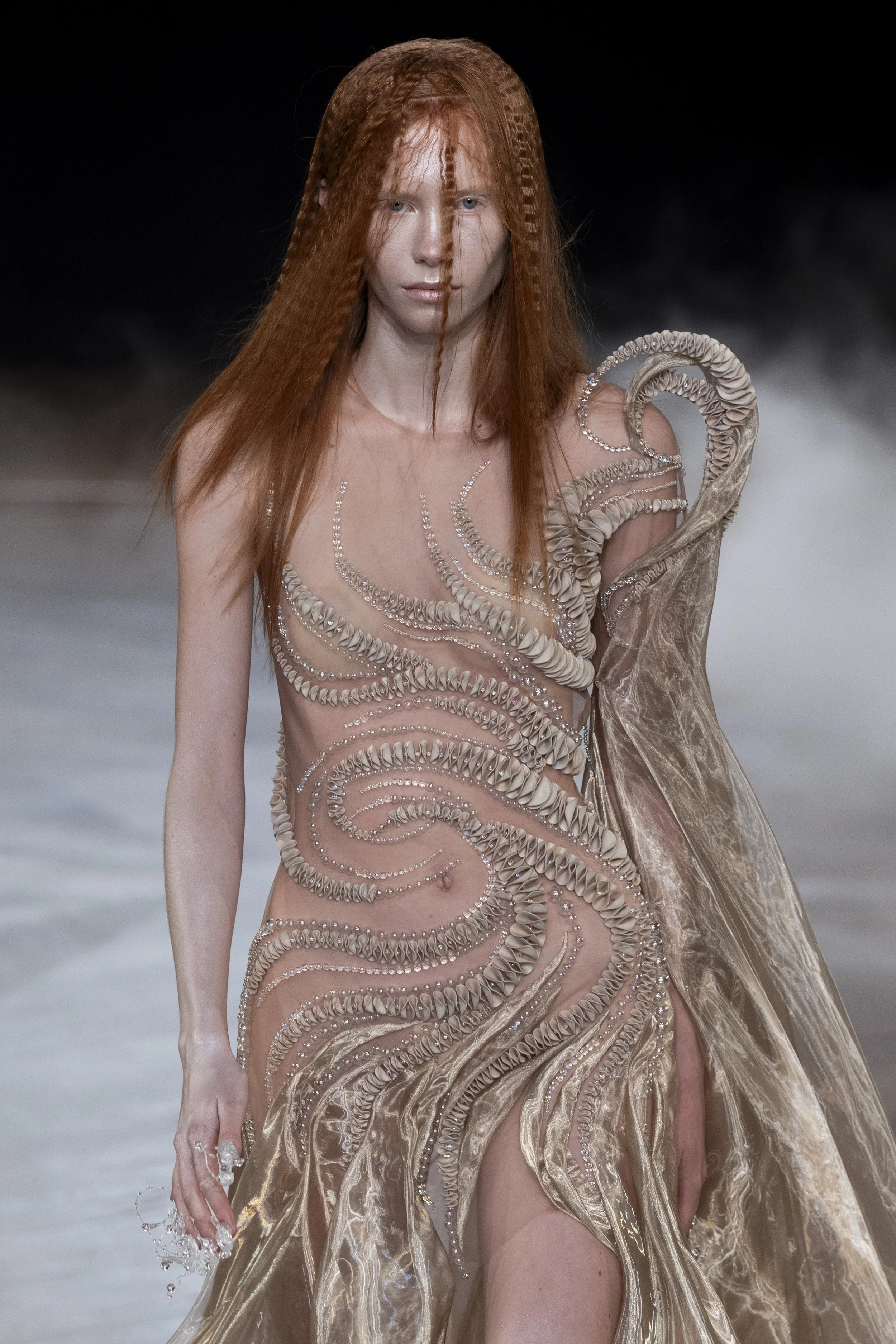
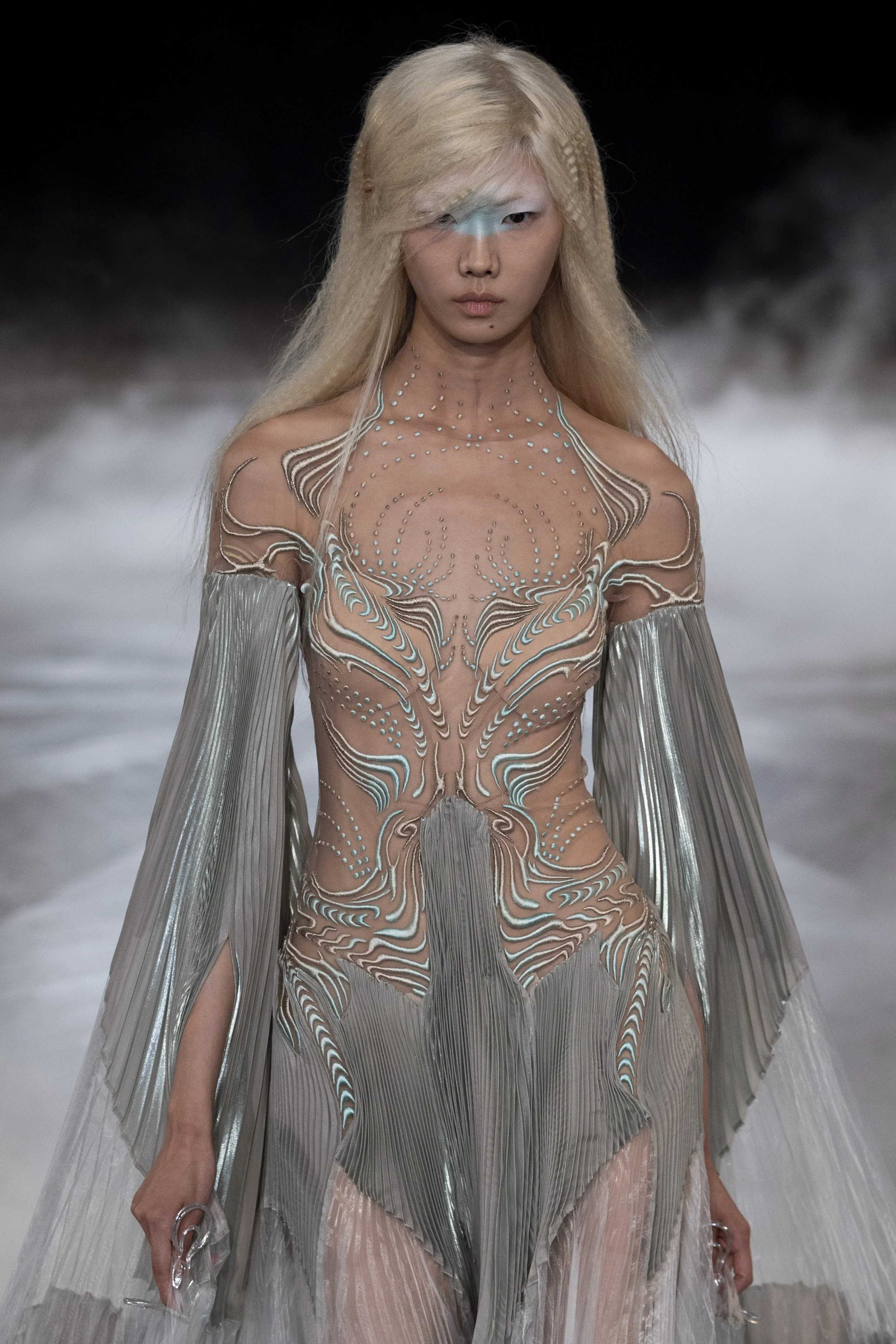
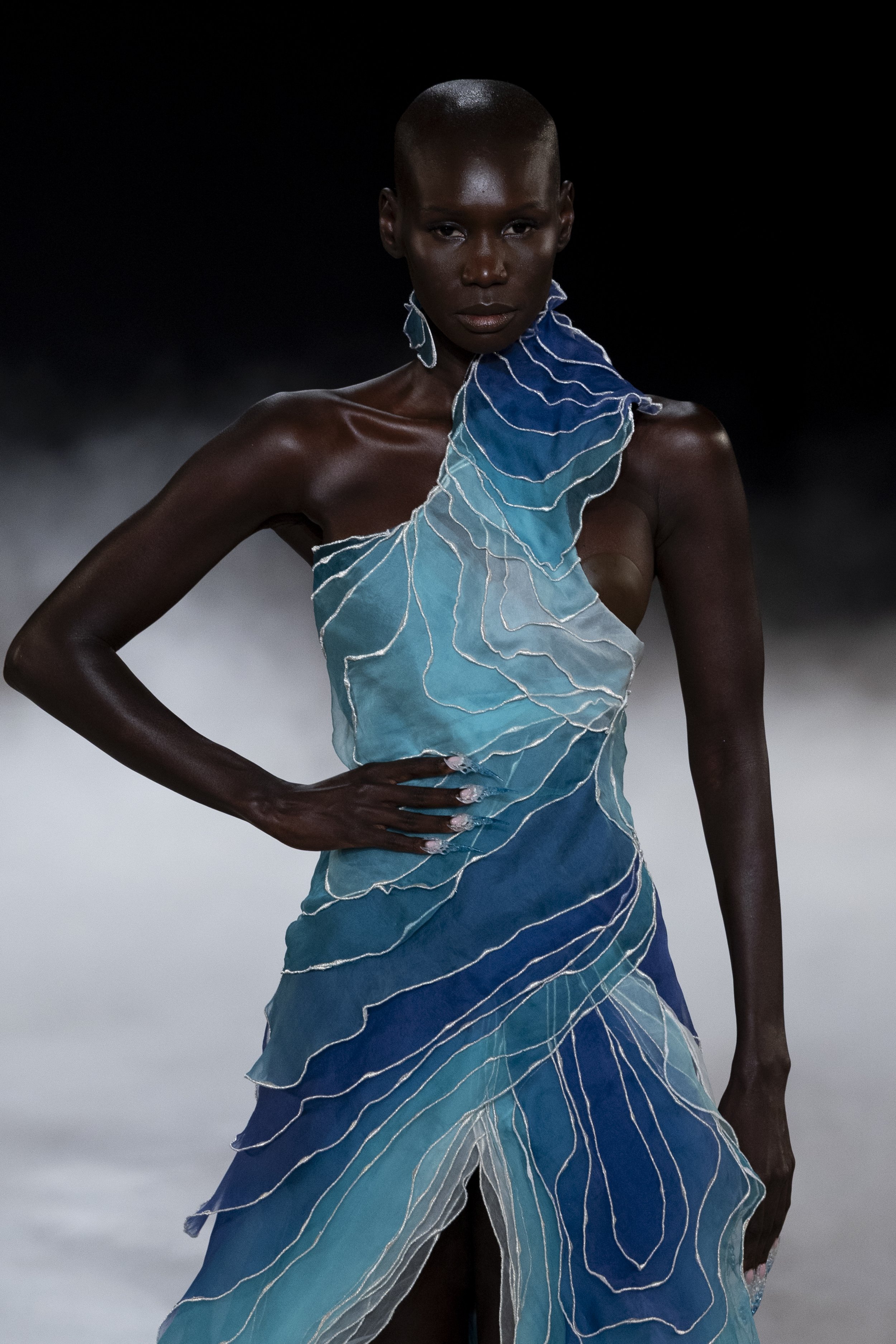
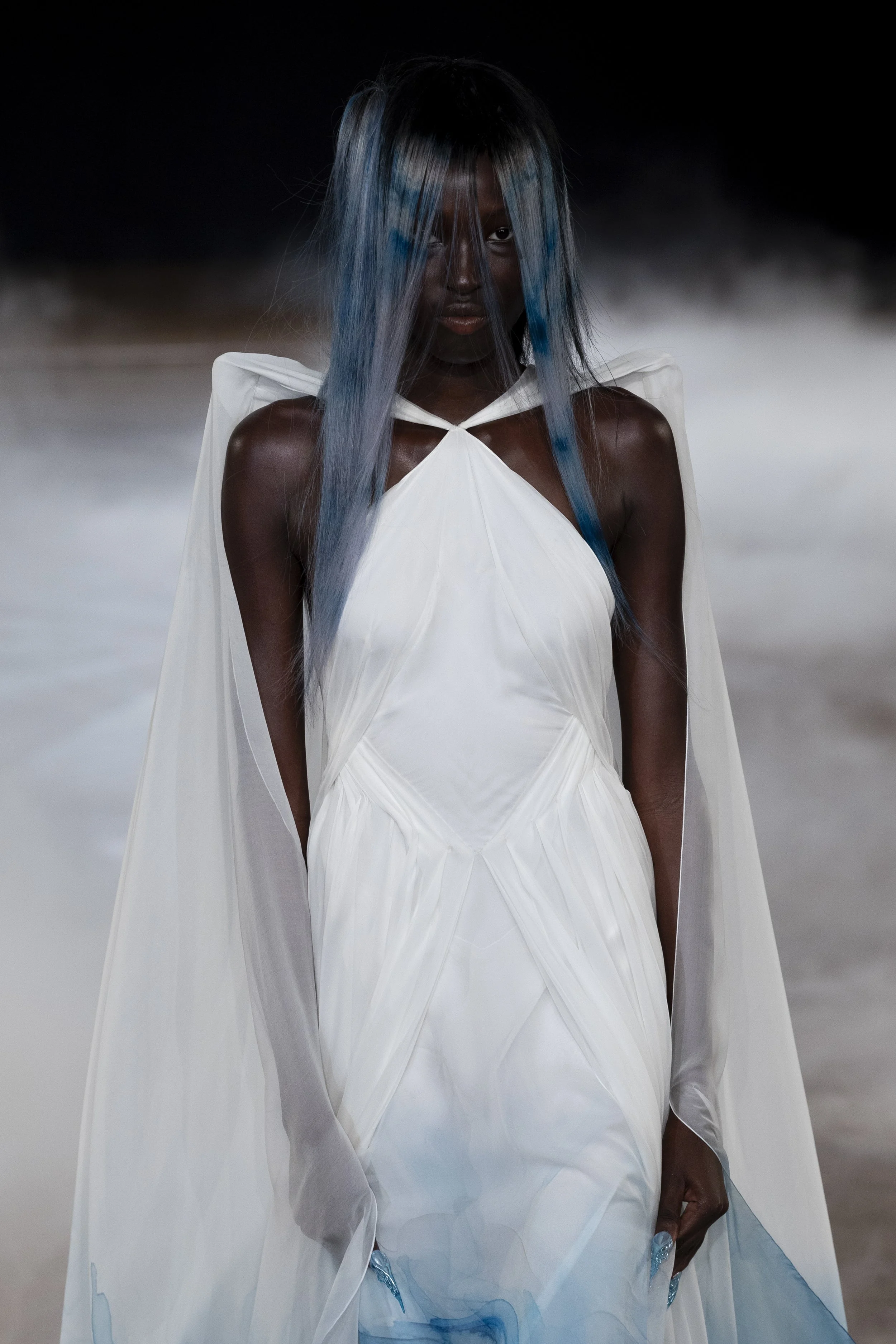
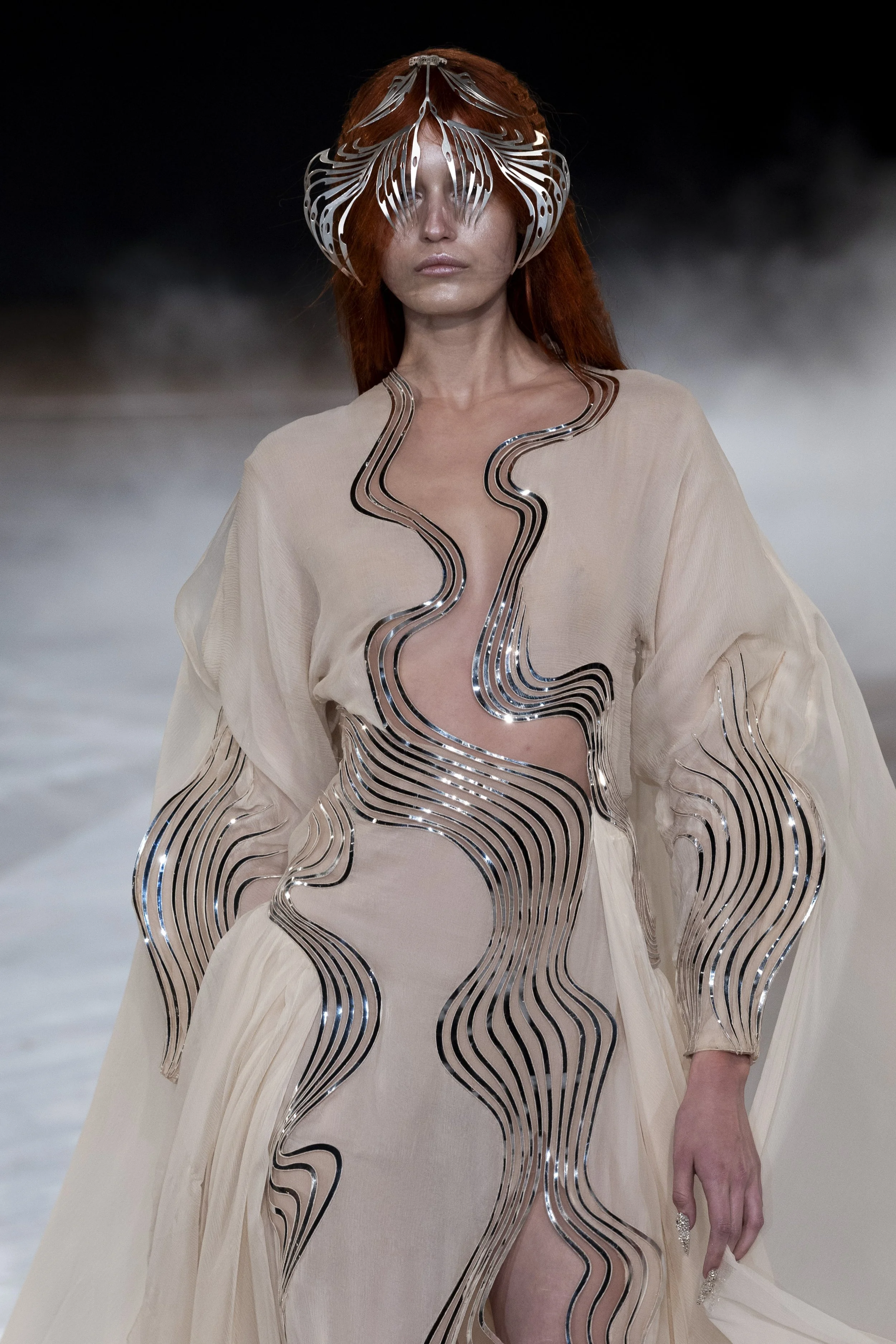
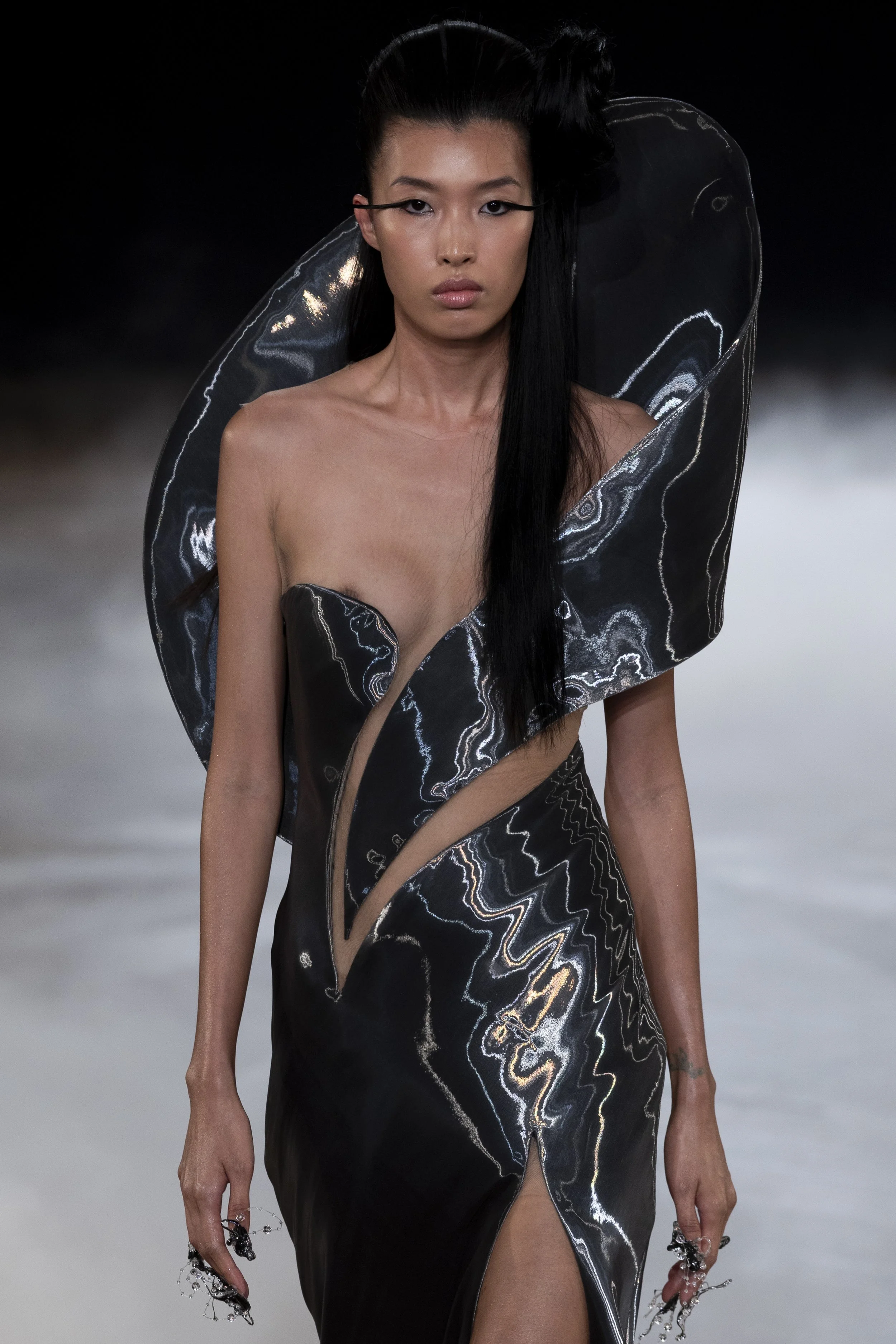
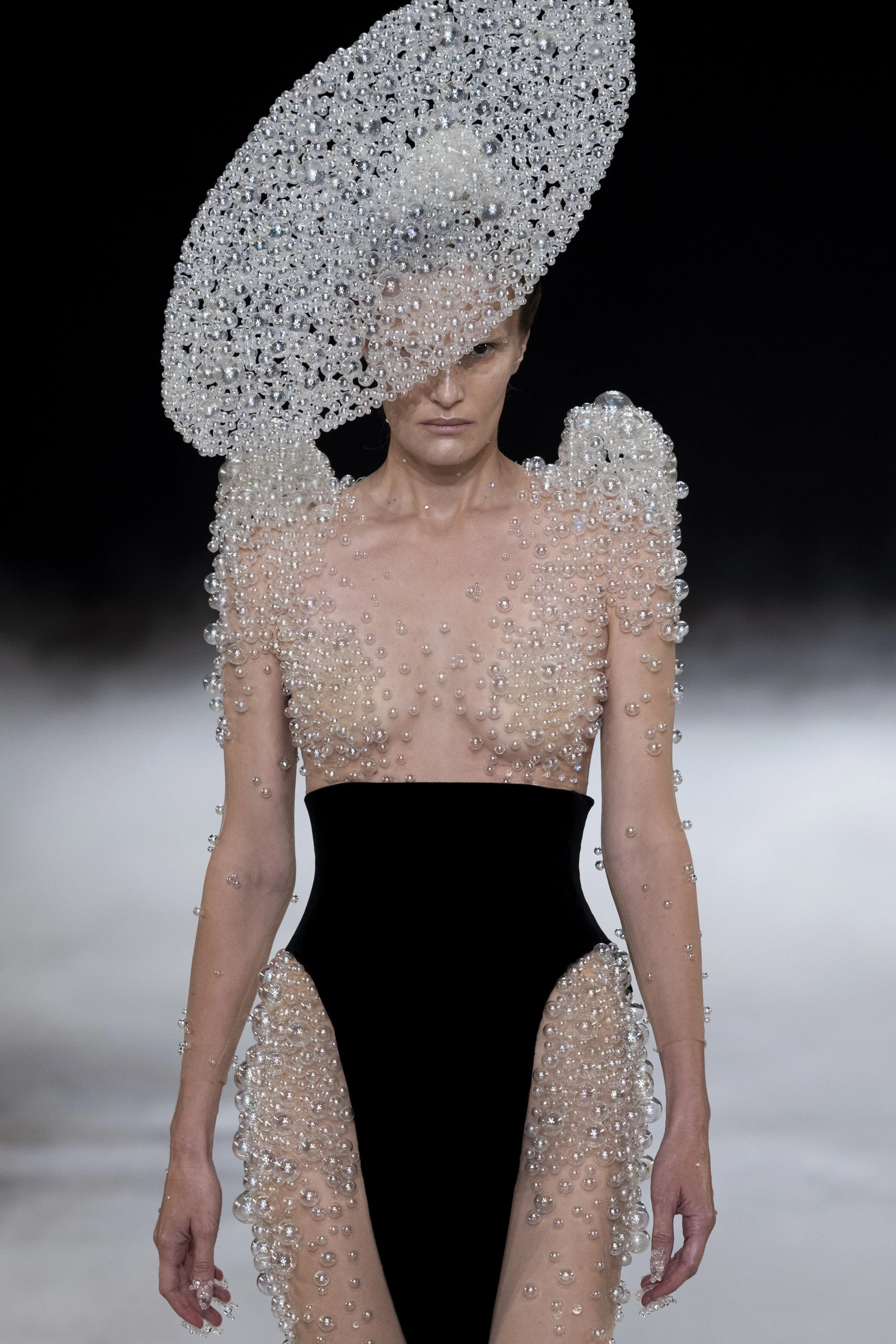
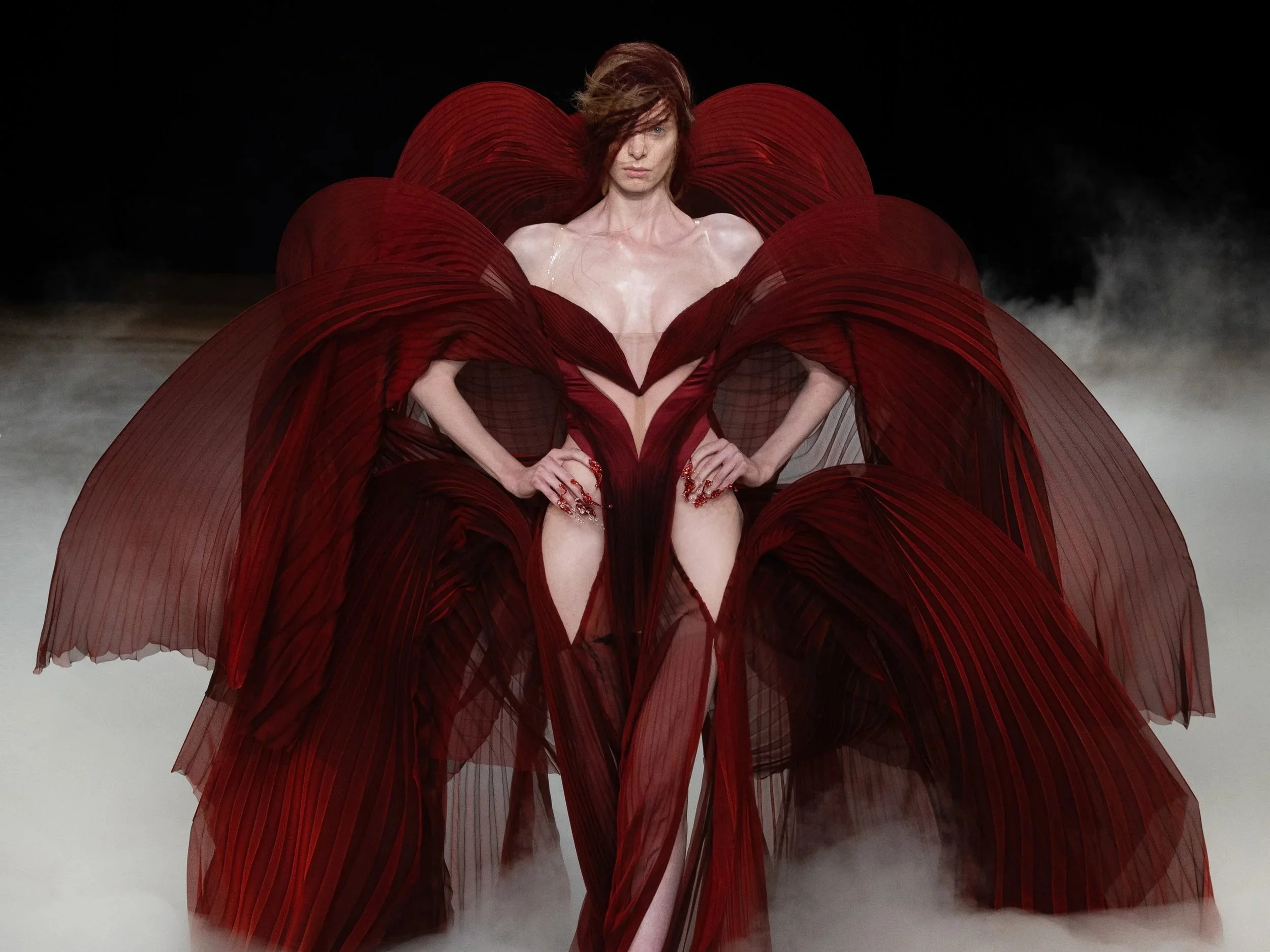
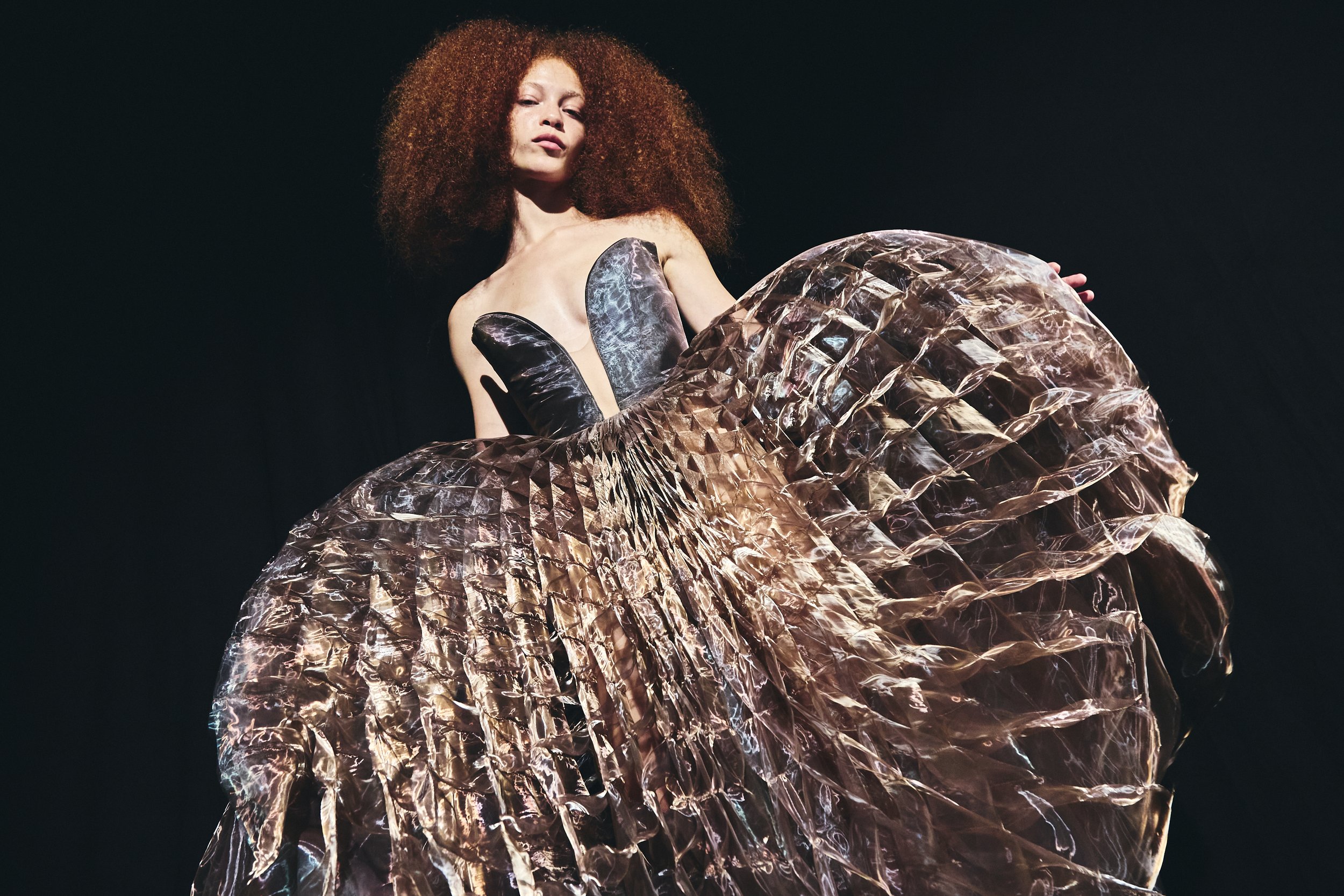
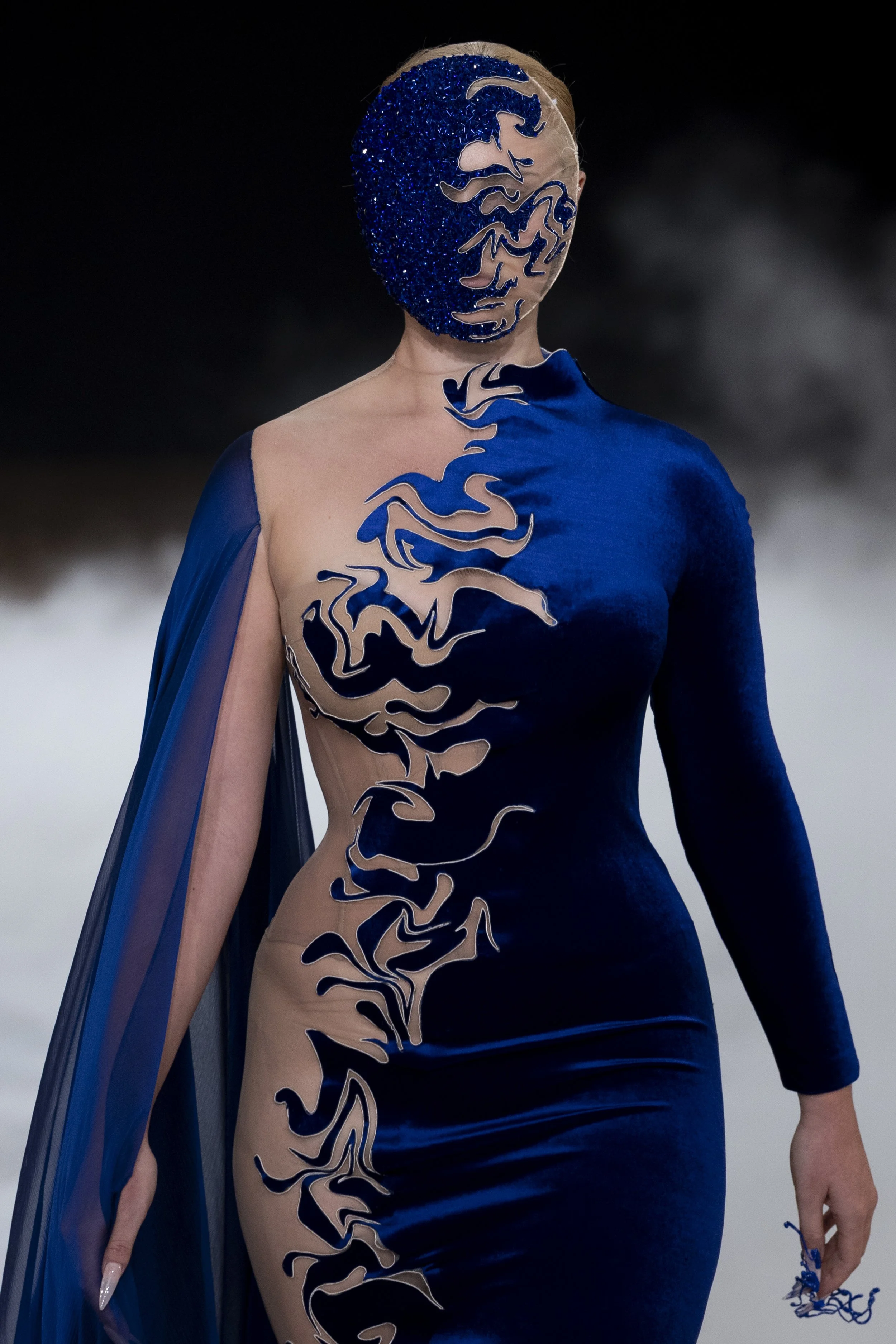
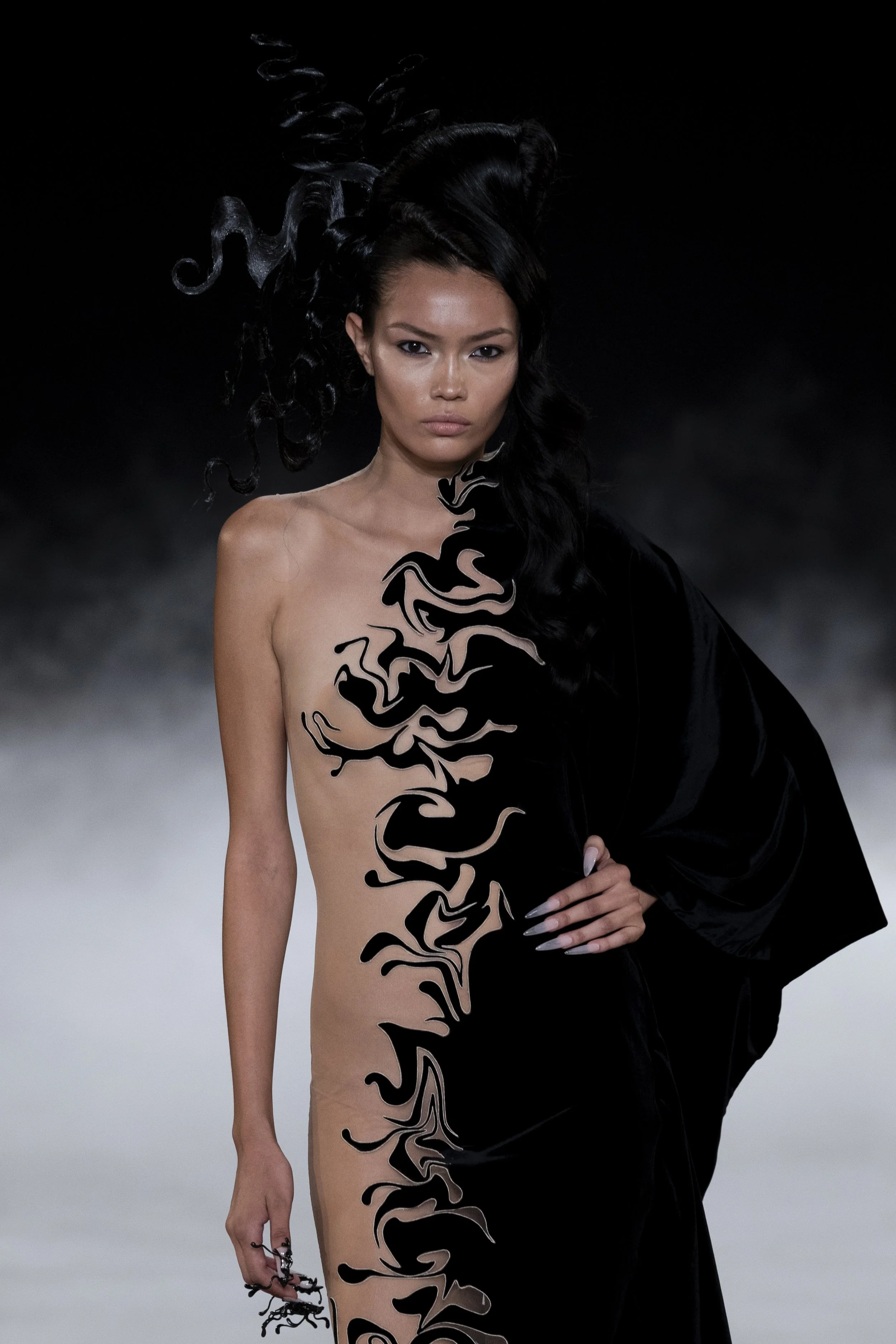
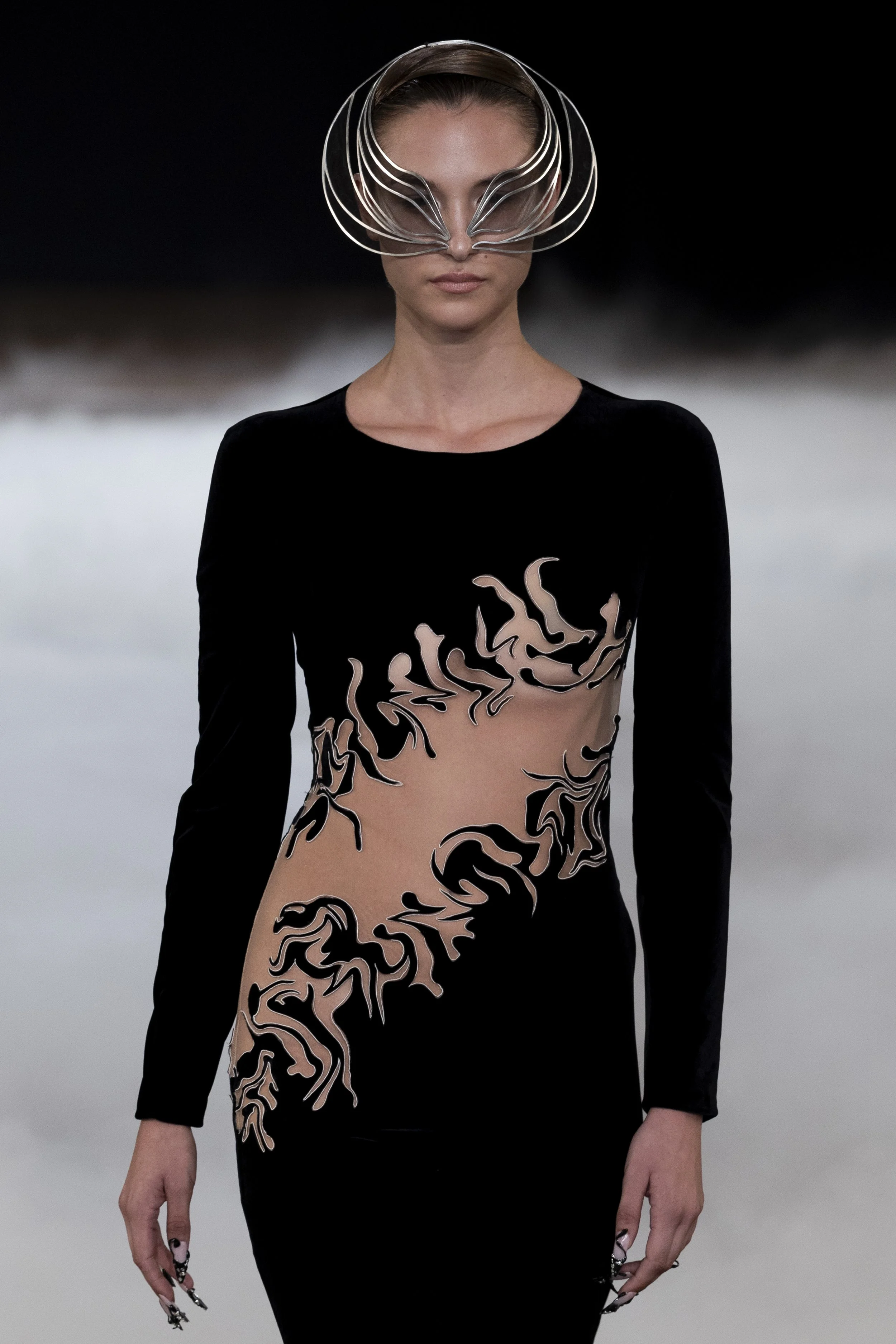
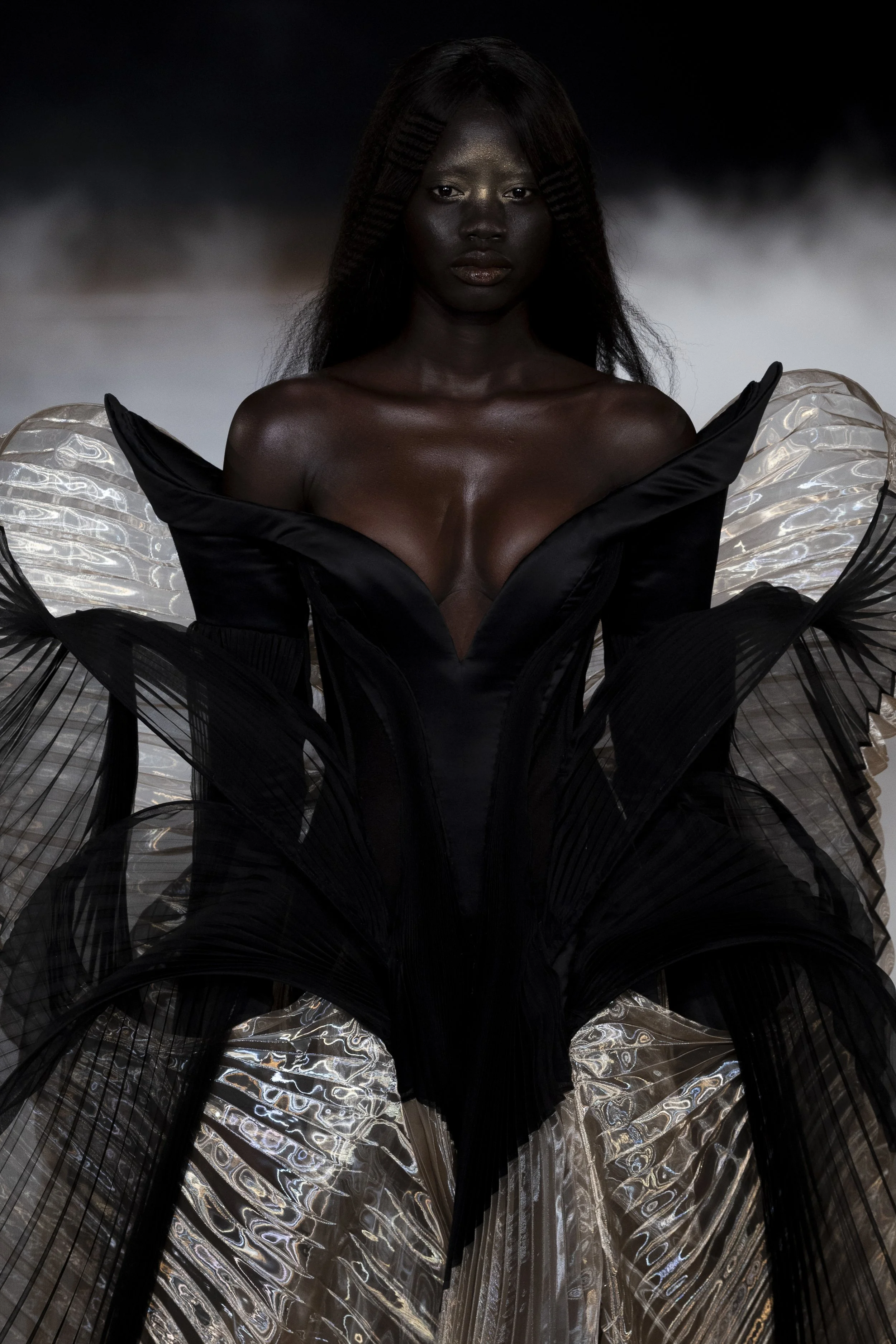
Beyond these two pieces, the collection’s most compelling developments appeared in its quieter technical details. Laser-cut velvet traced rippling motifs that continued onto the skin through hand embroidery, dissolving the boundary between fabric and body. Chiffon and organza were pleated into broad, weightless forms supported by curved carbon-fibre structures, allowing the fabric to hold its own architecture. More than thirty thousand hand-blown glass spheres appeared throughout the collection, creating a surface of texture and reflection. The palette moved through sapphire, cobalt, mineral green and deep nebula red, recalling astronomical imagery without becoming a literal translation.
The scientific references are inseparable from the clothes, but they do not replace the fundamentals of couture. Beneath the plasma, glass and experimental processes sits a precise understanding of construction: how materials carry weight, how volume changes movement, how the body completes a silhouette. Van Herpen’s achievement lies in making scientific research part of the garment’s structure rather than an external idea applied to it. Helix Nebula is not a couture dress with technology added afterwards; it is a couture dress conceived through the principles of technology itself.
DISCOVER IRIS VAN HERPEN