Tamara Ralph FW27 Introduces Sari-Inspired Movement into Her Couture Vocabulary
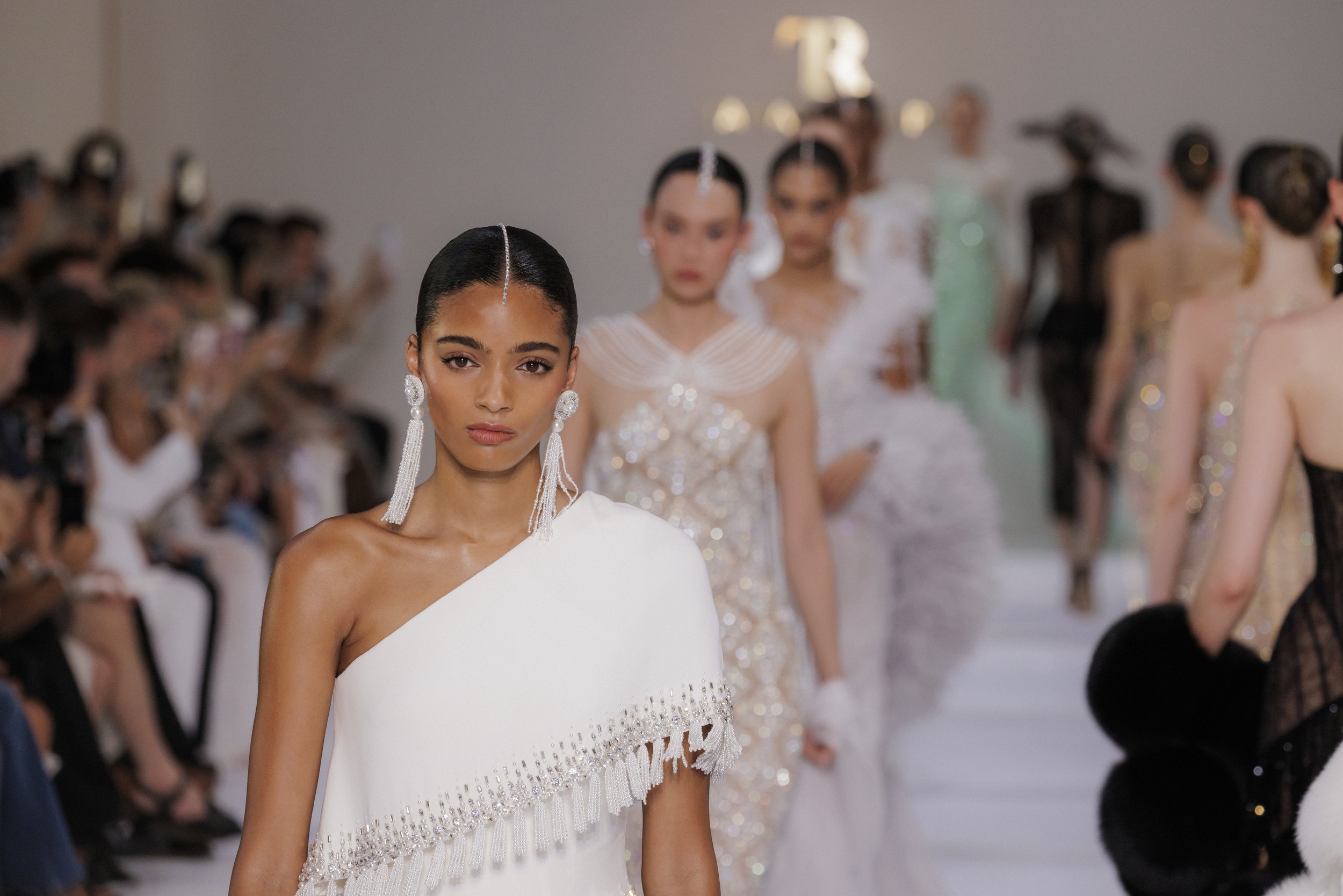
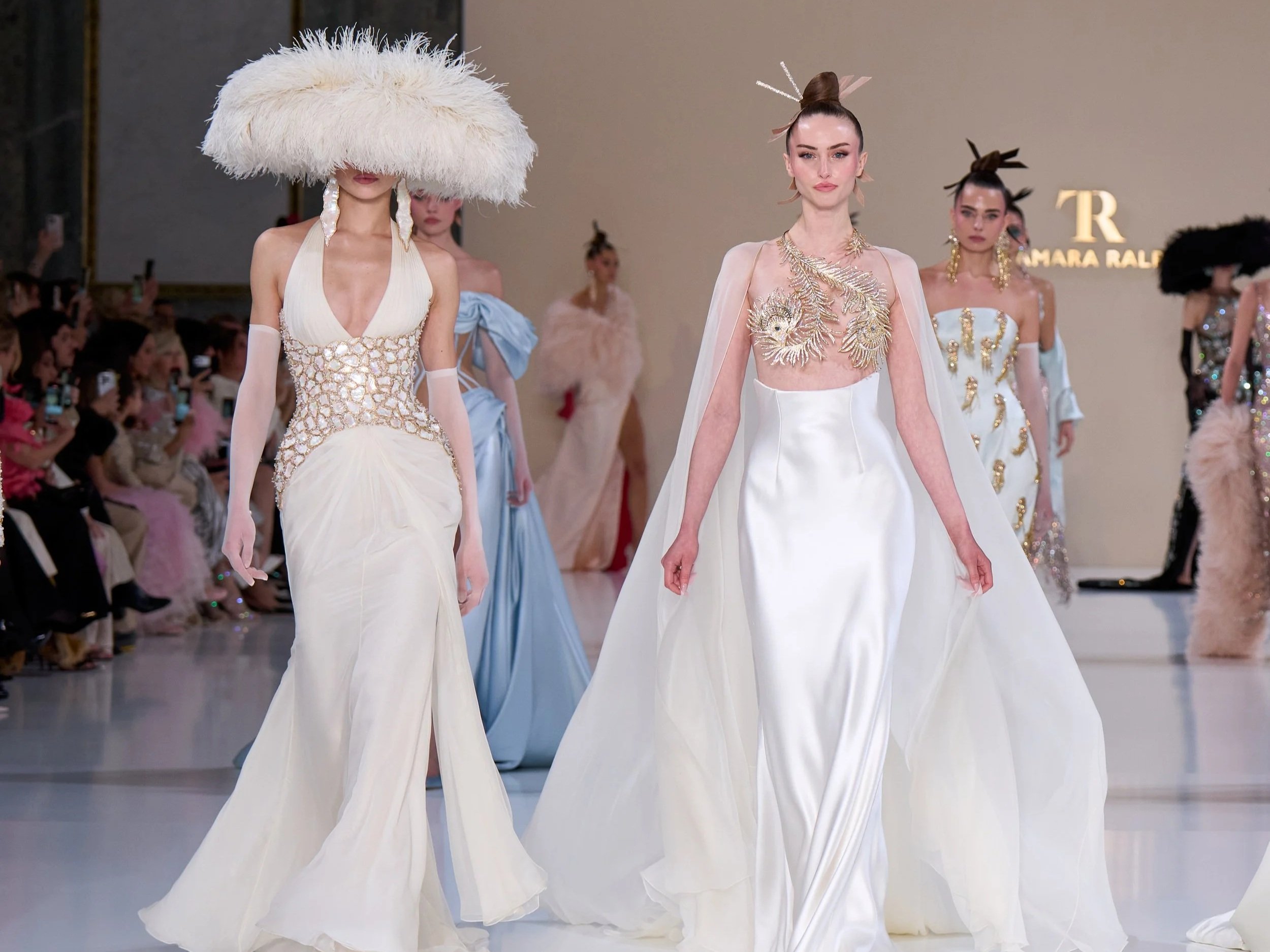
For Autumn-Winter 2026/27, Tamara Ralph worked within the vocabulary that has defined her couture practice — embroidery, corsetry and eveningwear — while introducing a new sense of movement through South Asian references. Elongated silhouettes, layered draping and asymmetric lines bring the fluidity of the sari into a house language built around structure and embellishment.
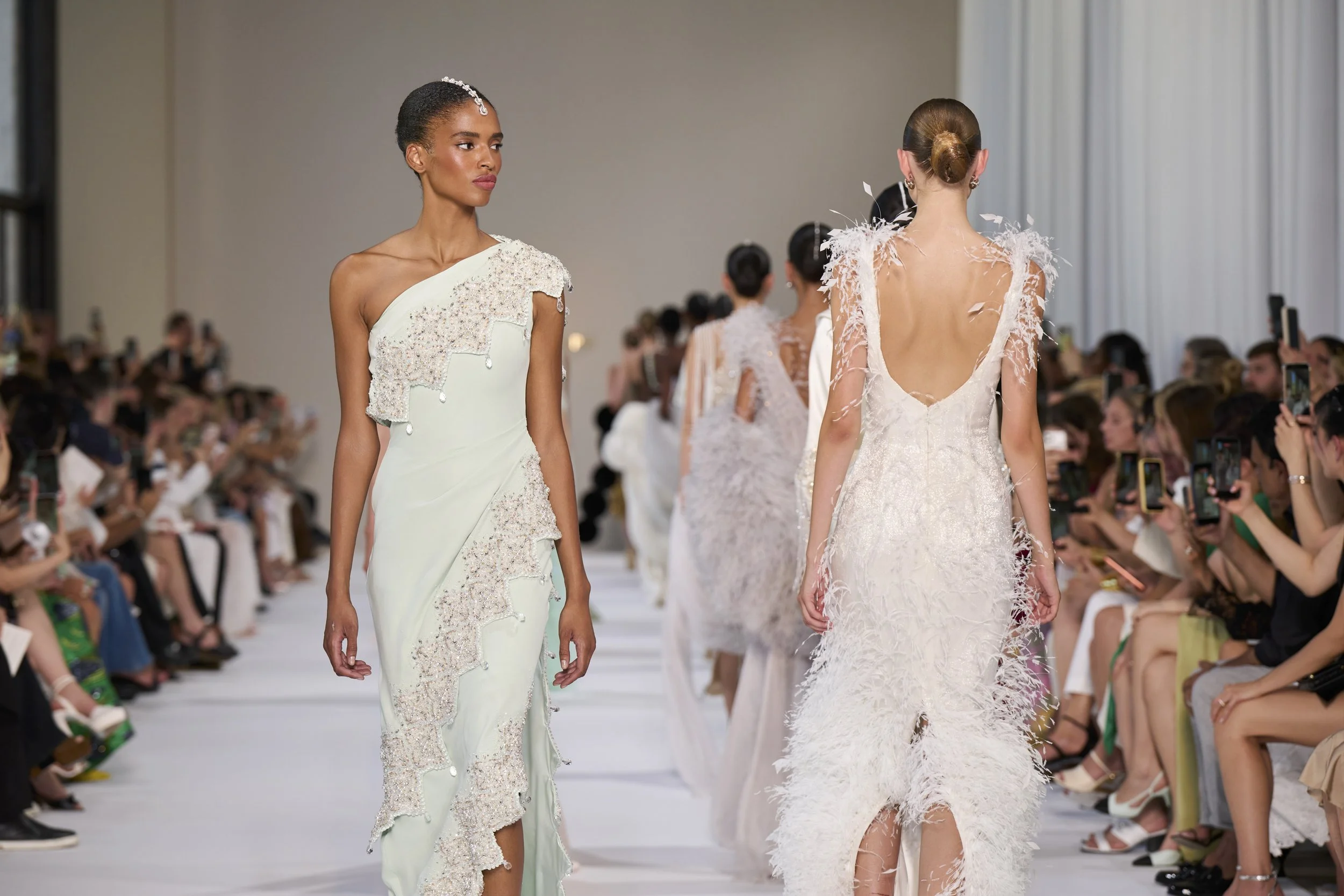
Ralph did not reproduce traditional dress directly. Instead, she isolated elements of sari construction — its diagonal drape, the weight of layered fabric and the way material moves around the body — and translated them through couture techniques. Several gowns introduce elongated panels and asymmetric cuts, softening the precision of her established silhouettes while maintaining their focus on the waist and the body’s outline.
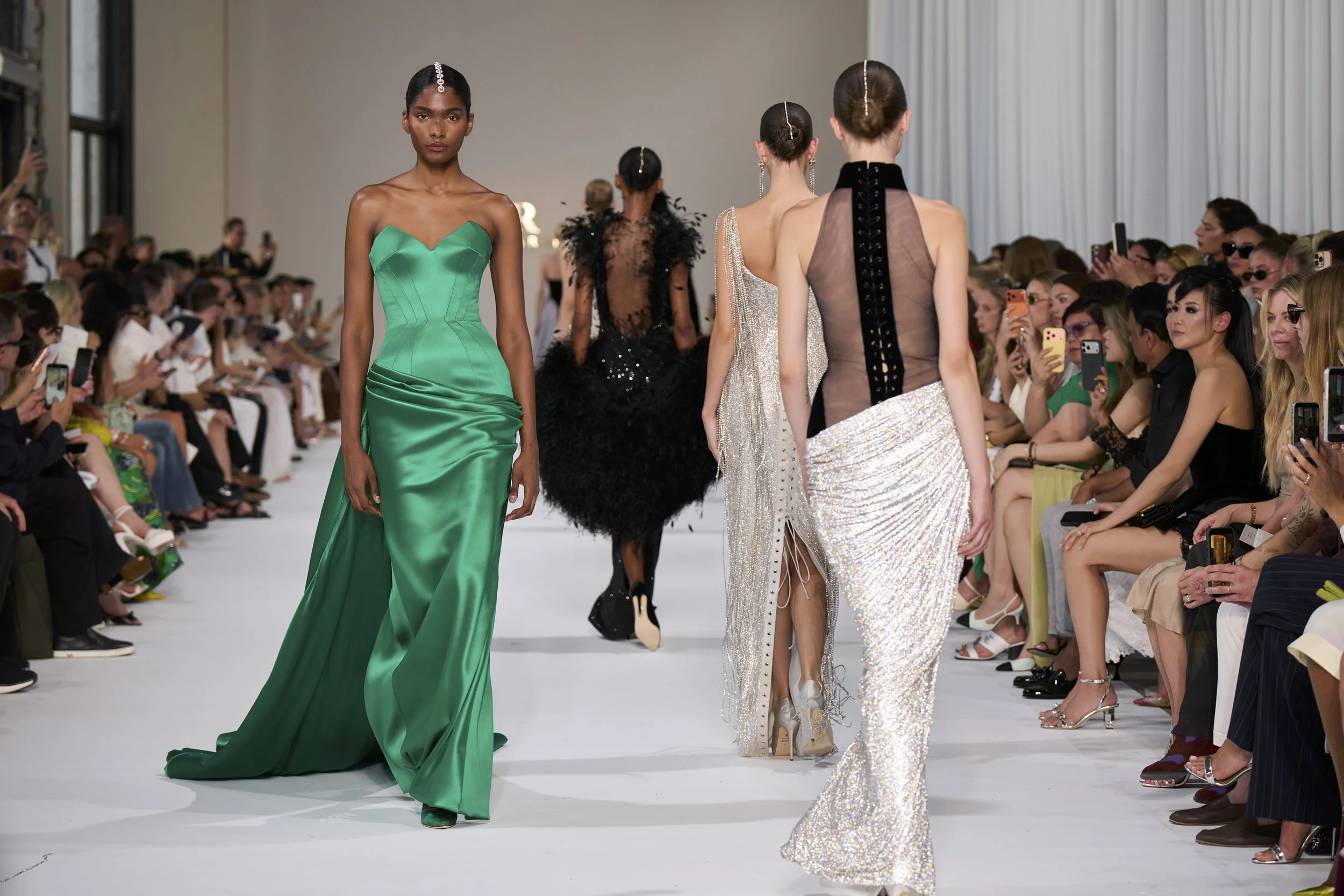
The silhouette remains structured. Floor-length columns, narrow lines and sculpted waists keep the body defined, while softer fabrics introduce movement around that framework. A fitted bodice allows silk to fall away from the body; sheer panels reveal the layers beneath, making the construction part of the design rather than something concealed.
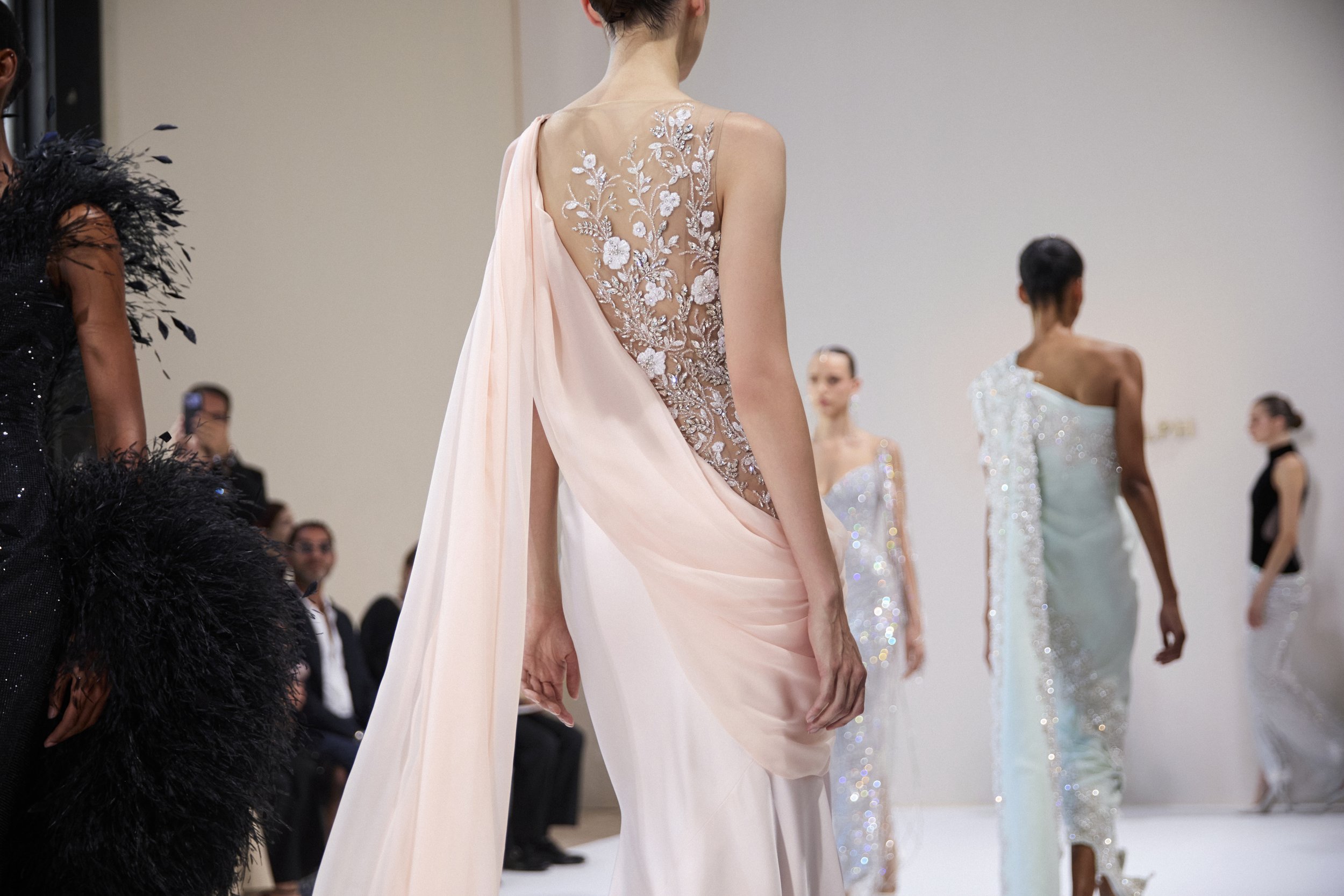
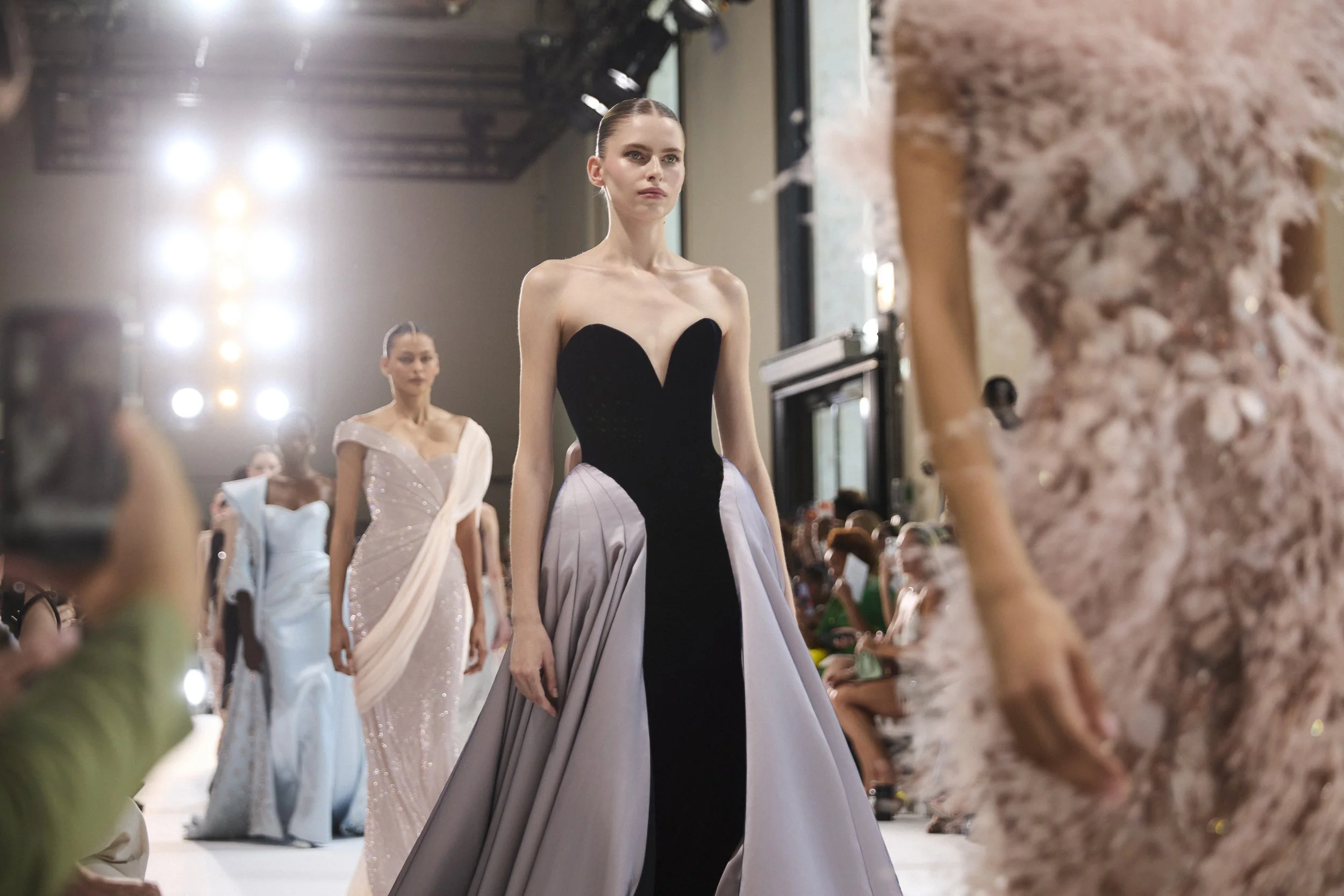
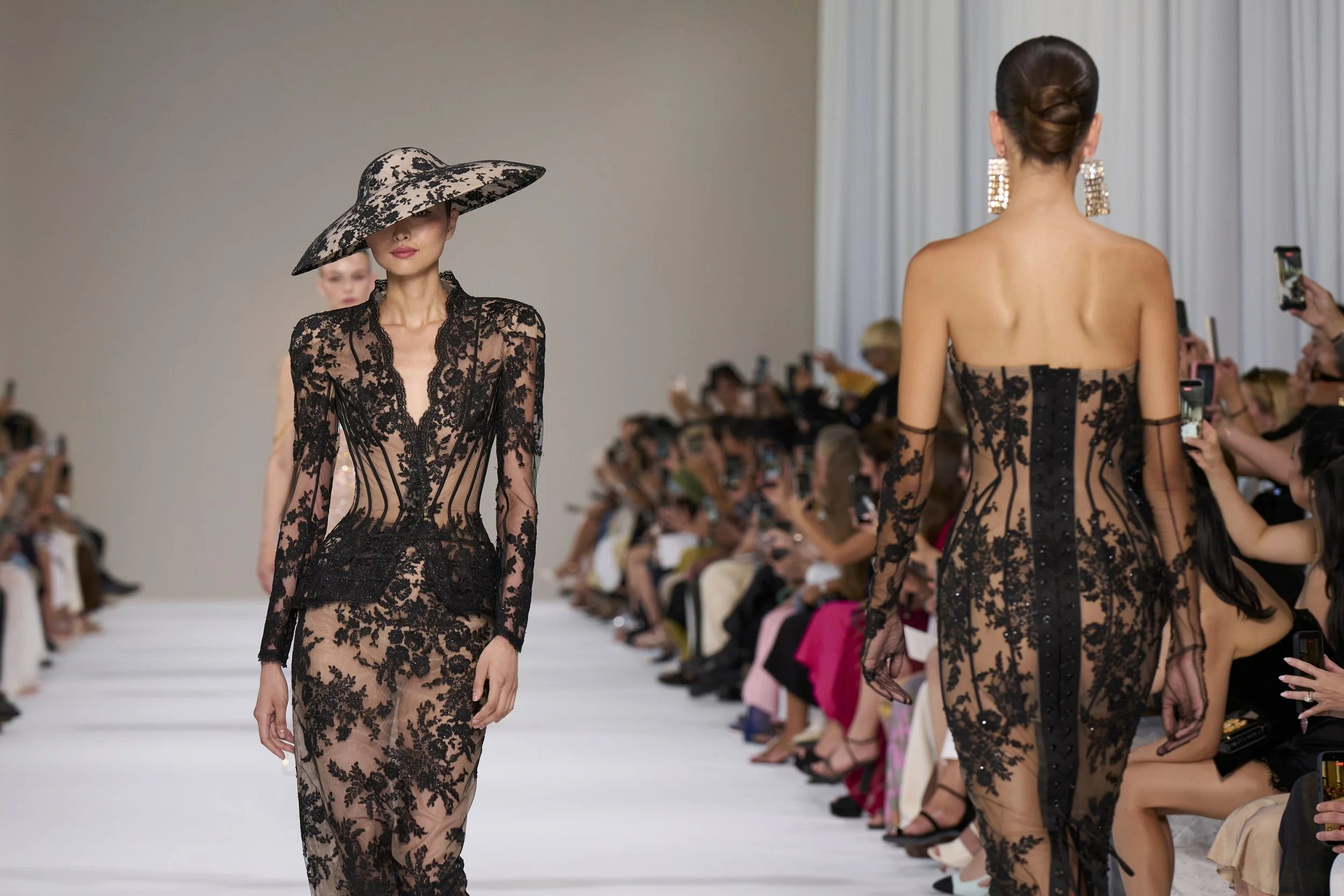
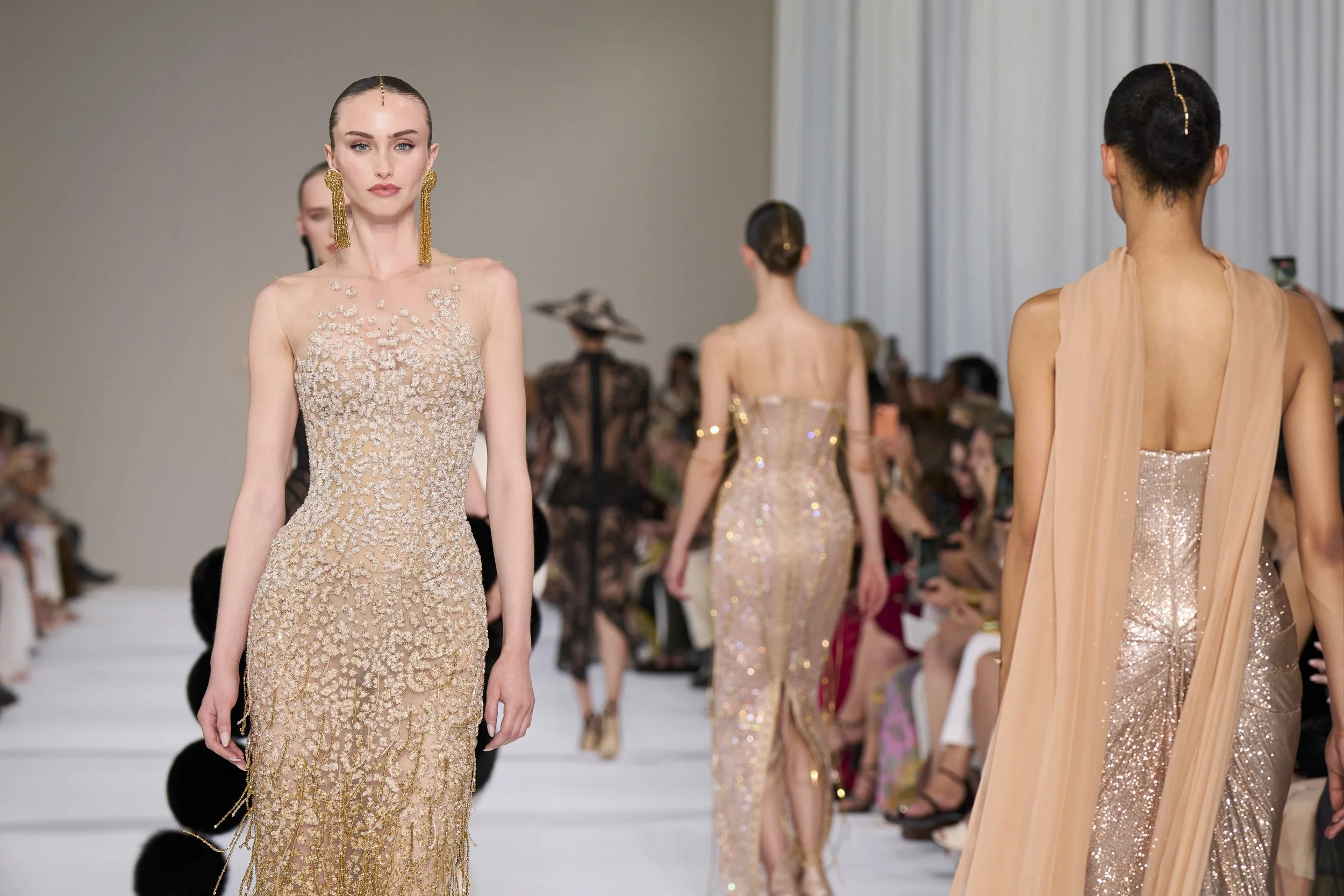
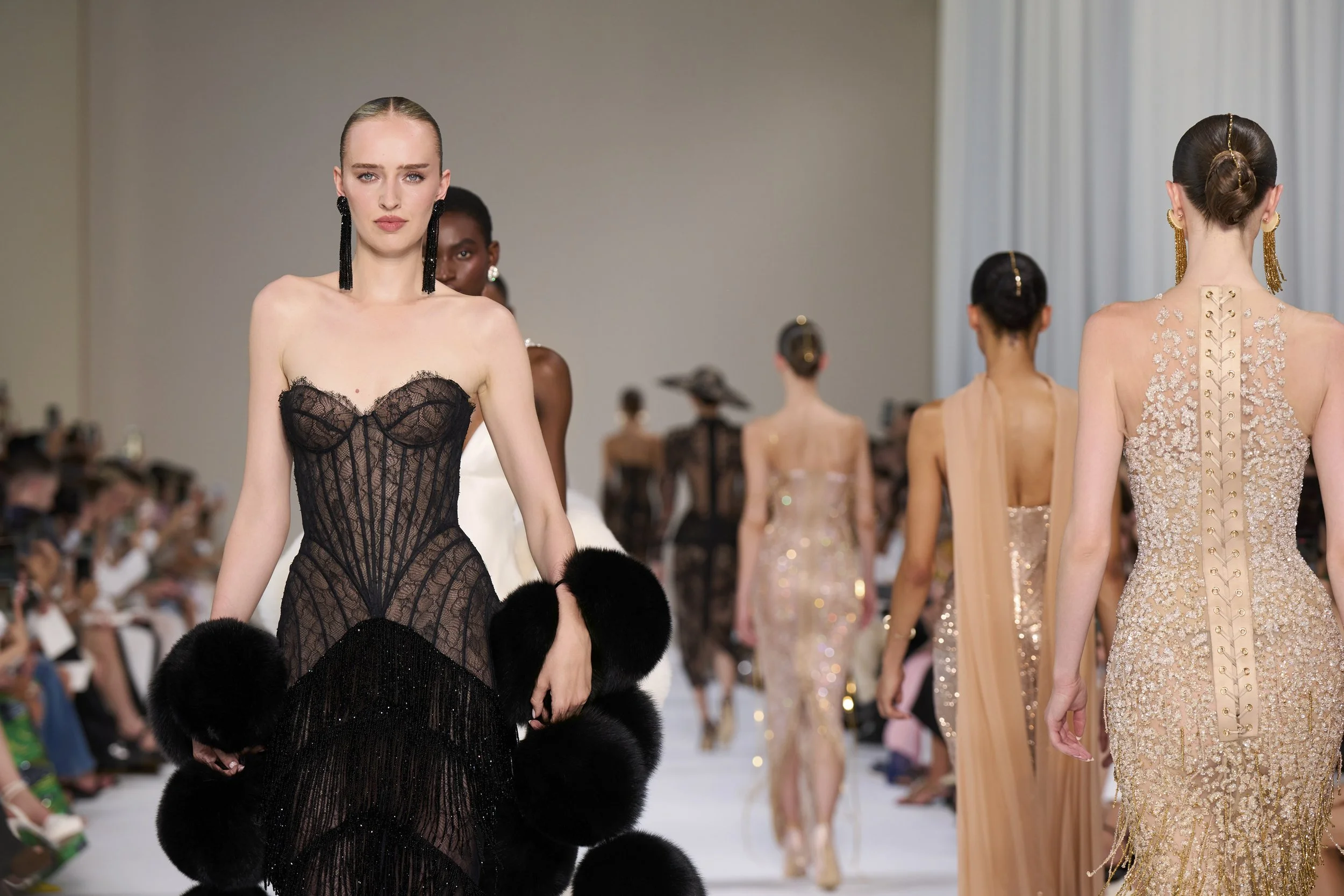
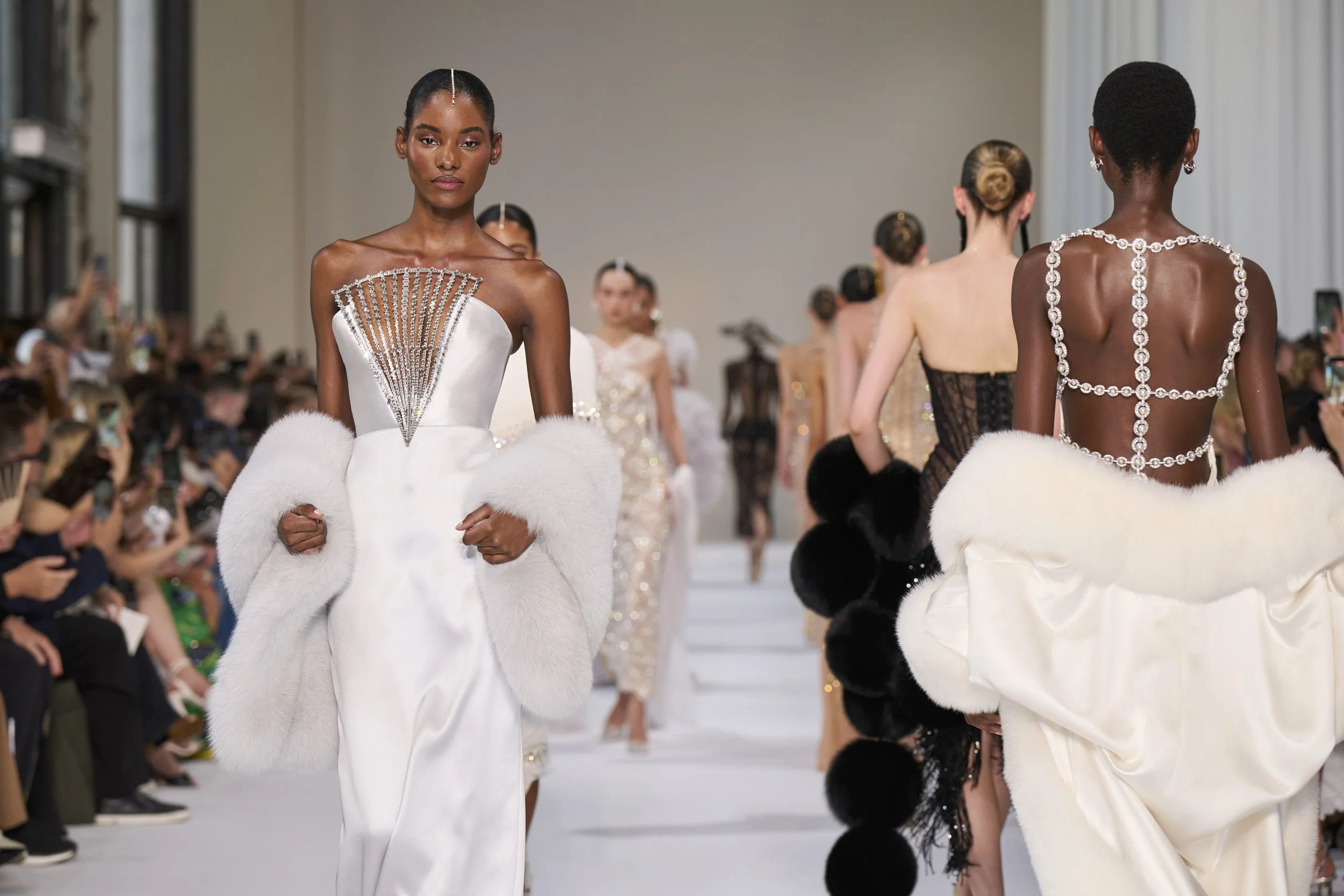
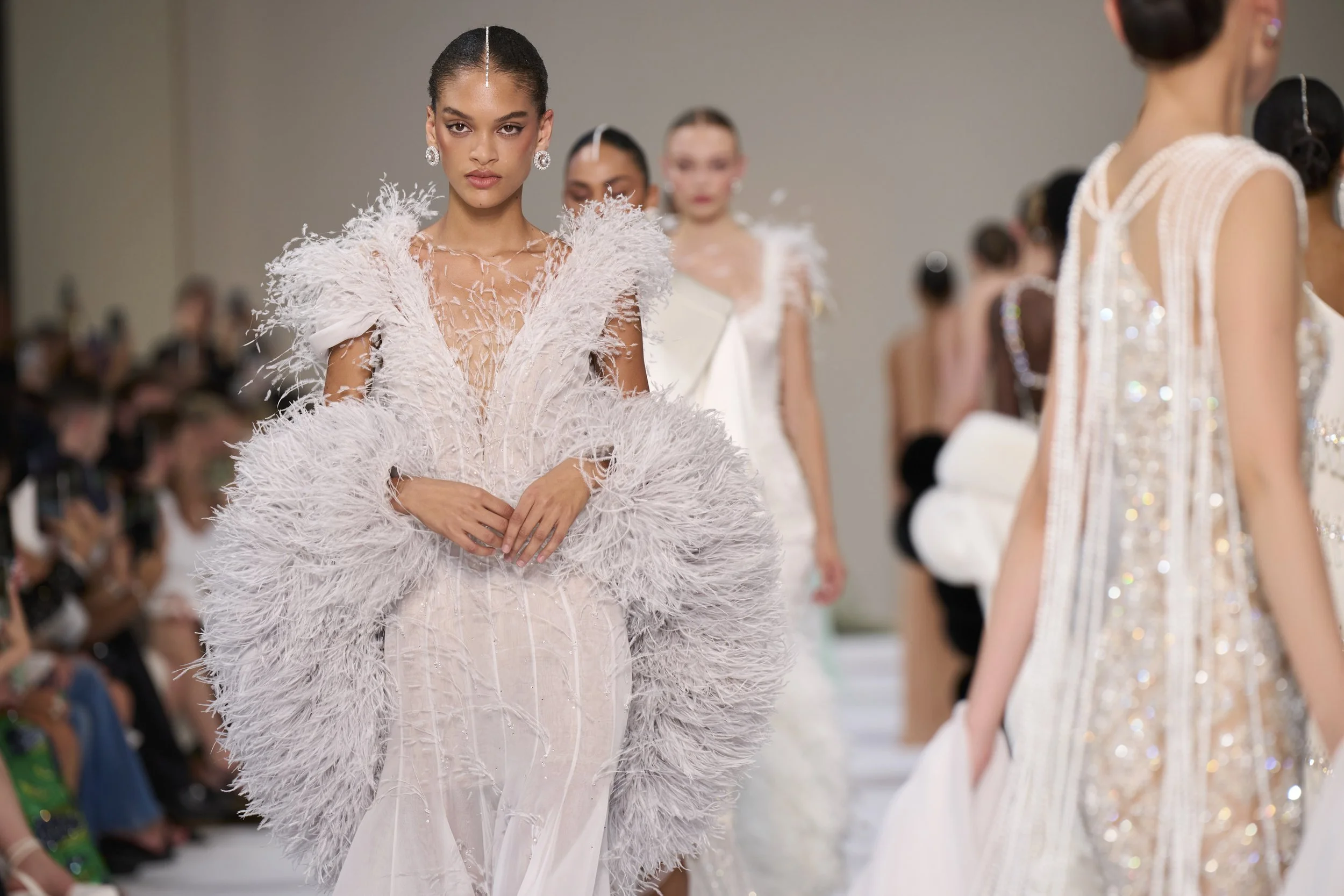
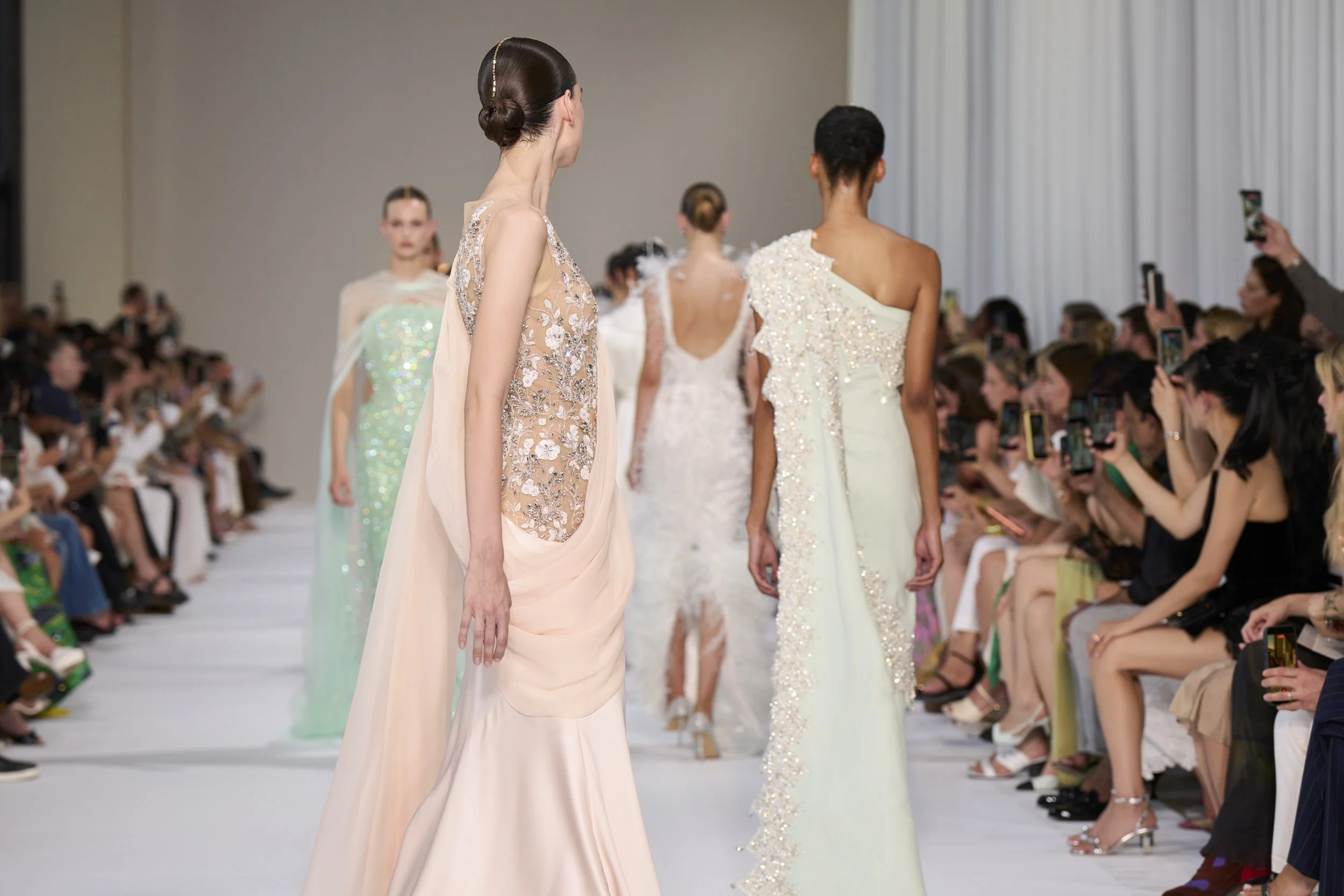
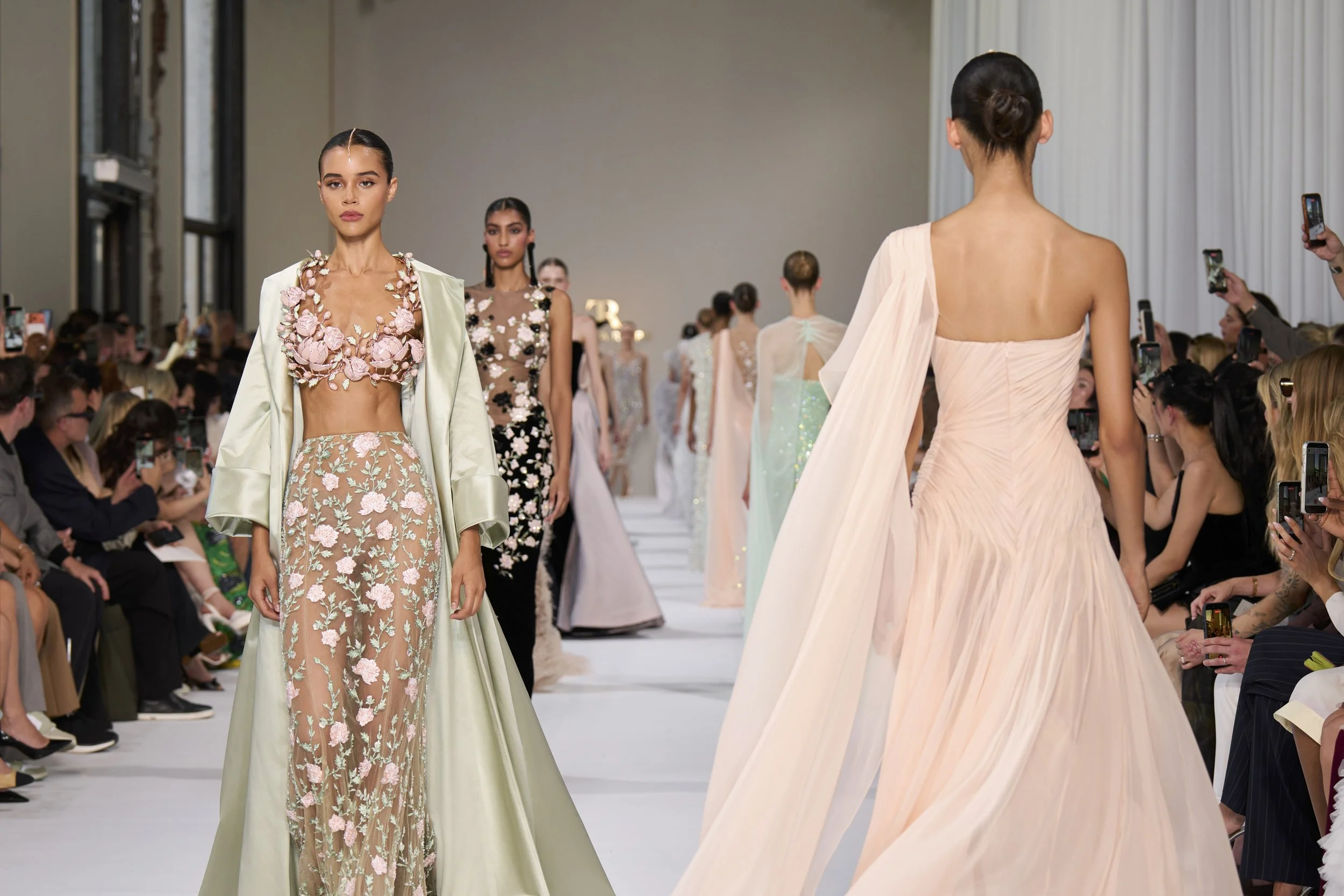
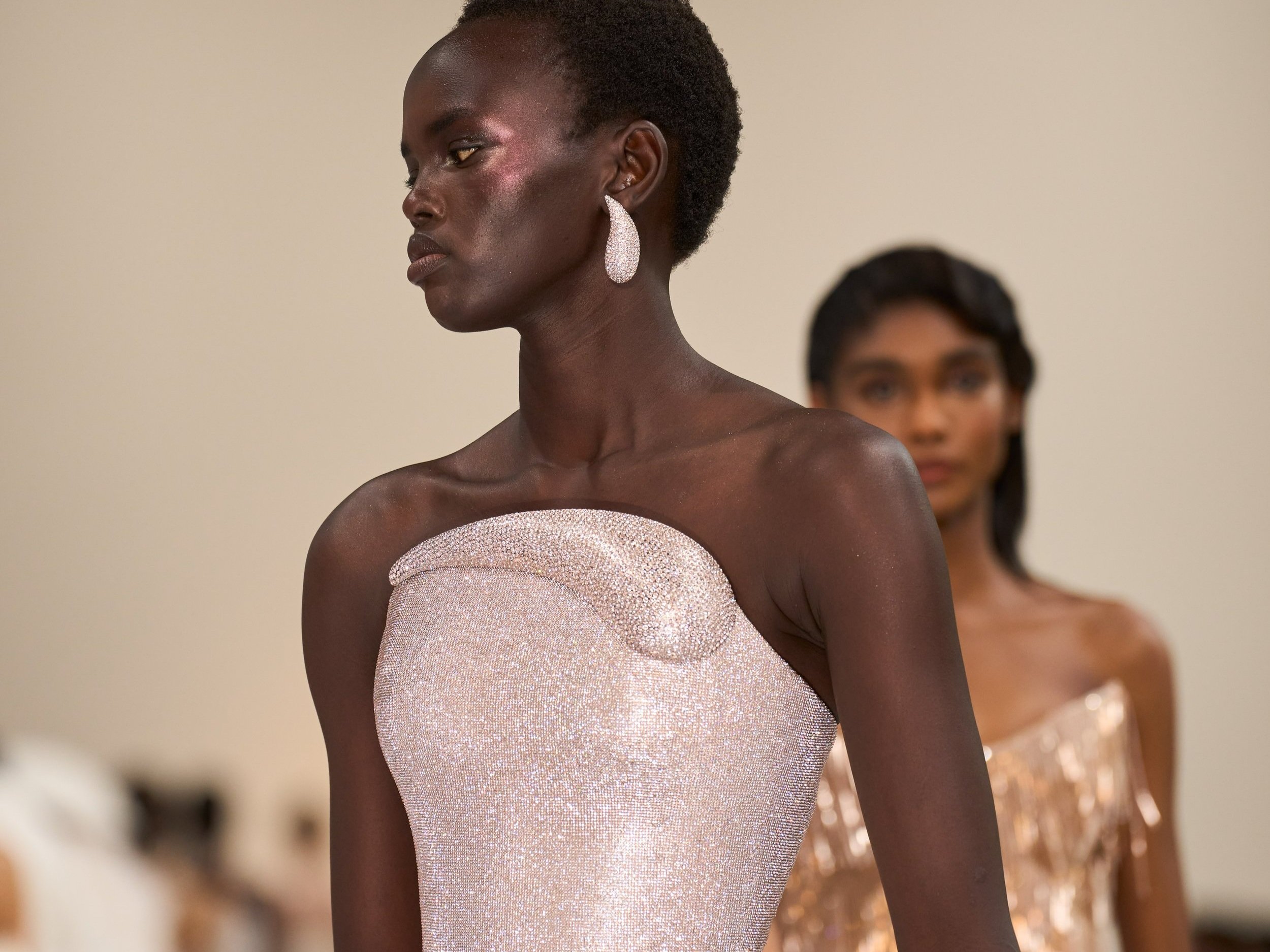
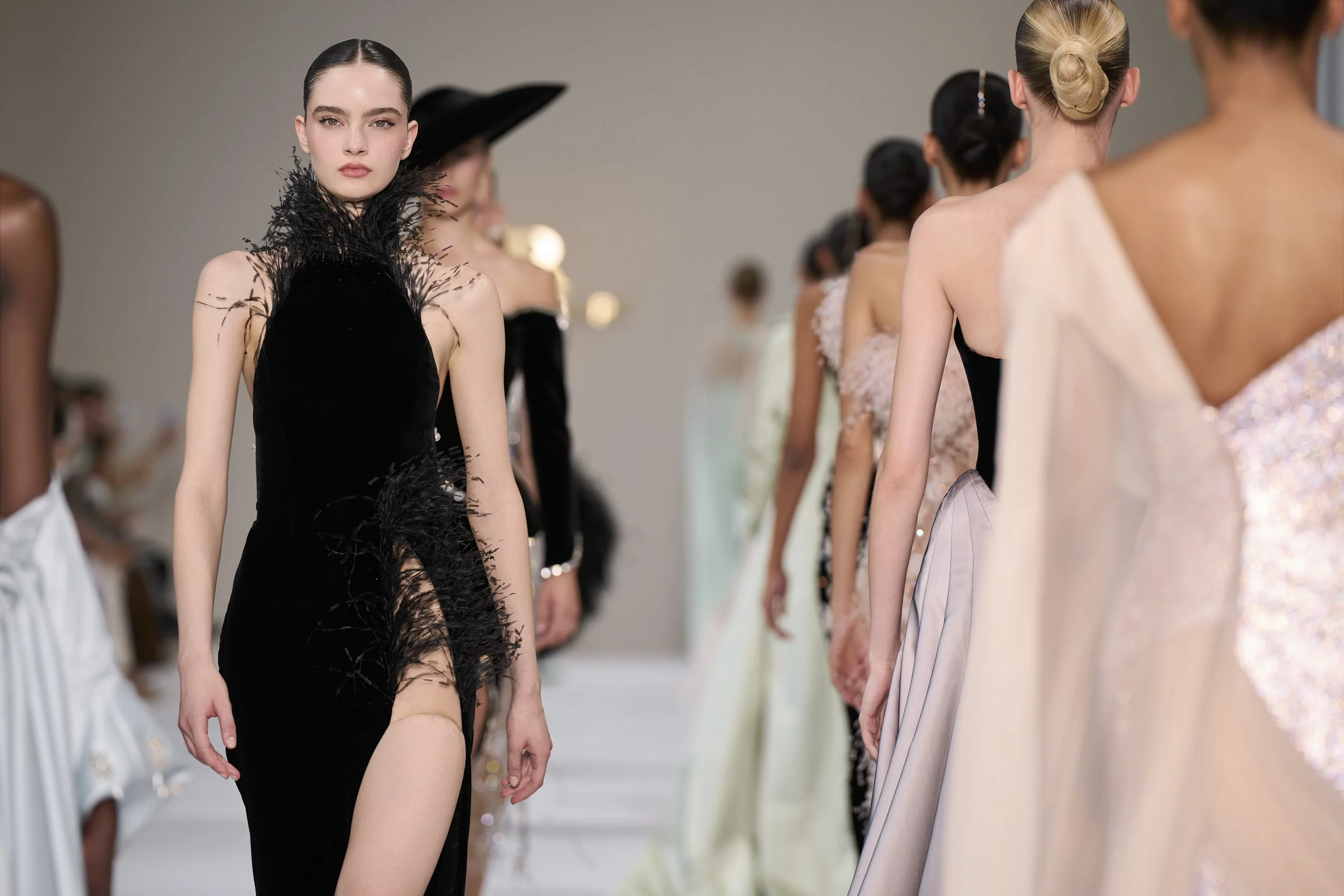
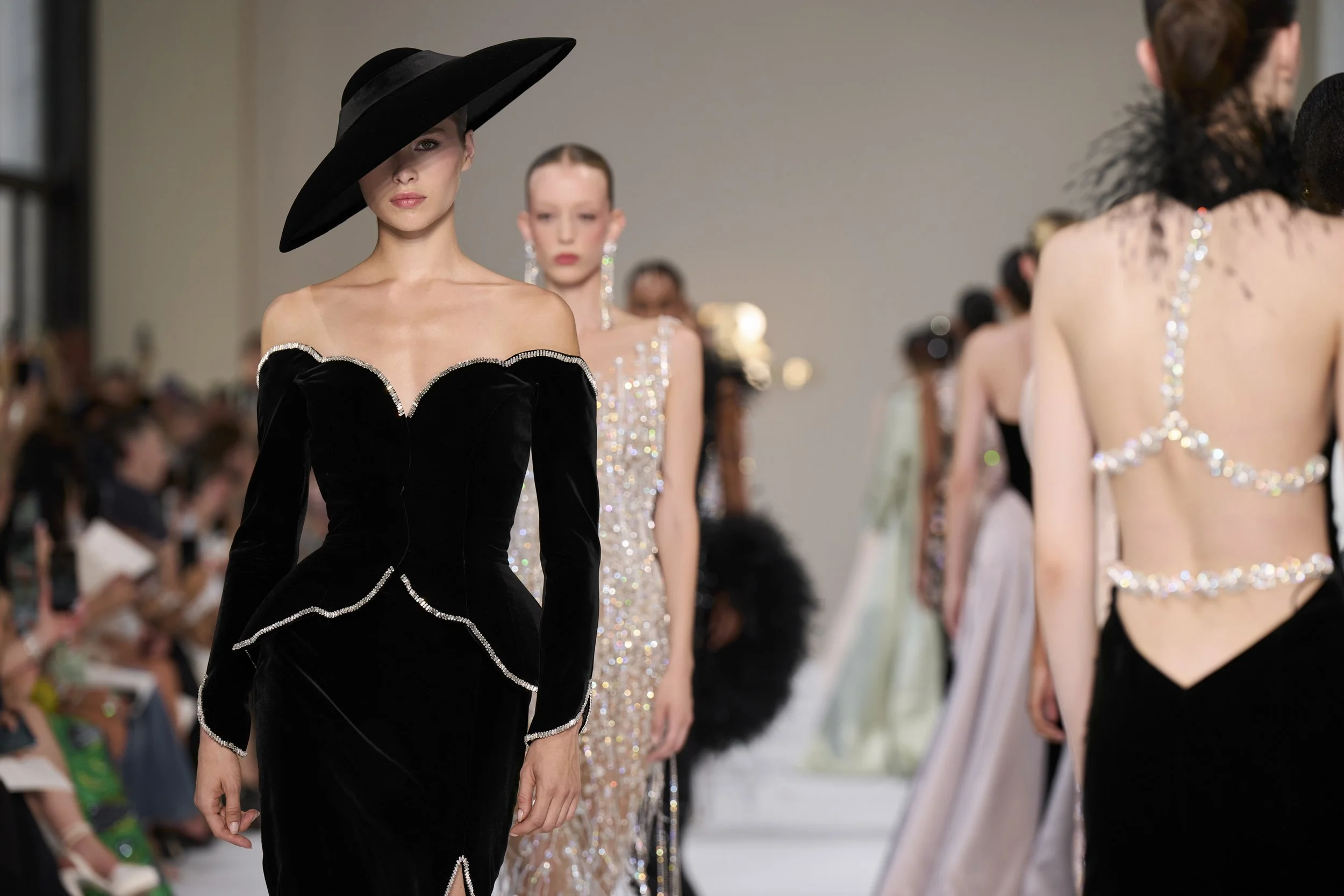
The palette moves between sunrise bronze, champagne gold, moonlit ivory and midnight noir. Metallic embroidery follows the body’s line, while crystal mesh, liquid silk and sculpted lace create shifts between transparency and opacity. Light becomes part of the surface of the garments, caught in embroidery and reflected through crystal detailing.
Material contrasts shape the collection’s construction. Velvet is set against tulle, crystal mesh is layered over nude illusion, and floral lace is paired with metallic threadwork. Diamond baguette embellishments trace the silhouette with the delicacy of fine jewellery, integrated into the line of the garment rather than placed as a separate decorative element.
Embroidery and lace remain central to Ralph’s couture practice, with hand-worked surfaces adding depth while following the structure beneath. The most successful pieces are those where decoration and construction become inseparable: the embellishment does not obscure the form, but reinforces it.
The influence of 1930s eveningwear appears most clearly in the floor-length columns and fluid draping of the gowns. Ralph draws on the movement associated with bias-cut dressing and places it alongside sharply defined corsetry and sculpted proportions, giving the silhouettes a more architectural quality.
The collection’s strongest moments come when the new fluidity meets Ralph’s established precision. Draped fabric, crystal work and corsetry rely on the same discipline of construction, allowing the garments to appear effortless while revealing the technical work beneath.
DISCOVER MORE ABOUT TAMARA RALPH