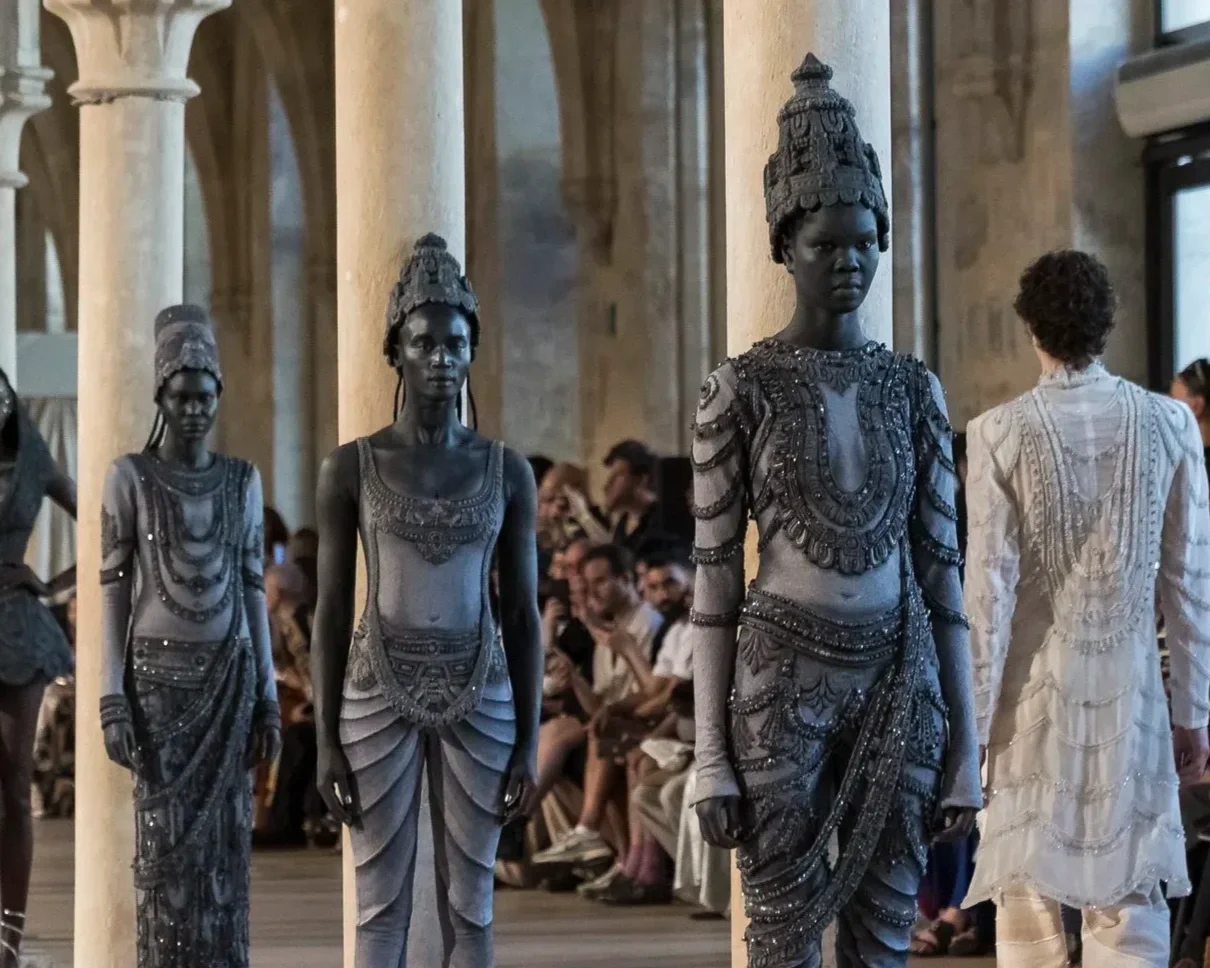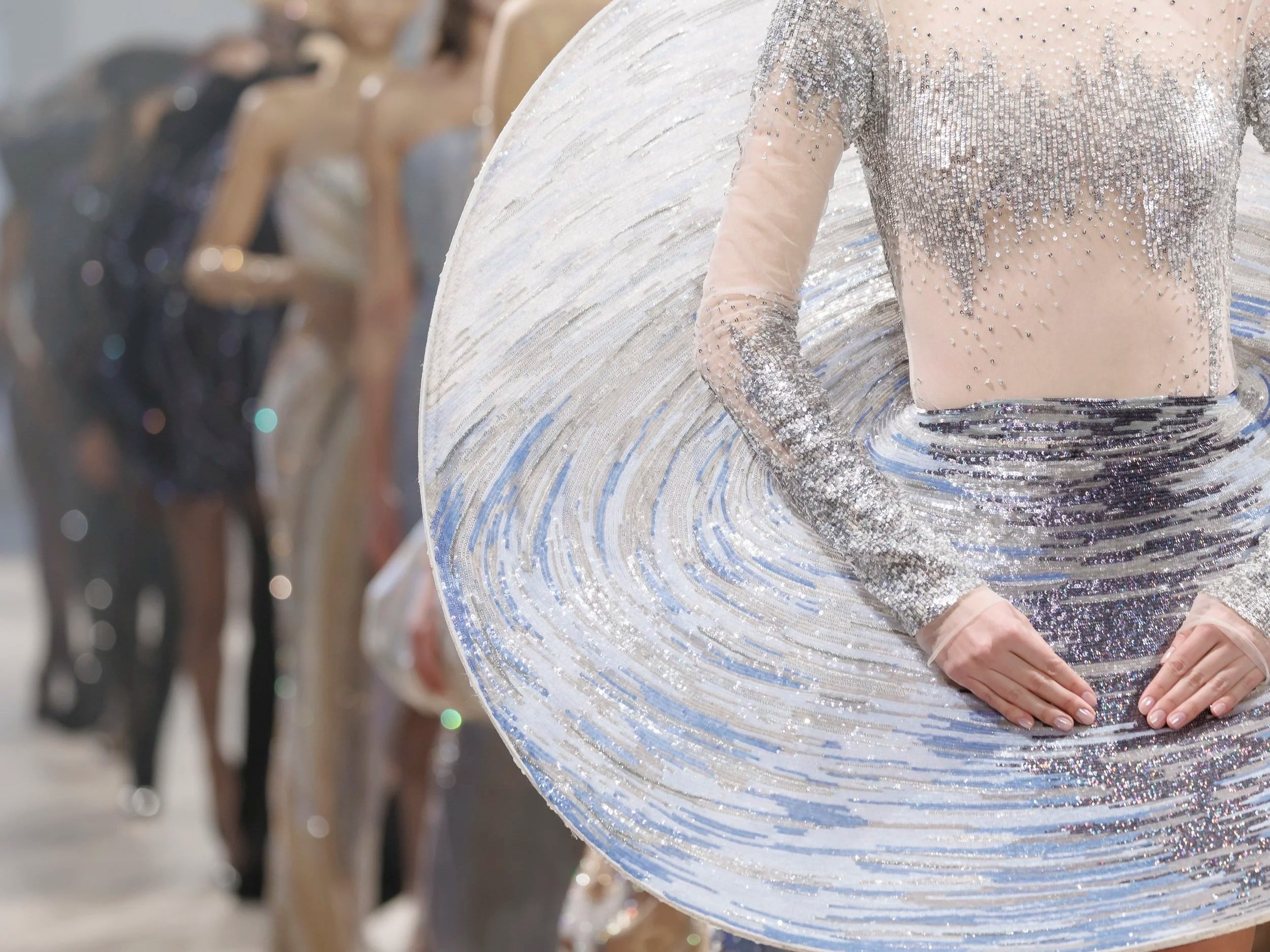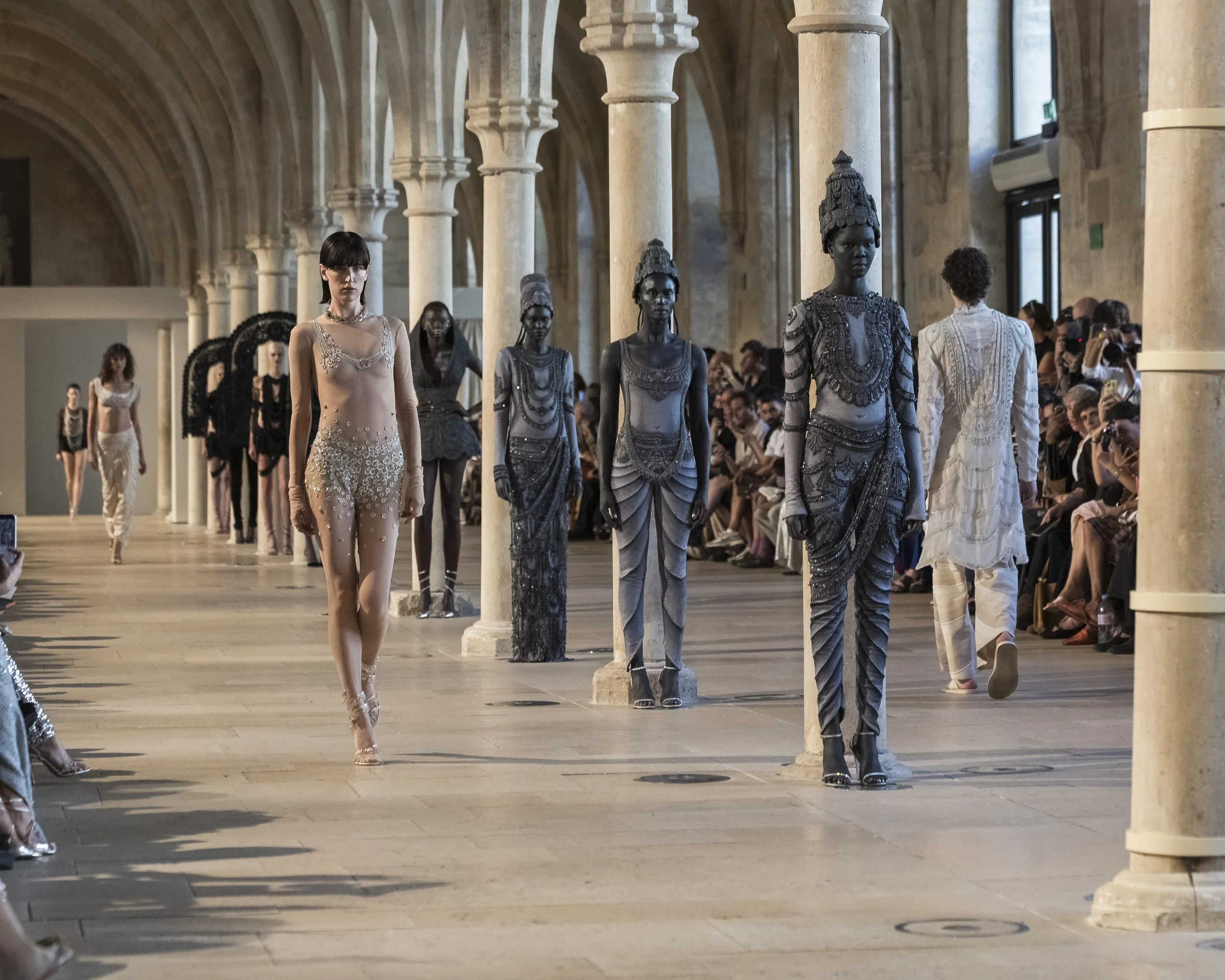
Stone has always represented permanence. It holds the marks of time, resists movement and records the hand of the maker through carving. Yet on Rahul Mishra’s Fall/Winter 2026–27 couture runway, stone appears to soften, gather and move with the body. The impression is created through embroidery: thousands of stitches, beads and crystals arranged to make fabric borrow the visual language of carved surfaces.
Mishra’s references include the Ajanta Caves, the Tarakeshwara Temple and the carved apsaras and celestial attendants that populate centuries of Indian sculpture. But the collection, titled Devi, was more an investigation into stone itself — its weight, texture, depth and relationship with light — than an exploration of sculpture as a discipline. Mishra’s atelier uses embroidery as a material illusion, allowing silk and thread to suggest the qualities of a substance traditionally associated with architecture and monuments.
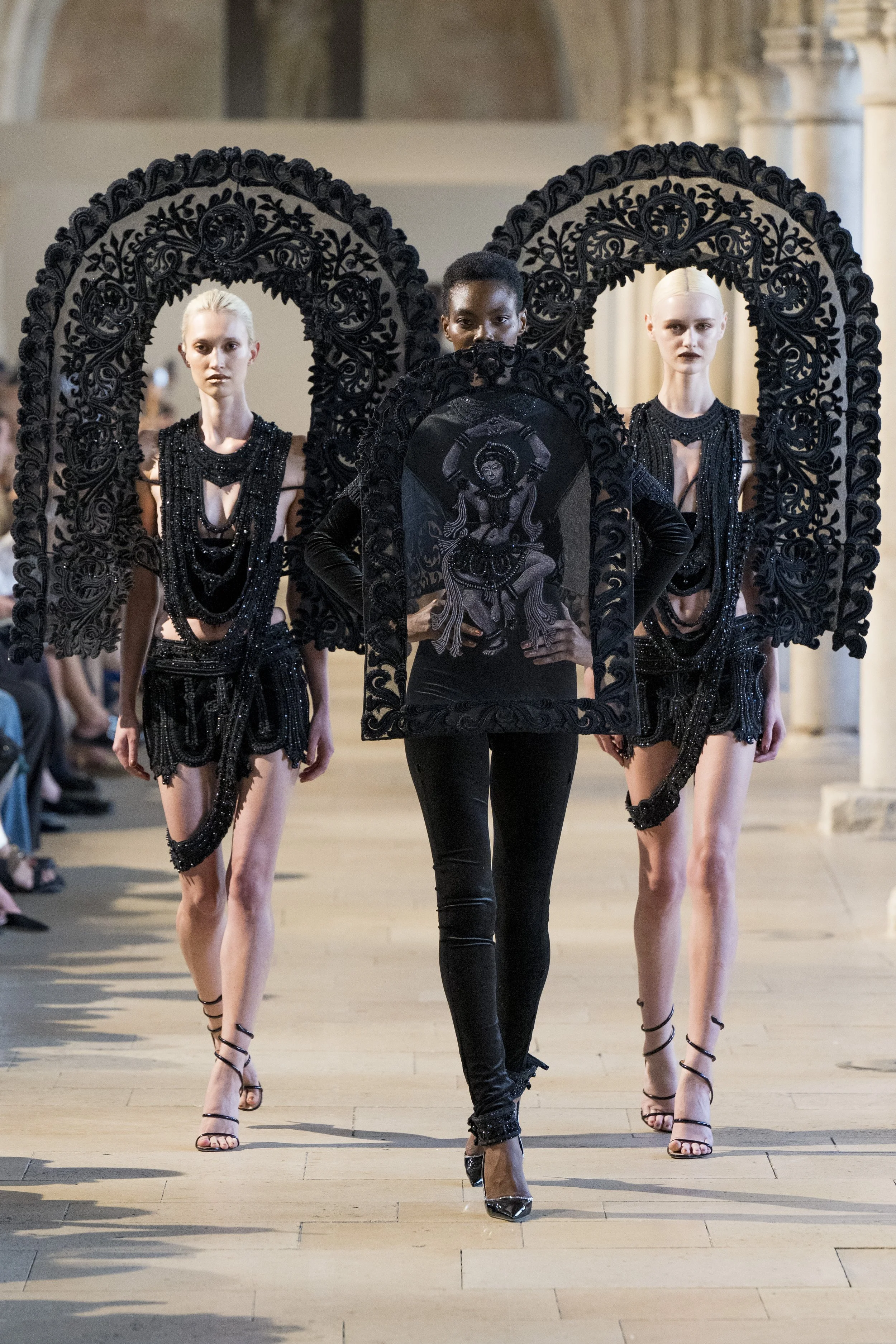
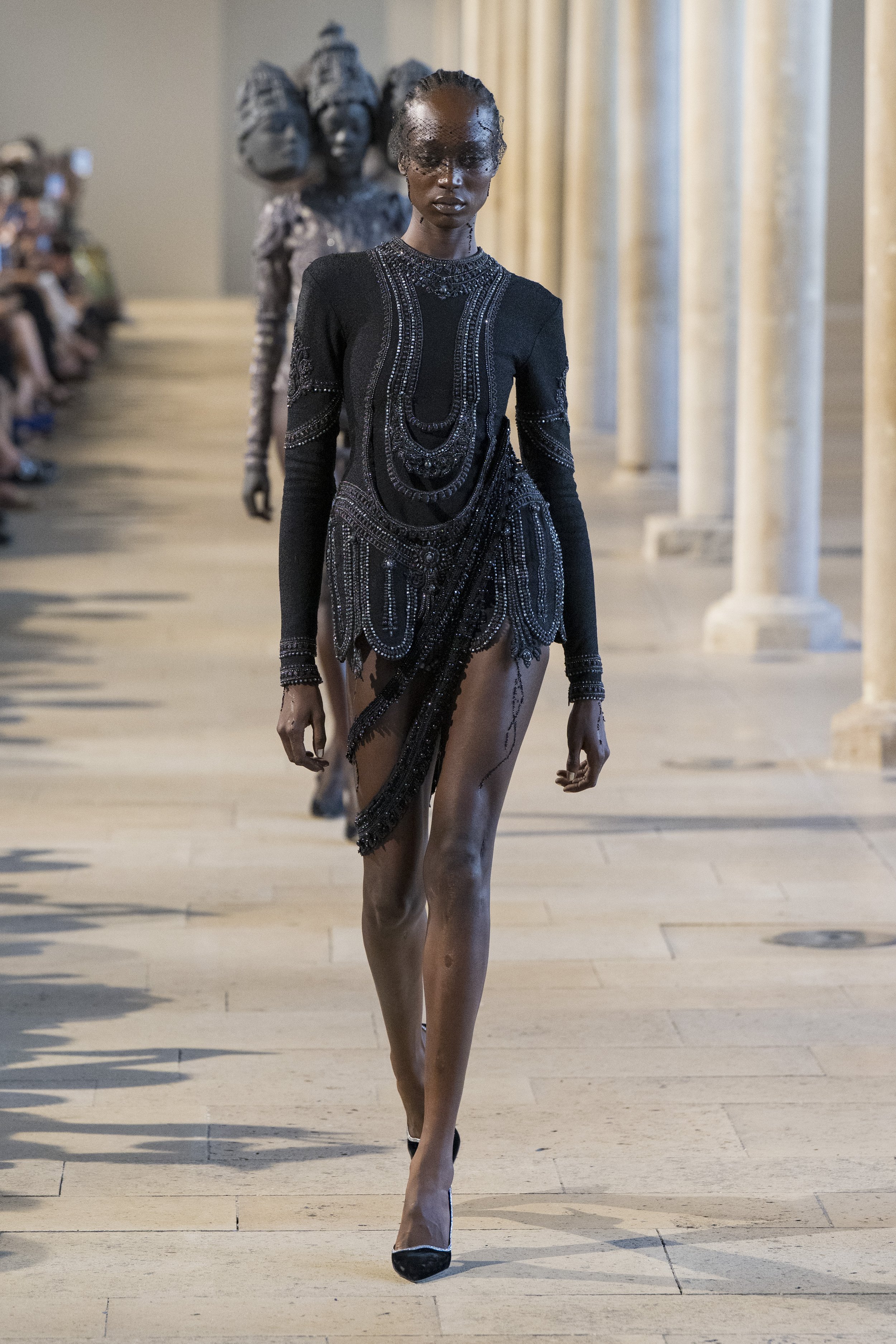
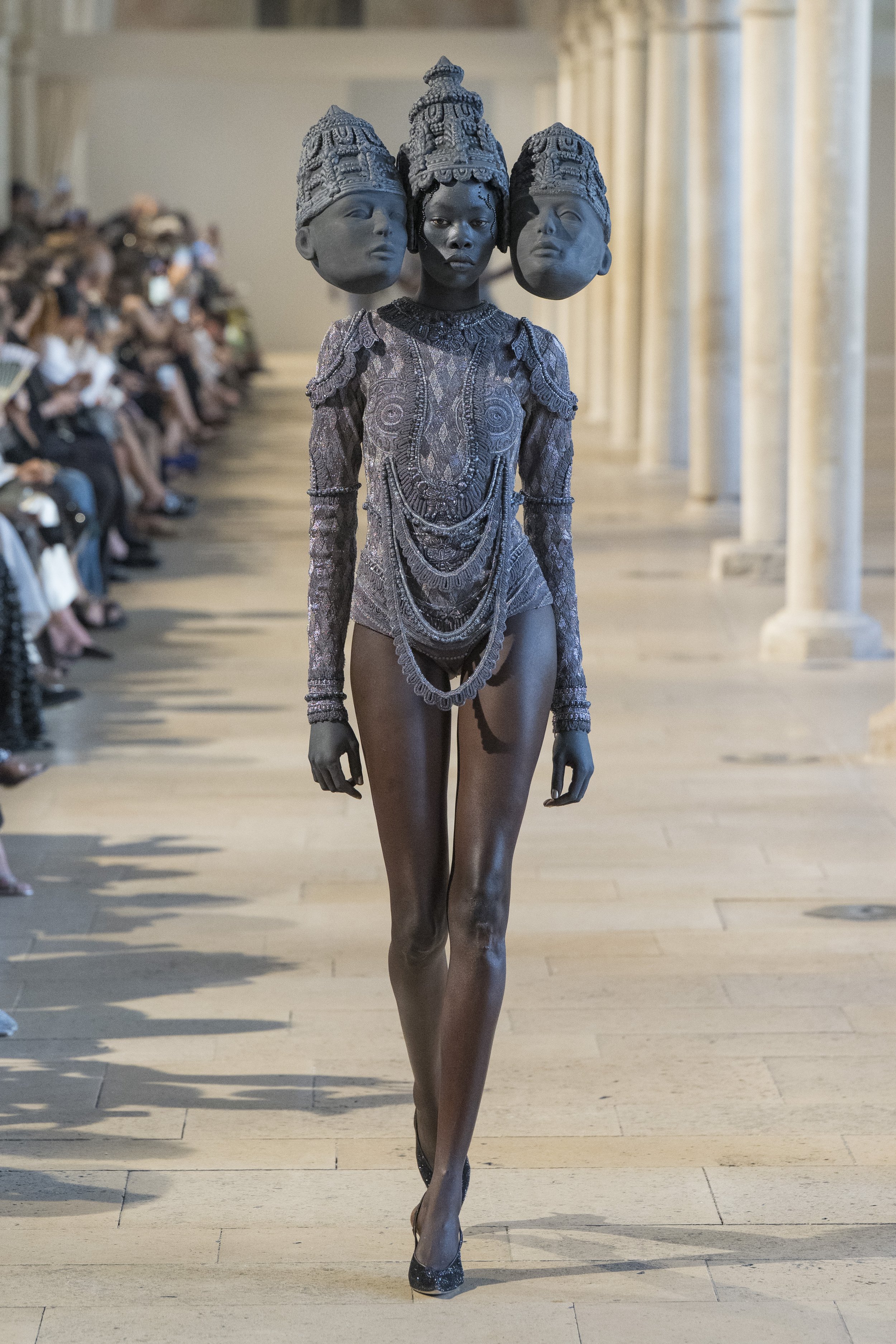
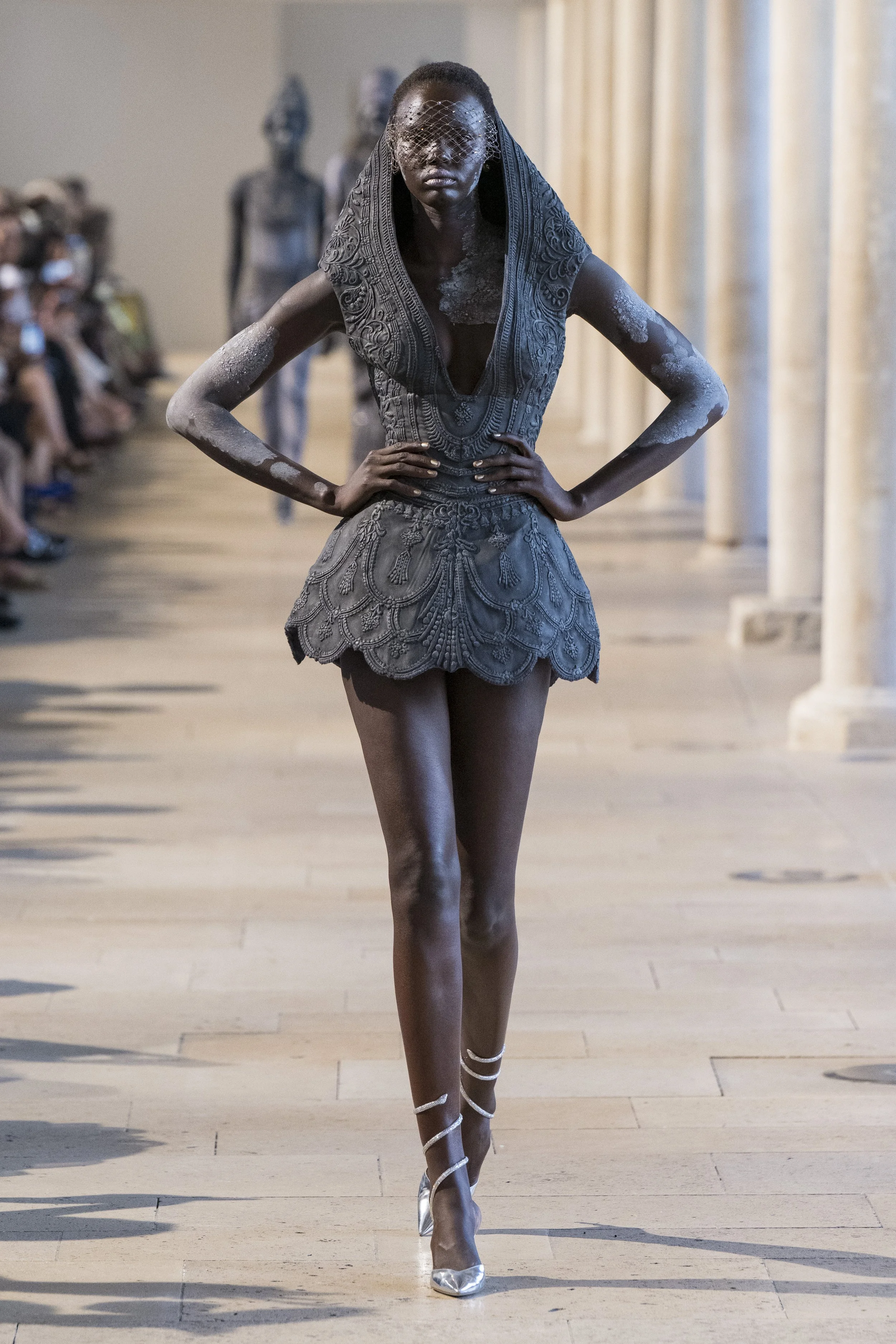
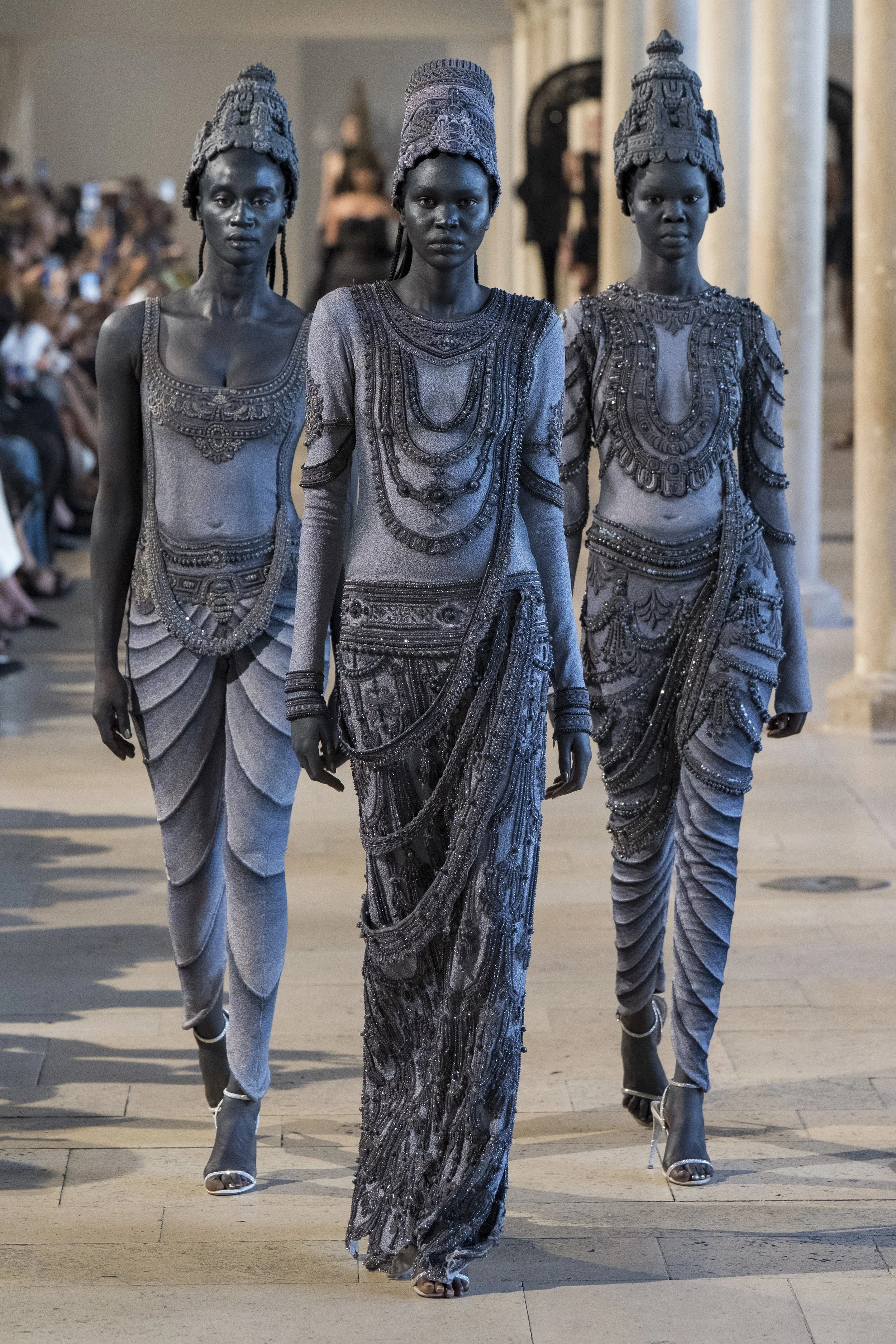
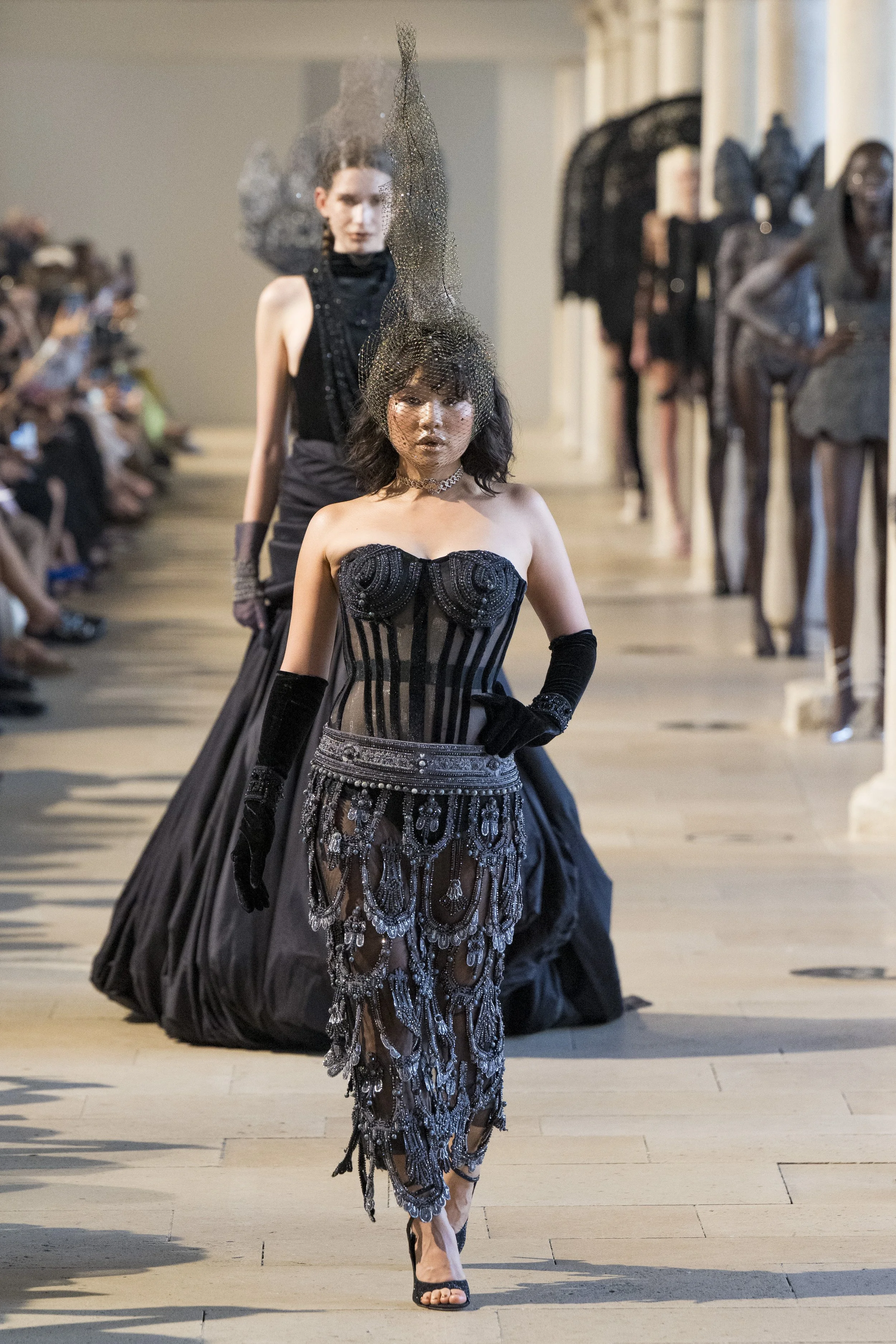
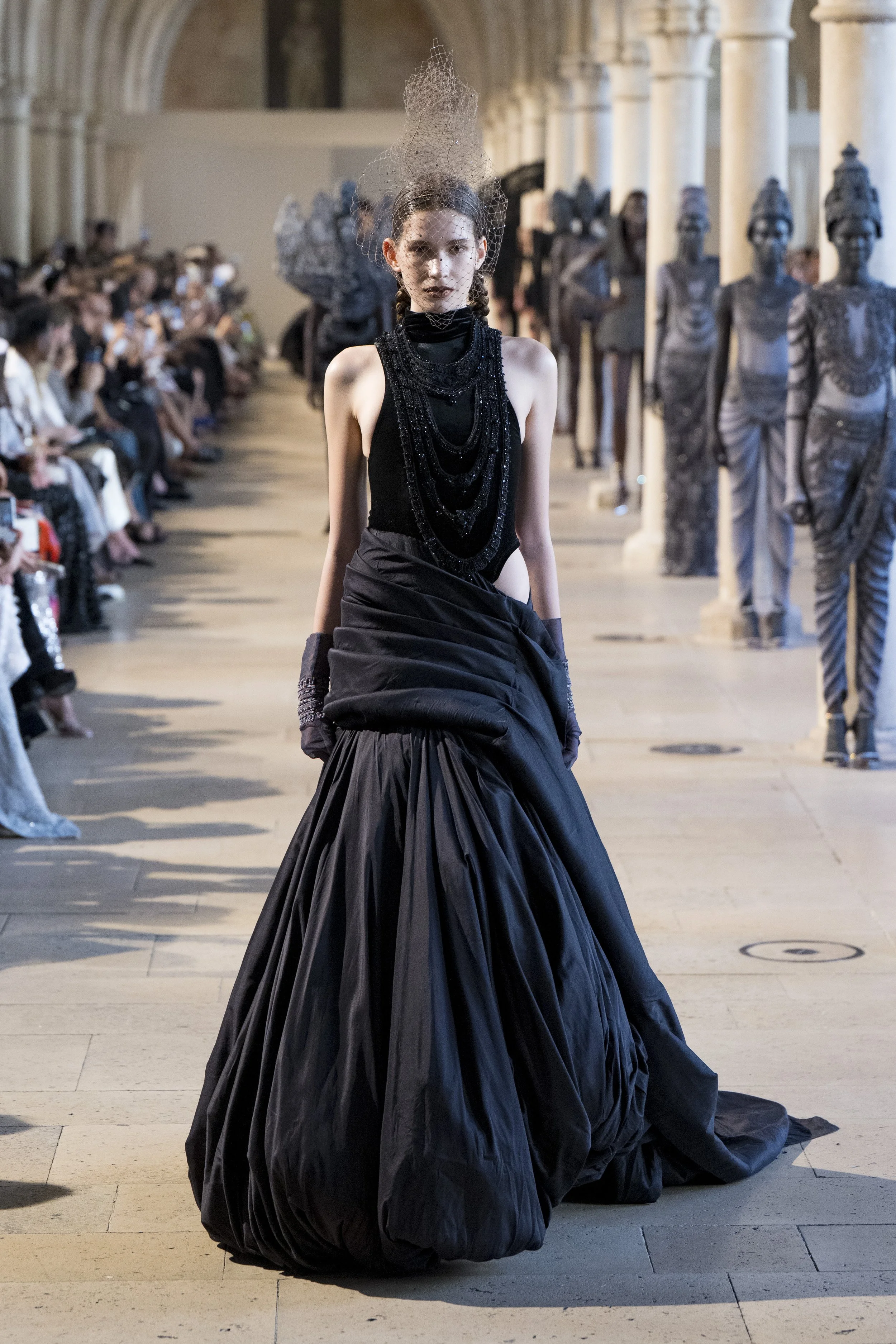
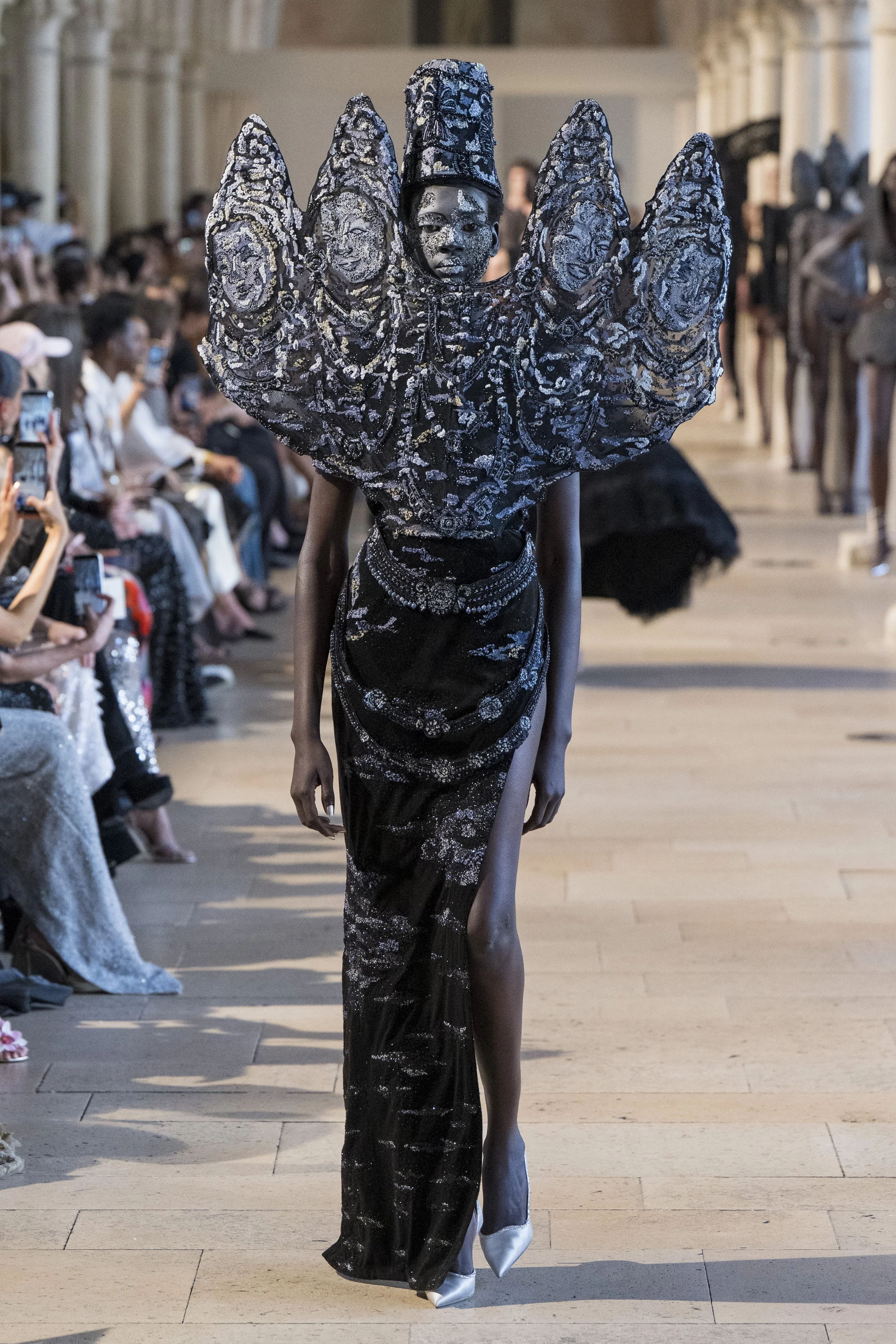
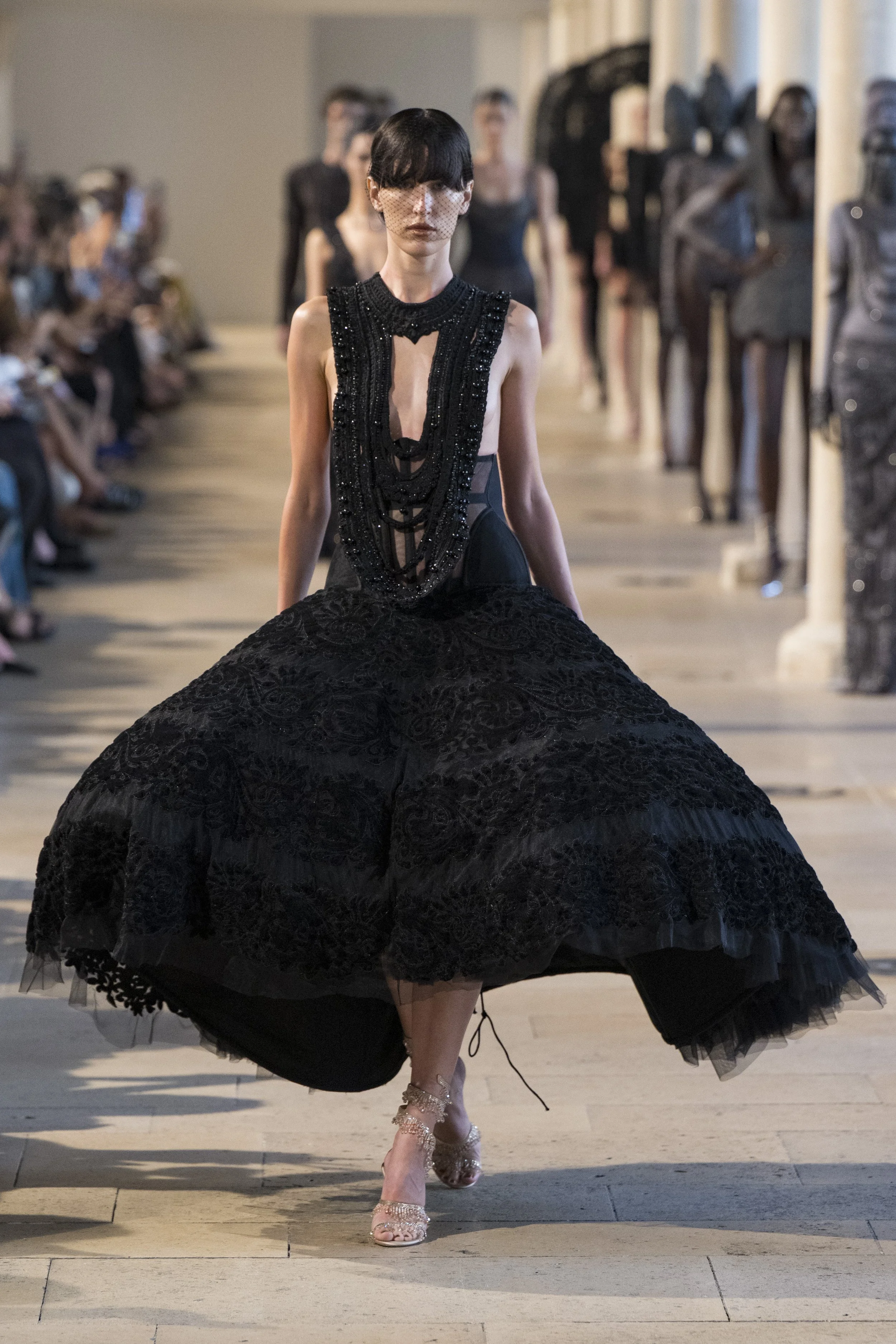
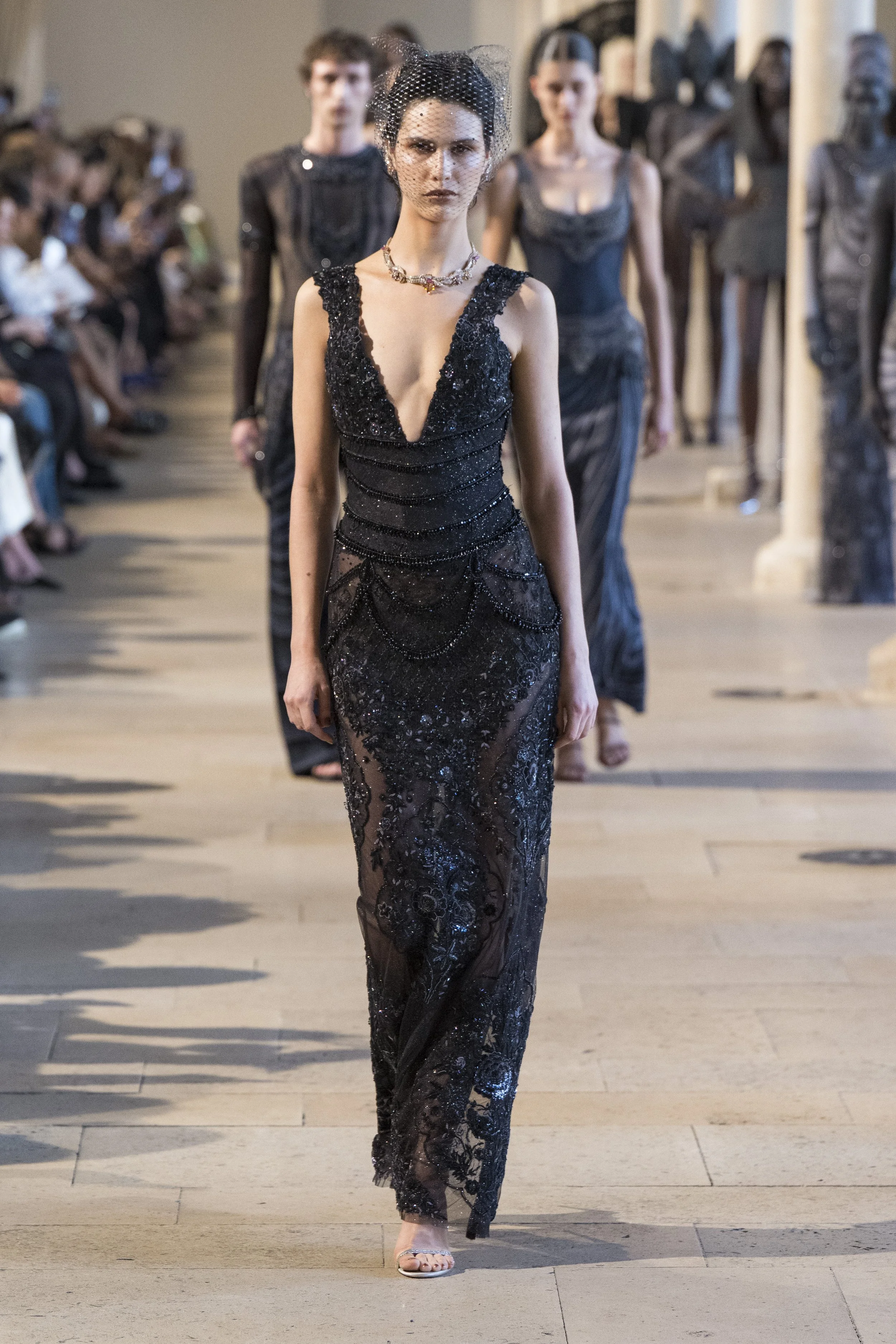
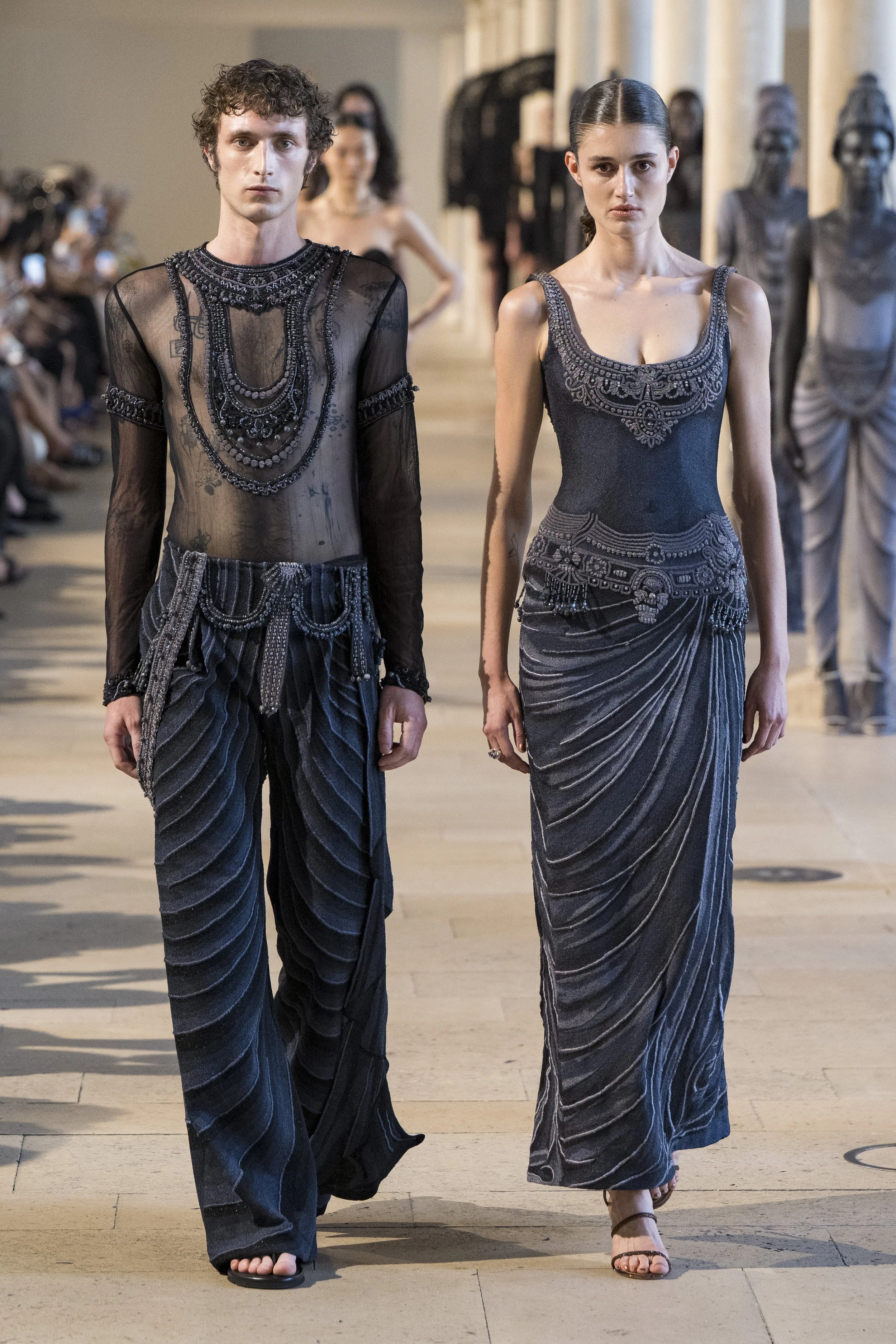
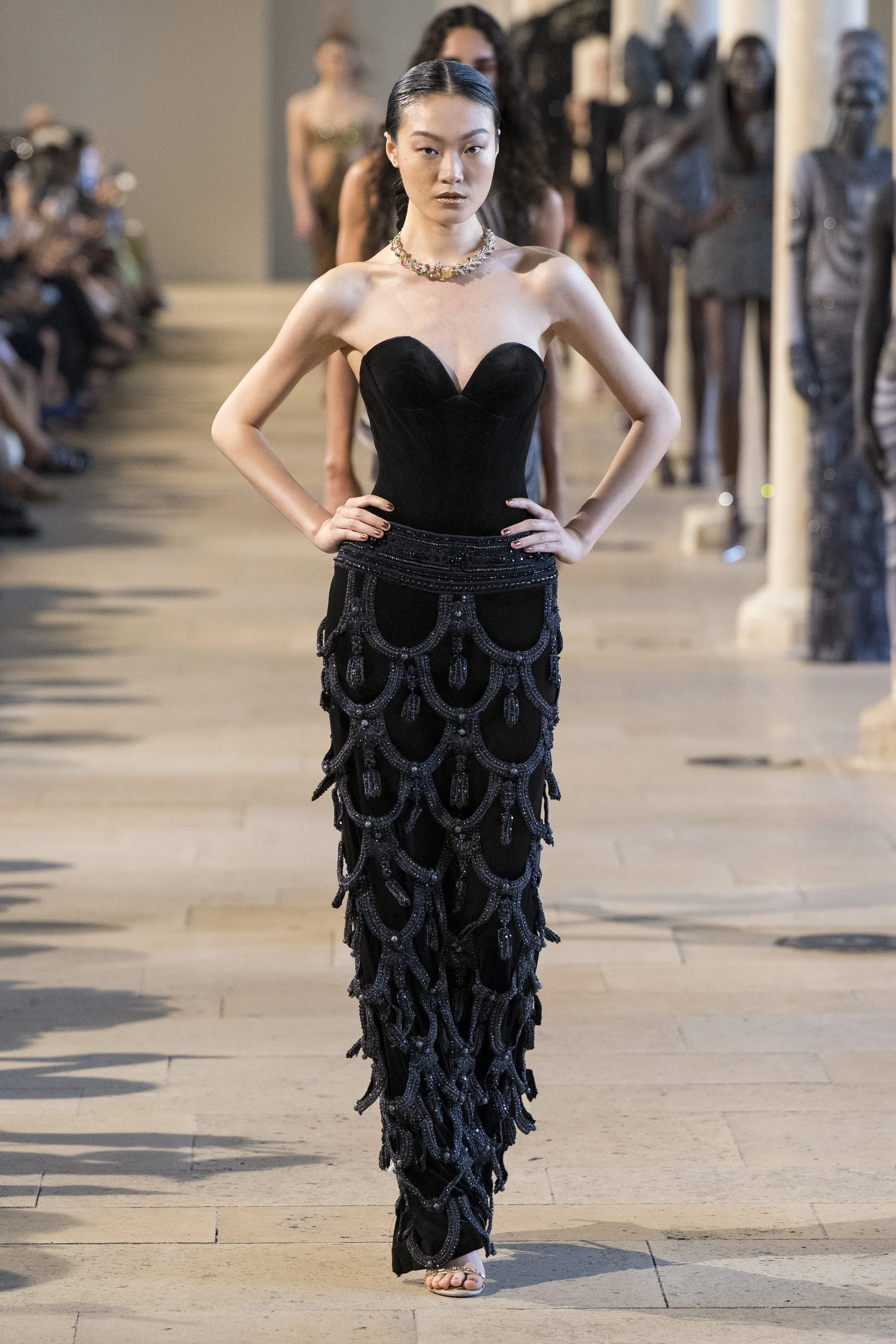
The surfaces appear mineral before they appear ornamental. Raised embroidery creates ridges and recesses, while dense areas of embellishment create the impression of a surface shaped over time. The technique reconstructs how stone is experienced rather than simply reproducing it as an image.
Stone is valued for stillness, while clothing exists through movement. Mishra places these opposing conditions together: the eye registers permanence, while movement reveals the fabric’s softness. This is where the collection finds its tension.
The most striking expression of this idea appears in the treatment of drapery. Draped silhouettes are traced with beadwork and raised textures that imitate the shadows, valleys and ridges of carved folds. Precision, not disguise, is what makes this trompe l’œil work. The embroidery constructs the visual evidence of a pleat or crease rather than merely outlining one. Darker recesses, reflective highlights and shifts in texture create the impression of depth, allowing a flexible material to appear sculpted. The effect is achieved on fabric with enough stretch to accommodate the wearer’s movement, preserving the contradiction between rigidity and ease.
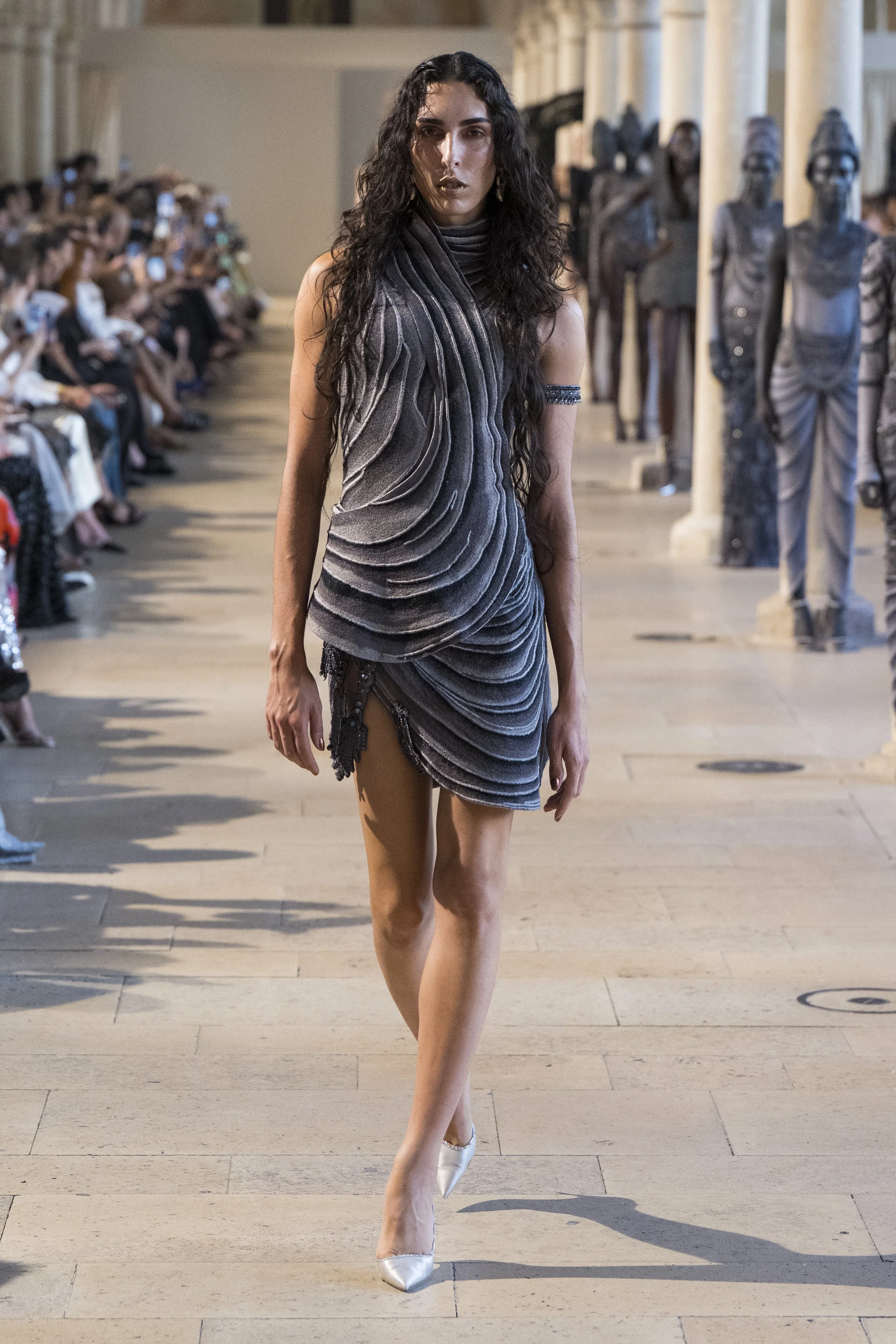
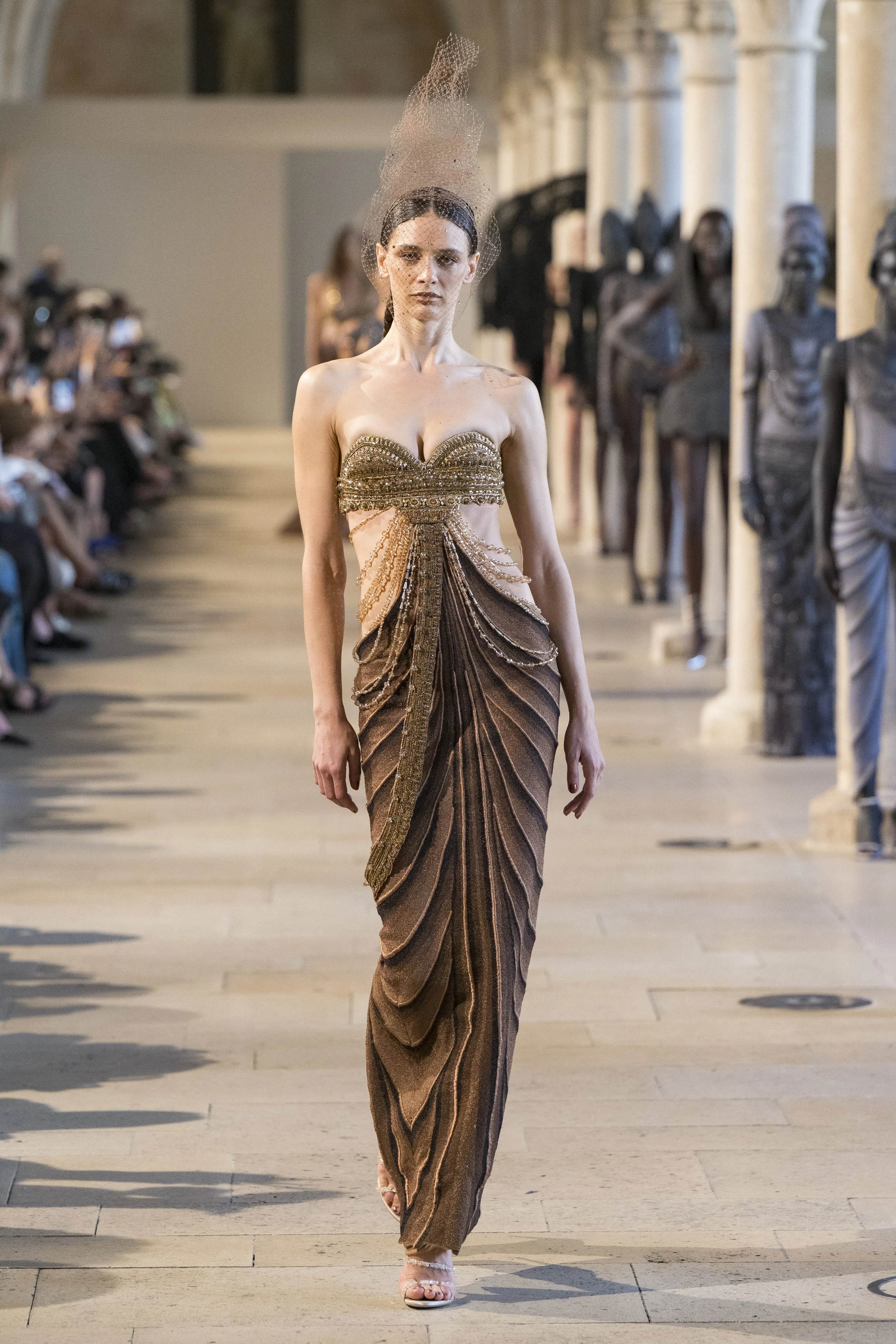
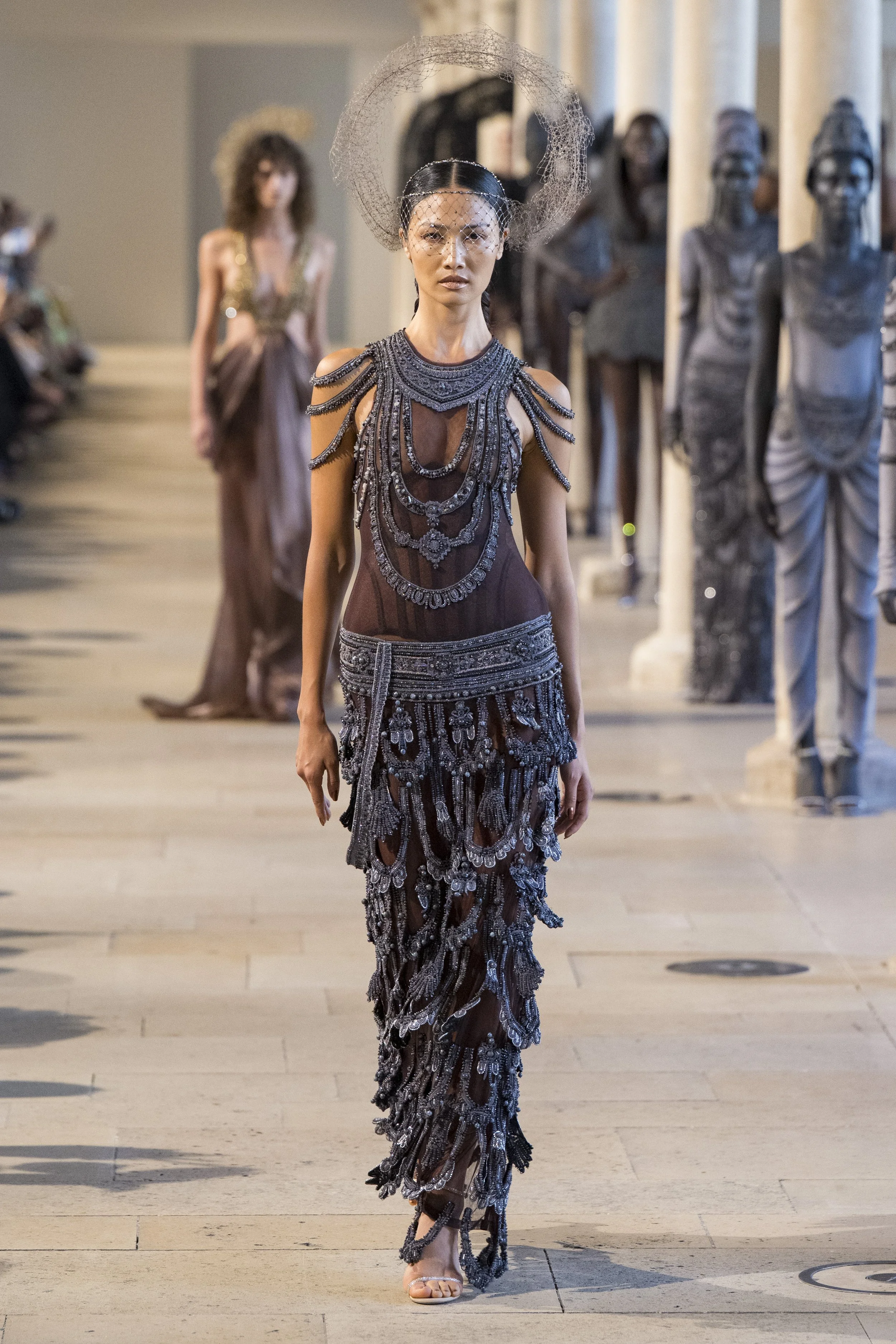
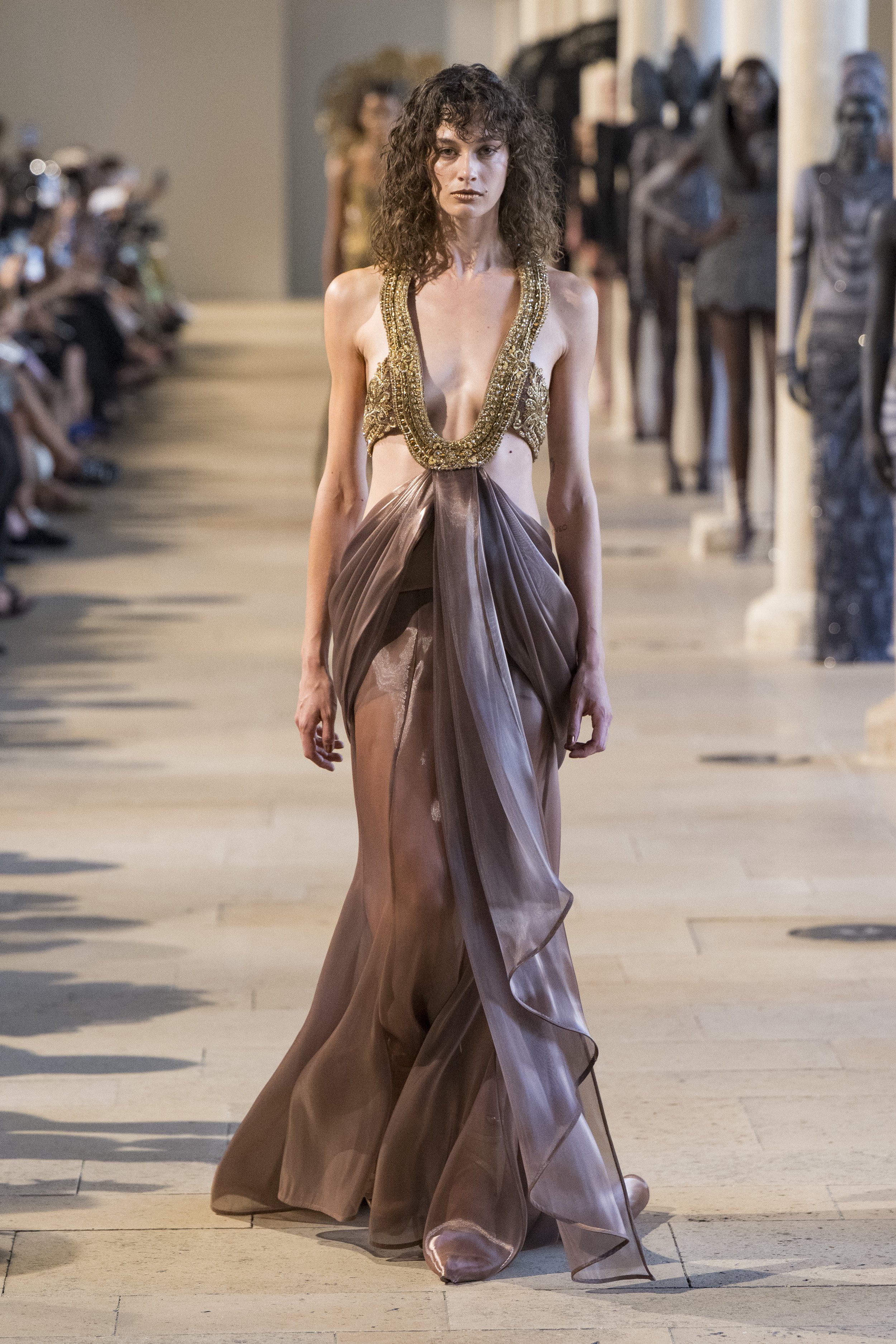
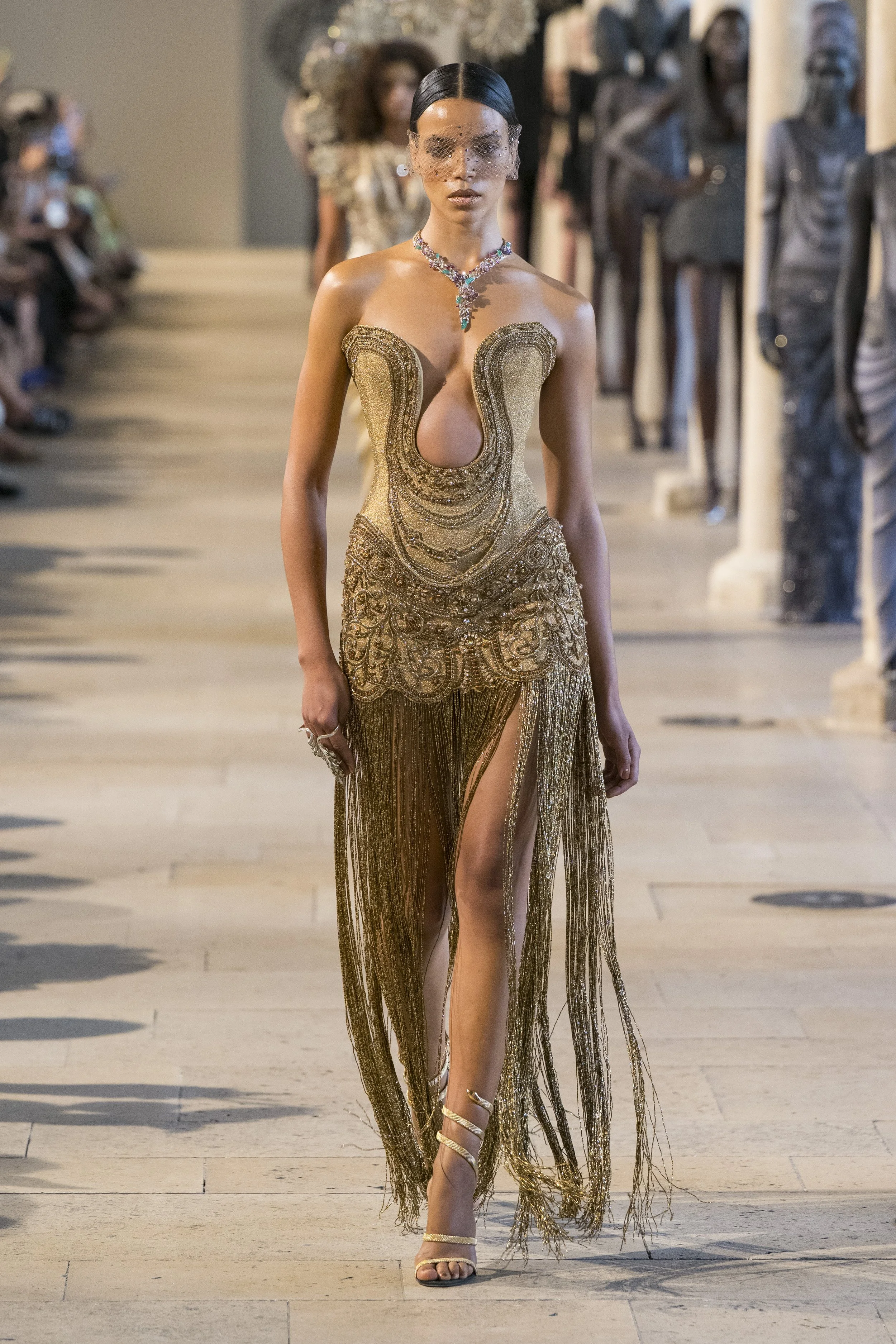
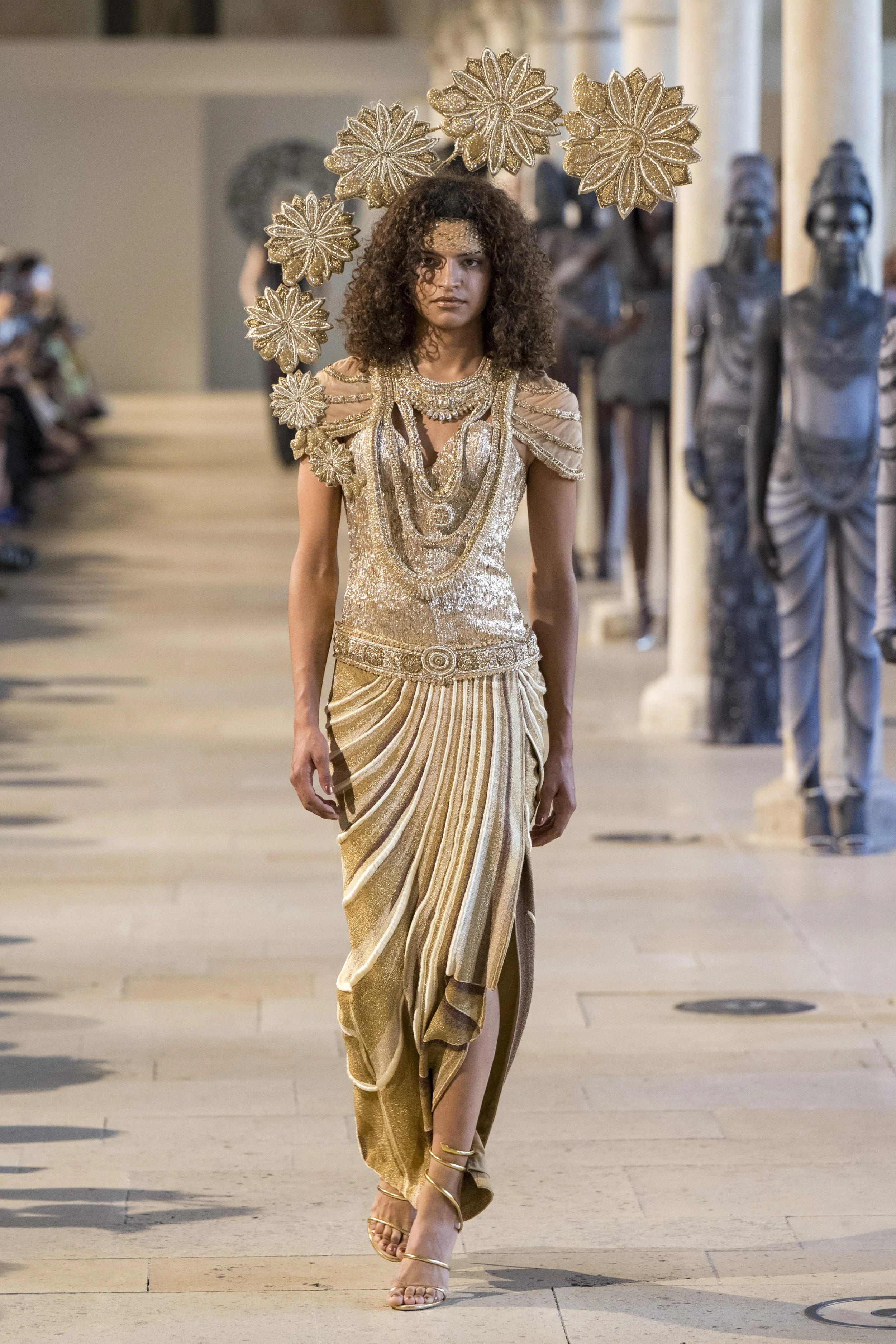
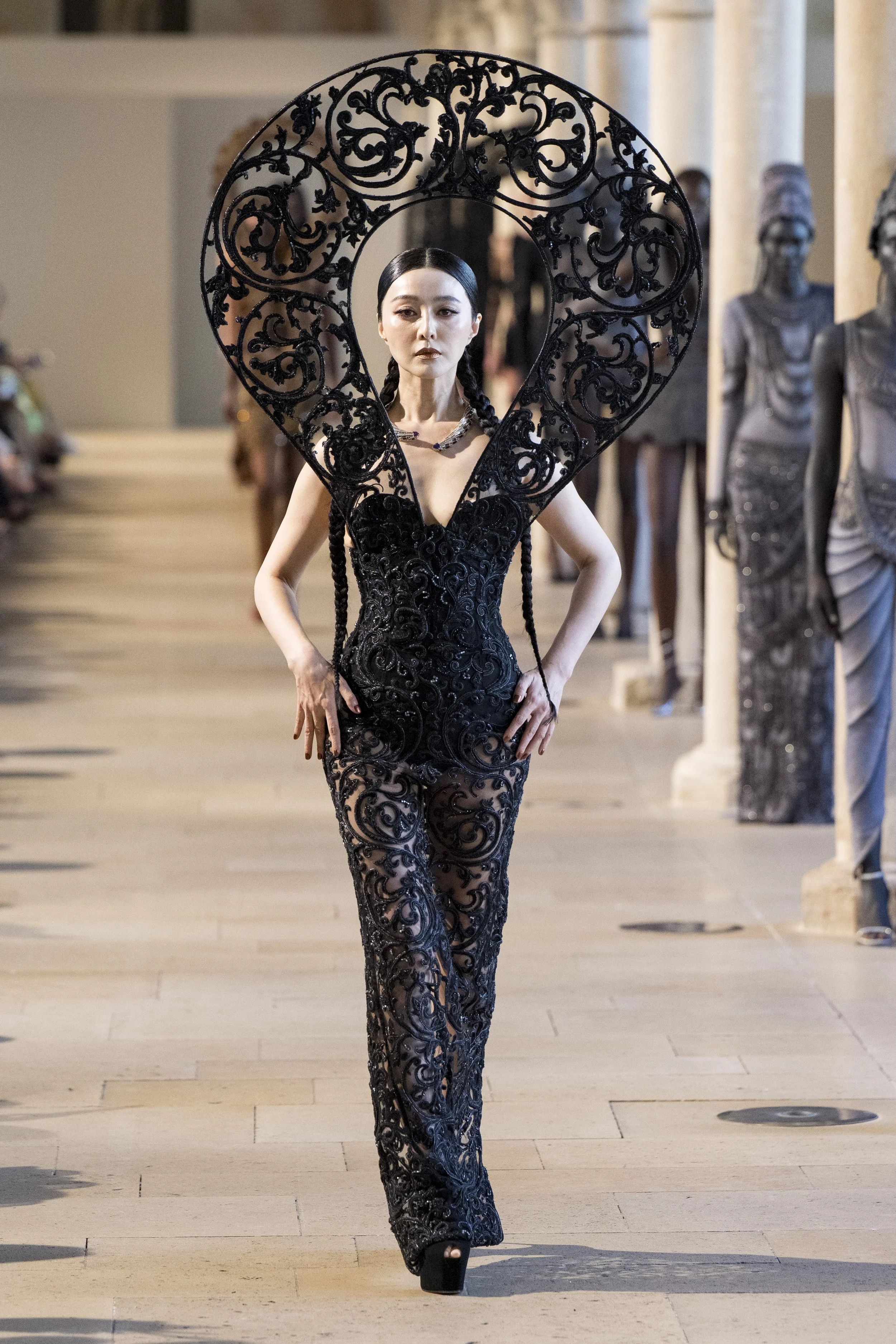
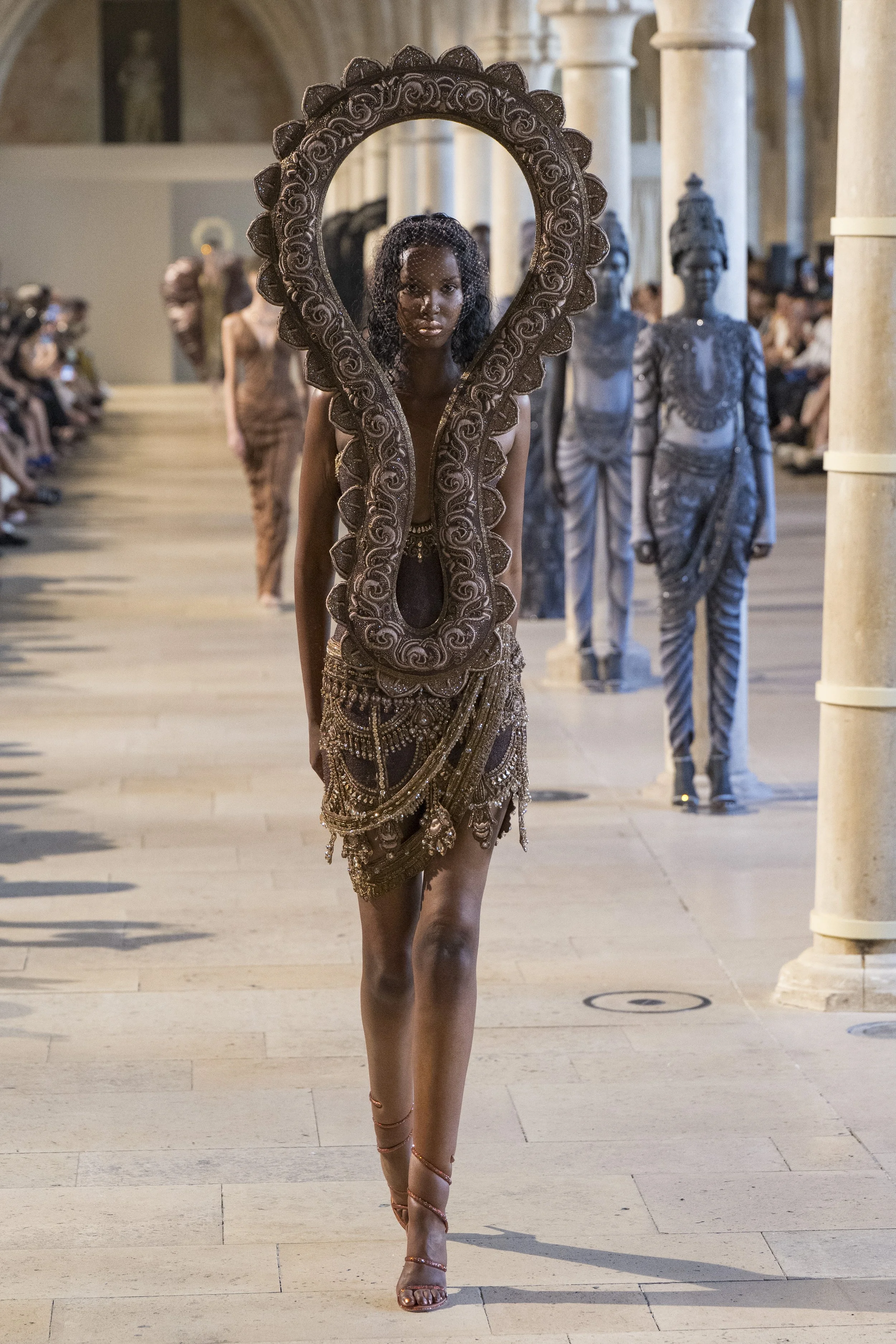
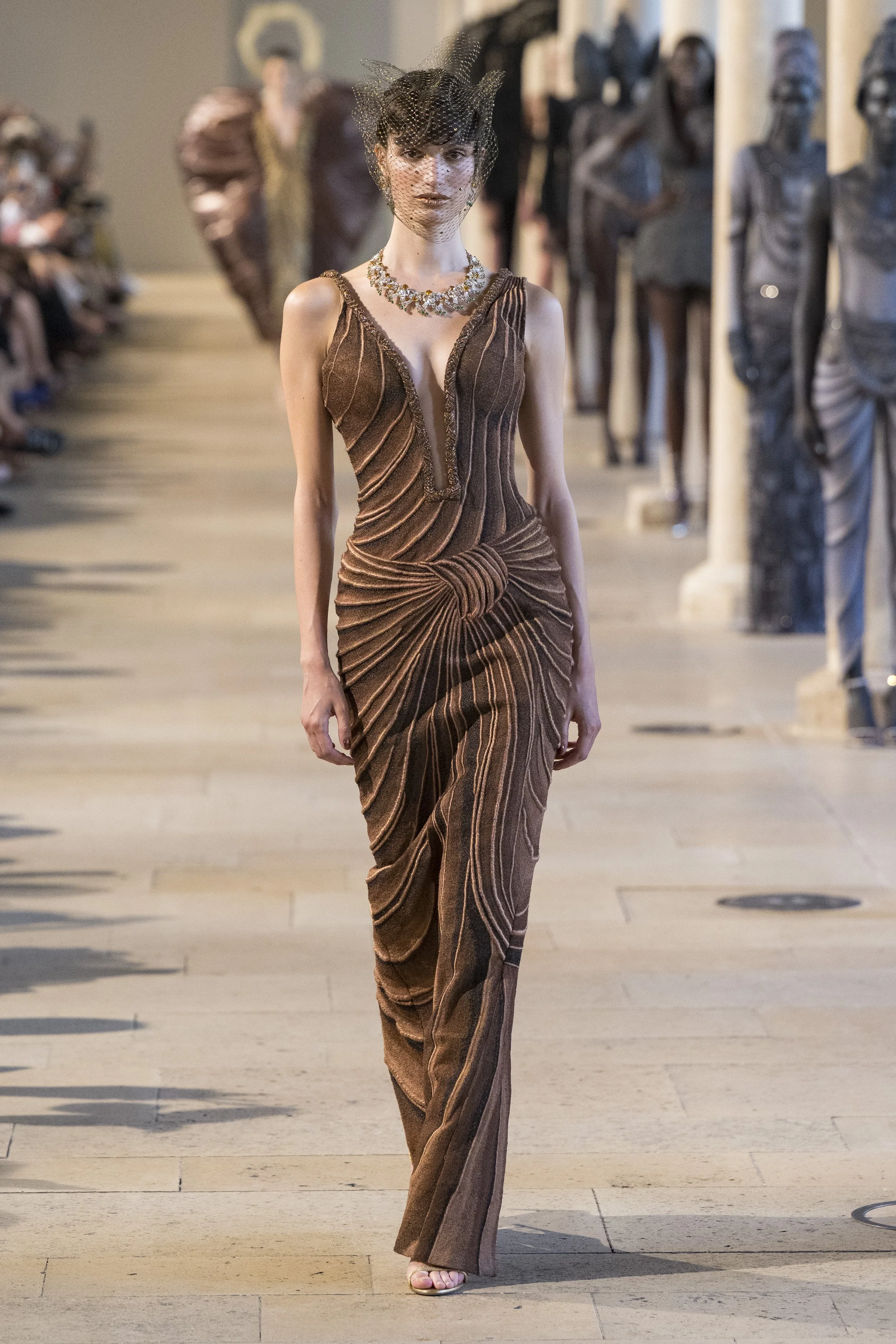
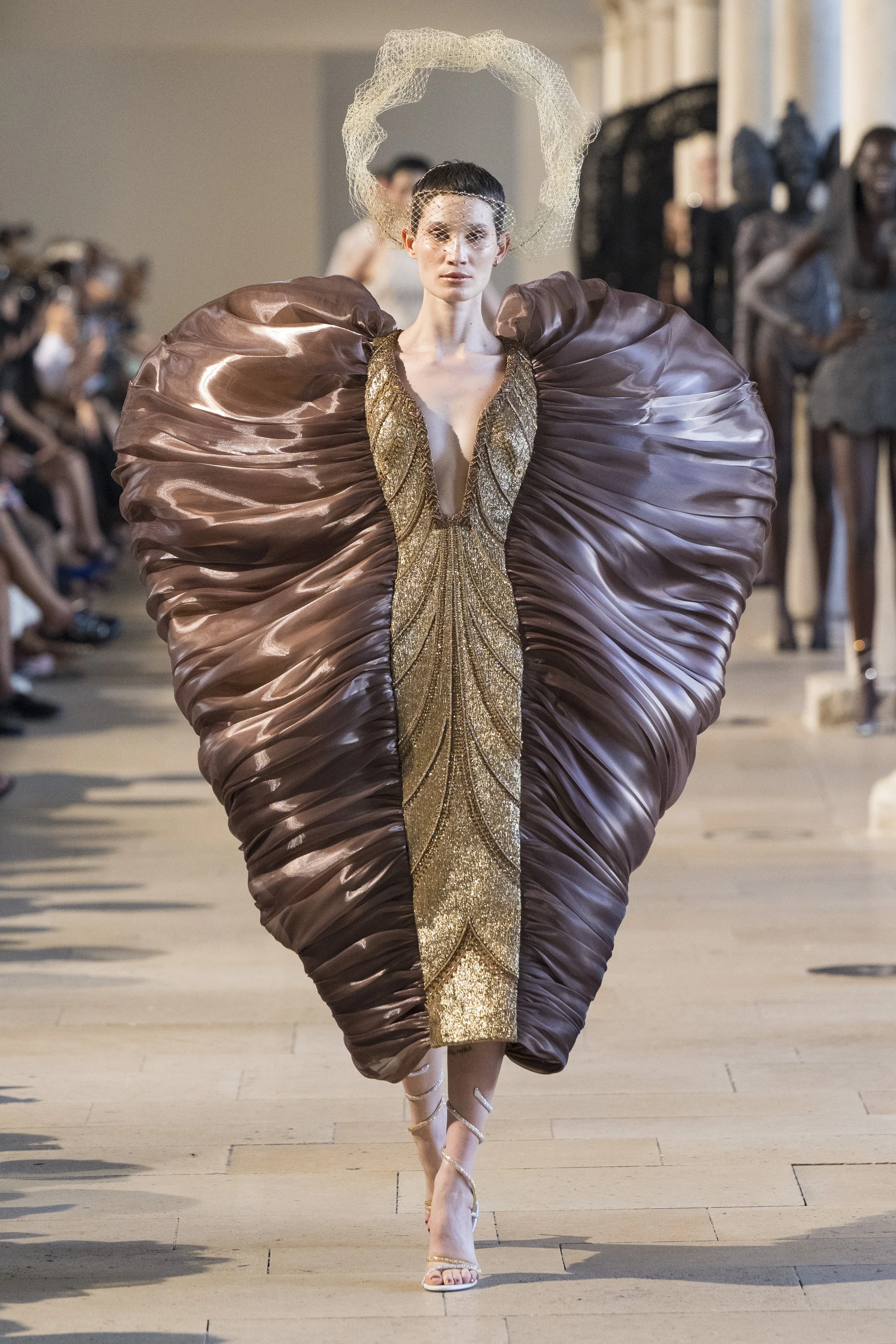
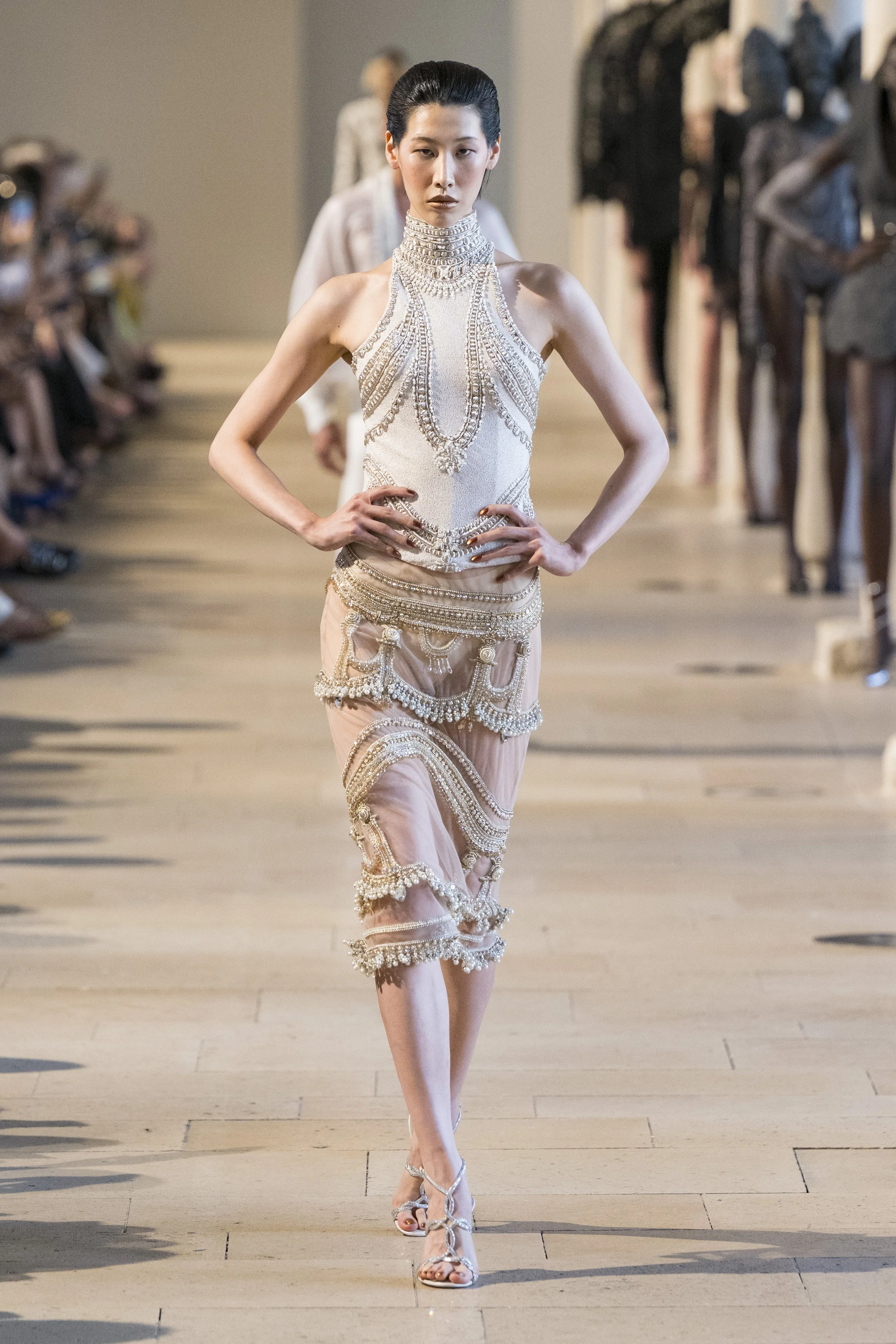
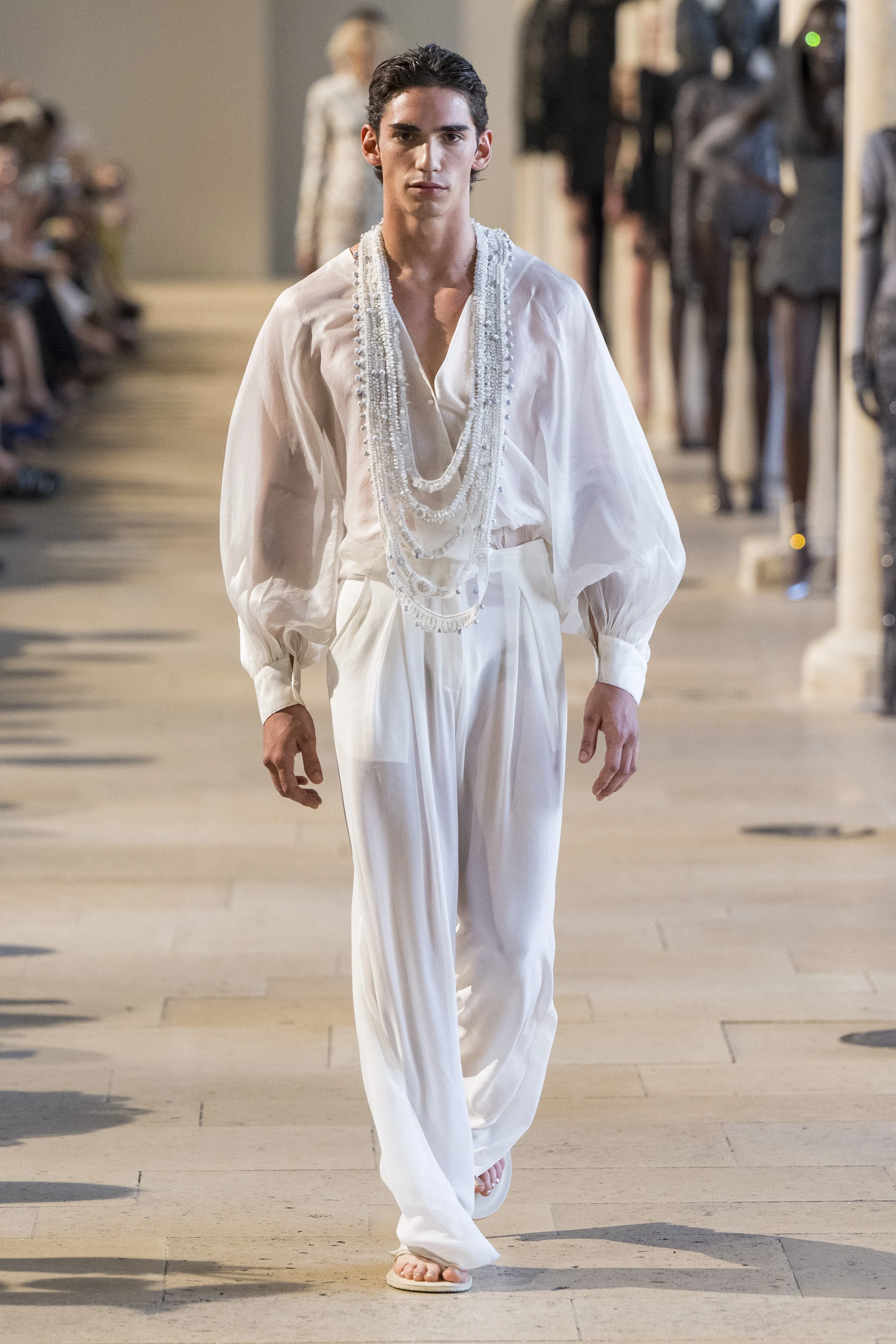
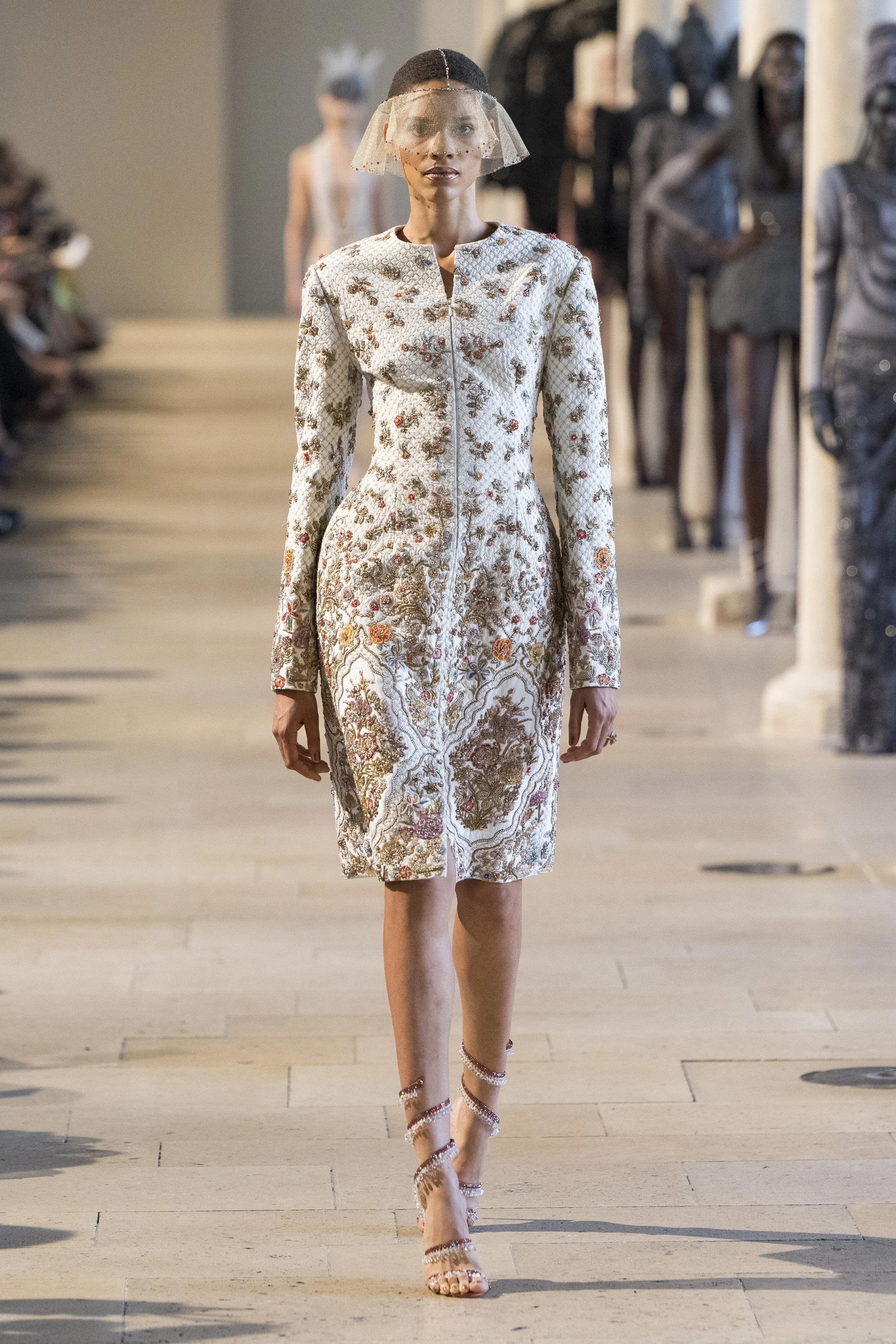
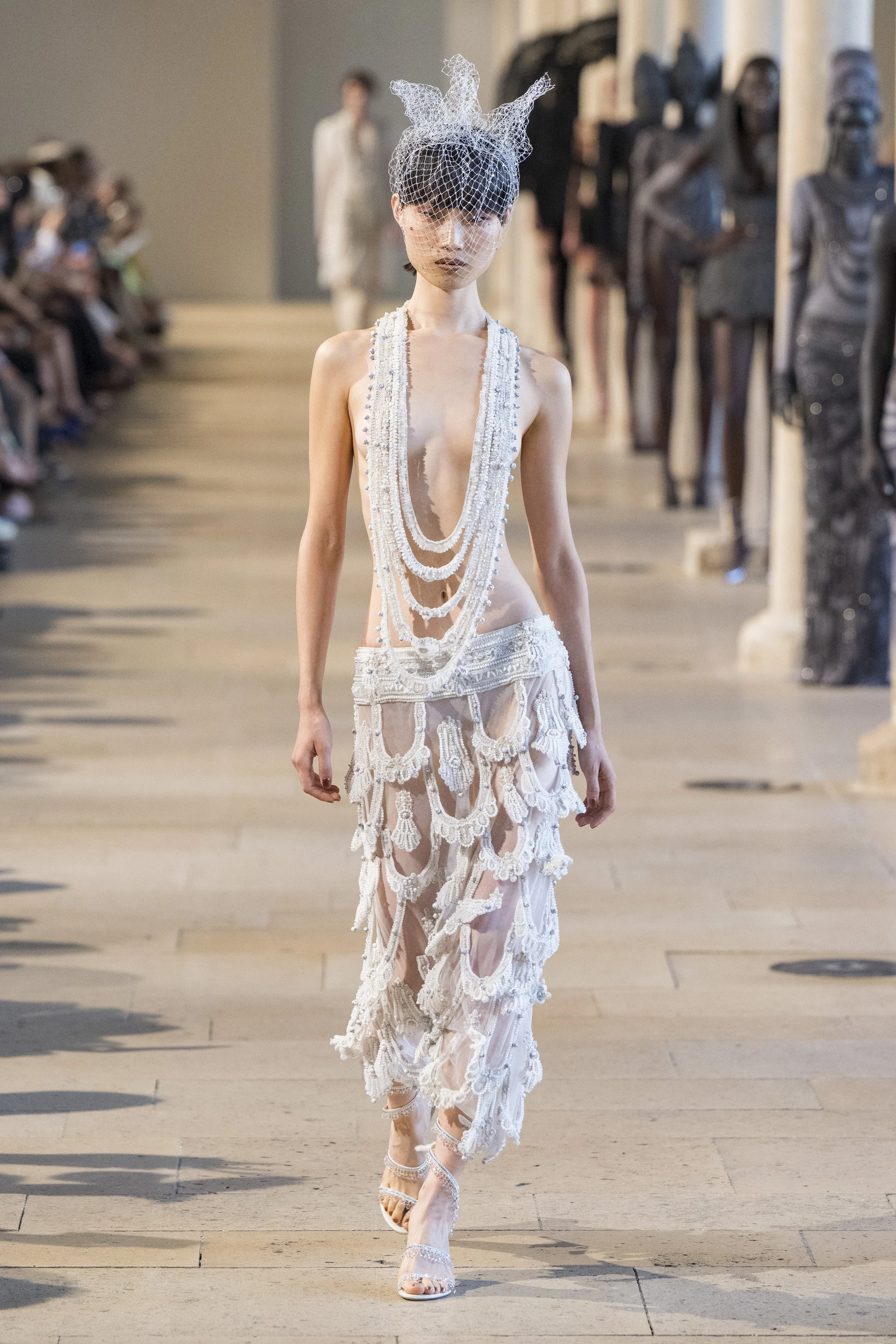
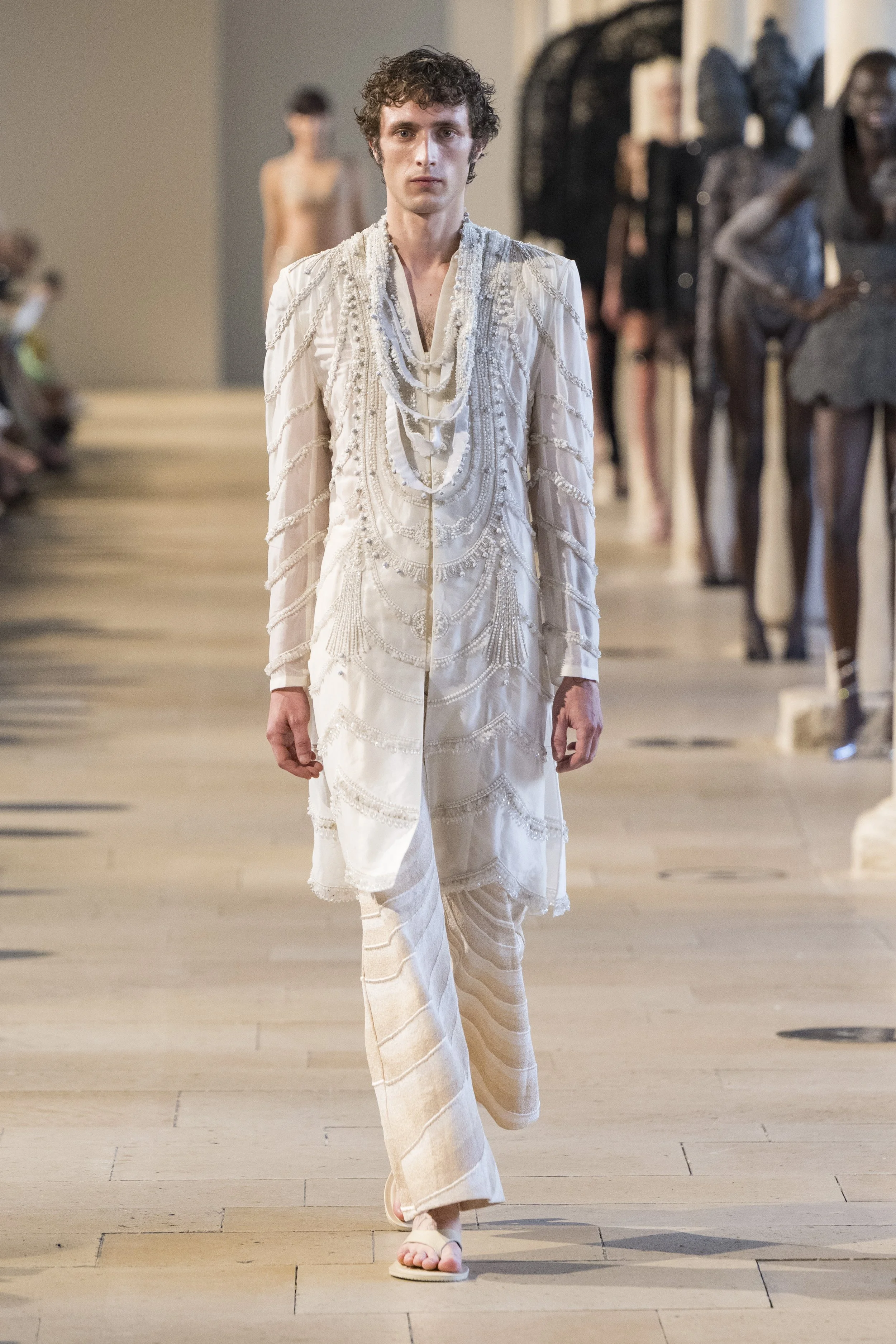
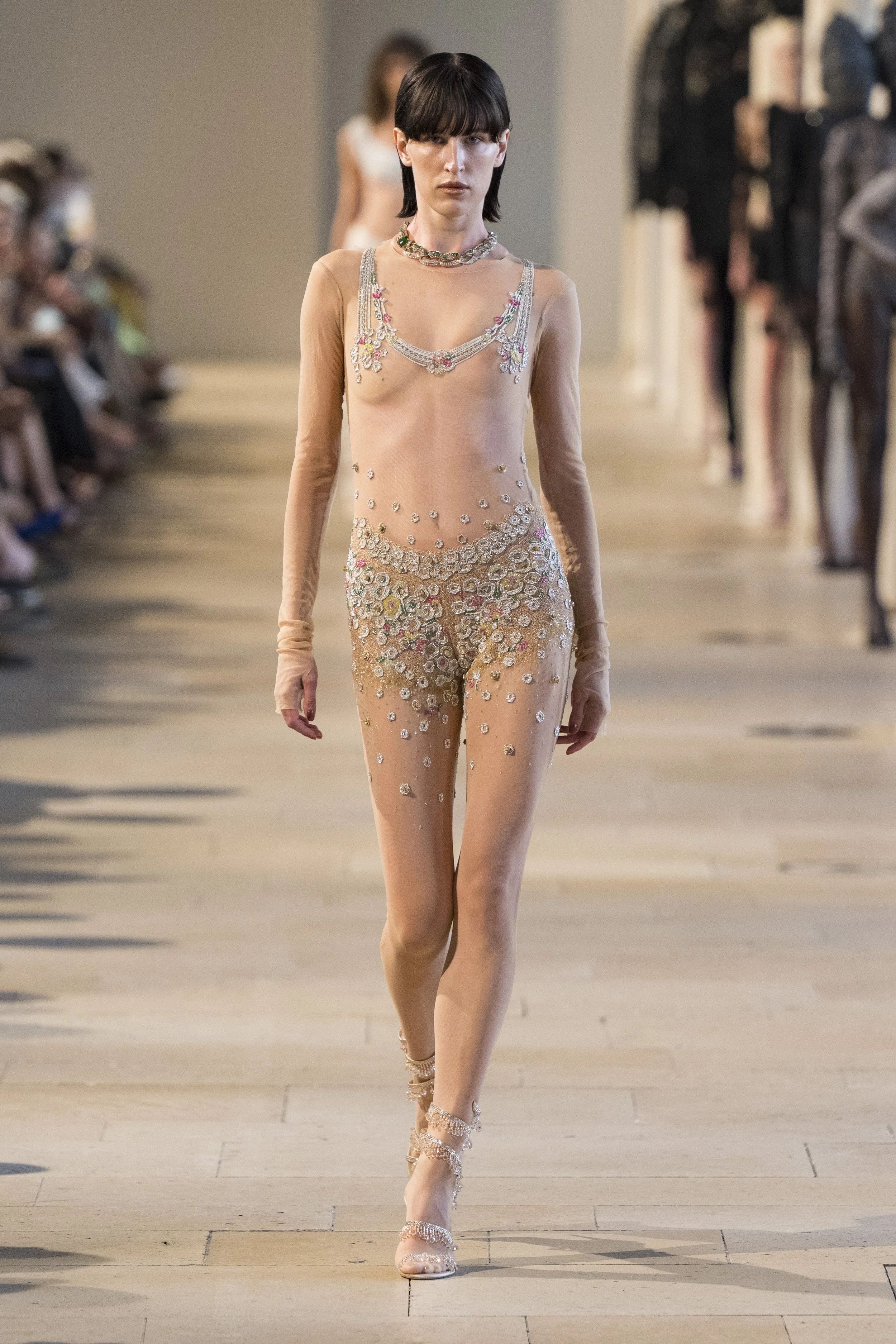
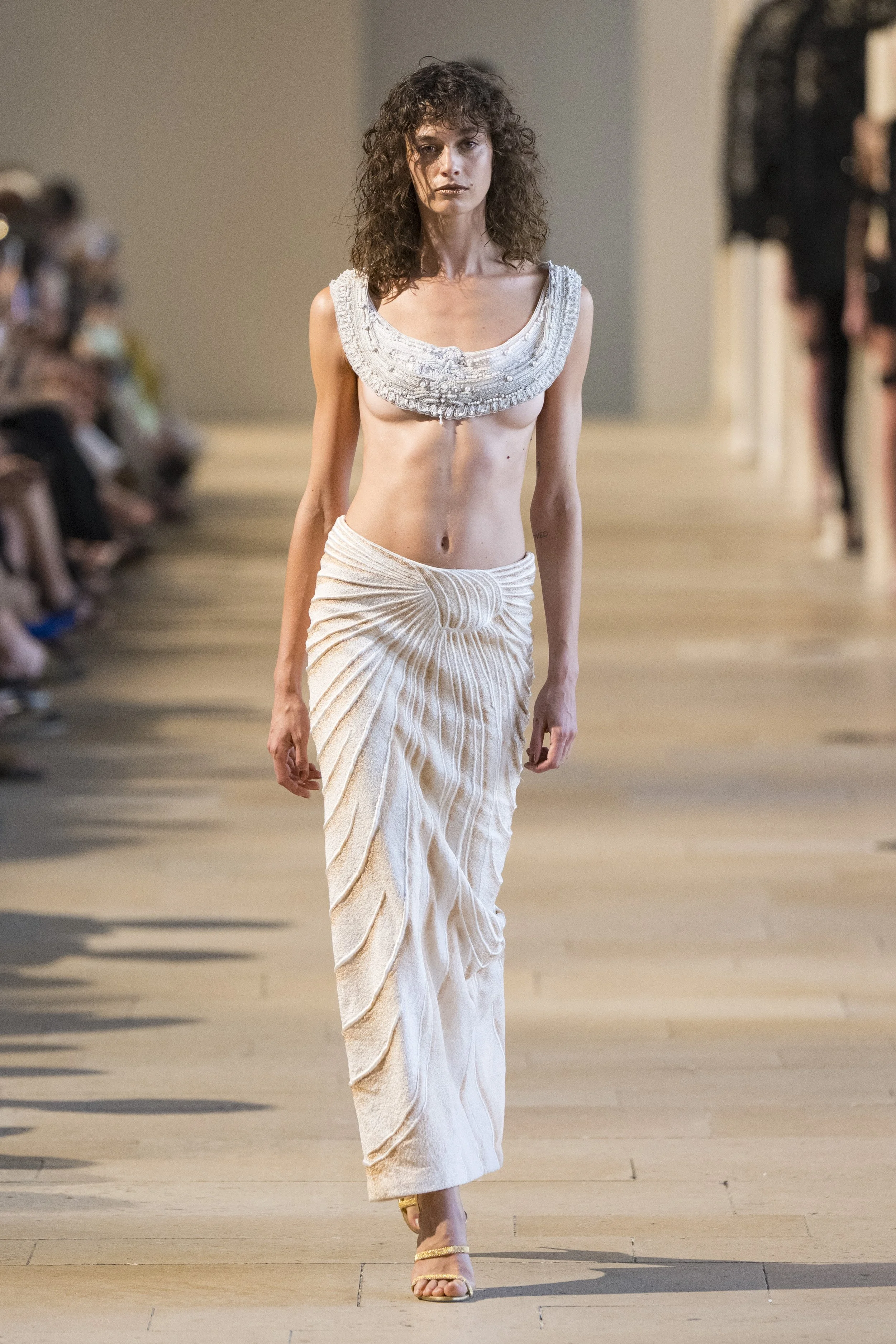
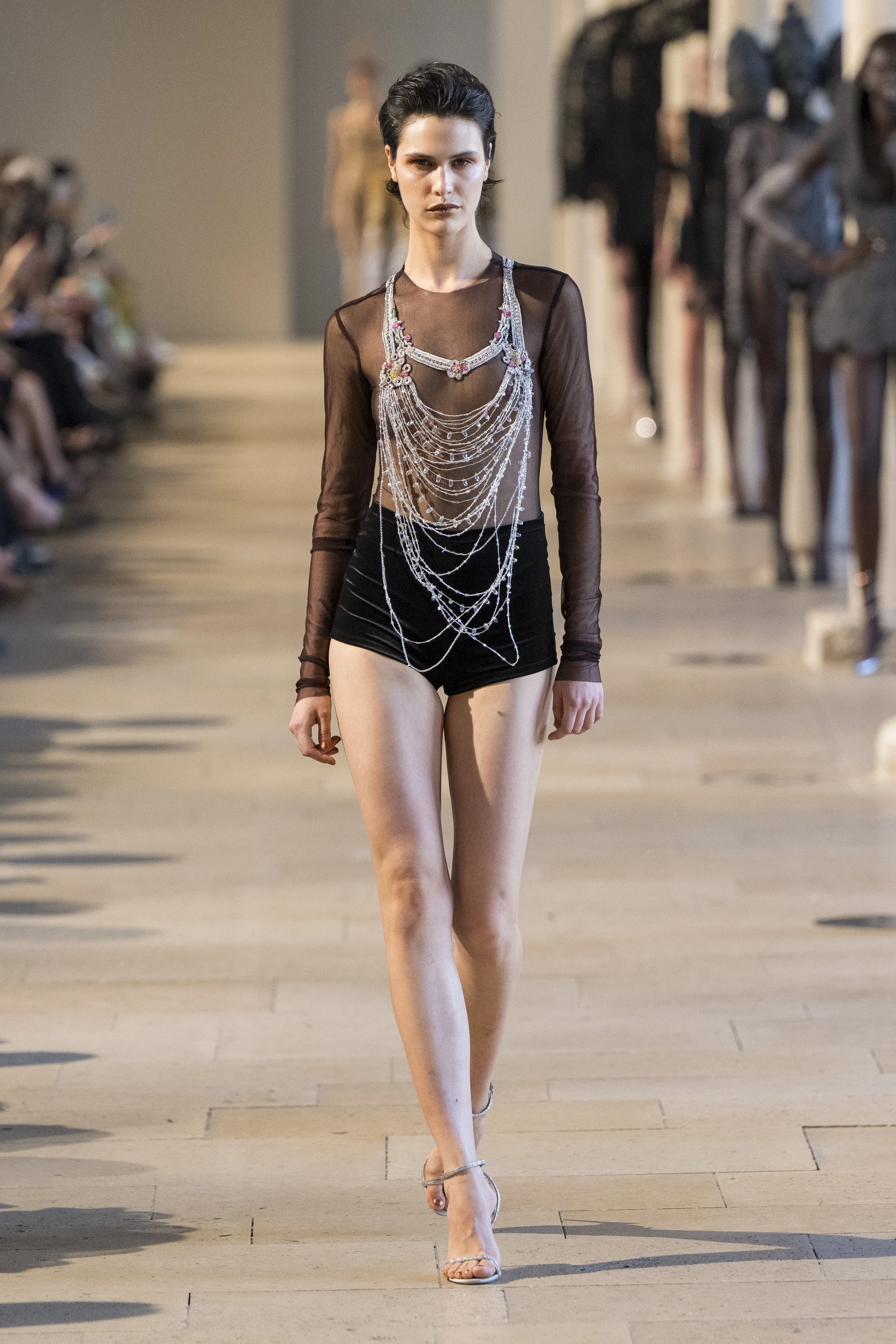
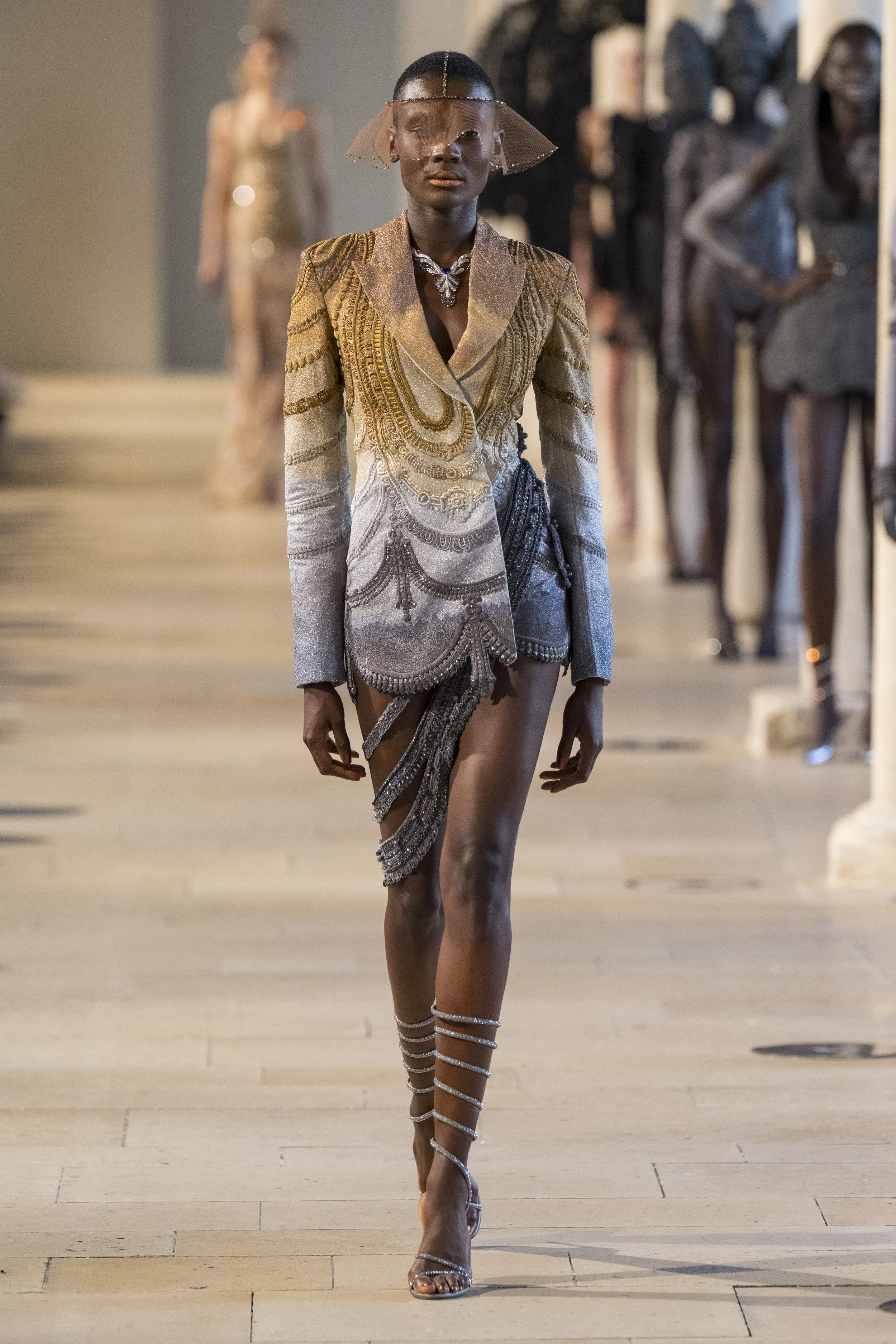
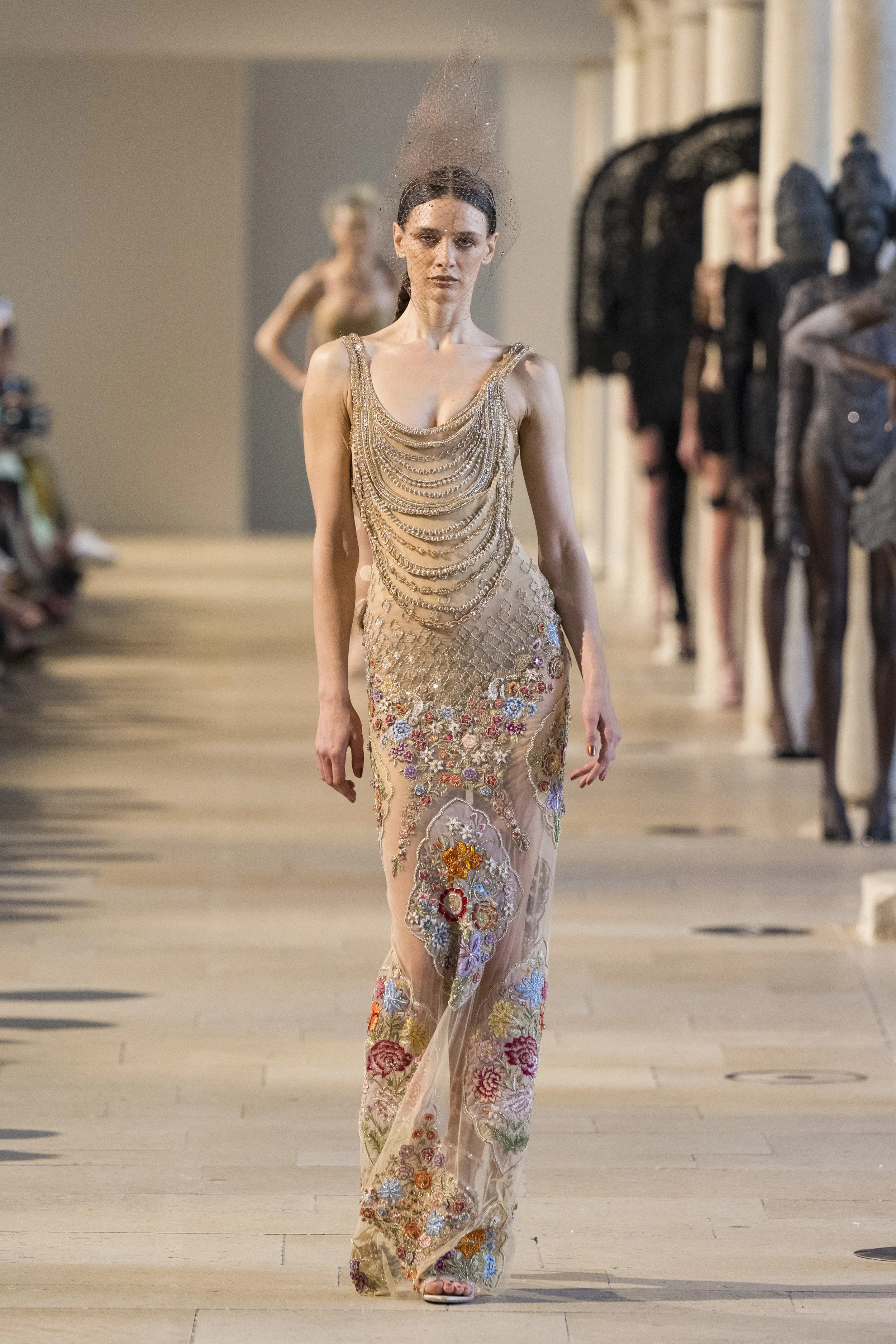
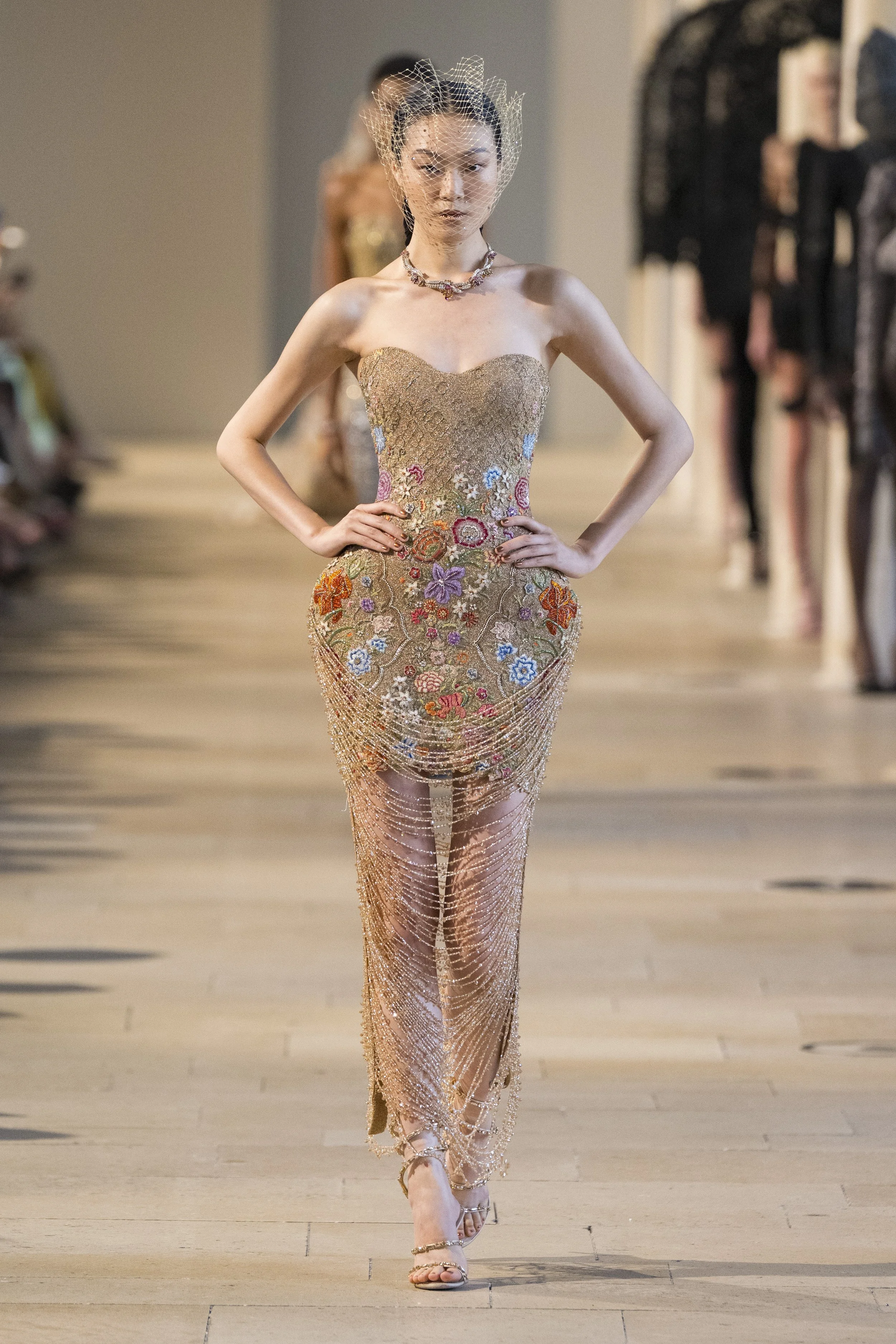
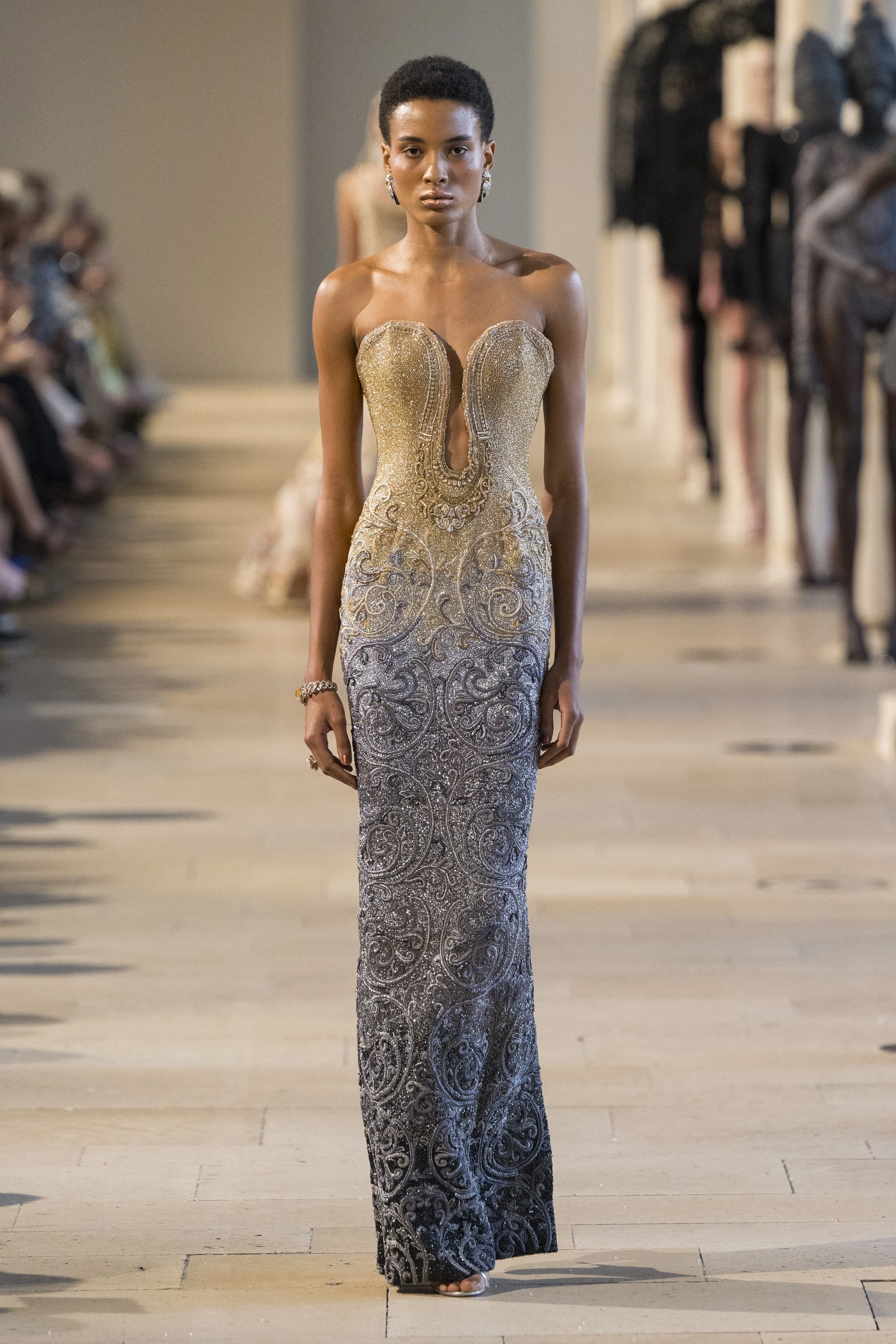
The connection to Indian sculpture has less to do with copying its forms than with understanding its treatment of surface. In temple sculpture, jewellery, textiles and bodily ornament are never secondary details; they define presence, movement and identity. Mishra approaches embroidery with the same logic. Embellishment becomes a structural element that determines how the form is perceived, not a final layer placed onto a garment.
DISCOVER MORE ABOUT RAHUL MISHRA