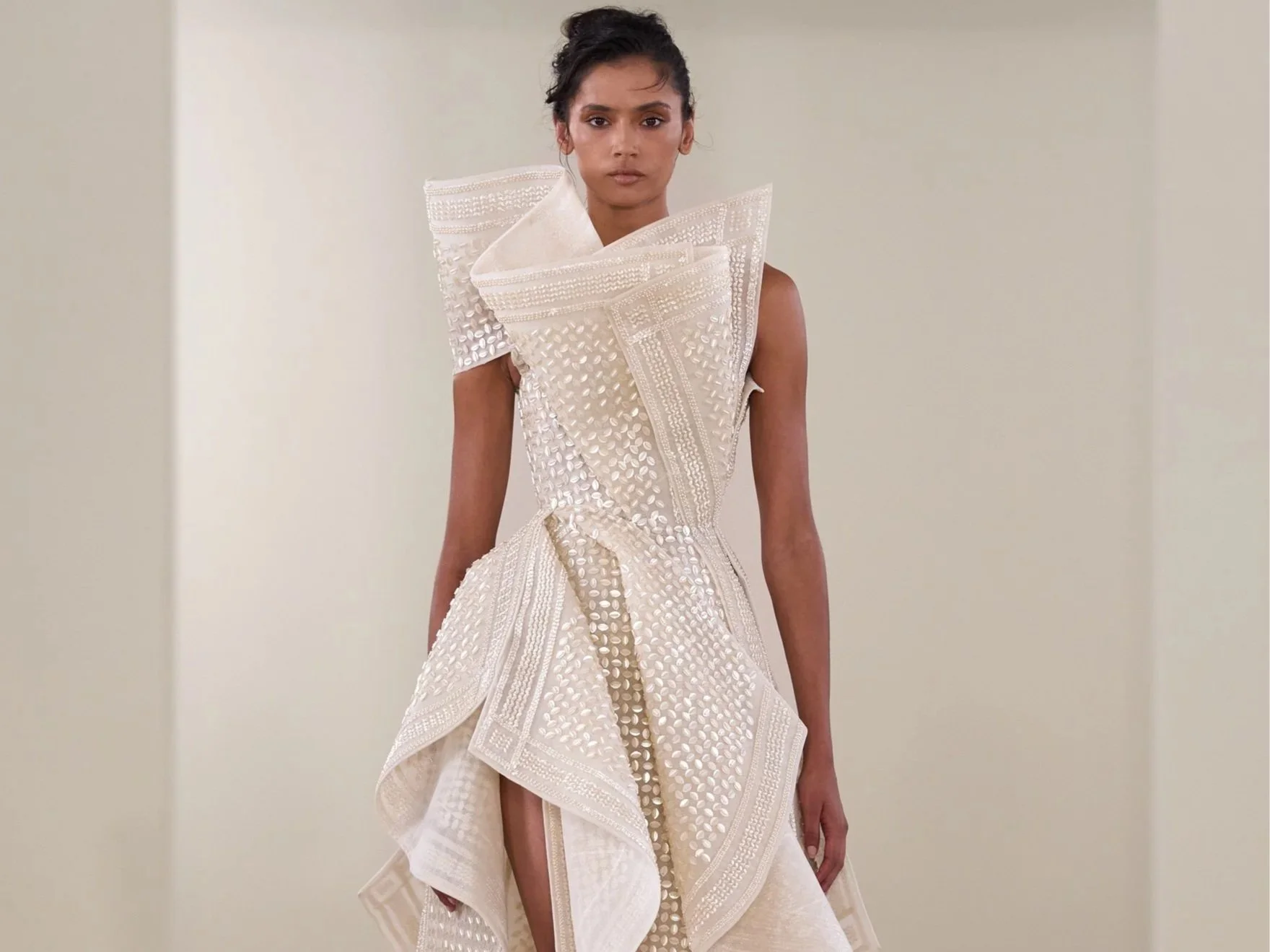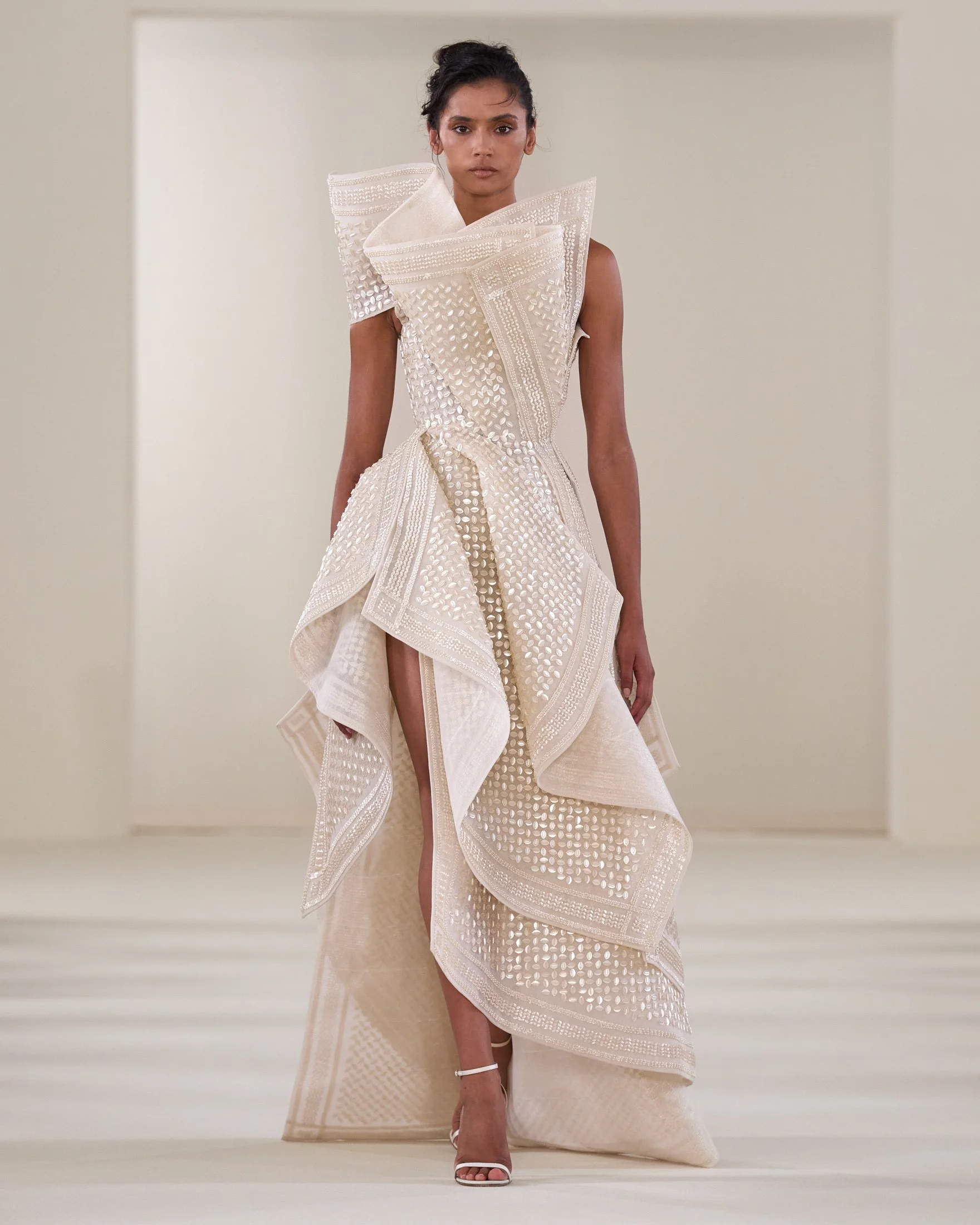
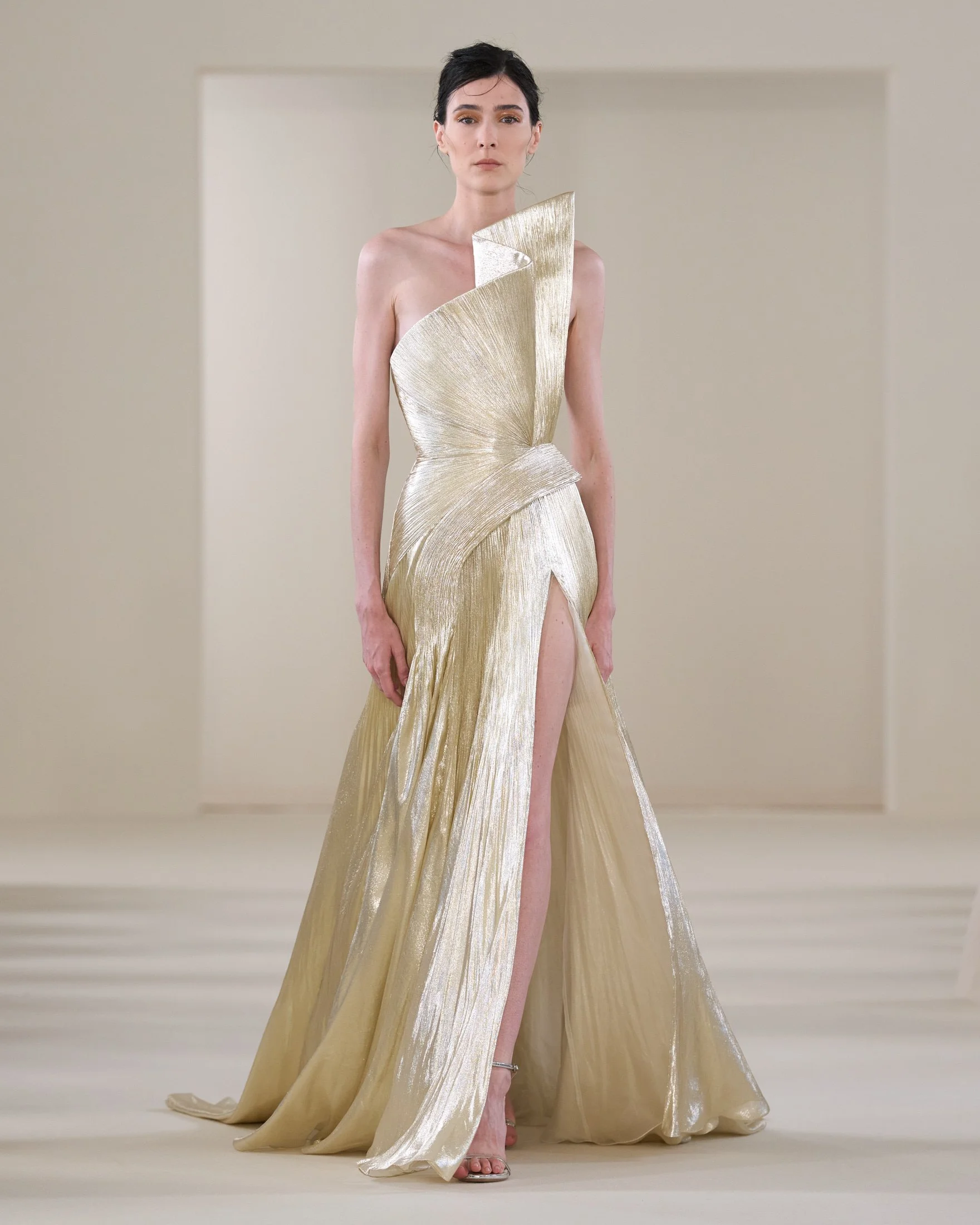
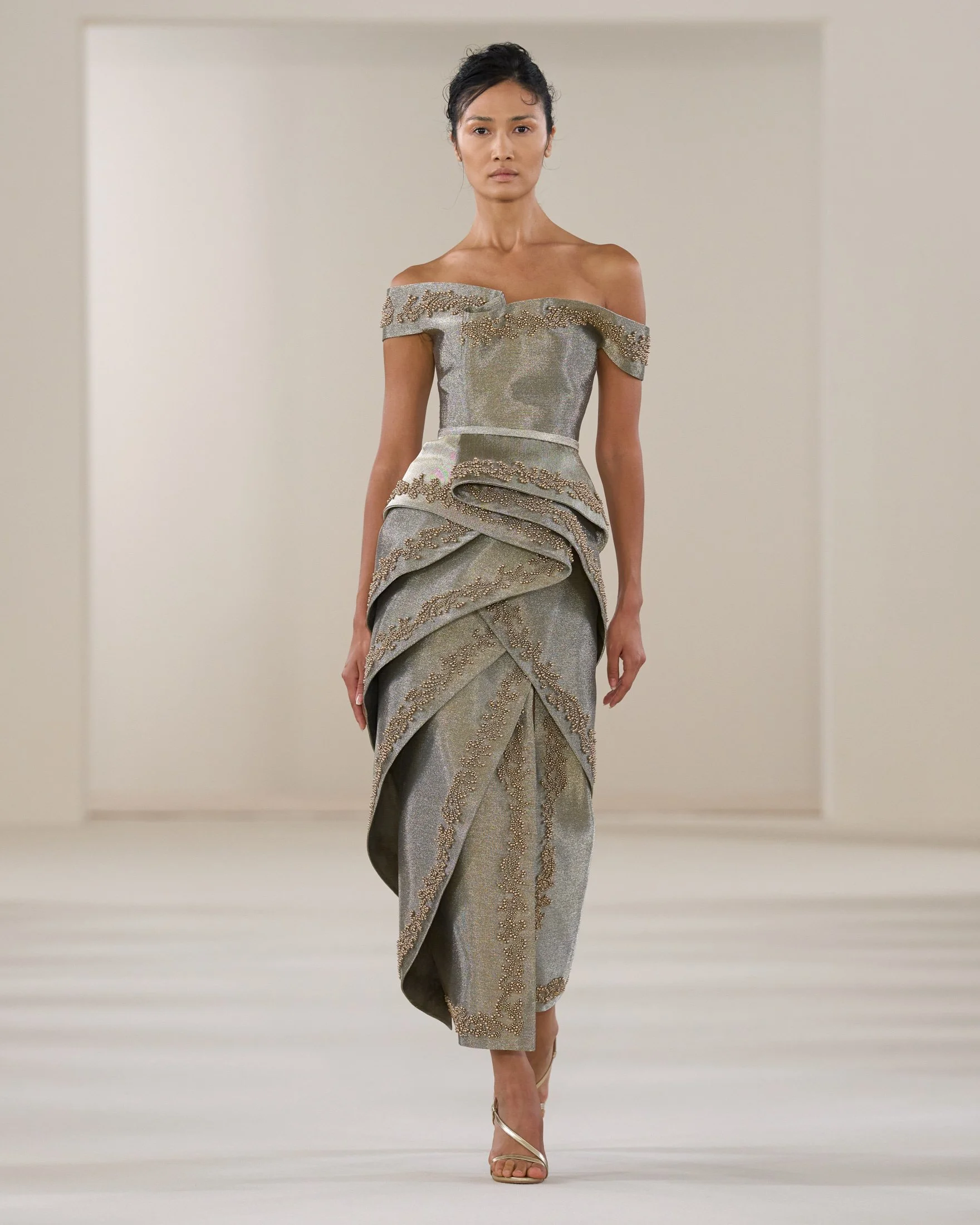
The first look in Rami Al Ali’s Fall/Winter 2027 couture collection establishes the idea that runs through the gowns that follow: fabric treated as structure. Influenced by the shemagh, the traditional head covering worn across parts of the Arab world, the piece translates the principle of folded fabric into a sculptural silhouette, with overlapping planes crossing the body and creating movement through construction alone.
Mother-of-pearl embroidery traces the surface, but the embroidery is secondary. The defining element is the folding of the fabric, which shapes the silhouette and creates a structured relationship between cloth and body.
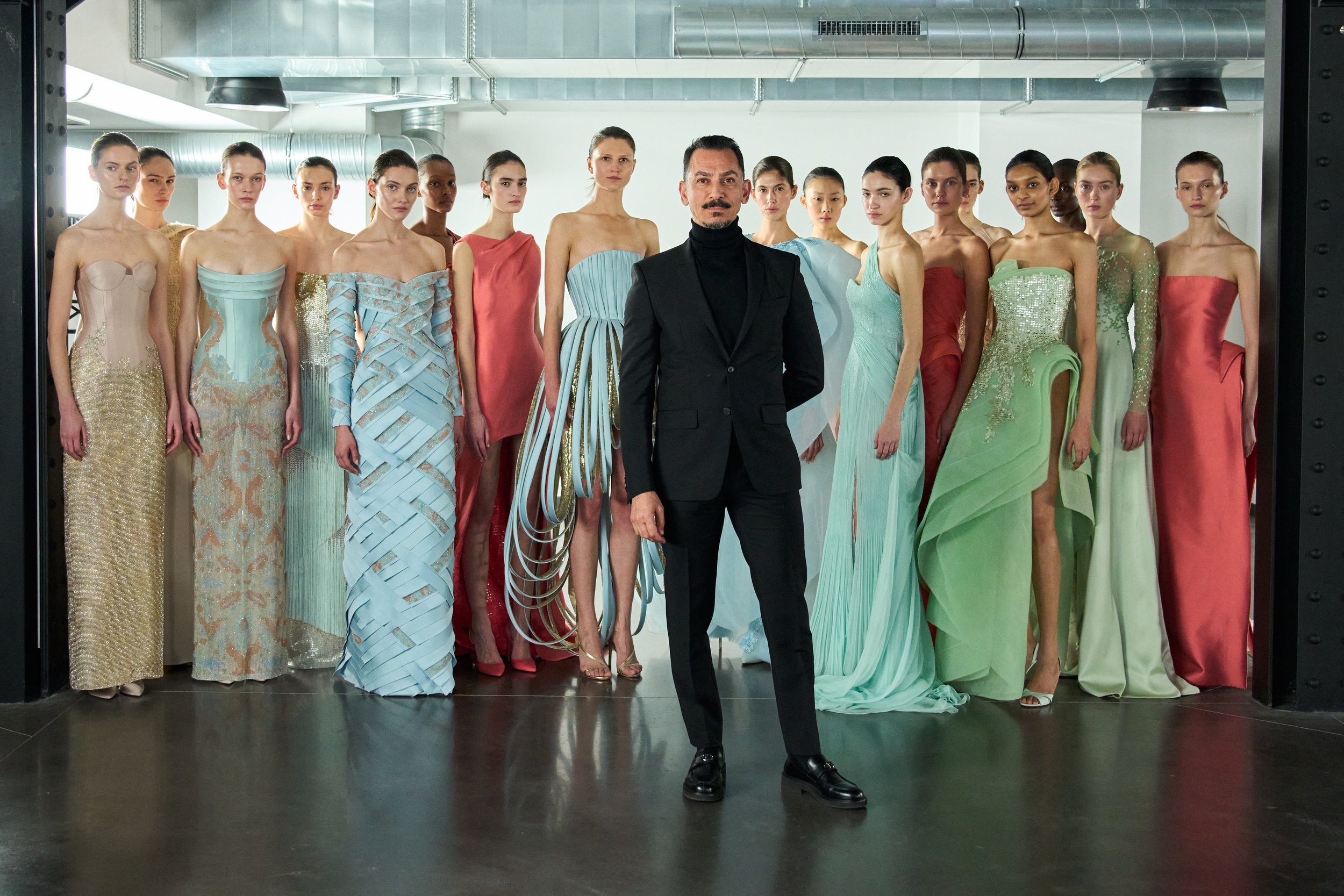
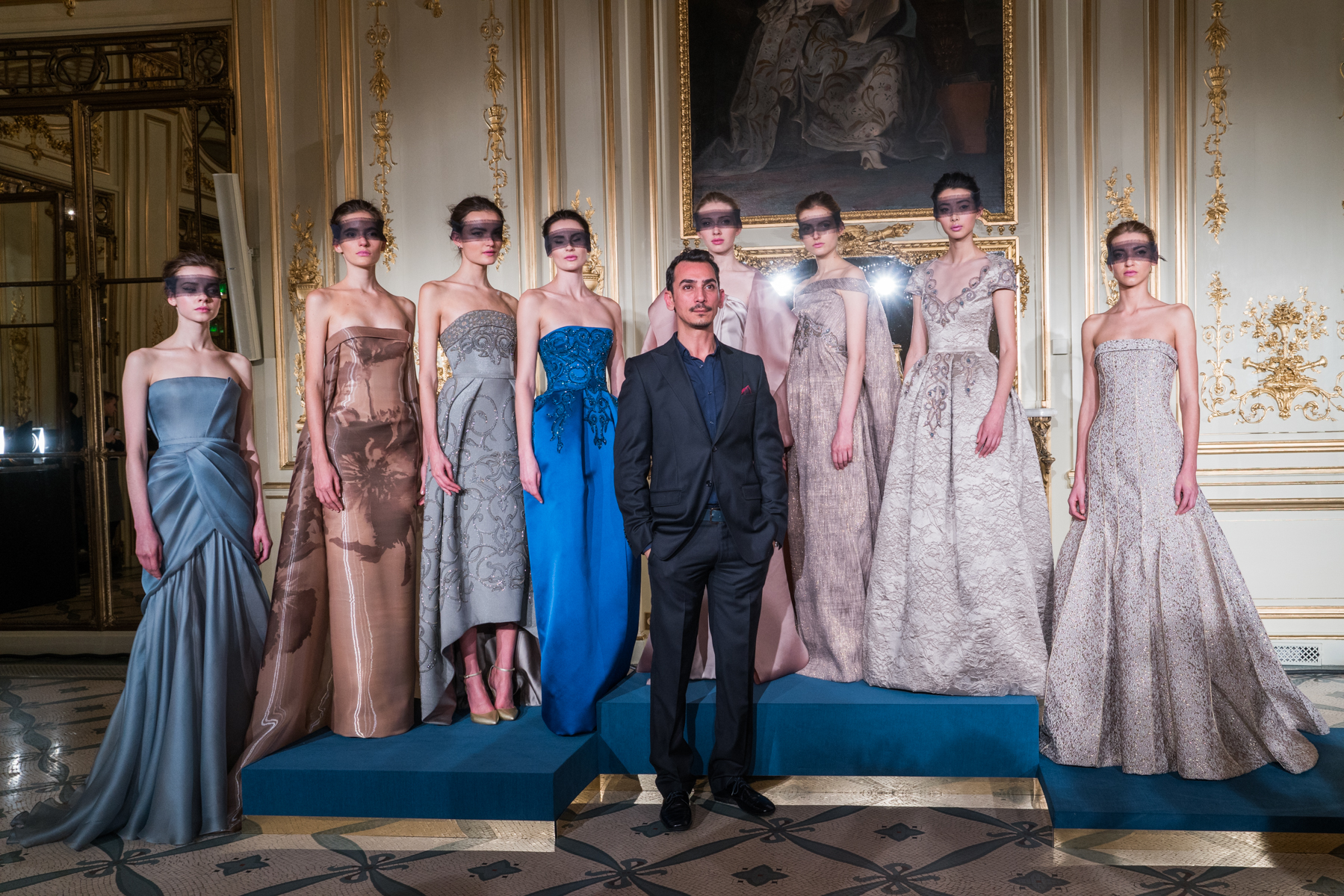
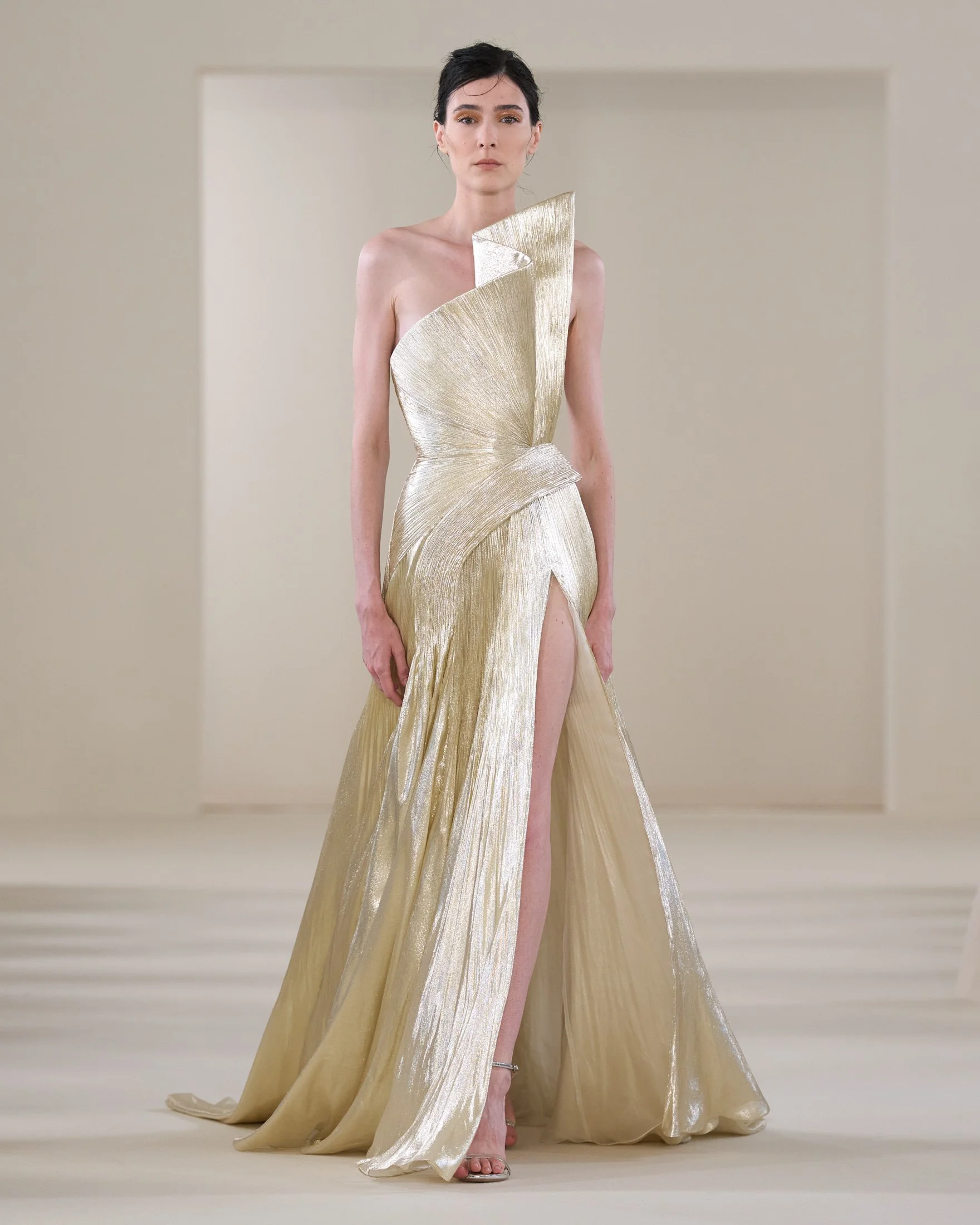
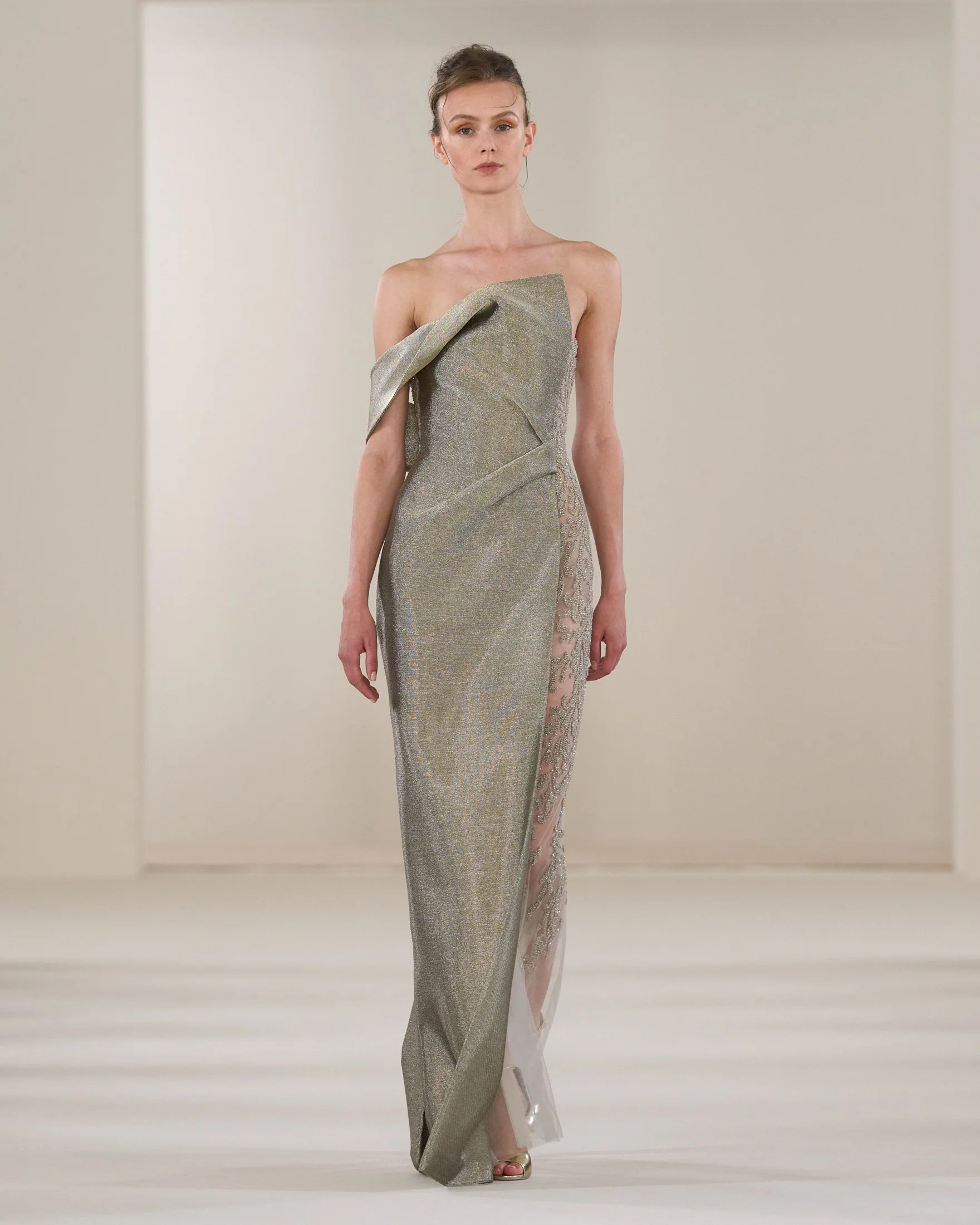
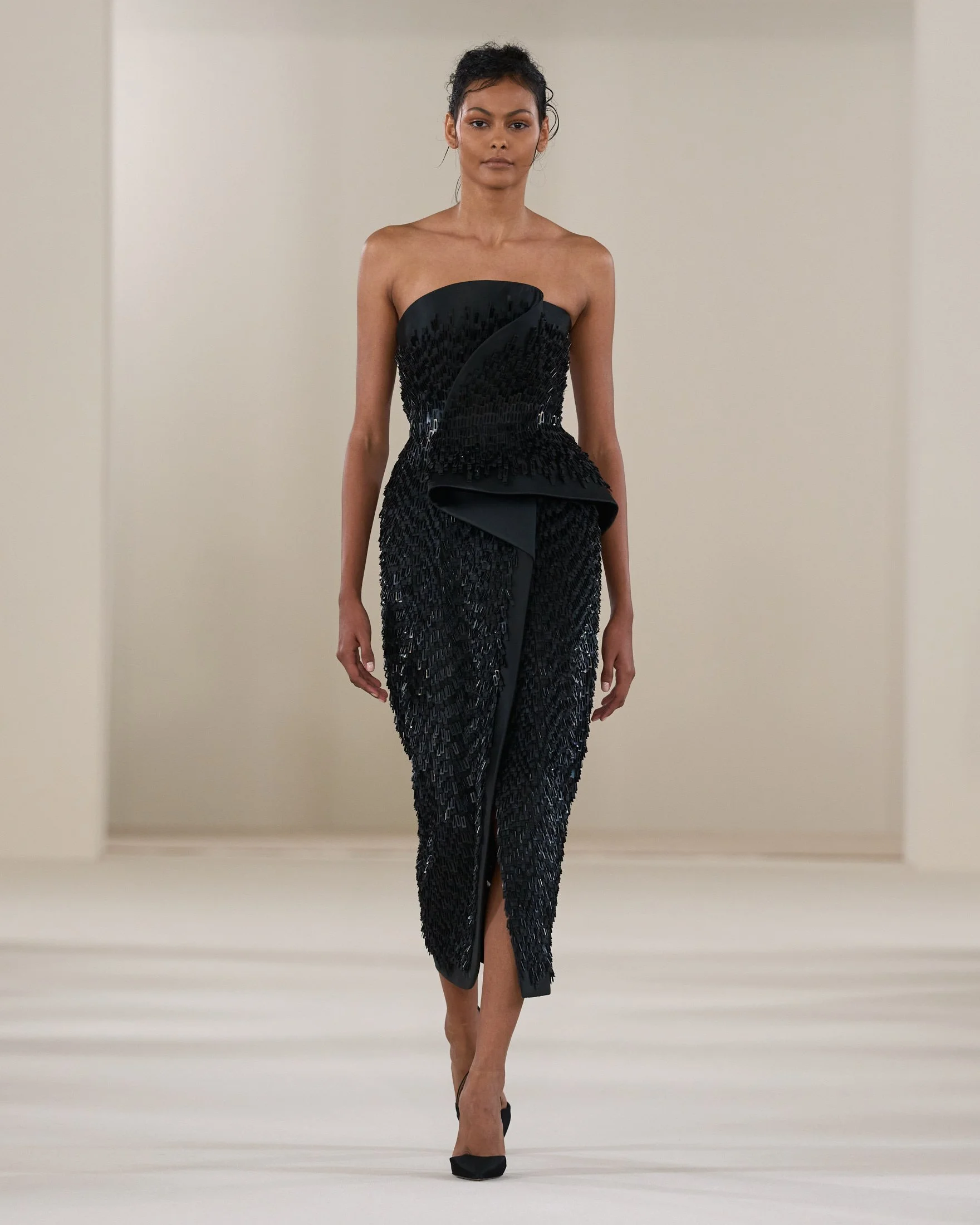
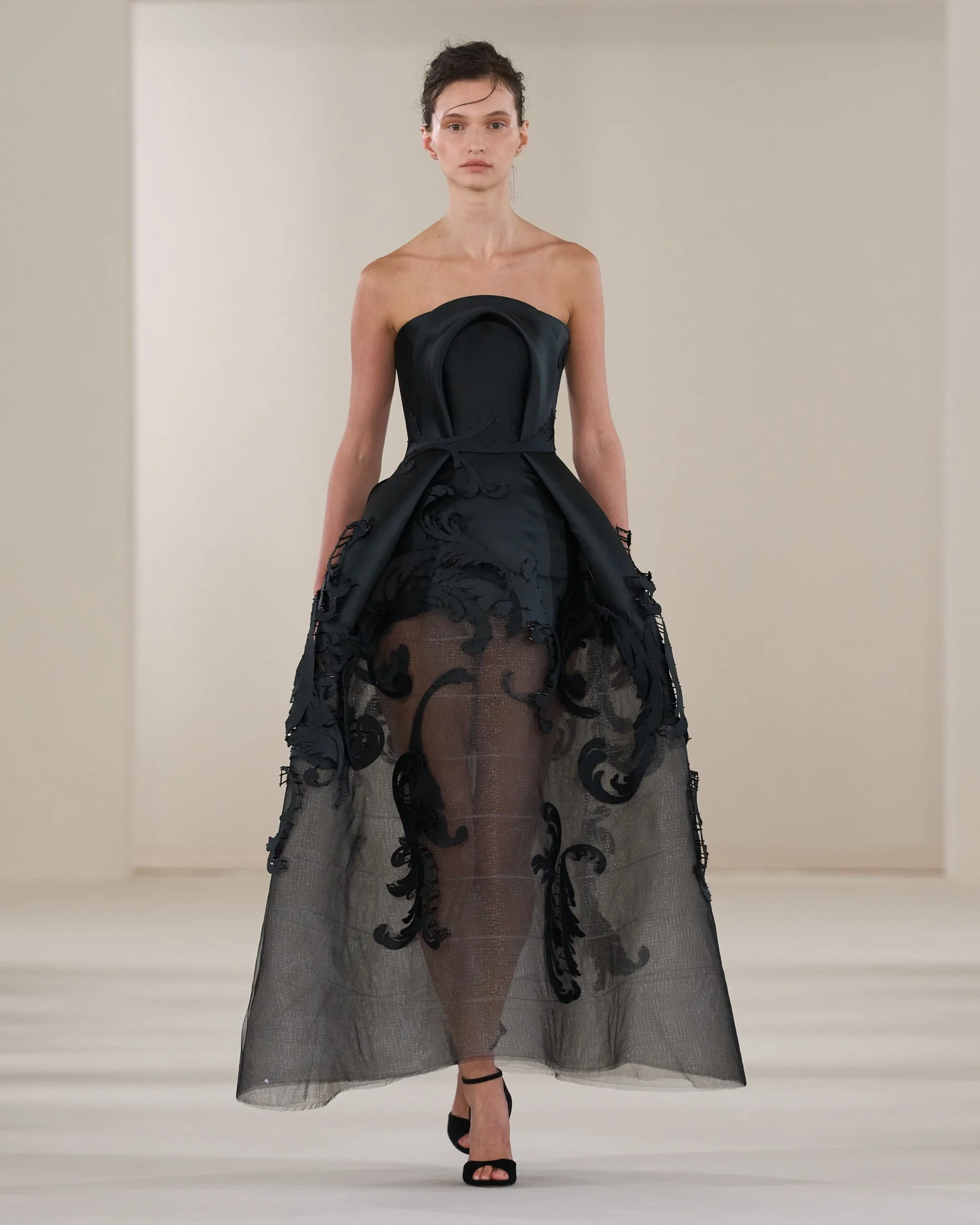
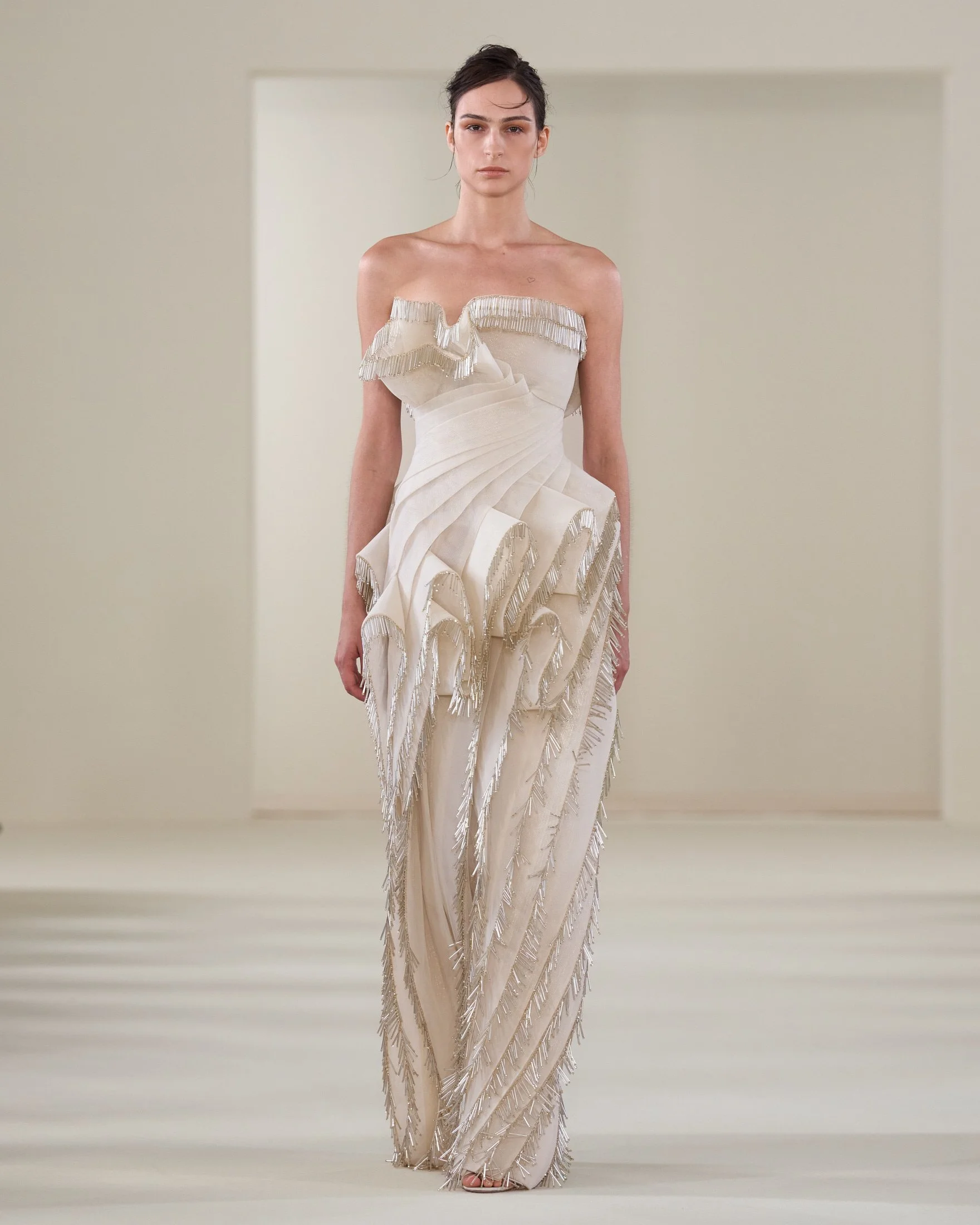
That approach continues throughout the collection. A silver column gown is interrupted by a curved structural panel extending from the waist and sweeping around the torso. Elsewhere, broad bands of fabric spiral diagonally across the figure, generating movement through tension and placement. Several gowns appear built from layered planes, their surfaces forming ridges and contours that catch the light before the embroidery comes into focus.
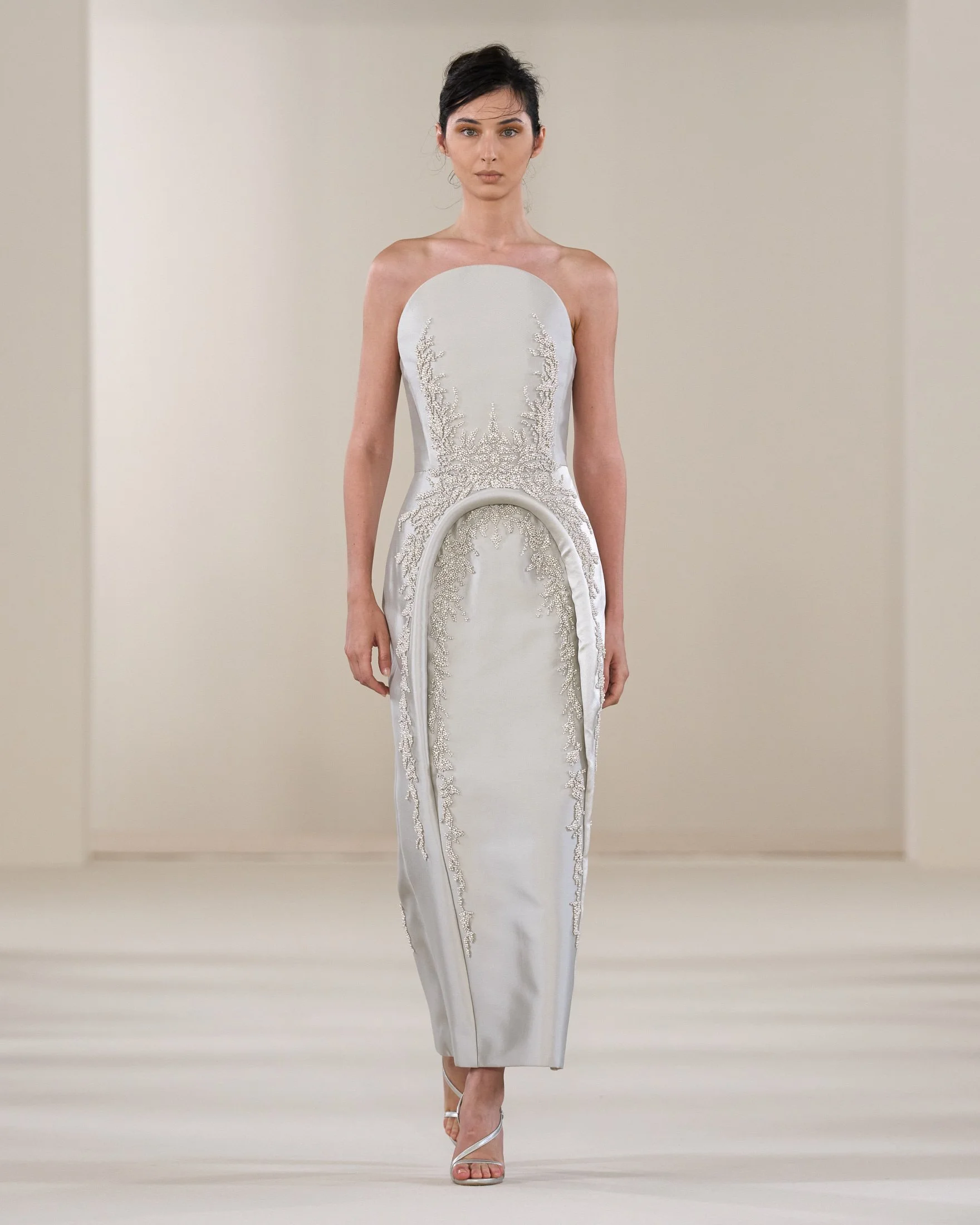
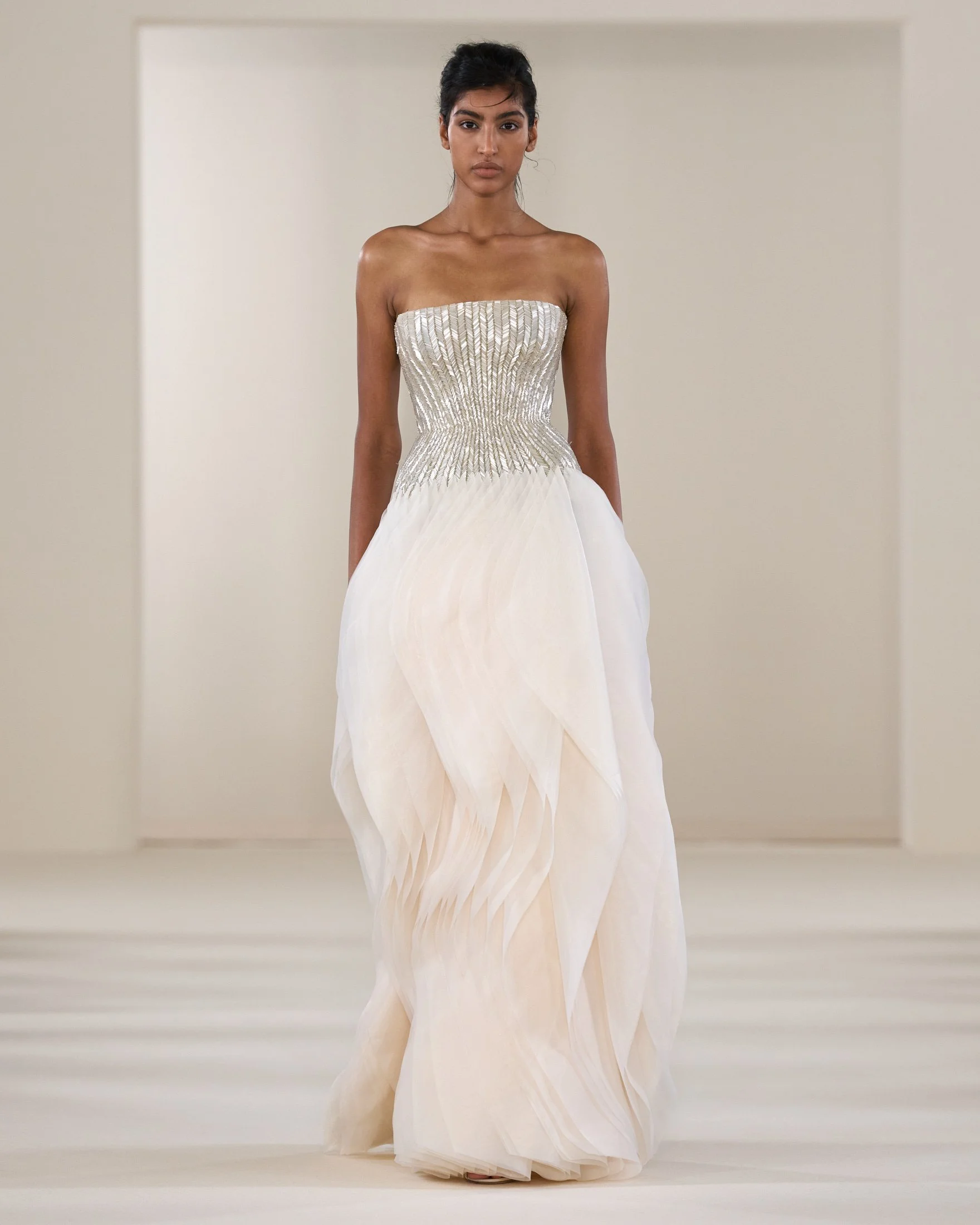
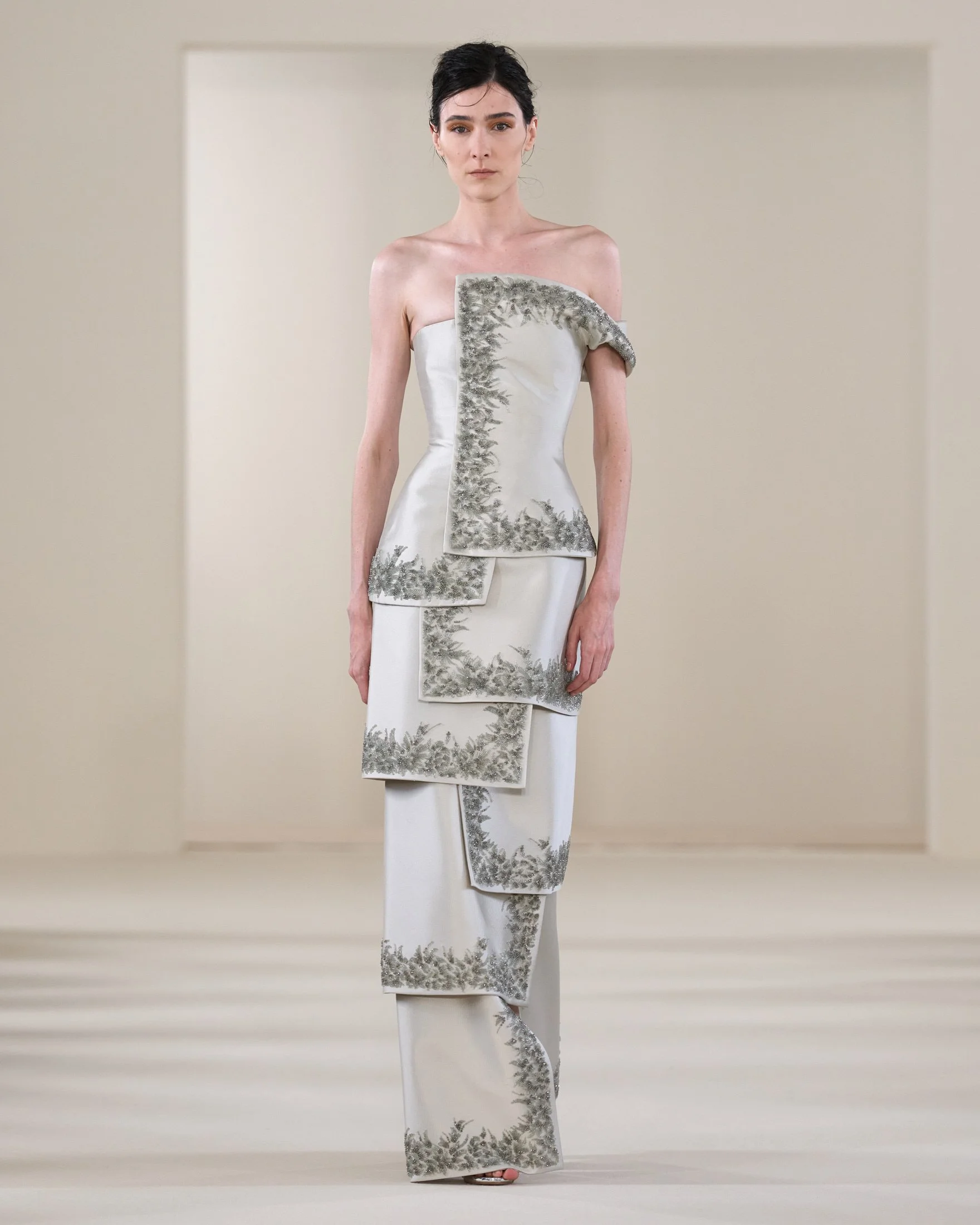
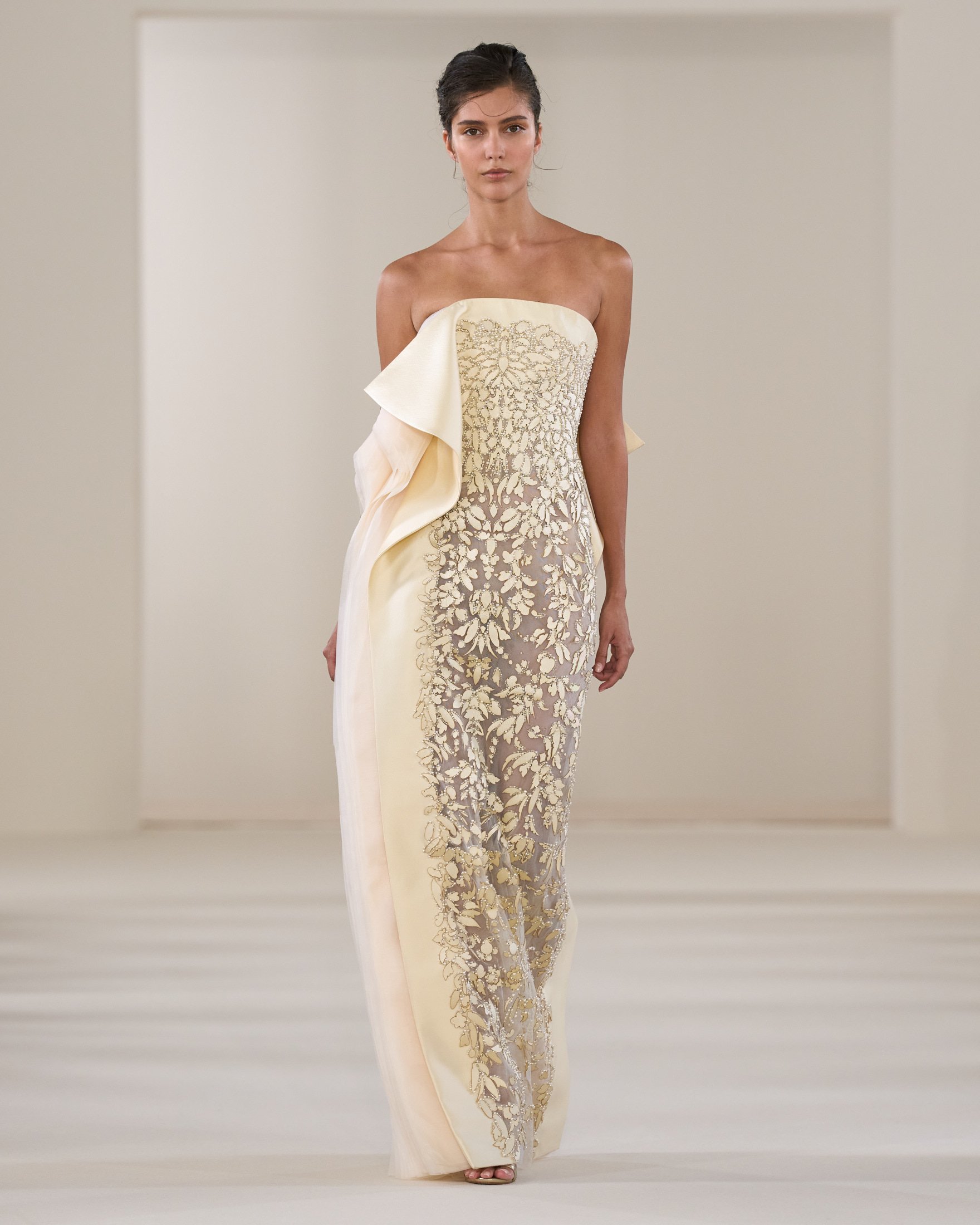
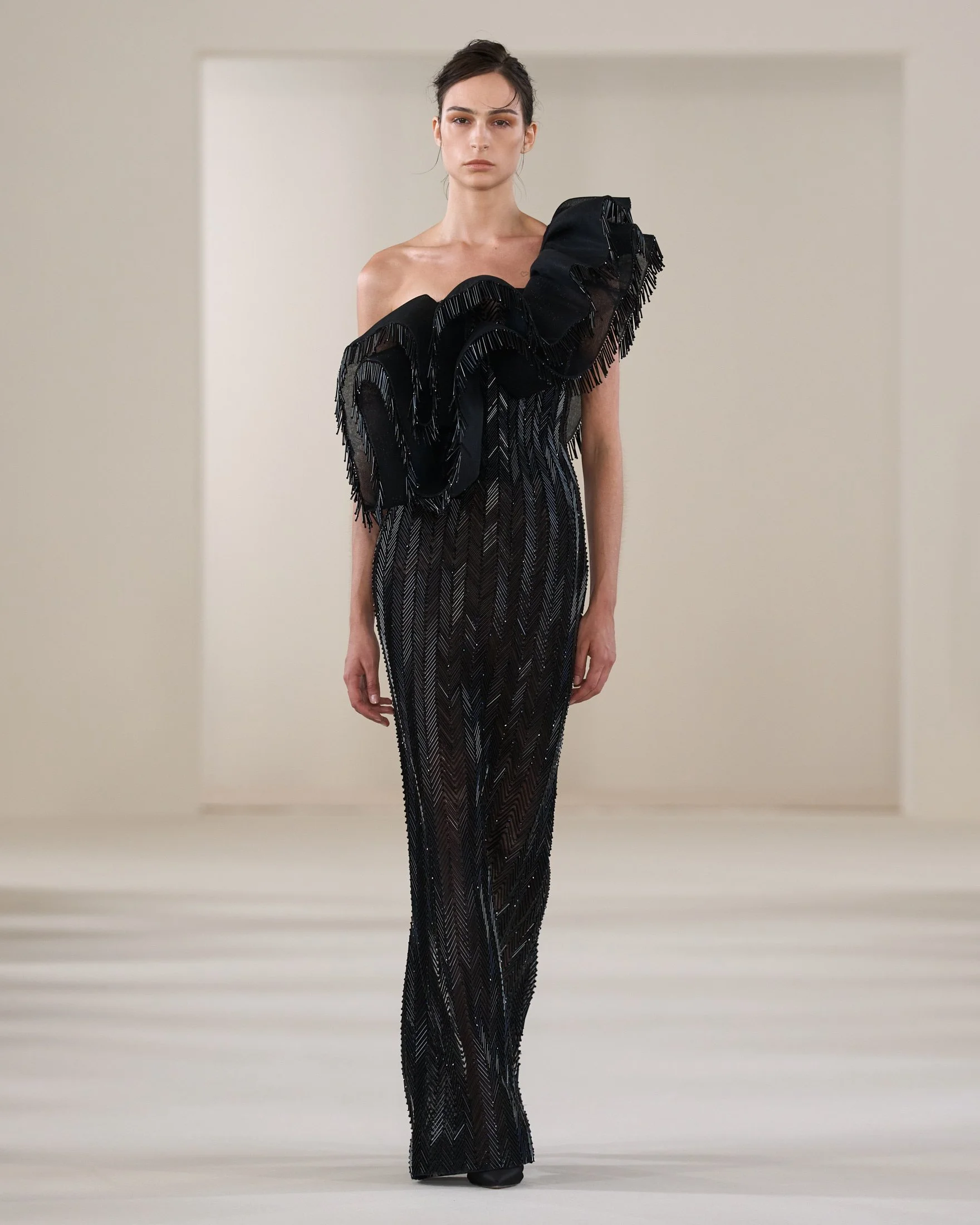
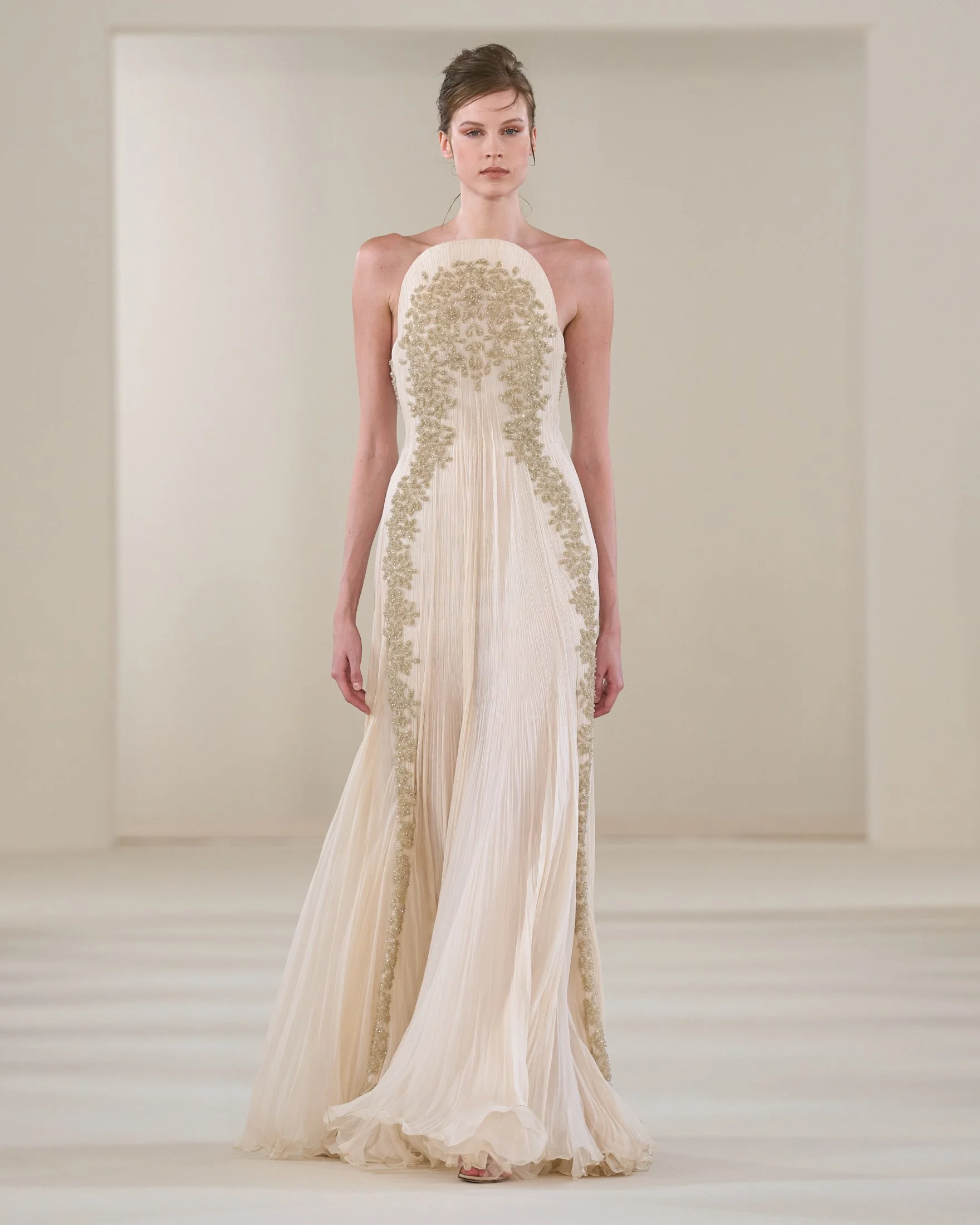
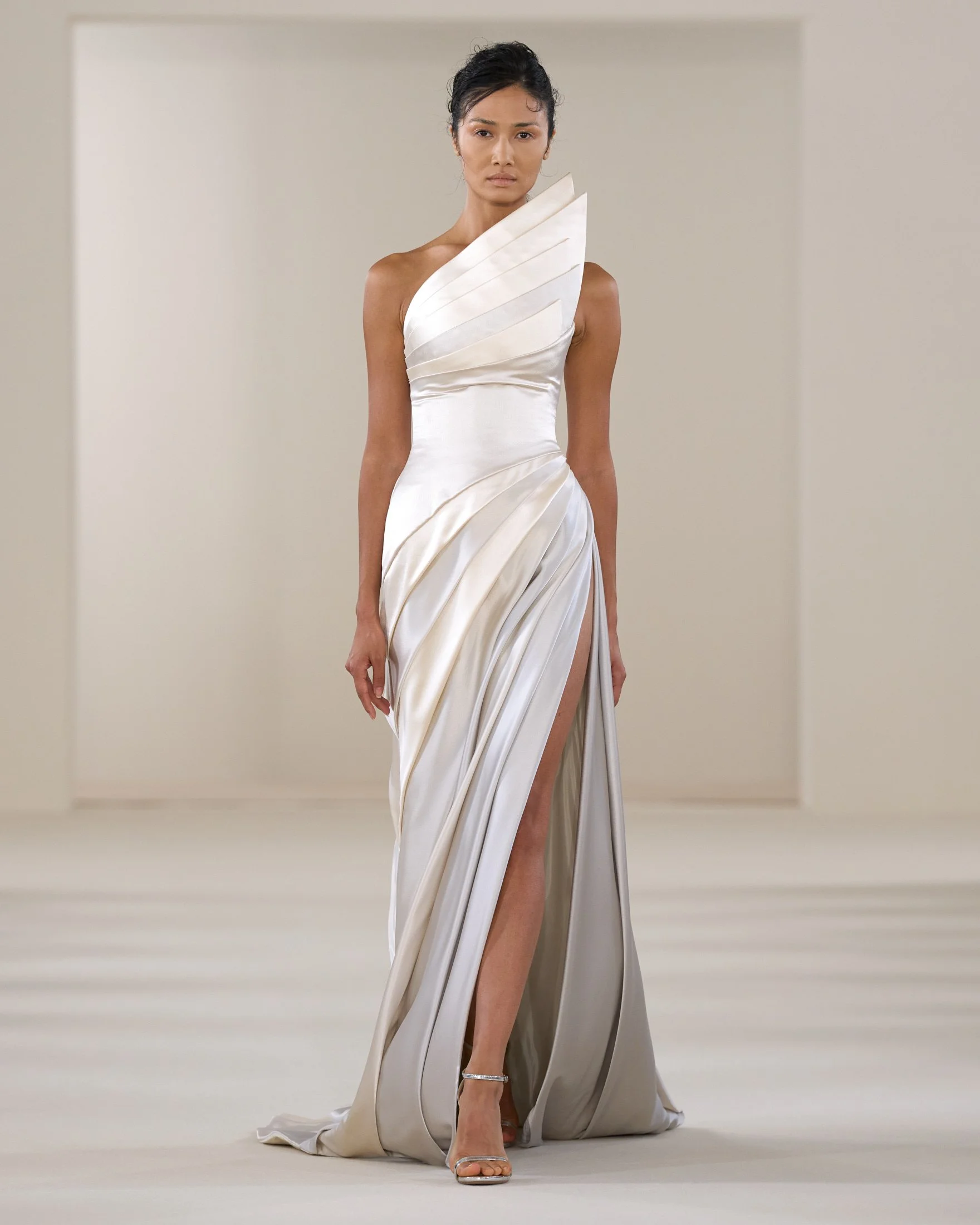
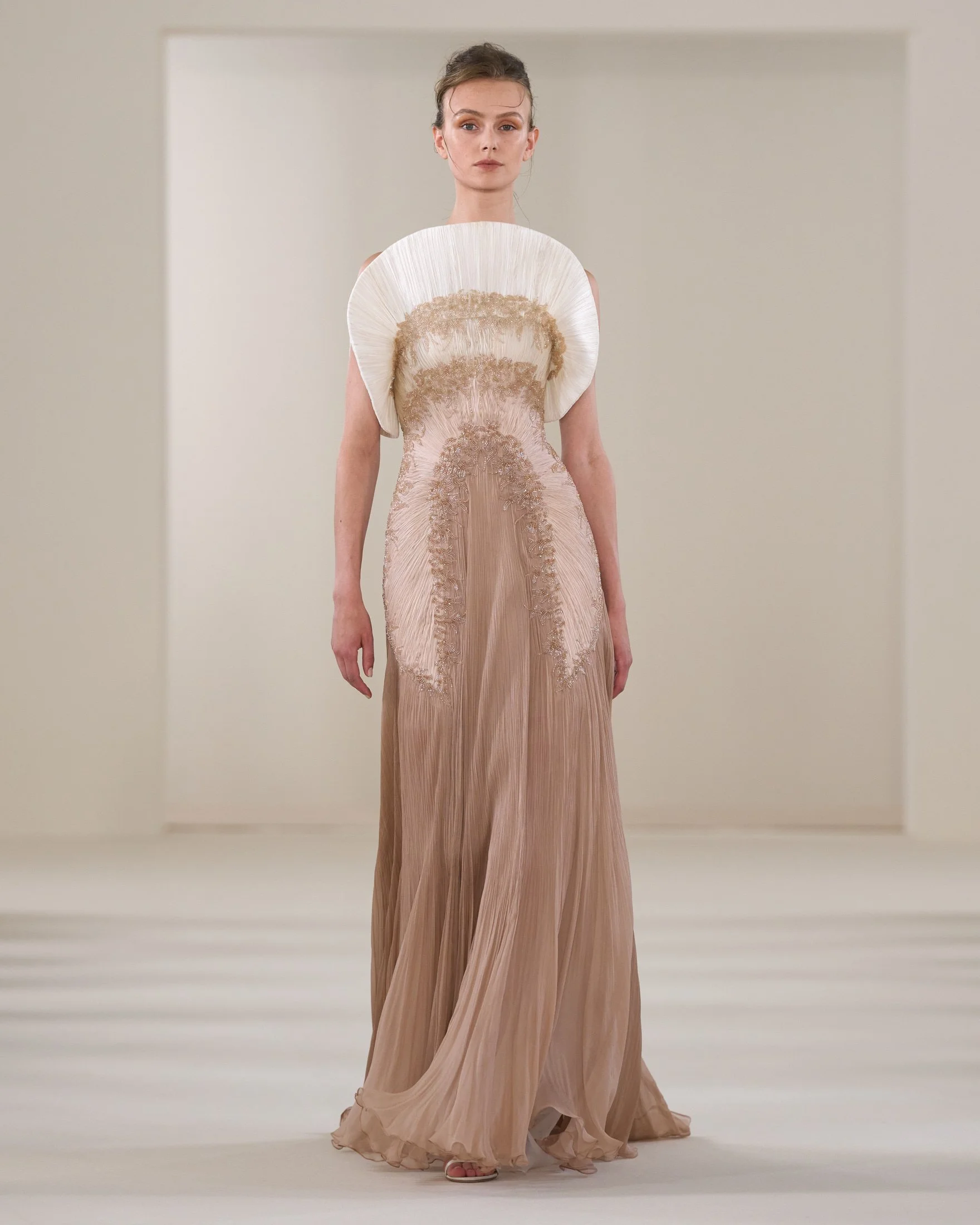
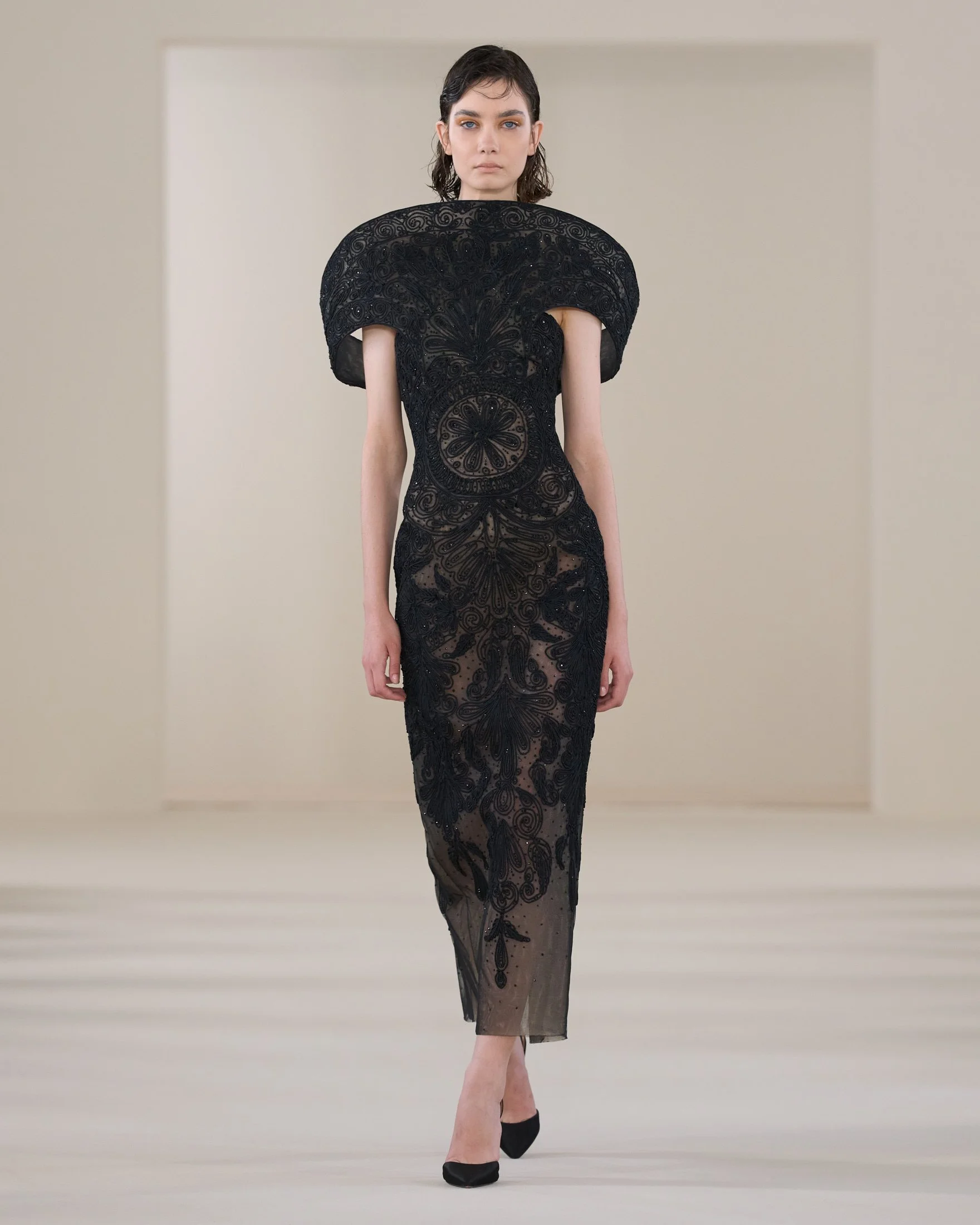
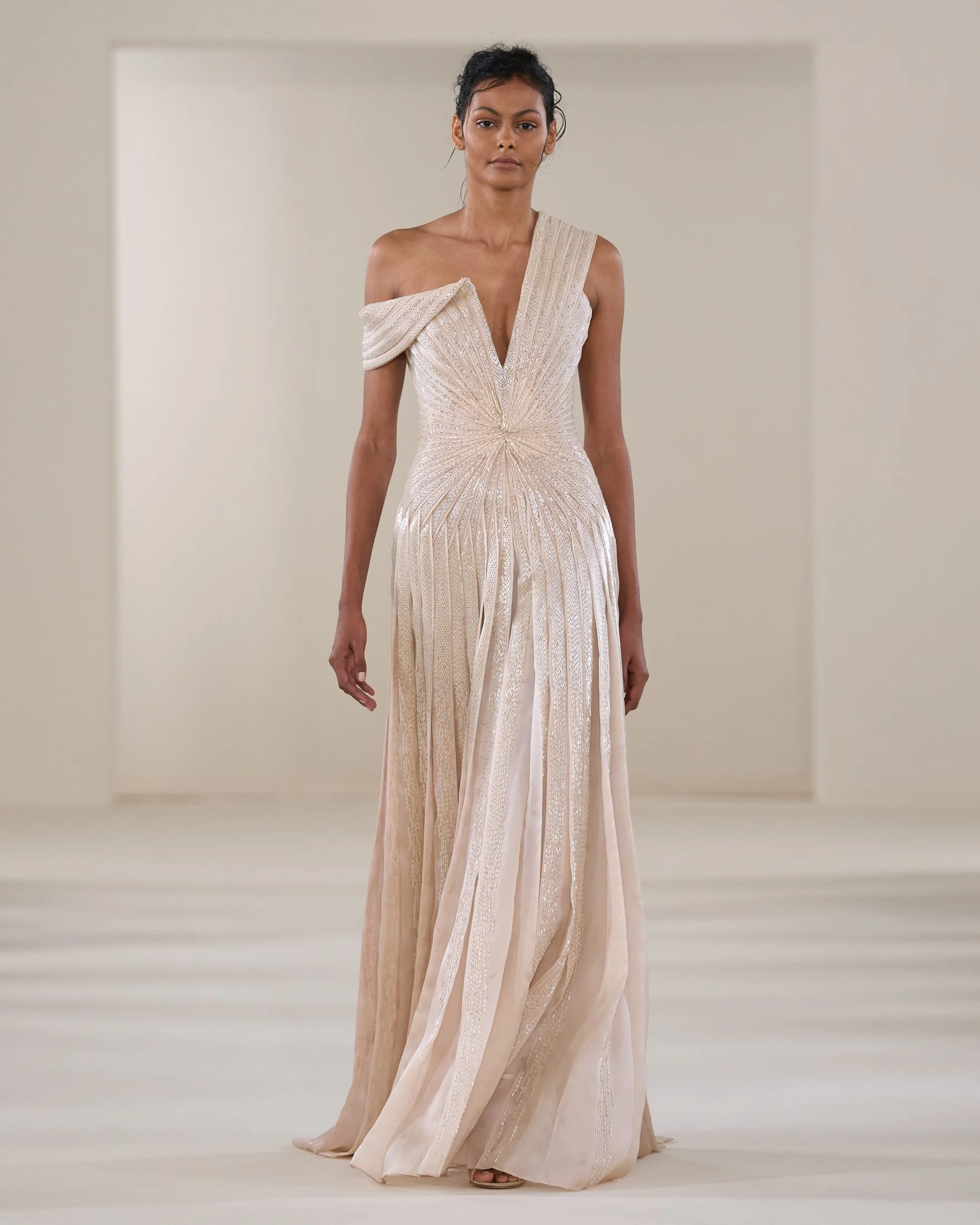
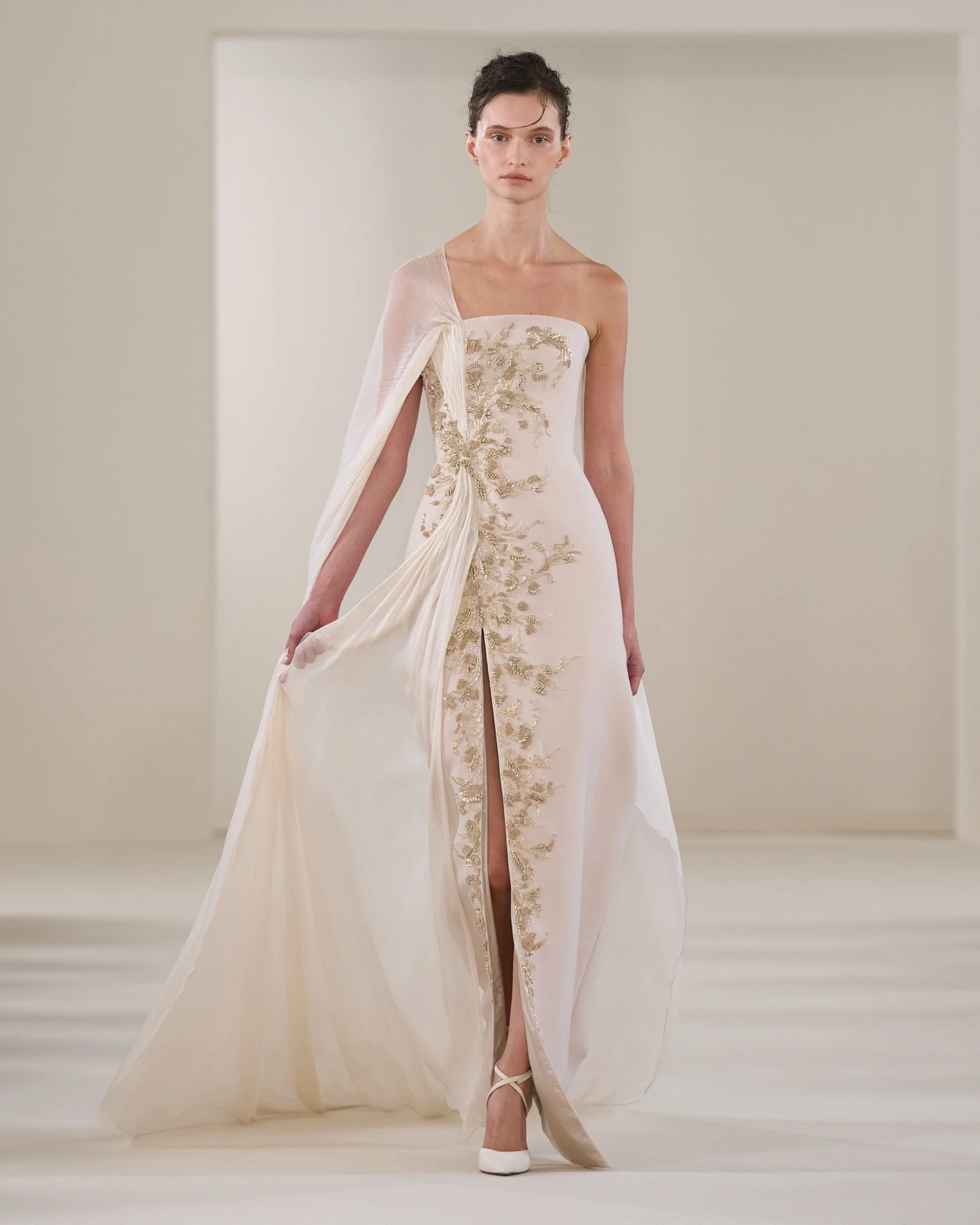
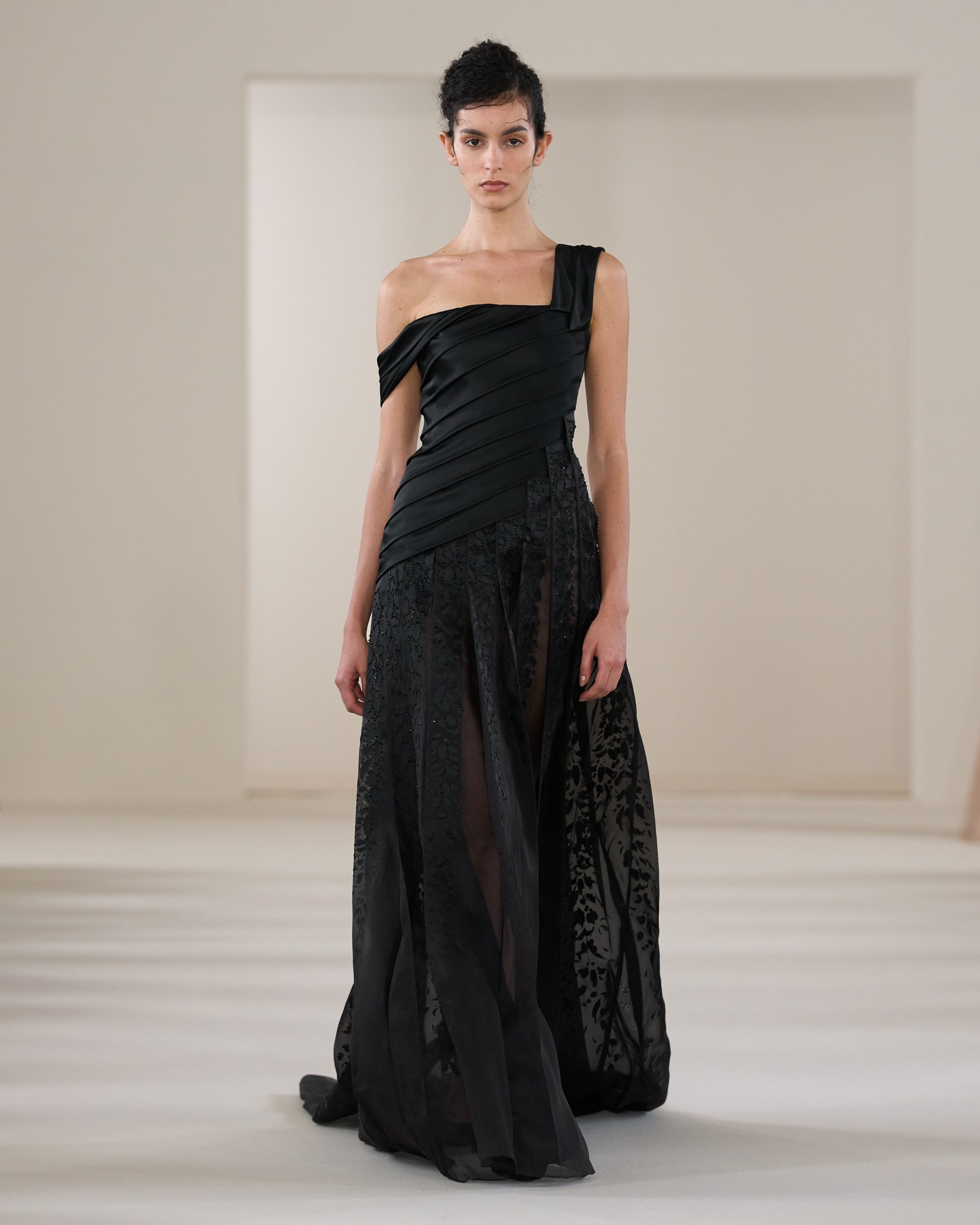
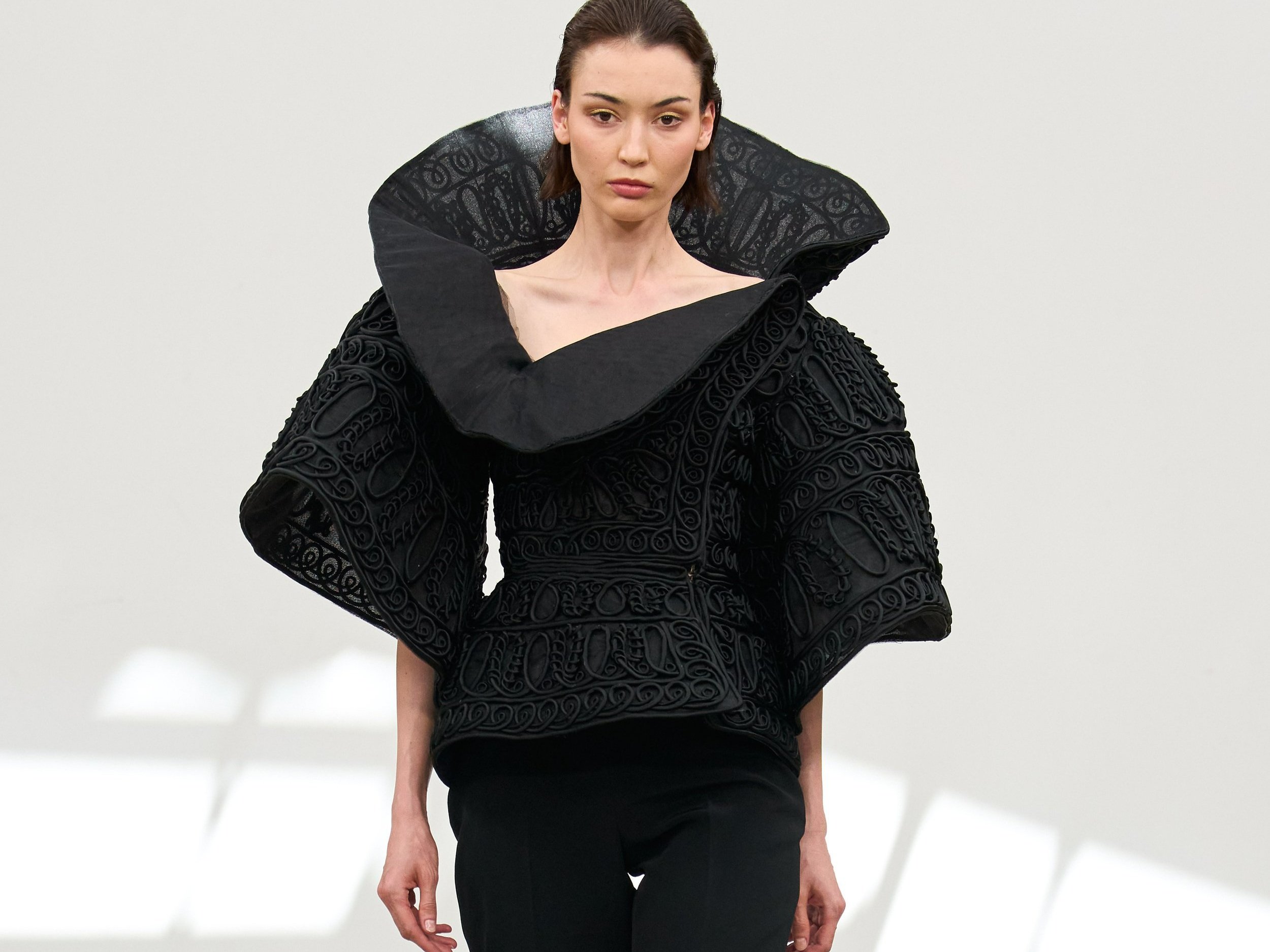
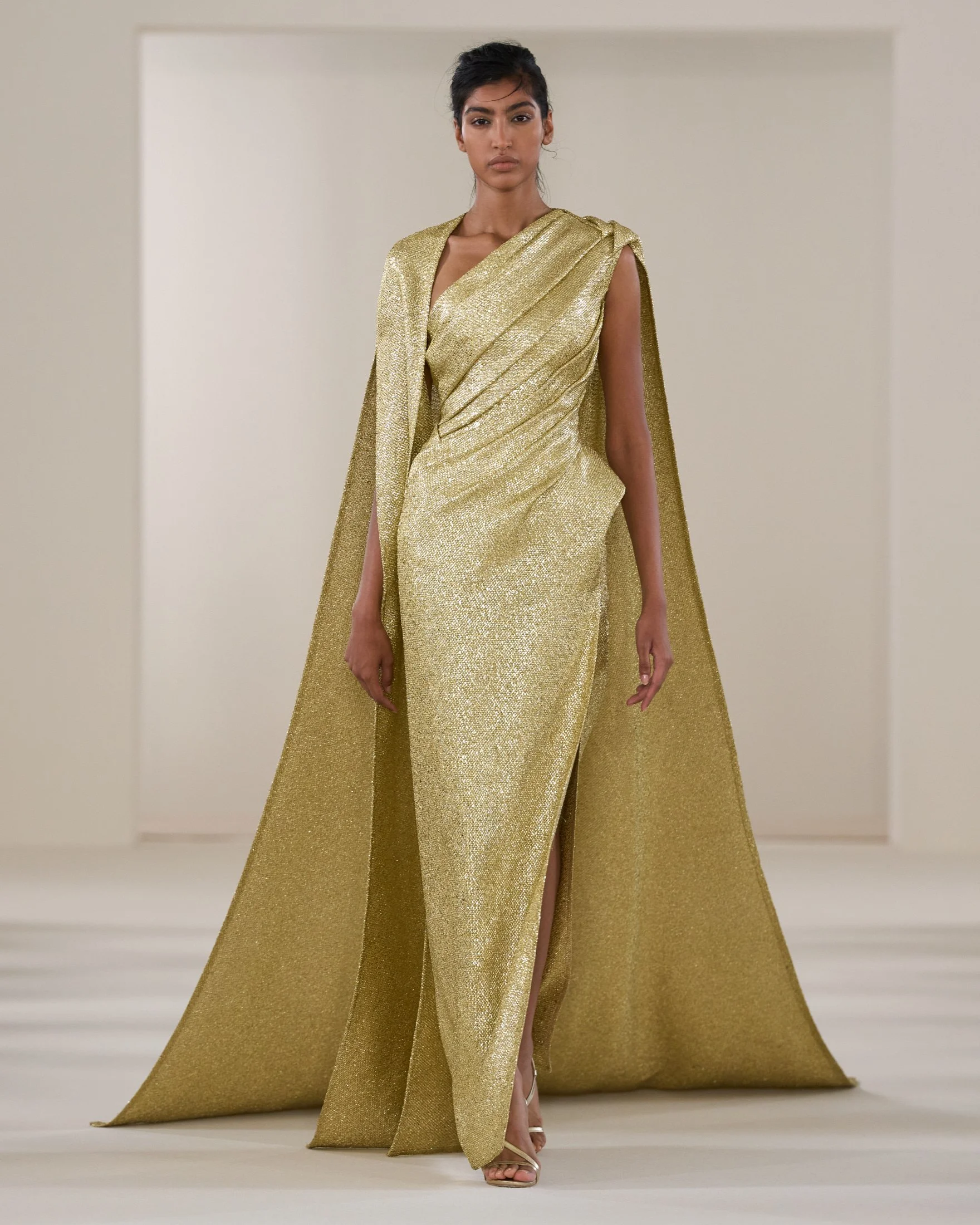
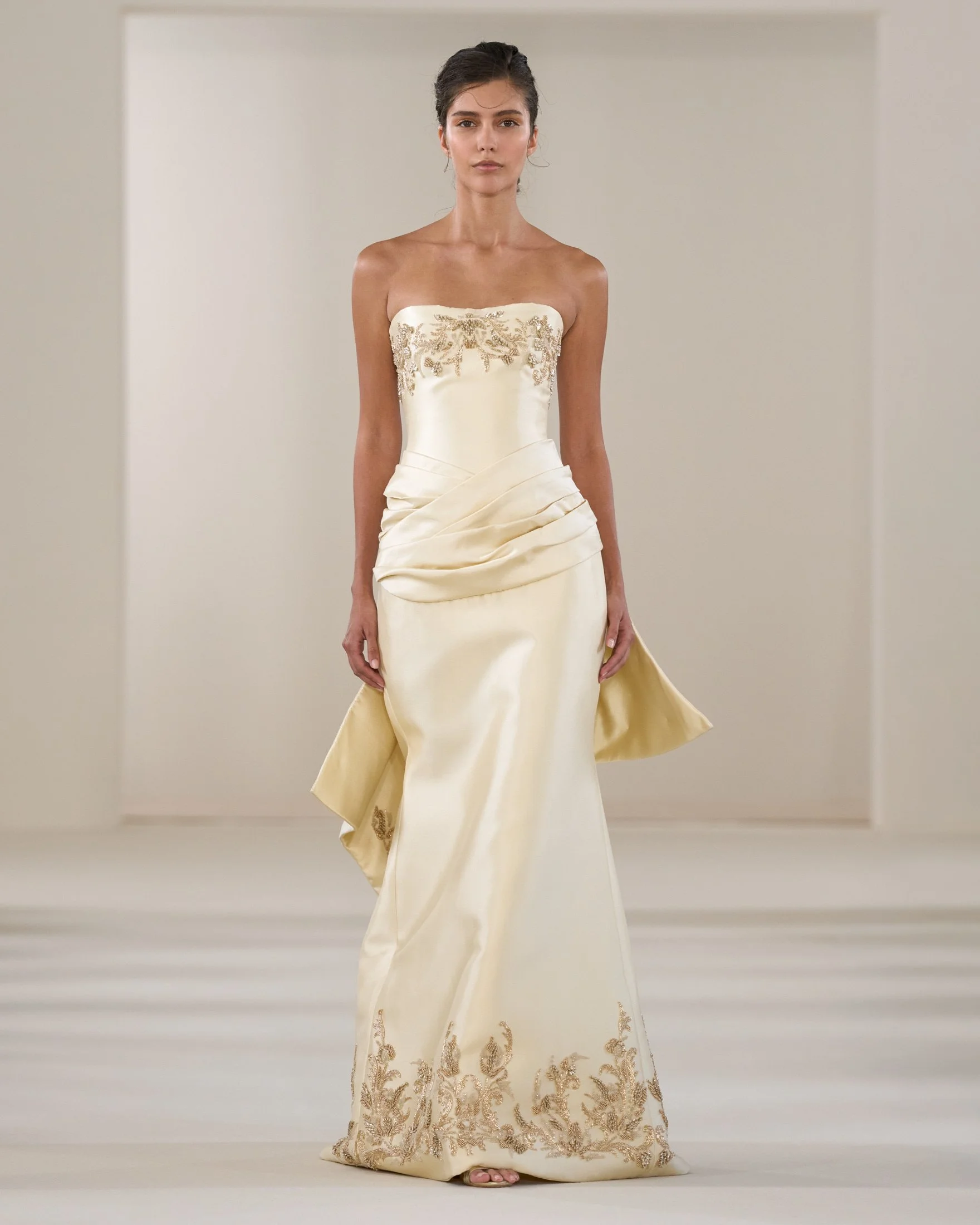
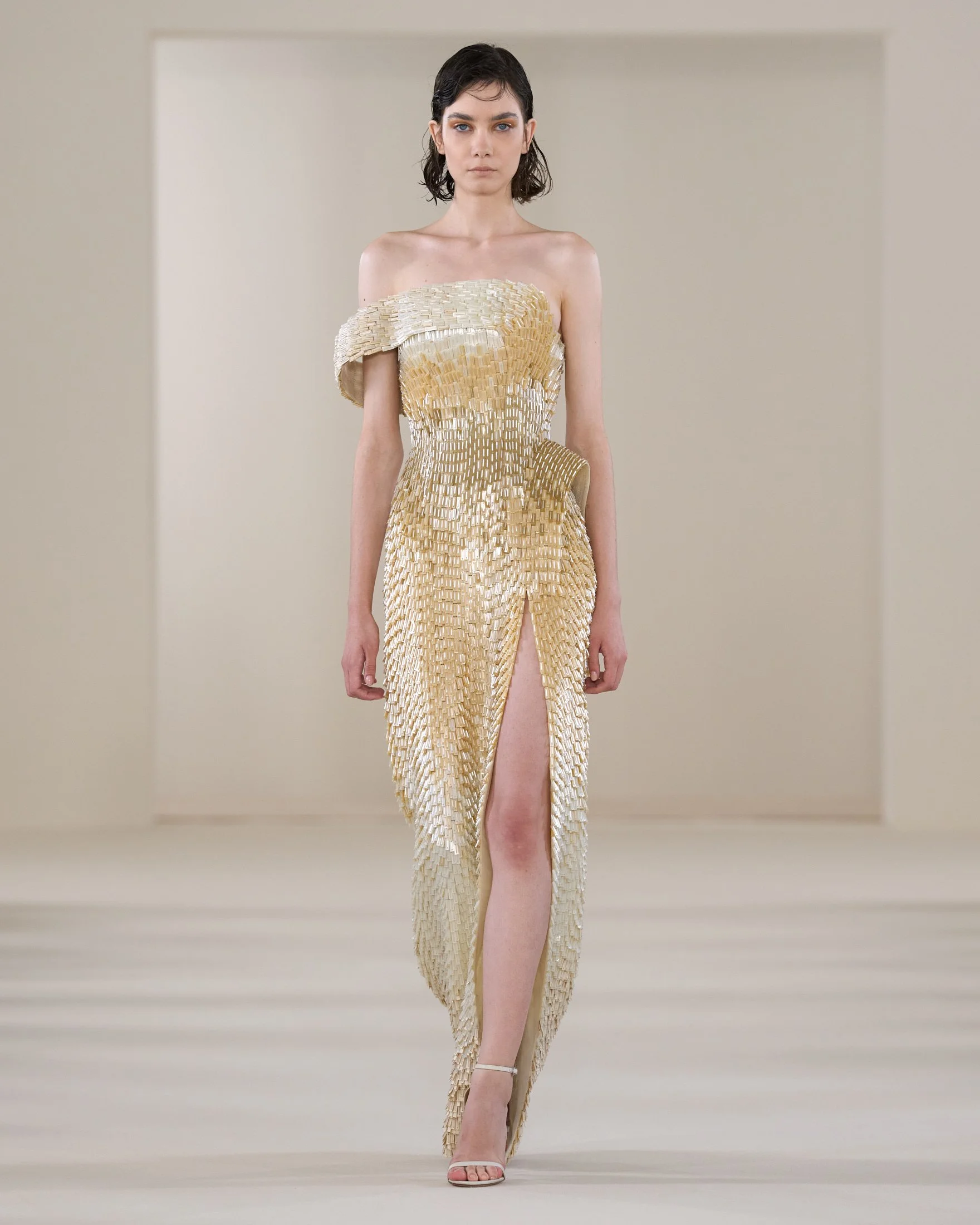
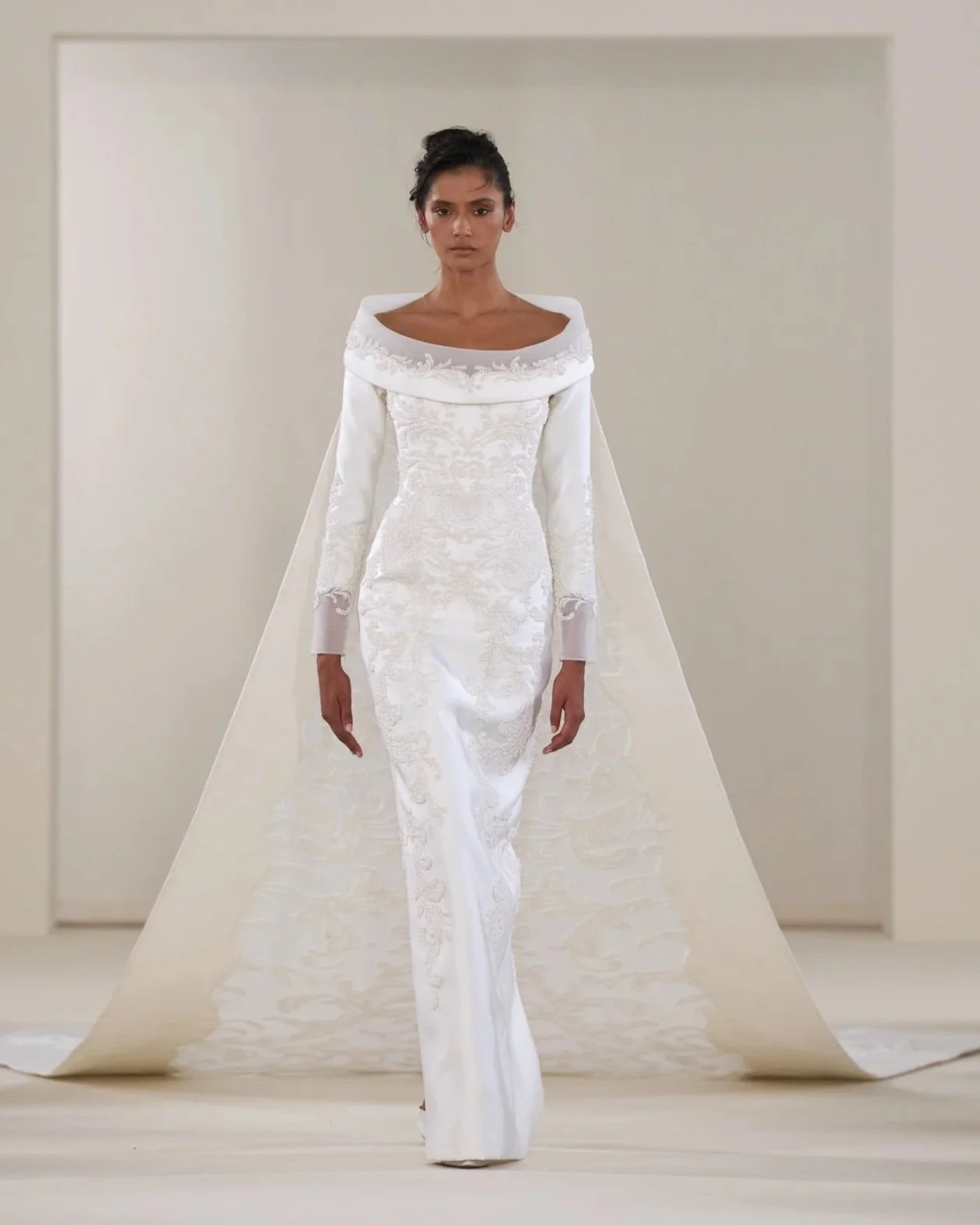
The fold becomes the collection’s defining gesture. It appears in asymmetrical bodices, sculpted shoulders and wrapped skirts, sometimes creating volume, sometimes creating restraint. These are not loose gestures of drapery; they establish the underlying architecture of each garment.
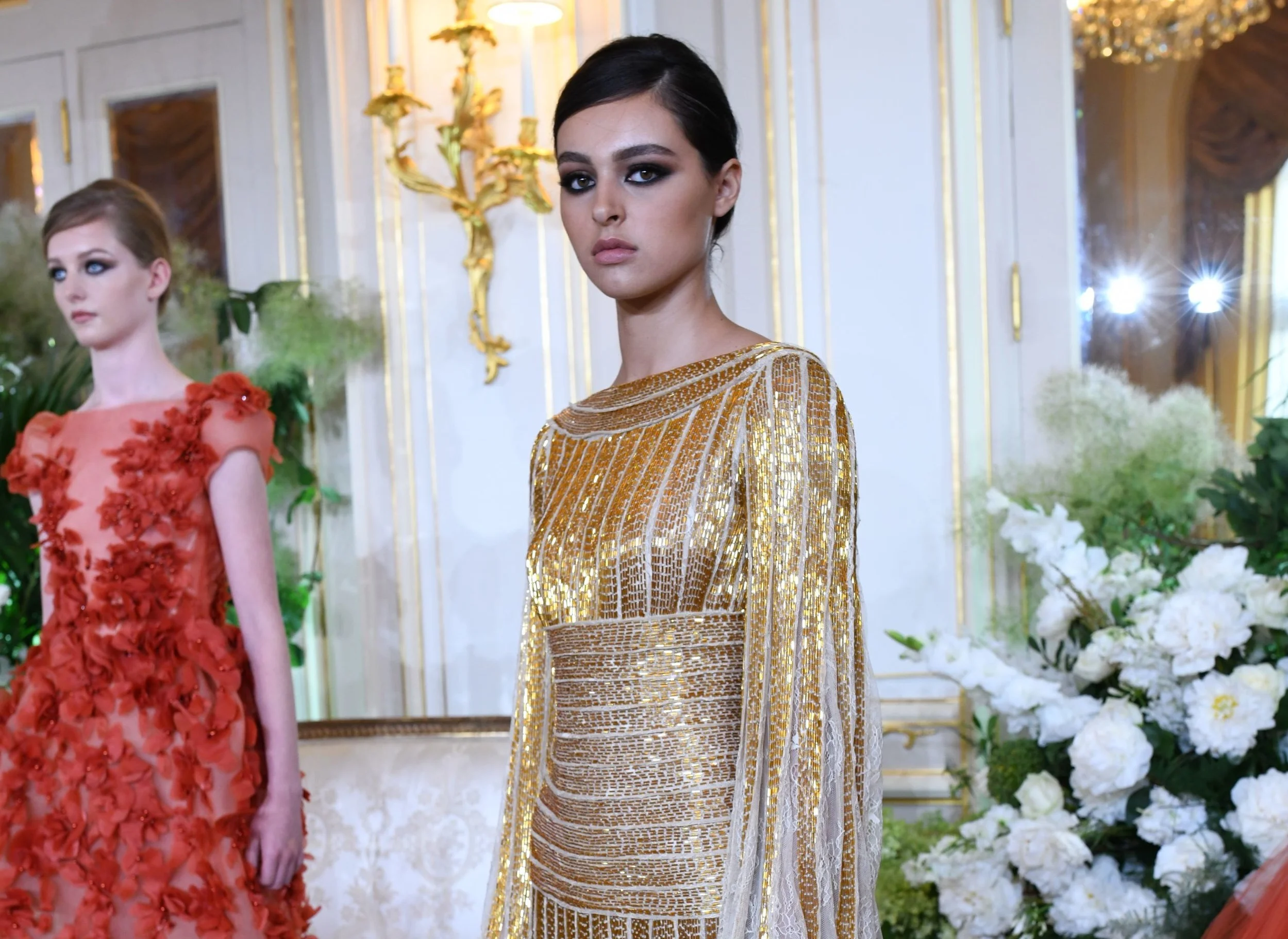
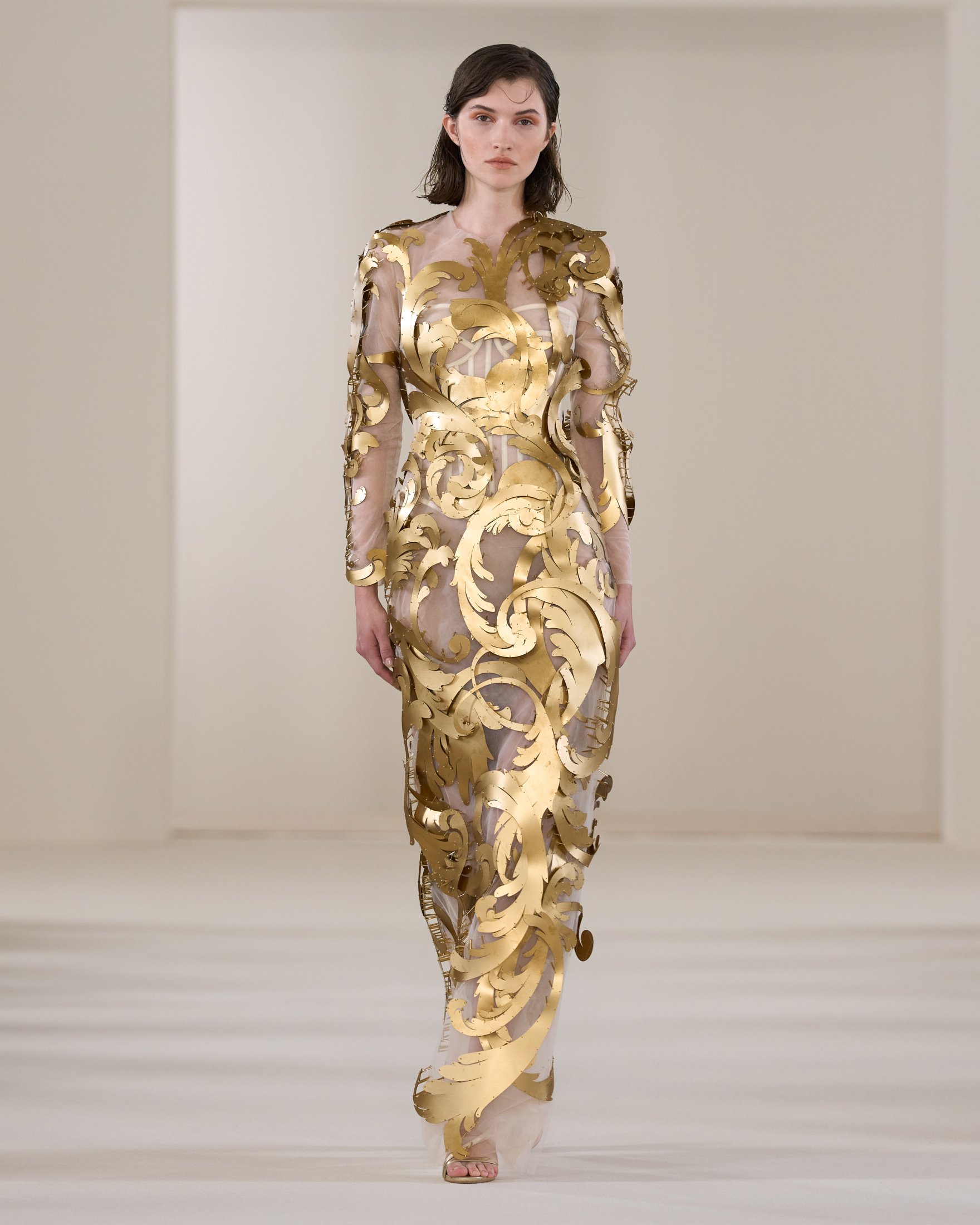
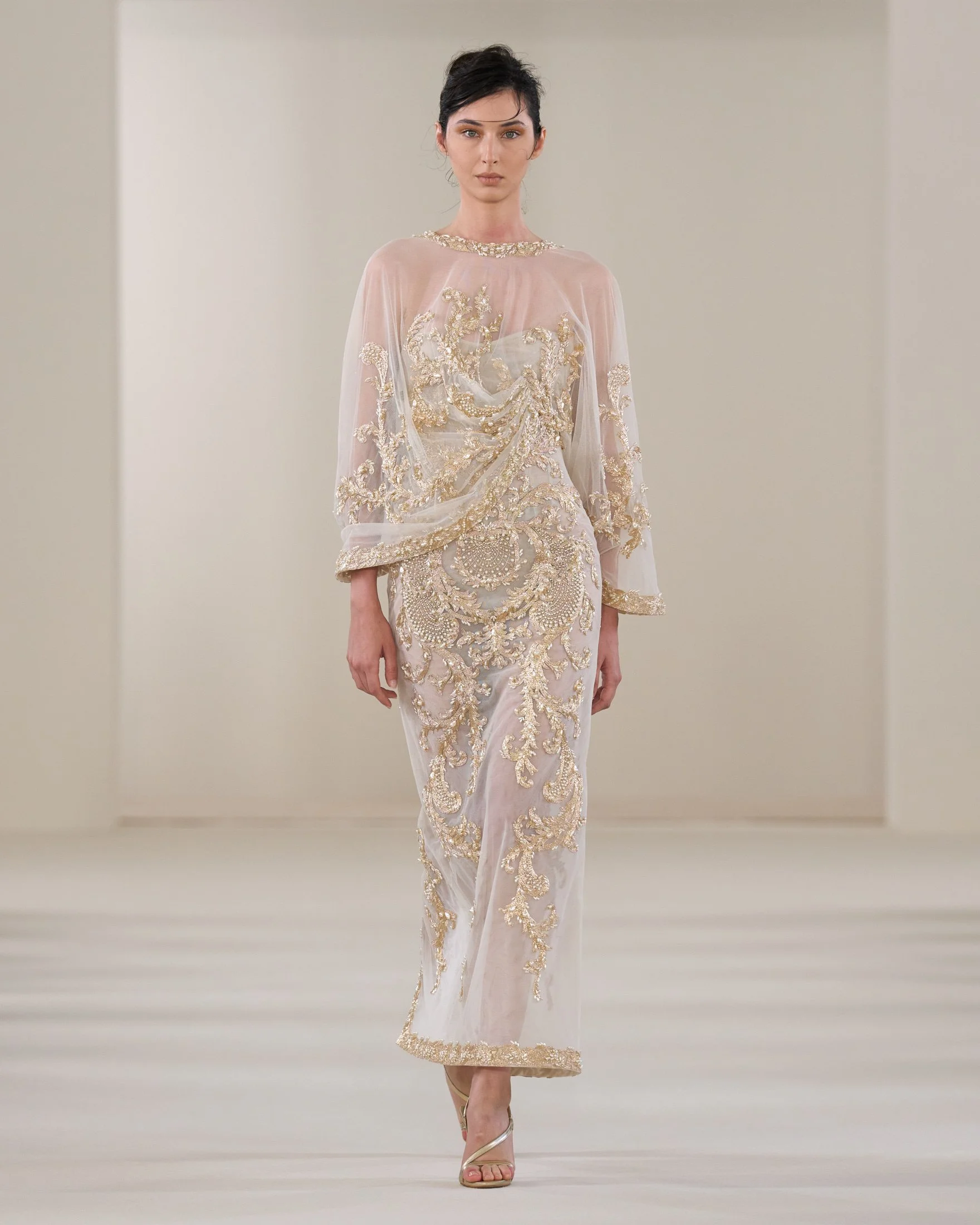
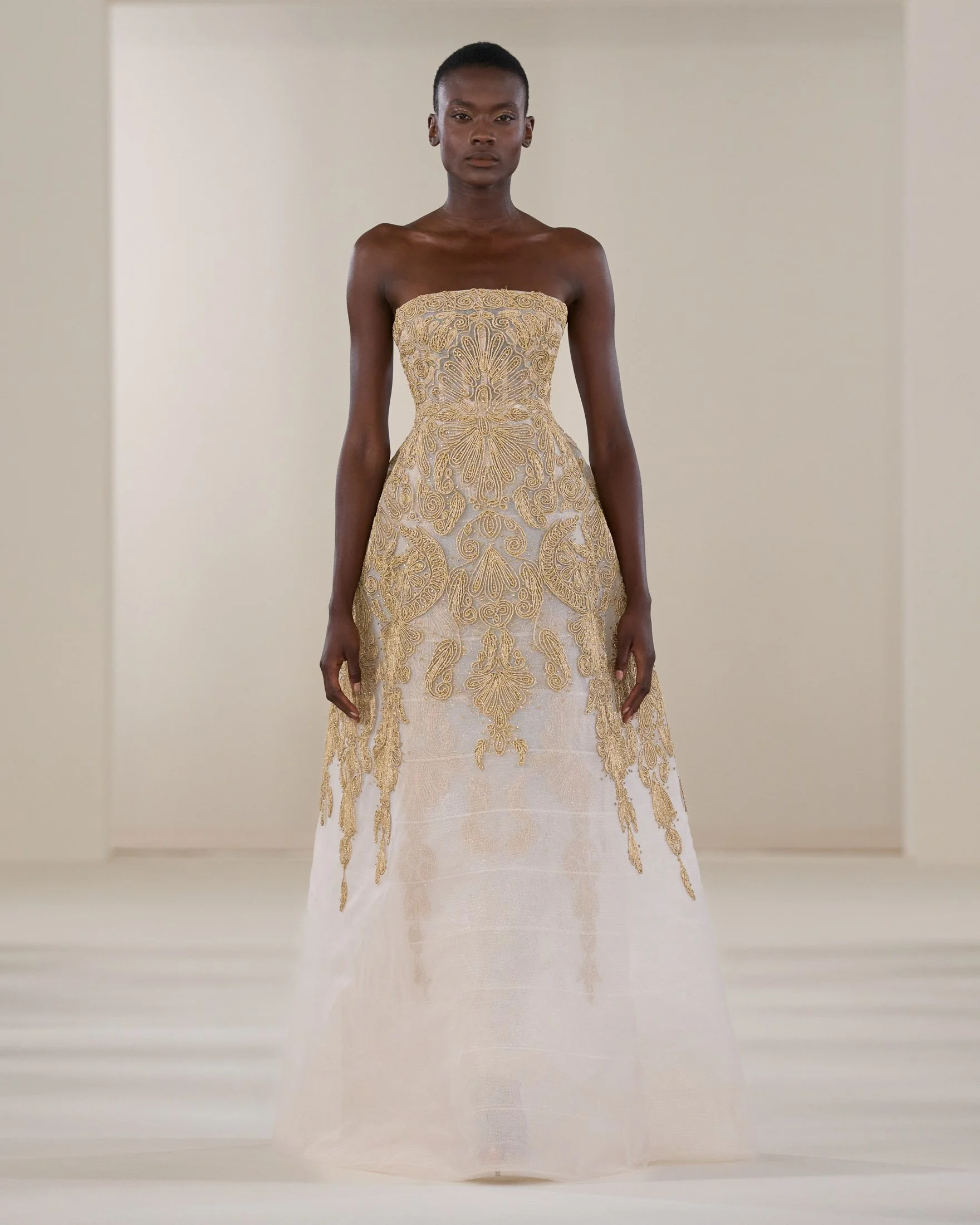
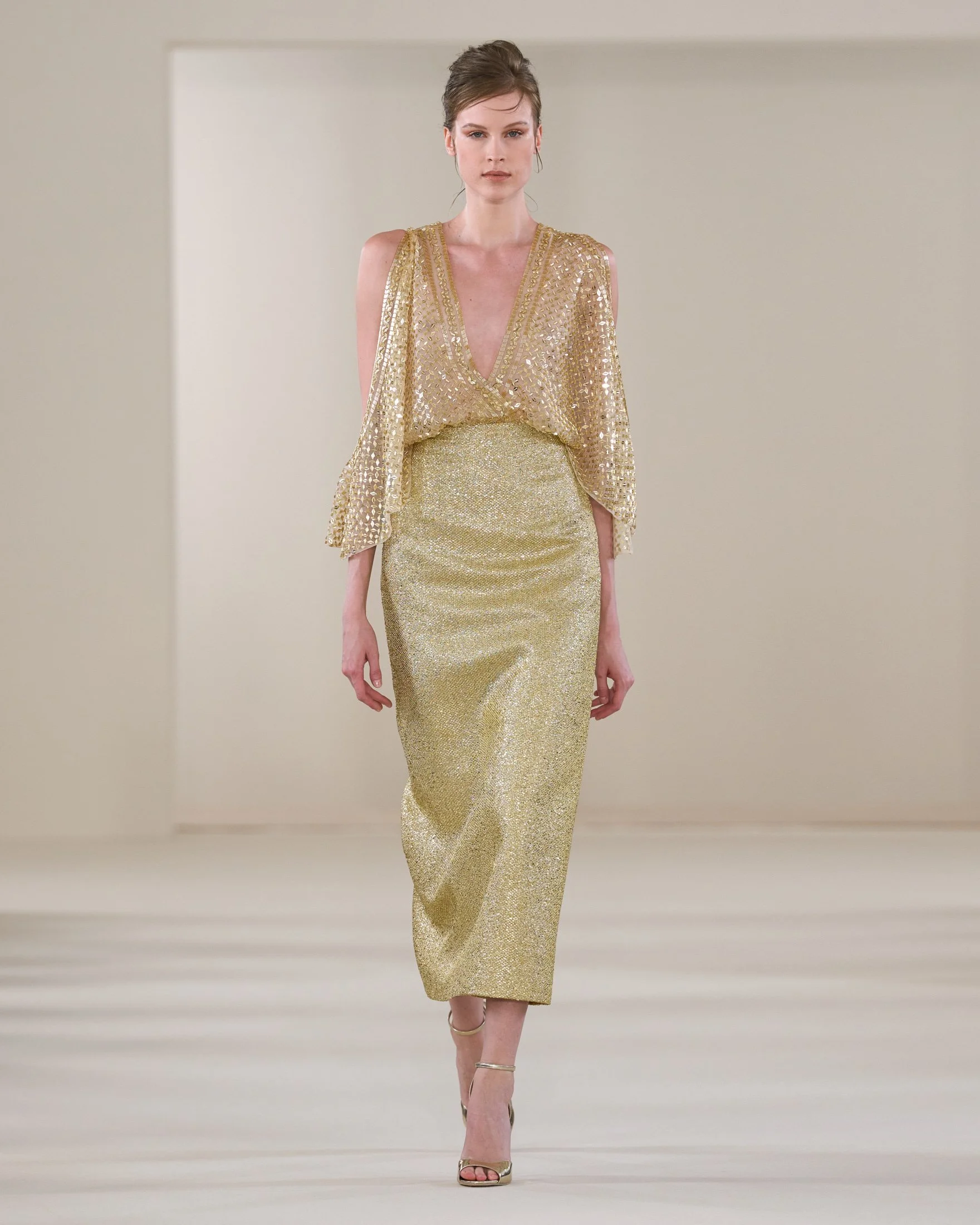
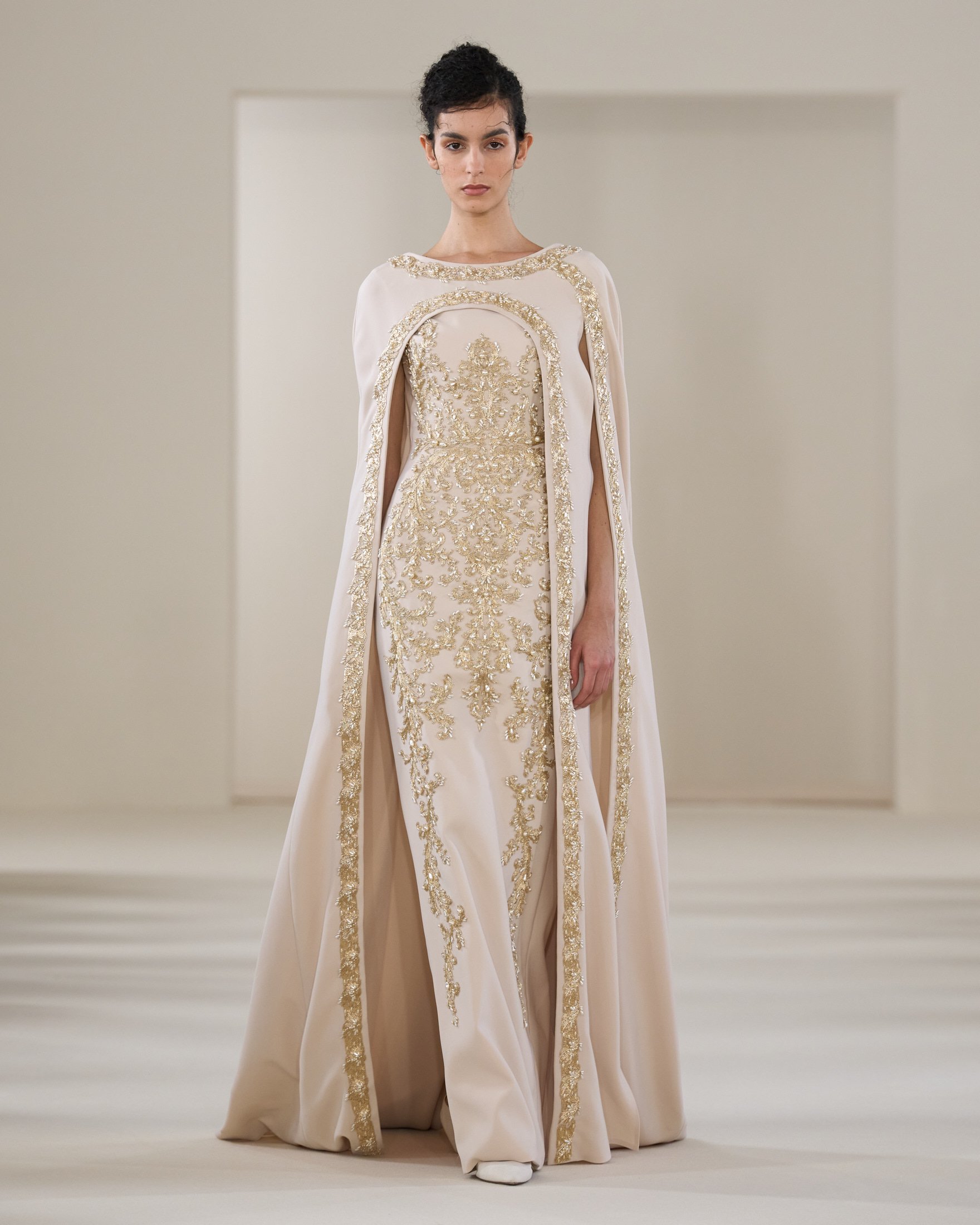
Even the most embellished pieces follow this logic. Gold embroidery reinforces the existing lines of the silhouette, while metallic surfaces emphasise contours already created through cut. The decoration works within the structure rather than obscuring it.
For much of modern couture history, couture from the Middle East has been recognised internationally for the exceptional skill of its embroidery ateliers. The houses that emerged from Beirut helped define a language of eveningwear built around surface richness and intricate craftsmanship. That legacy remains significant, but Al Ali’s strongest work increasingly begins elsewhere: with the manipulation of fabric itself.
This places him in a different lineage from designers whose reputations were shaped by a singular technical approach. Balenciaga transformed volume into architecture; Madame Grès made pleating a study of movement; Alaïa built his vocabulary around precision and the relationship between fabric and the body. In this collection, Al Ali continues to develop his own recurring gesture: the fold, used as a structural principle rather than an ornamental detail.
DISCOVER MORE ABOUT RAMI AL ALI