

Cameroonian couturier Imane Ayissi, who shows regularly in Paris, is known for his use of raffia and for his longstanding interest in the textiles that sit outside the familiar image of African fashion. For more than a decade, he has drawn attention to wax print’s Indonesian origins and its relatively recent arrival in Africa, at the end of the 19th century, arguing that its prominence has overshadowed the continent’s much older and varied textile traditions. His position is not a rejection of wax print, which has become part of African cultural and commercial life, but a call for greater recognition of the breadth of the continent’s textile heritage.
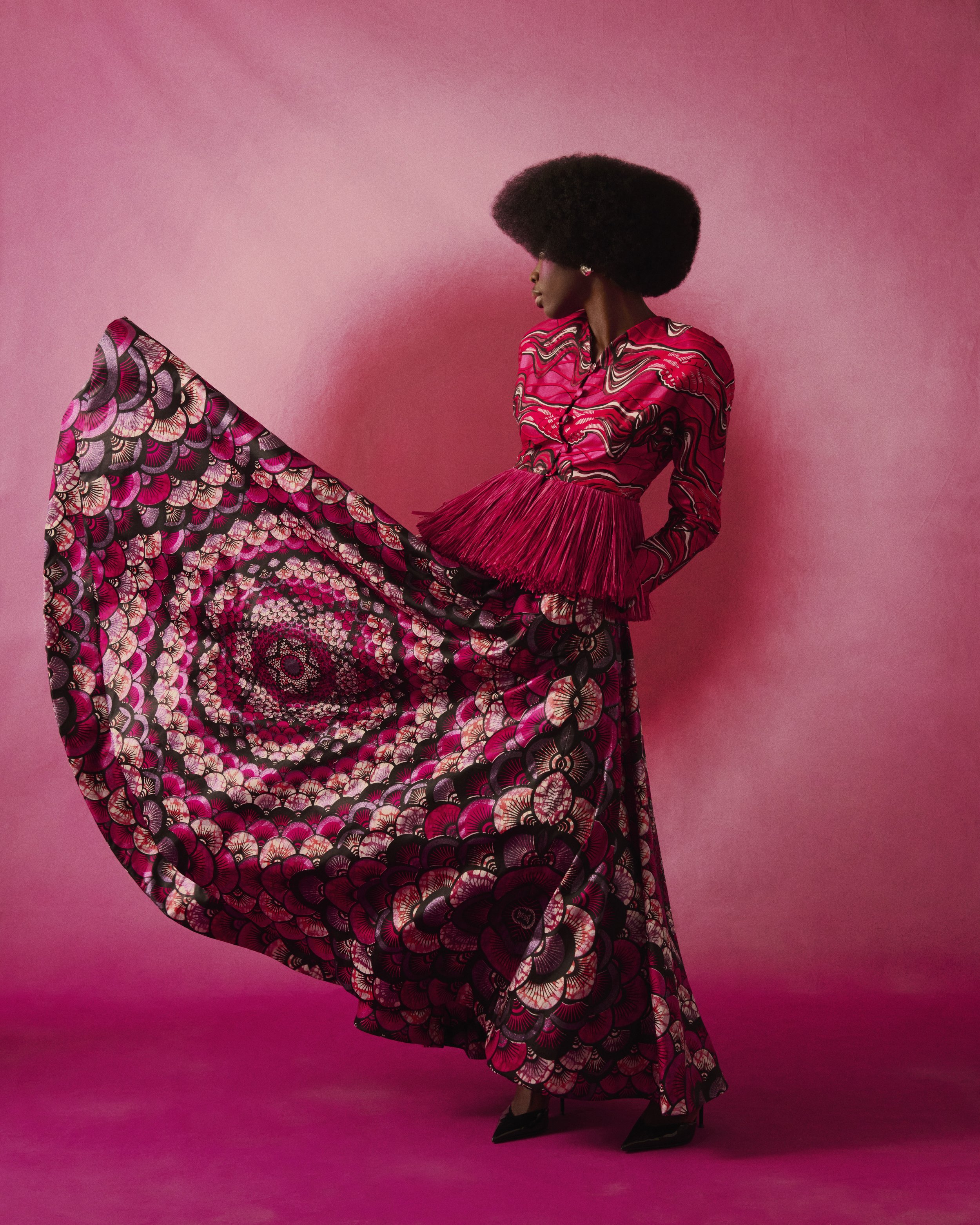
But for the 180th anniversary of Dutch textile house Vlisco, Ayissi has agreed to collaborate on a new wax-print fabric design, inspired by his visit to Vlisco’s factory in Helmond. Understanding the various stages of the industrial process specific to the wax-print technique and witnessing the moment when the wax-coated cotton appears to be covered in gold caught Ayissi’s attention and later served as inspiration for a new co-created print.
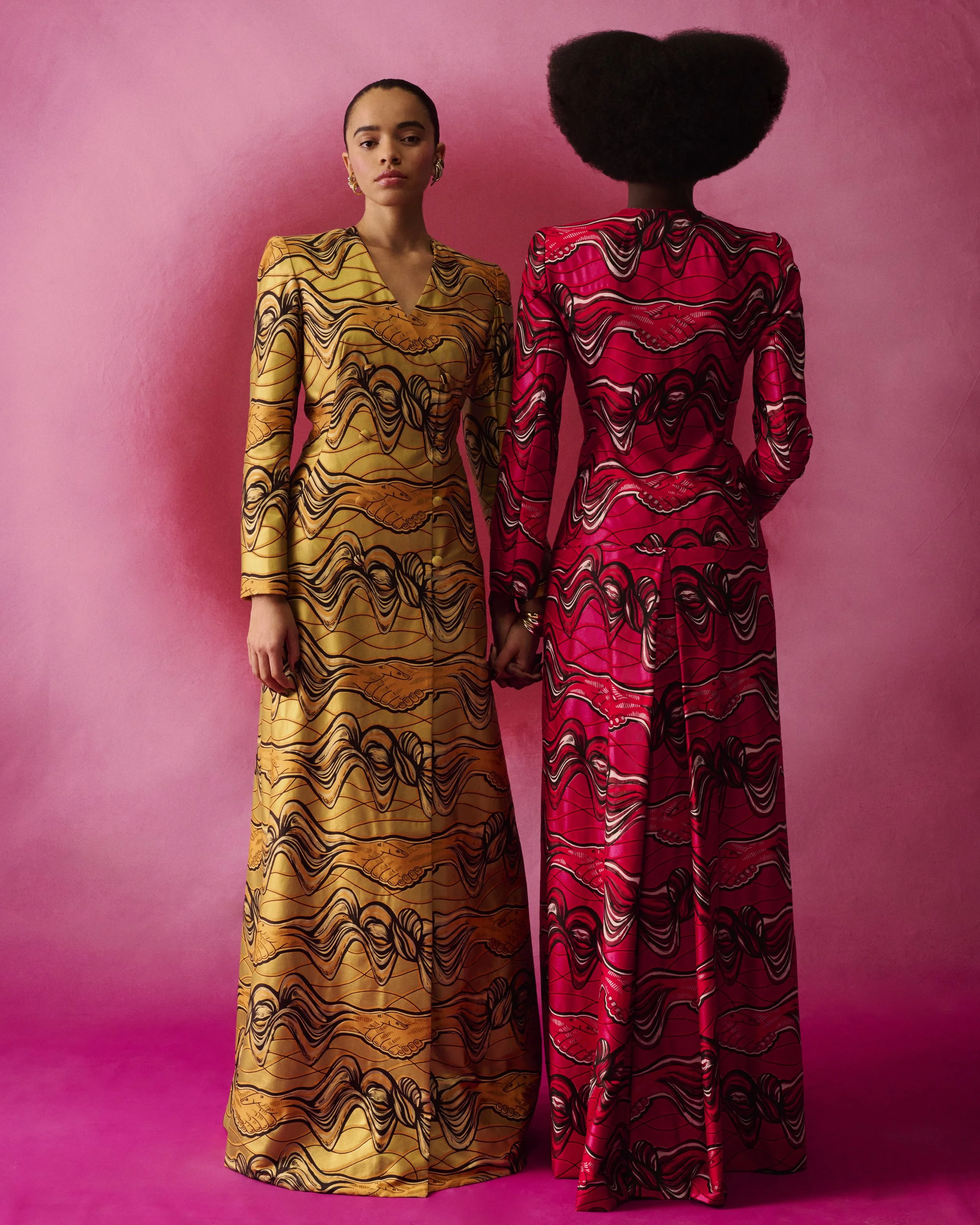
“I wanted something that brings humanity together,” he says, referring to a handshake design he has incorporated into his print. “The hands themselves are important, because they are the hands that work, the hands that gesture as we communicate, and the hands that reach out as greeting to maintain that friendship. It’s a vision to holding on to the meaning of friendship,” he explains.










DISCOVER MORE ABOUT IMANE AYISSI