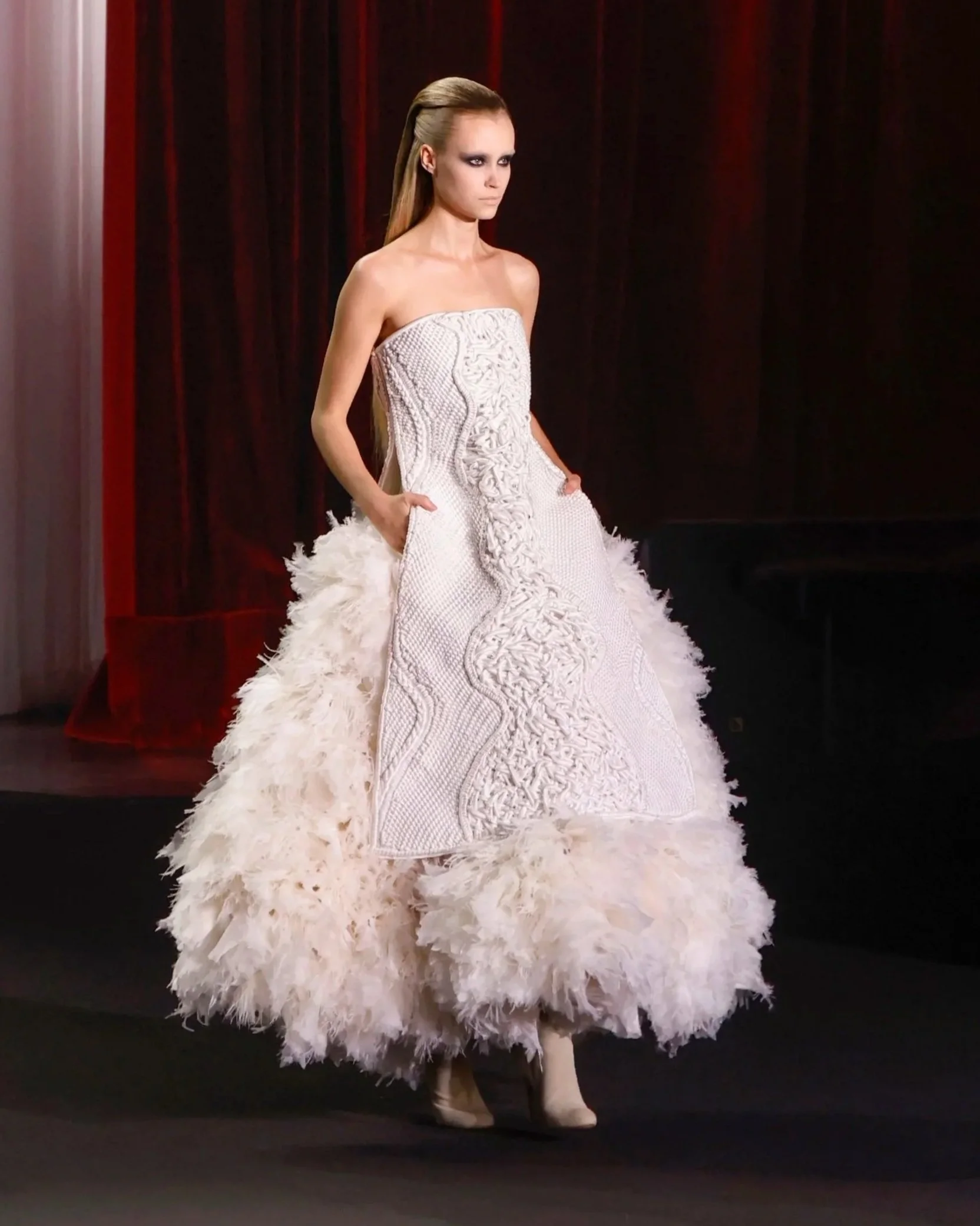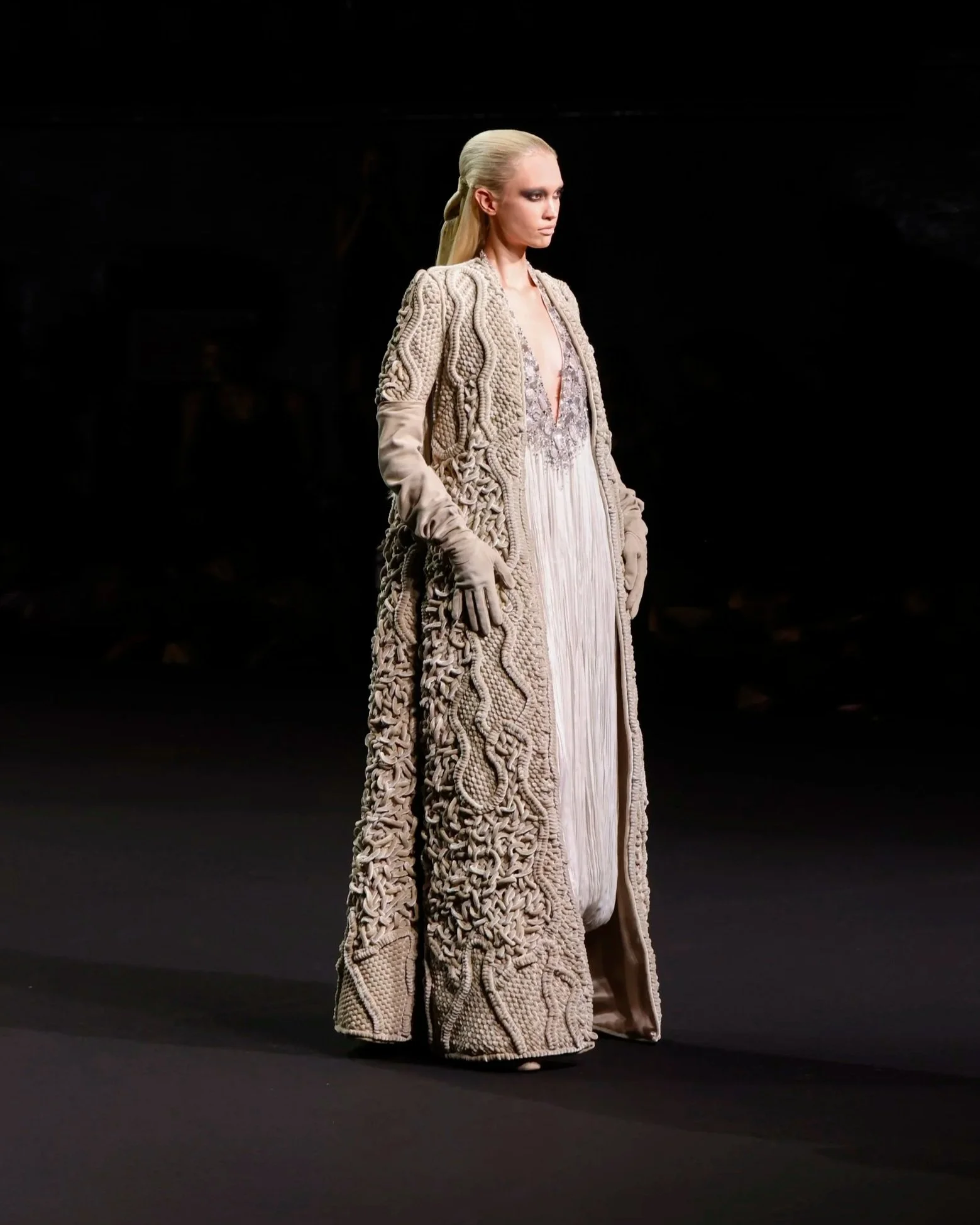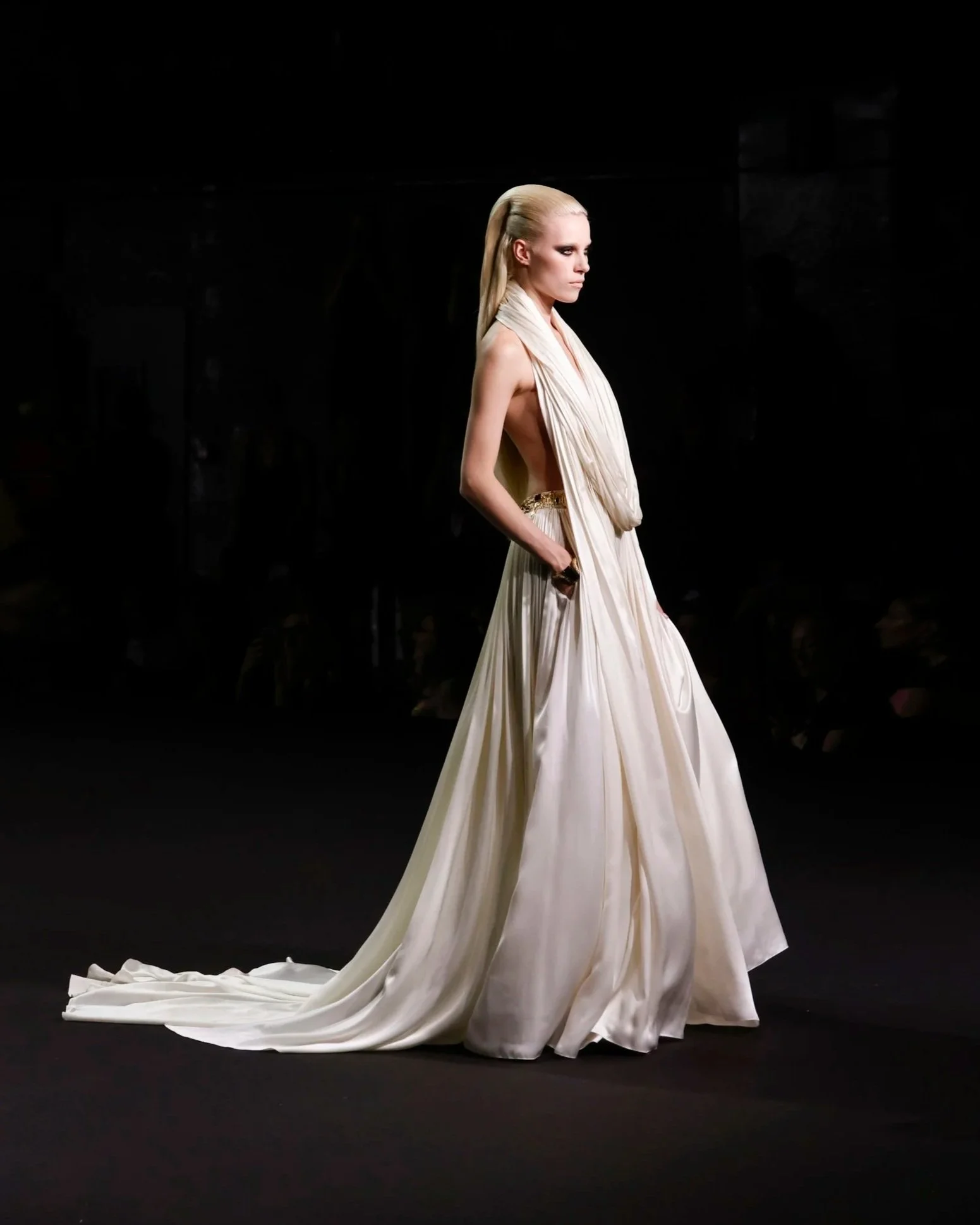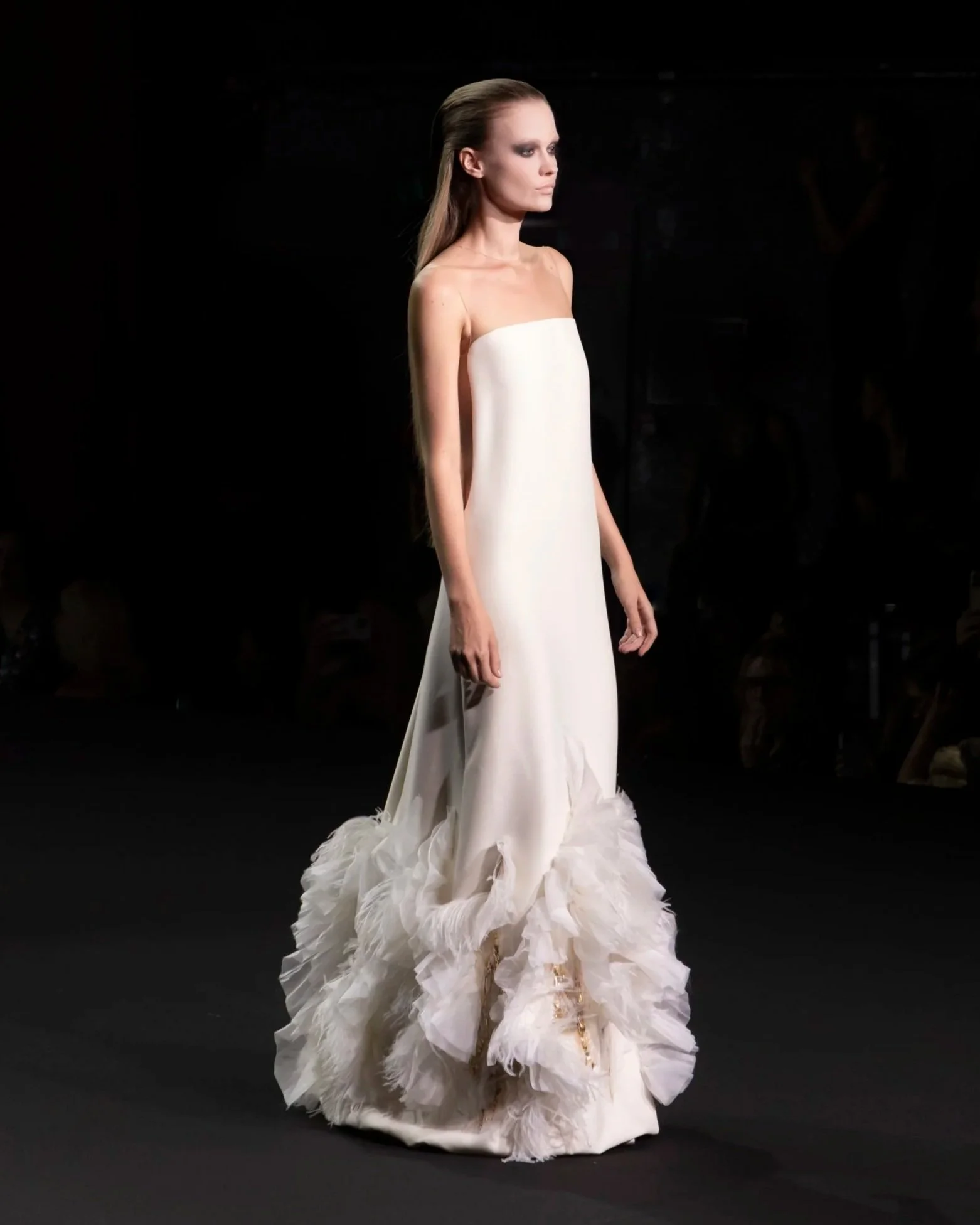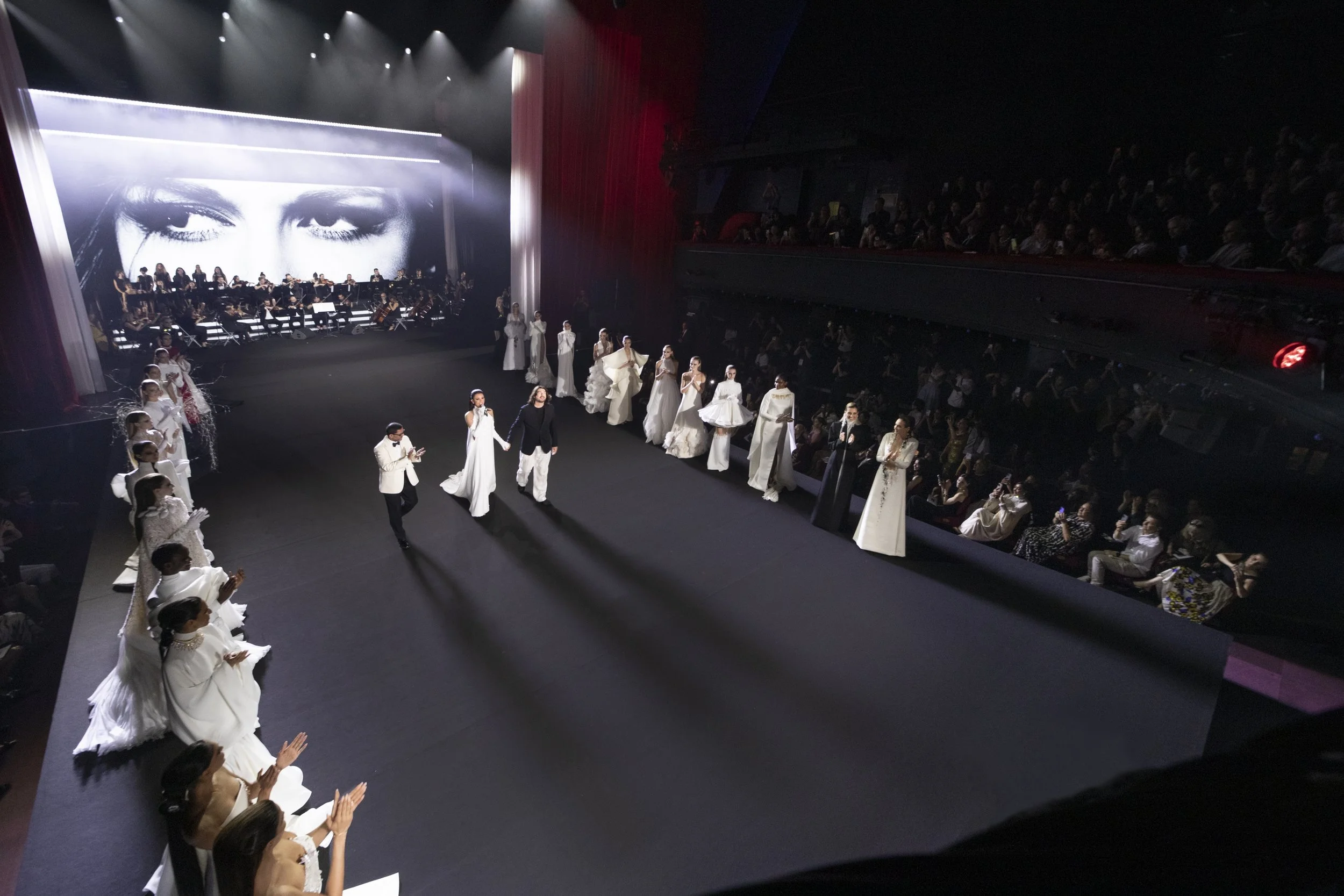
For Stéphane Rolland’s Fall/Winter 2026/27 haute couture collection, every element returned to Dalida. Forty years after the singer’s death, he built a show around her presence rather than her wardrobe: the scale of her performances, the authority of her silhouette, the space she occupied on stage. The setting was the Olympia, the Paris music hall where she first appeared in the late 1950s and returned throughout her career. The venue deepened the tribute, but the collection was concerned with the performer rather than her costume.
Dalida is an unusually complex figure to place at the centre of a couture collection. Born in Cairo to an Italian family, she moved between cultures throughout her career, becoming a French icon while retaining the Mediterranean and Egyptian references that shaped her early identity. Rolland’s own vocabulary — long coats, ceremonial volumes, sculptural lines — has often drawn from that broader region of dress. Here, the connection was less about recreating a singer’s wardrobe than examining the authority she carried on stage.
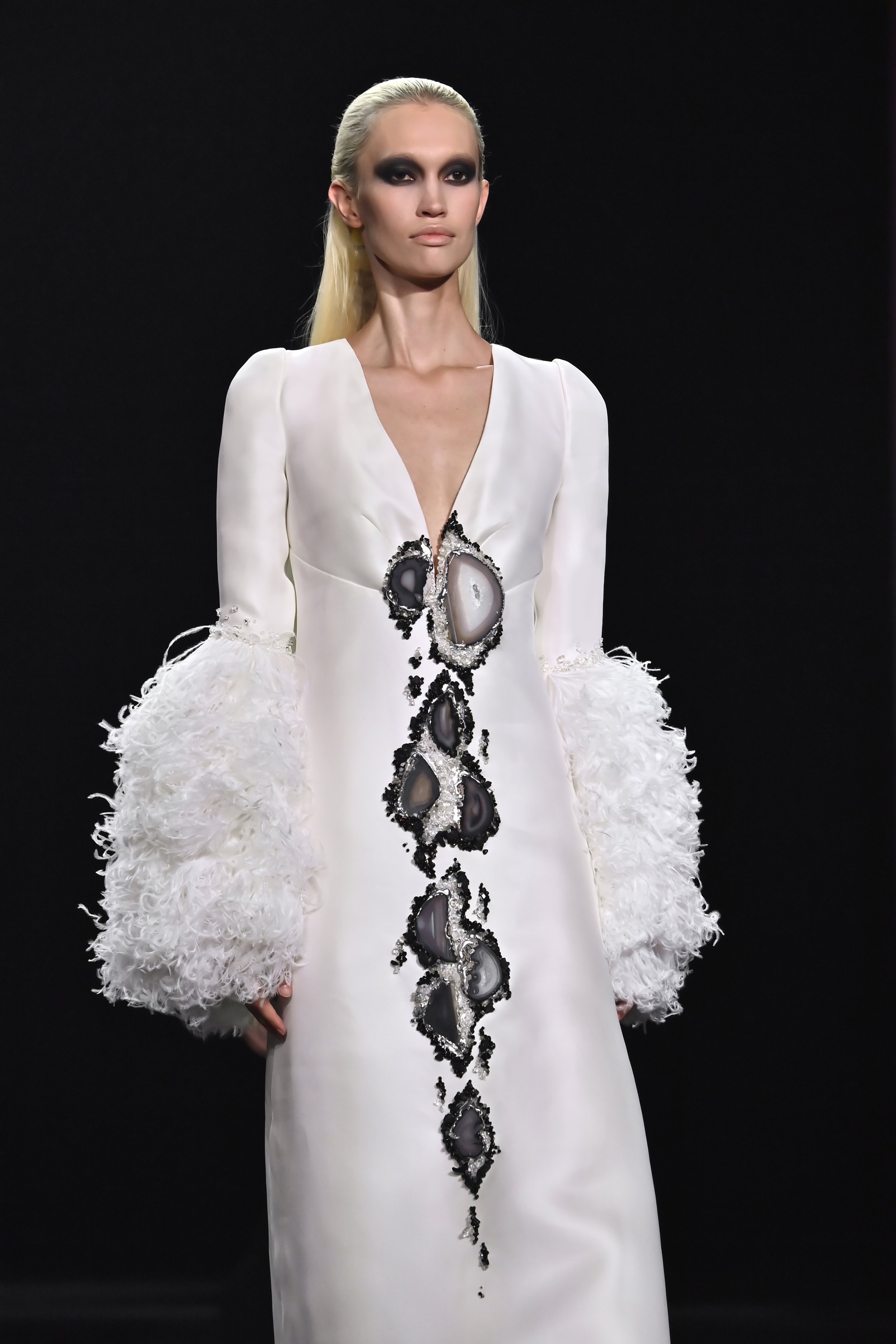
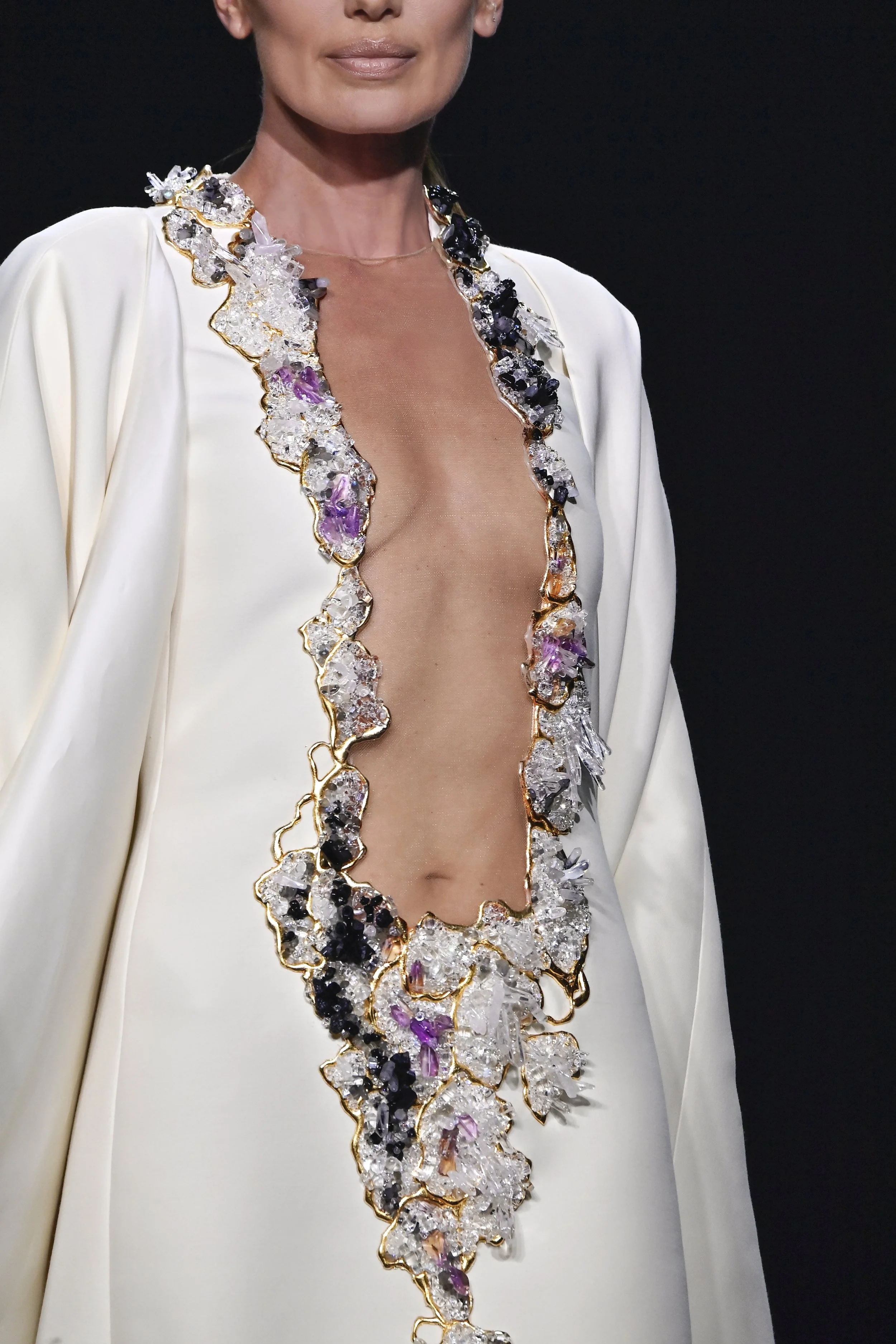
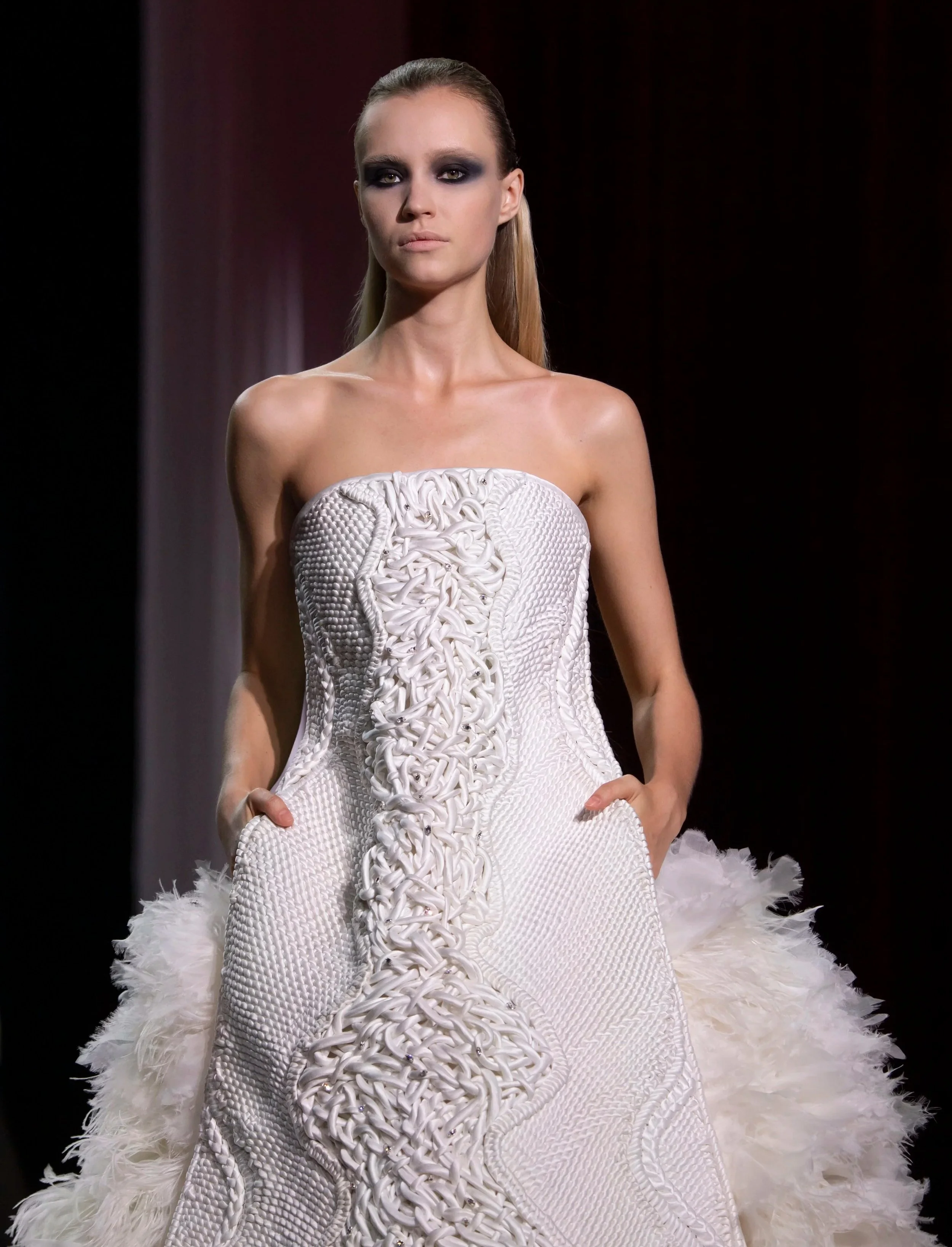
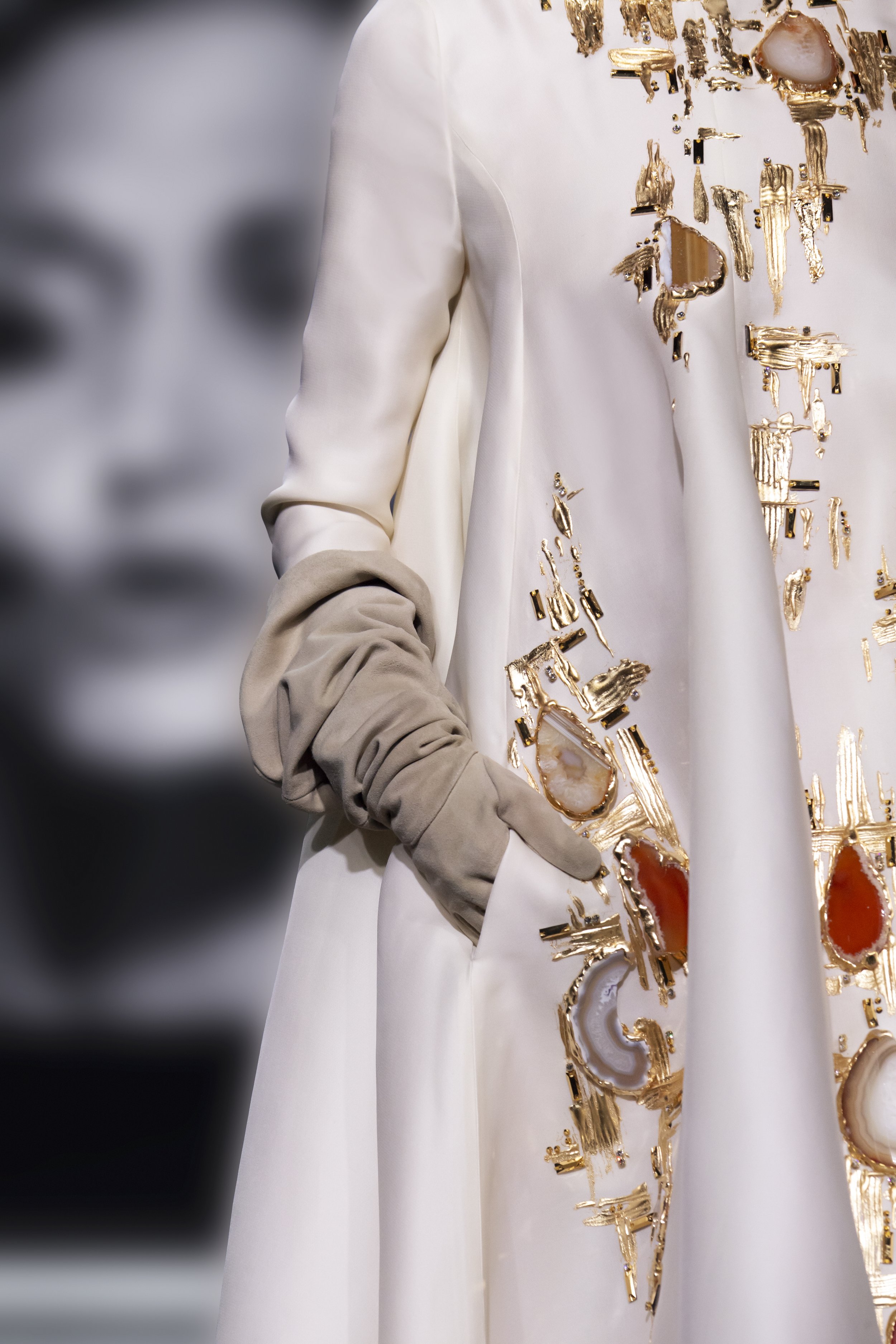
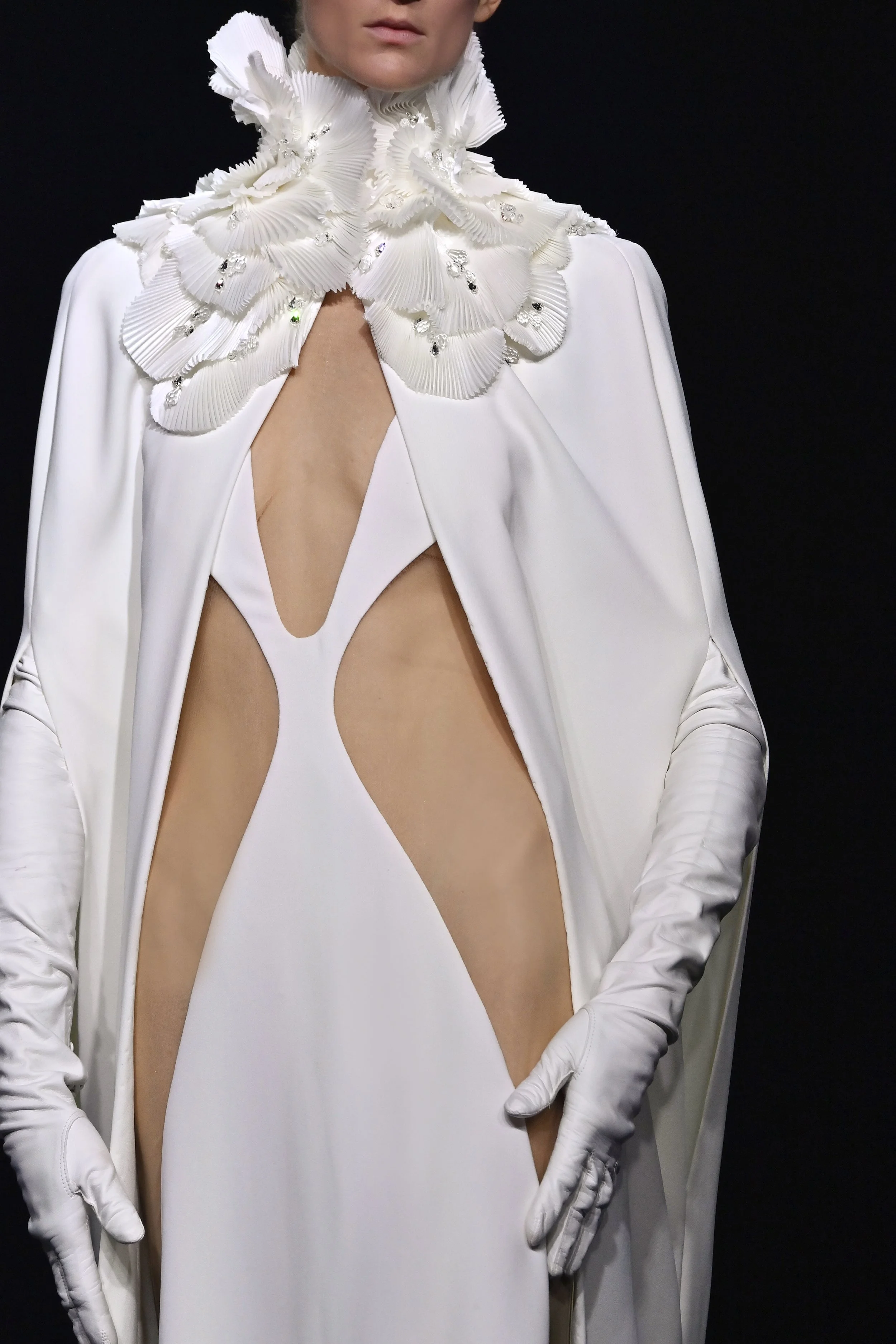
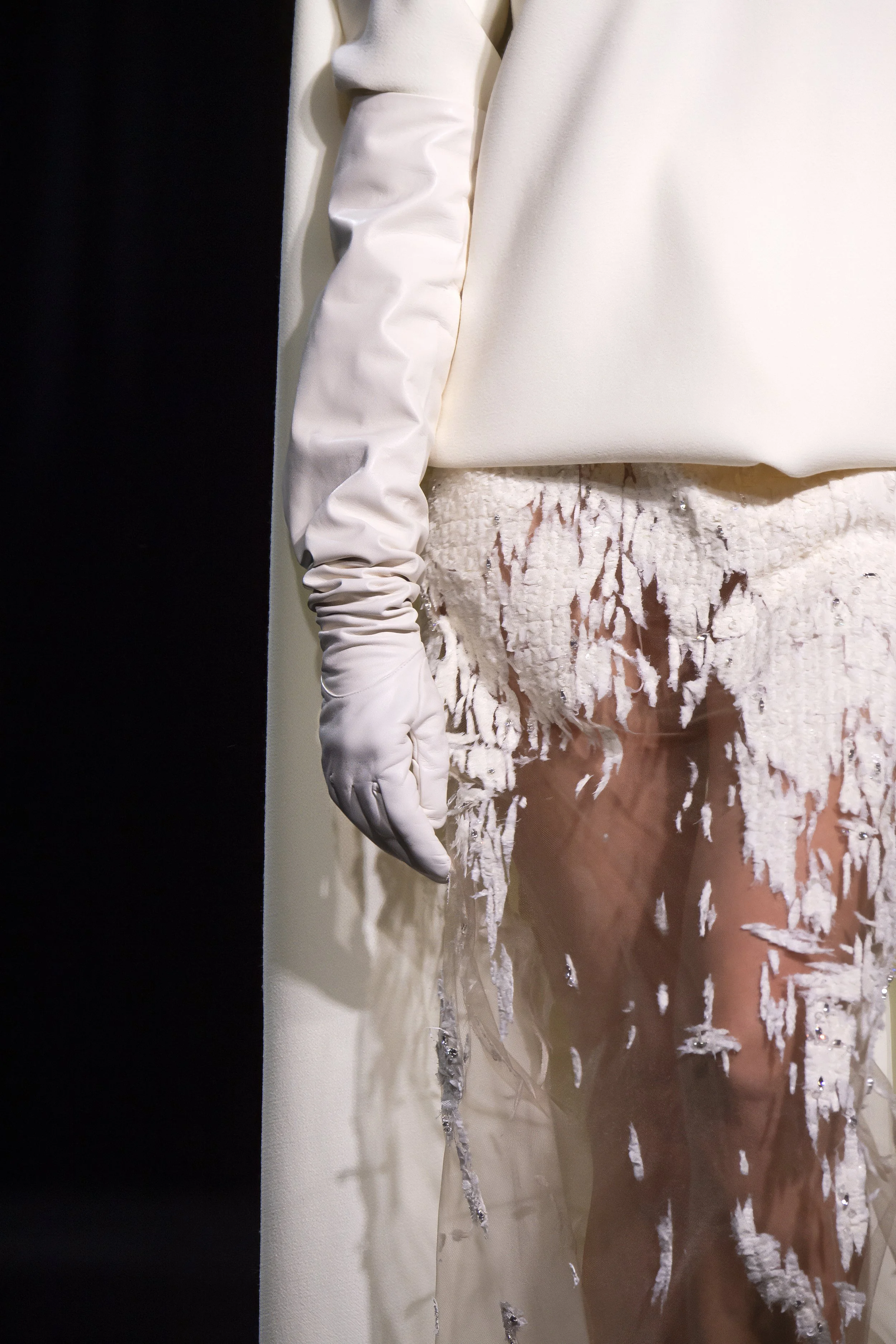
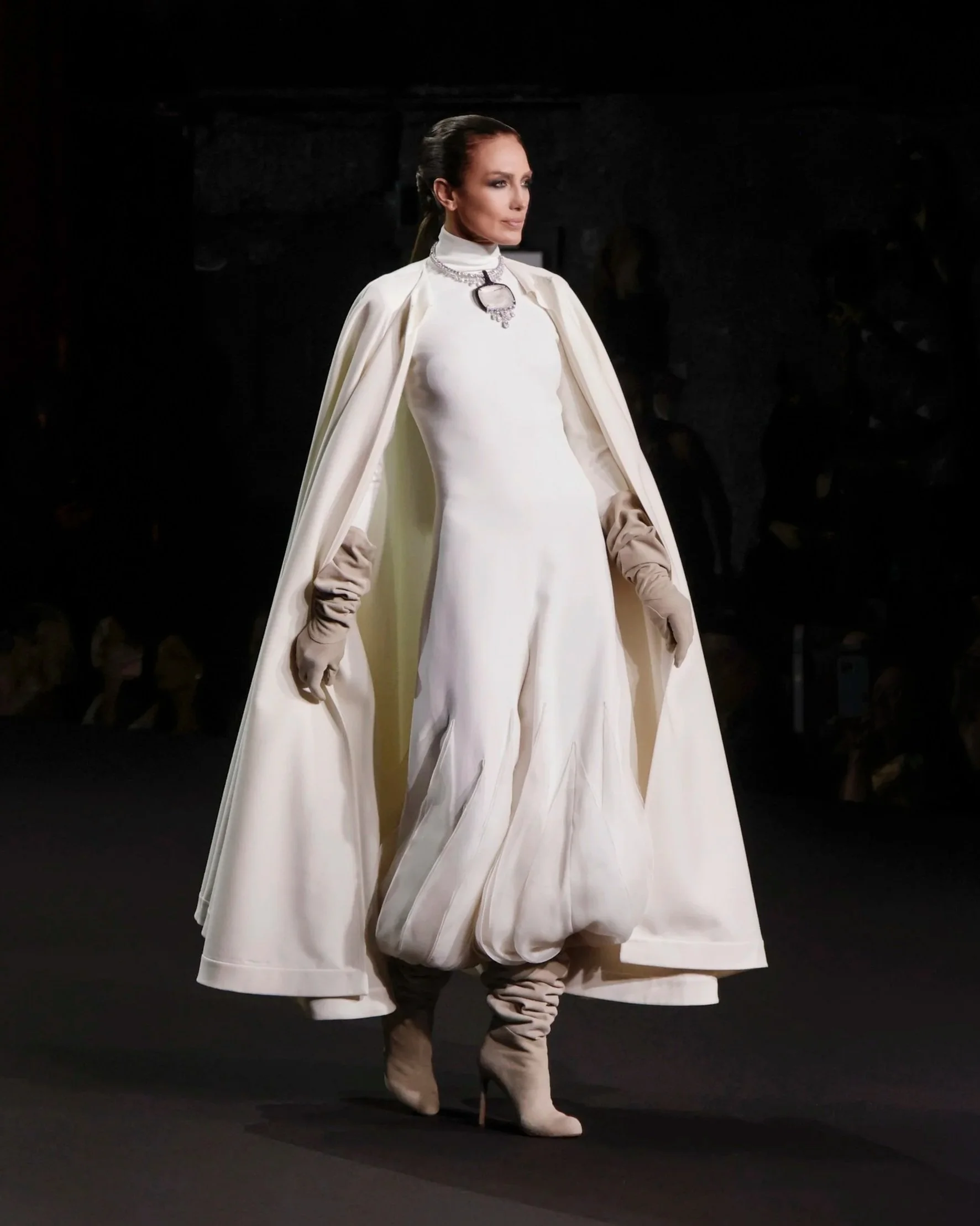
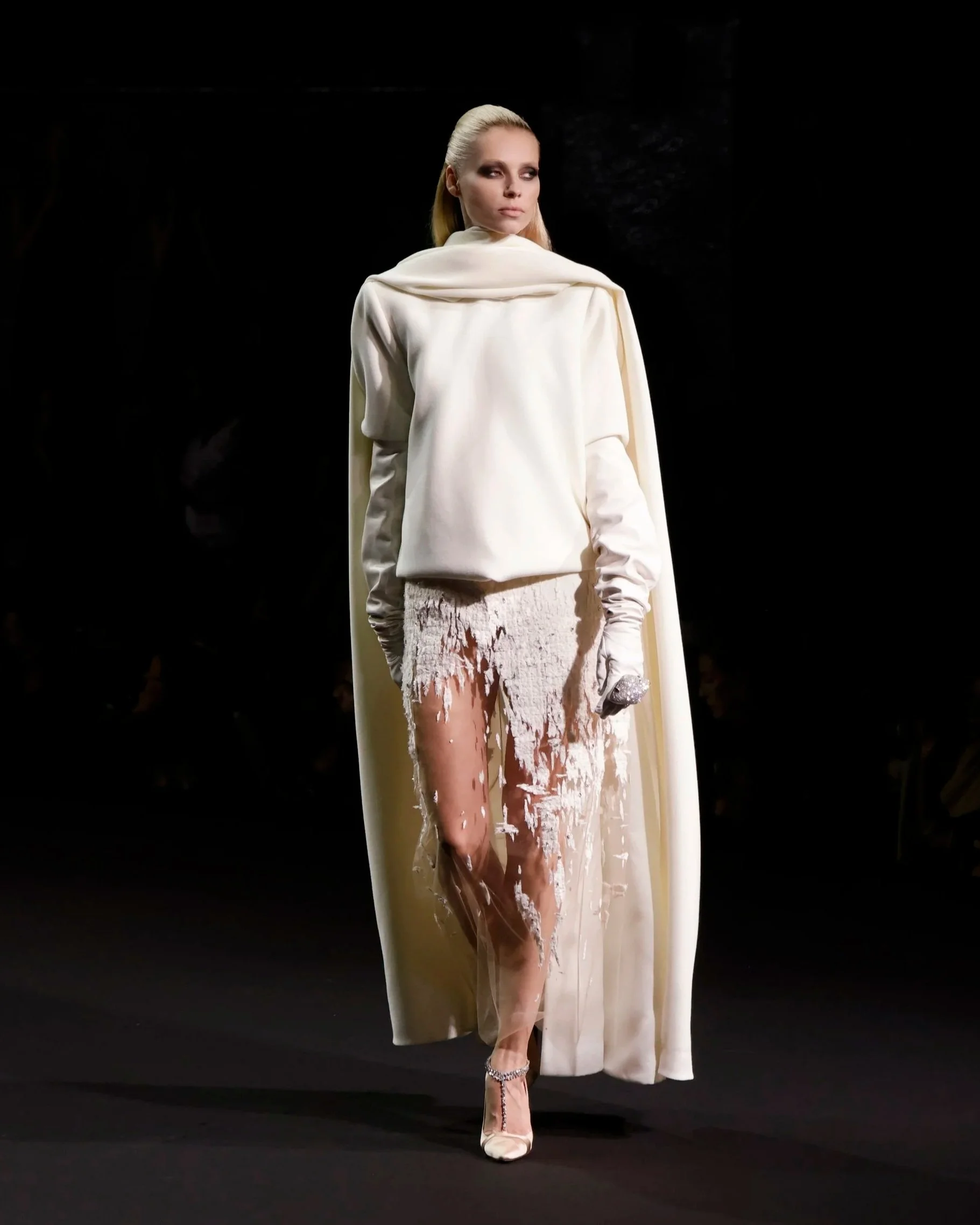
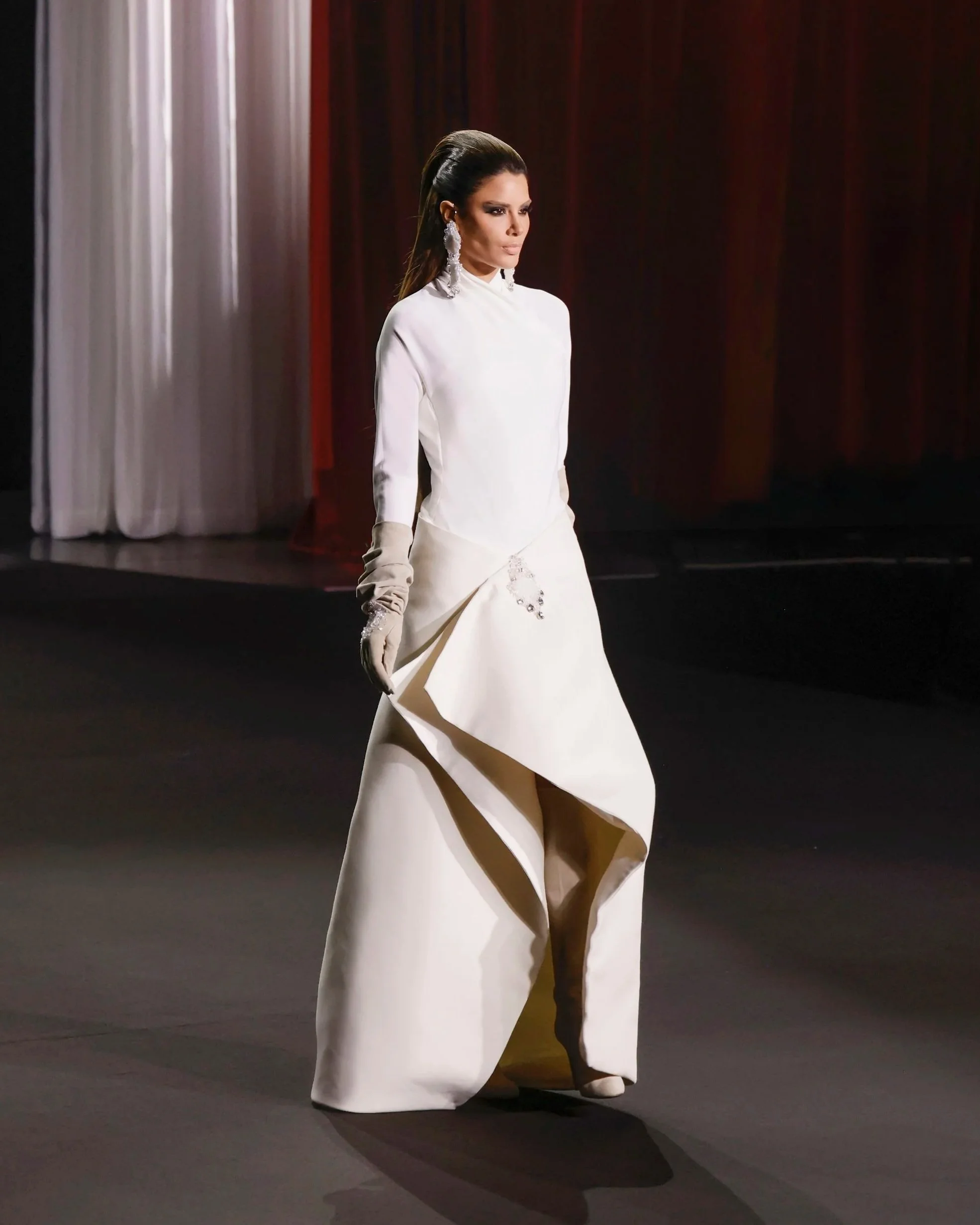
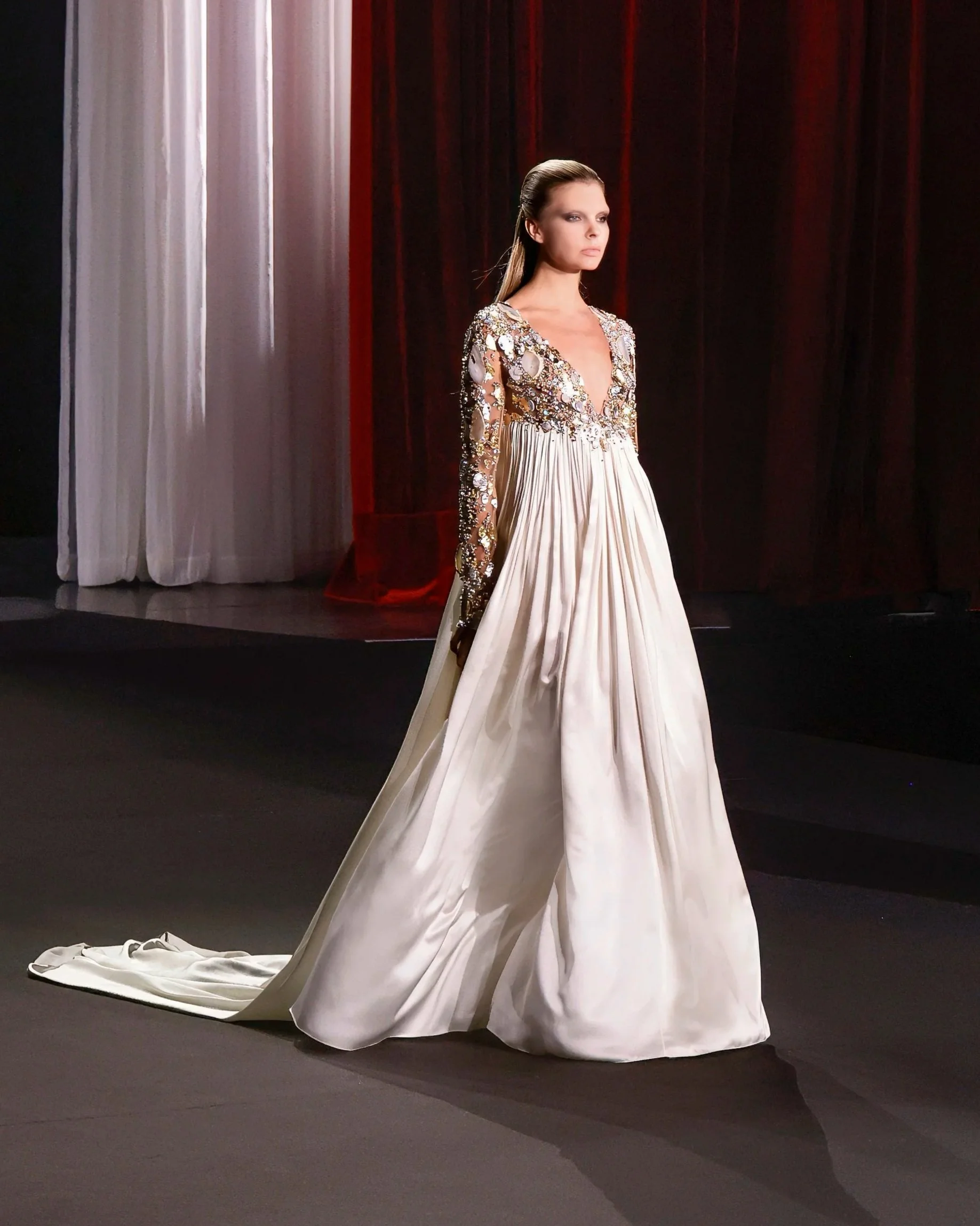
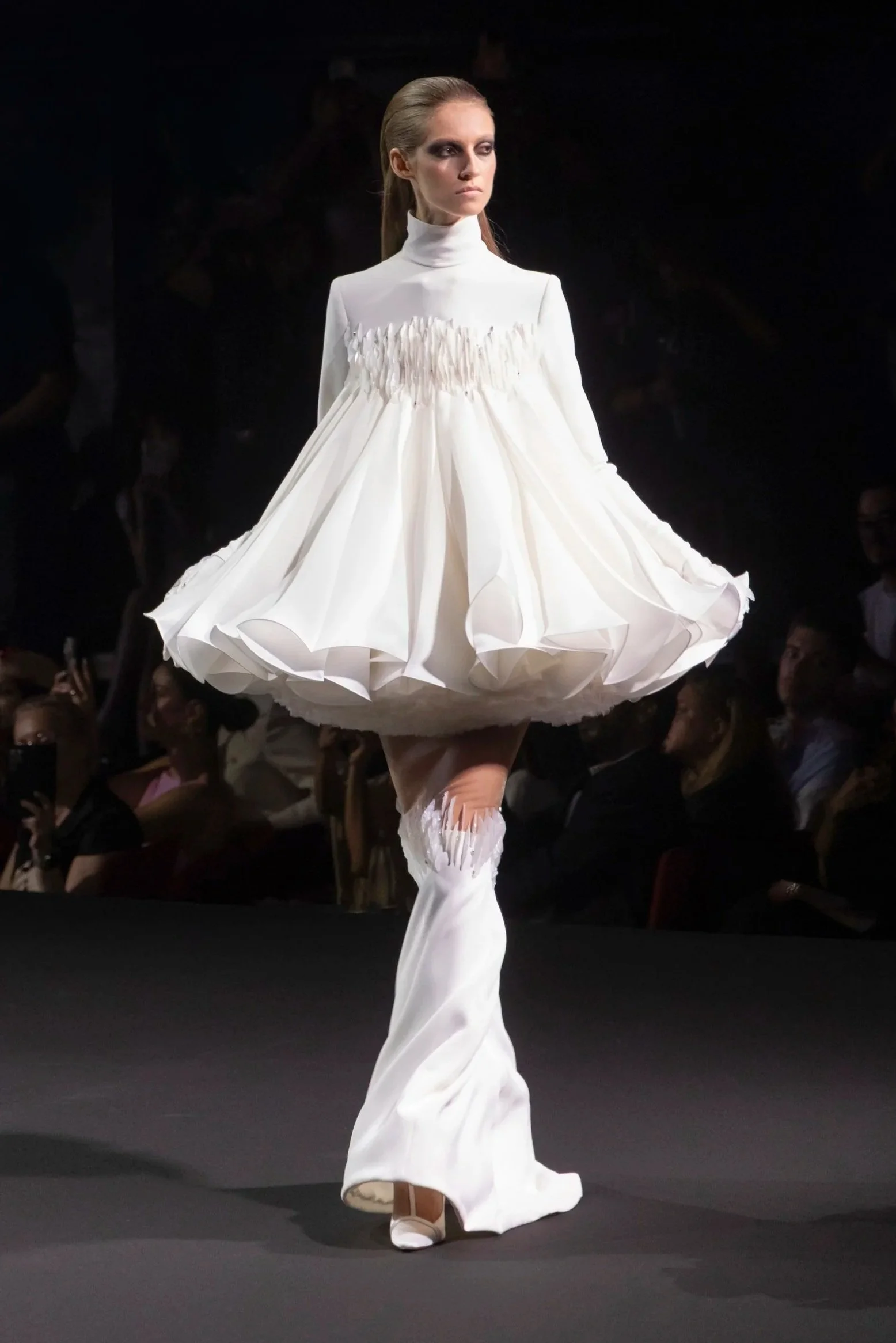
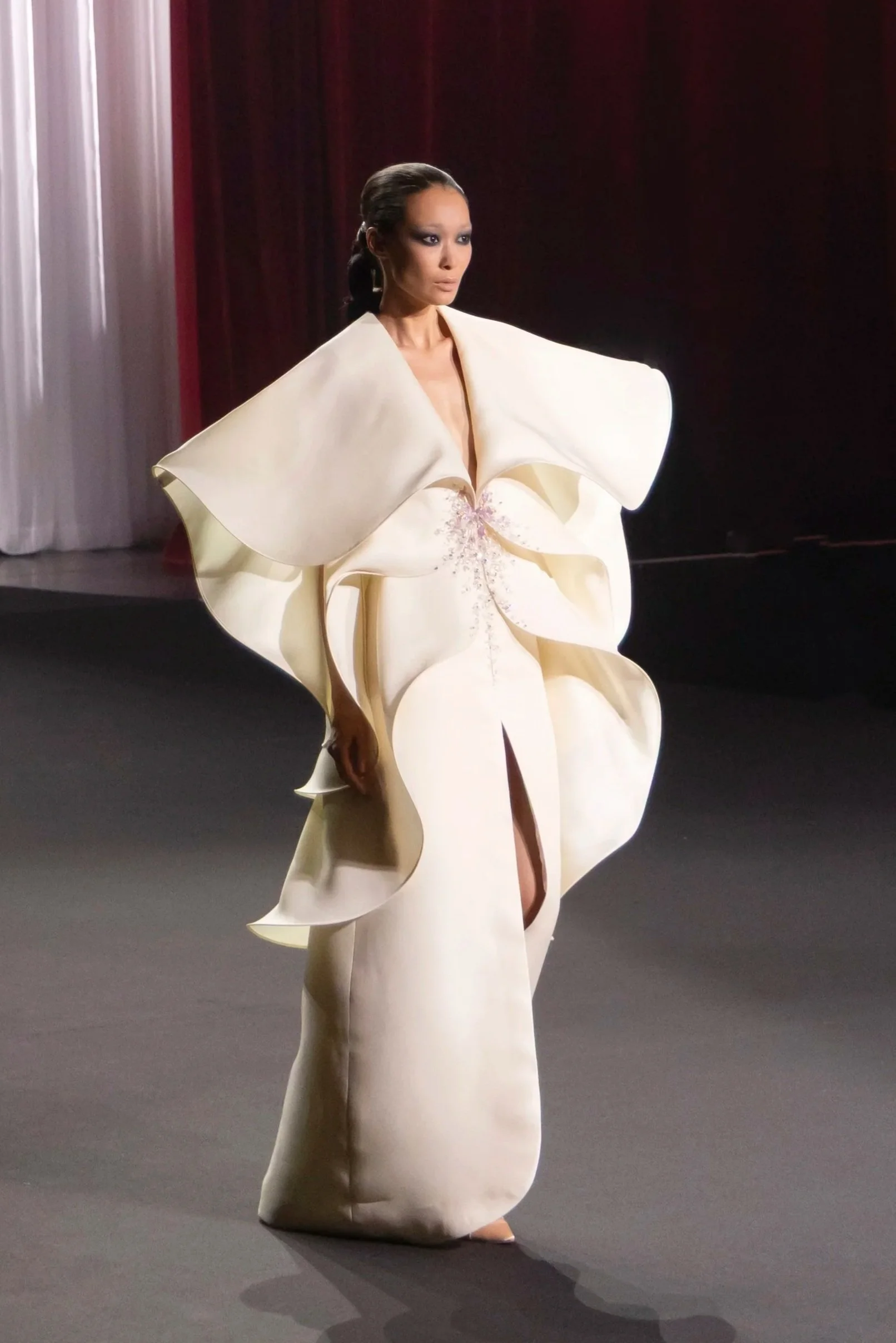
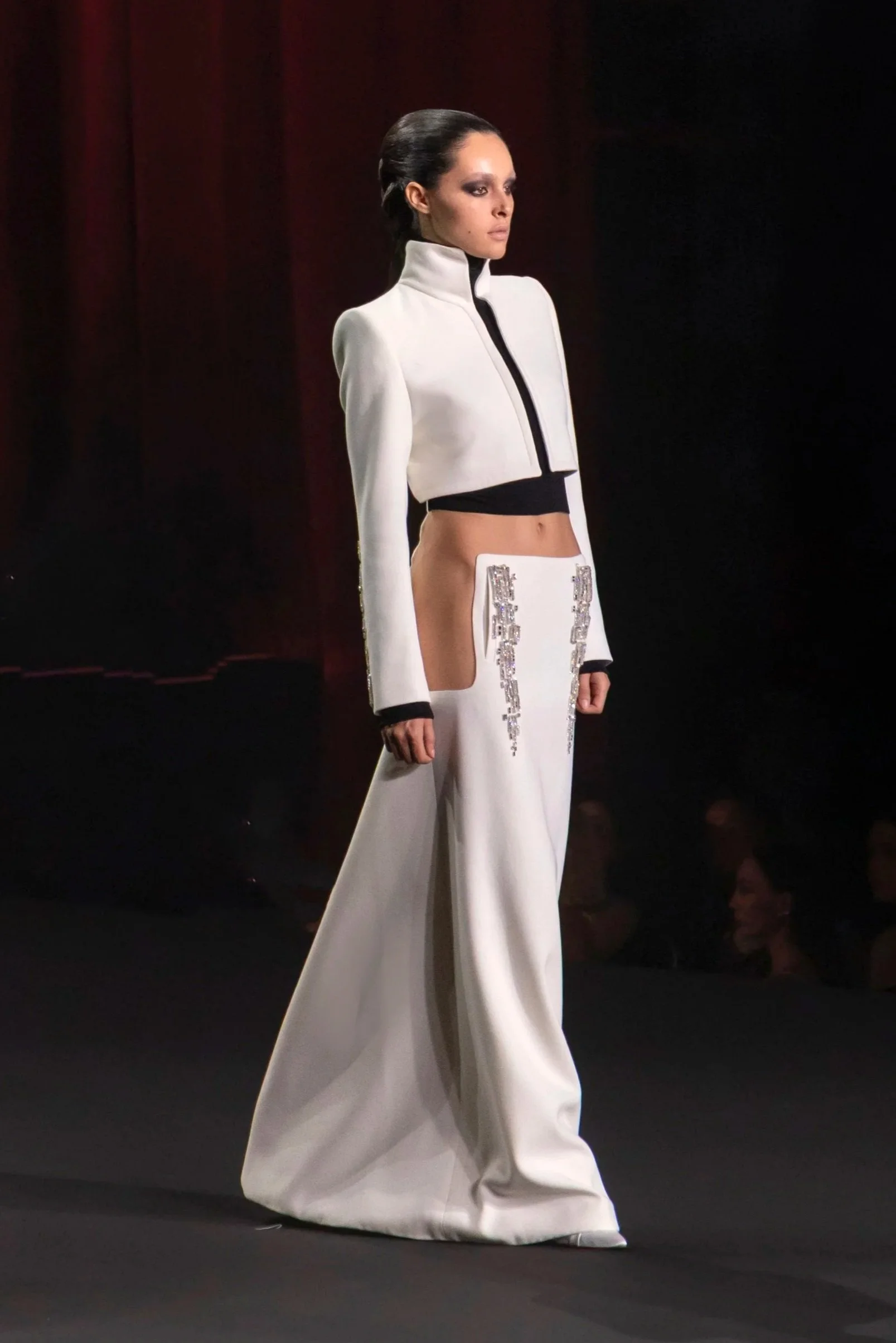
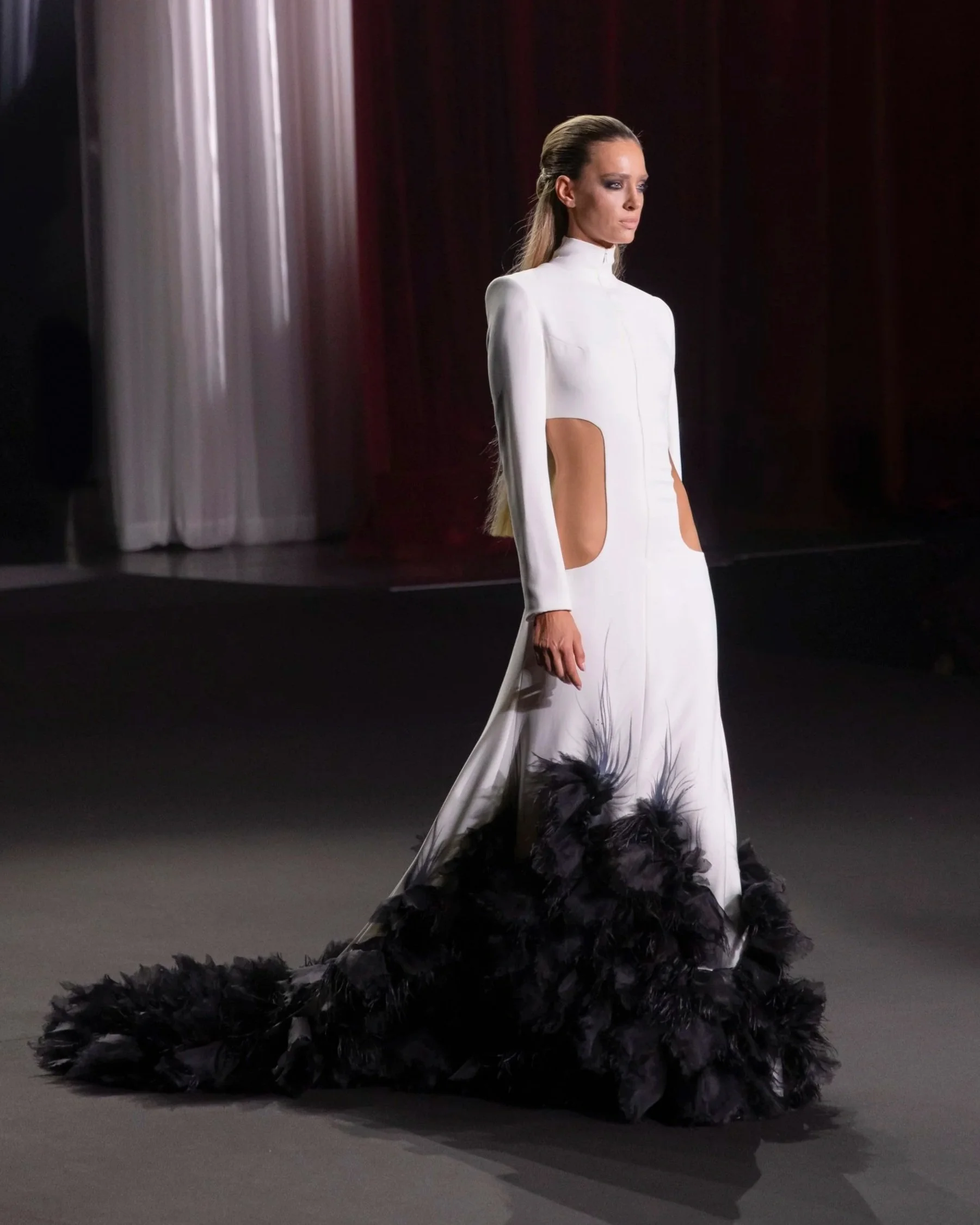
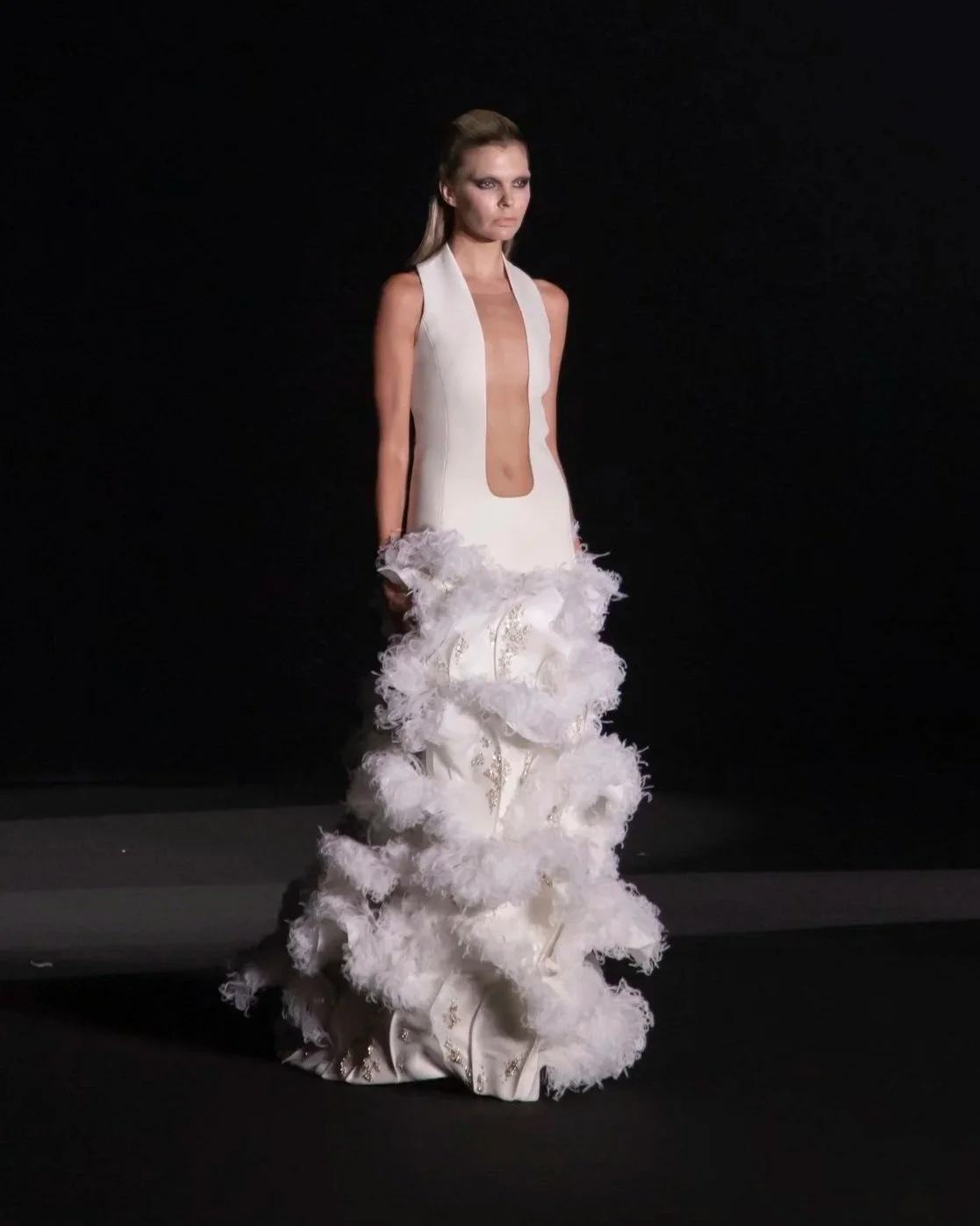
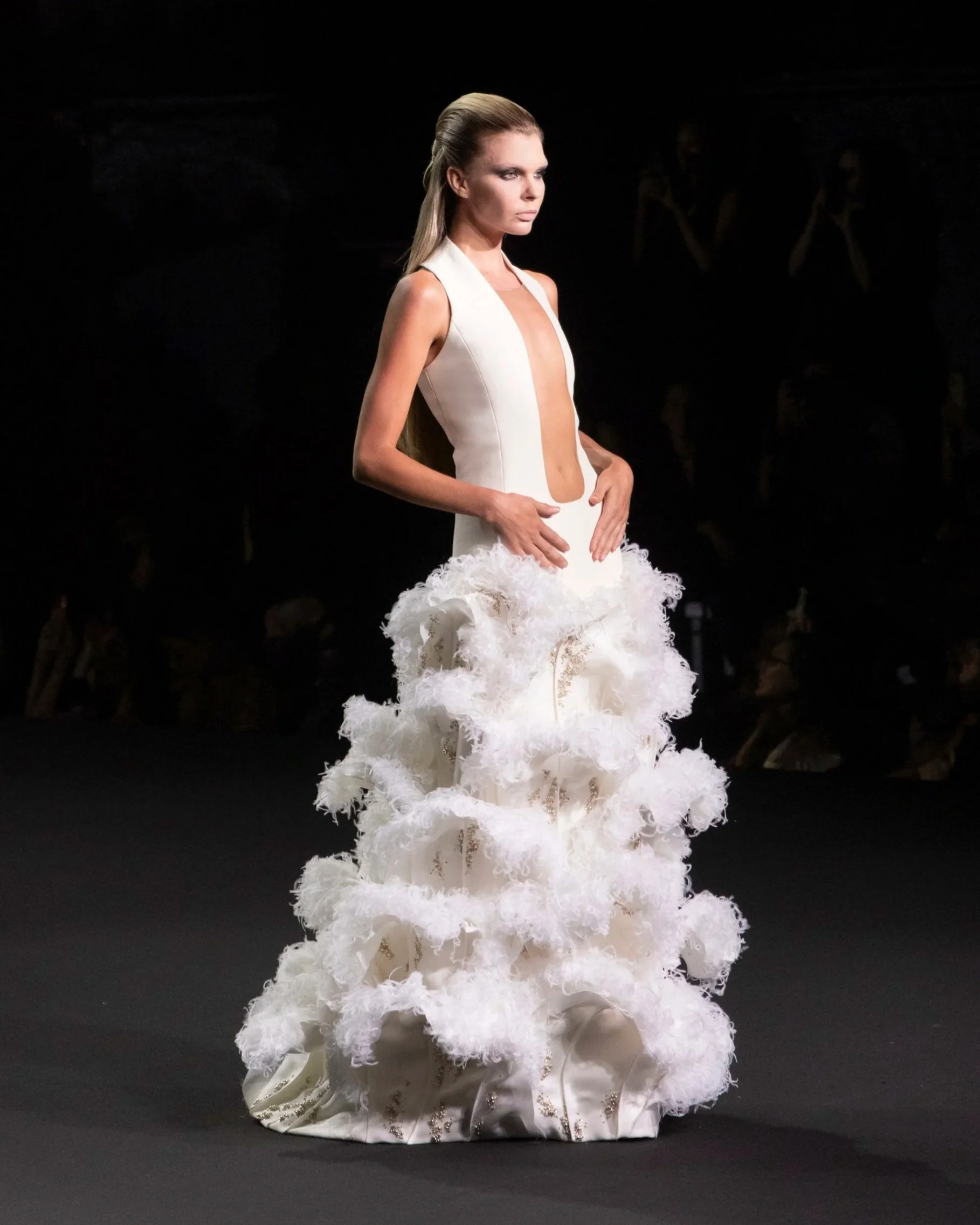
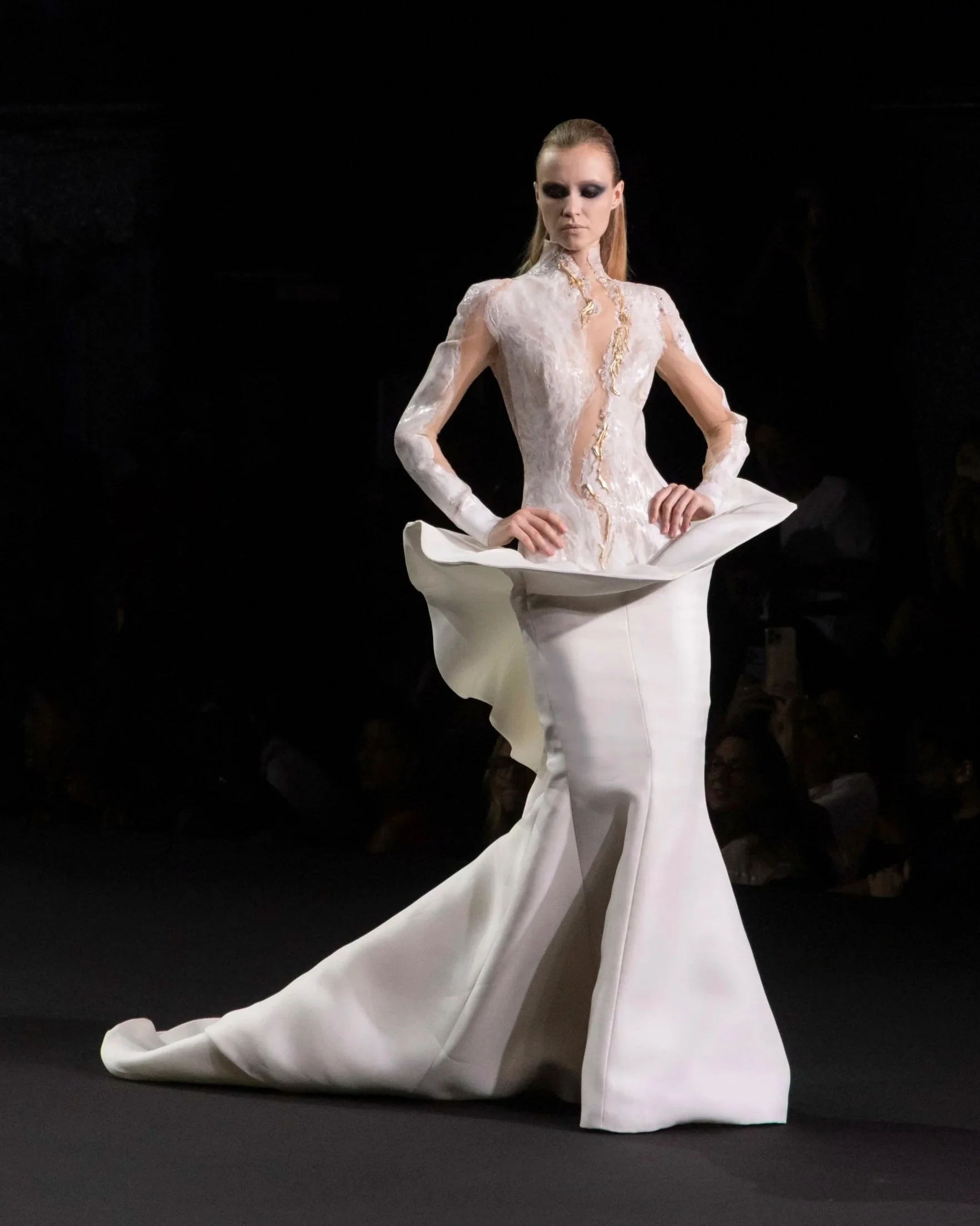
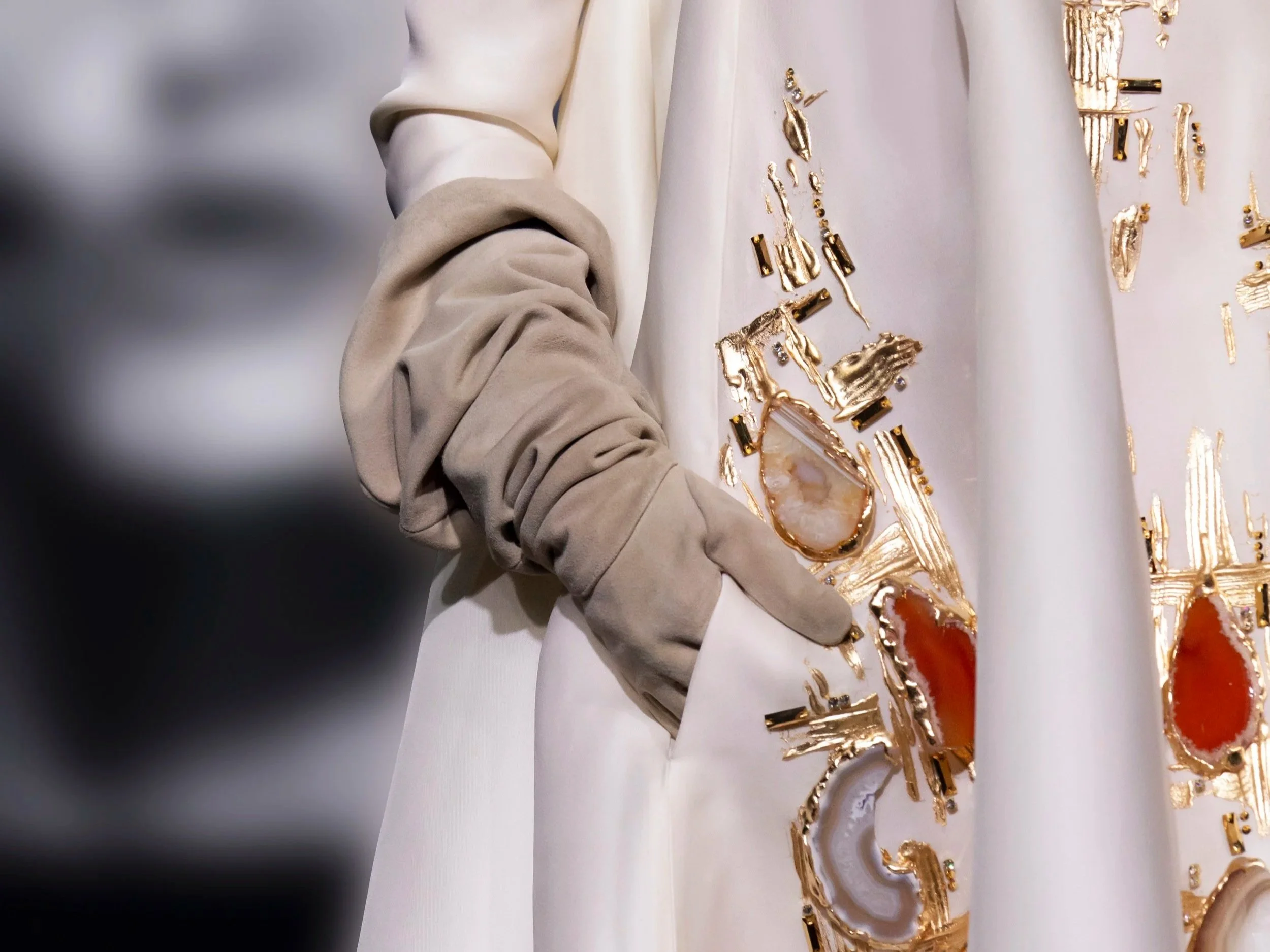
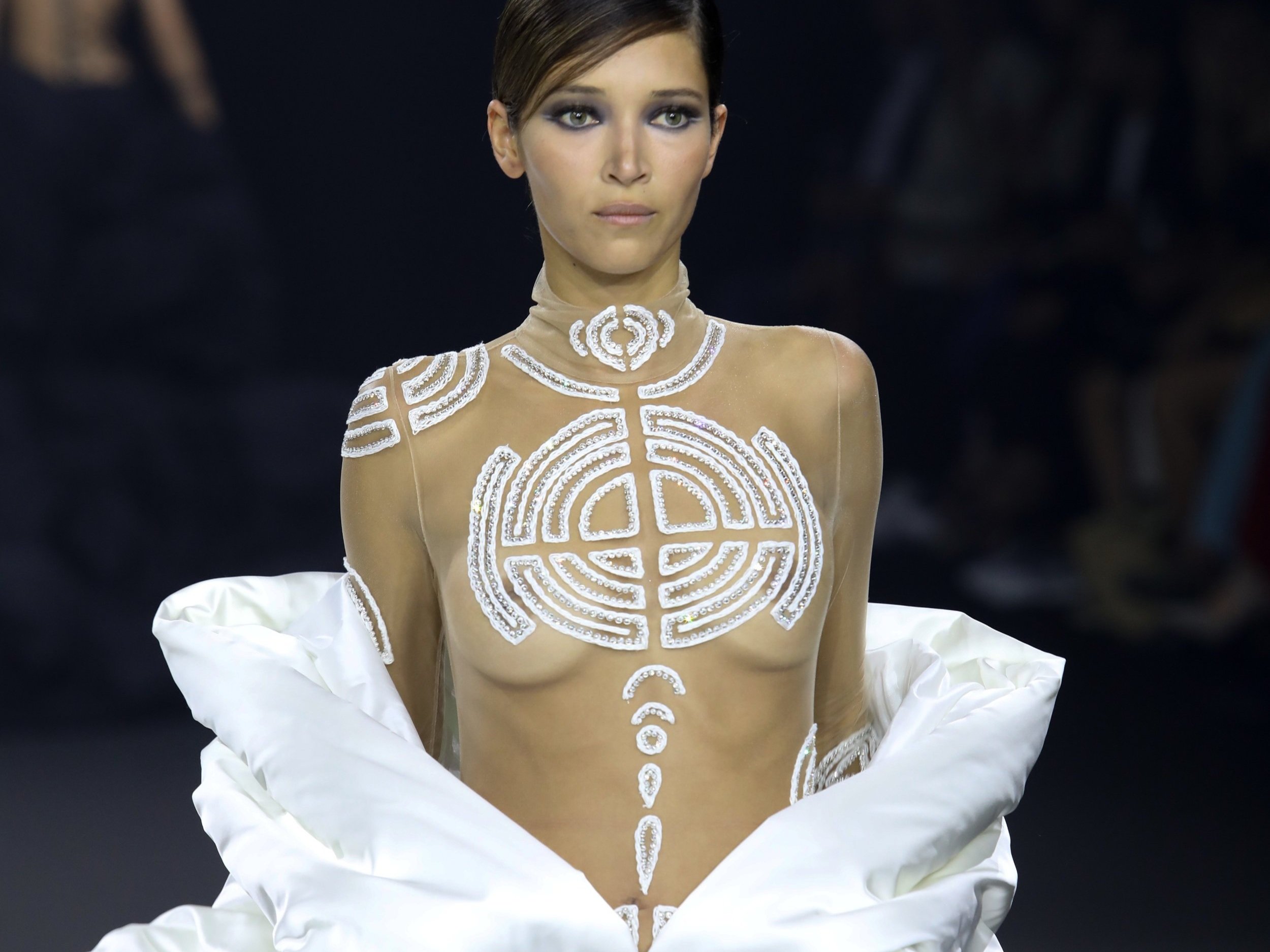
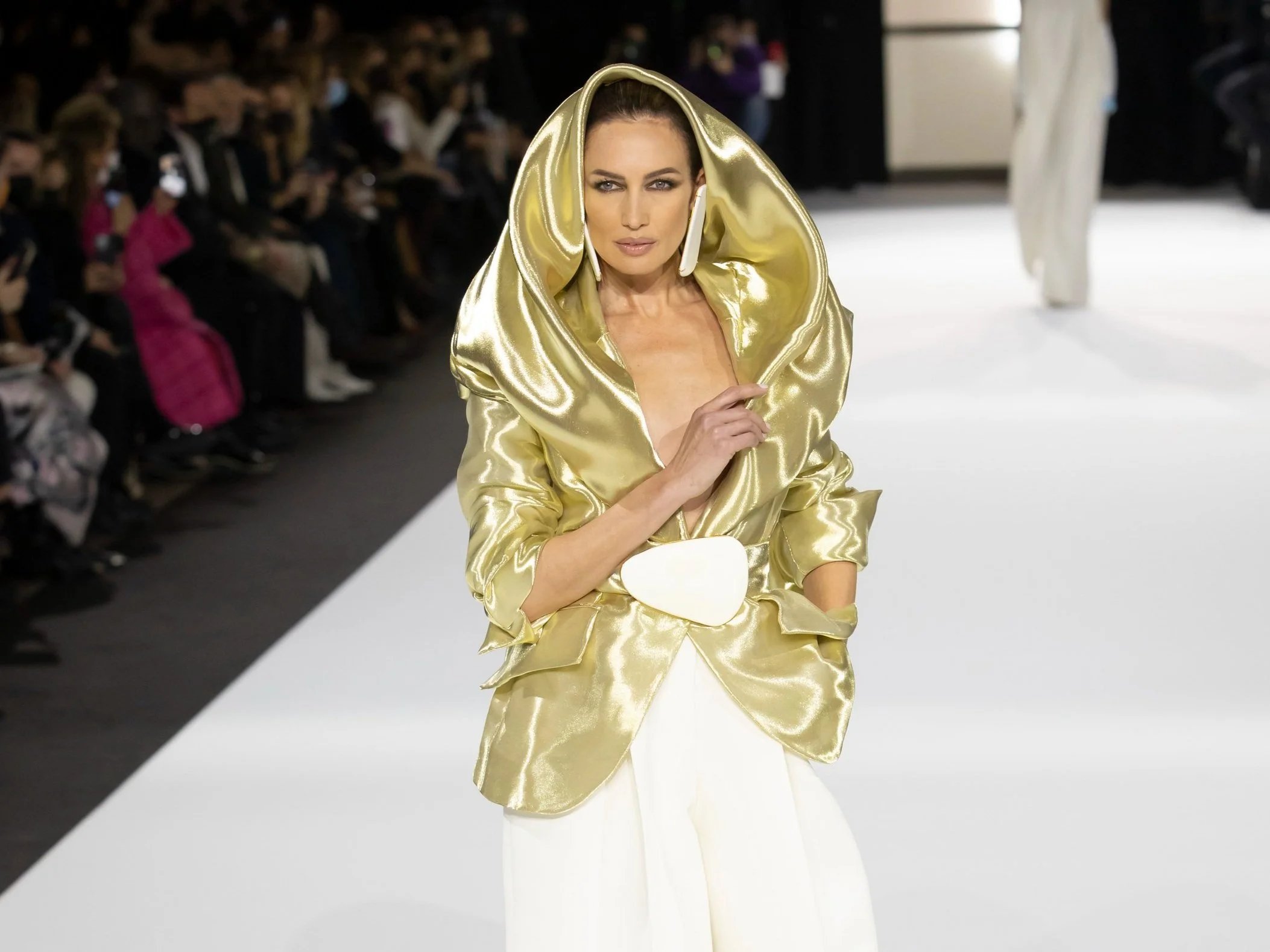
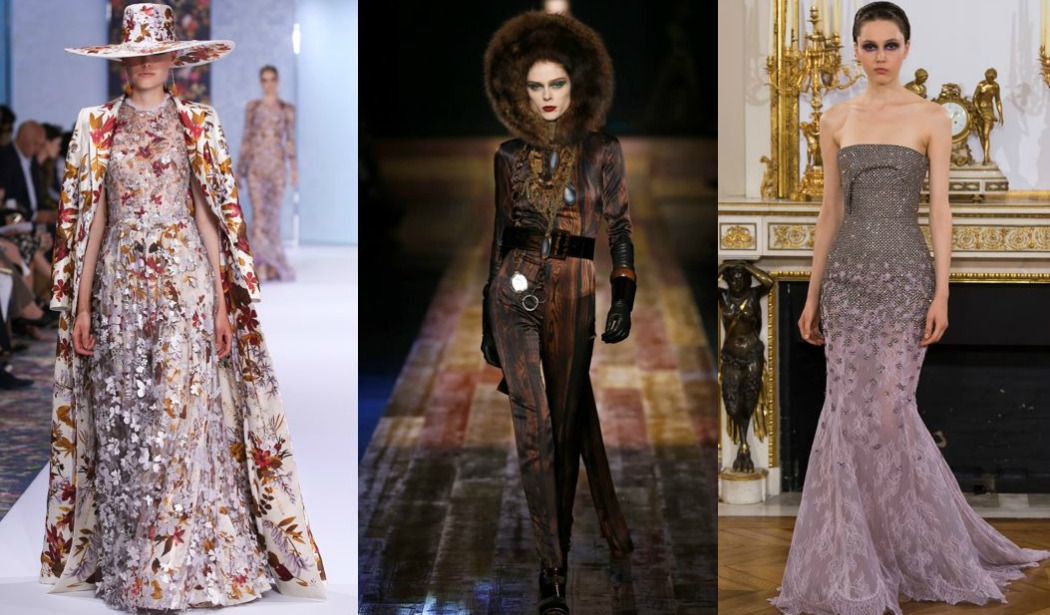
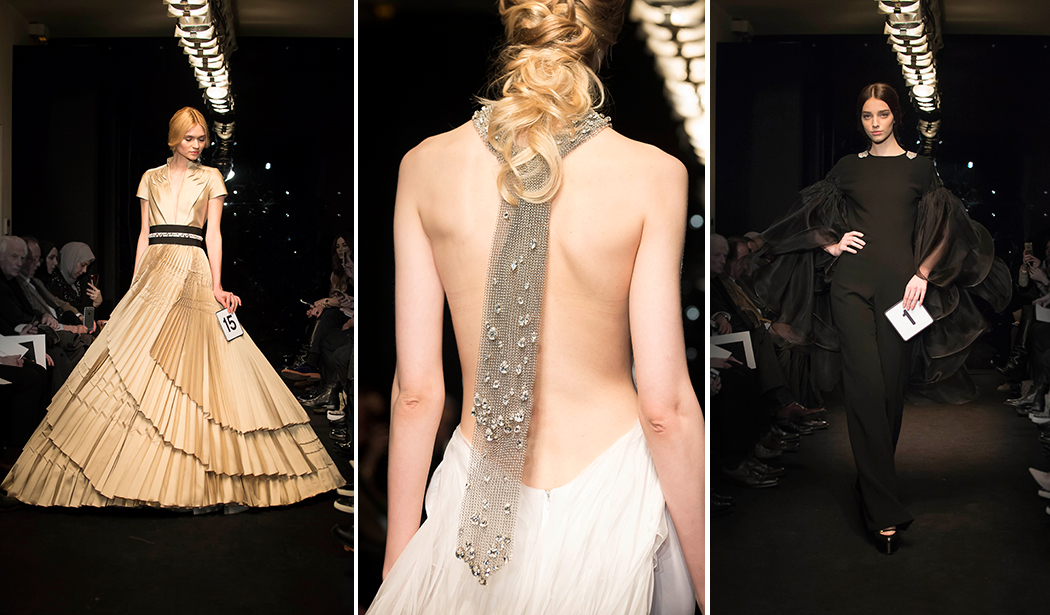
Thirty-three looks followed a progression closer to a concert programme than a conventional runway. The opening passages stayed almost entirely white: crêpe, gazar, chiffon, organza and satin formed zouave trouser jumpsuits, wrap-front dresses and long trapeze gowns with open backs. The restraint gave the craftsmanship room to register. Rock crystal, smoky and greige agate, mother-of-pearl and translucent silicone shaped to resemble marble replaced obvious theatrical effects with surface and light.
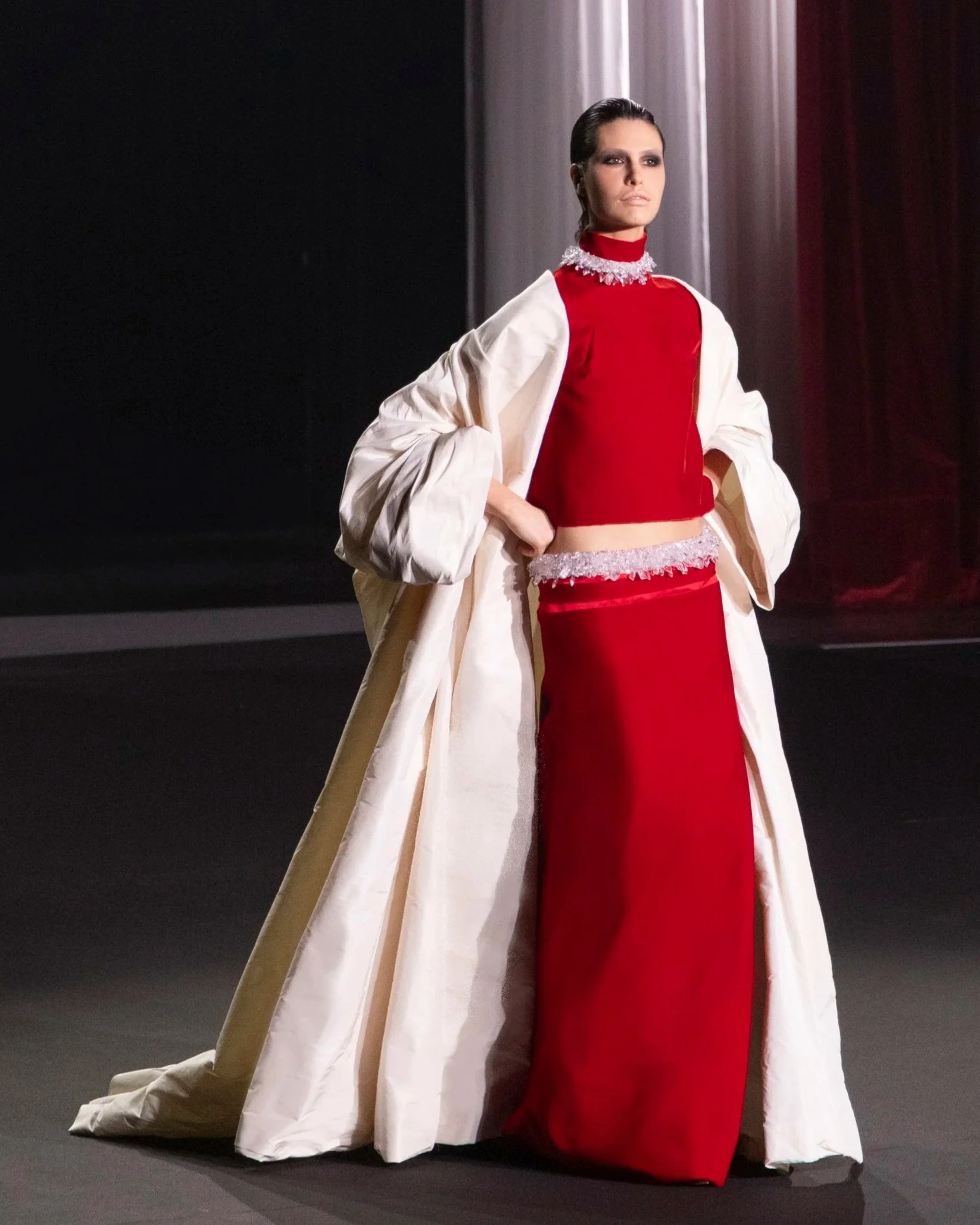
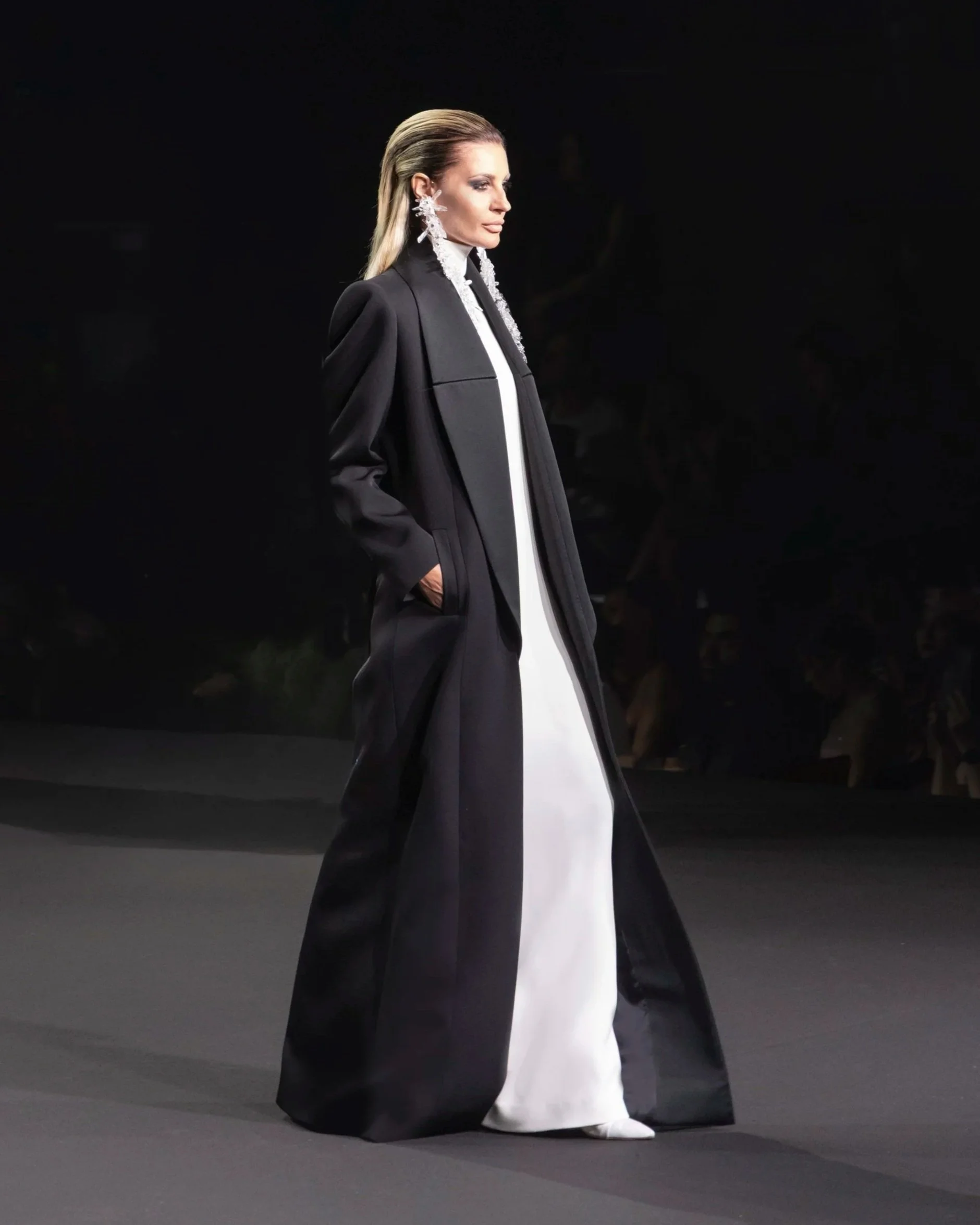
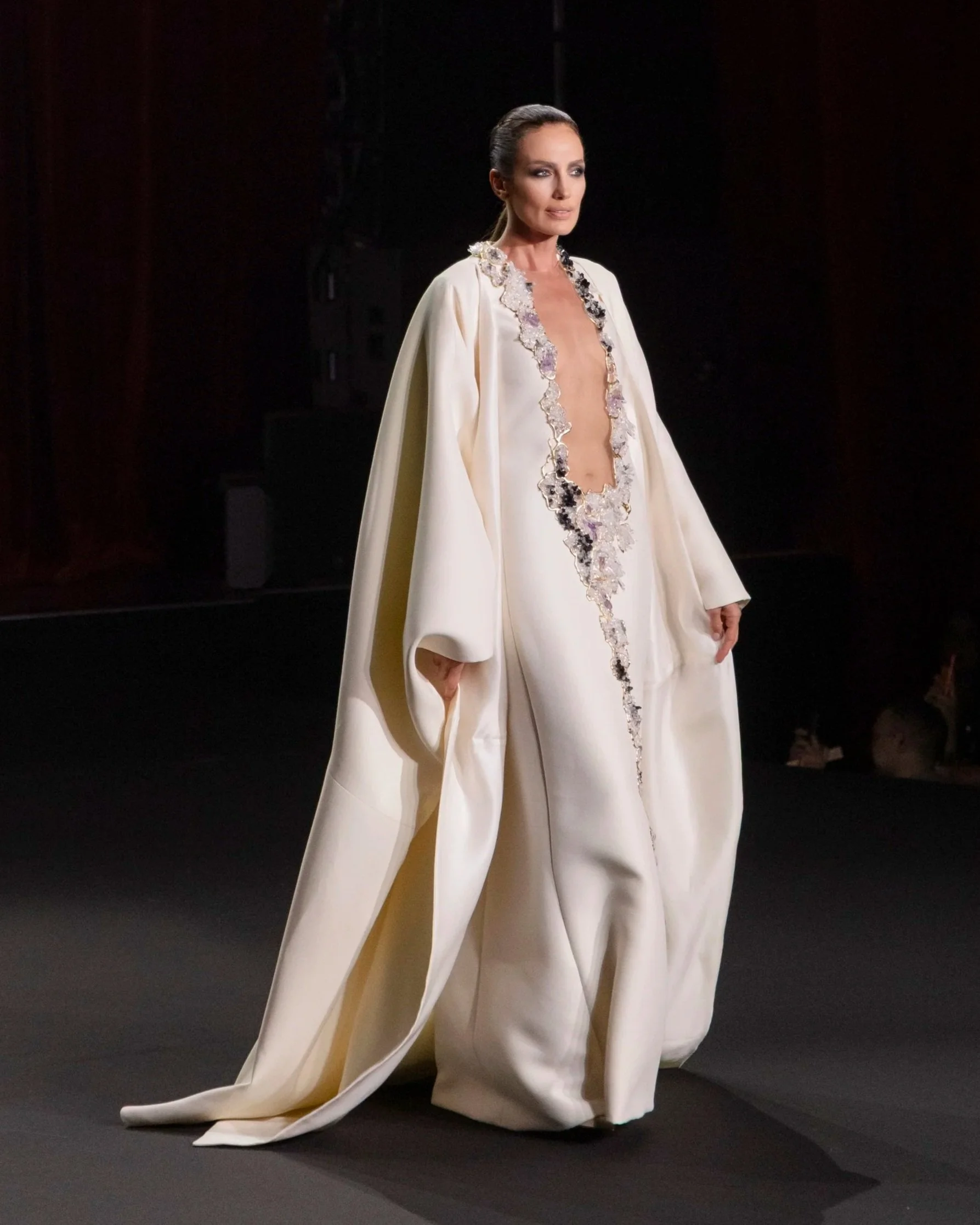
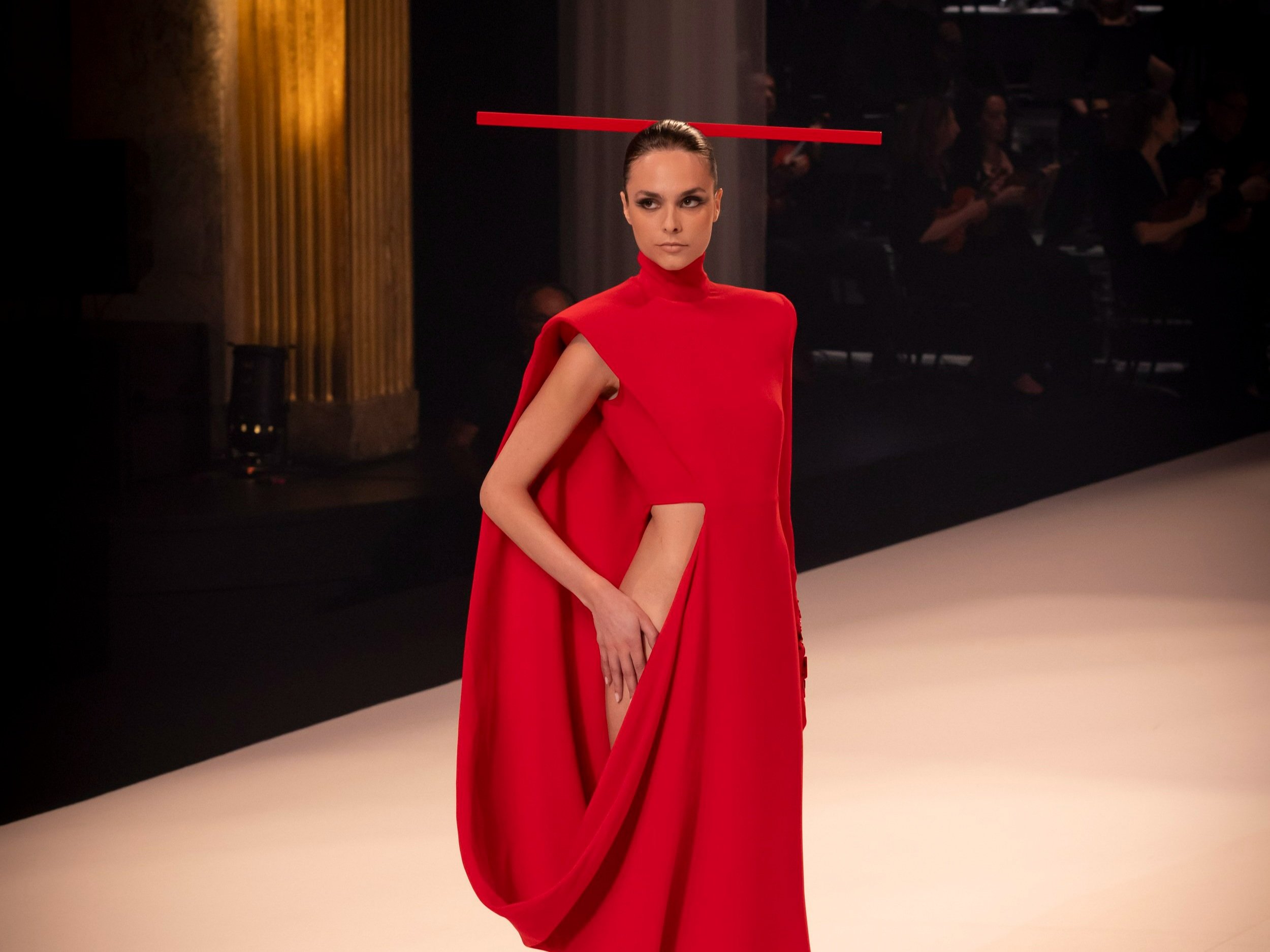
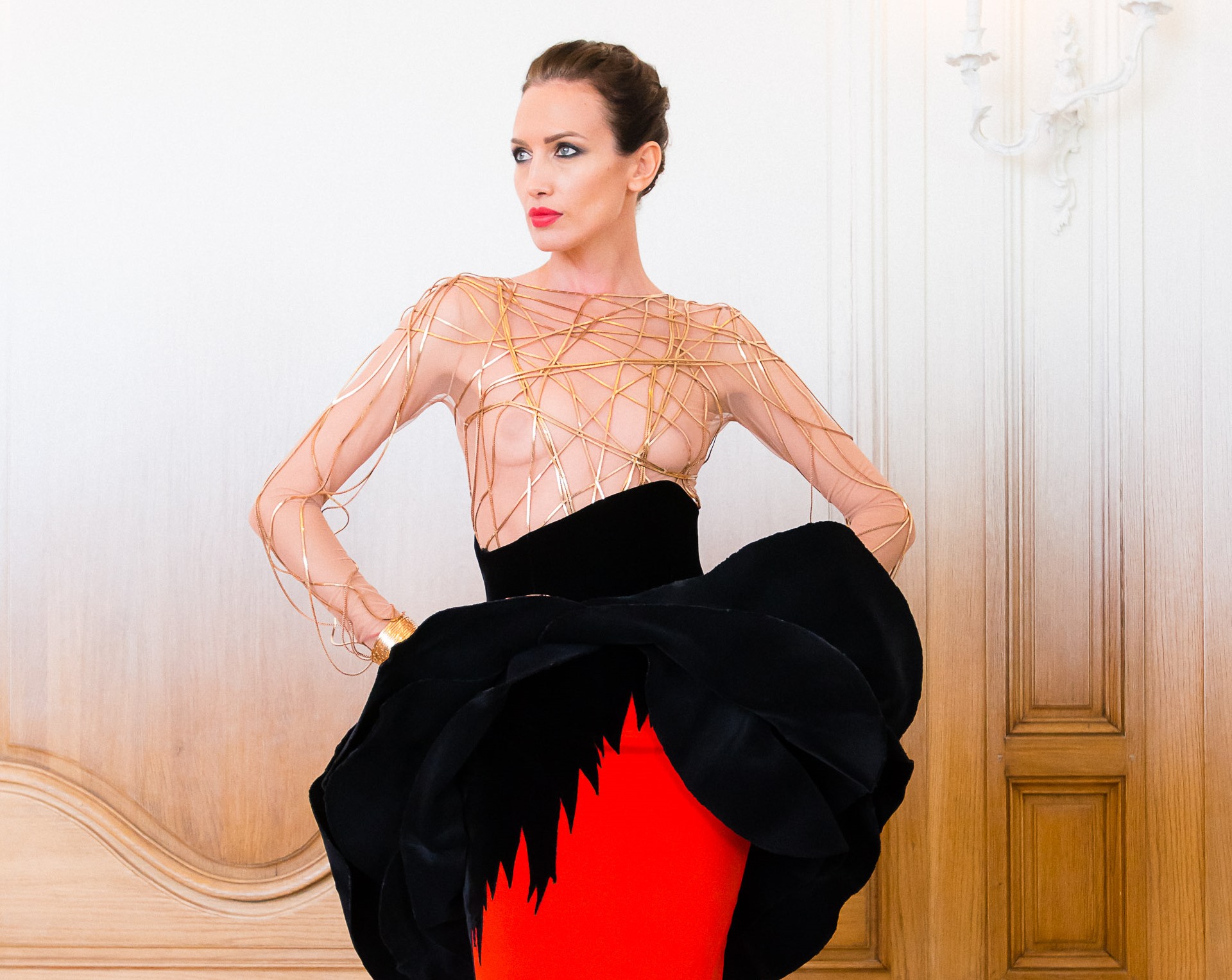
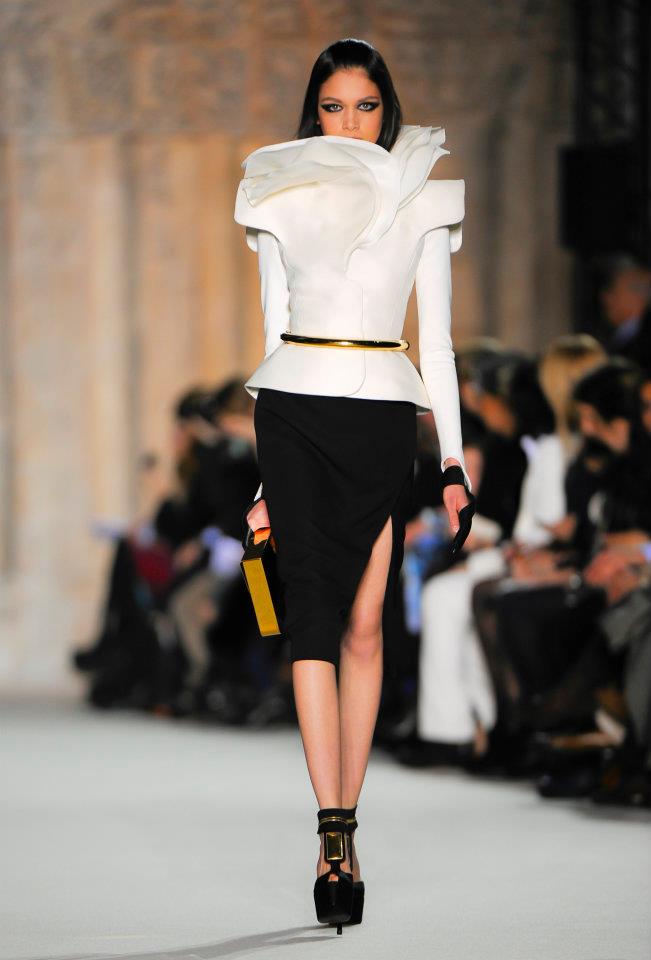
The shift arrived later. Black grain de poudre, jonquil diamonds and a long backless tuxedo jacket introduced a sharper register before the collection moved into its defining reds. A tunic dress and trapeze skirt in the custom Olympia velvet appeared beneath an ivory shantung kimono coat covered in rock crystal embroidery. The colour did more than reference the theatre’s curtains; it placed the garment inside the history of the room itself. For one moment, performer, stage and clothing occupied the same visual space.
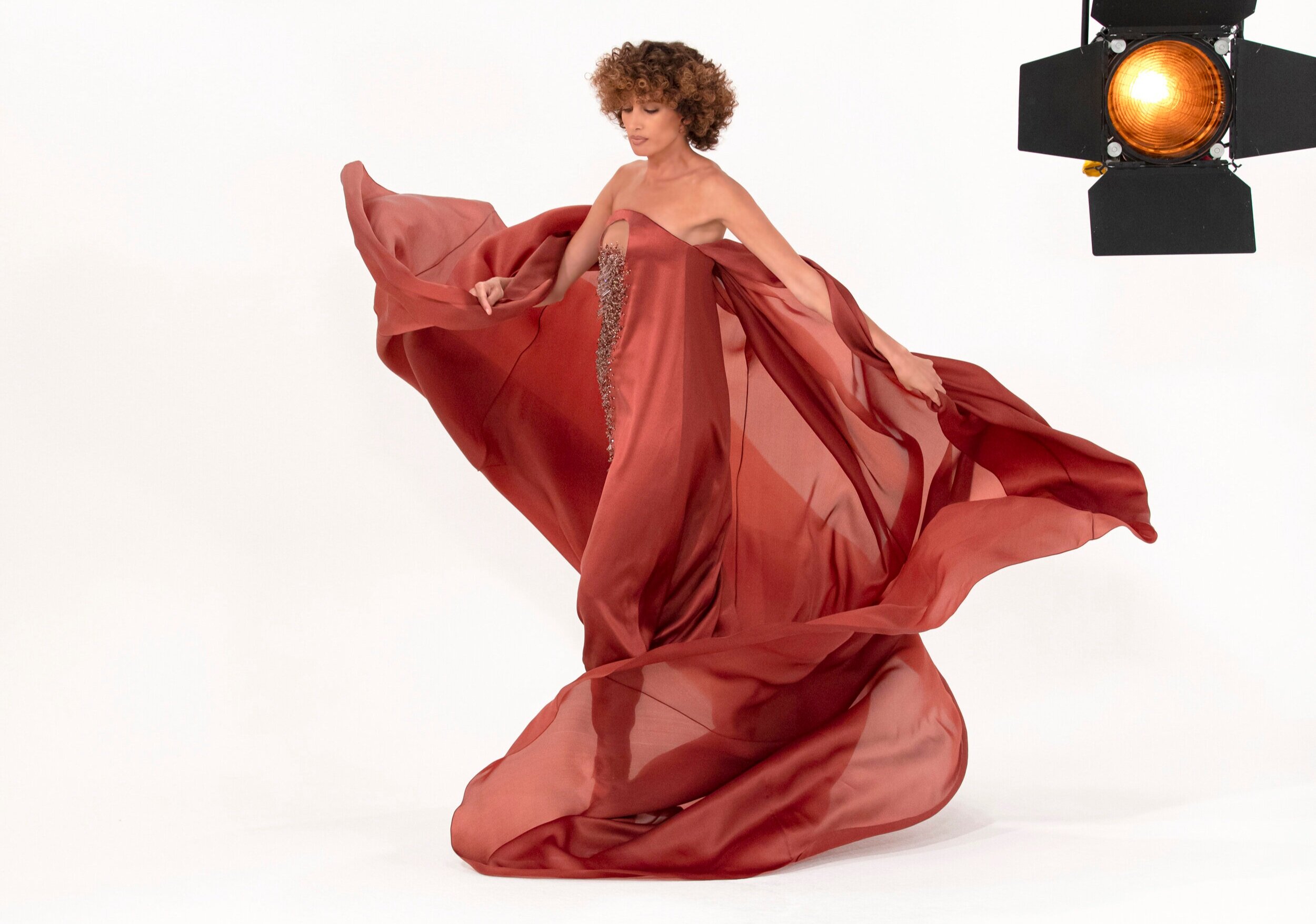
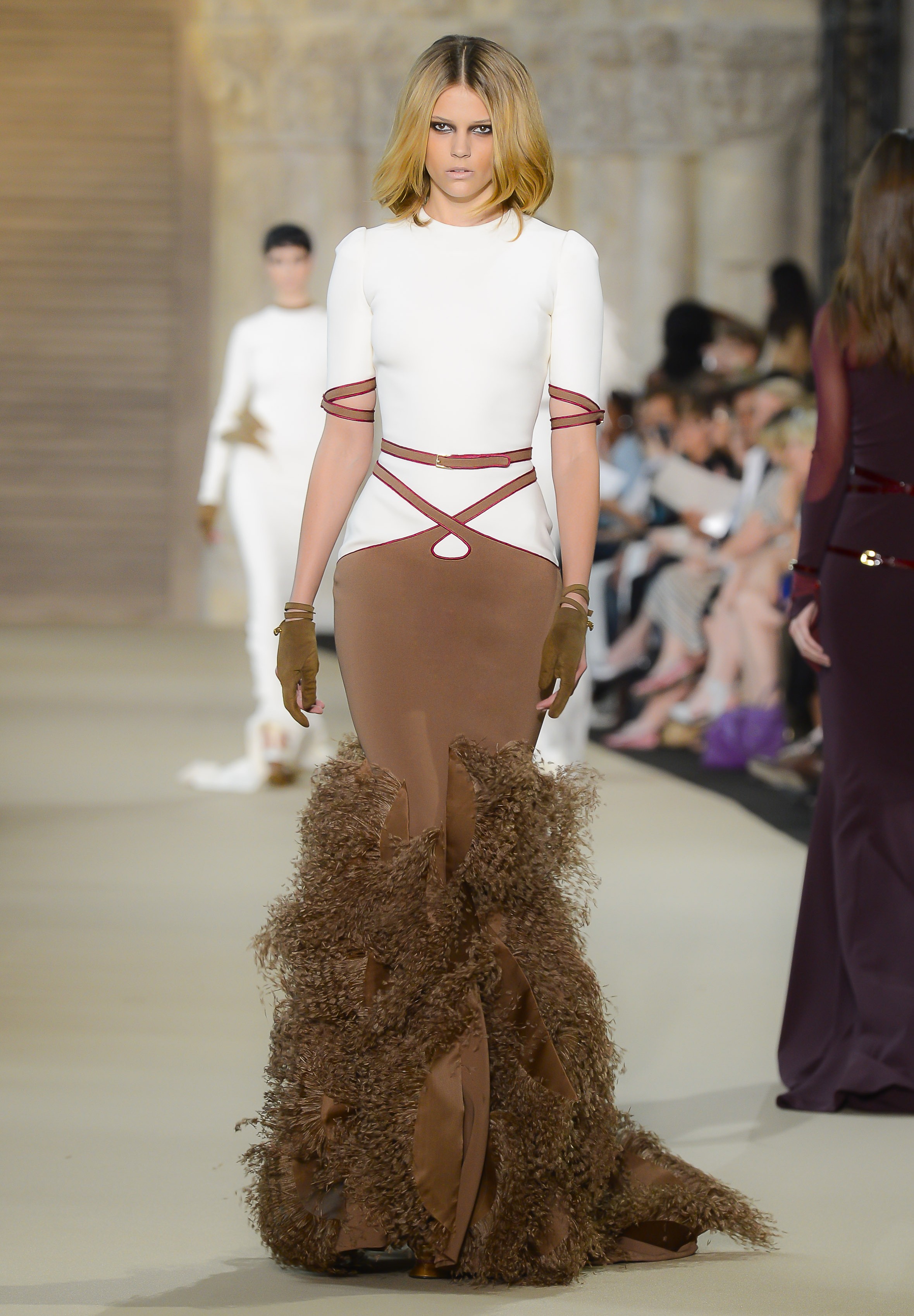
That relationship between body and architecture has always been central to the Olympia’s history. The venue is not simply where singers perform; it is a room where repeated appearances become part of a performer’s identity. Rolland understood that distinction. There was no literal costume quotation and no attempt to recreate Dalida’s disco-era image. Instead, the references appeared through posture: vertical silhouettes, sweeping capes and long pareos designed for movement, closer to a performer approaching a microphone than a guest entering a room.
Rolland did not attempt to recreate Dalida. He translated the qualities that made her recognisable: scale, movement and control. The collection’s achievement lies in that restraint — it treats couture as a way of preserving a performer’s presence without reducing her to the images already attached to her.