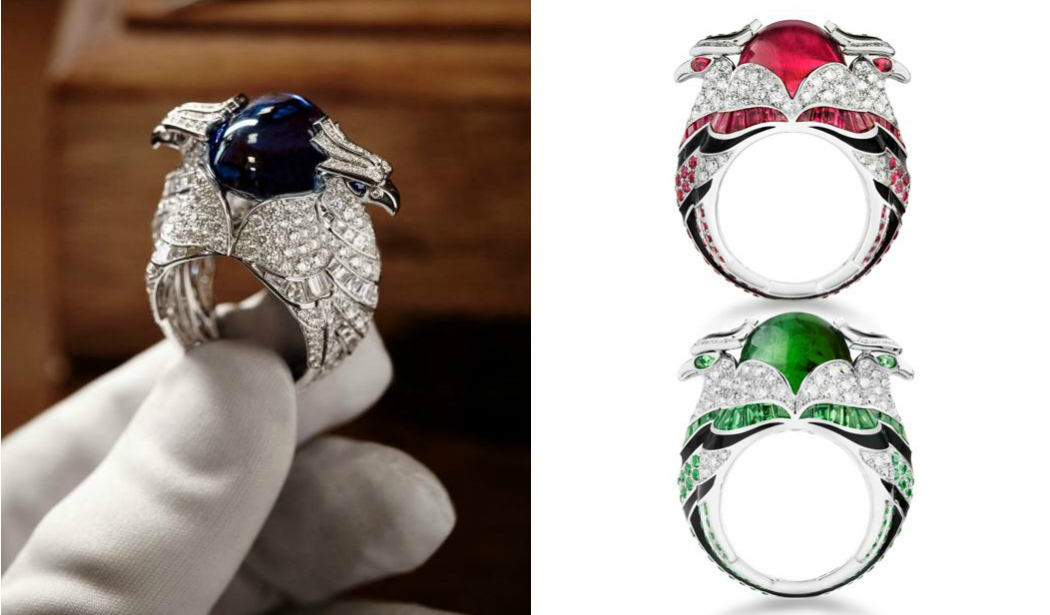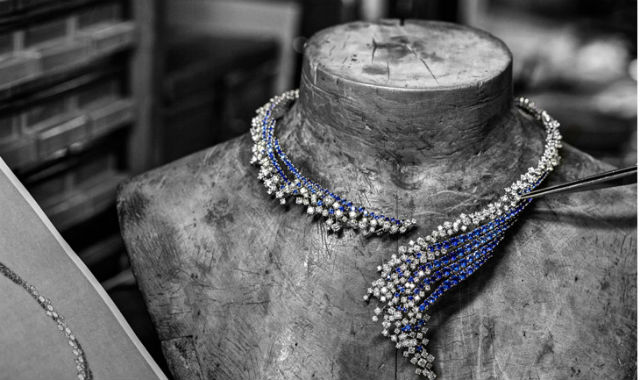
Boucheron's Human Being collection repeated one silhouette, the cluster necklace, across five sets, each paired with a ring in the same design language.. What changed each time was the elaborate savoir-faire.
The Parisian jeweller built its reputation on something other than rarity. Its founder favoured rock crystal over precious stones, and Claire Choisne continued that instinct as creative director, working with aerogel, aluminium, ceramic and quartz alongside traditional gems. Her recent Carte Blanche collections approached jewellery through broader questions — water scarcity in Or Bleu (2024), the disappearance of nature in Impermanence (2025). Human Being followed the same direction, using its theme as a starting point for five technical experiments.
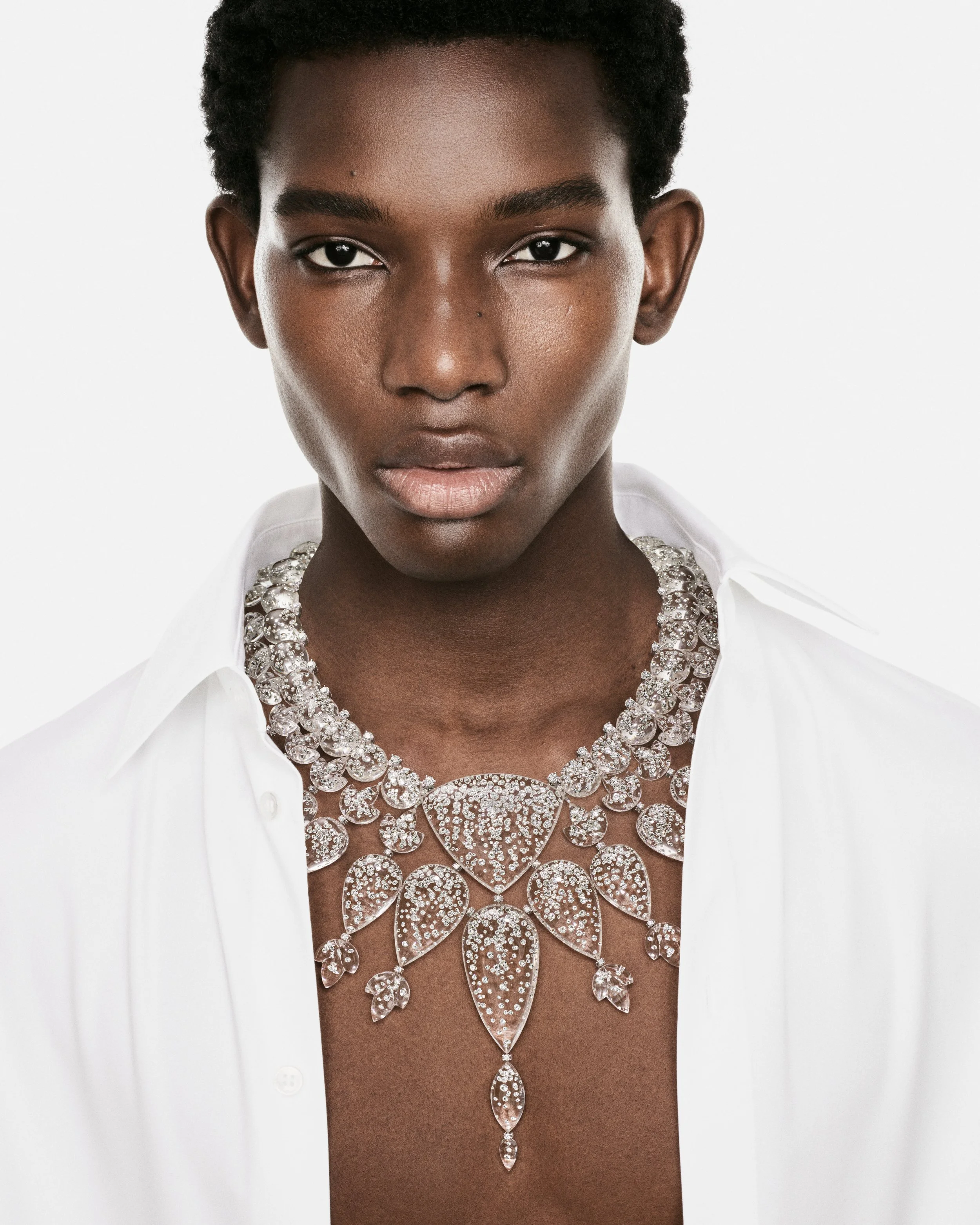

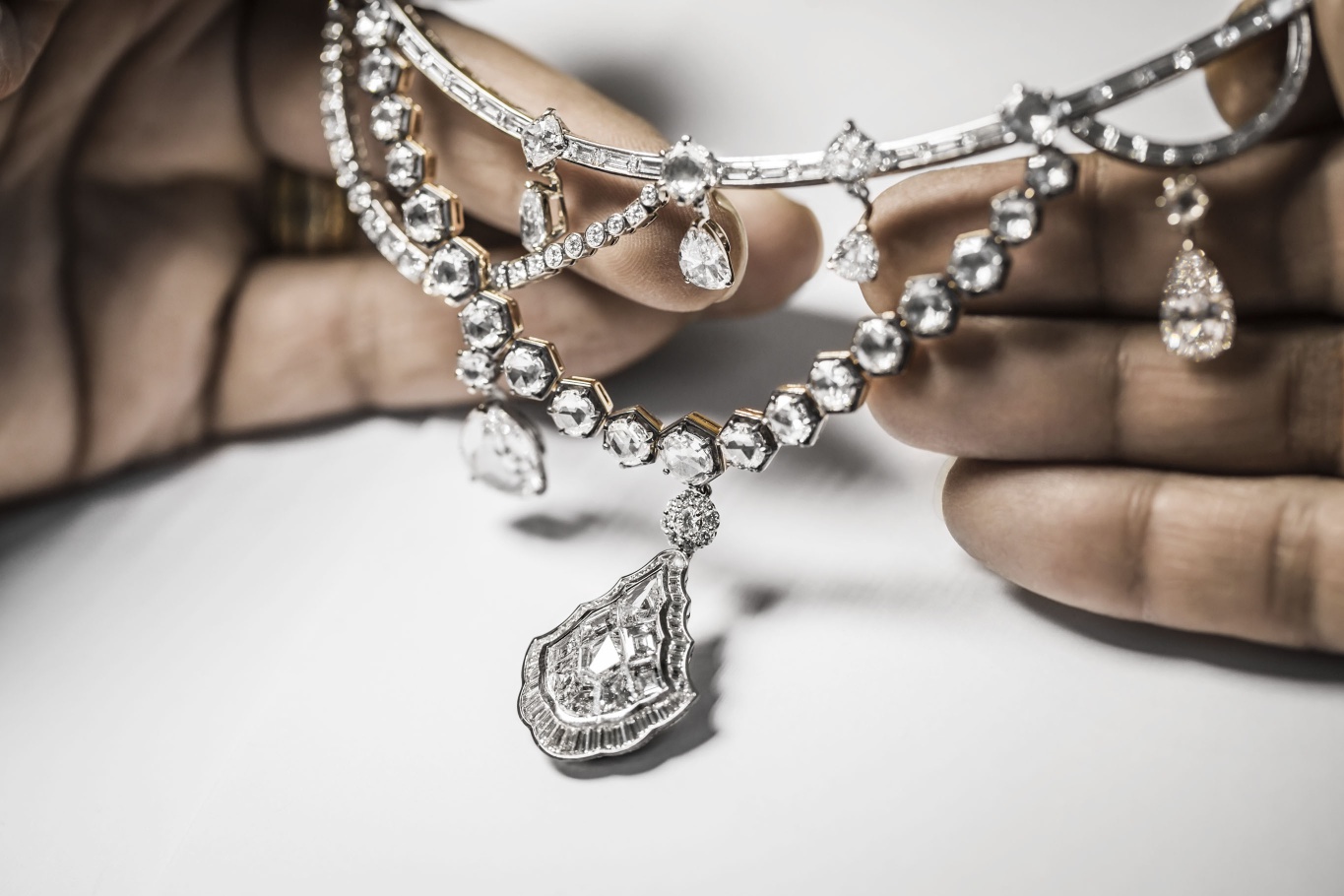
Boucheron artisans built "Rain" around the problem of making diamonds appear suspended in motion, which meant removing the element most high jewellery depends on: the visible setting. Diamonds were suspended inside hollowed drops of rock crystal filled with resin, poured in successive layers under vacuum to eliminate air bubbles. Each stone was positioned by hand to recreate the irregular movement of falling water. Even the joints linking the crystal drops were pavé-set with diamonds, leaving little evidence of how the necklace was held together.
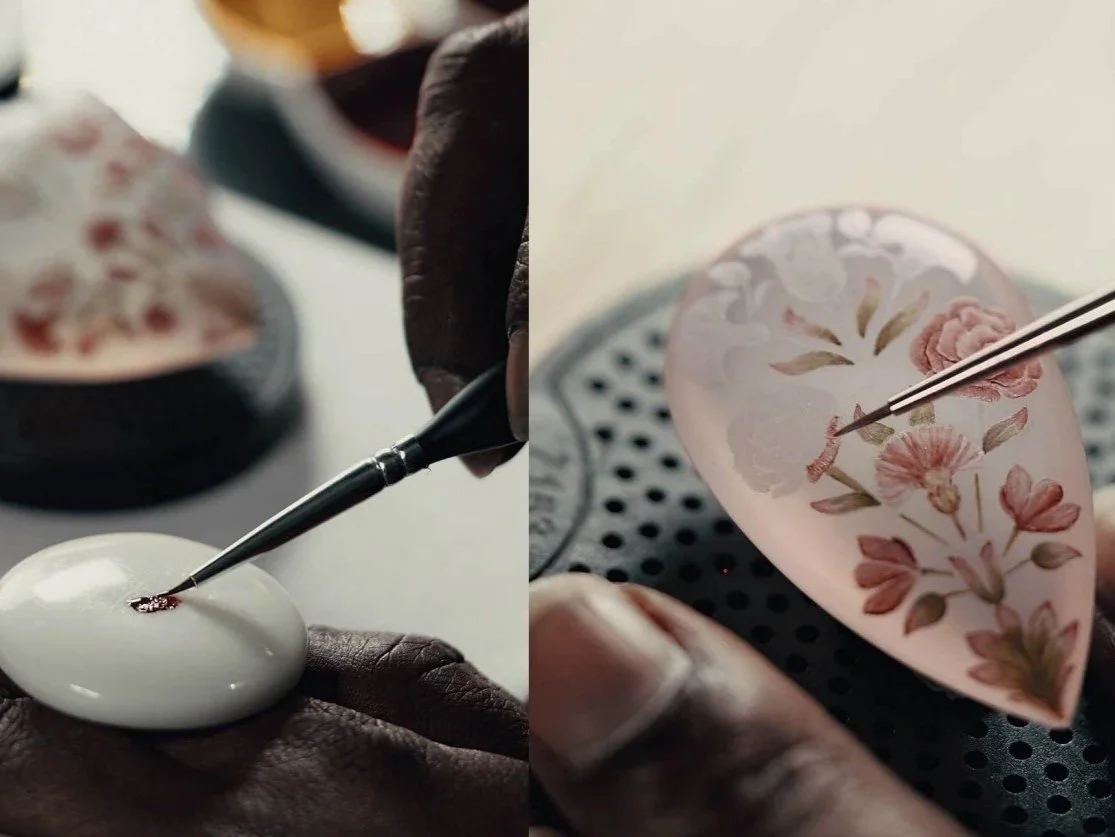
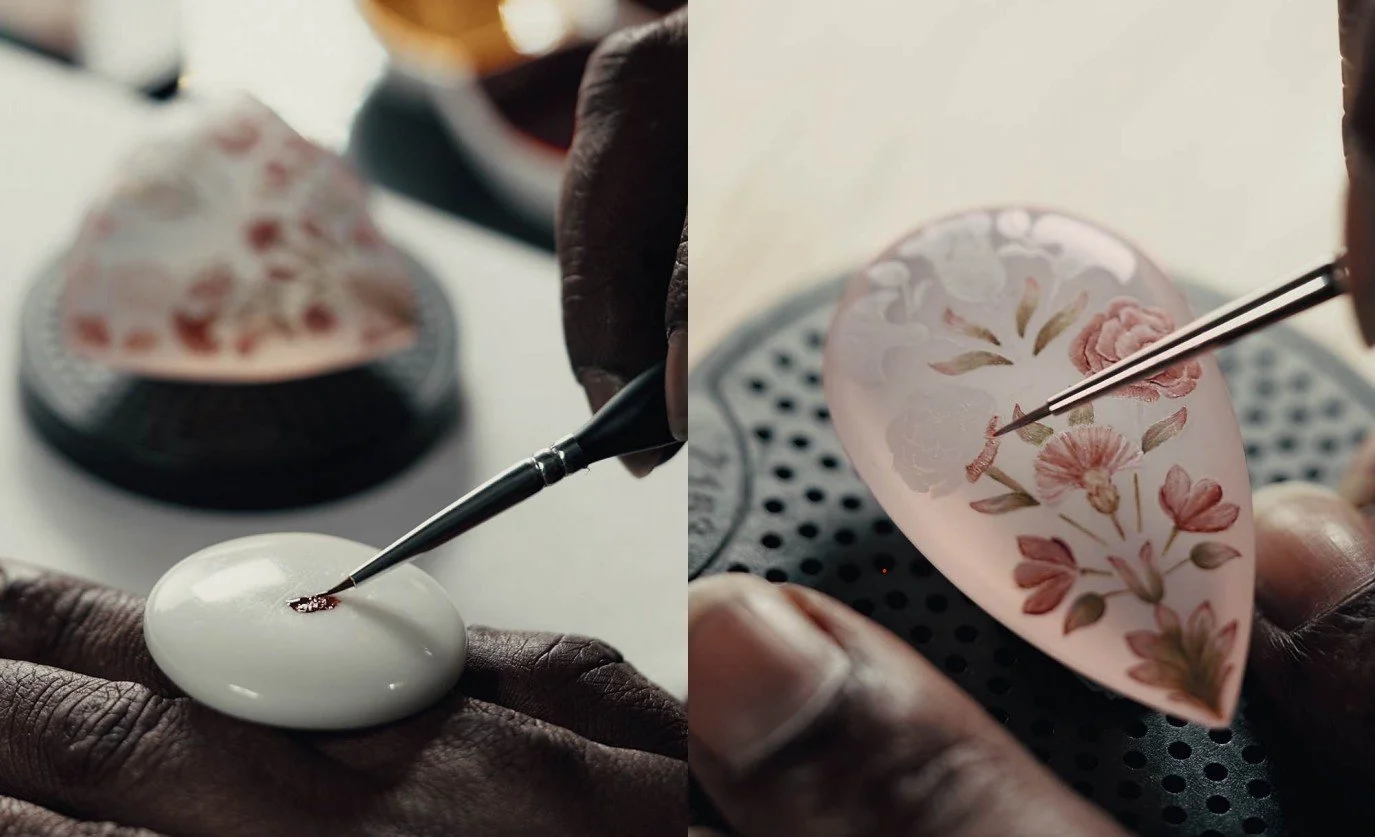
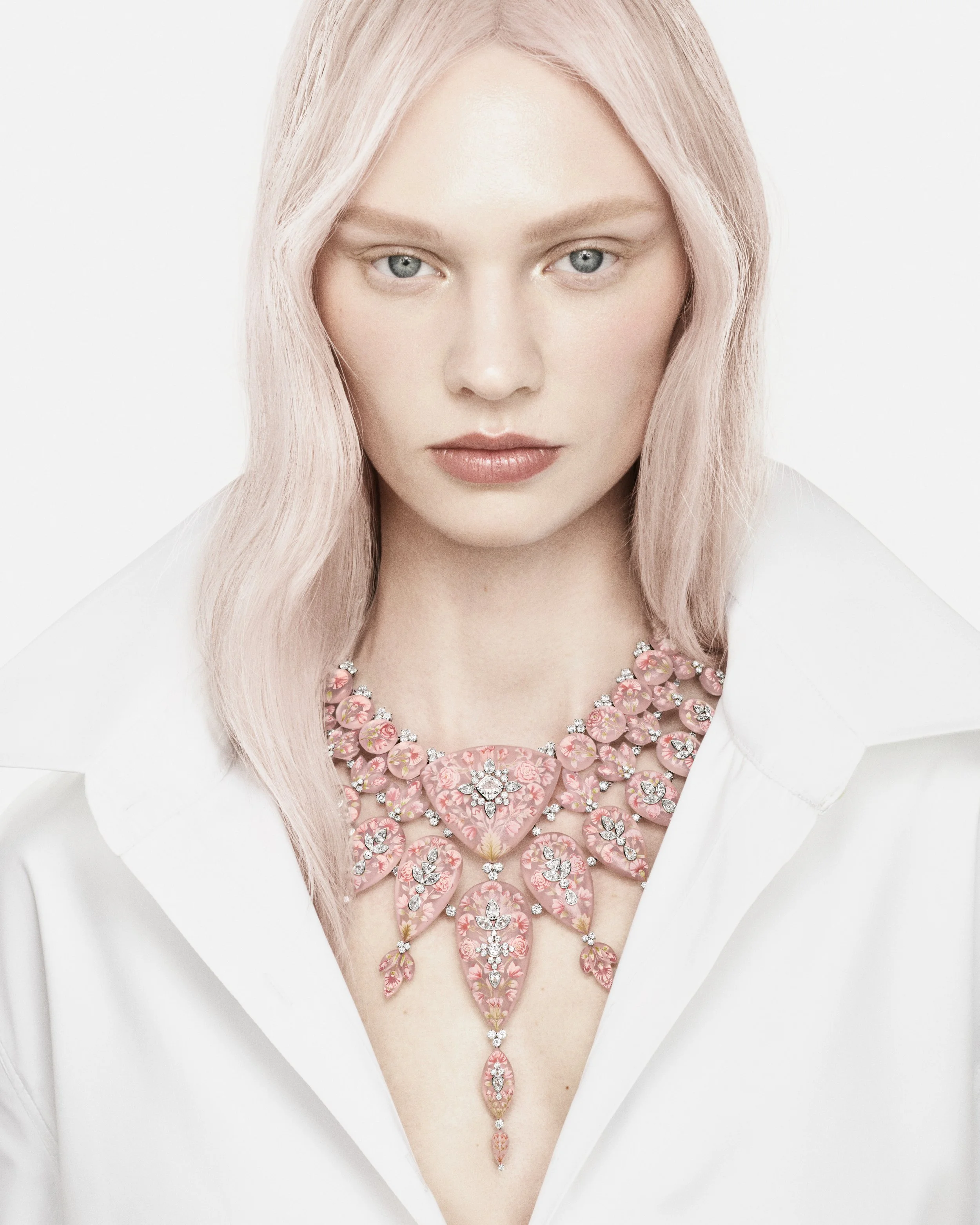
Floral motifs were hand-painted onto rose quartz under magnification for "Flower," colour and shading adjusted across dozens of individual stones so the pattern read as a continuous image rather than a repeated stamp. Each stone forming the necklace required around ten hours of work. Much of that time went into the final varnish, where a single imperfection could disrupt the soft, diffuse quality of the finished surface.

Morganite is vulnerable to vibration, which made "Light" a problem of engineering as much as design. Conventional stone-setting techniques risked cracking the gem, so instead of hammering prongs into place, the workshop secured the settings with screws. Diamonds embedded within the morganite required a more complex solution: the stones were hollowed out and fitted with concealed metal structures supporting the diamonds from within, so that the gem itself carried part of the setting's function.
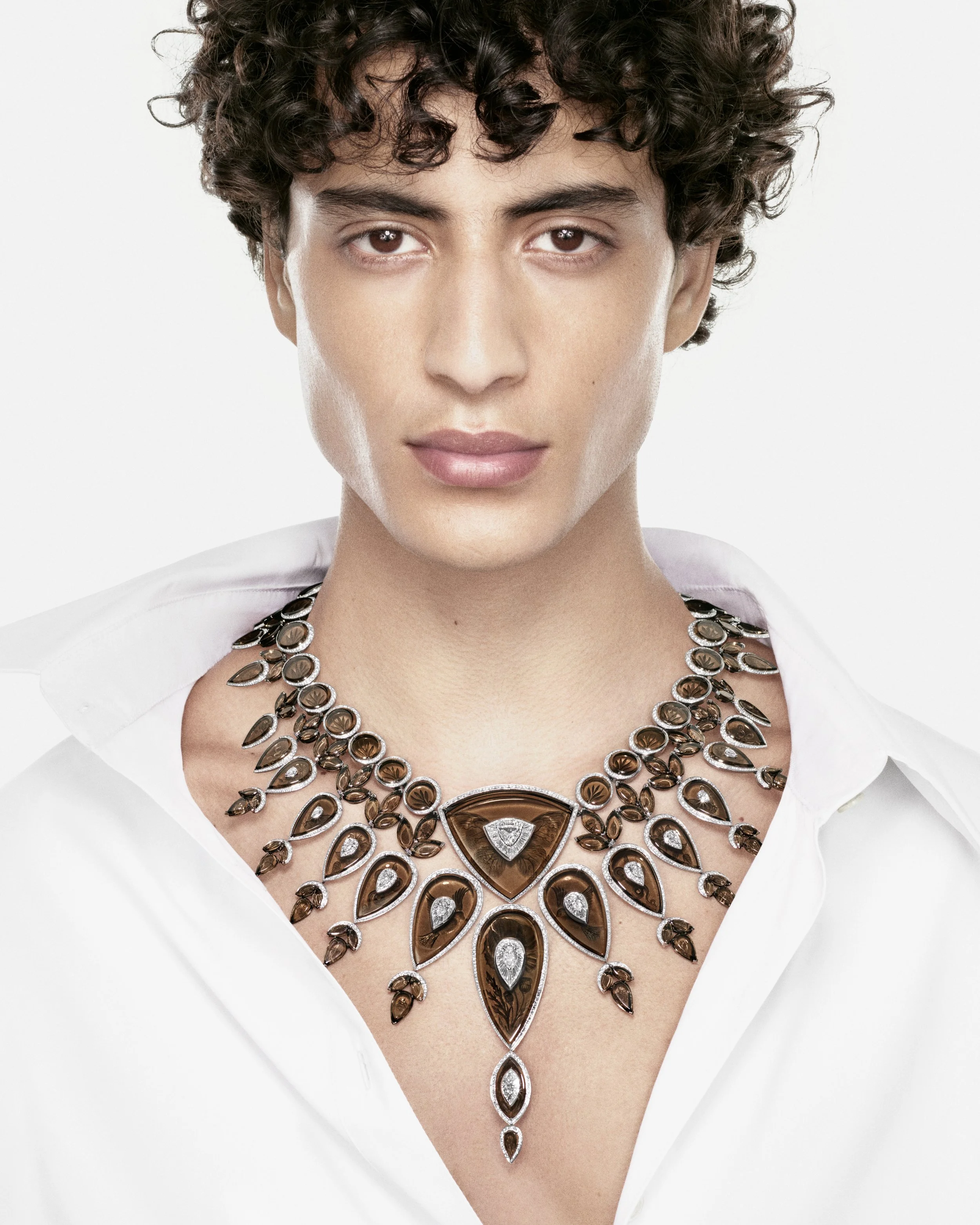
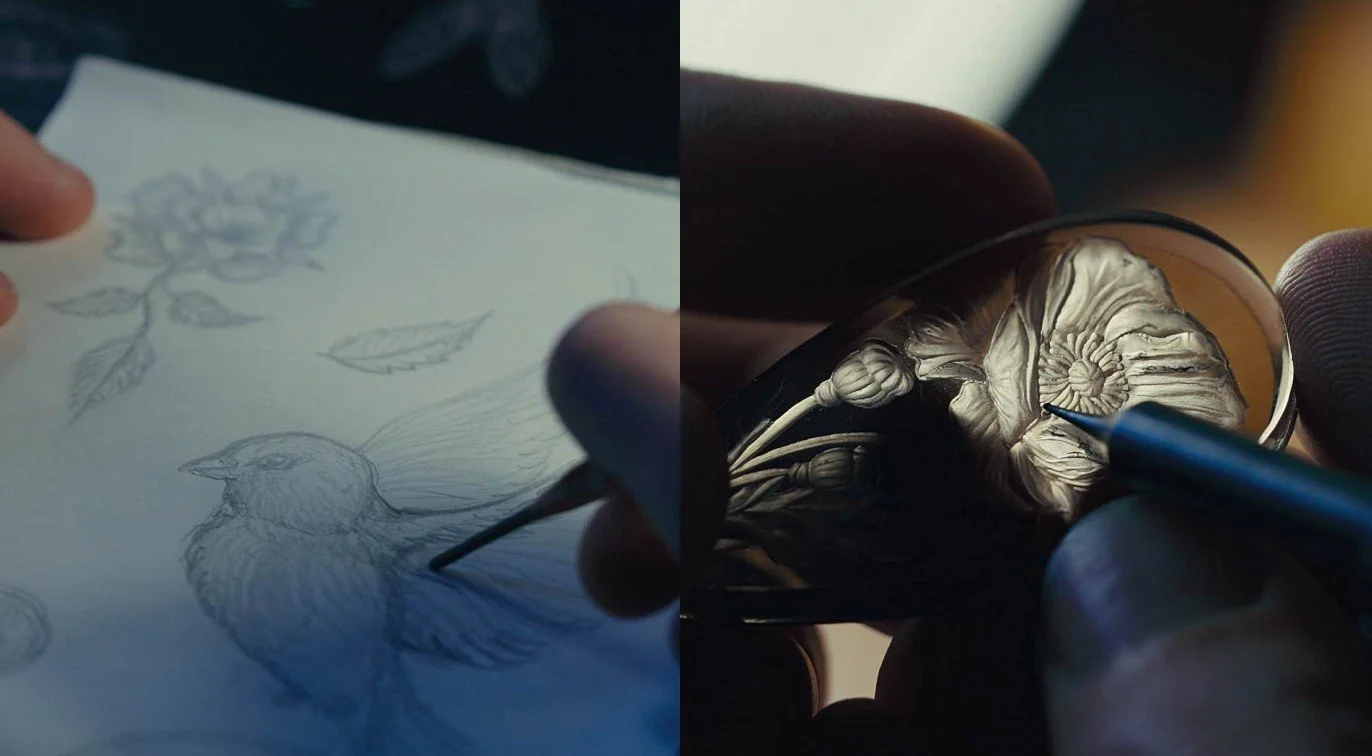
Colour had no role to play in "Tattoo." Motifs drawn from Boucheron's Victorian tattoo archive were engraved into the reverse of smoky quartz using glyptic carving, an ancient technique that creates relief by removing material from the stone itself. Definition came entirely from depth, shadow and light. The workshop developed more than 200 custom tools for the project, continually reshaping them as the quartz wore them down. Once removed, the material could not be restored.
A femtosecond laser more commonly associated with advanced watchmaking took the place of the engraver's tools for "Checkers." The houndstooth motif was etched into onyx with enough precision to remove material without generating the heat that could damage the stone. Continuity proved the harder problem: the pattern extended across 163 individually shaped elements, each requiring its own tool and position within a digital model, so the design appeared uninterrupted from one stone to the next.
What emerges across the five sets is less a meditation on humanity than a record of five different technical questions: how to make a setting disappear, how to paint onto stone, how to support a fragile gem from within, how to carve without the possibility of reversal, and how to adapt a tool from watchmaking to jewellery.
DISCOVER MORE ABOUT BOUCHERON