Chud Thai: How Thailand’s National Dress Is Seeking UNESCO Recognition
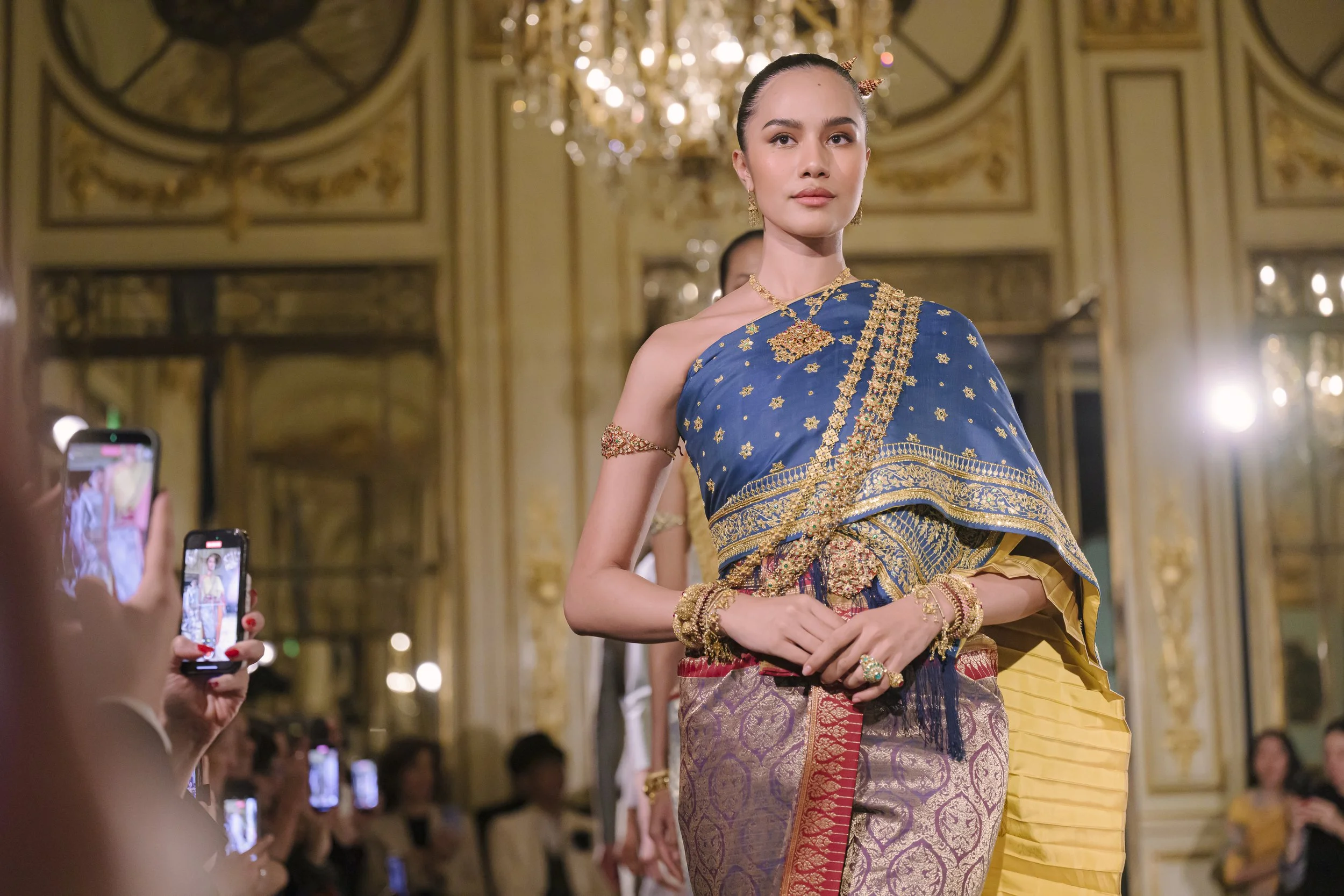
This December, UNESCO’s Intergovernmental Committee for the Safeguarding of the Intangible Cultural Heritage will consider whether to inscribe Thailand’s Chud Thai, the country’s national dress, on its Representative List.
Chud Thai is more than a traditional outfit. Made from handwoven Thai silk and finished with embroidery, brocade and metal-thread work, it draws on skills passed from one generation to the next, from raising silkworms and reeling silk to weaving, dyeing and embellishment. The techniques used to make the fabric determine its patterns, texture and finish.
In mat mee, the Thai form of ikat, bundles of threads are tied and dyed before weaving begins, sometimes in several rounds to build up colour. The pattern emerges as the threads are arranged on the loom. Khit and jok create motifs during weaving, using supplementary threads to form designs within the cloth.
Pha yok, or brocade, adds raised patterns with supplementary threads of silk, gold or silver. In pha mai yok thong, metallic thread forms the motifs, catching the light against the silk. Traditionally, this thread could be made by rolling silver into fine strips and winding them around a yarn core. The resulting fabric was prized for its richness and associated with royal dress and courtly status.
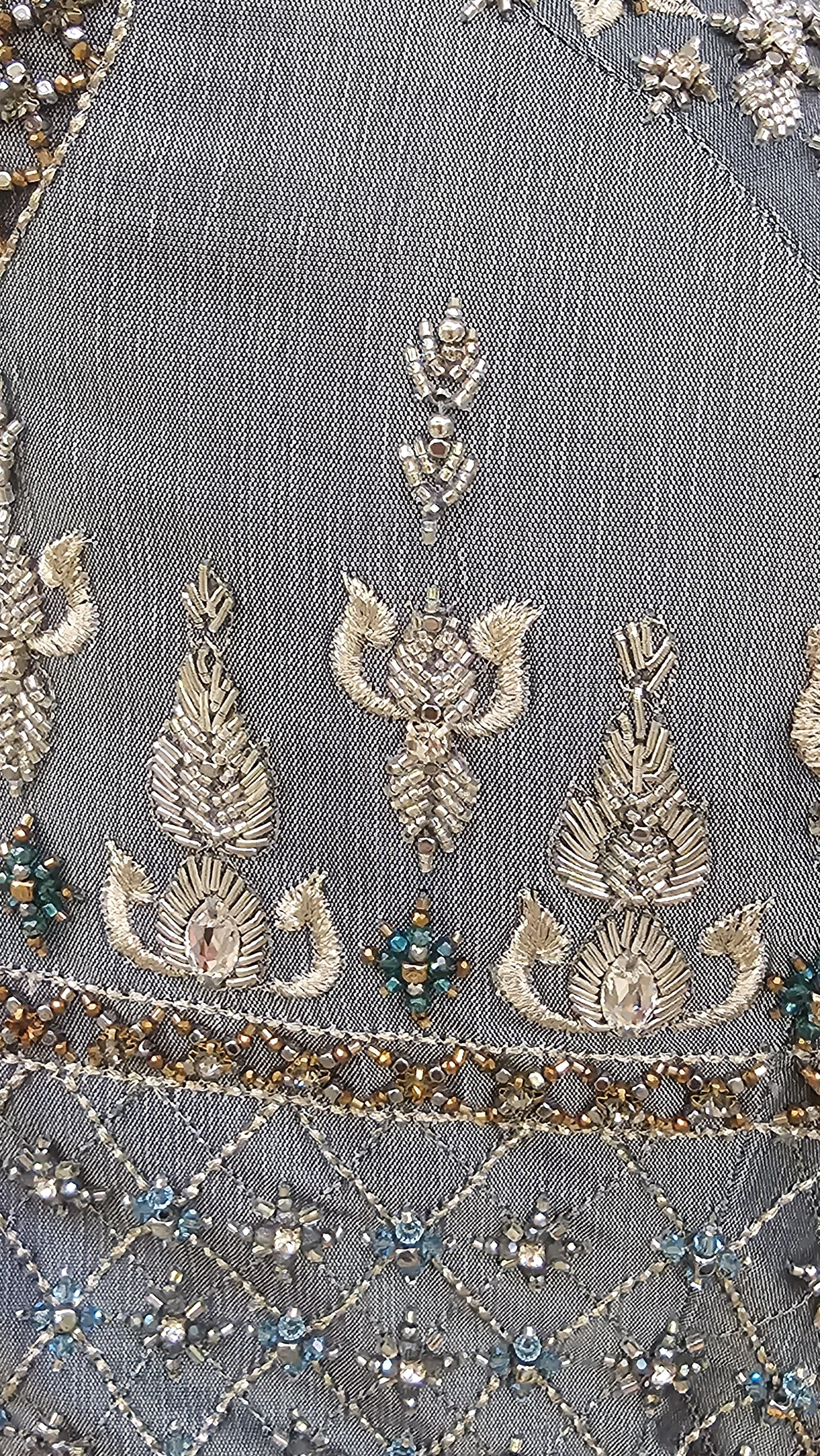
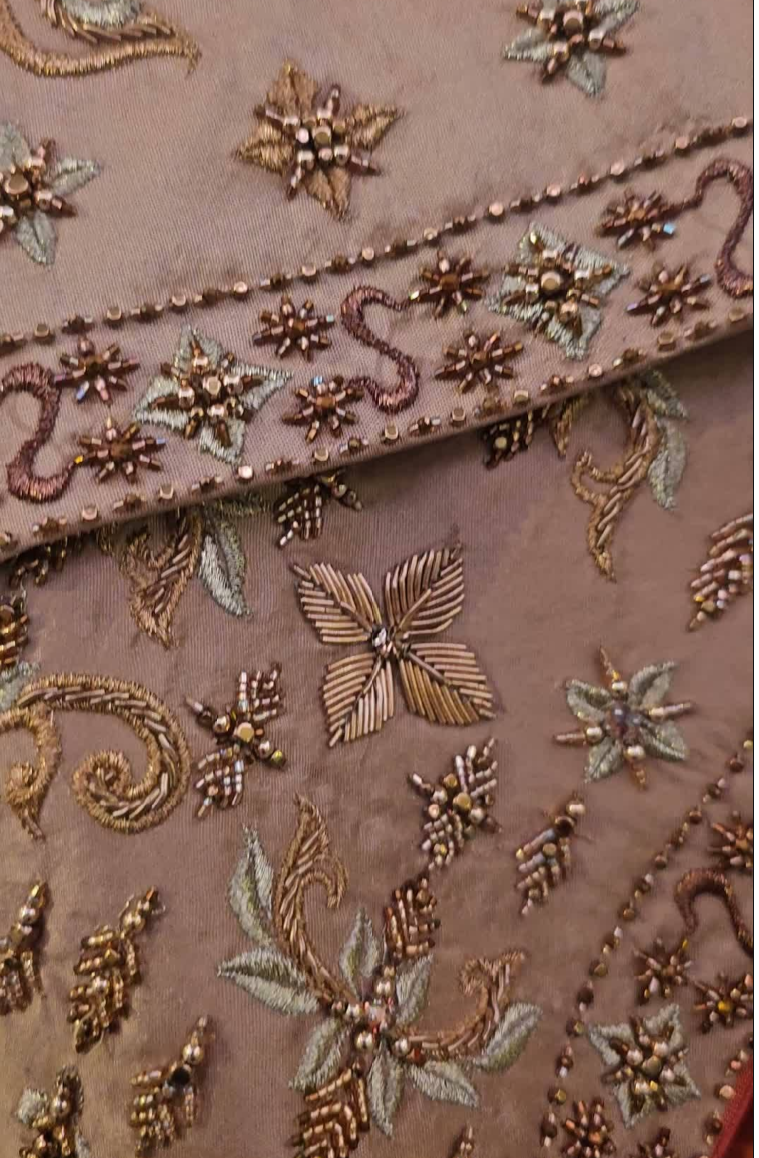
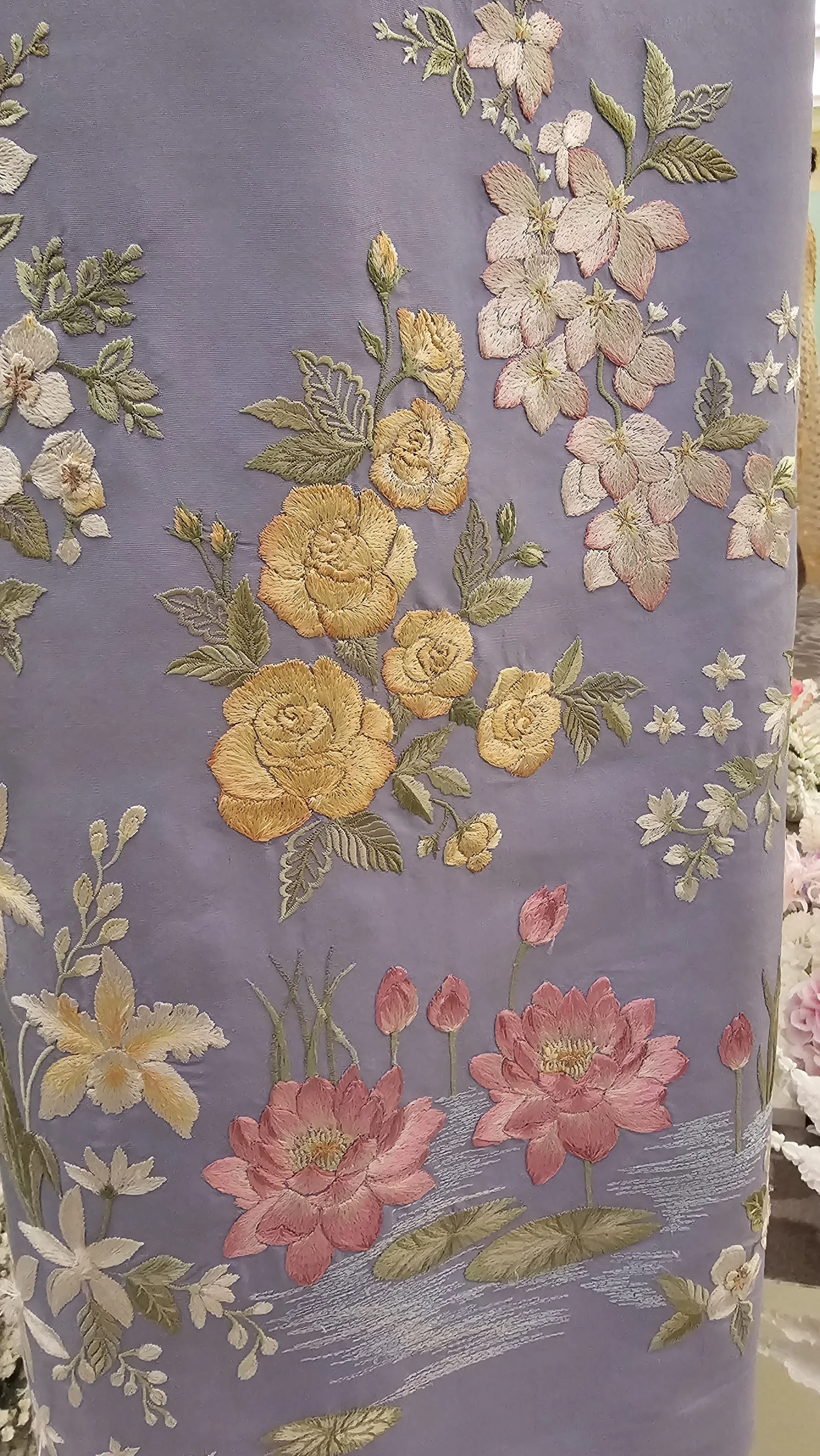
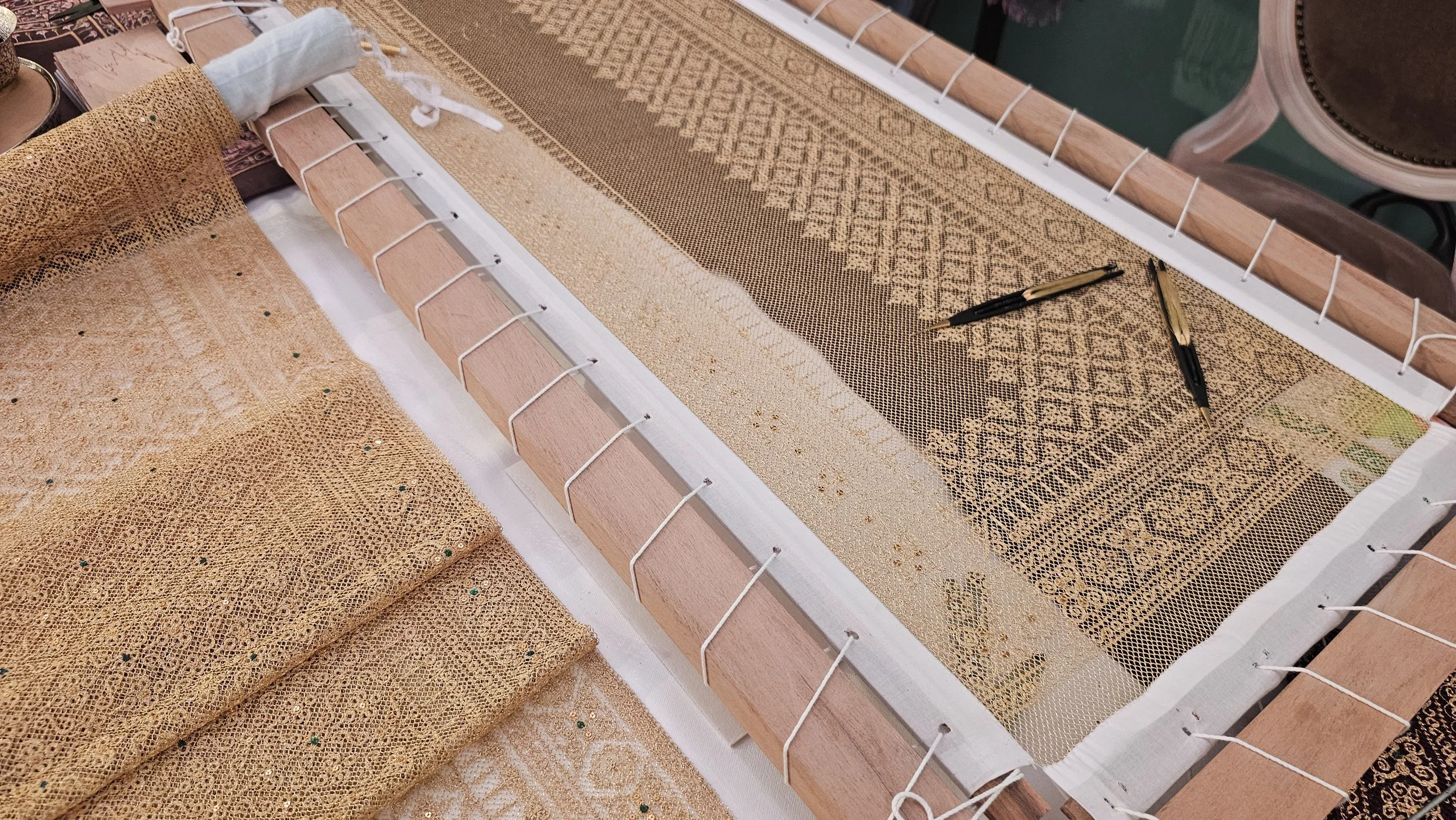
Other techniques bring ornament to the surface or create a more open structure. Sadung Khrueang Mai is an intricate hand-embroidery technique associated with the Thai royal court, worked on fabric stretched over a frame. Krong thong uses metallic thread knotted into an open mesh, which can then be embellished with embroidery and ornaments. Both require specialised skills beyond those used to weave the fabric itself.
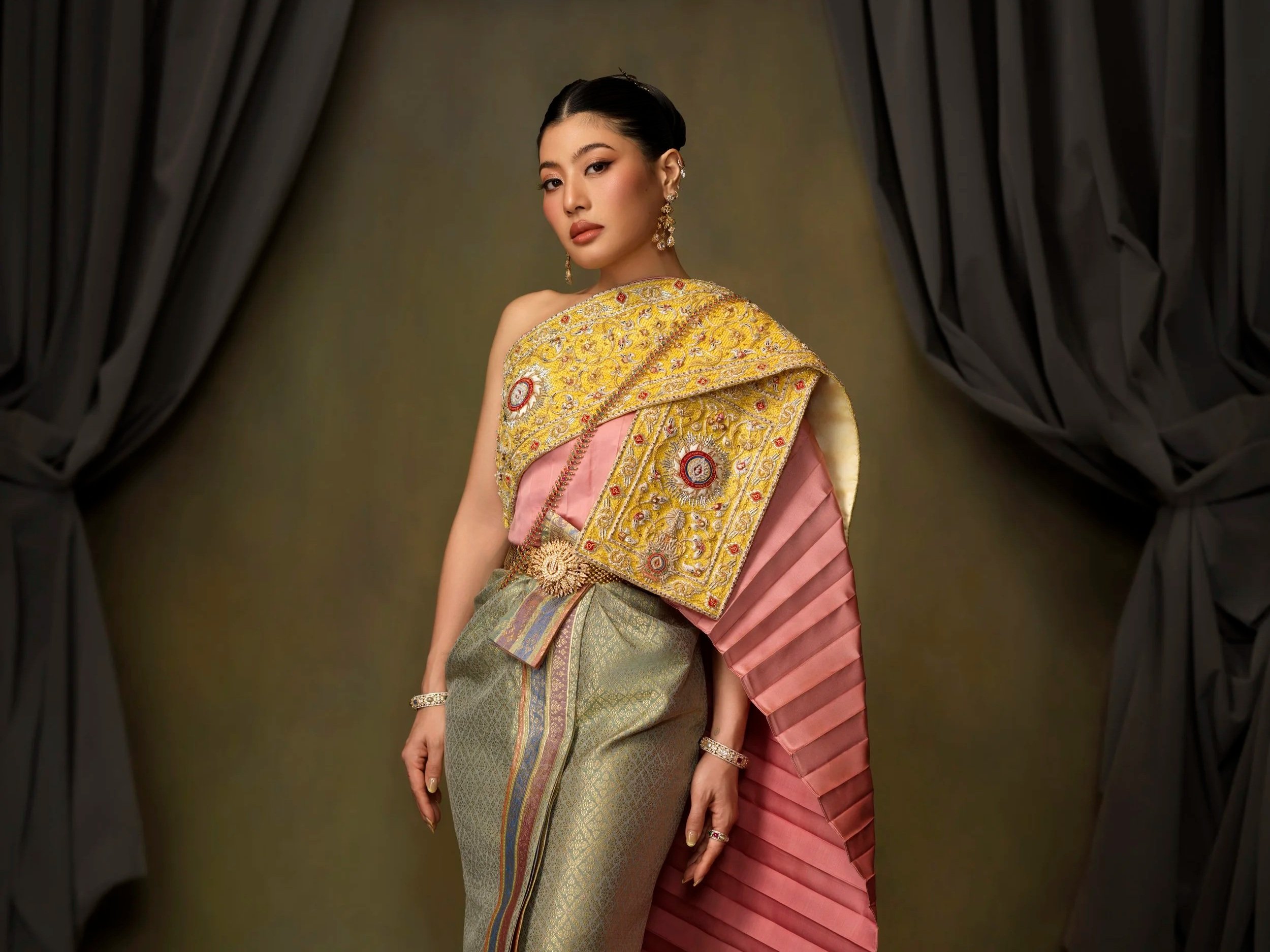
Officially known as Chud Thai Phra Rajaniyom, the national dress is a group of eight formal styles first envisioned in the late 1950s by Queen Sirikit, who devoted herself to preserving Thailand’s artistic and cultural heritage, with particular attention to handwoven textiles.
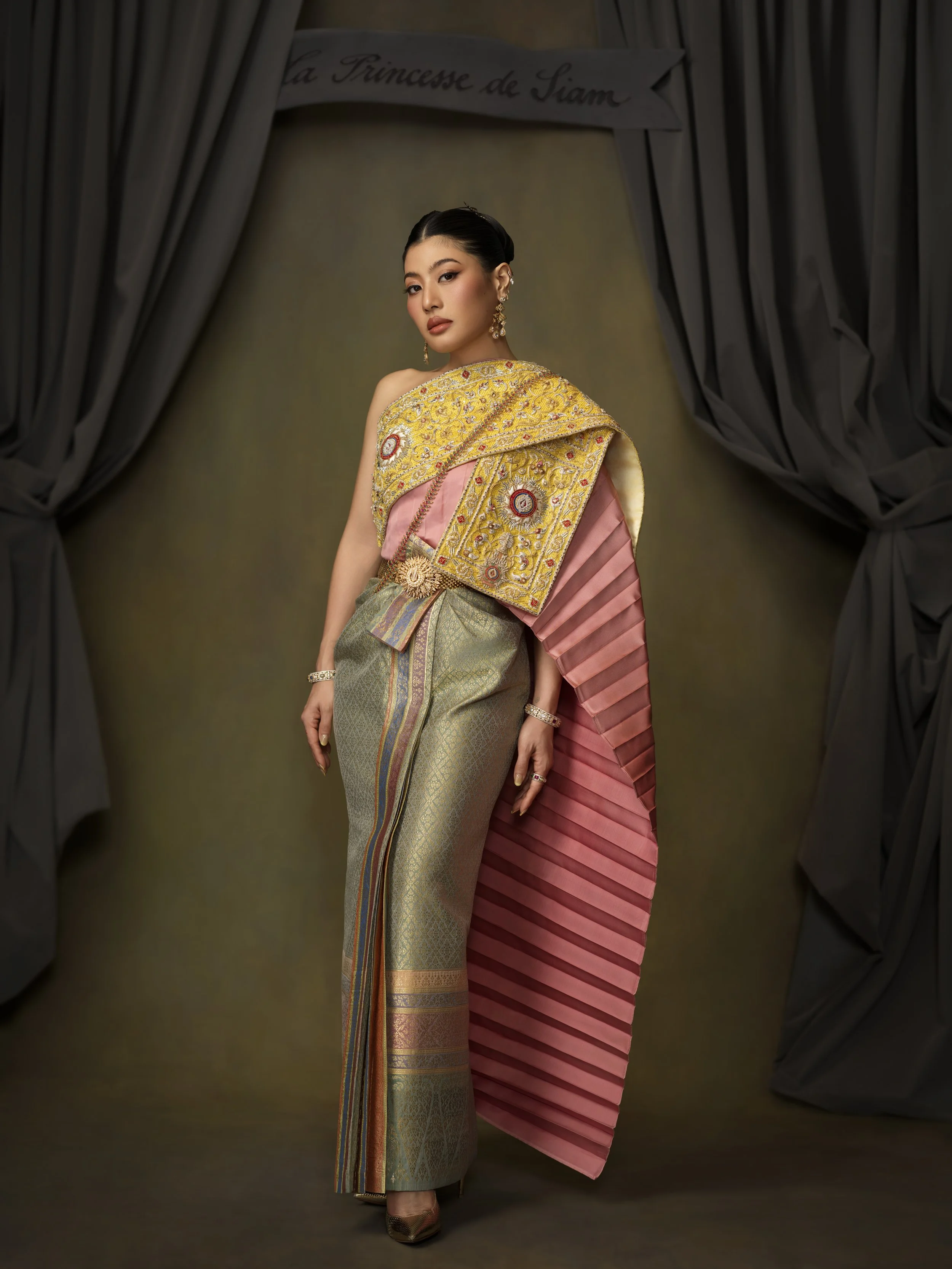
Princess Sirivannavari Nariratana Rajakanya
Queen Sirikit studied Thai court dress across different historical periods and consulted Thai historians and designers, including Thai fashion designer Urai Lueumrung and French couturier Pierre Balmain, as she developed a series of foundational designs for women and men. Early versions were worn during her 1960 state visits to the United States and Europe. The eight styles were refined over the following years, with the collection taking its final form by 1964.
The collection was designed to cover a range of occasions, from informal visits and daytime events to state ceremonies and other formal functions. The eight women’s styles were given names associated with royal halls and residences and together became known as Chud Thai Phra Rajaniyom.
“Chud Thai Phra Rajaniyom is a major cultural legacy for the Thai people, drawn from a wellspring of knowledge and reflection that my grandmother wished to pass on to future generations,” says her granddaughter, Princess Sirivannavari Nariratana Rajakanya. She also describes the styles as deeply rooted in tradition but “by no means frozen in time”, continuing to evolve as the eras change.
That idea extends beyond the clothes themselves. Hairstyles, hair ornaments, makeup and jewellery were considered alongside the garments, changing according to the occasion. Chud Thai was conceived as a wardrobe, with different forms for different degrees of ceremony rather than one prescribed costume.
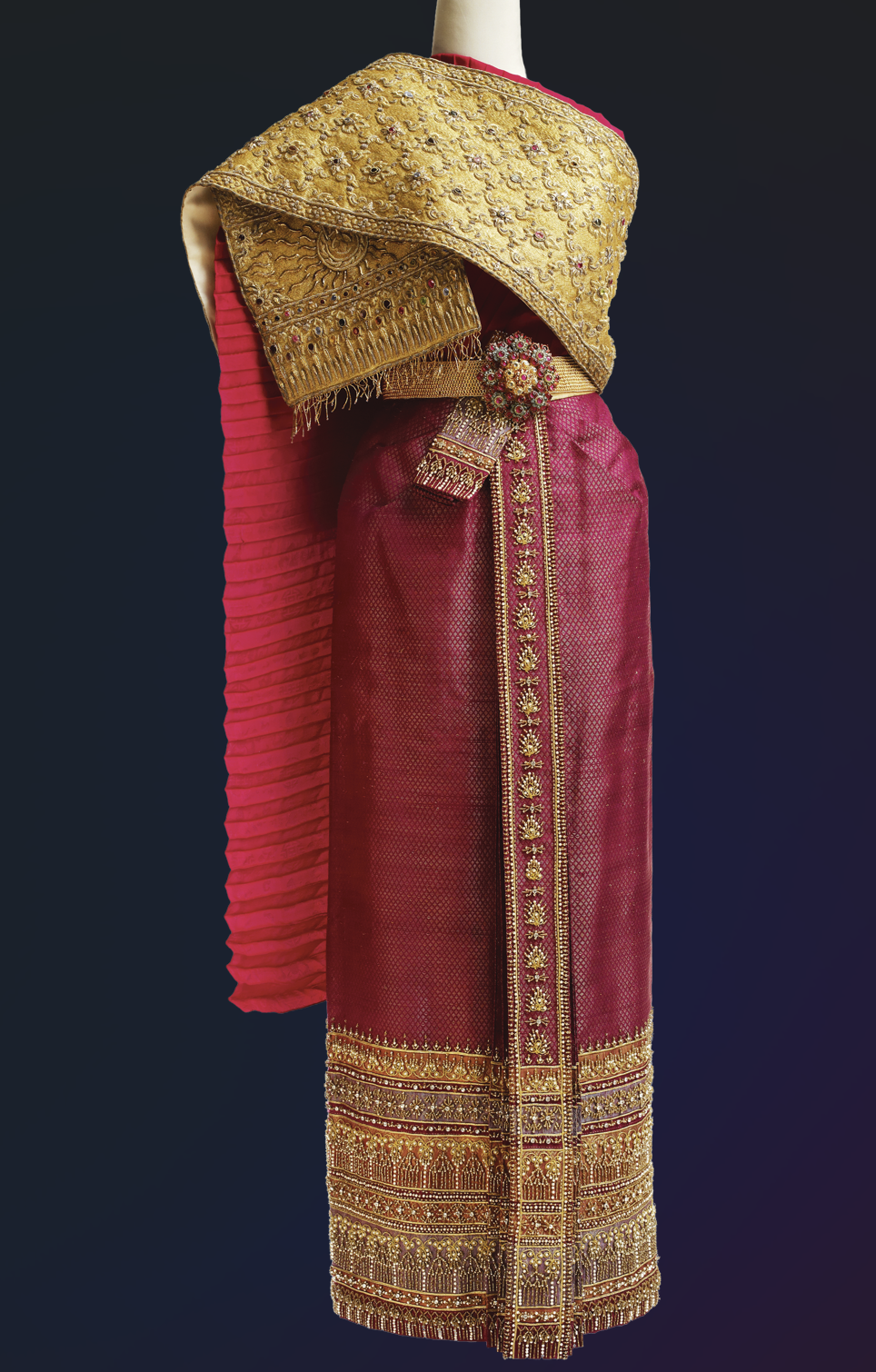
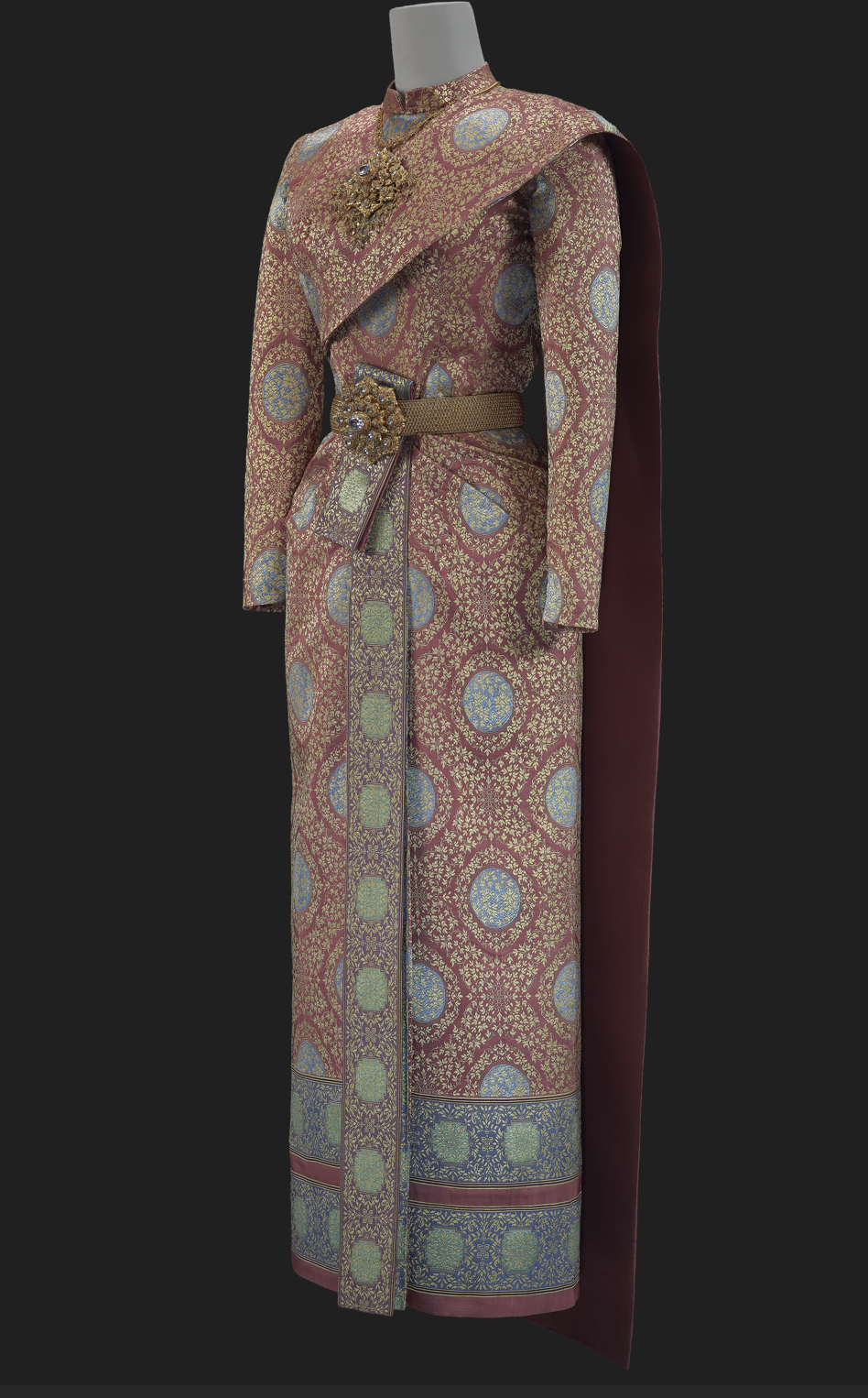
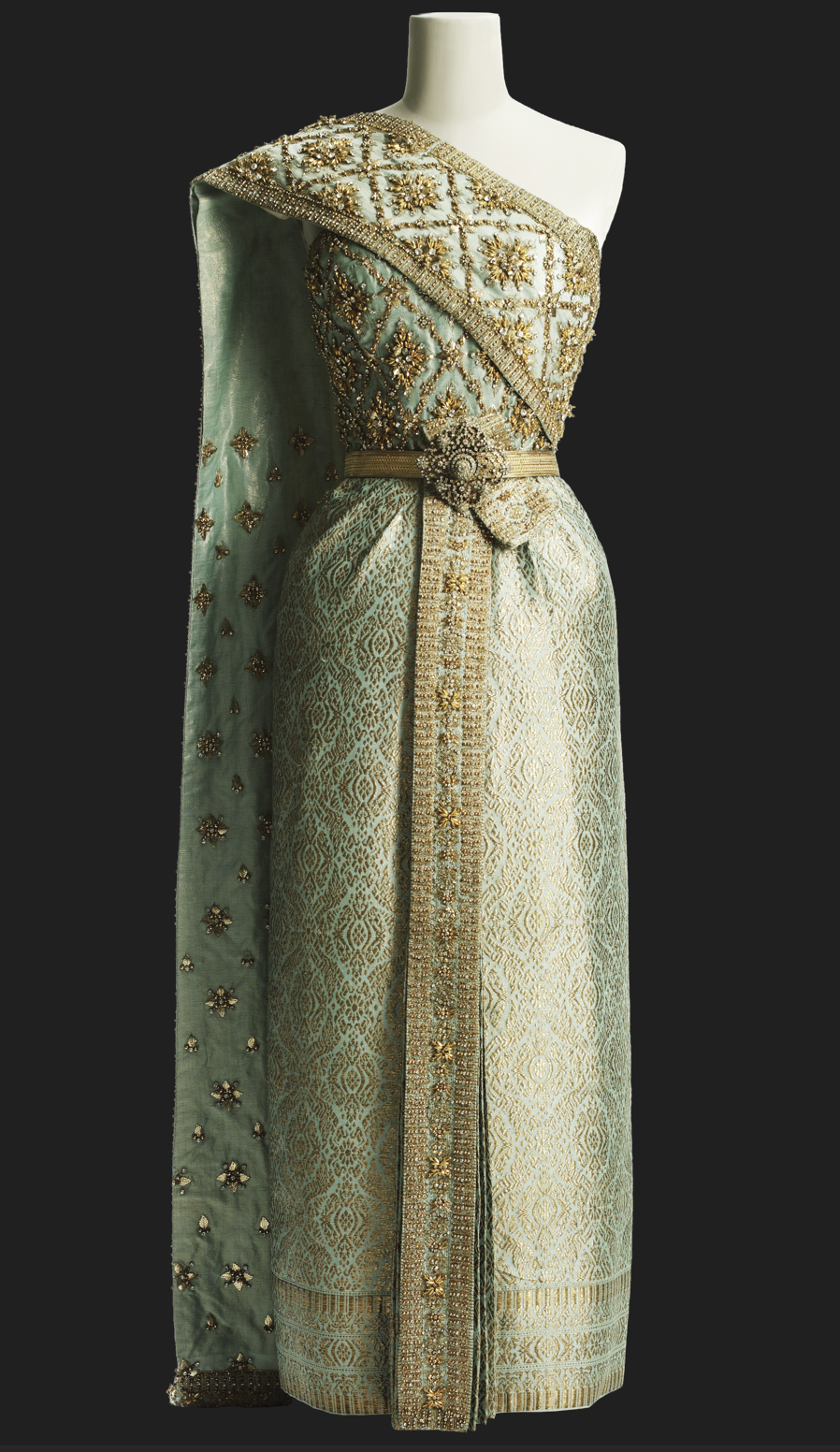
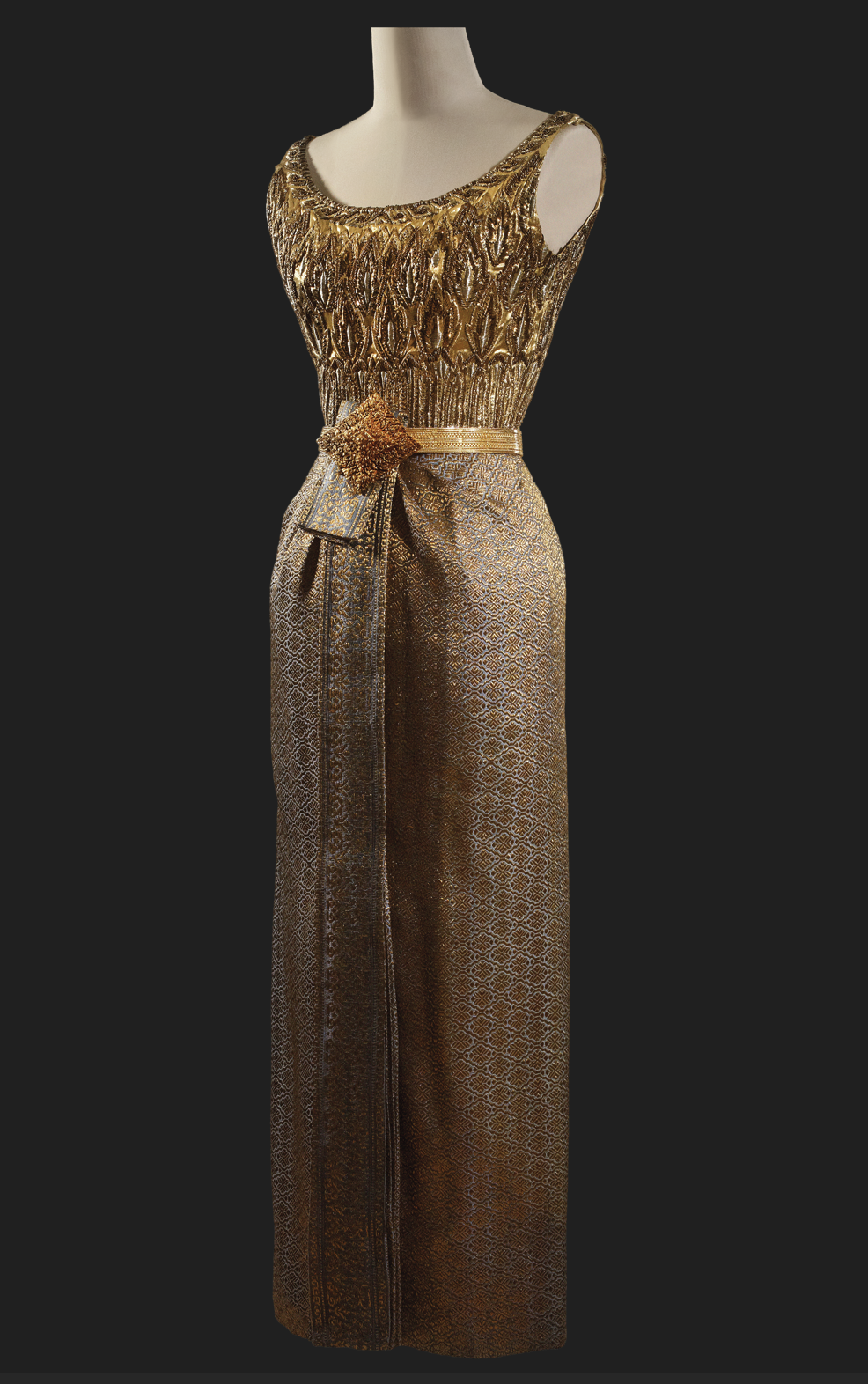
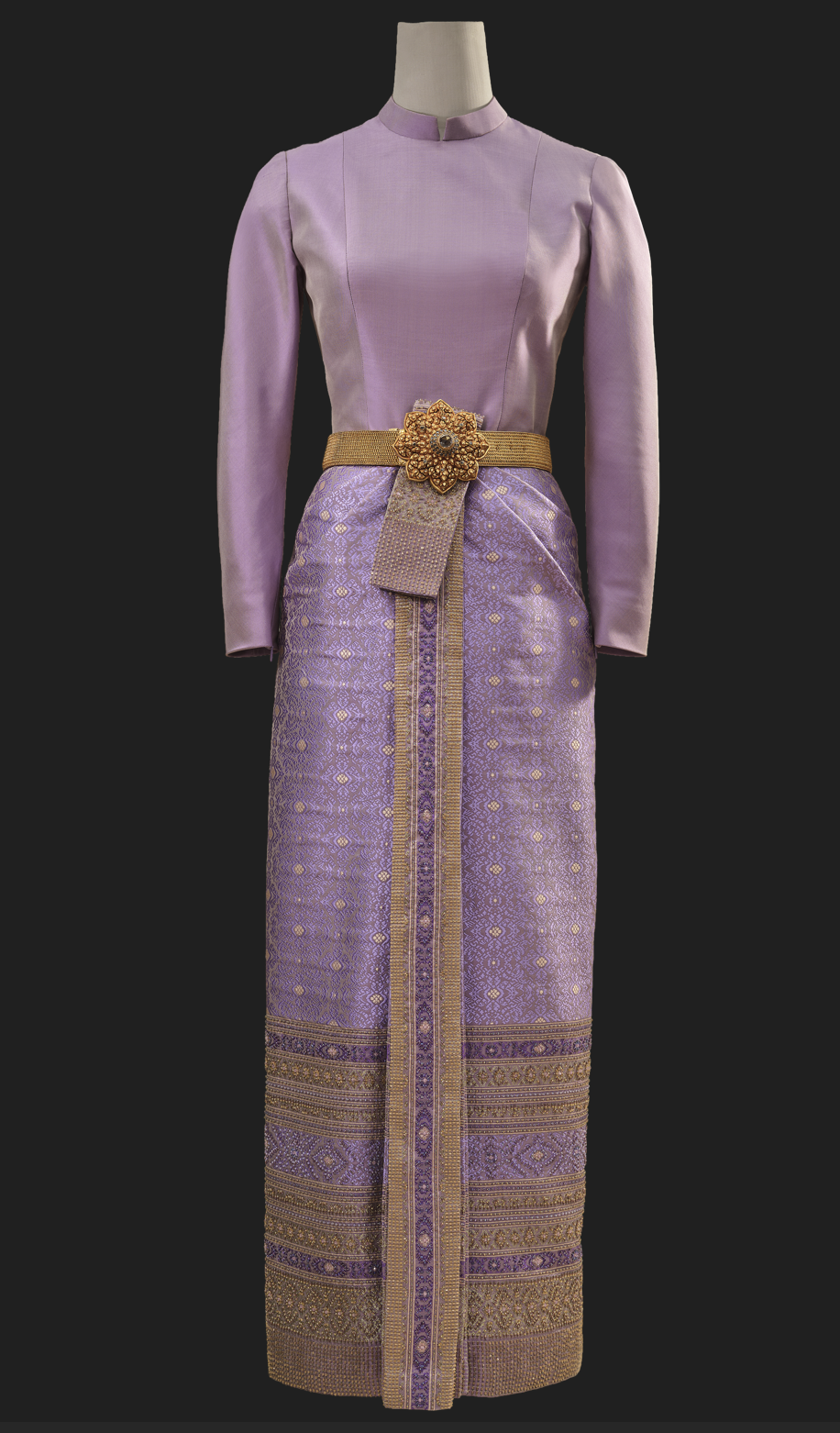
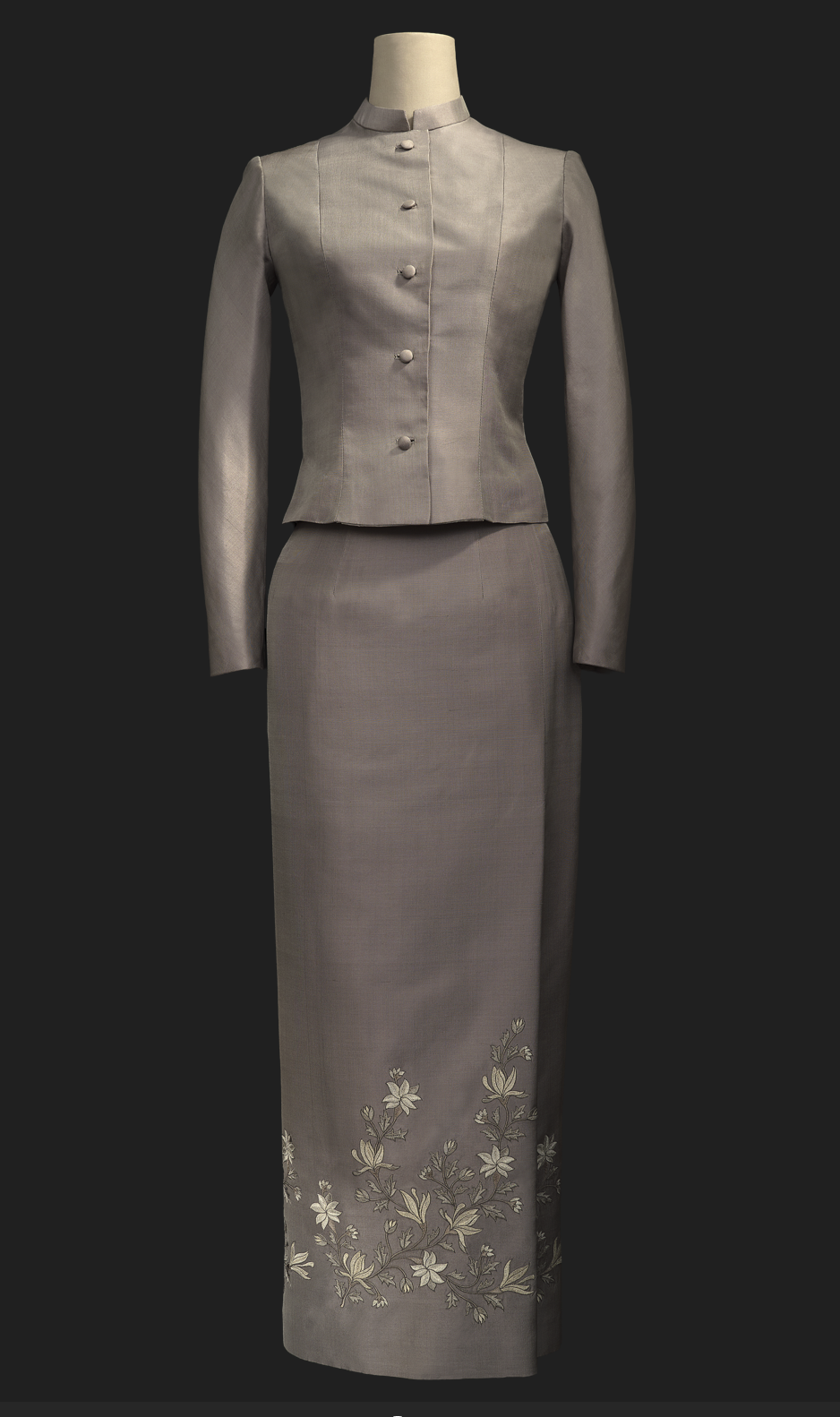
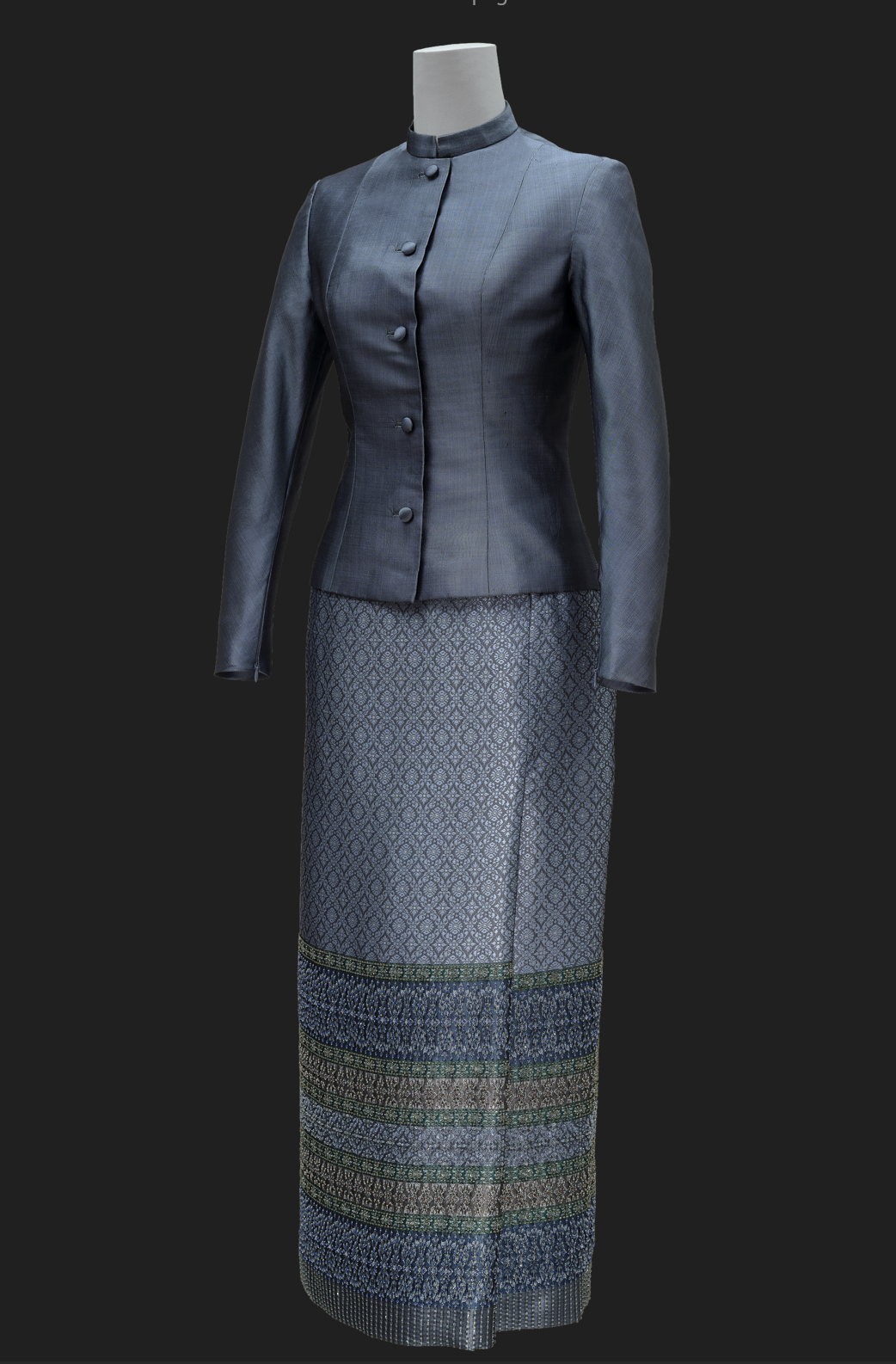
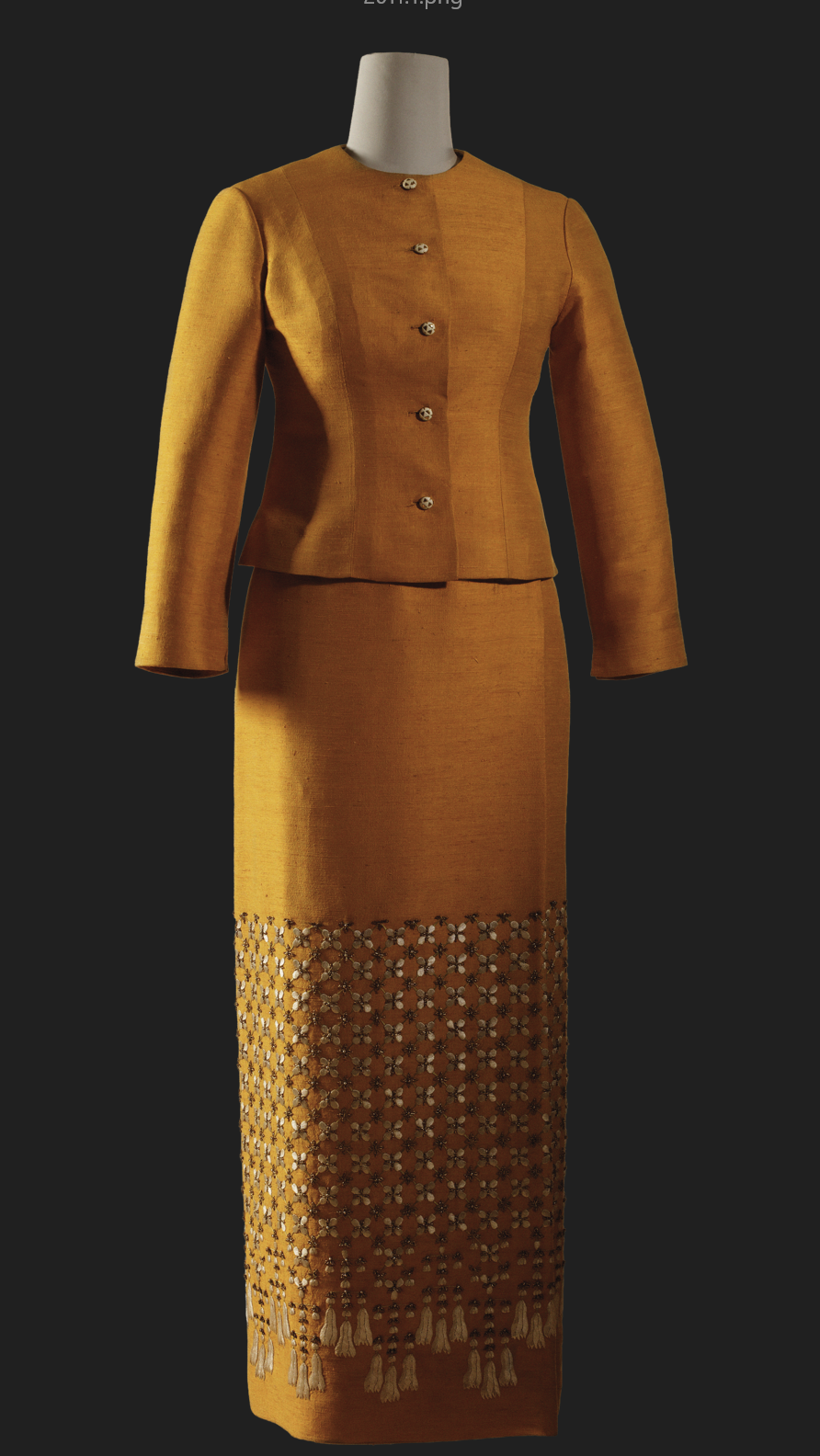
The eight women’s styles of Chud Thai Phra Rajaniyom form a wardrobe for different occasions, from informal daytime wear to state ceremonies and evening dress. Their differences lie in the cut of the blouse, the drape of the skirt, the use of a shoulder cloth and the richness of the textiles.
Ruean Ton is the most informal, with a buttoned blouse and a tubular skirt. Chitralada is a formal daytime style, pairing a long-sleeved silk jacket with a wrap skirt. Amarin uses a similar silhouette for evening, with richer fabrics and metal-thread brocade. Boromphiman has a more tailored line, with a high collar, long sleeves and a front-pleated skirt.
The evening styles make greater use of elaborate textiles and ornament. Dusit, for example, can combine silk and brocade with sequins, beads and embroidery; a 1963 version designed by Pierre Balmain illustrates this approach. Chakri is distinguished by its shoulder cloth, often embroidered, worn with a formal brocade skirt. Siwalai adds a saphak, an outer cloth draped over the bodice. Chakraphat is among the most elaborate, with layered, embroidered shoulder cloths.
The men’s counterpart is the Suea Phra Ratchathan, or royally bestowed shirt, in three versions: short-sleeved, long-sleeved, and long-sleeved with a sash.
The clothes also became part of Thailand’s presentation abroad. Queen Sirikit wore the new forms during the 1960 royal visits, when her wardrobe was photographed extensively. Balmain was involved from the beginning of the project, serving on the design committee and helping translate Thai materials and references for an international wardrobe.
While the eight signature silhouettes belong to the 20th century, the crafts that bring them to life belong to centuries of living heritage. Thailand’s UNESCO bid zeroes in on this human legacy: the silk rearers, loom masters, and court embroiderers whose inherited knowledge gives the garments their soul. Ultimately, Chud Thai is far more than a set of historical costumes—it is a living tradition whose future relies entirely on the hands that keep these skills alive.
EXPLORE ASIAN COUTURE