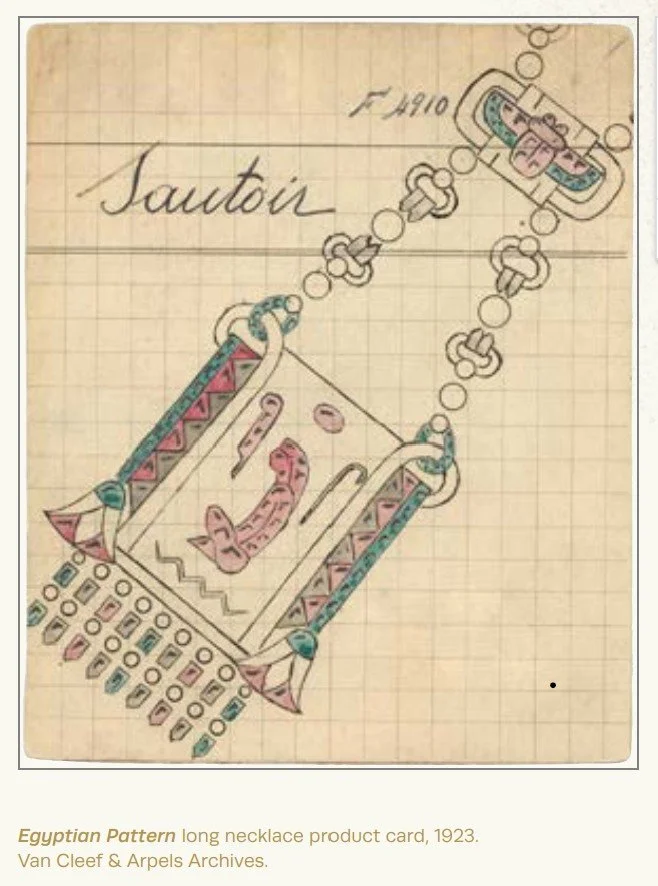
A turquoise scarab, a lotus flower in profile, a cartouche recalling pharaonic inscriptions: these motifs have formed part of Van Cleef & Arpels' visual vocabulary for more than a century. The French maison first turned to Ancient Egypt in the 1920s, when the fascination for archaeological discoveries and pharaonic imagery shaped European decorative arts. Its designers translated this renewed interest into jewels that combined Egyptian-inspired symbols with the geometric language of Art Deco. The colour associations traditionally linked to Egyptian symbolism, blue for the heavens, green for vegetation, yellow for the sun and red for vitality, found a new expression through sapphires, emeralds, rubies and other precious materials.
The house's relationship with Egypt was further shaped by its clientele as members of the Egyptian royal family commissioned important pieces in the 1930s-1940s, including jewels created for Princess Fawzia's wedding in 1939 and a diamond necklace made for Queen Nazli. These historic works remain reference points within Van Cleef & Arpels' patrimonial collection, preserving a dialogue between past creations and contemporary design.
That dialogue continues with Fascinating Egypt, Van Cleef & Arpels' latest high jewellery collection of 180 pieces, which revisits the civilisation's imagery through a century of references, from pharaonic symbols and archaeological discoveries to the maison's own archive and contemporary interpretations of jewellery technique.
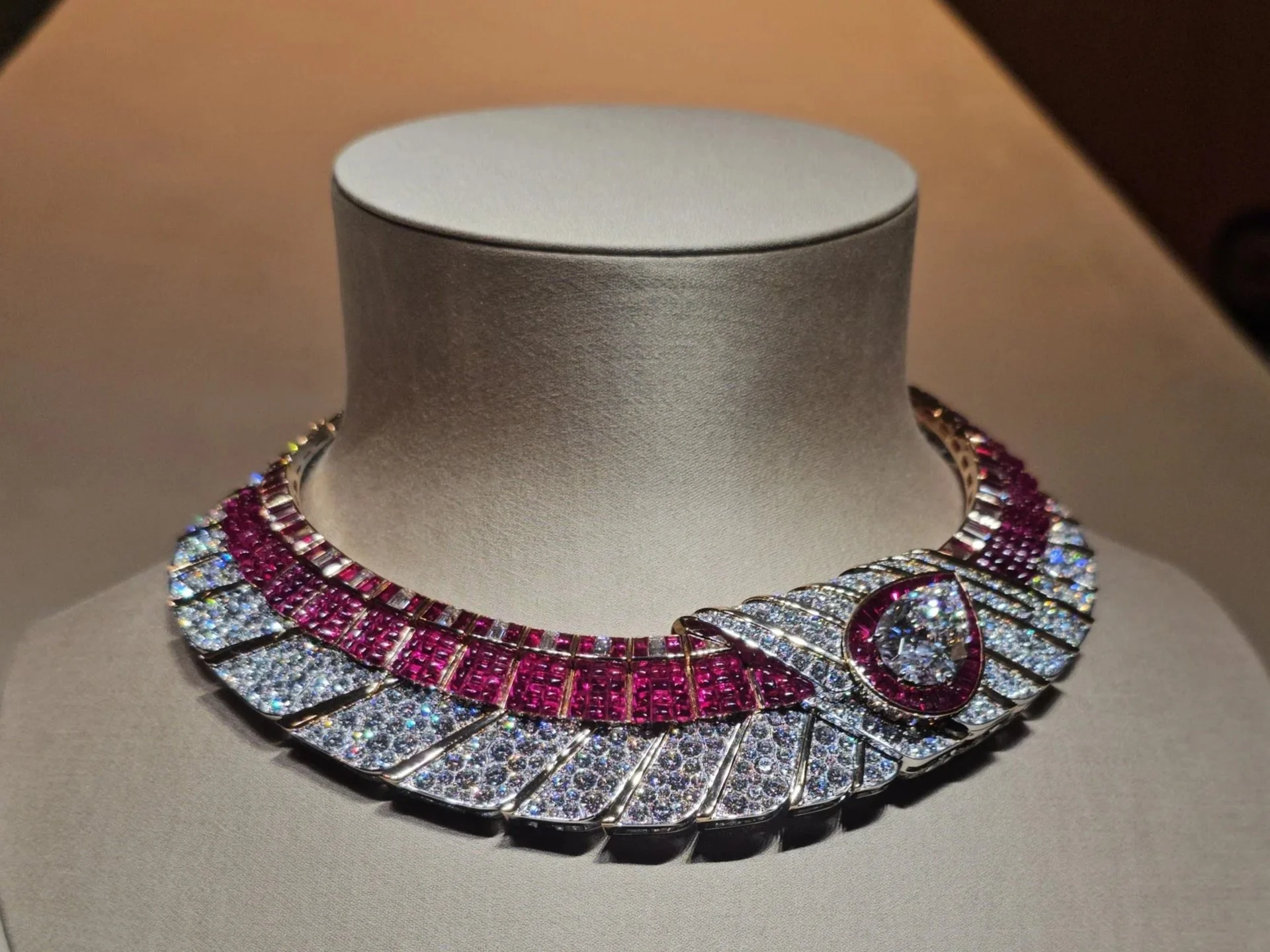
The Mystery Set, patented by Van Cleef & Arpels in 1933, remains central: by mounting gemstones onto concealed rails, the method allows surfaces of rubies or other coloured stones to appear uninterrupted by metal. In the Fleur de lotus Mystérieuse clip, the technique lends the lotus petals a velvety finish, contrasting with mirror-polished gold stems and corollas, while the geometric arrangement of baguette-cut rubies and diamonds nods to the period that first shaped the maison's Egyptian-inspired jewels.
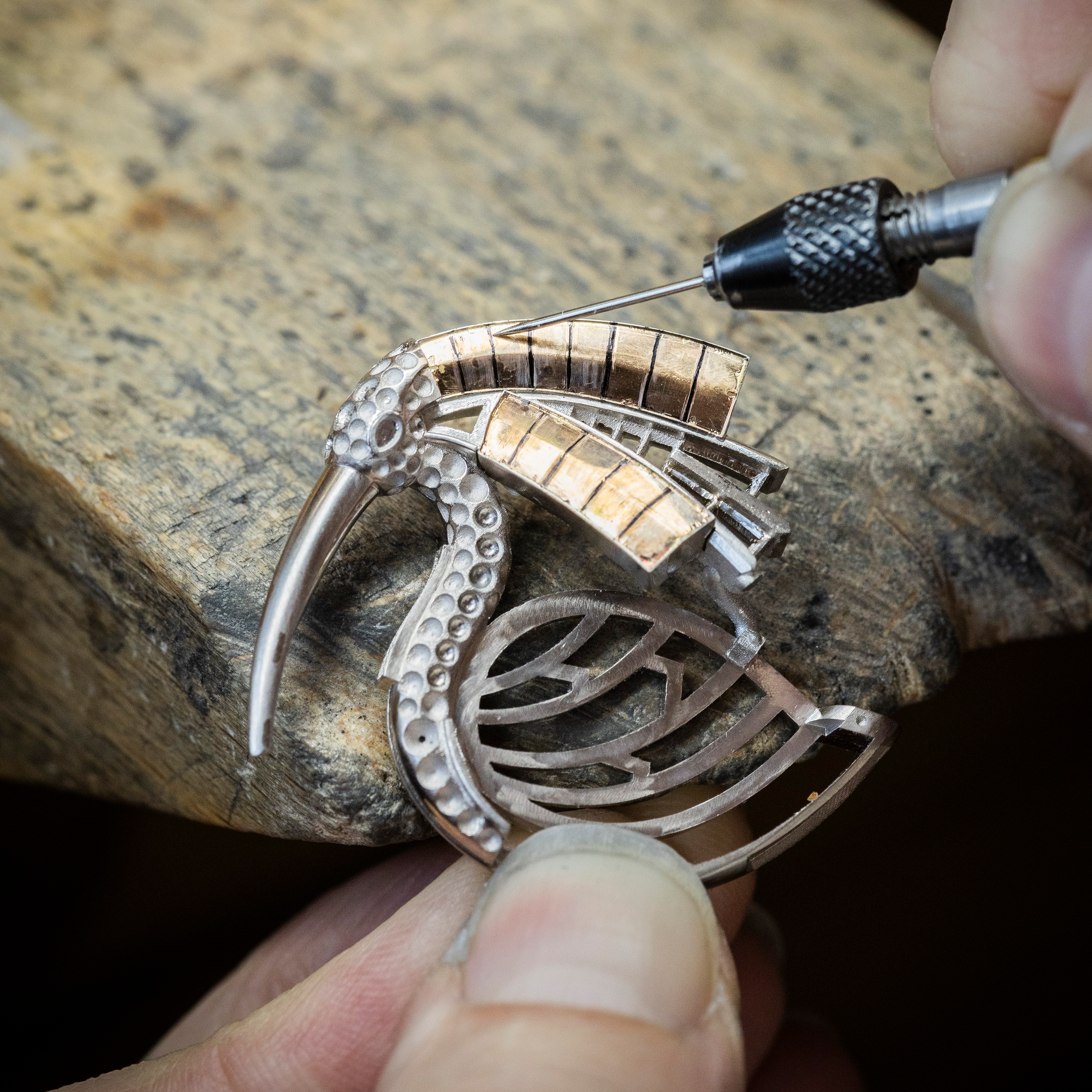
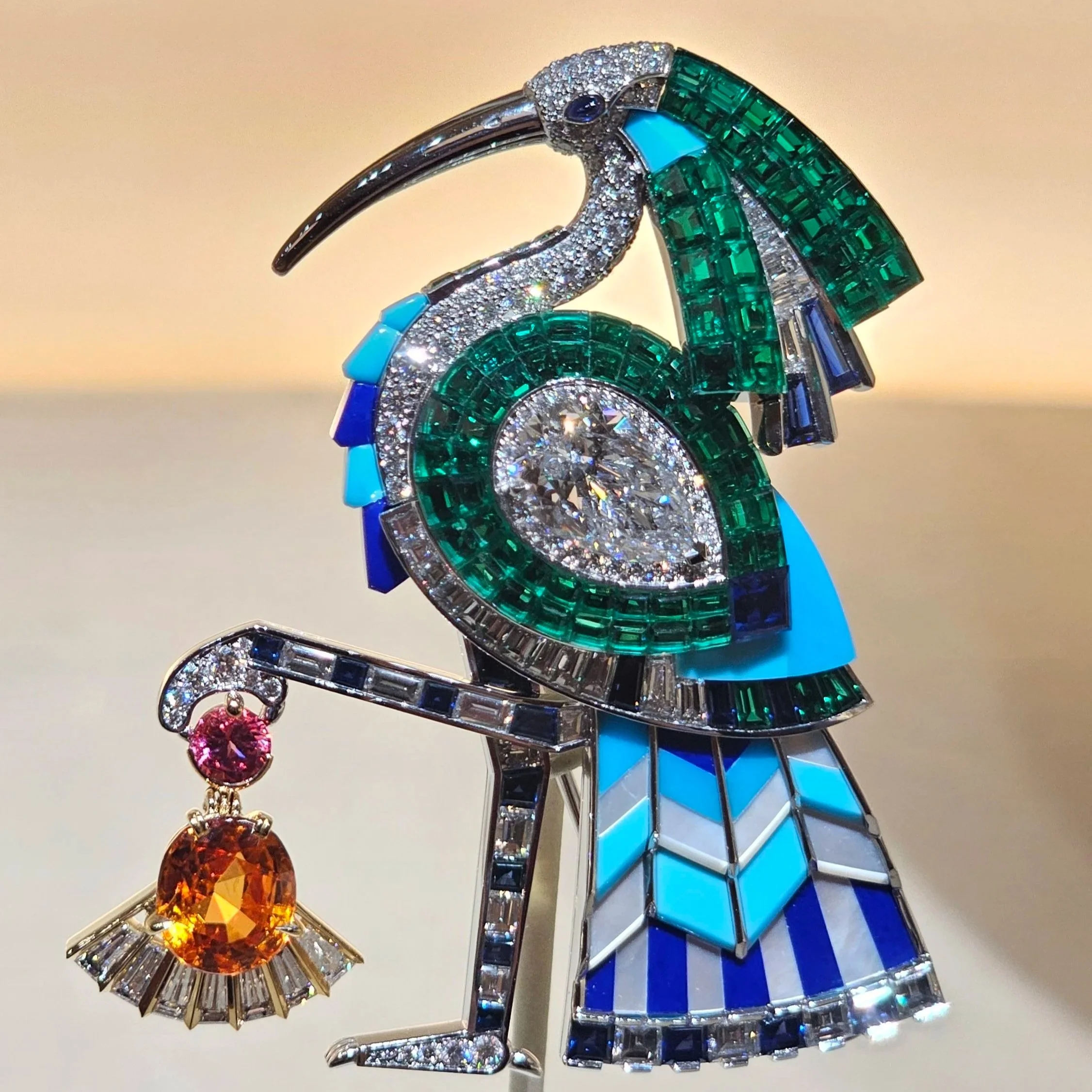
The Mystery Set reappears throughout the collection in increasingly complex forms. The Déesse ailée Mystérieuse transformable necklace combines ruby-set wings with snow-set diamonds, concealing the metal beneath articulated motifs that curve around the neck while supporting detachable pear-shaped diamonds that can also be worn as rings. In the sculptural Bénou Mystérieux, Griffon Mystérieux and Bastet Mystérieuse clips, the technique is applied to birds, mythical creatures and the cat-headed goddess Bastet, where uninterrupted surfaces of emeralds and rubies are juxtaposed with lapis lazuli, turquoise, coral and engraved gold. Executing the Mystery Set with emeralds is particularly demanding because of the stone's fragility, underscoring the technical ambition behind these miniature sculptures.
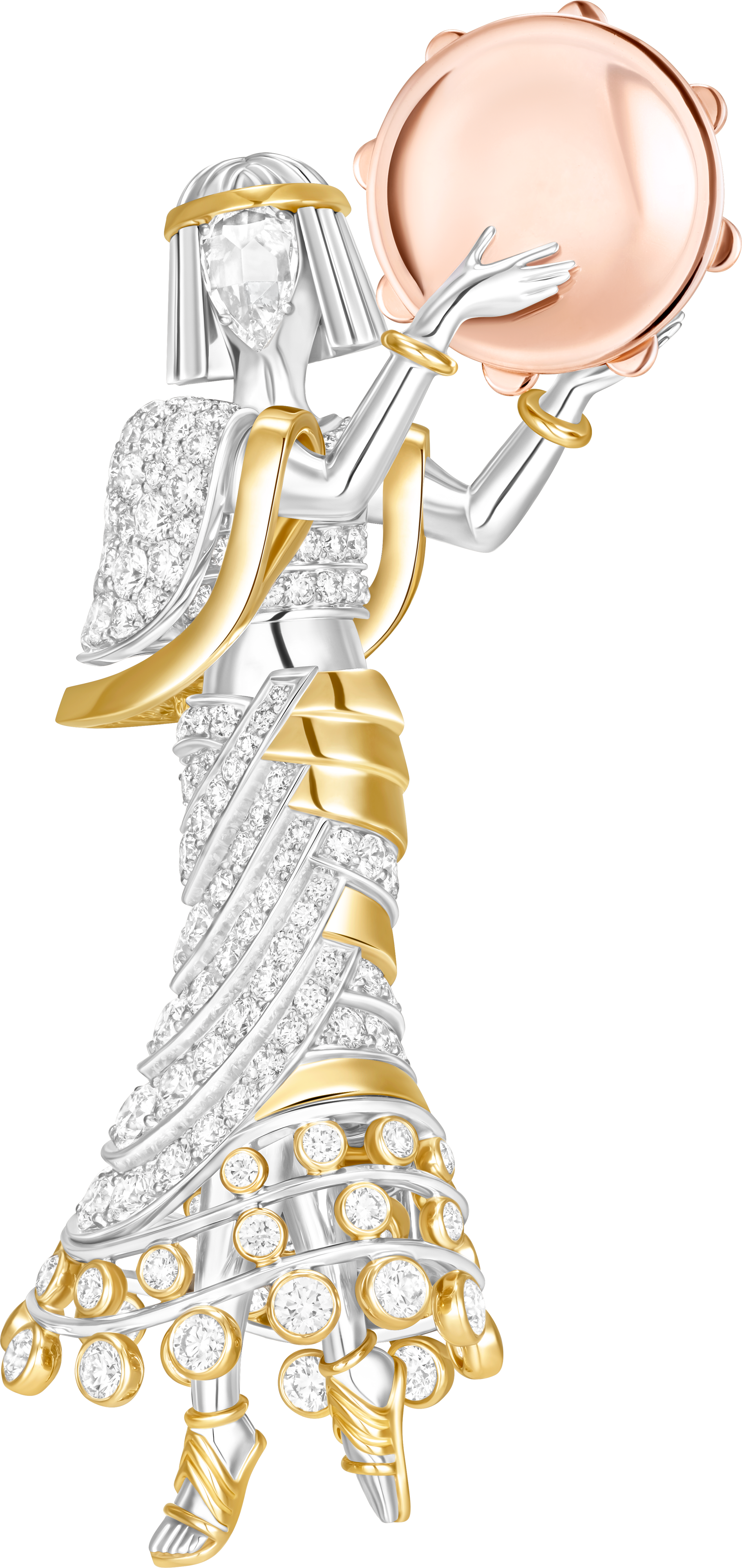
The figurative Muse éternelle, Pharaon sacré and Danseuse clips extend another longstanding theme in the maison's repertoire: character jewels. While Muse éternelle and Pharaon sacré depict Cleopatra and a pharaoh, the three Danseuse clips revisit a motif that has appeared regularly in Van Cleef & Arpels' collections since the 1940s, reimagined here through Ancient Egyptian iconography. Inspired by scenes depicted in tombs and temples, the figures are captured mid-movement holding a tambourine, a flabellum or lotus leaves. Their rose-cut diamond faces echo the maison's historic ballerina clips, while polished, engraved and hammered gold recreates the movement of drapery.